-
-
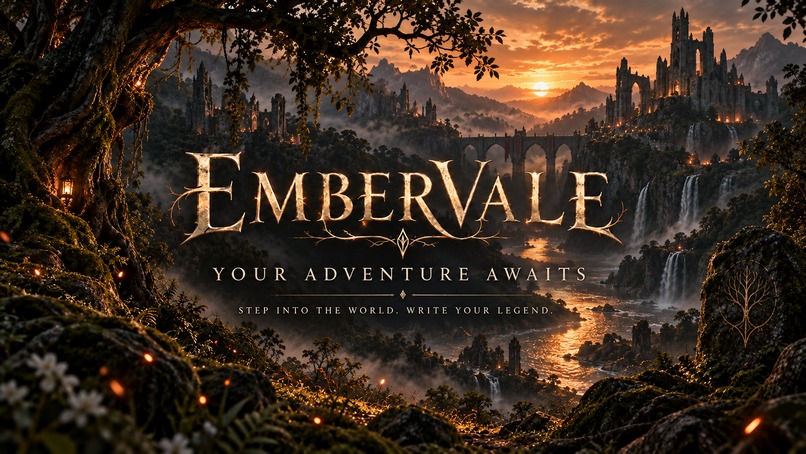
Game Thumbnail
-
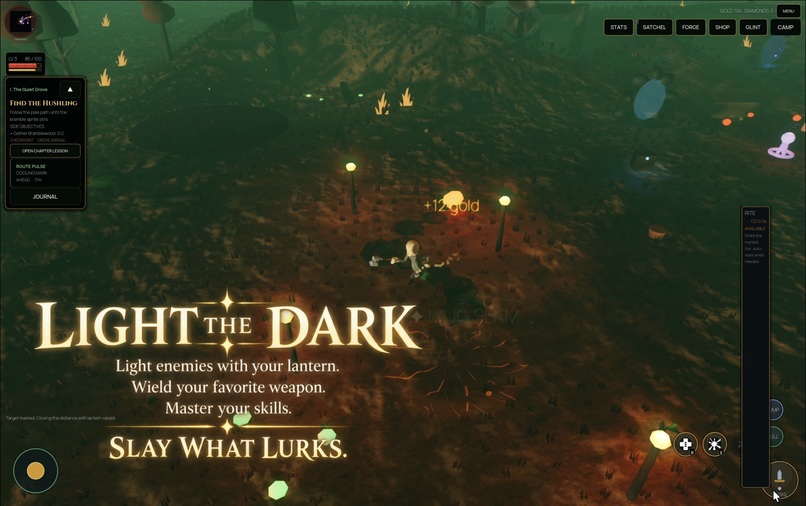
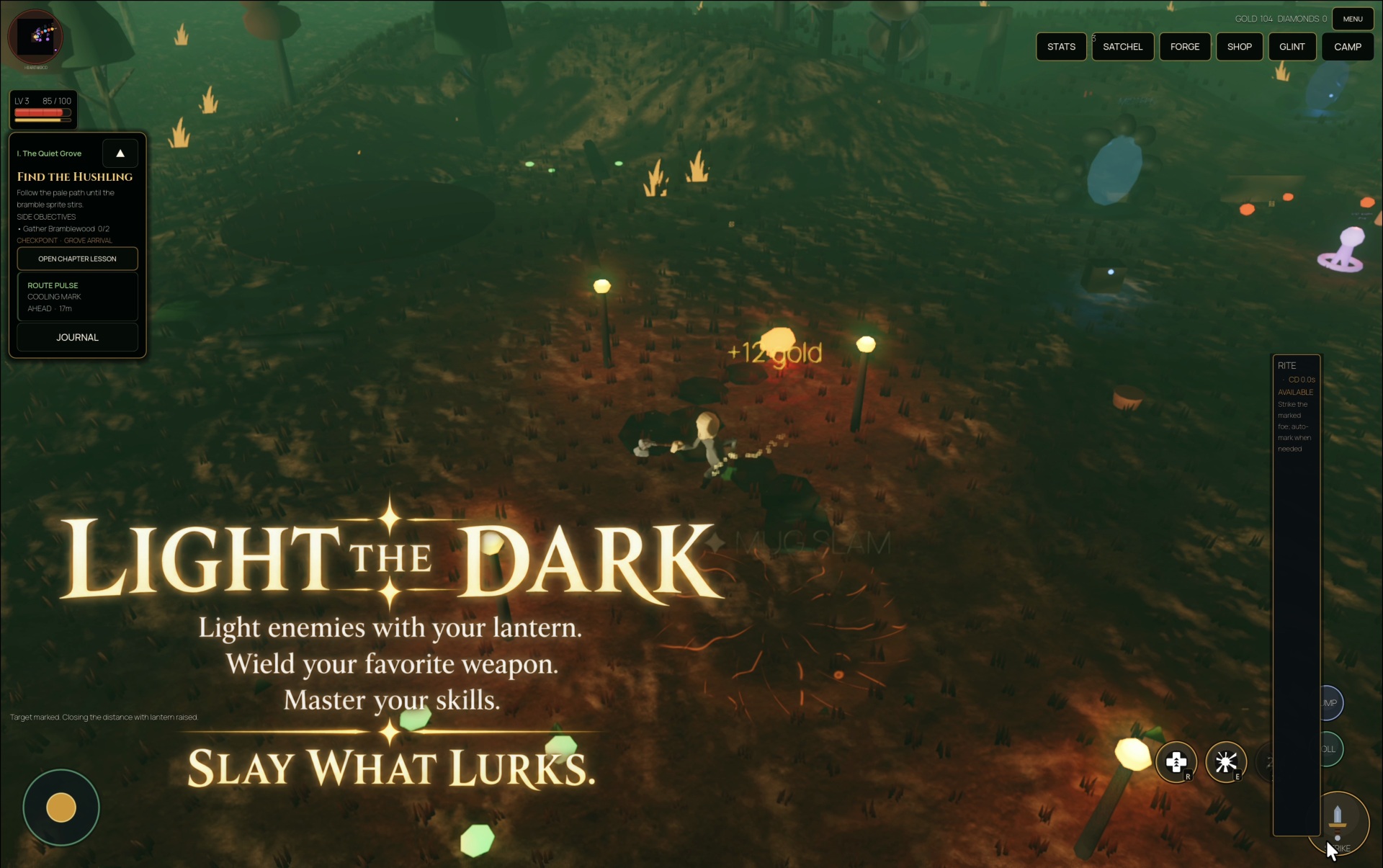
Light the dark with your lantern
-
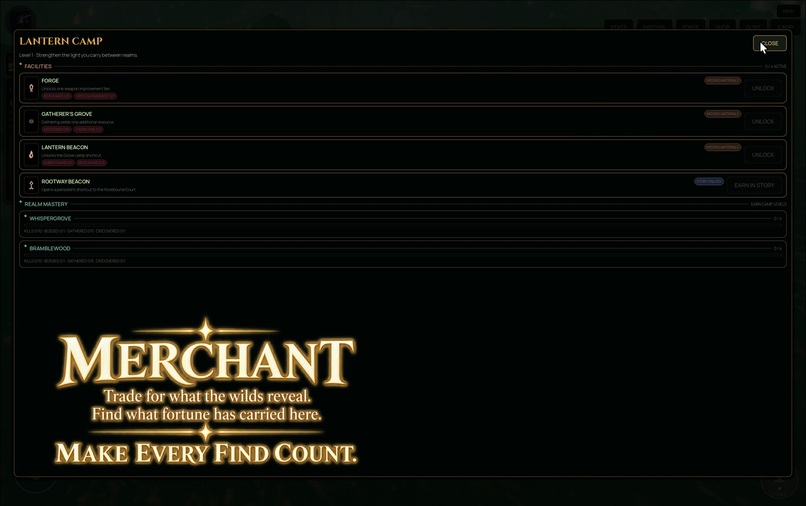
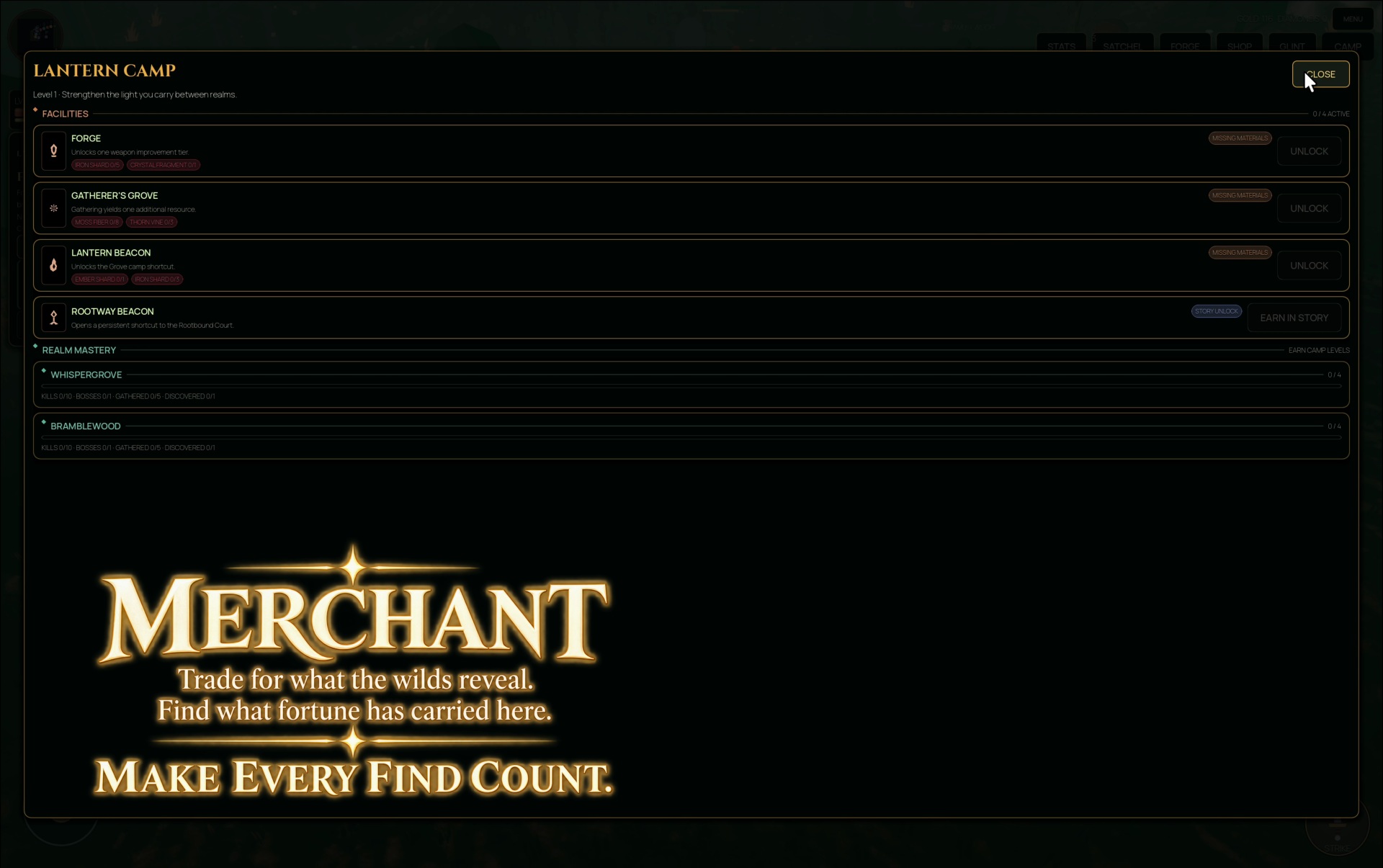
Meet the merchant
-
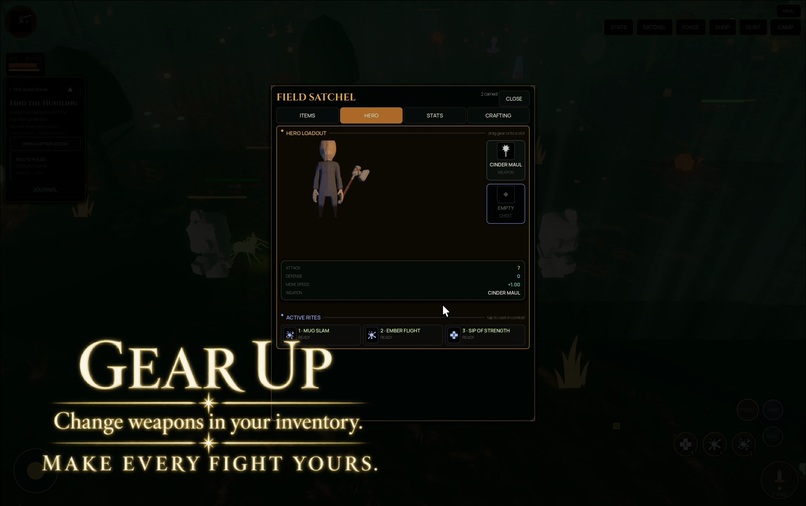
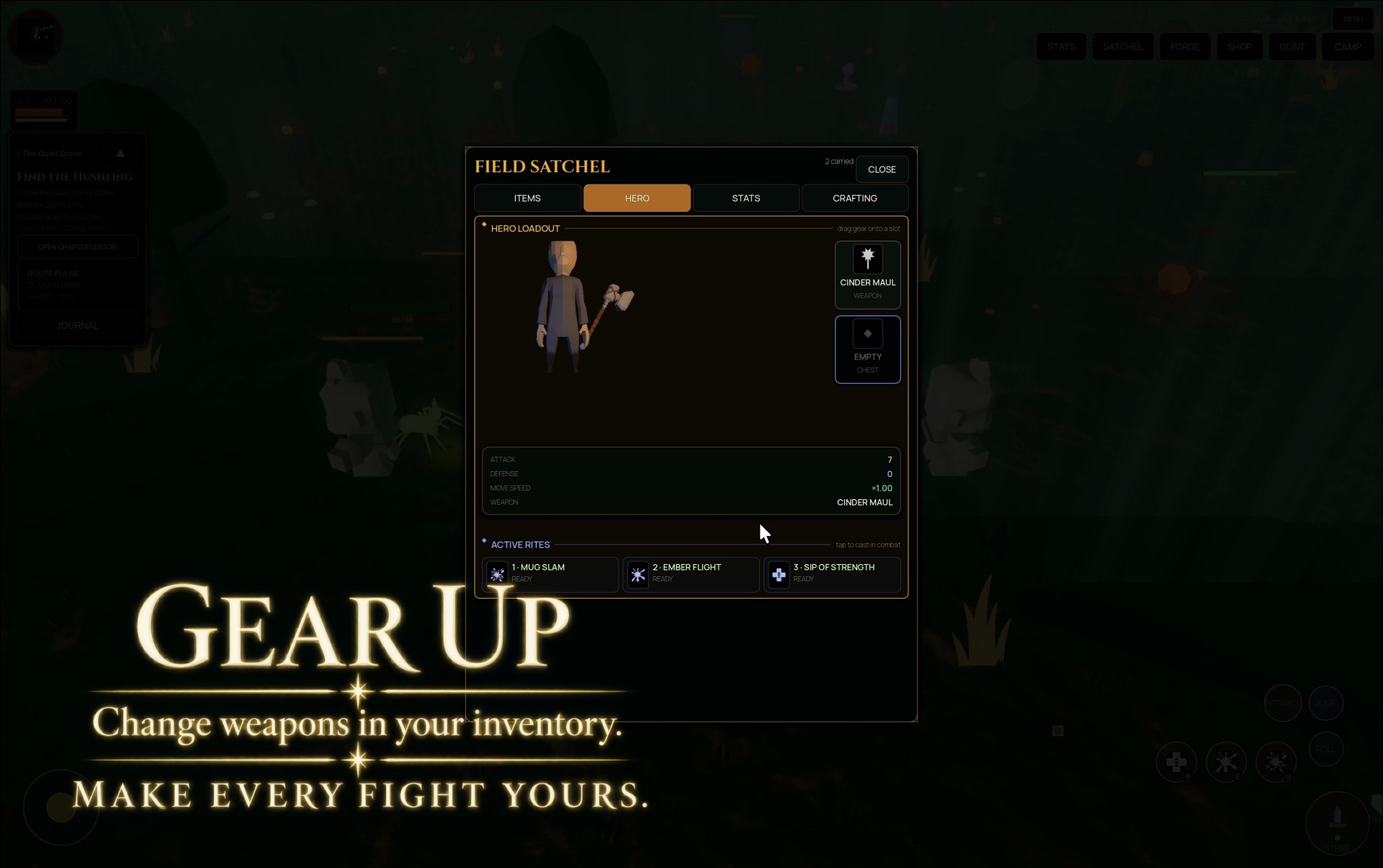
Gear up for battle
-
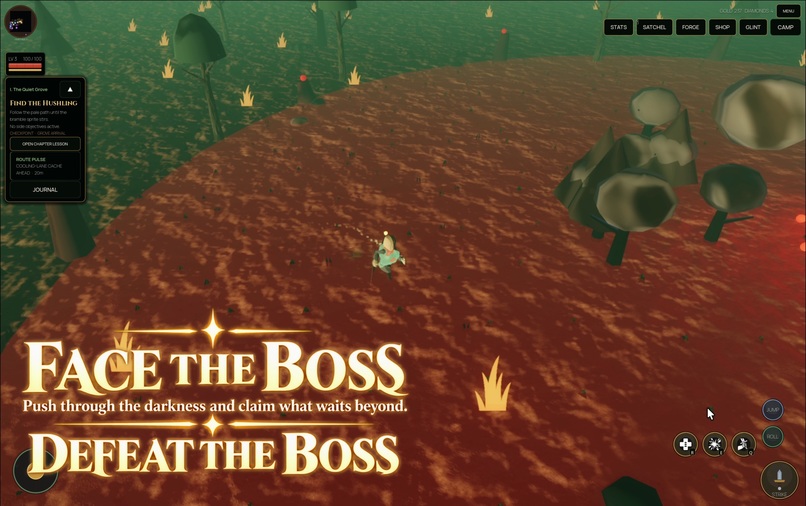
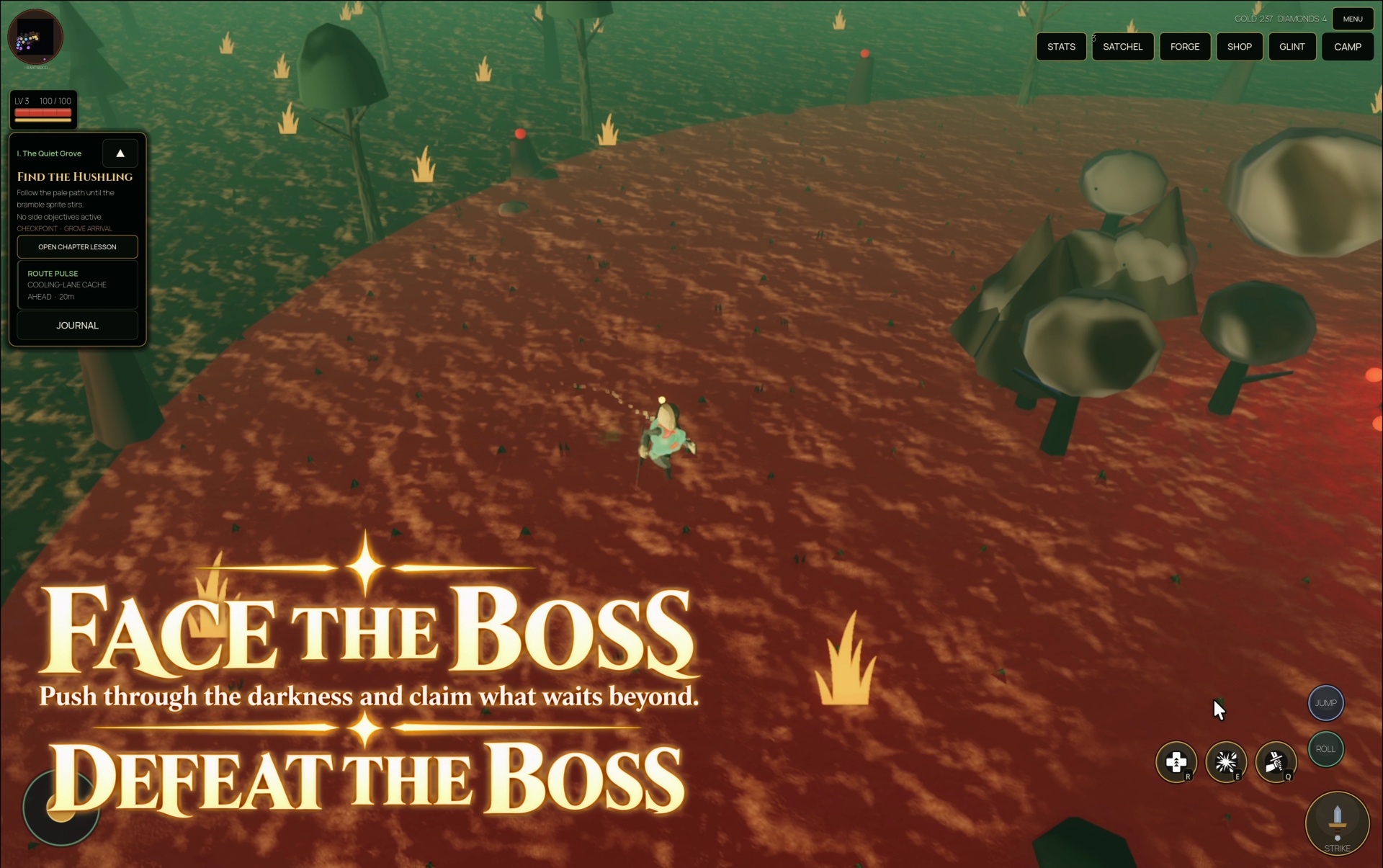
Defeat bosses
-
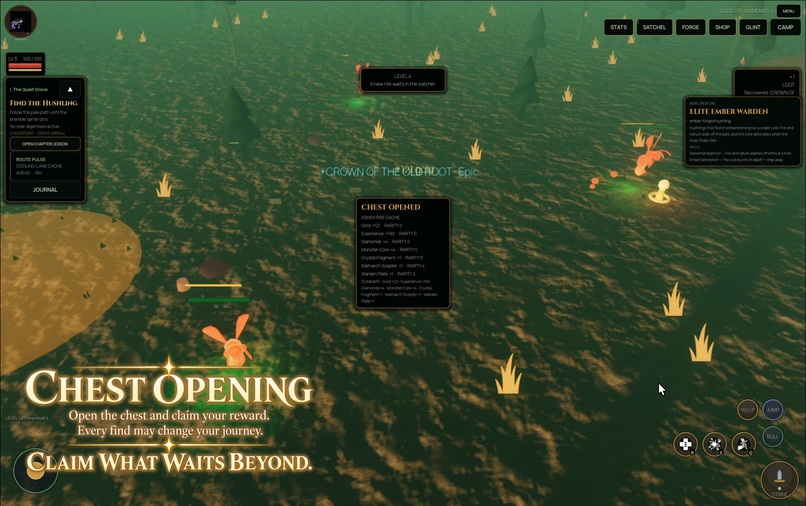
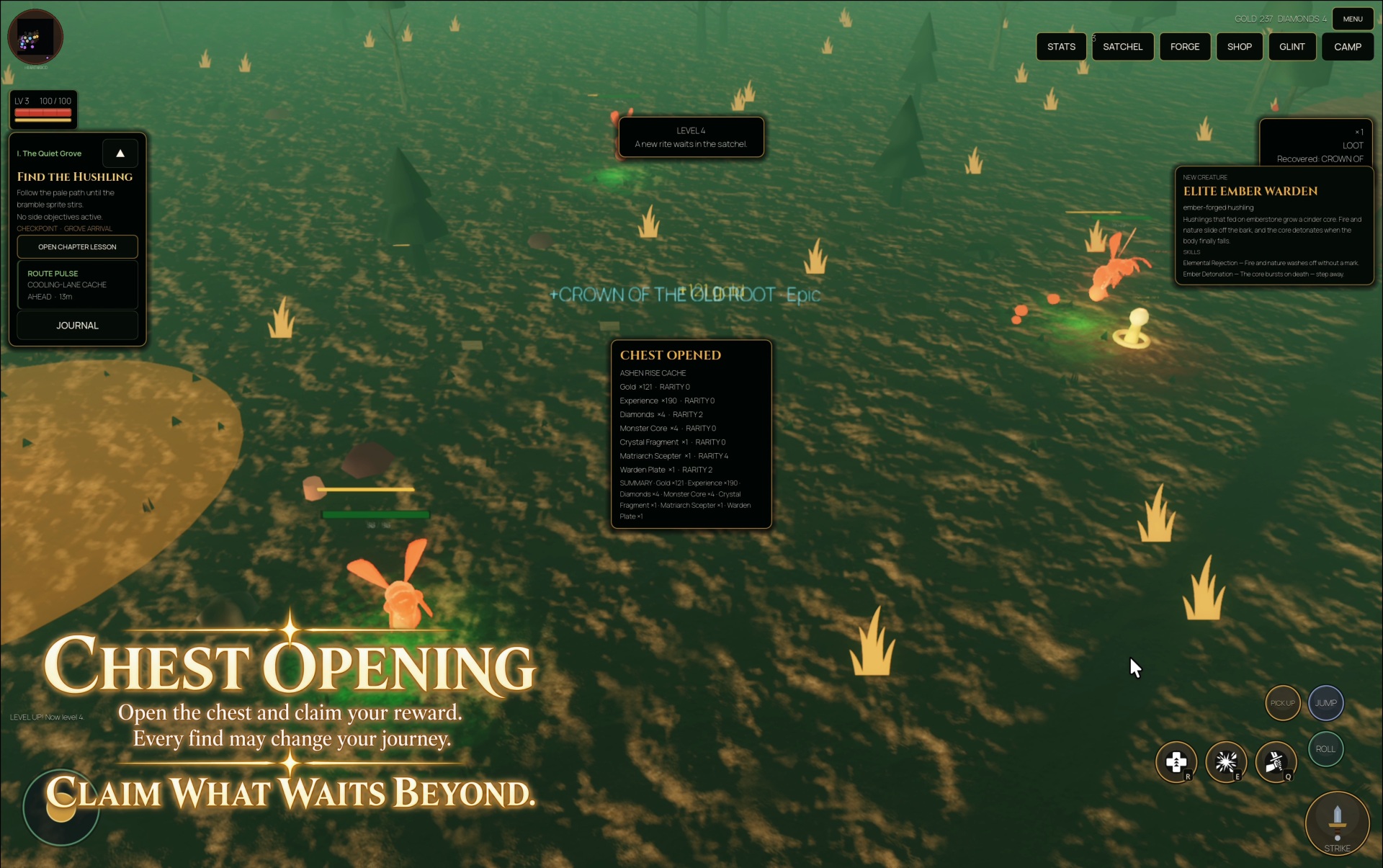
Open chests and get rewards
-
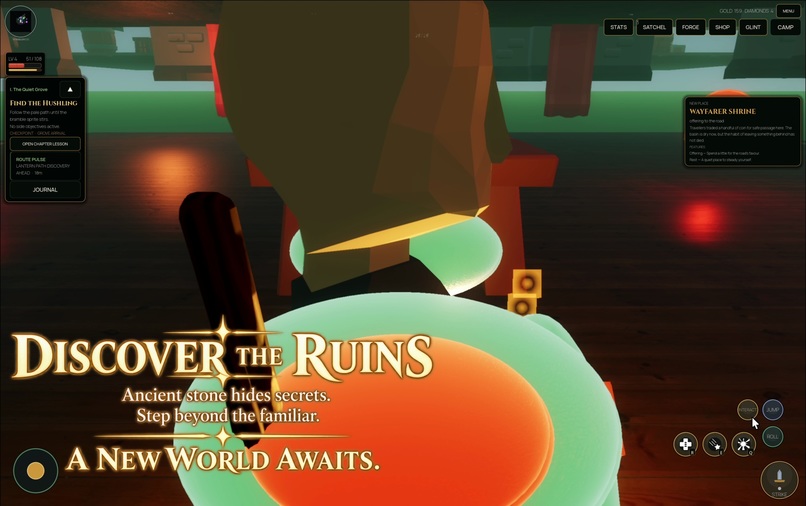
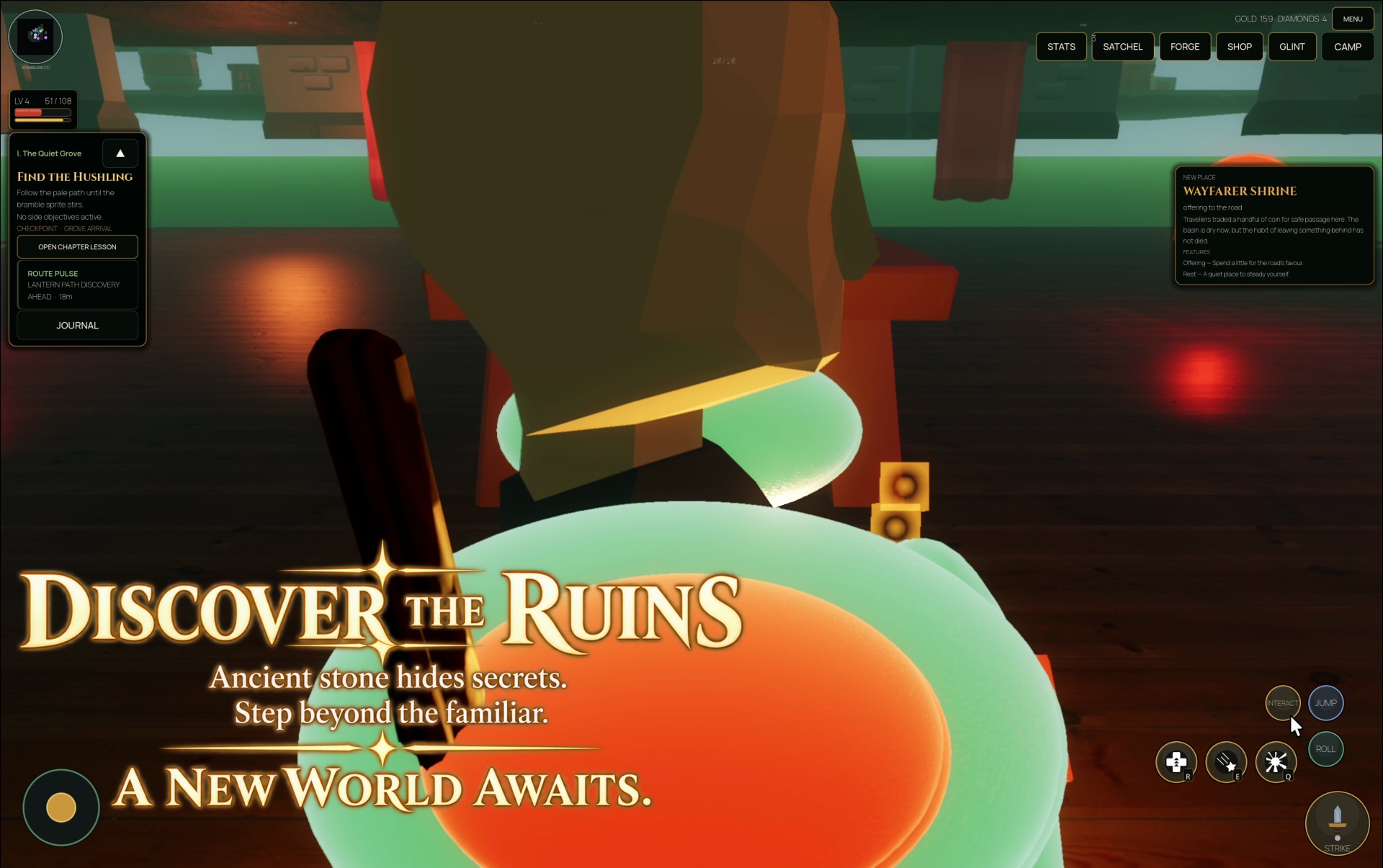
Discover the ruins
-
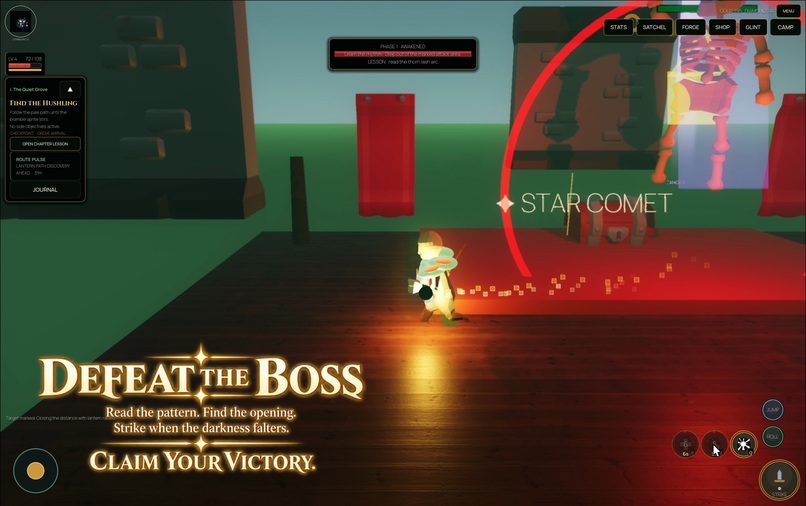
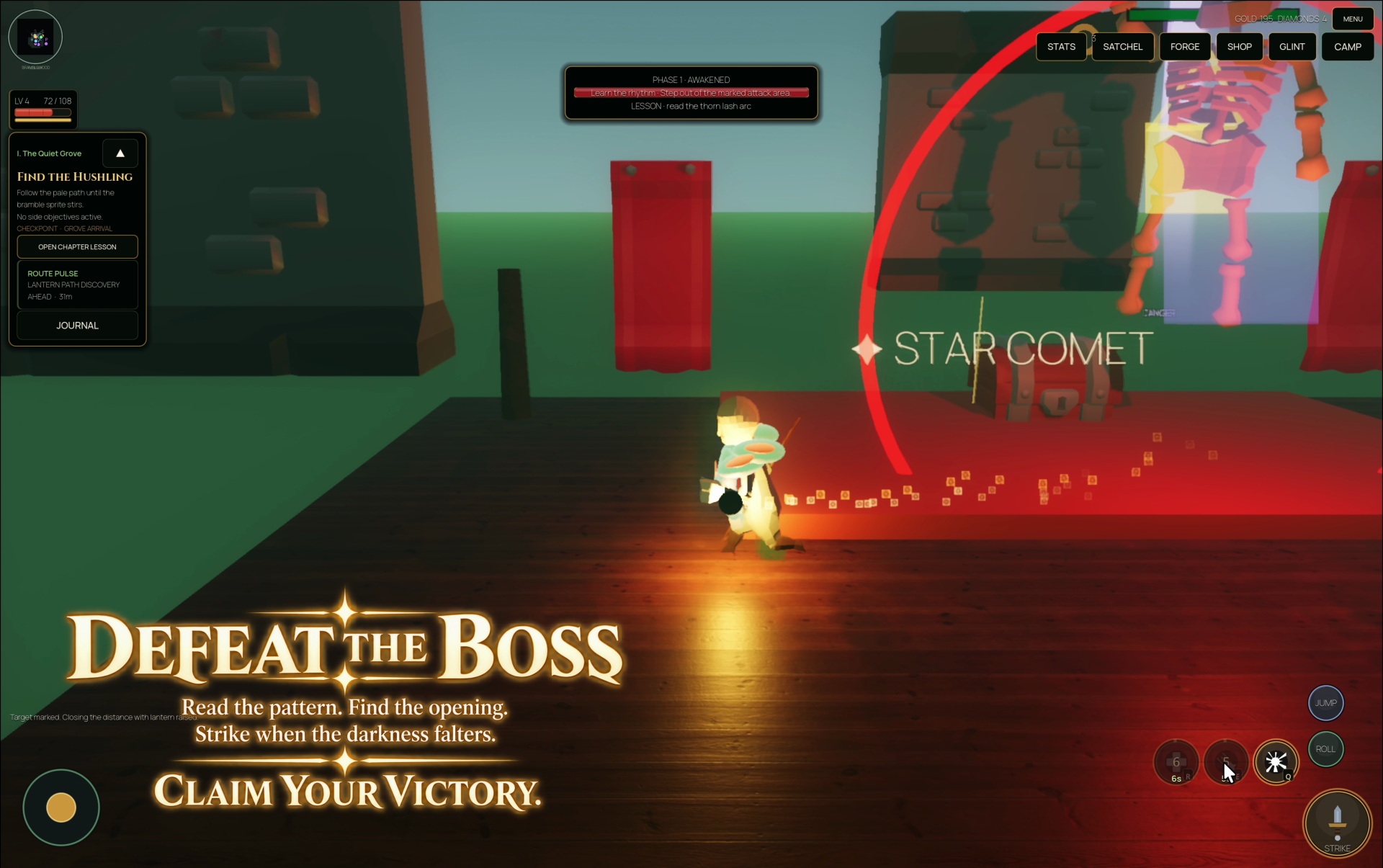
Defeat the ruin boss
-
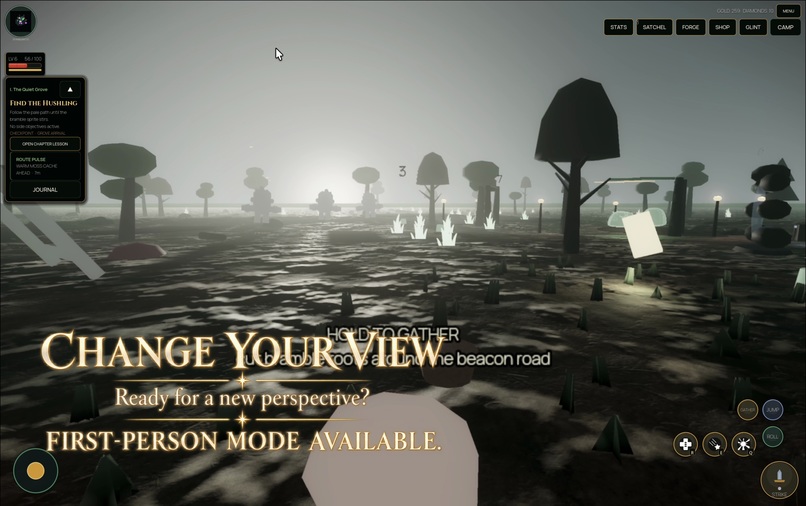
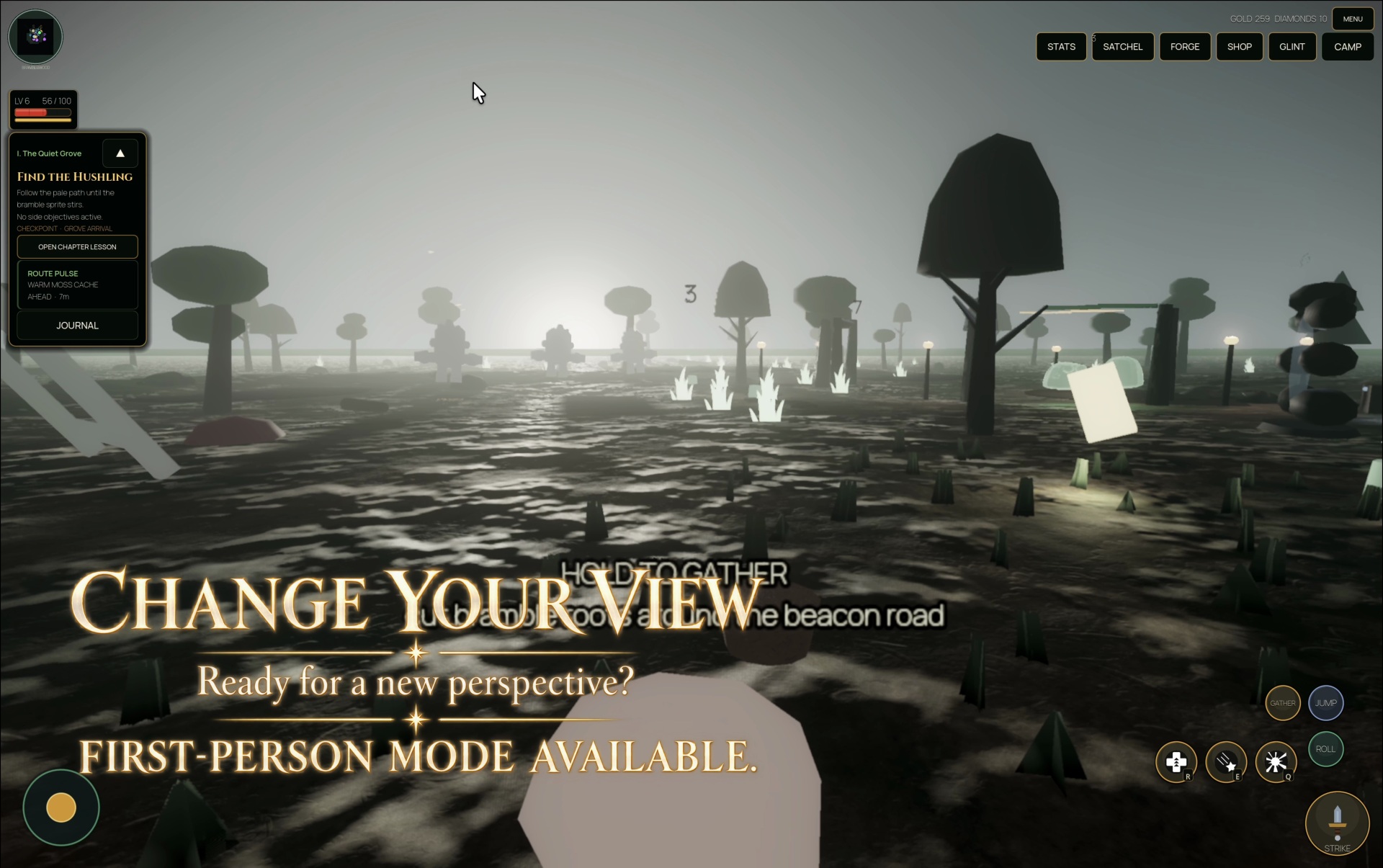
Change to First-person view
-
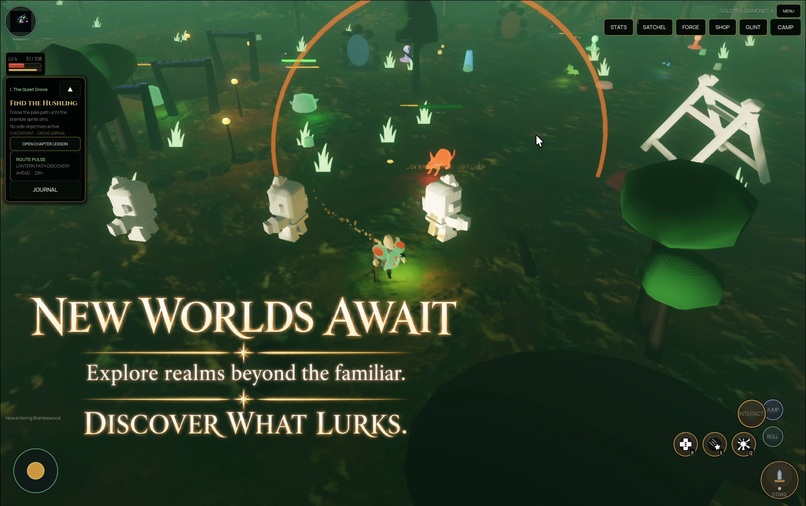
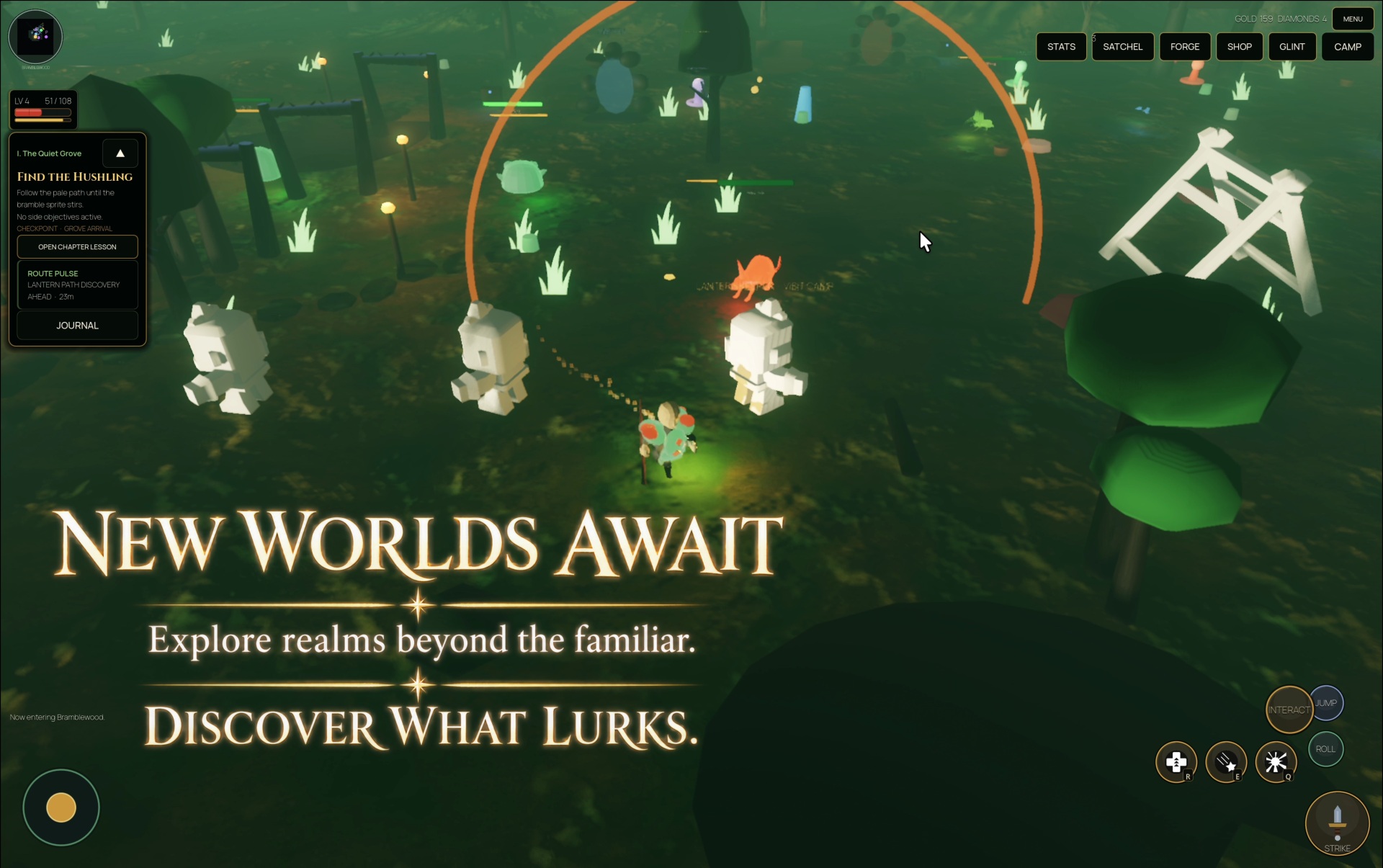
Explore new realms
-

game icon
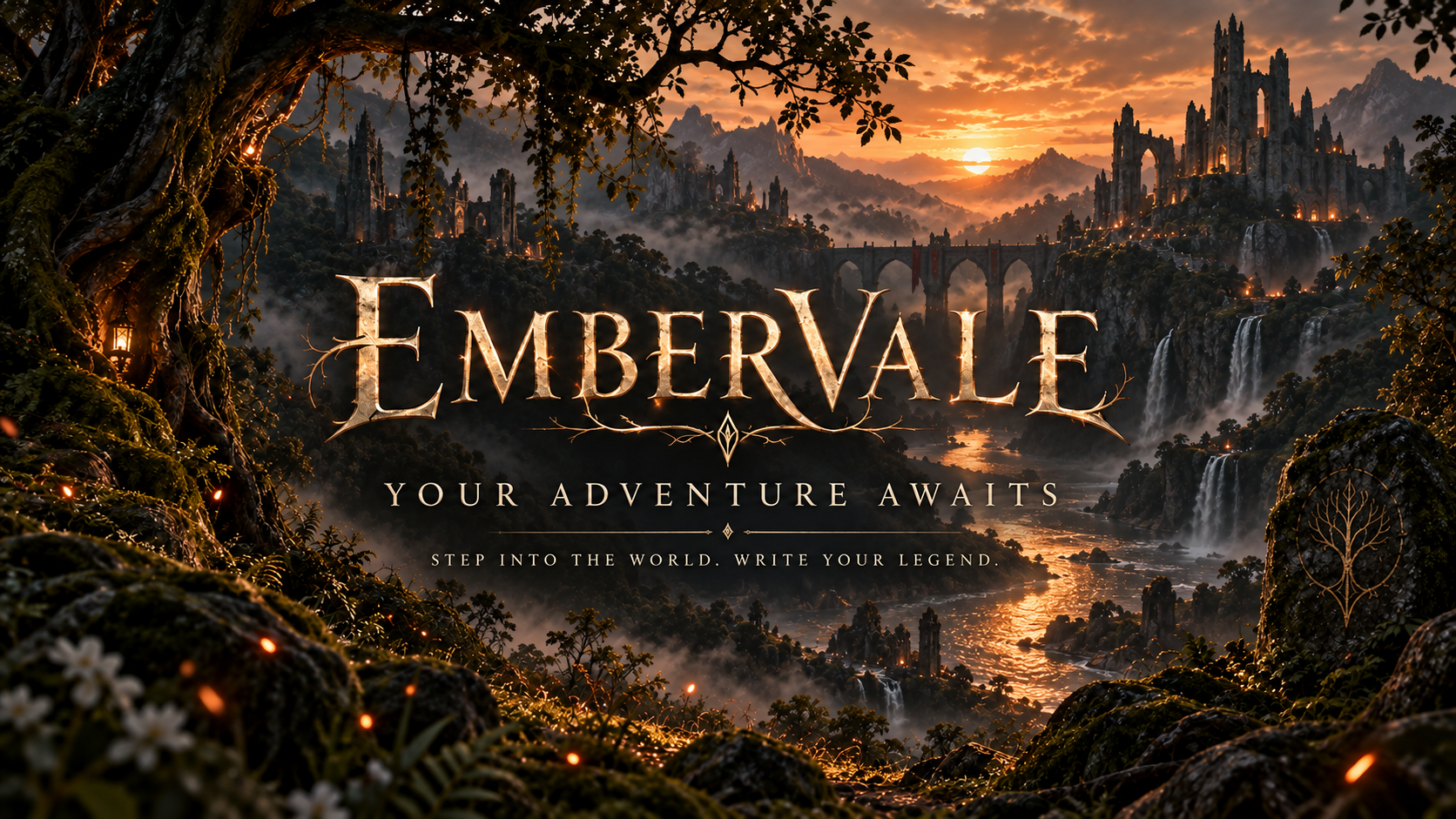

Inspiration
Embervale was inspired by classic dark-fantasy action RPGs and the challenge of creating a meaningful adventure that works well on mobile. We wanted to build a world that feels mysterious and rewarding to explore, while keeping combat readable and responsive on a small screen.
What It Does
Embervale is a stylized dark-fantasy action RPG built for Android and desktop. Players explore five distinct realms, fight enemies and bosses, gather materials, discover new locations, upgrade equipment, and forge weapons from blueprints.
The project includes:
- Five unique realms: Whispergrove, Bramblewood, Mistfen, Heartwood, and Moonfen
- Action combat with dodging, skills, enemy telegraphs, elites, and bosses
- Gathering, inventory, equipment, crafting, and blueprint-based forging
- A discovery codex and player-following minimap
- Portrait-oriented mobile controls and safe-area-aware UI
- Scalable visual quality settings for different devices
- A hosted RevenueCat and Stripe purchase flow designed to keep sensitive provider credentials server-side
How We Built It
The game was built with Godot 4.7 using typed GDScript. We created reusable systems for combat, world streaming, terrain materials, enemy behavior, bosses, inventory, forging, quests, UI, audio, and quality scaling.
The environment uses stylized physically based materials, procedural terrain details, realm-specific color palettes, landmarks, waterways, and exploration paths. Gameplay systems are data-driven so that weapons, enemies, rewards, and realm content can be expanded without rewriting the core systems.
Because Android is the primary target, the project uses capped visual effects, scalable particles, limited transient lights, optimized materials, portrait UI layouts, and touch-friendly interaction controls.
Challenges
One of the biggest challenges was balancing visual quality with mobile performance. Lower quality settings needed to reduce presentation cost without changing damage, collision, gameplay timing, or telegraph readability.
Another challenge was designing a complete RPG loop that feels understandable:
- Explore a realm
- Discover enemies and resources
- Gather materials
- Compare equipment
- Forge an upgrade
- Return to the world with new abilities and goals
We also had to make crafting transactional and save-safe, preventing duplicate rewards or repeated resource deductions when the player interacts multiple times, dies, reloads, or travels between realms.
What We Learned
We learned that mobile game design requires more than simply shrinking a desktop interface. Controls, menus, touch targets, safe areas, combat feedback, and text hierarchy all need to be designed around short play sessions and limited screen space.
We also learned the importance of separating gameplay contracts from visual effects. Combat must remain fair and readable even when particles, fog, lights, and other effects are reduced for performance.
What's Next
The next stage is to polish the complete 20–30 minute route from the Whispergrove introduction through the Bramblewood expedition, elite encounter, boss battle, equipment upgrade, and visible realm unlock.
Future work will focus on Android device profiling, audio polish, stronger realm identities, quest progression, accessibility settings, and additional weapons and boss encounters.

Log in or sign up for Devpost to join the conversation.