-
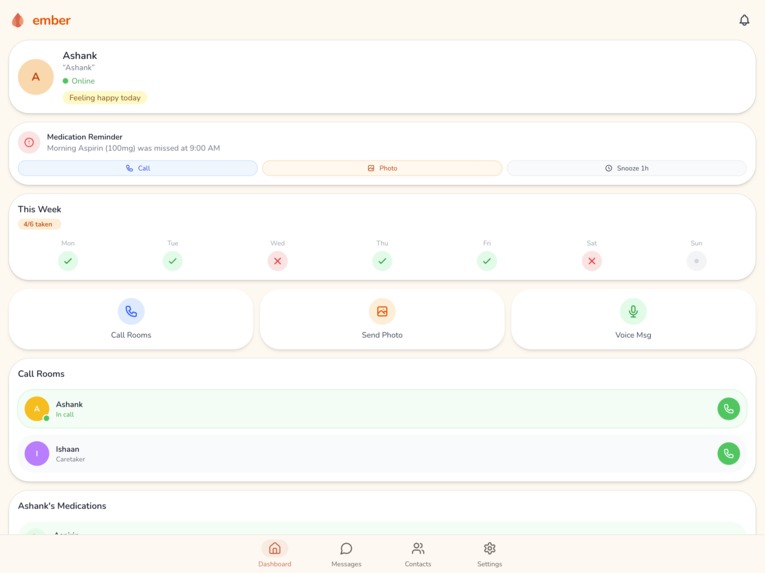
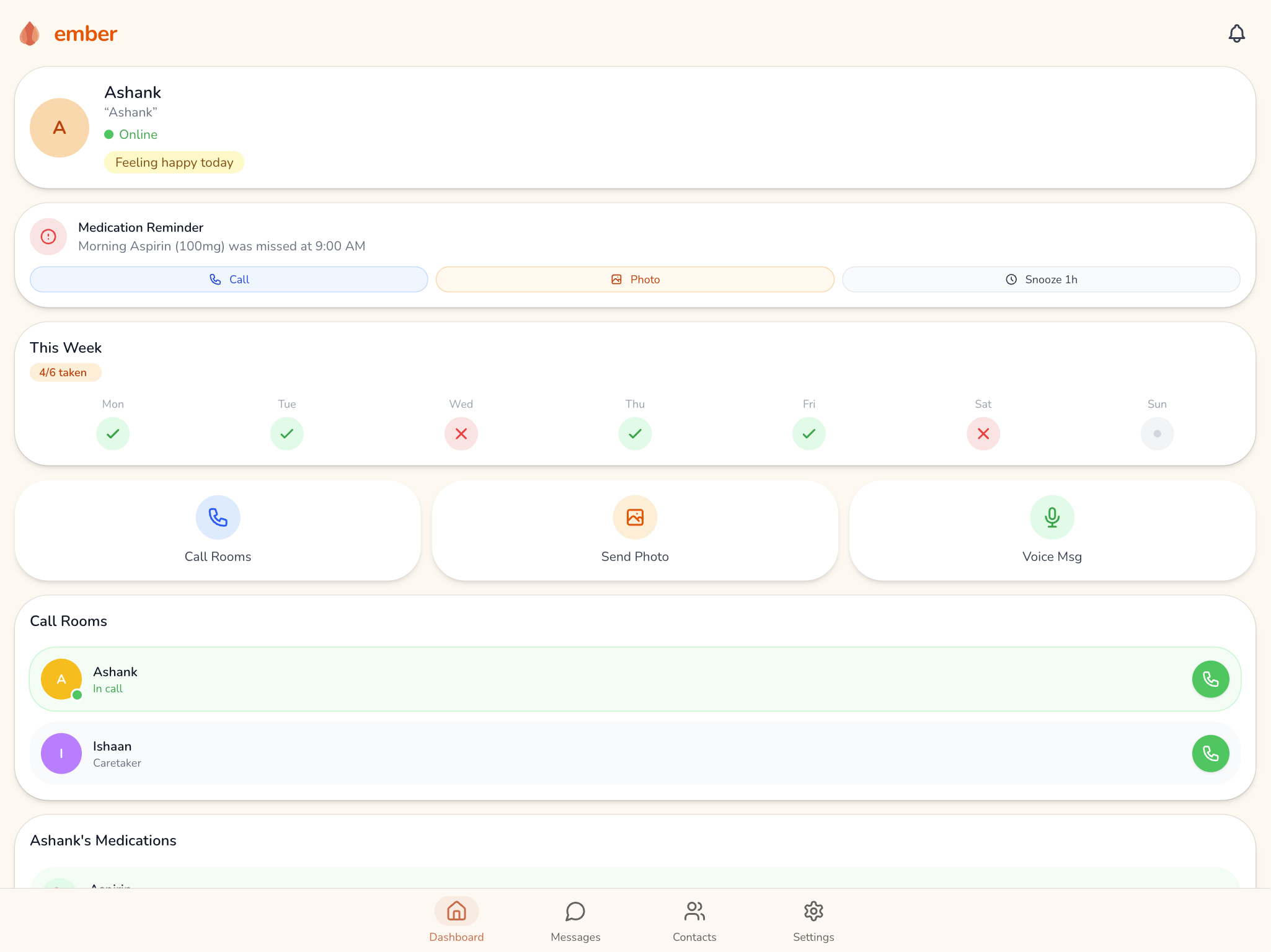
Dashboard (Family)
-
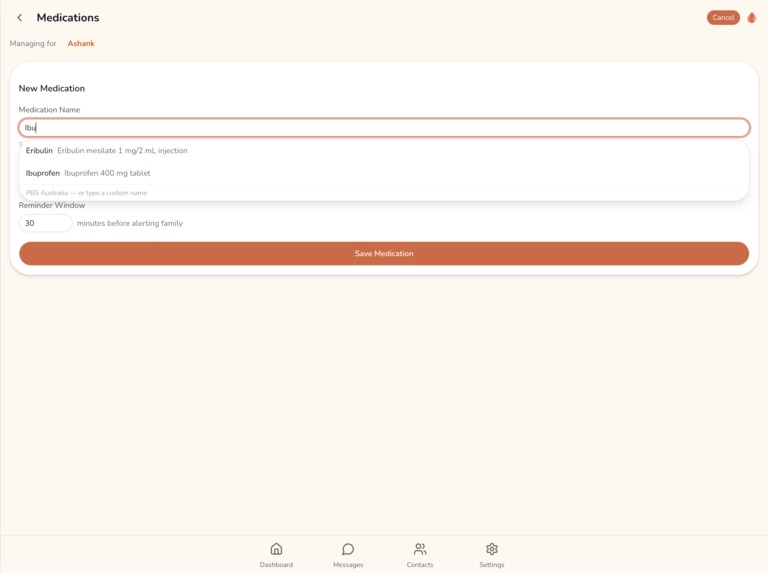
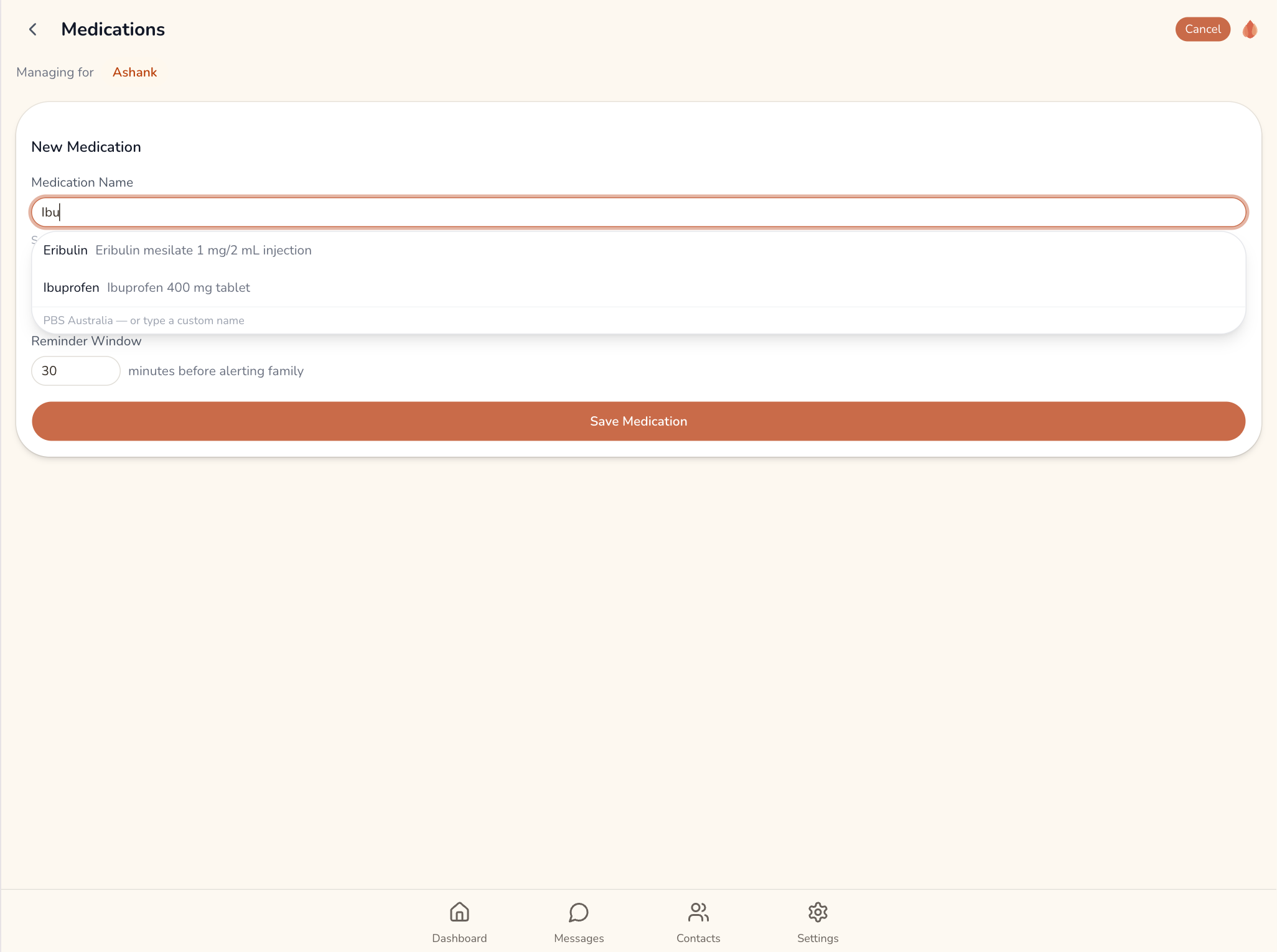
Adding medication (Family)
-
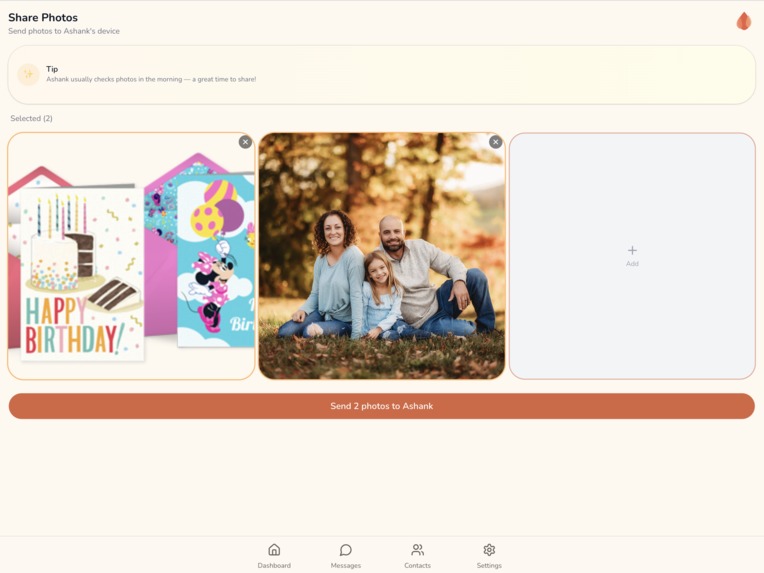
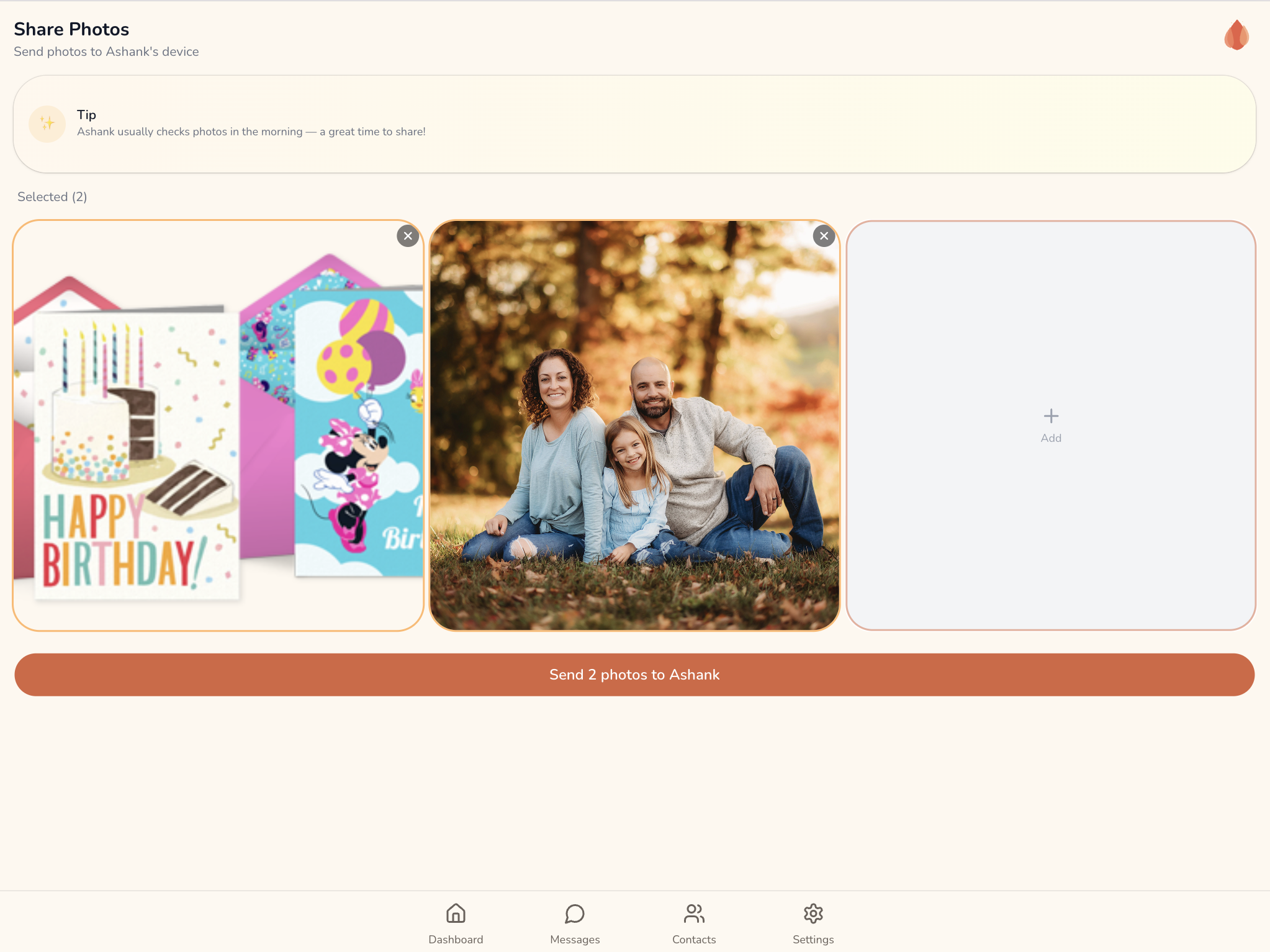
Sending photos (Family)
-
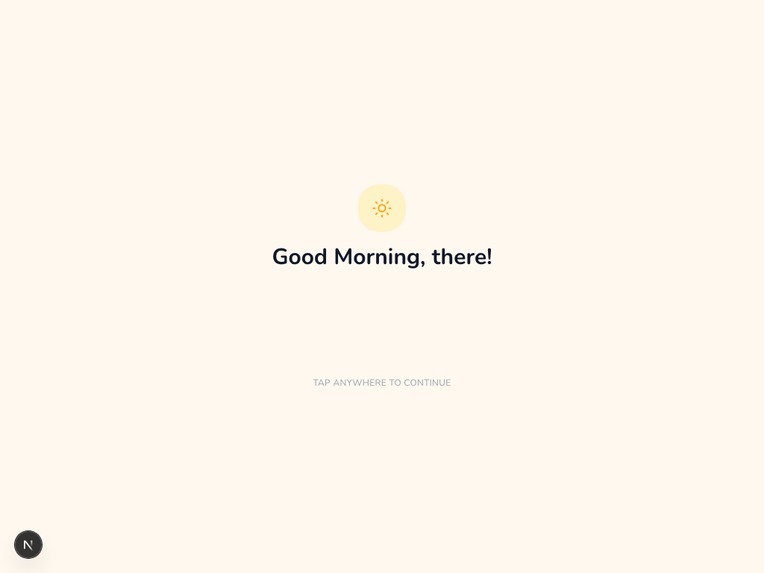
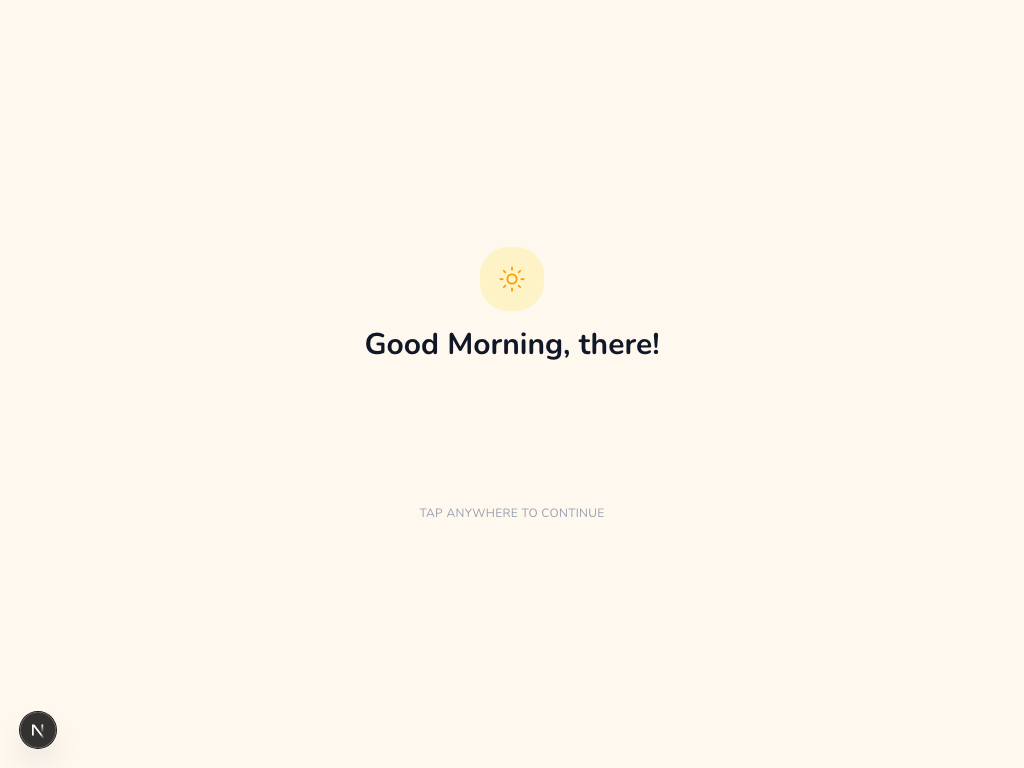
Morning greetings (Senior)
-
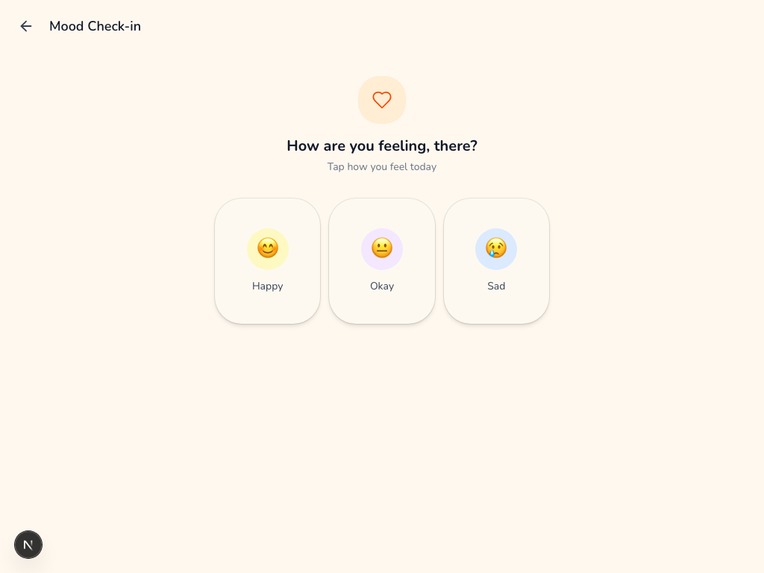
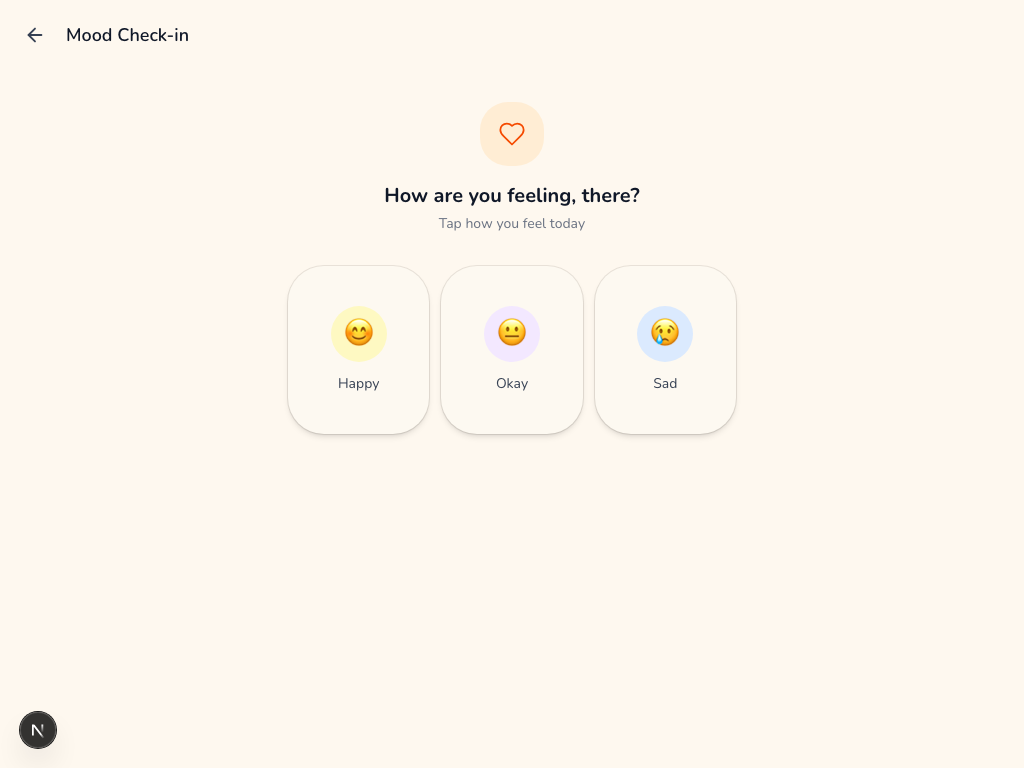
Mood-check (Senior)
-
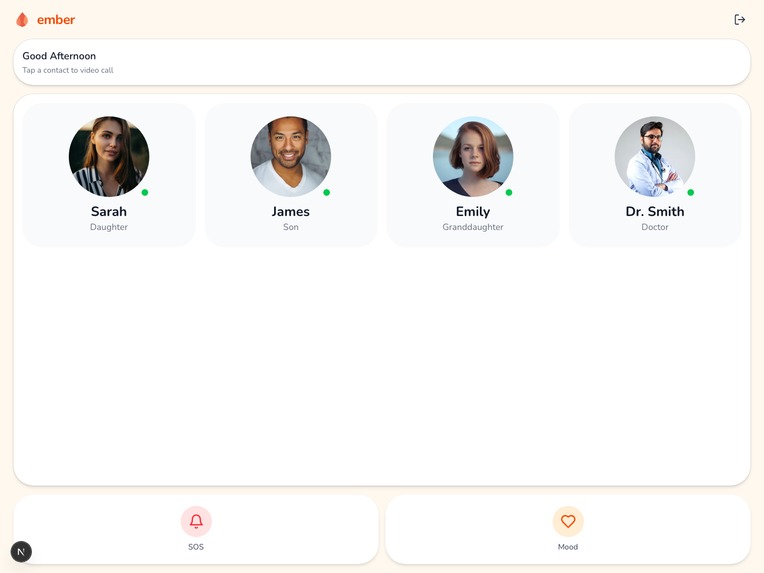
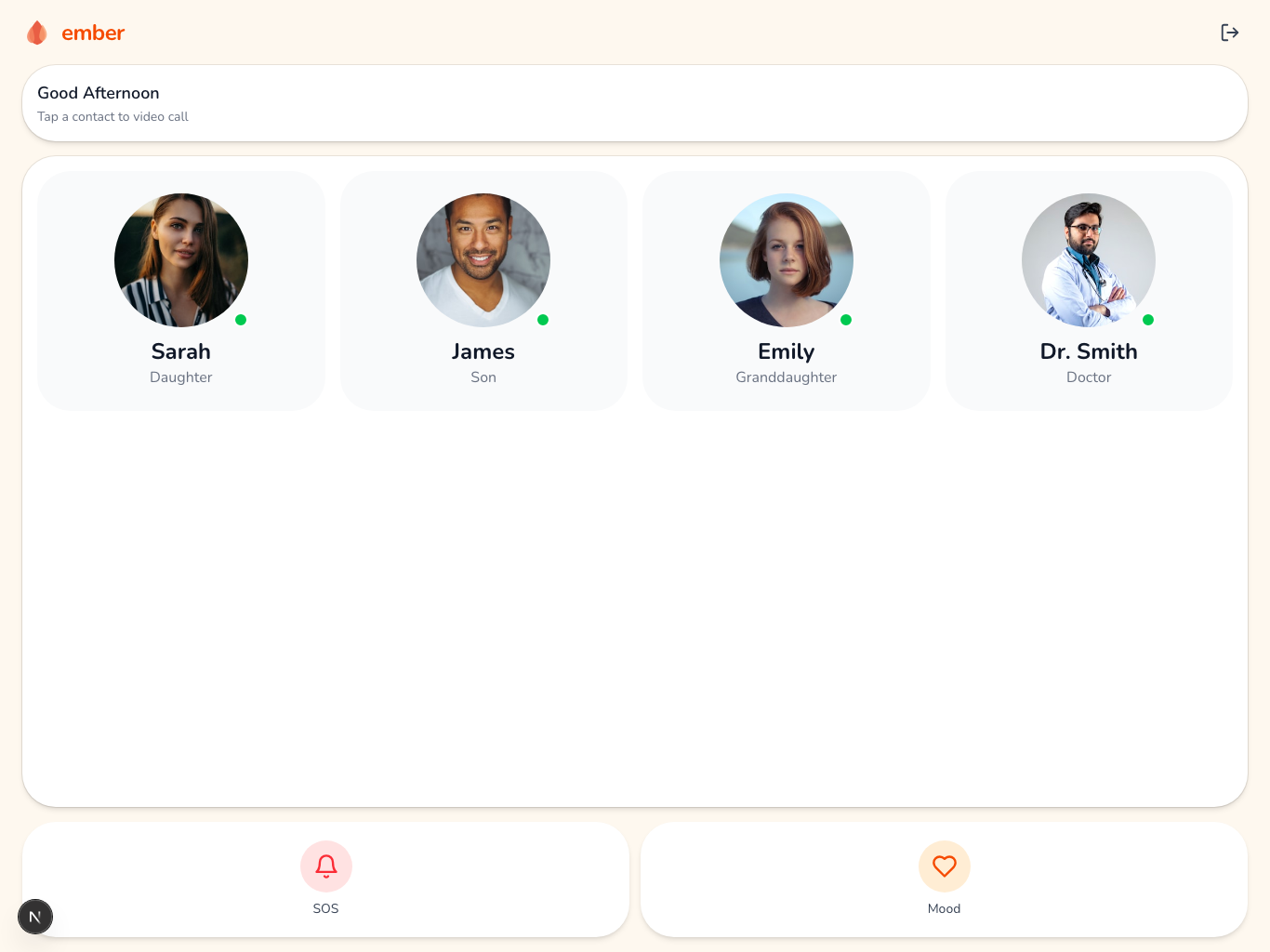
Contacts overview (Senior)
Inspiration
Every one of us has a grandparent, a parent, or a loved one who lives alone - someone who lights up when family calls, but who finds the technology to do so overwhelming. We watched our own families struggle: a grandmother who couldn't work out how to unmute herself on Zoom, a grandfather who missed his medication because no one was there to remind him, a family separated by language who could never quite bridge the gap on a video call. We asked ourselves a simple question: what if technology got out of the way entirely? That was the spark for Ember, named for the quiet, persistent warmth of an ember that never quite goes out. Not a blazing fire that demands attention, but a steady glow that's always there.
What it does
Ember is two products fused into one: For the senior: a tablet app so simple that if you can tap a face, you can make a call. There are no menus, no settings. Just a grid of the people you love. One tap and you're talking. For the family: a companion app that acts as a remote control for everything. Family members handle all the complexity so their loved one never has to. Beyond calling, Ember's AI companion (powered by Claude) knows the senior by name, tracks their daily routine, and delivers warm, personalised reminders:
"Good morning Margaret! Time for your morning tablet. Mary sent you a lovely photo yesterday, would you like to see it?"
When something feels off, a missed medication, a lonely mood check-in, two days without a call, Ember quietly nudges the family:
"Margaret might appreciate a call, she mentioned feeling a bit lonely."
And for families separated by language, Ember provides real-time bidirectional call translation, a grandchild speaking English and a grandmother speaking Cantonese can have a natural, flowing conversation, with live subtitles and translated audio on both screens.
How we built it
The frontend of the web app was built with React and Next.js creating a simple UI that could easily be iterated onto. The backend is written in Go, handling call signalling and notification routing. The AI runs on Claude, to power the app's conversational reminders, the mood check-in responses and the family notification/nudge system.
Challenges we ran into
The biggest challenge we encountered was ensuring the senior version of the app was as simplified as possible while also making it recognisable and similar to other messaging platforms. In the end many discussions were made on what features to keep and what features were redundant to the senior side of the app.
Accomplishments that we're proud of
We got live bidirectional translation working in a real video call, with subtitles and audio on both screens. The senior UI was also a good win, creating a simple platform that required very little navigation.
What we learned
We learned a lot about interface creation and designing for an audience with the least technical experience.
What's next for Ember
The PRD roadmap goes well beyond the hackathon MVP. Our immediate next steps:
Voice-only calling: "Call David" with no screen interaction required Health device integration: blood pressure cuffs and glucose monitors auto-logging to the caregiver dashboard GP/Pharmacist portal: healthcare providers update medication schedules directly, closing the clinical loop Memory support: AI helps seniors recall names and faces before family visits Voice biomarker pipeline: passive cognitive health monitoring from call audio, flagging early signs of decline to caregivers and clinicians Scam shield: a whitelist-only communication fortress, protecting seniors from phone and video scams
Longer term, we believe Ember's warm handoff architecture: AI detecting need, routing to human connection, is a model that extends well beyond the home. The same pattern applies to care homes, telehealth, and community support networks. We started with a grandmother who couldn't unmute herself on Zoom. We want to end with a world where that barrier simply doesn't exist.


Log in or sign up for Devpost to join the conversation.