-
-
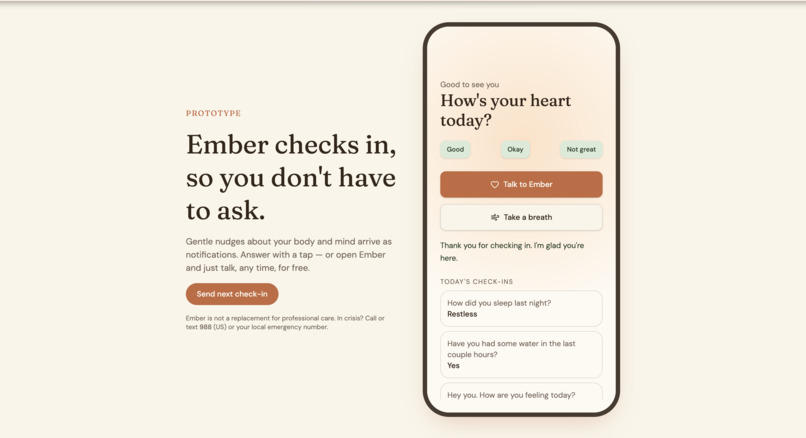
Ember Landing Page (Desktop) - Prototype
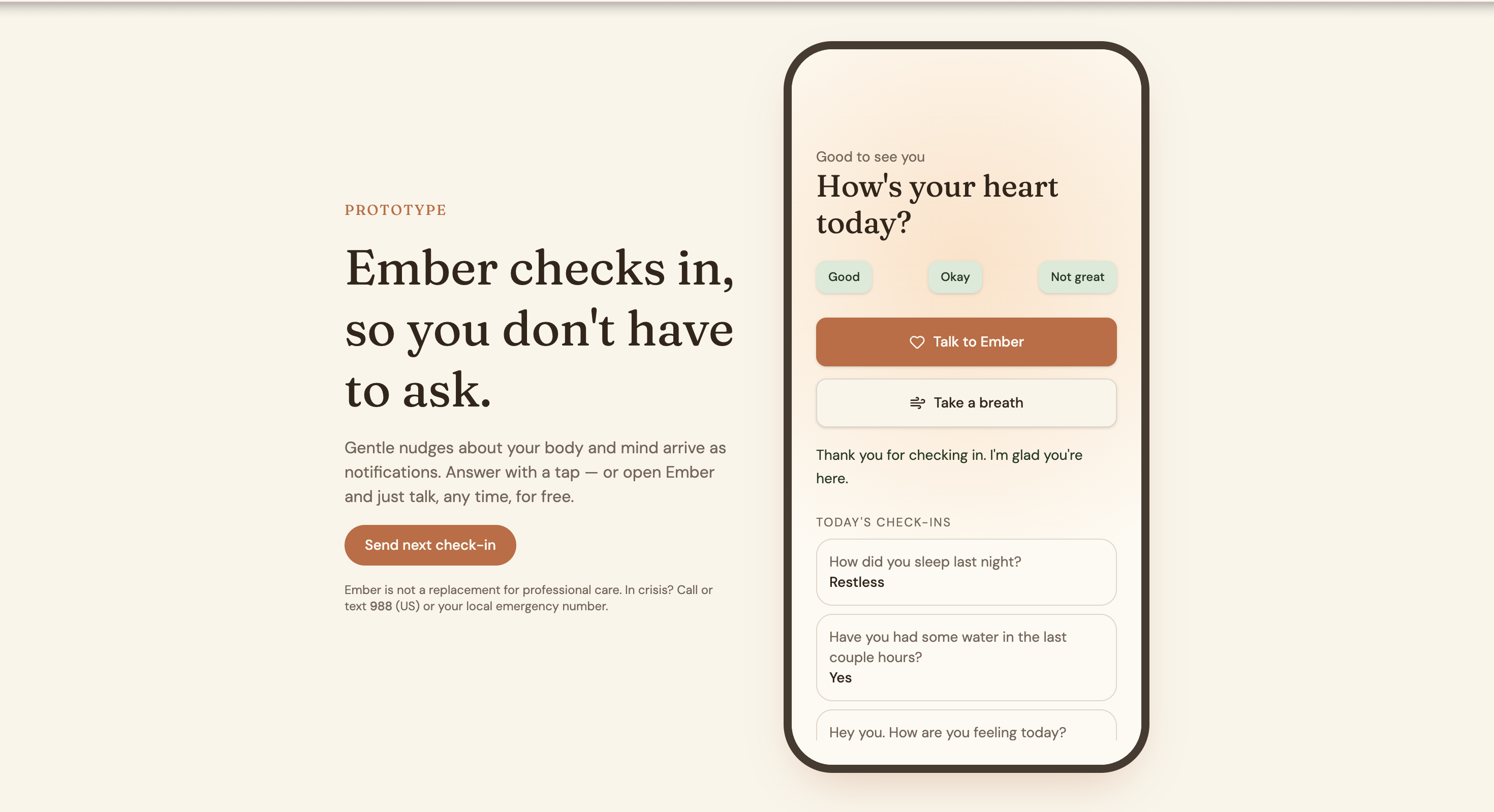
Inspiration
The inspiration for this prototype came from an experience one of our teammates had with talking to AI for consolement. We decided to embark on creating a whole new AI dedicated to the field of mental health therapy.
What it does
Ember is a mobile-first AI companion that checks in on your mind and body, so you don't have to remember to ask for help.
- Gentle check-ins arrive as notifications, with questions about both mental and physical wellbeing (stress, posture, eye strain, water).
- Answer with one tap. Each notification has Rough / Good / Okay buttons, so you can reply without even opening the app.
- Tap Rough and Ember reaches back right away, offering to talk. Tap the notification itself to open a chat with the AI.
- It remembers what matters. If you mention an exam or a hard conversation, Ember checks back in at a sensible time. The lock-screen text stays generic ("Thinking of you...") so the details stay private inside the app.
- It adapts to you. It learns when you tend to reply, backs off if you dismiss it, checks in a little more often after rough stretches, and stays quiet during your chosen quiet hours.
- Safety comes first. Crisis language is caught before the AI responds and gets a supportive reply with crisis resources, and helpful links only come from a curated list. Ember is a friend, not a therapist, and it never diagnoses.
- A breathing exercise and a "Today's check-ins" log round out the app.
How we built it
- Backend: Python with FastAPI and SQLite. Chat runs on Claude (Sonnet 5.5) through the Anthropic API, with a system prompt that sets a warm, short, non-clinical voice and returns a structured mood estimate, risk level, and follow-up suggestions.
- Notifications: Web Push (VAPID) with a service worker, delivered through the phone's own push system. A scheduler on the server sleeps until the next check-in is due, so the phone does nothing in the background between notifications, which keeps battery use low.
- Frontend: An installable mobile web app (PWA) in plain HTML and JavaScript, with no frameworks. We prototyped Ember's look and flow in Lovable and rebuilt it on top of our own backend so it could use real notifications.
- Safety layer: A keyword check runs before the model, the model rates risk on every message, and a curated resource list prevents invented links.
Challenges we ran into
We had some trouble with creating the notifications aspect and overall finding a niche for our app.
- Push notifications need HTTPS, and iPhones only support them after the app is added to the Home Screen. iOS also doesn't show notification buttons.
- Phones don't let web apps see what you're doing in other apps, so we dropped our original "detect when you're focused" idea and replaced it with adaptive timing based on how you respond.
- Balancing a helpful, friendly tone with the safety needs of a sensitive topic.
Accomplishments that we're proud of
- A working end-to-end prototype: notification, one-tap reply, and AI chat.
- An energy-conscious design: no polling or background work on the phone.
- Privacy-minded details, like keeping follow-up topics off the lock screen and letting users delete their data.
- A safety-first approach that doesn't depend on the AI model alone.
What we learned
- Notifications and timing matter as much as the AI itself. A check-in at the wrong moment feels like an interruption instead of care.
- Efficient design means doing less: letting the operating system and a sleeping server do the work.
- Mental health tools need guardrails from the start, not added later.
What's next for Ember
- Evaluate Ember's replies against clinician-written standards, such as the recently released MentalHealthBench, and improve them based on the results.
- Long-term memory across days, so Ember can notice patterns over time.
- A mood history screen, a settings screen, and a way to turn off check-ins in the app.
- Crisis resources for countries beyond the US.
- A native iOS and Android app for the best battery life and notification support.
- User testing with real people and review by mental health professionals before any real-world use. ## What's next for Ember: The App that Keeps your Flame Alive


Log in or sign up for Devpost to join the conversation.