Inspiration
As climate change hits closer to home, Californians say goodbye far too early to the things they hold dear. Our national parks face similar trials as fires take advantage of their vulnerable state caused by global warming. As such, conservation efforts are needed more than ever and we aimed to build a product that would get people to visit the national parks. In the digital age where everything is available to be held at the palm of our hand, we often overlook the magnitude of these vast landscapes and what they do for our planet. We want to bridge the gap between adventure and modern technology.
What it does
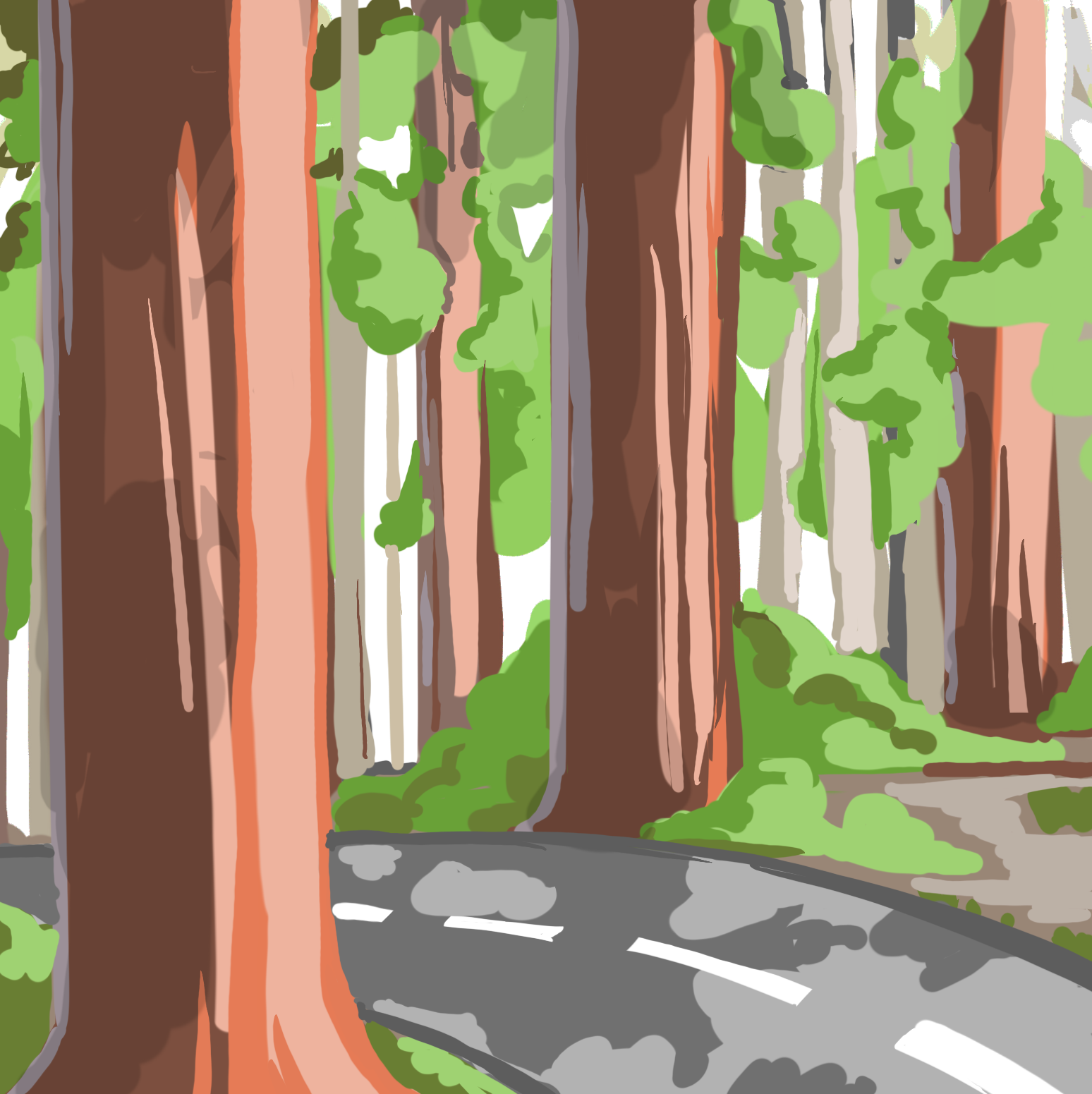
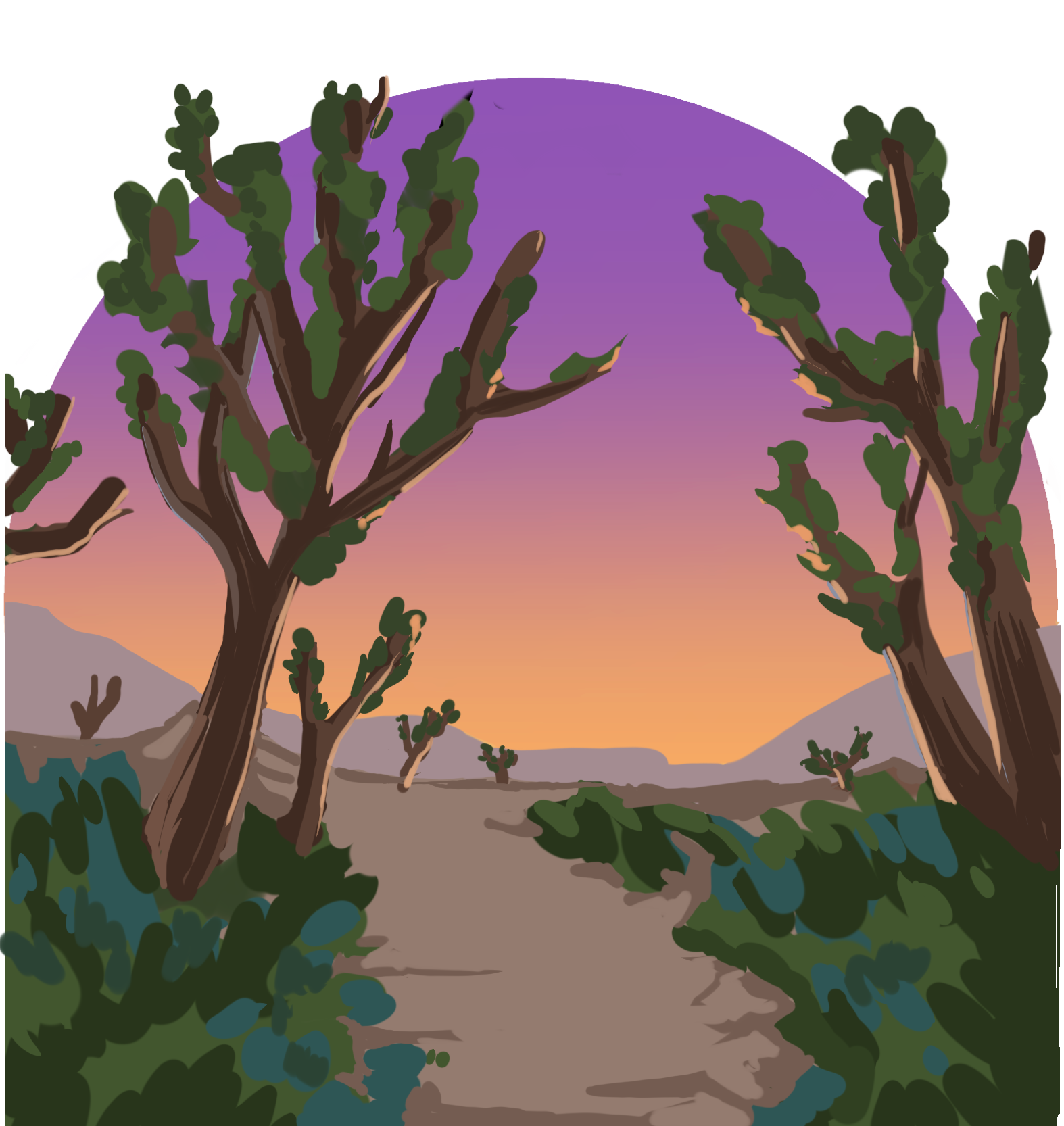
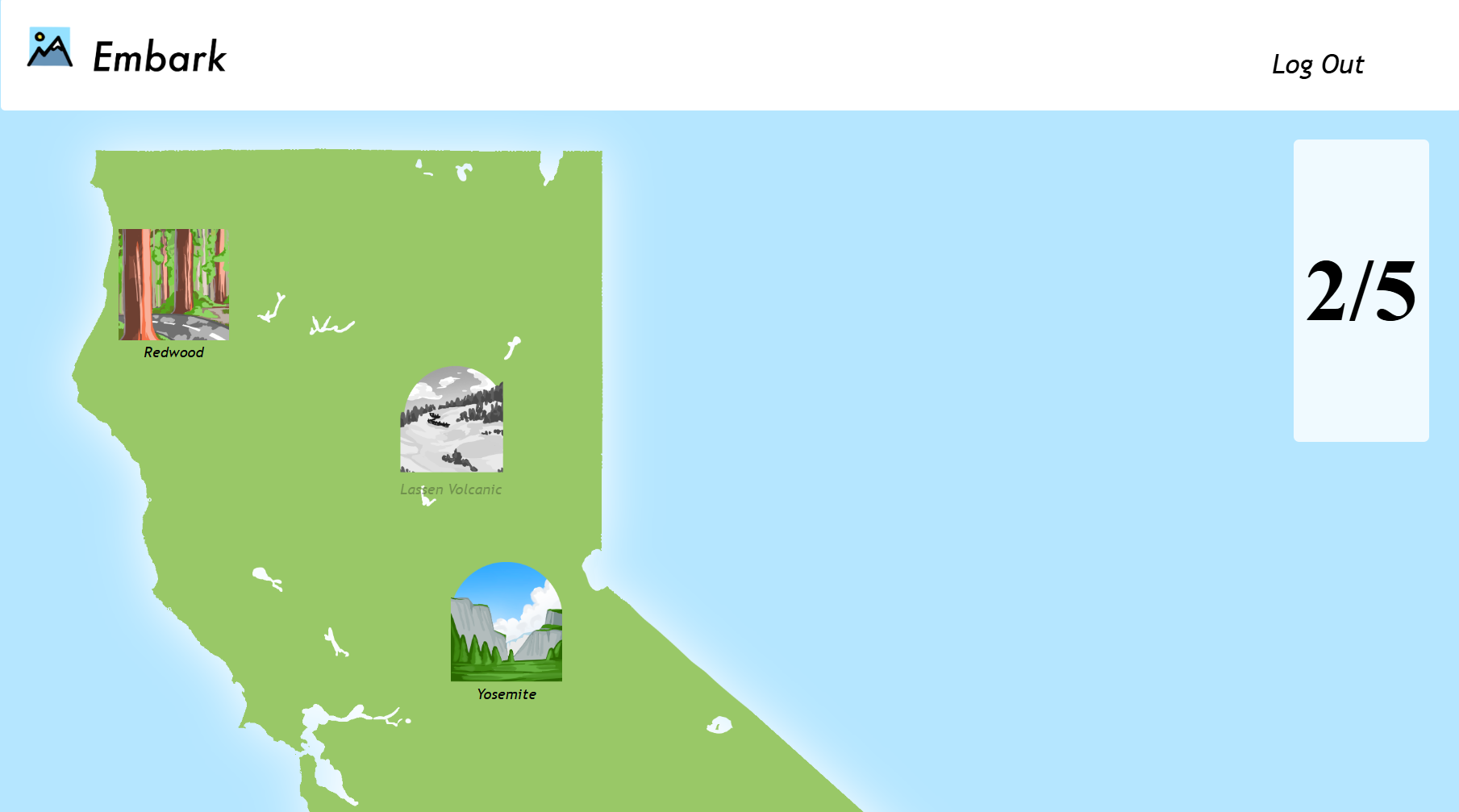
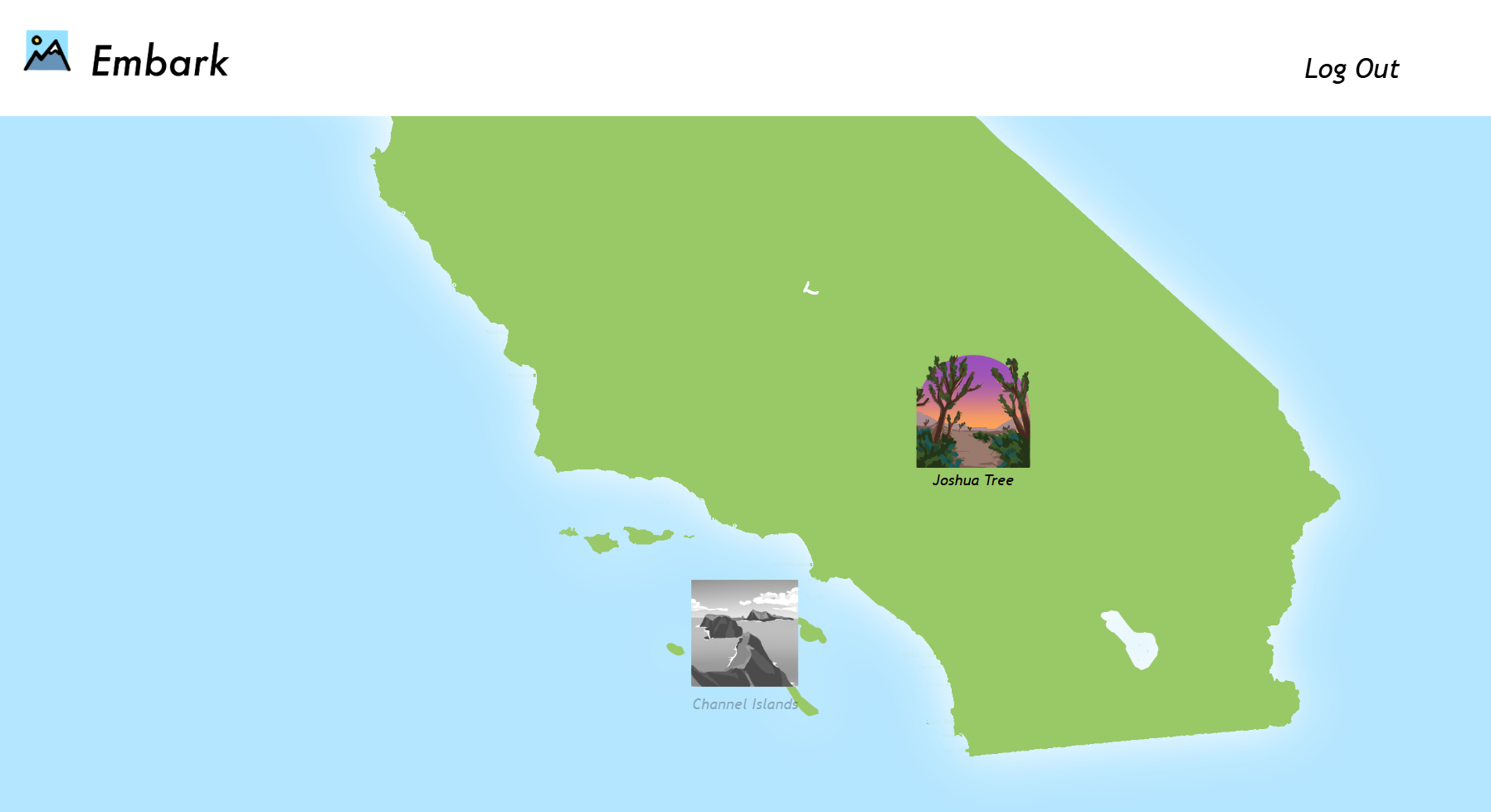
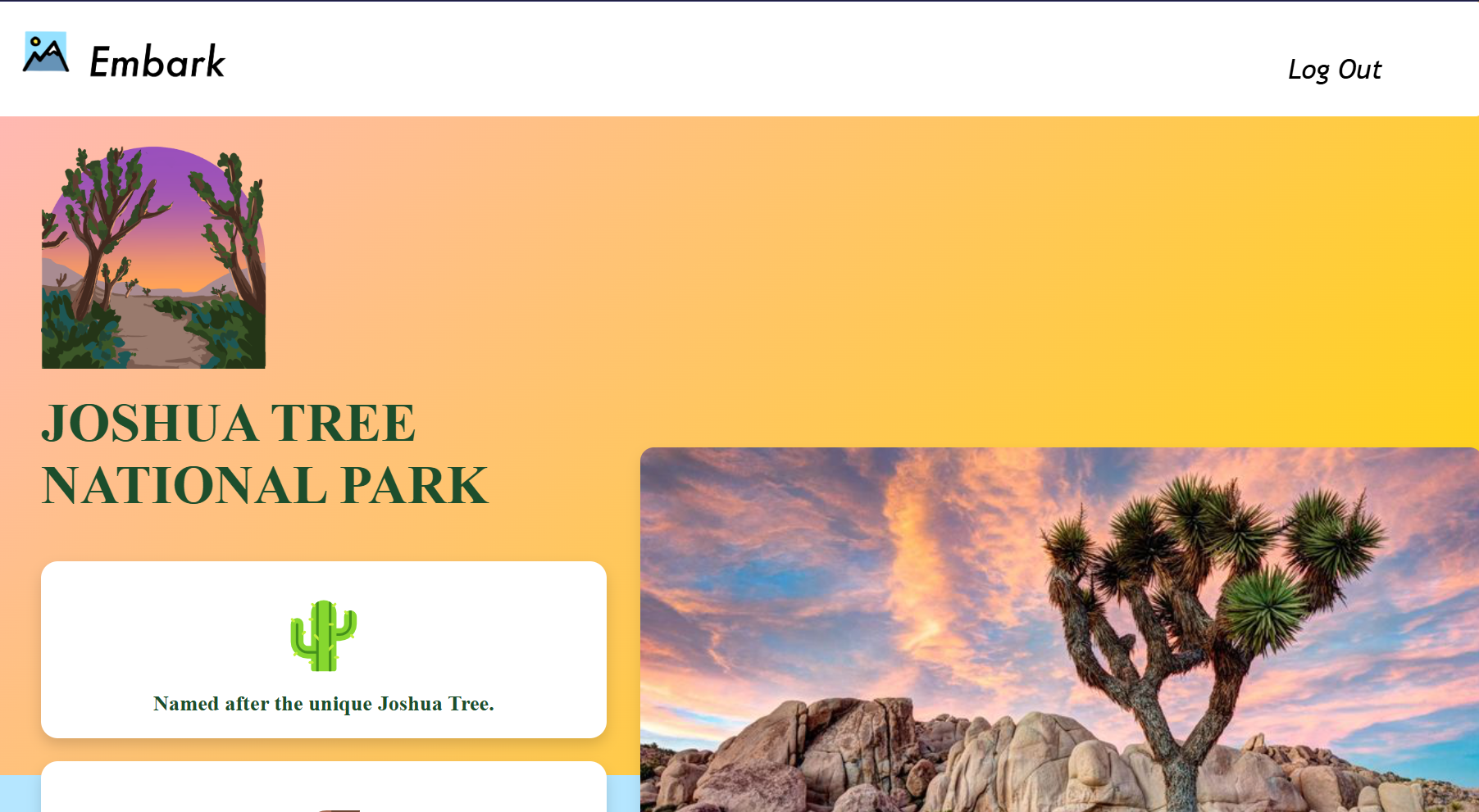
Embark encourages users to explore California’s national parks while learning about how fires have devastated natural preserves. Upon login, users are shown a map of California with stamps for all the national parks. As users scan the QR codes in the park, they get access to a journals page, where they can learn more about the park and learn how fires and climate change have ravaged our national parks.
How we built it
For the frontend, we used SvelteKit. Our frontend consists of a login page, a journal page, and a QR code page. For the backend, we used the Go standard library to interface with Firebase user authentication and Firestore database to store individual user data and the states of the parks they visited.
Challenges we ran into
For the frontend, we have resolved the issue of icon misalignment caused by browser zooming and resolved the issue with the display size of the banner. Since the backend team was learning Go on the fly, the unique syntax, features, and boilerplate of the language posed significant obstacles. However, as the API did not require much complexity, we had more than enough time to figure it out. One of the main selling points of the web application was the feature of scanning QR codes to unlock parks. However, we were not only unable to self host successfully but also unable to find practical and functional hosting services. We could not use our mobile phones to access the frontend, so we had to make do with some strategies involving the imagination.
Accomplishments that we're proud of
The frontend team learned SvelteKit and implemented a full frontend in this new framework, and were able to successfully troubleshoot the multitude of problems that we faced. SvelteKit is relatively new so not very highly supported, so the lack of documentation made it difficult to fix our problems. However, we learned a lot by debugging and ultimately became better programmers.
What we learned
The front-end group challenged themselves by learning a new framework, while the back-end group took on the challenge of learning a new programming language. Throughout the project, we encountered many technical issues, but we tackled them through our own efforts. On the back end, working with Go introduced us to its unique approach to error handling, emphasizing explicit error checks rather than exceptions. We also became familiar with best practices for handling HTTP requests, ensuring proper status codes, and structuring responses according to web standards. Additionally, we deepened our understanding of web architecture, designing a system that efficiently managed routing, data handling, and scalability.
What's next for Embark
Our next steps for Embark is to cover ALL national parks in USA as well as present QR codes at Vista Points within the park, so that users are encouraged to hike around the park and collect even MORE stamps! At the same time, we hope to create more interactive figures in this project future to encourage people to visit national parks and inspire more interest in nature.


Log in or sign up for Devpost to join the conversation.