
Inspiration
The journey began in February 2025. You see, every year on January 1st I used to write myself a letter scheduled to be delivered 1 year later. I used a well known website for this - it used to be free (at least for the basic use - I never used file attachments or any of the fancy features). Then, they introduced a subscription, and I had to pay $9/year to write a single email per year. I didn't want to pay subscription for this. And after some time I decided to build my own app for this purpose. It went live in March 2025, and to this day over 150,000 users have used it. This mobile app was the natural next step in our journey.
What it does
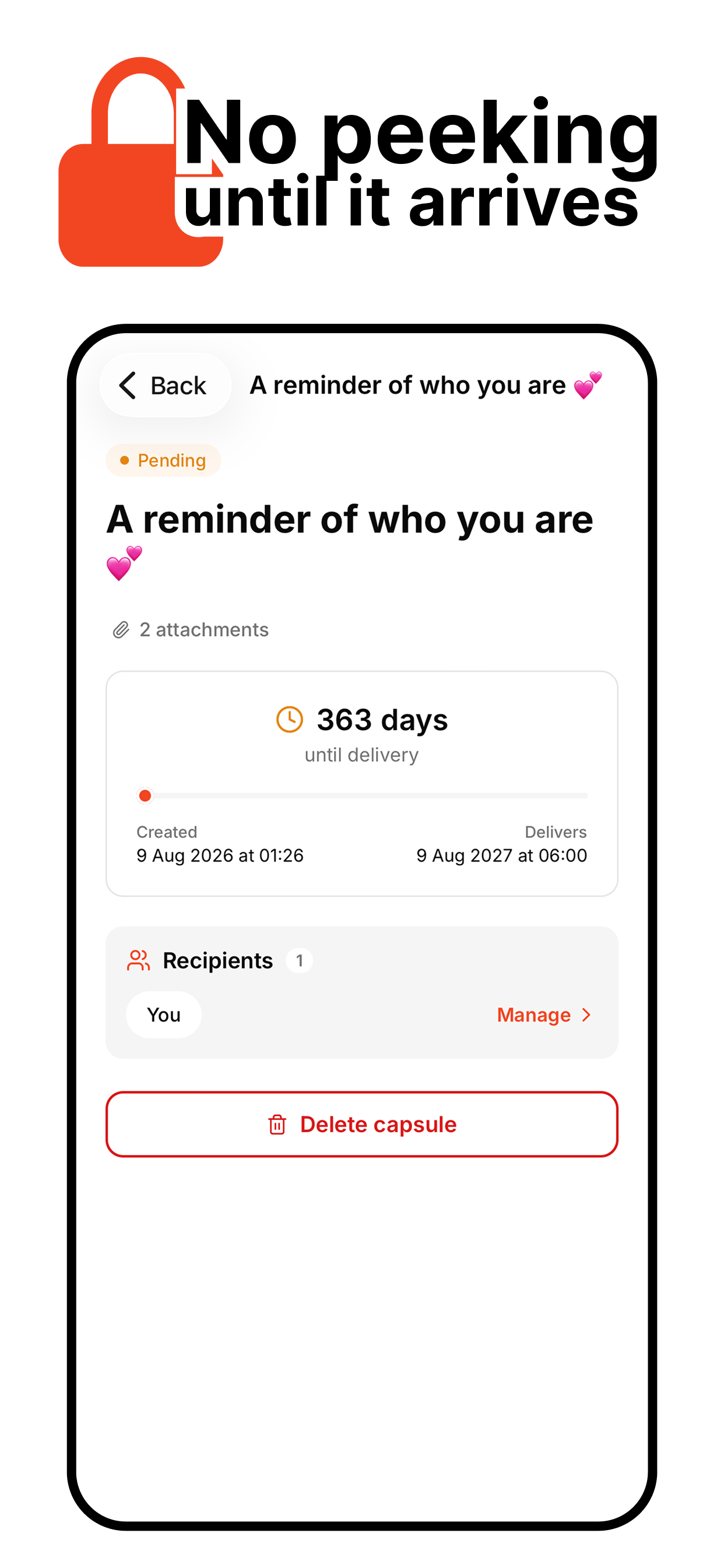
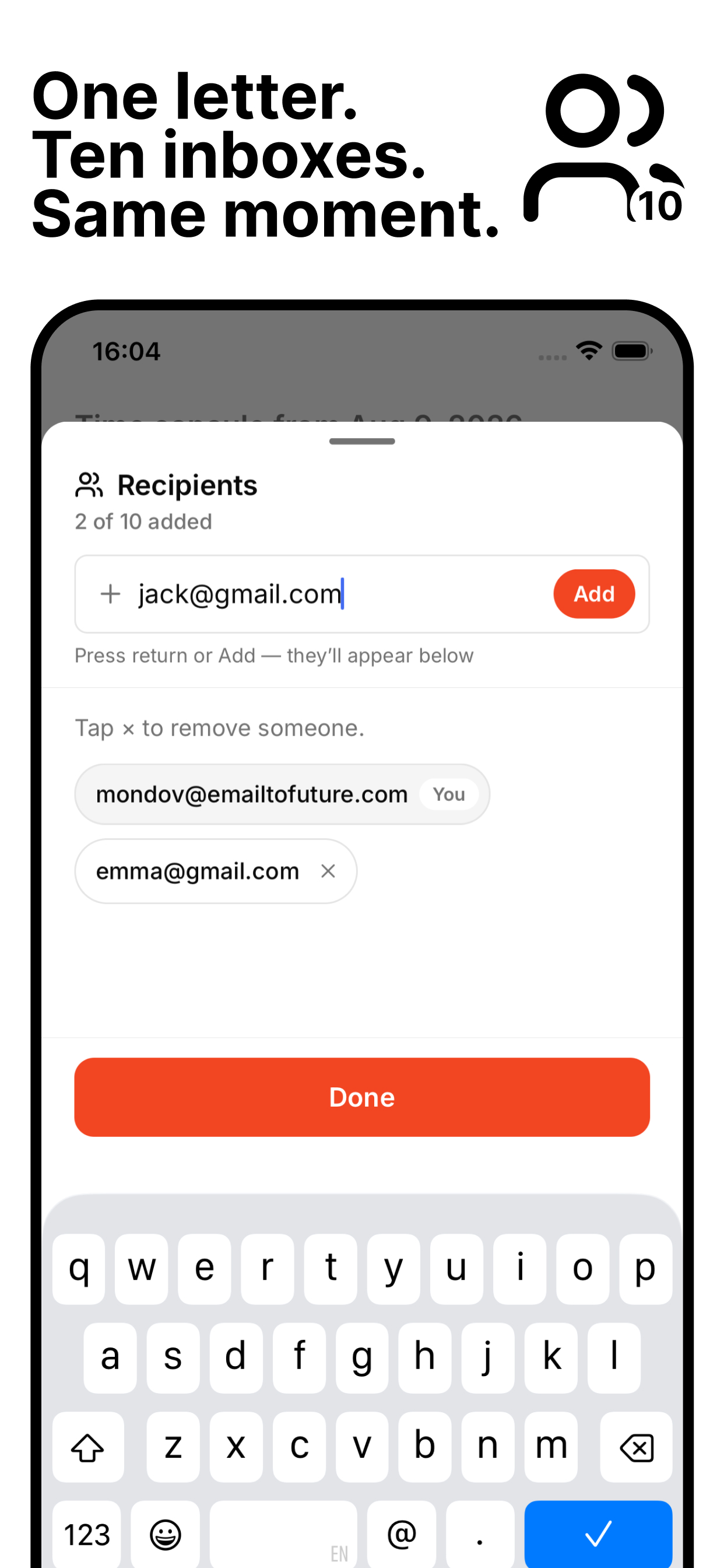
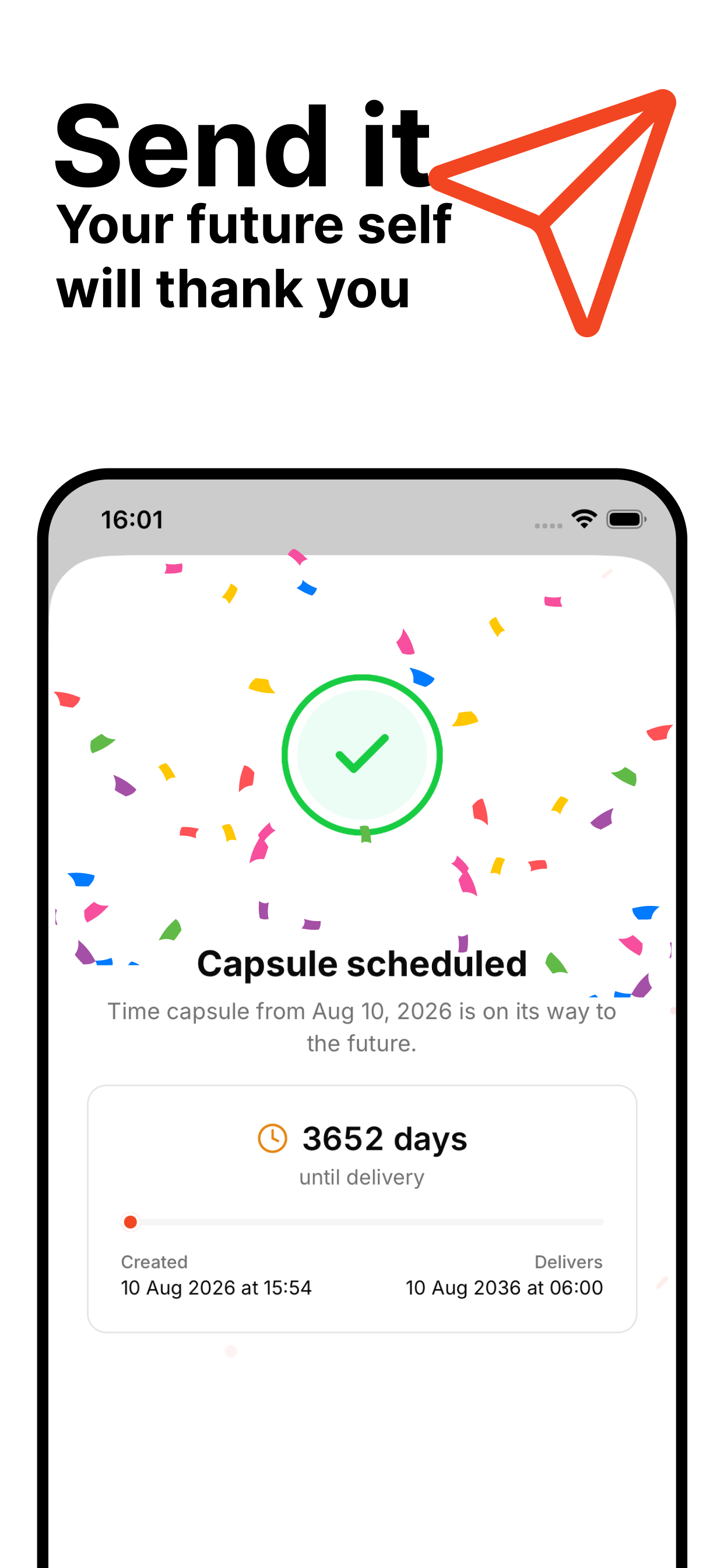
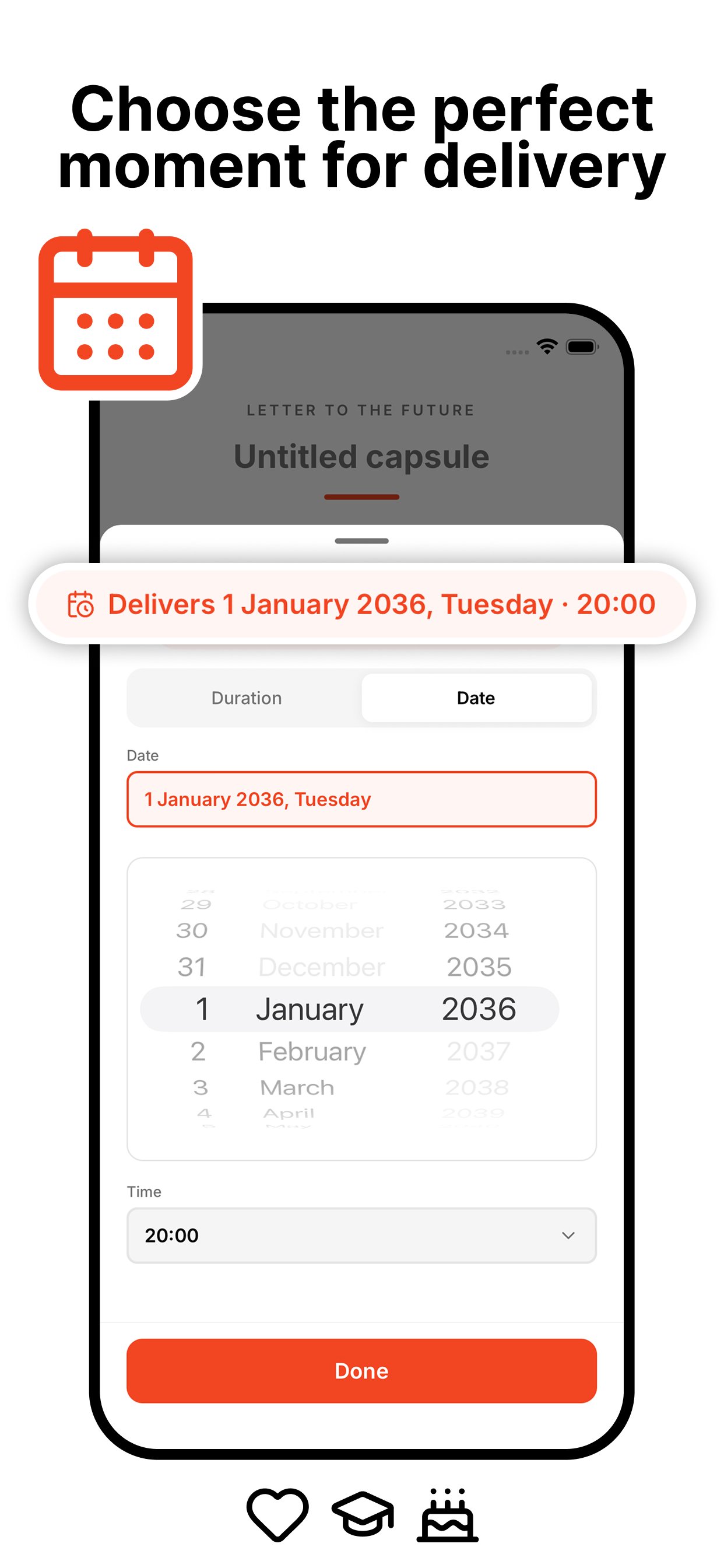
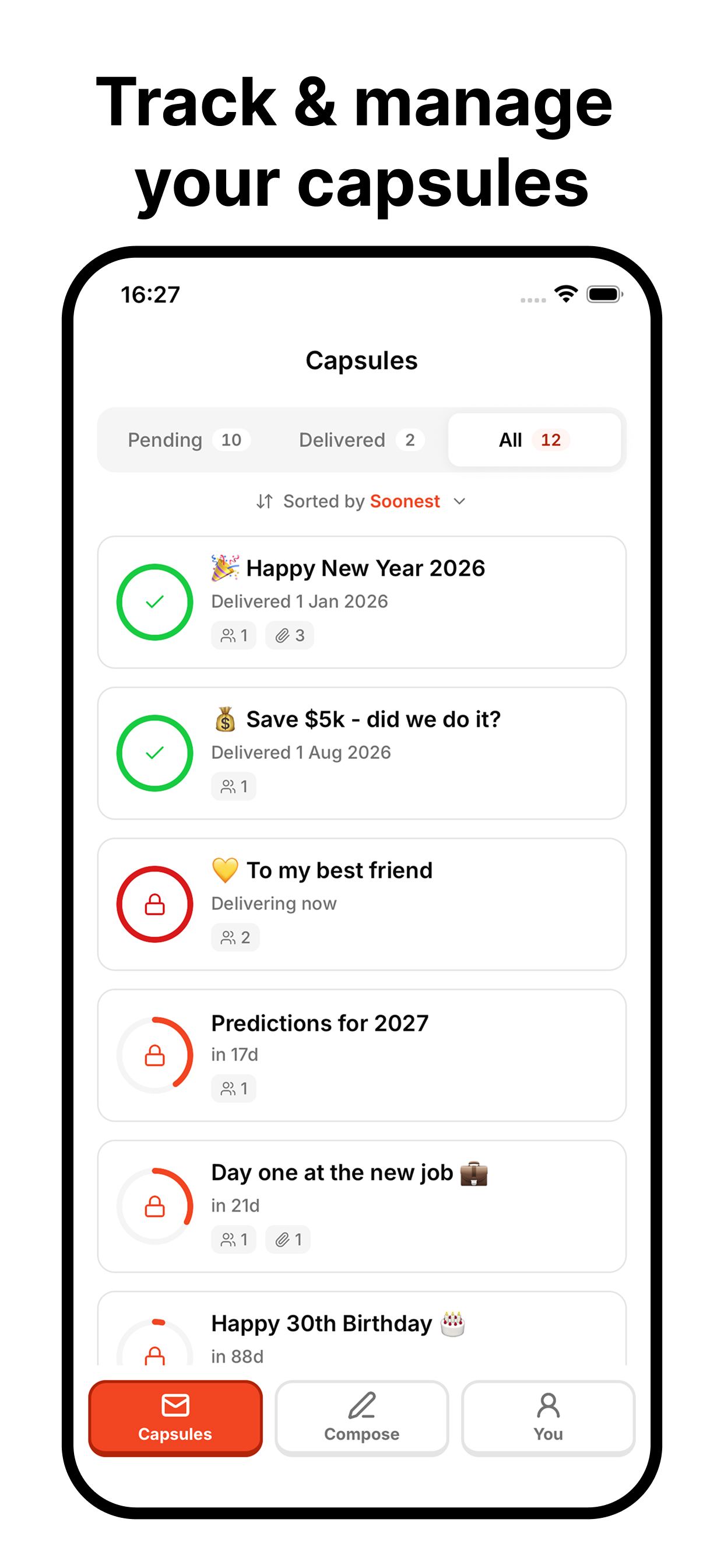
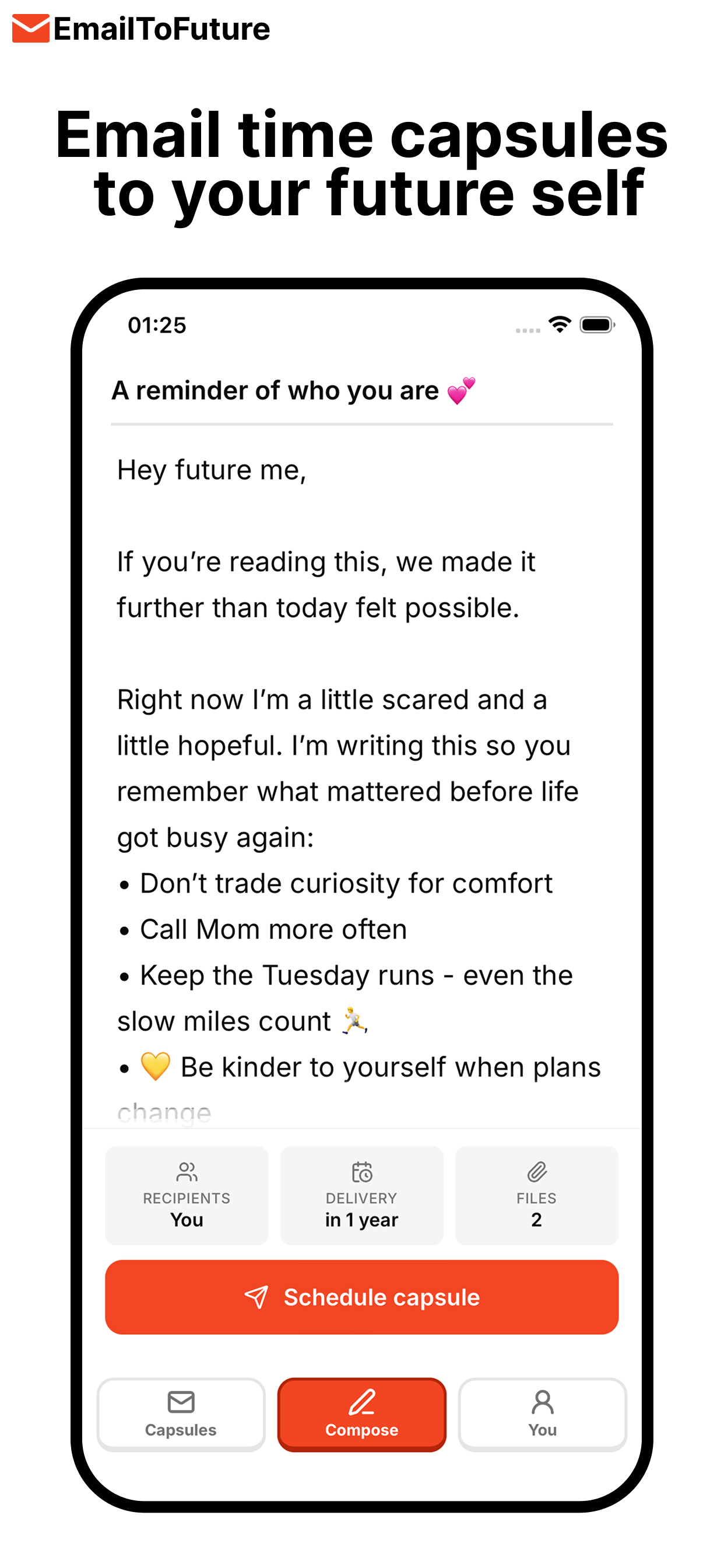
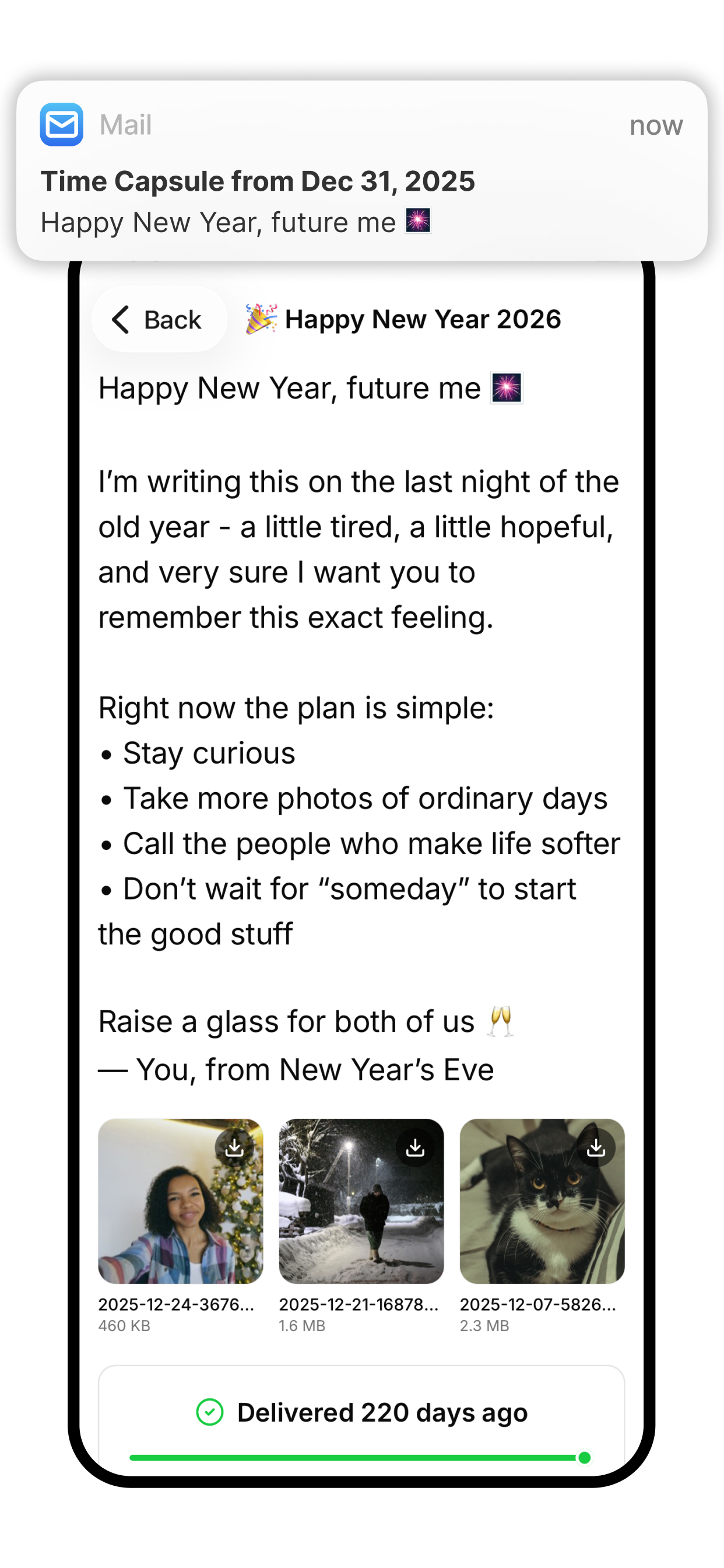
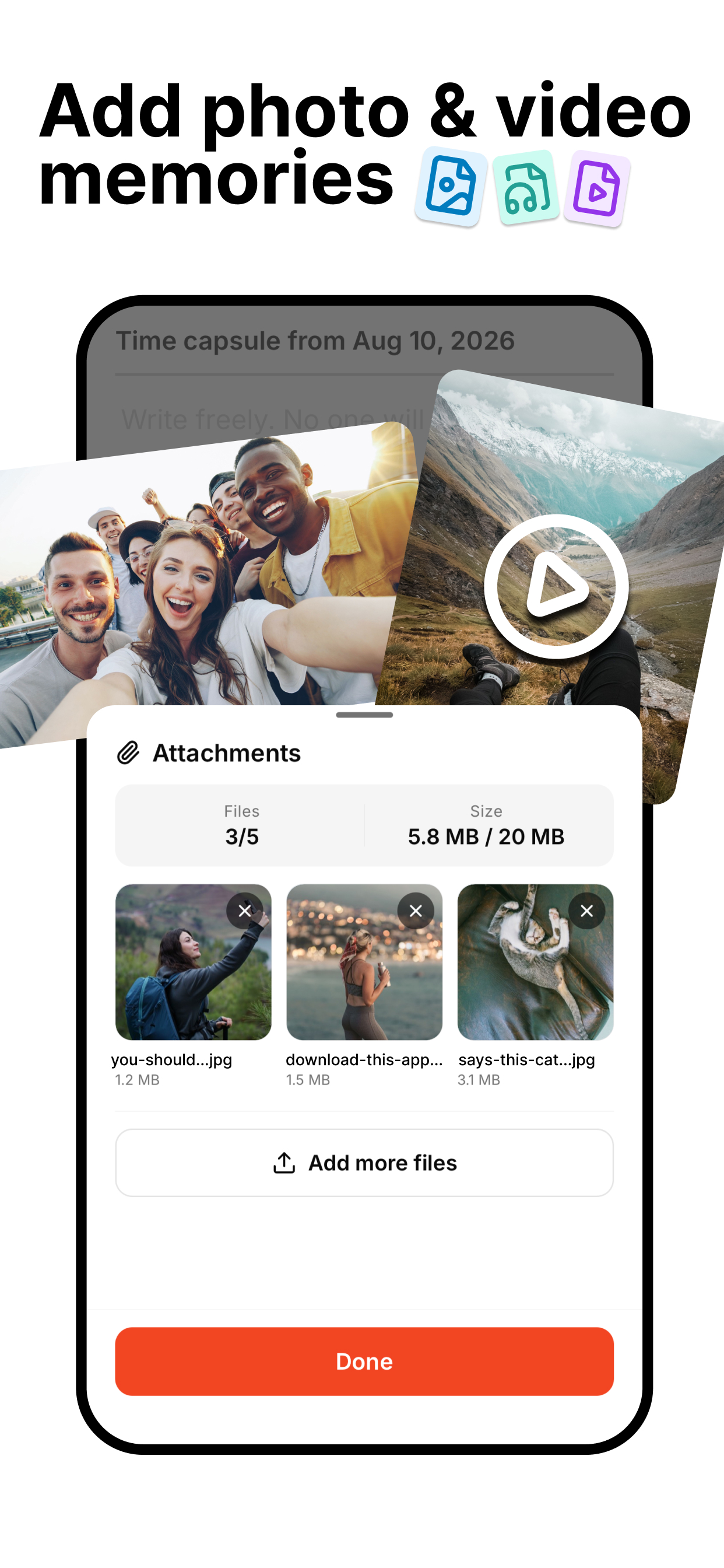
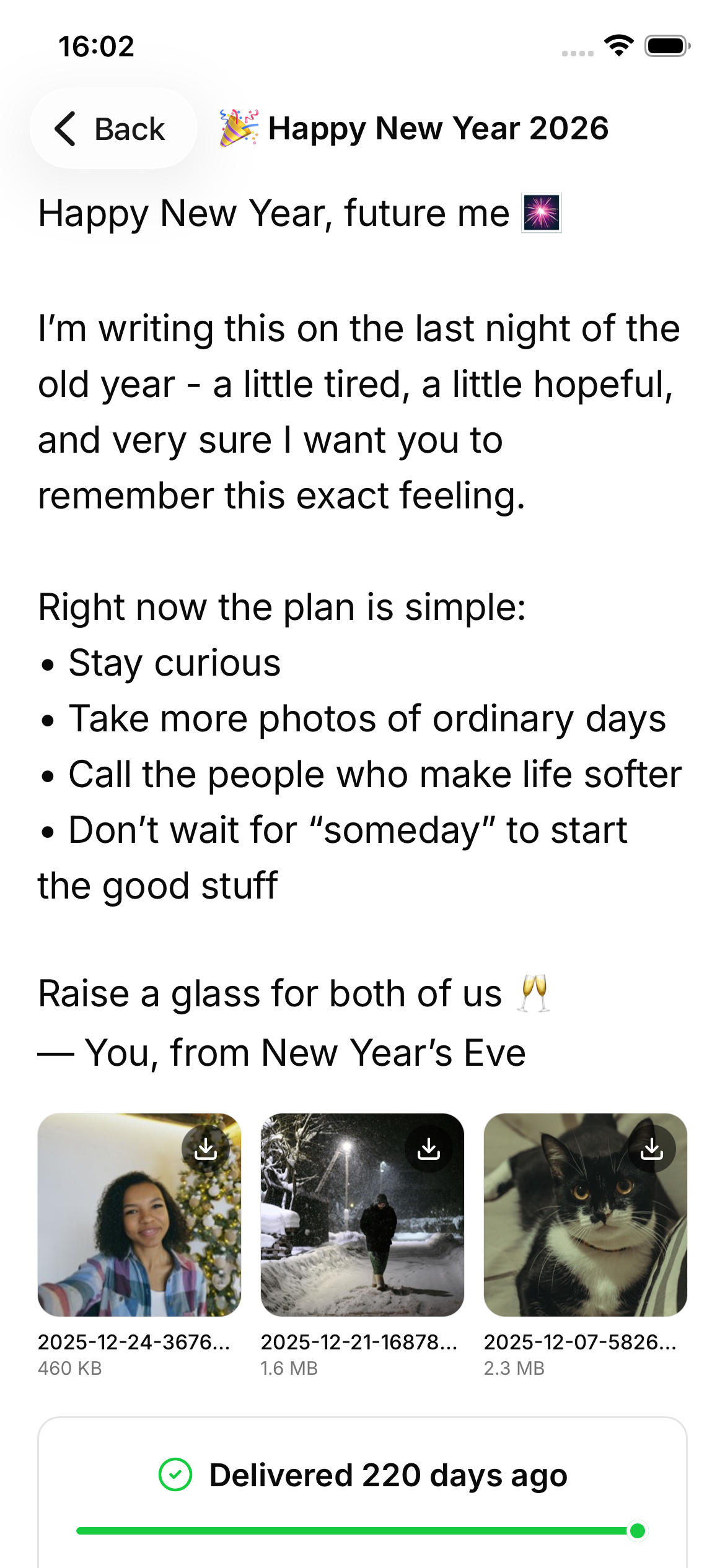
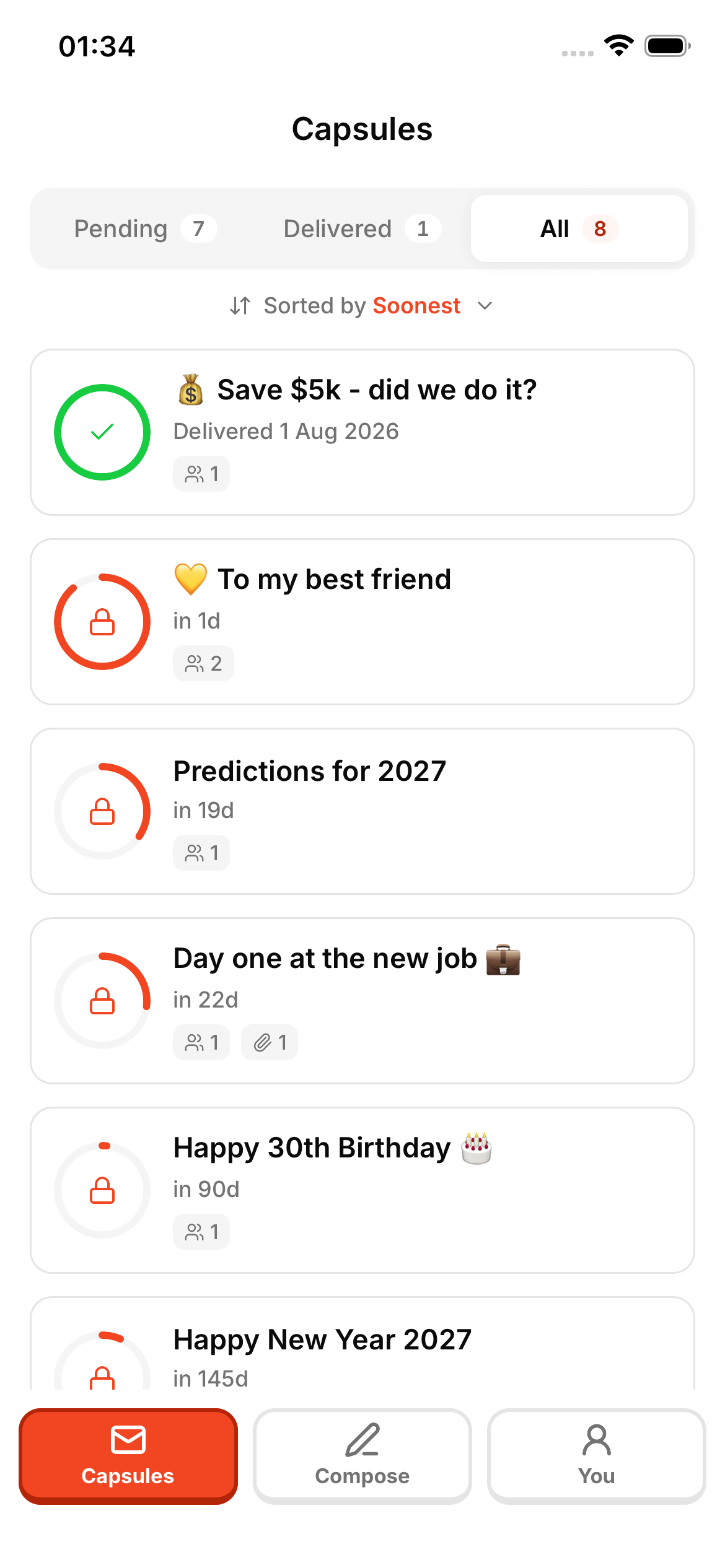
You write a time capsule content, add file attachments, up to 10 recipient email addresses and choose the delivery date (up to 10 years in the future). Then ... you wait. You cannot open it early. And when the time comes the time capsule is delivered to you by email. It's a nice way to communicate with yourself (or someone else) through time.
How we built it
First it started as a web app only - a very simple one. You could only sign in, write som text, choose date. That was it. As the project started growing and getting users we started adding more and more features based on requests from our users. The most requested one was a mobile app. So we built it. Thanks to the existing user base and the community we were able to get over 3000 mobile app wait-list signups while we were building. The community played a big role in shaping the product - we discussed what the app should look like and how it should work. We also discussed the pricing and made sure that our users would find it fair.
Challenges we ran into
Turning trusted web app experience into mobile native app required us to think in detail how users interacted with the service. User experience is the most important part of an app like EmailToFuture because the whole product focuses on the emotional side of things. We had to get the UX right! And we did - it required a lot of testing and iterating but we ended with a product that matches our expectations.
EmailToFuture started as a free alternative supported by donations from our users. As the project grew it bacame obvious that this was not sustainable even though we loved this "business" model. Transitioning to a fair pricing meant we needed to do a lot of analysis and talking to users.
Lastly, shipping a full mobile app within 2 months while supporting the existing user base was a challenge by itself.
Accomplishments that we're proud of
We're proud we were able to ship the first version of the mobile app people asked for. We're extremely glad so many people signed up for the wait-list, downloaded the app once it was available and started using it right away.
We also managed to transition to a fair premium pricing which aligns with our values and community.
What we learned
What users think about the product matters more than we expected and building it doesn’t mean we know what’s best.
The community taught us that trust is the product: delivery on time, no early opens, and pricing that doesn’t punish the simple use case that started all of this. Shipping in public forced clearer decisions. When we were unsure about UX or Premium, we asked Reddit instead of guessing, and the answers were usually better than ours.
We also learned that “free forever for everything” doesn’t scale, but “free where it matters” can if you design credits and Premium with the same people who will pay for them.
What's next for EmailToFuture
We will keep working on improving the mobile app based on feedback from users and implementing new features. Next big most requested feature is public time capsules - letting users write their time capsule and optionally making it public, so once it's delivered, anyone can read it. This will create a fun little place where anyone can read anything someone wrote years ago.
Built With
- onesignal
- react-native
- revenuecat
- supabase
