-
-
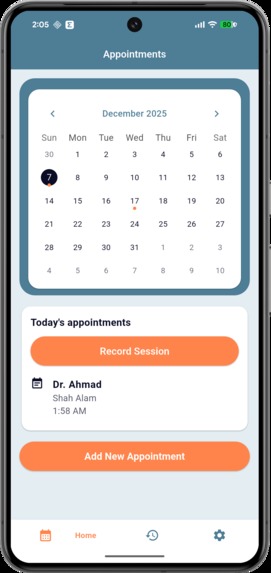
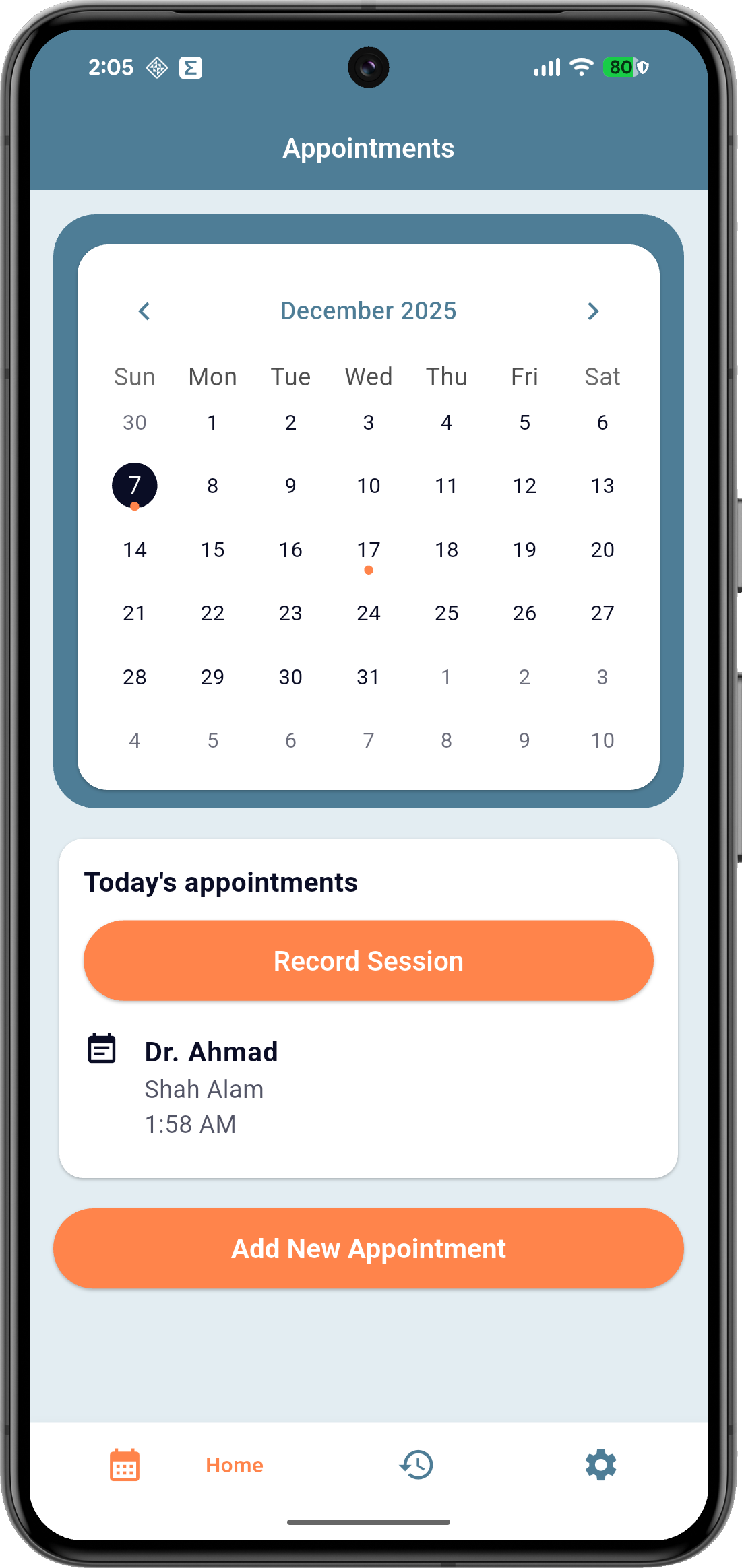
Main screen: Current appointment
-
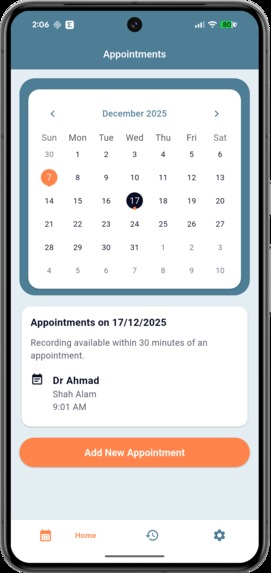
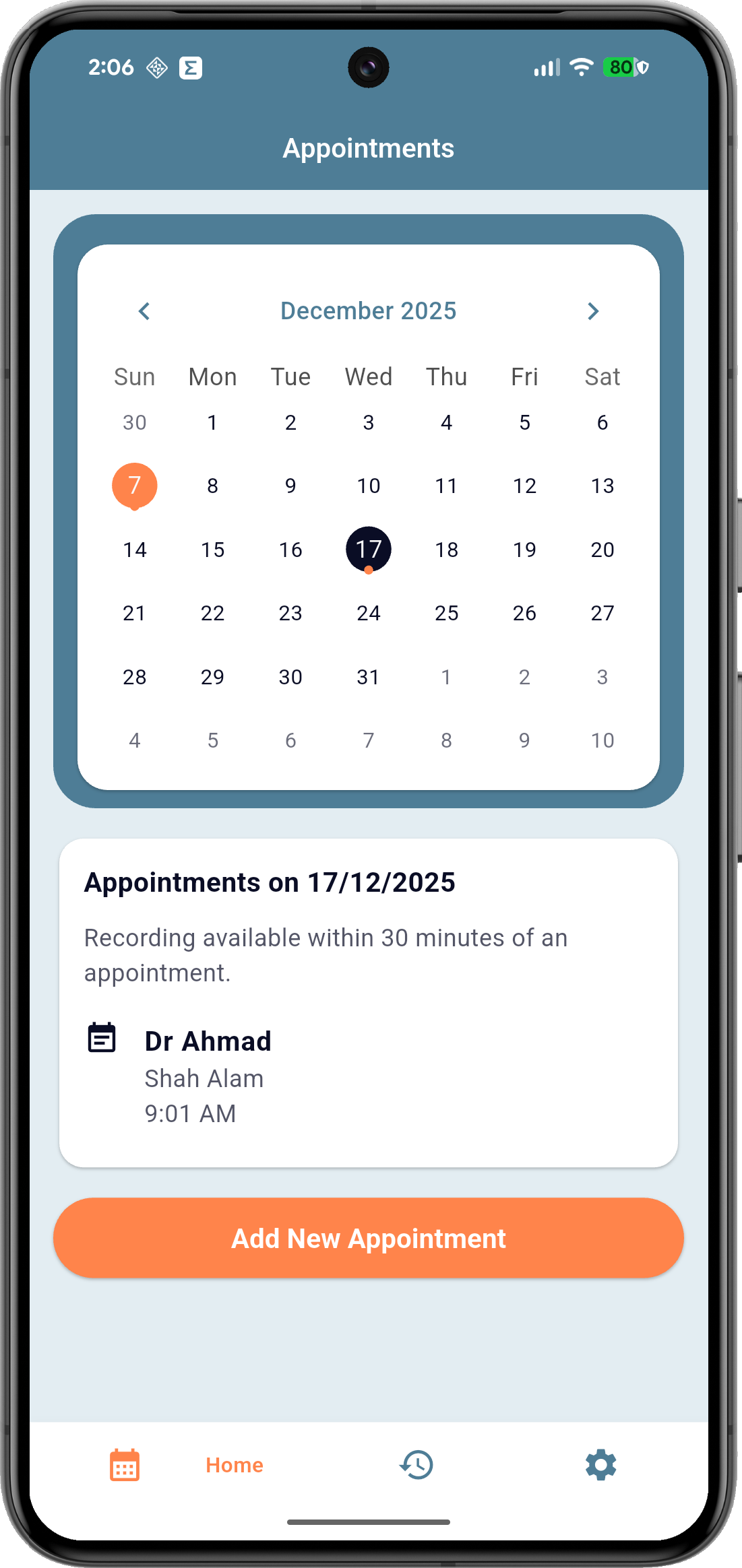
Main screen: Future/Next appointment
-
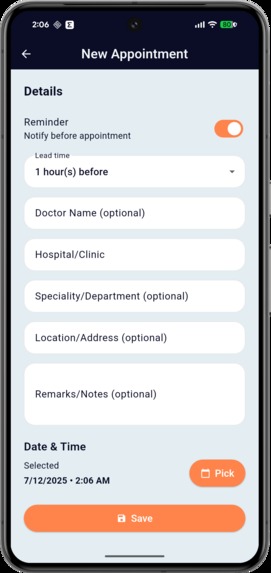
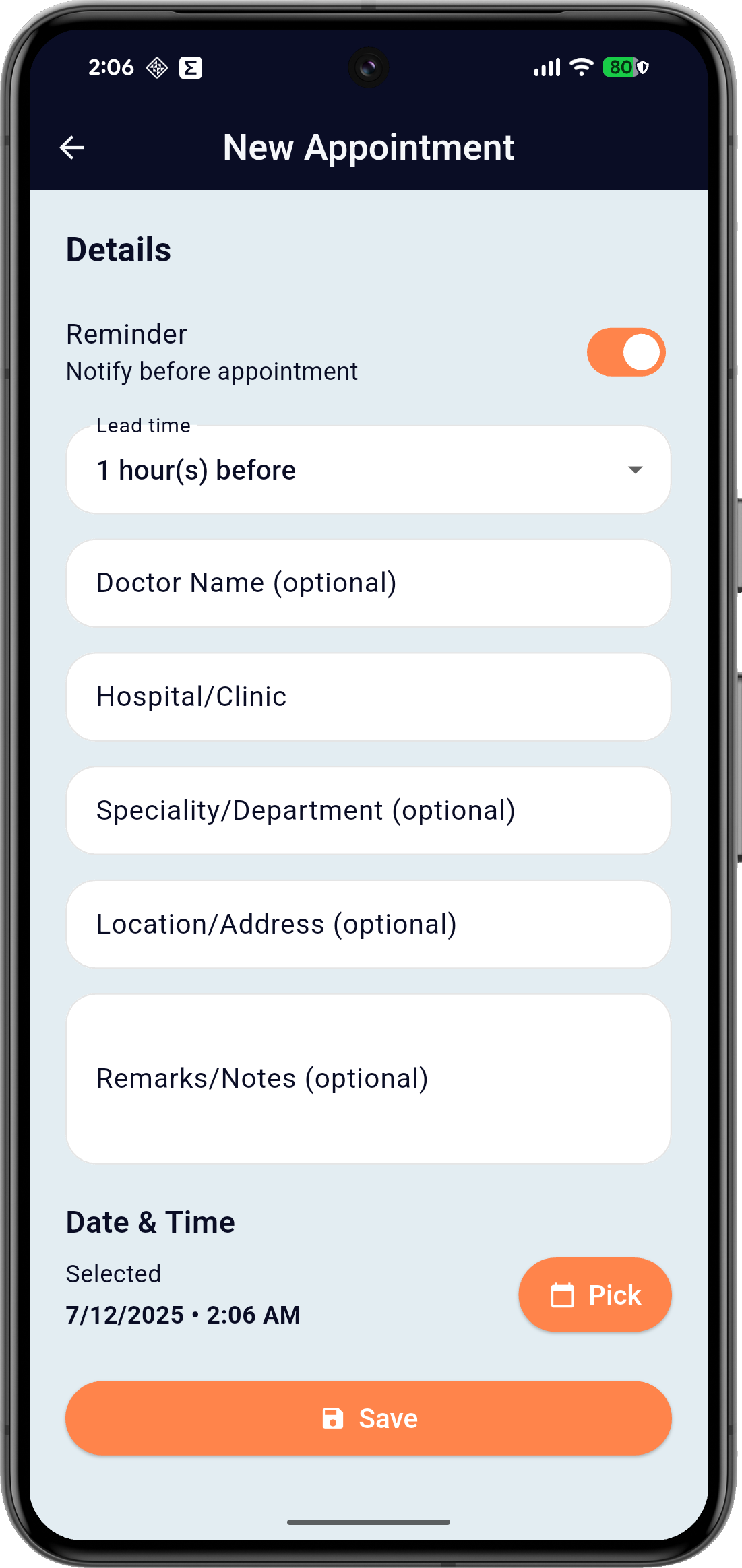
Add New Appointment
-
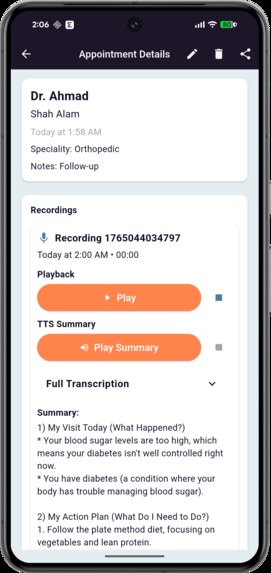
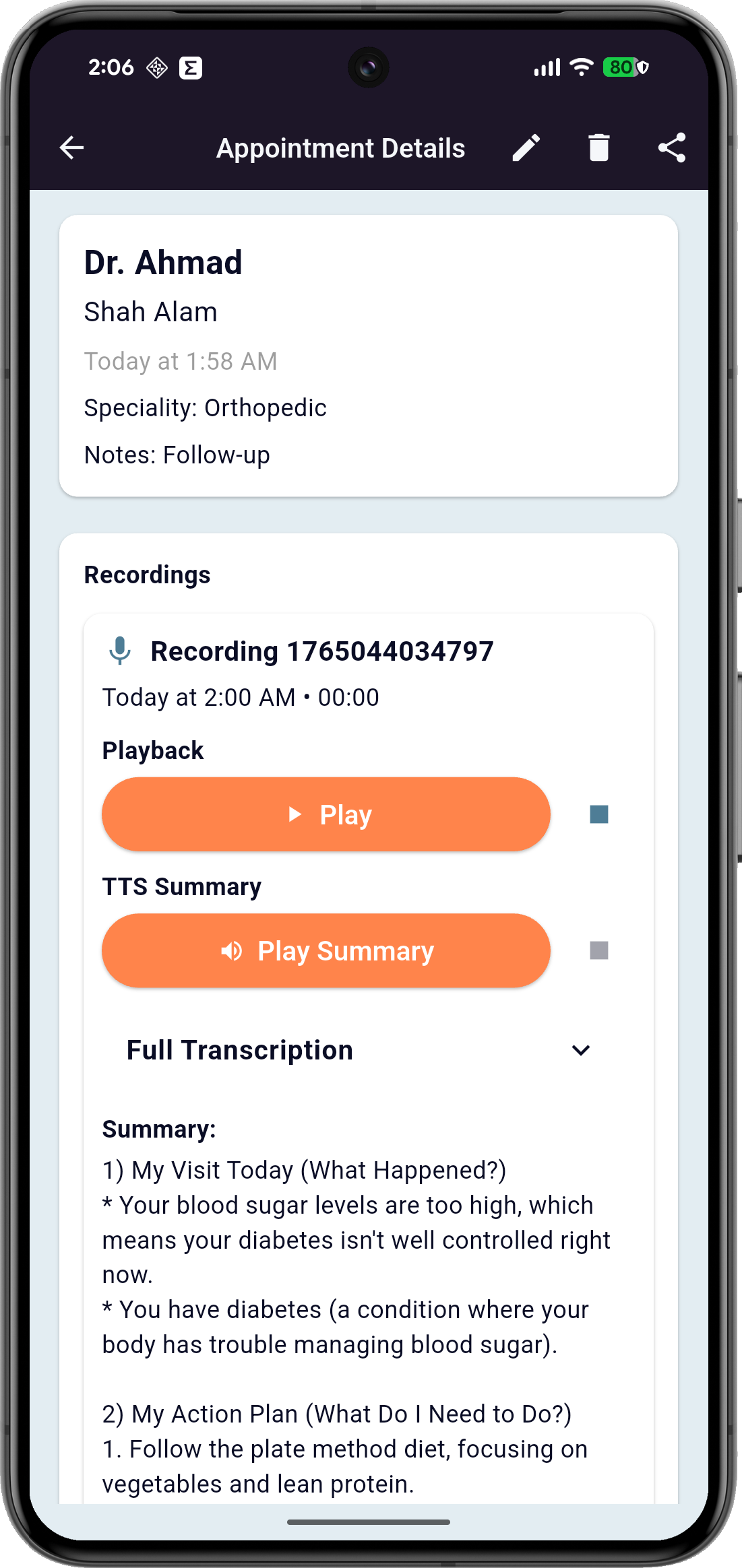
Appointment details
-
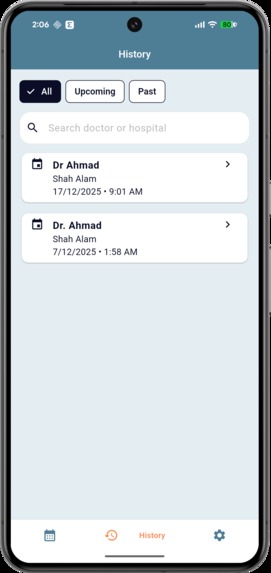
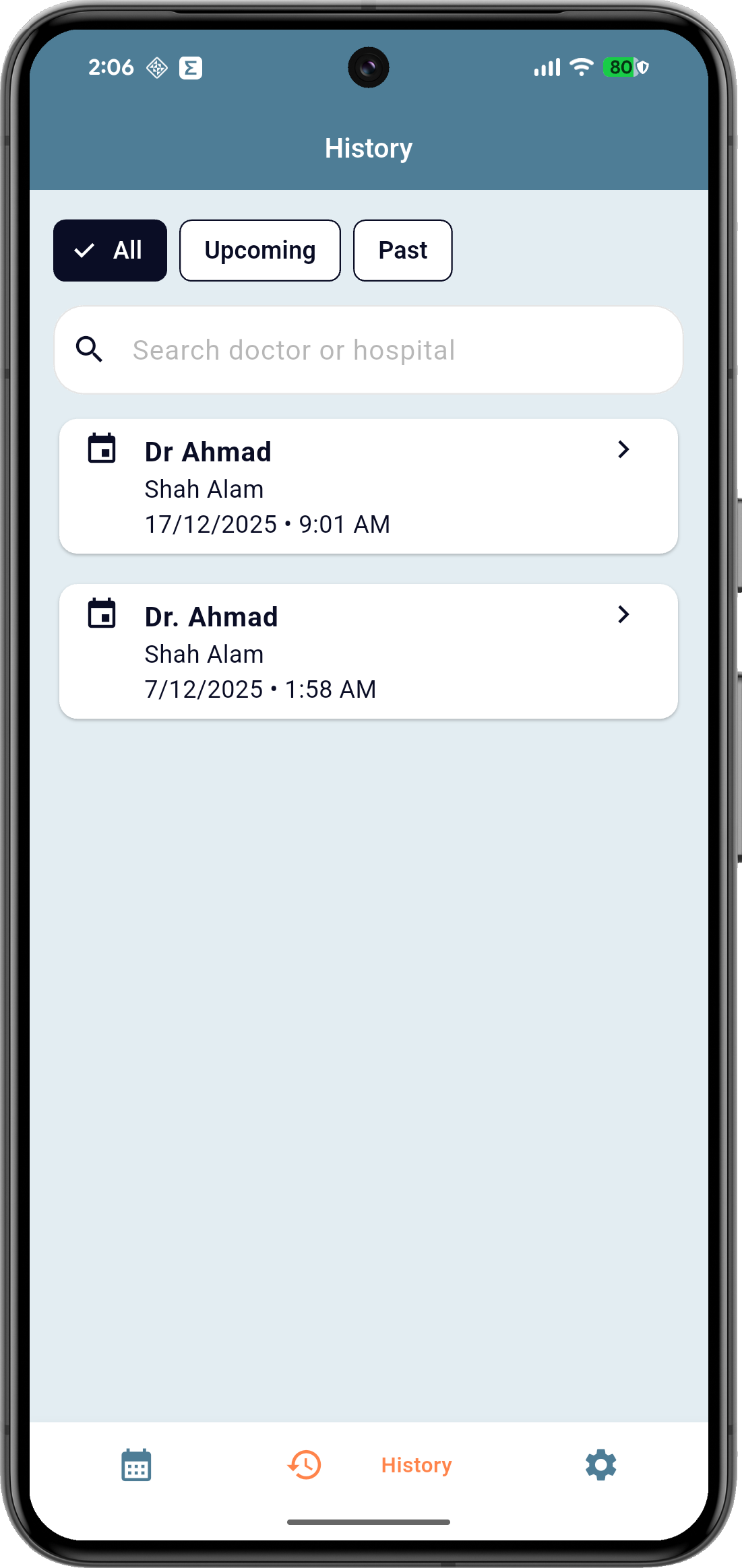
History
This is the modified README.md in Markdown format, incorporating all your new sections and content while maintaining the project's accessibility focus.
📝 EMA - Elderly Medical Assistant
Project Overview
EMA (Elderly Medical Assistant) is a cross-platform mobile application designed to bridge the communication gap between healthcare providers and elderly patients, ensuring crucial medical advice is never misunderstood or forgotten.
The app uses Speech-to-Text (STT) to record and transcribe doctor-patient consultations and then leverages a Large Language Model (LLM) to transform complex medical jargon into a simple, easy-to-understand summary written at a primary school reading level.
💡 Inspiration
My personal motivation for building EMA stems from a direct observation of this critical healthcare communication failure:
I saw my mom struggle to understand the doctor's explanation, sometimes forgot the crucial details, and could not explain to us well when she had an appointment with the doctor when I cannot accompany her for the sessions.
This experience highlighted the urgent need for a tool that empowers elderly patients with clear, accessible, and shareable medical information, acting as a reliable memory and communication aid.
⚙️ What it does
EMA provides a seamless, end-to-end solution for managing and understanding medical visits:
- Appointment Management: Users can add and view appointments using a simple, calendar-first UI.
- Consultation Recording: A single, large button initiates the recording of the doctor-patient conversation.
- Intelligent Summarization: The raw audio is transcribed (STT) and immediately processed by the LLM (Groq) to generate a 3-point, simplified summary (Diagnosis, Action Plan, Next Appointment) at a Grade 4 reading level.
- Review & Share: The summary can be read, listened to (TTS), or shared easily with family and caregivers.
🏗️ How we built it
| Component | Technology / Service | Implementation Details |
|---|---|---|
| Mobile Platform | Flutter (Dart) | Utilized for cross-platform deployment (iOS/Android) with an emphasis on Accessible UI/UX (High-Contrast, Large Targets). |
| Architecture | Clean Architecture (BLoC/Riverpod) | Structured the codebase into Presentation, Domain, and Data layers for maximum testability and maintainability when integrating external APIs. |
| Summarization (LLM) | Groq API (Mixtral/Llama 3) | Used a highly-optimized, structured prompting strategy to leverage Groq's low latency and speed up the summary generation process significantly. |
| Transcription (STT) | ElevenLabs Scribe v1 / Groq ASR | Integrated a robust STT solution to accurately capture medical terminology for processing. |
| Local Storage | Hive | Used for fast, lightweight local persistence of appointment logs and summarized text. |
🛑 Challenges we ran into
- Prompt Engineering for Readability: The biggest challenge was fine-tuning the Groq prompt to consistently produce summaries that were medically accurate while strictly adhering to the Grade 4 (Layman's) reading level without losing crucial context.
- API Latency Management: While Groq is fast, orchestrating the multi-step process (Audio Upload $\rightarrow$ Transcription $\rightarrow$ Summarization) while providing clear feedback to the user on the "Processing" screen required careful asynchronous state management in Flutter.
- Accessibility Design: Ensuring the Calendar-first view and Timeline History remained intuitive and easy to navigate for users with potential cognitive or dexterity limitations.
✅ Accomplishments that we're proud of
- Finished the core functionalities of the app: Successfully implementing the full pipeline from Recording $\rightarrow$ Transcription $\rightarrow$ LLM Summarization $\rightarrow$ Display into a functional mobile UI.
- Established a high-contrast, accessible UI/UX flow that prioritizes the unique needs of the elderly demographic.
- Integrating a modern, high-speed LLM service (Groq) to provide near real-time summarization, greatly enhancing the user experience.
🧠 What we learned
- The full potential of Cursor: Utilizing advanced code generation and editing tools to accelerate development and adhere to Clean Architecture standards.
- Groq API: Gaining hands-on experience in leveraging an ultra-low latency LLM for complex, real-time agentic tasks (like summarization) in a mobile context.
- Proper 'vibe-coding' development process: Successfully balancing rapid feature implementation with meticulous attention to security and architectural best practices.
⏭️ What's next for EMA - Elderly Medical Appointment (Assistant)
- Polish the app and refine the visual design to achieve a polished, production-ready aesthetic.
- Enhance and expand the app functionality with advanced AI features, such as:
- AI image recognition to automatically log medicine information and schedule reminders based on the medicine picture (e.g., dosage, frequency).
- Expand the sharing feature or add user & family account functionality to make the appointment sharing session easier and create a centralized hub for caregiver coordination.

Log in or sign up for Devpost to join the conversation.