-
-
Thumbnail
-
Welcome Page
-
Screenshot
-
About


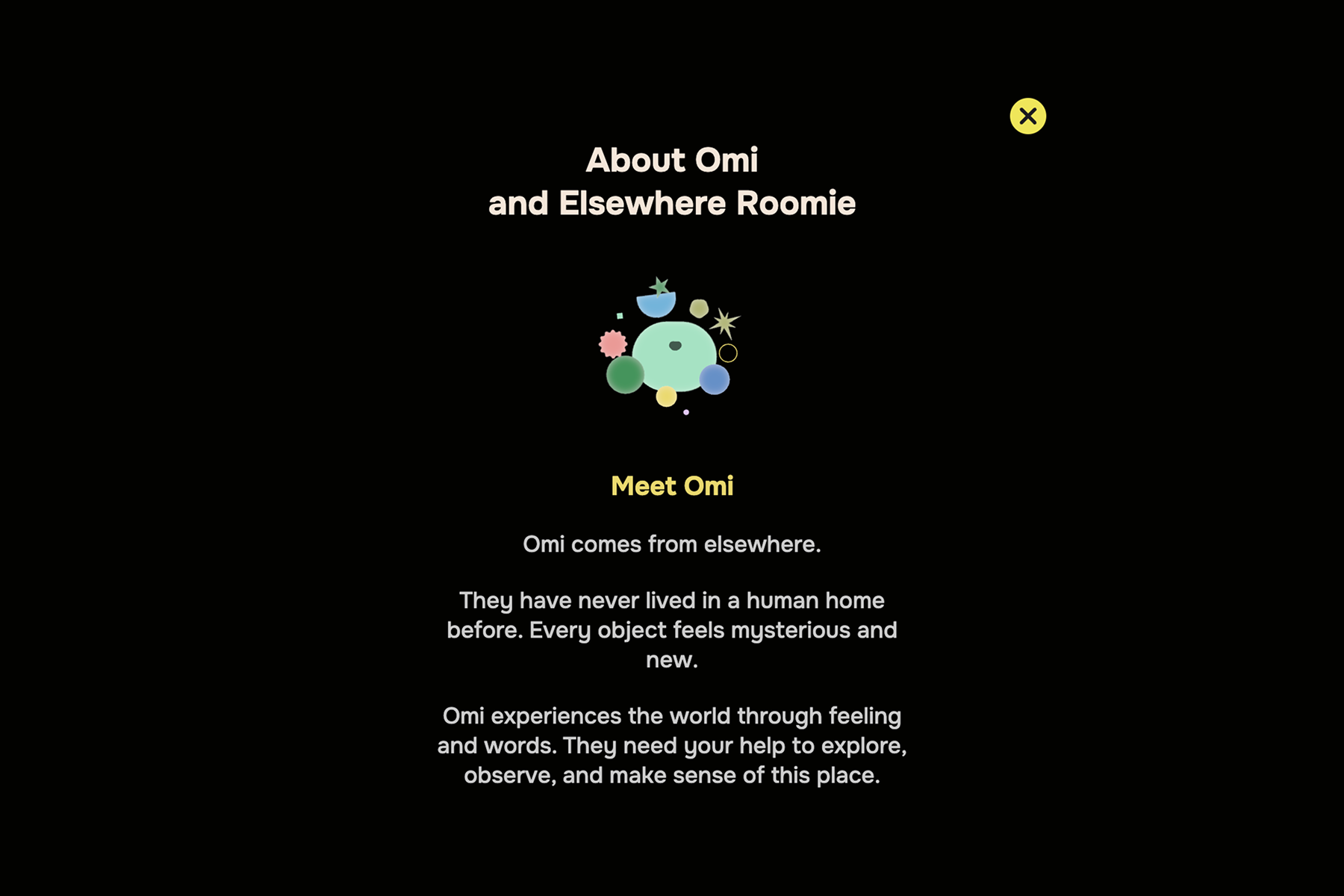
Elsewhere Roomie
Inspiration
The project was inspired by the idea of the traveler's mind. When we travel, we are drawn to unfamiliar things and naturally stay curious. But we spend most of our time at home. We know it so well that we often stop noticing it. Our homes hold our habits, memories, and everyday rituals, yet we can become numb to them.
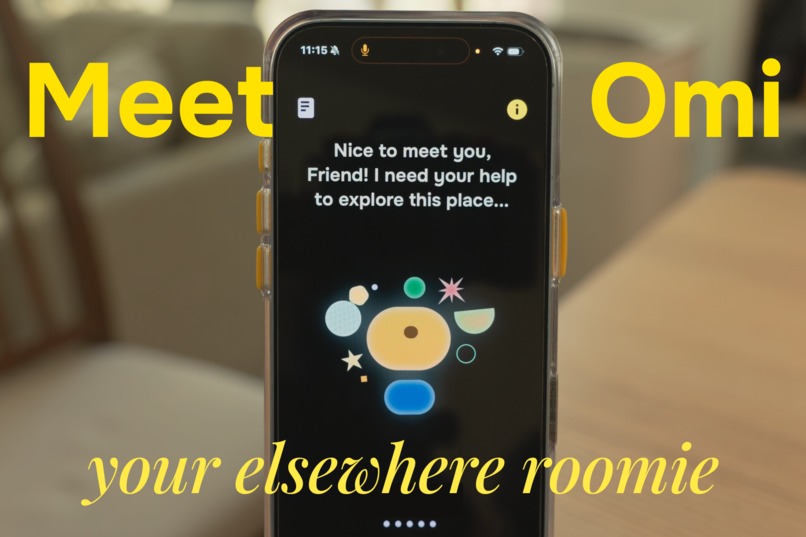
Elsewhere Roomie began with a simple question: what if an alien came to visit your home, and you had to be their travel guide?
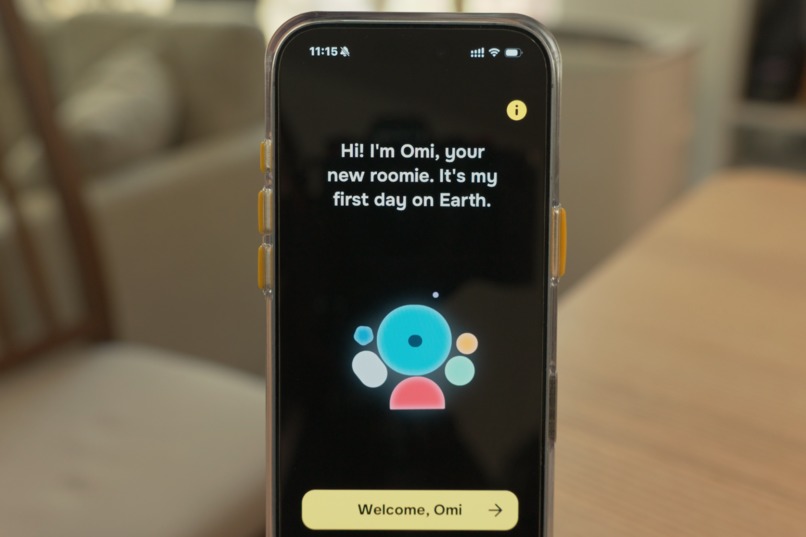
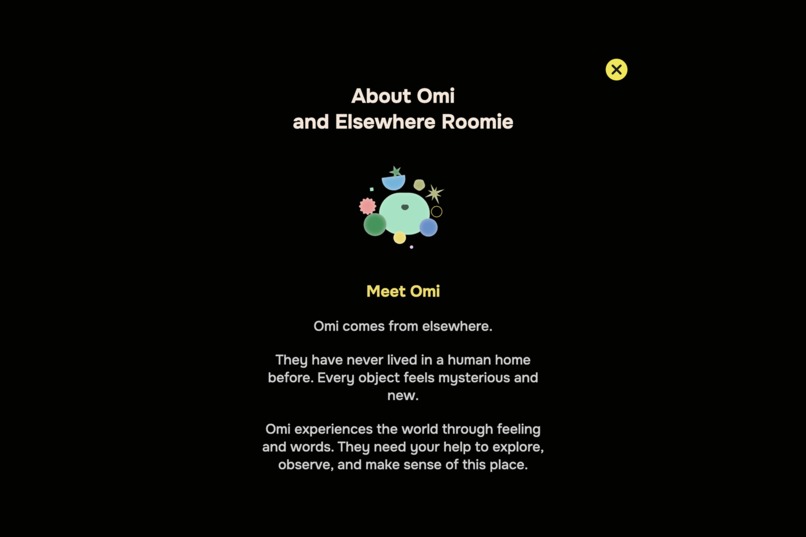
We created Omi, a traveler from Elsewhere who visits your room and becomes your roomie. Omi does not understand ordinary human objects or experience world the way we do. Instead, Omi relies on the user’s words, descriptions, and stories, to understand and explore.
When we interact with AI chatbots, it always feels like they are showing us the world, teaching us knowledege. With Elsewhere Roomie, AI does not tell us what we don't already know, it helps us see our surroundings as if it's for the first time. By guiding someone who finds everything unfamiliar, users are encouraged to slow down, notice overlooked details, and bring imagination and wonder back into everyday spaces.
What it does
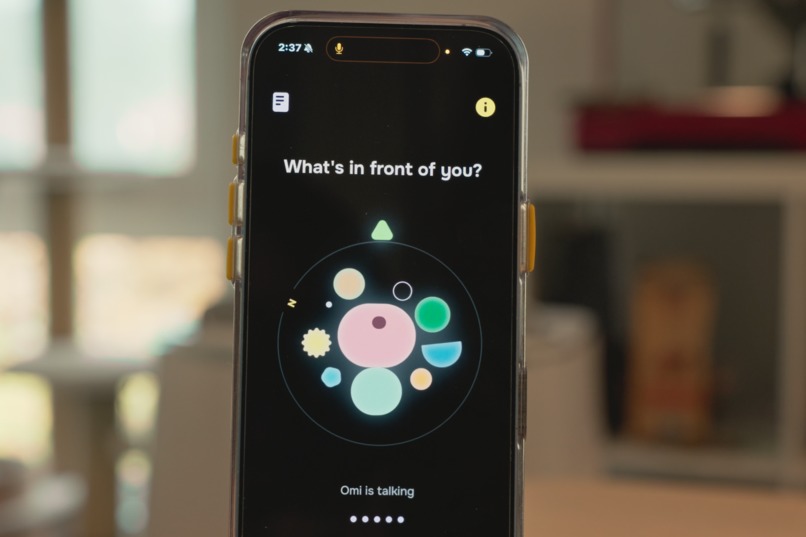
Elsewhere Roomie is a voice-first exploration experience powered by GPT Realtime 2.1. The user holds their phone flat like a compass, follows the direction Omi chooses, and describes the object they find.
Omi then responds with an observation or imaginative guess. A lamp might seem like a second sun. A door might look like a wall that changed its mind. From there, Omi asks how the object is used, why it matters, and what it reveals about human life.
Each conversation becomes part of Omi’s travel journal, documenting both Omi’s growing understanding of Earth and the user’s renewed awareness of home.
How we built it
We built Elsewhere Roomie as a mobile web experience using GPT Realtime 2.1 as the core engine for the low-latency voice conversation.
The experience combines live voice interaction with device orientation and compass data. Omi selects a direction, the interface guides the user through the space, and the user describes what they find.
We designed Omi’s conversation around five steps:
Observe → Imagine → Ask → Reframe → Remember
This keeps Omi from becoming a basic object-identification assistant. Omi observes first, makes a playful interpretation, asks about the object’s role, reframes what was learned, and turns the conversation into a journal entry.
We used Codex to research and validate the concept, plan the voice-agent architecture, build the front end, connect the system layers, and iterate on prompts and interactions. This let us spend more time shaping the character and experience instead of only building infrastructure.
Challenges we ran into
One of the hardest parts was making Omi feel naturally curious. A prompt alone was not enough. Early versions asked flat questions like “What is this?” or produced reflections that sounded repetitive, childish, or overly philosophical.
We had to build many examples, define clear behavioral rules, and keep adjusting the prompt through real conversations. We also learned how important it was to give each agent detailed documentation before deployment so that the character, state, and system behavior stayed consistent across layers.
This was also our first time debugging a live voice system. Many layers had to handle input and output at the same time, including low-latency audio, conversation context, animation states, memory, and sub-agent orchestration. Keeping them synchronized without creating conflicts was one of the biggest technical challenges.
Accomplishments that we’re proud of
Neither of us comes from a traditional engineering background, so we are proud that we built an entire voice-agent pipeline, orchestration layer, and memory system over one weekend and reached a result that felt seamless, coherent and responsive.
We are also proud of Omi’s visual design, character animation, and interaction details. Every technical and visual decision was made to support the same idea: making an ordinary room feel interesting again.
Most importantly, we turned a small but meaningful idea into a working experience. Elsewhere Roomie uses AI not for recognition or productivity, but to help people notice what they may have stopped seeing.
What we learned
We learned how to collaborate quickly, both with each other and with coding agents. Clear ownership, detailed documentation, and small testable steps made it much easier to move between design, prompting, and implementation.
We also learned that agents work best when they are treated like collaborators with context, constraints, examples, and clear handoffs. The quality of the system depended not only on the model, but also on how clearly we communicated the role of each layer.
On the product side, we learned that AI can create value without always giving answers. It can also help people ask better questions, notice more, and build a different relationship with familiar things.
What’s next for Elsewhere Roomie
This prototype is still an early demonstration of the idea, but presenting it successfully made us want to continue refining the character and the experience.
Next, we want to improve the voice pipeline, reduce latency, strengthen context and memory, and make collaboration between agents more reliable.
We also want to expand Omi’s travel journal into a longer-term record of the user’s home. Omi could remember recurring objects, changing spaces, personal rituals, and stories across different explorations.
Future versions could introduce new ways of exploring through sound, touch, memory, or change. We would also like to explore a small physical companion for Omi, making the act of choosing a direction more tactile and allowing Omi to feel even more like a real roomie.
Our long-term vision is to help people carry a traveler’s curiosity into everyday life—to rediscover familiar places, rebuild the habit of noticing, and see the world they already inhabit from a new perspective.
Built With
- codex
- express.js
- gpt-realtime-2.1
- node.js
- openai-realtime-api
- react
- typescript
- vite
- webrtc


Log in or sign up for Devpost to join the conversation.