-
-

Elorah — your Bible companion for reading, understanding, and returning.
-
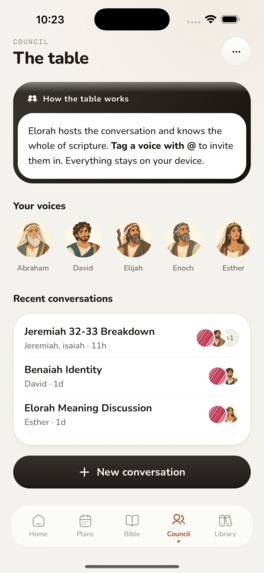
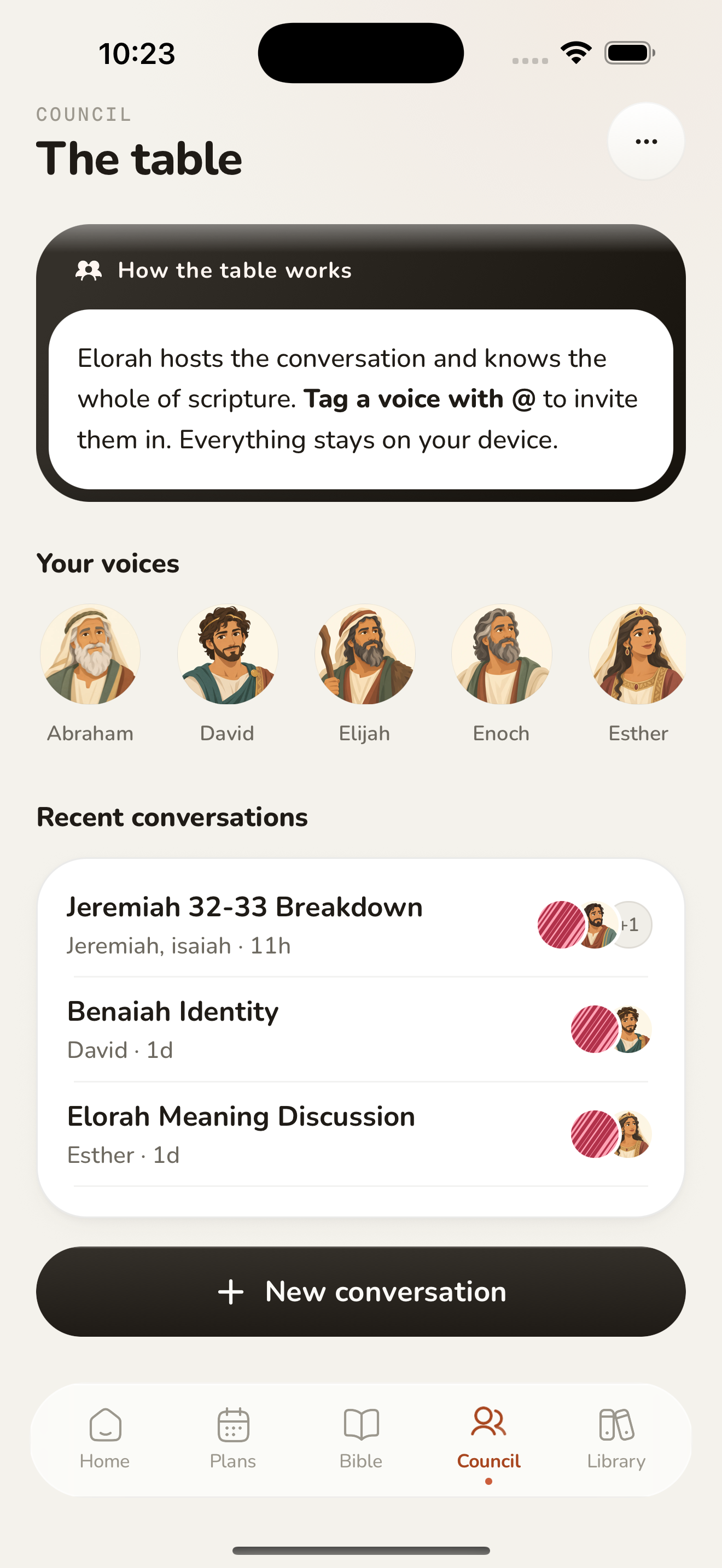
Council lets you invite biblical perspectives into one continuing conversation.
-
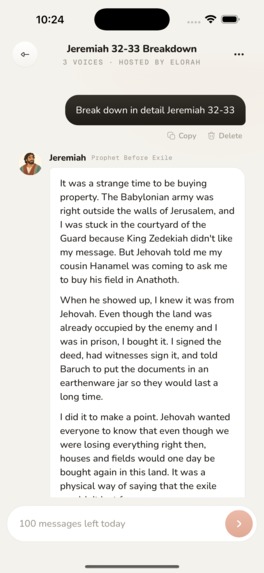
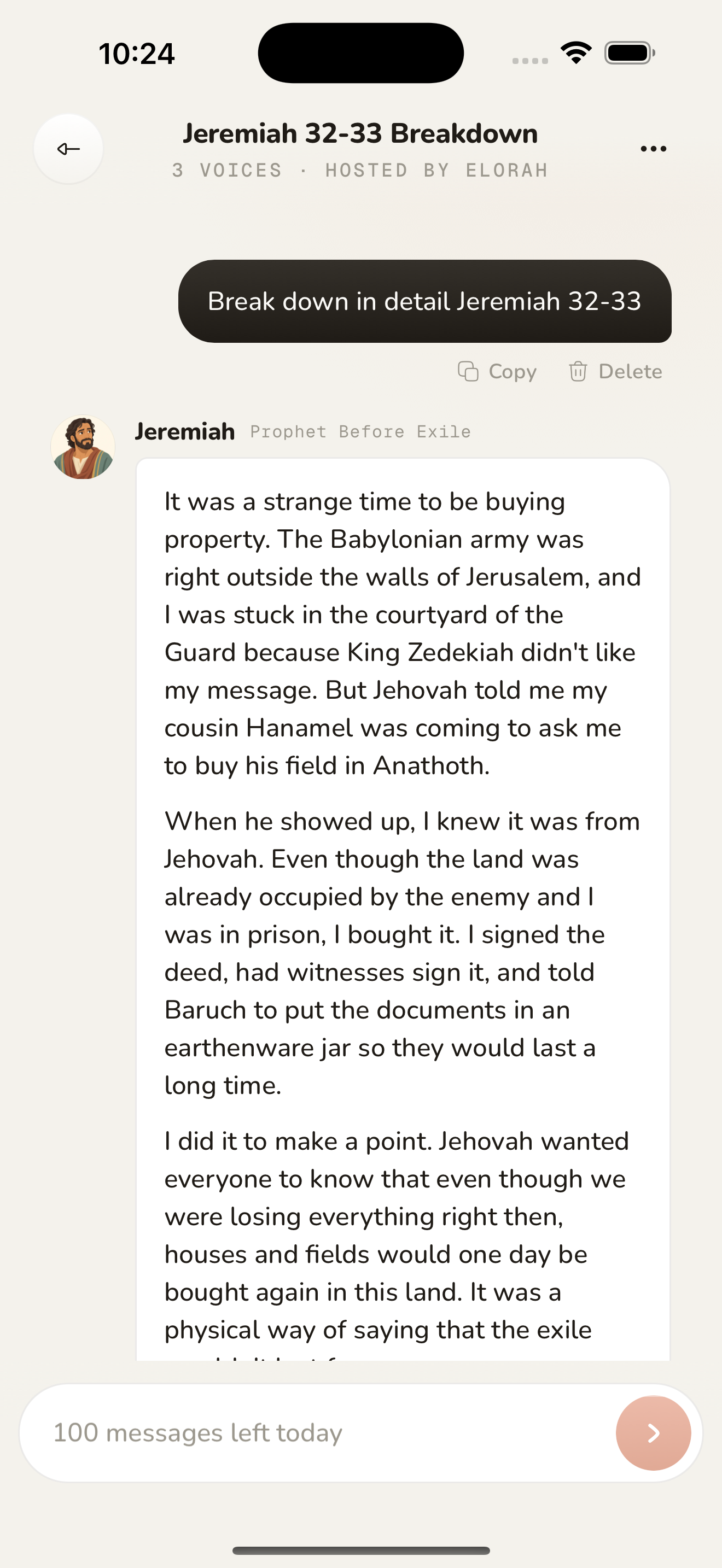
Scripture Breakdown explains difficult passages and connects related verses.
-
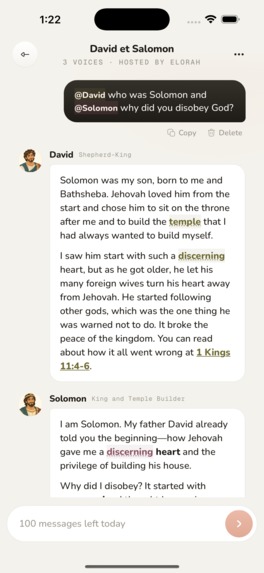
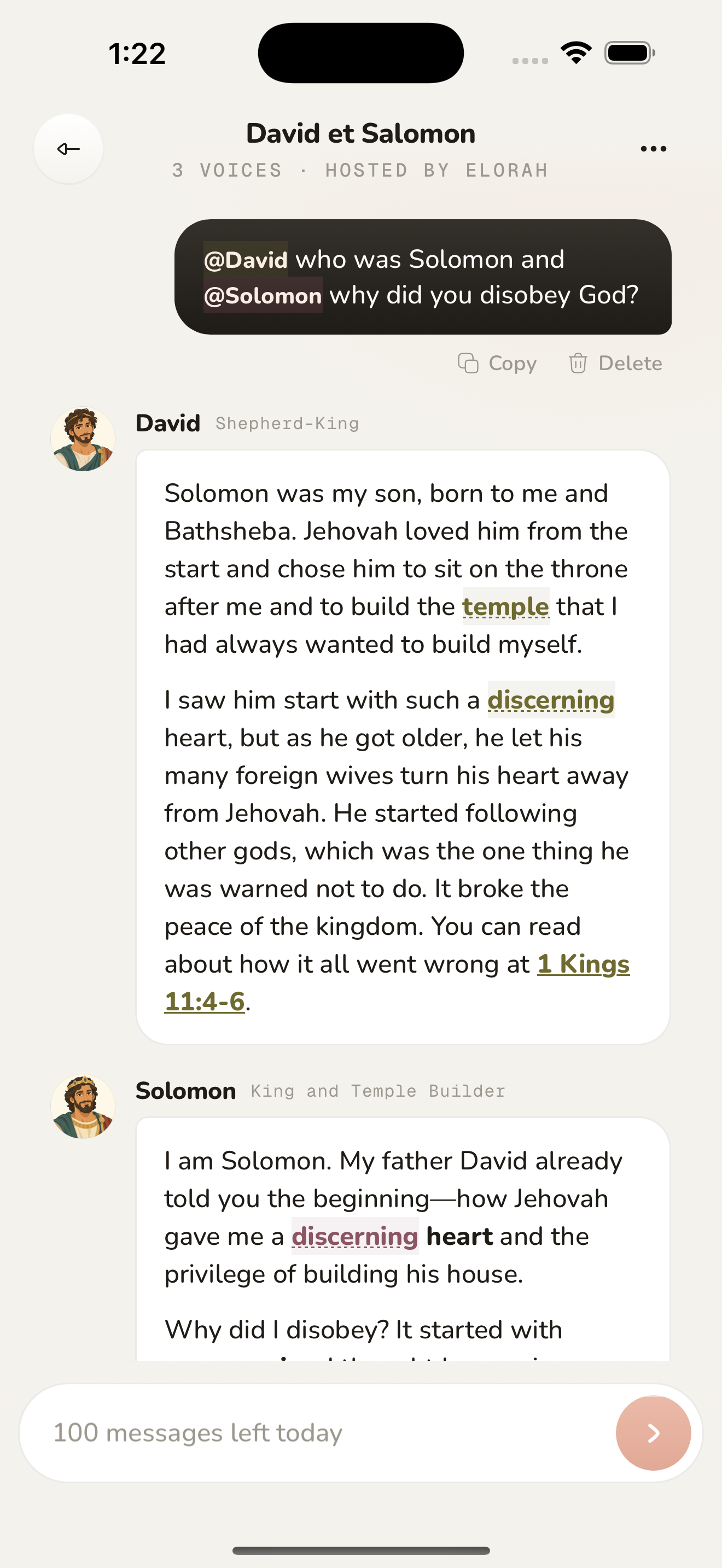
Ask David and Solomon a question together, then continue the conversation.
-
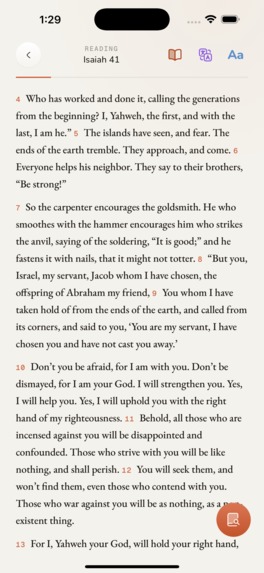
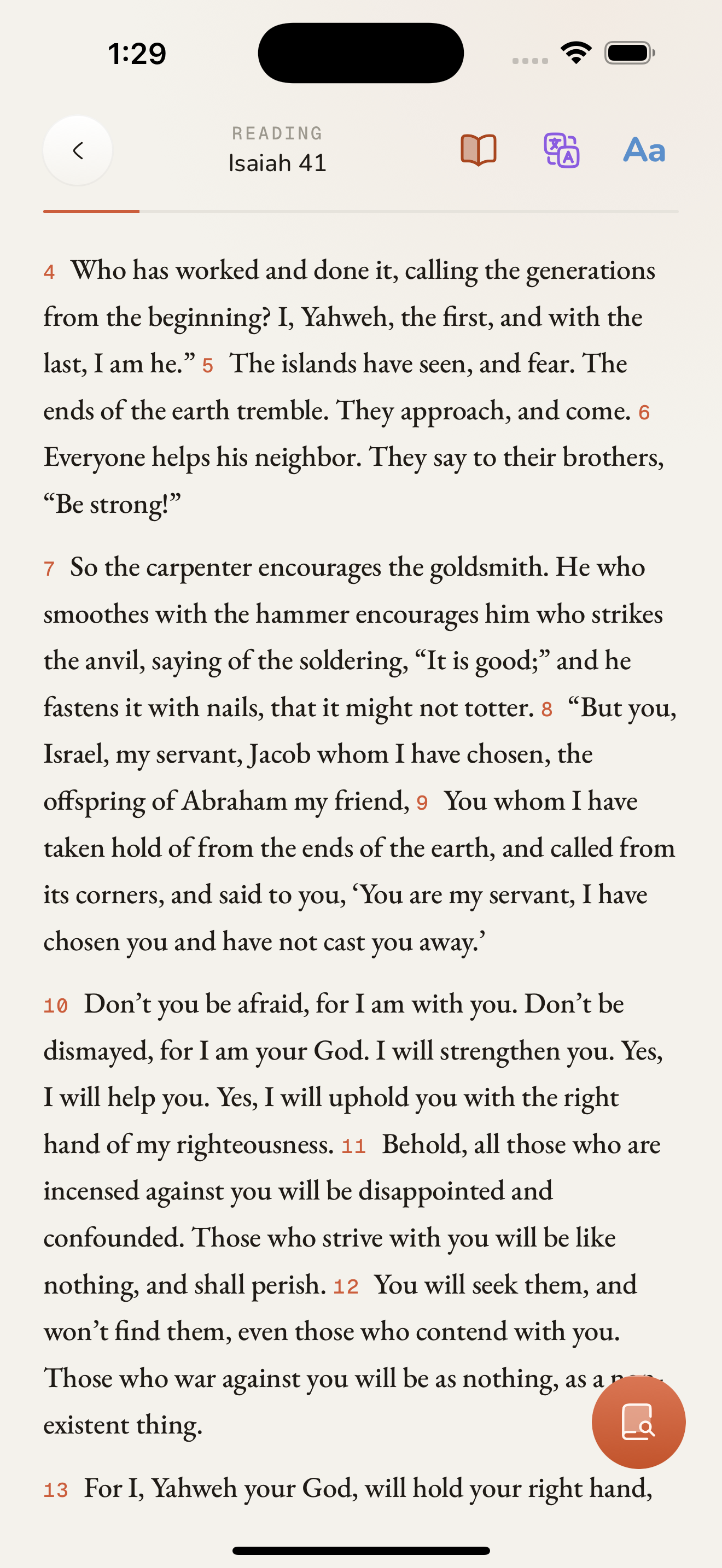
Read Scripture, select verses, save notes, and open a breakdown in context.
-
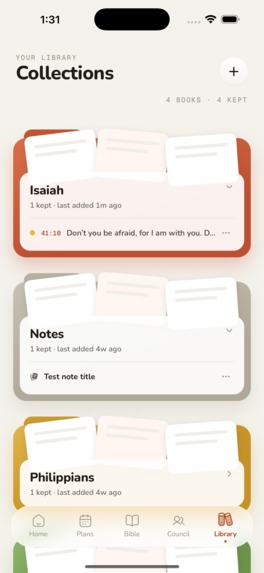
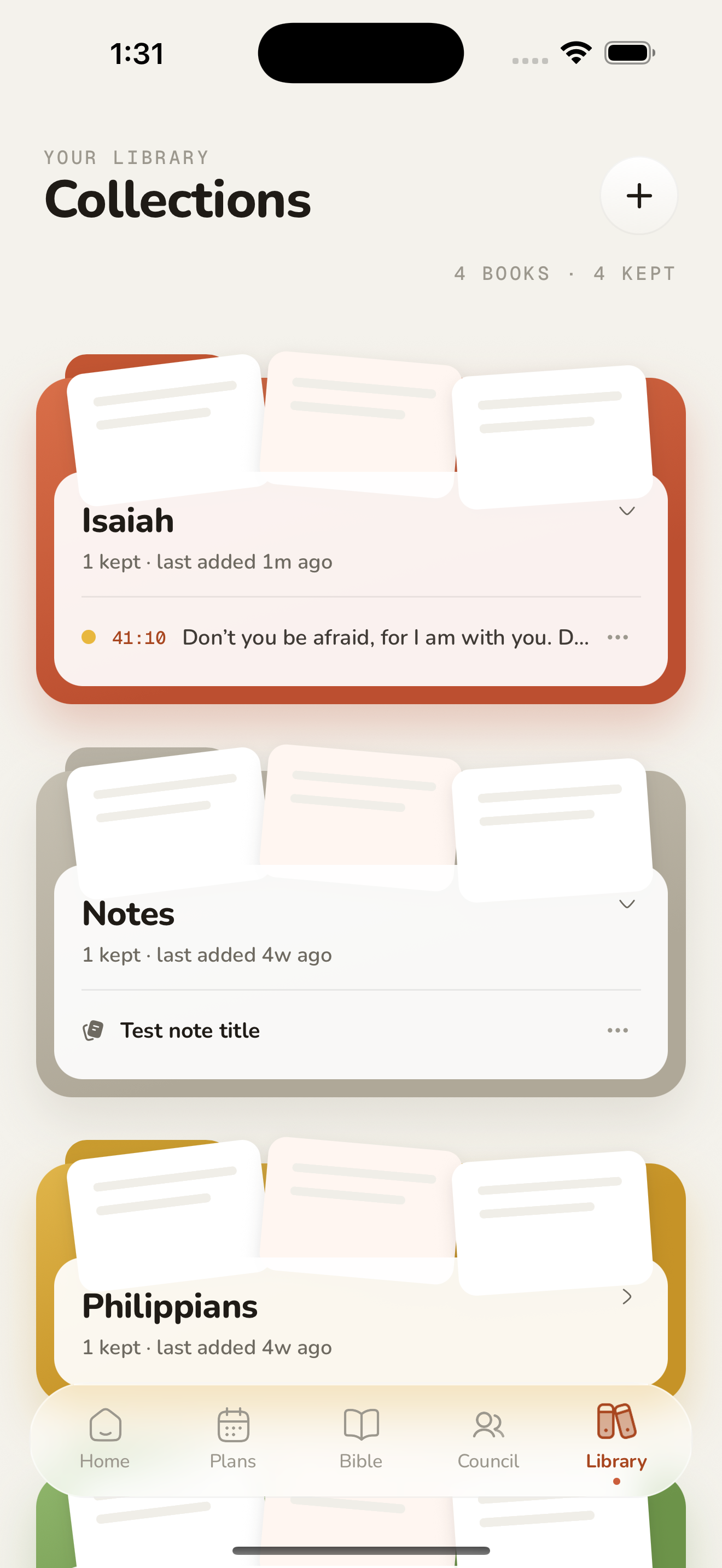
Keep highlights, notes, plans, and Daily Words organized in your Library.

Inspiration
For nearly three years, I kept trying to become more consistent with reading the Bible. Finding a Bible was never the problem. The difficult part was everything around the reading: deciding where to begin, understanding a passage that felt unclear, remembering what stood out, and returning after missing a few days without feeling as though I had failed.
Most Bible apps gave me access to Scripture or another streak to maintain. I wanted something quieter: a companion that could sit around the reading experience without replacing it. That became Elorah.
What it does
Elorah helps people move through a simple rhythm: open, read, understand, reflect, apply, and return.
Readers can start with a Daily Word, create a flexible reading plan from a book, question, biblical person, short reset, or surprise prompt, then read and track progress without punitive streaks. They can highlight verses, write notes, save what matters to a personal library, and open a plain-language Scripture Breakdown when a passage is difficult.
Council is Elorah's most distinctive feature. It lets someone talk through a passage in one continuing conversation with AI-guided voices based on biblical figures. A reader can invite David or Solomon with an @ mention, ask a follow-up, compare perspectives, and then return to Scripture. Elorah clearly presents Council as AI—not the people themselves—and encourages readers to verify every answer against the Bible.
Elorah also works alongside Bible apps people already trust. A passage can open in JW Library, YouVersion, Bible Gateway, Olive Tree, or Logos, or the reference can be copied for use with any Bible, including a physical one.
How we built it
The iPhone app is built with Expo, React Native, Expo Router, TypeScript, NativeWind, Reanimated, Skia, and SQLite. The local-first database keeps downloaded Scripture, plans, notes, highlights, and reading progress dependable offline.
A Hono engine handles authentication, plan generation, Scripture Breakdown, Council, notifications, backup, and subscription state. It uses Prisma with PostgreSQL, Redis, Socket.IO, Zod, and OpenRouter-backed AI services. The launch site is built with Next.js and Motion.
RevenueCat powers Elorah Plus end to end: monthly and yearly products, purchasing, restoring, subscription management, entitlement checks, server refresh, and webhook-driven updates. The backend verifies RevenueCat's current customer state before applying an entitlement, protects against duplicate or stale webhook events, and sends the updated membership state to the app in real time.
Challenges we ran into
The hardest product challenge was adding useful AI without letting AI become the product. Scripture had to remain visually and conceptually central, so Breakdown and Council were designed as tools that return the reader to the passage rather than endless content feeds.
The hardest engineering challenge was keeping offline state, App Store purchases, RevenueCat entitlements, and backend limits consistent. Purchases can be restored, renewed, transferred, or reported by delayed webhooks. Treating RevenueCat as the source of truth and making webhook processing idempotent prevented stale events from incorrectly changing access.
Accomplishments that we're proud of
Elorah shipped publicly on the App Store during Shipaton as a complete, usable product—not a prototype. Core Bible reading remains free, the app works with other Bible apps, and Plus adds honest value without holding Scripture behind a subscription wall.
I am especially proud of the calm interaction design, Council's multi-voice conversation model, the flexible plan creator, the local-first reading experience, and a RevenueCat integration that connects the App Store purchase to live in-app and server-side access.
What we learned
Consistency is not created by pressure. For this product, designing a graceful way to return mattered more than designing another streak.
What's next for Elorah
Next I want to improve Council's grounding and citations, add more Bible translations, make backup and restore even more resilient, learn from real reading behavior without selling attention, and bring Elorah to Android. The goal remains the same: help people understand what they read and make returning feel natural.
Built With
- expo.io
- hono
- next.js
- openrouter
- postgresql
- prisma
- react-native
- redis
- revenuecat
- socket.io
- sqlite
- typescript

Log in or sign up for Devpost to join the conversation.