Inspiration
Many travelers today focus on their expenses and efficiencies when planning their trips, however with increasing air pollution and ongoing climate change conditions, being aware and choosing eco-friendly alternatives becomes very important.
What it does
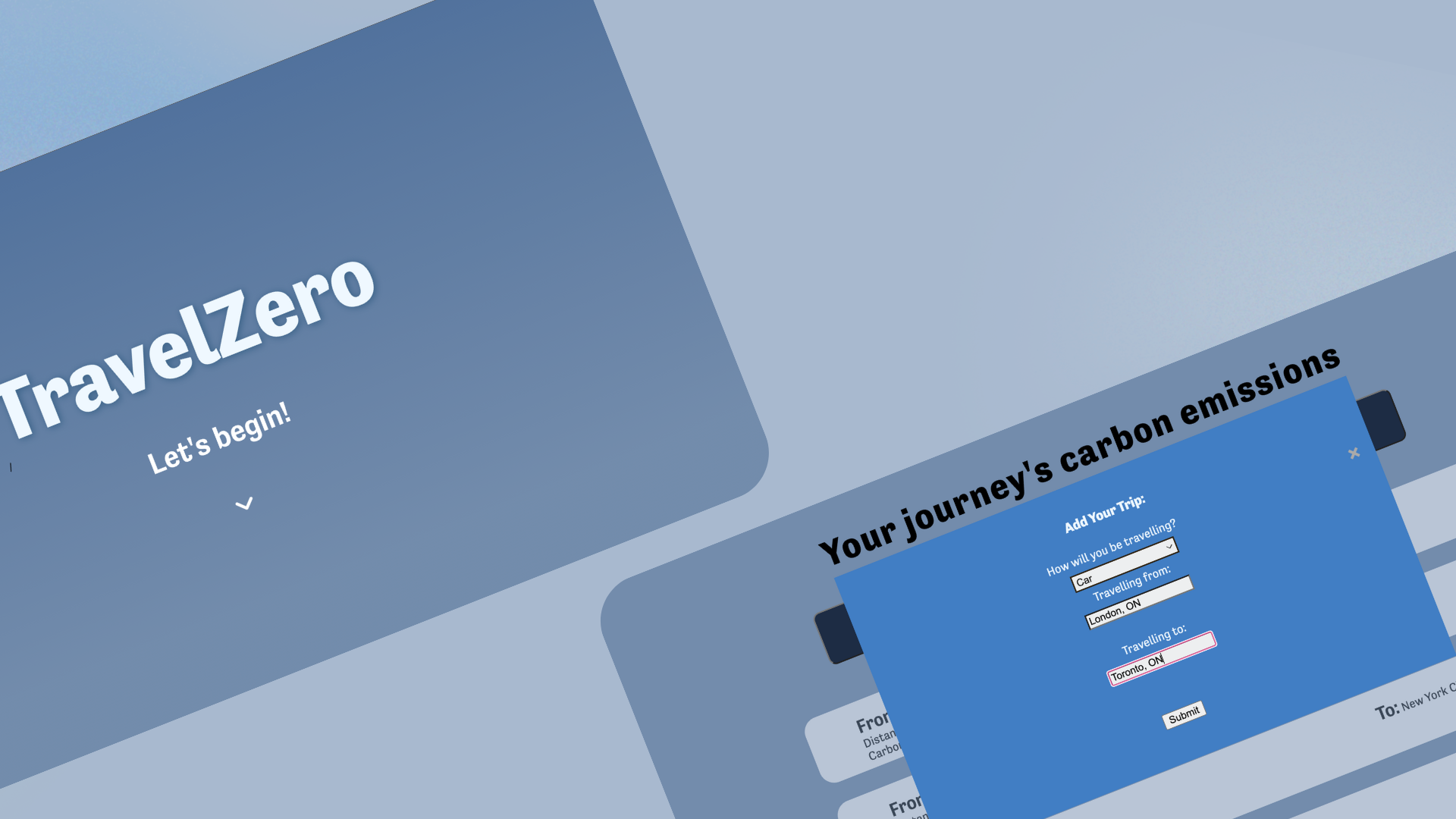
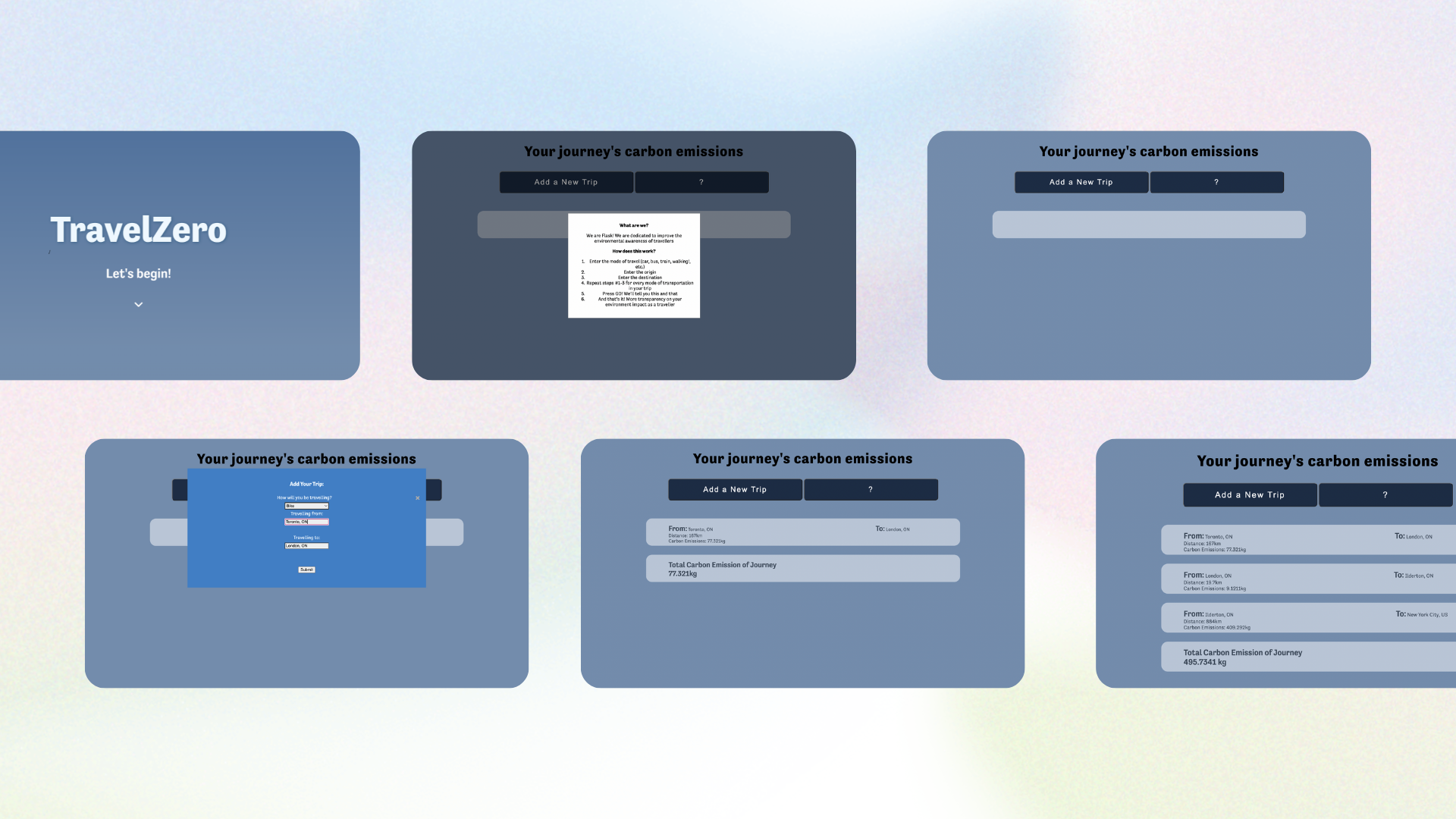
The web application is a tool that enables users to see how their travel itinerary and methods contribute to their carbon footprint. It allows them to check the carbon emissions for traveling from one location to another.
How we built it
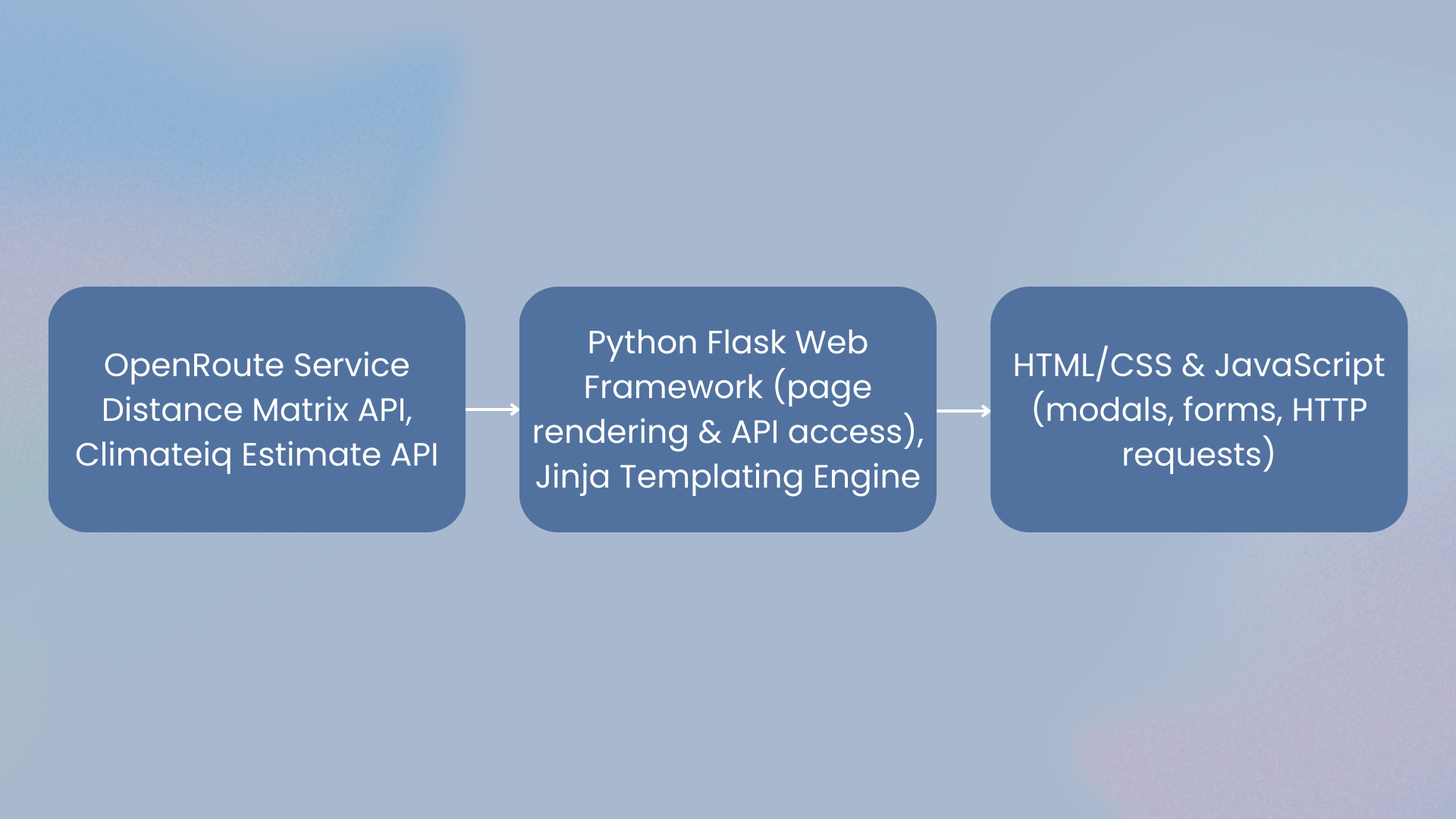
We built our web application using Python Flask for the Back-End and JavaScript, HTML and CSS for the Front-End tech stack. Additionally, we implemented a Climatiq API and a OpenRoute Service Distance Matrix API. The Back-End was used to implement the functionality of the application according to the data input and API information. The Front-End was used to design and organize the web application.
Challenges we ran into
Not finding APIs readily available to provide us with the data we want caused us to start coding the back-end a little later with a bigger time crunch. Once we did find them, integrating the APIs also caused an issue, due to a lack of documentation for Python. We also initially used VSCode Live Share to share code between us. It quickly became challenging: the live share localhost site would crash when the original sharer would close the command terminal, or sleep their laptop. To combat this, we switched over to working on our own personal instances, but updating a shared Replit frequently with new work.
Accomplishments that we're proud of
We're very proud of how we constantly adapted despite the challenges we encountered and the limitations in store for us. Despite facing challenges and setbacks with integrating the API, we were able to find creative solutions and implement them as best as possible, showcasing our technical skills and problem-solving abilities. Our front-end and UI was also built with appealing visuals in mind, and it shows in itself. Overall, we’re incredibly proud of developing an application targeting a strong air-environmental issue, and accomplishing as much as we did.
What we learned
We were able to gain a better understanding in collaborating for a full-stack web application, where the front-end and back-end development should be integrated more simultaneously. We learnt to quickly adapt with changes, and work effectively with team members, where documentation of programs helps improve readability.
What's next for TravelZero
For TravelZero, we aim to continue working on the backend to ensure that the Distance Matrix API can correctly collect information from the form and calculate distance based on geocode-calculated coordinates. Additionally, the Google Maps API would be implemented in order to display the Google Map with the route according to the inputted locations, therefore, providing a better visual experience for the user.

Log in or sign up for Devpost to join the conversation.