-
Dashboard
Inspiration
When we were presented with the CBRE challenge, we noted that the data was focused on the condition of the machines, with no regard to the humans employed to perform maintenance on them. We were inspired to take a human-focused approach to predictive analysis that incorporates natural language as a method for determining the condition of resources. At Elevator Pitch, we believe our human-focused AI/ML pipeline and human-centric design create an optimal experience for technicians, monitors, and ultimately, users.
What it does
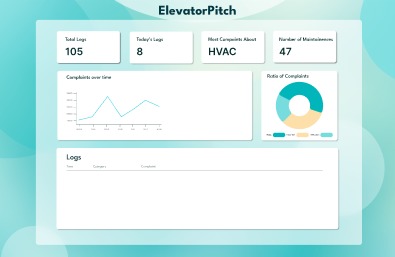
Our solution empowers building managers with a comprehensive overview of elevator-related complaints. Using speech recognition, our model analyzes feedback, categorizing it as positive or negative. In cases of negativity, it further classifies the issue, whether related to HVAC, elevators, or plumbing. The front end displays this data, providing insights like complaint types, maintenance requirements, daily complaint counts, and more, enabling effective management and decision-making.
How we built it
The first component of Elevator Pitch is the hardware. This component would be deployed on a user-adjacent device, such as a security camera. The hardware records user chatter and logs it in the database. The inference component watches for changes in the database and produces reports based on the sentiment and topic of the chatter. The frontend takes those reports and provides analytics and statistics. We used GCP to deploy our AI model, which is a pipeline of two models. The first is a wav2vec2 model which transforms audio to text. An MNLI model based on BART performs zero-shot classification on that text. The database is MongoDB, which is accessed by all components to synchronize and persist data. The front end is made with Streamlit and pulls from the database.
Challenges we ran into
Initially, we approached the challenge of integrating our stunning UI into Next.js with confidence, despite our limited familiarity with the framework. While we eagerly embraced the chance to explore this new technology, our time constraints posed a significant hurdle, and we pivoted to StreamLit. This transition also provided us with a unique opportunity to spotlight our UI philosophy and design principles. Additionally, we had started the project almost at midnight as that’s when the idea came to us.
Accomplishments that we're proud of
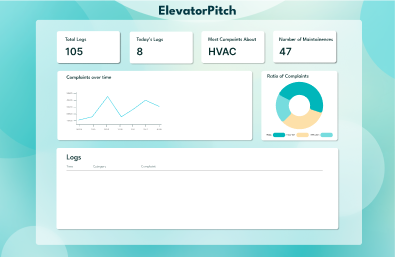
We’re proud of the design processes we went through to create this application. We began with low-fidelity mockups, then moved on to wireframing, high-fidelity mockups, and interactive prototyping. We worked closely with our devs to create a seamless design to implement.
What we learned
Throughout this project, our team gained valuable insights. We discovered how to adapt when facing challenges, taking this as an opportunity to showcase the aspects of the project we took pride in and fostering collaboration within our development team.
What's next for Elevator Pitch
In the future, we're eager to enhance our project by incorporating additional features into our dashboard, creating a more functional UI. Our plans include adding work order capabilities, task tracking, and the ability to compare trends between received complaints and completed maintenance tasks.
Built With
- figma
- ml
- python
- streamlit


Log in or sign up for Devpost to join the conversation.