Inspiration
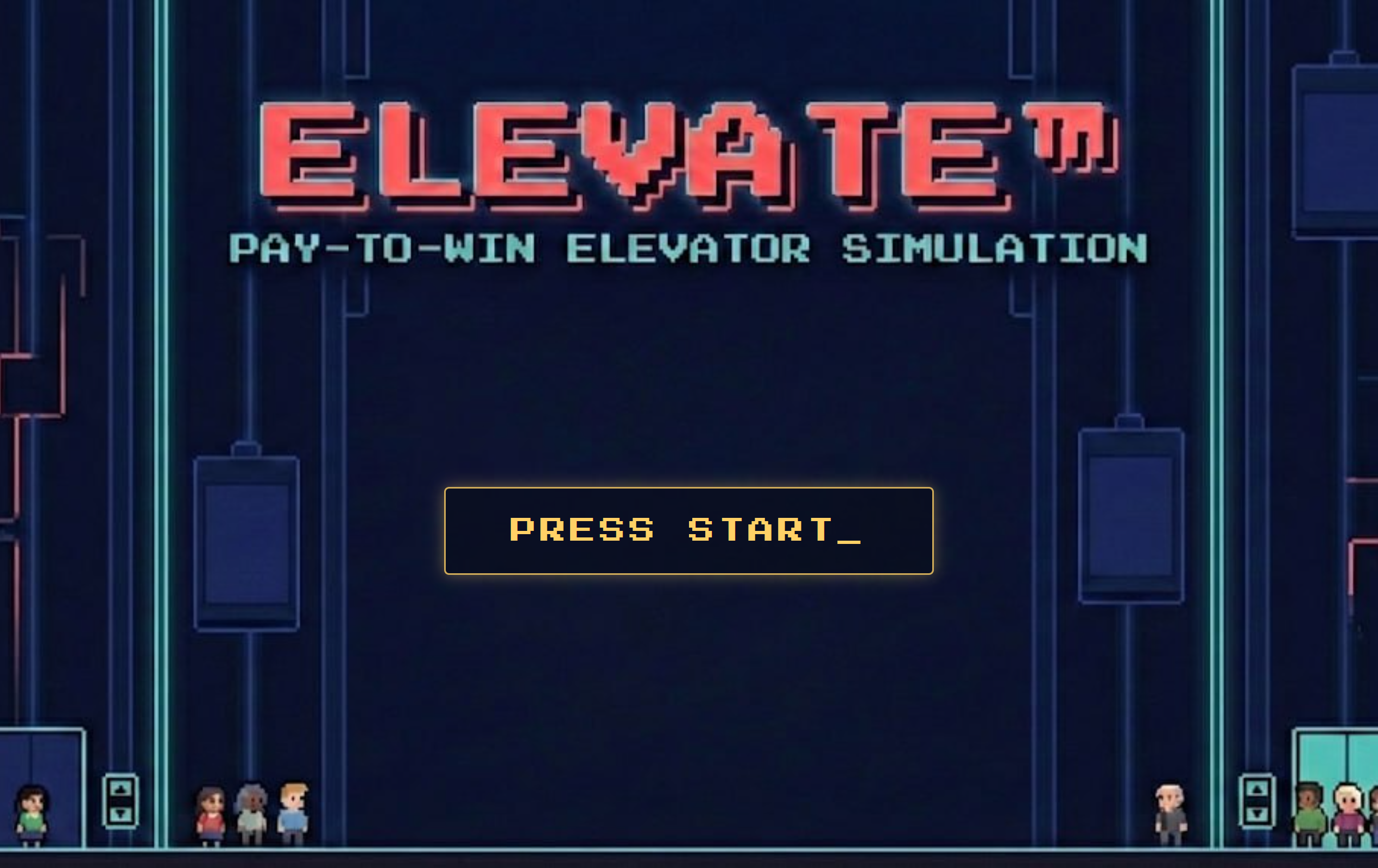
Many financial ideas such as capital allocation, liquidity risk, auctions, and behavioral bias are often taught in an abstract way. While the theory is sound, it can feel detached from how decisions are actually made under pressure. We wanted to explore whether these concepts could be understood instinctively, simply by playing a game.
The initial inspiration came from all-pay auctions and competitive bidding environments, where winning is costly and losing is still expensive. These systems felt like a natural foundation for a game that could create tension, force trade-offs, and reveal player behavior without requiring any prior financial knowledge.
What We Learned
Through building and playtesting the game, we learned how quickly simple rules can produce complex behavior. Players naturally began to think about timing, bluffing, conserving capital, and adapting to their opponent—even without being told to do so.
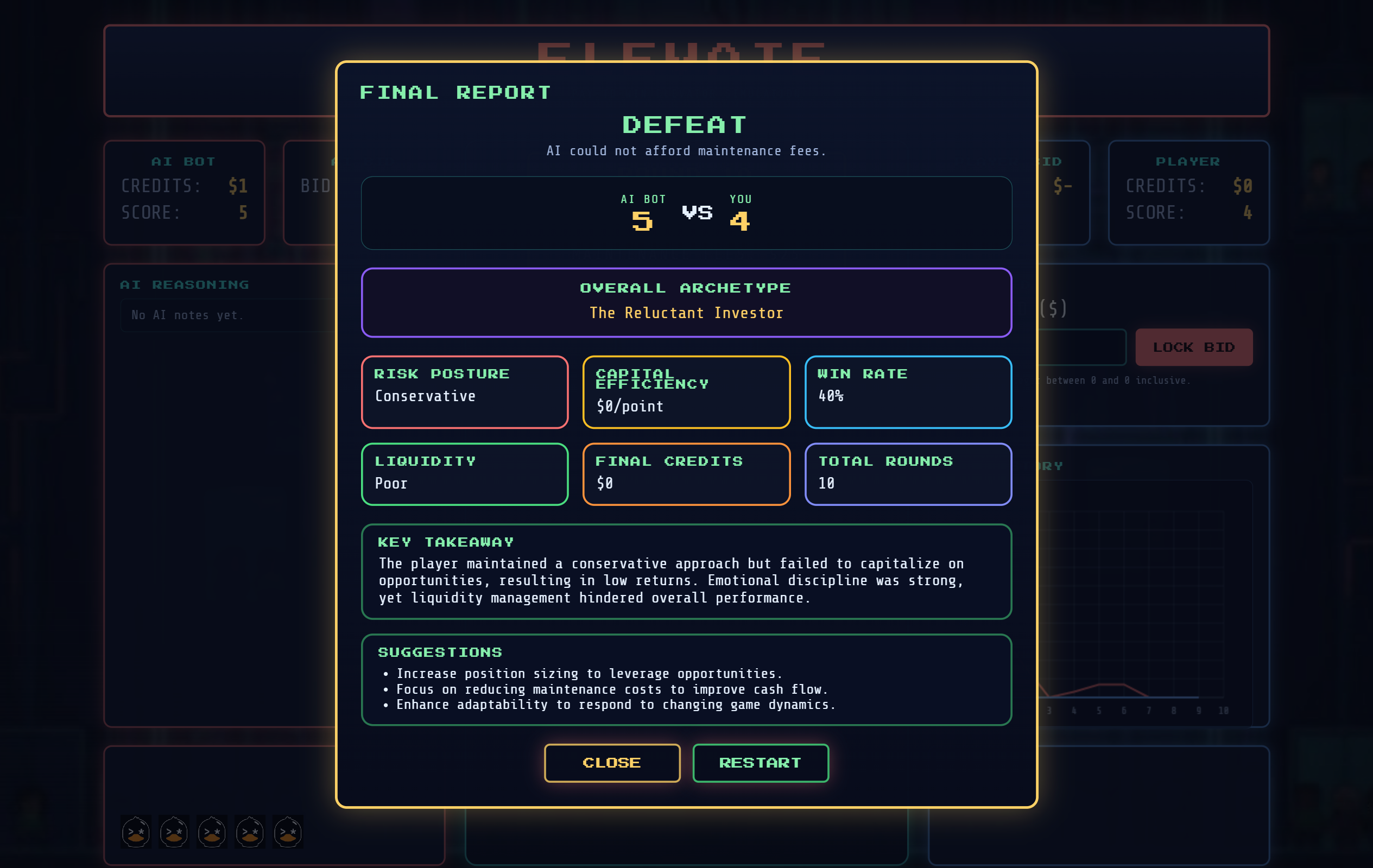
We also learned that decision-making under budget constraints feels very different from traditional turn-based games. Players experienced frustration, overconfidence, panic bidding, and restraint, which closely mirror real-world behavioral finance patterns. This reinforced our belief that experiential learning can be more powerful than explanation.
On the technical side, we learned how agentic AI systems can create more believable and engaging opponents compared to scripted logic. Allowing the AI to reason, plan, and adapt made gameplay feel more alive and unpredictable.
How We Built It
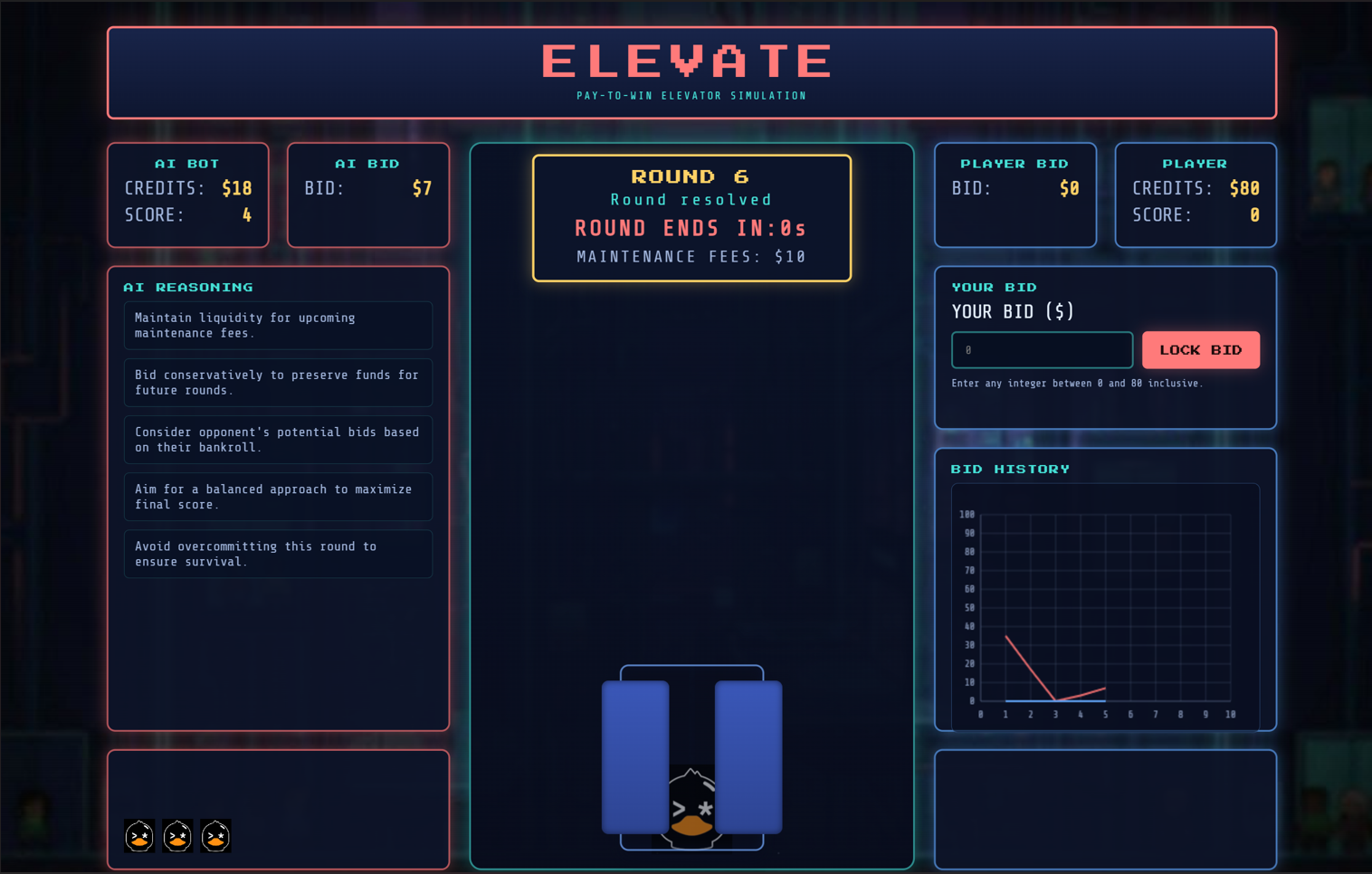
The game was built as a deterministic, round-based system to ensure clarity and fairness. The frontend uses a lightweight web interface to keep interactions fast and responsive, allowing players to focus entirely on decision-making.
The AI opponent was implemented as an agentic system using LangChain and LangGraph. Instead of hardcoding strategies, the AI analyzes the current game state, models the player’s past behavior, predicts likely bids, and plans its capital usage across future rounds. A personality modulation layer allows the AI to shift its behavior, making it feel more human and adaptable.
To improve transparency and trust, we added explainability features such as bid history and an AI reasoning panel, so players can understand not just what the AI did, but why it did it.
Challenges
One of the biggest challenges was designing rules that were simple enough to explain instantly but deep enough to avoid dominant strategies. Small changes to bidding rules or end conditions could easily break the balance.
Another challenge was tuning the AI. If it was too aggressive, it would bankrupt itself early; if it was too conservative, it became predictable. Finding the balance between survivability, pressure, and adaptability required extensive iteration.
Finally, we had to ensure that the AI felt intentional rather than random. The goal was not to make the AI unbeatable, but to make it feel like a thinking opponent whose behavior players could read, exploit, and be surprised by.
Built With
- canvas
- css3
- html5
- javascript
- langchain
- node.js
- openai-gpt-4o-mini
- rest-api
- zod

Log in or sign up for Devpost to join the conversation.