-
-
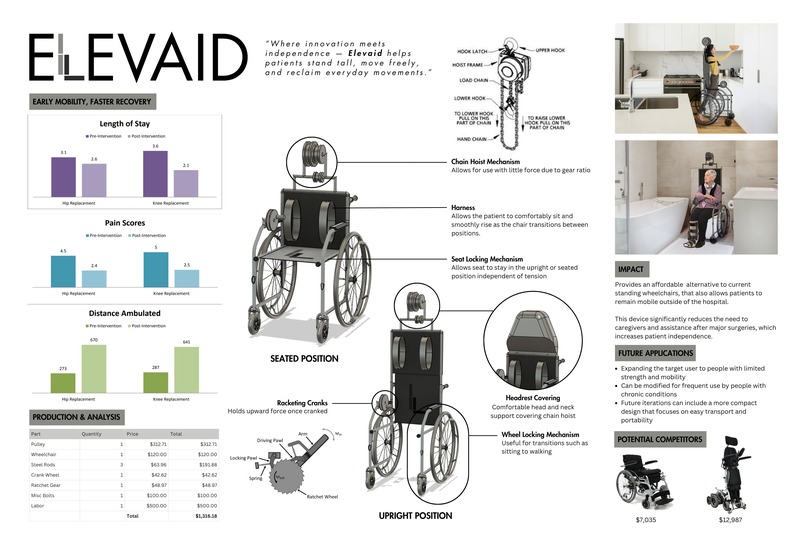
Elevaid Poster
-
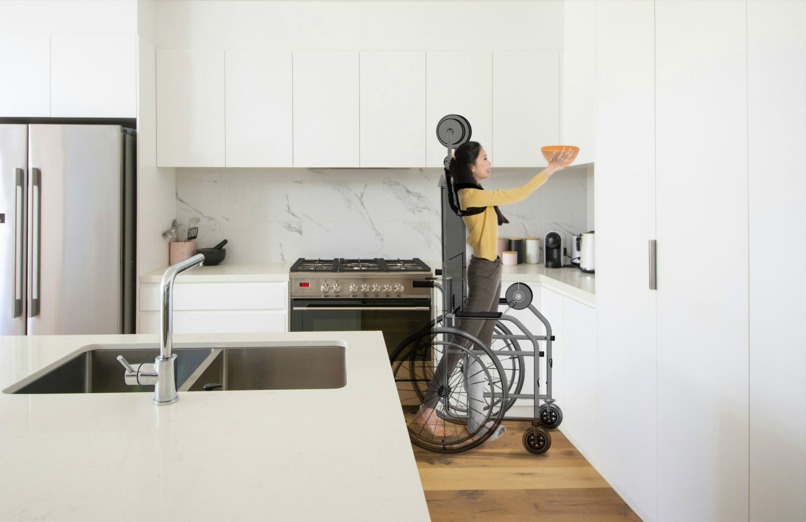
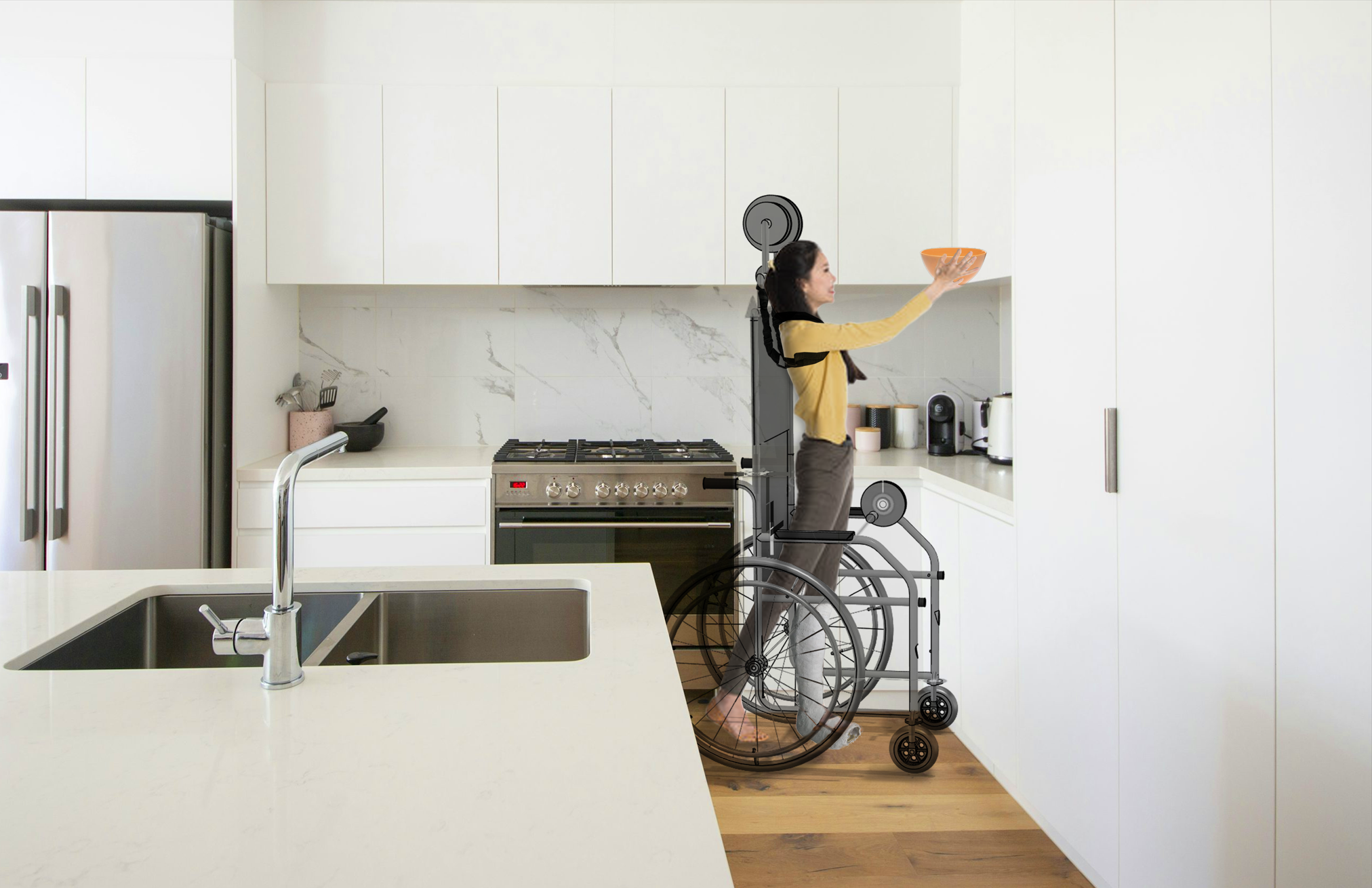
Elevaid Standing Position
-
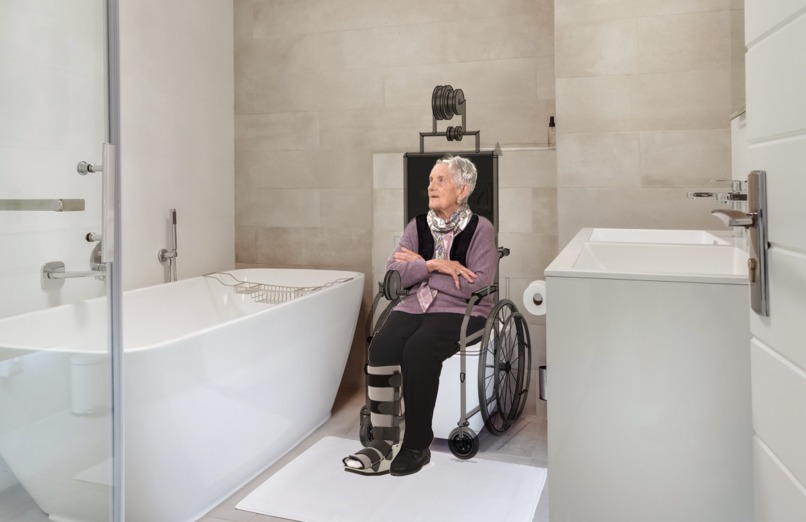
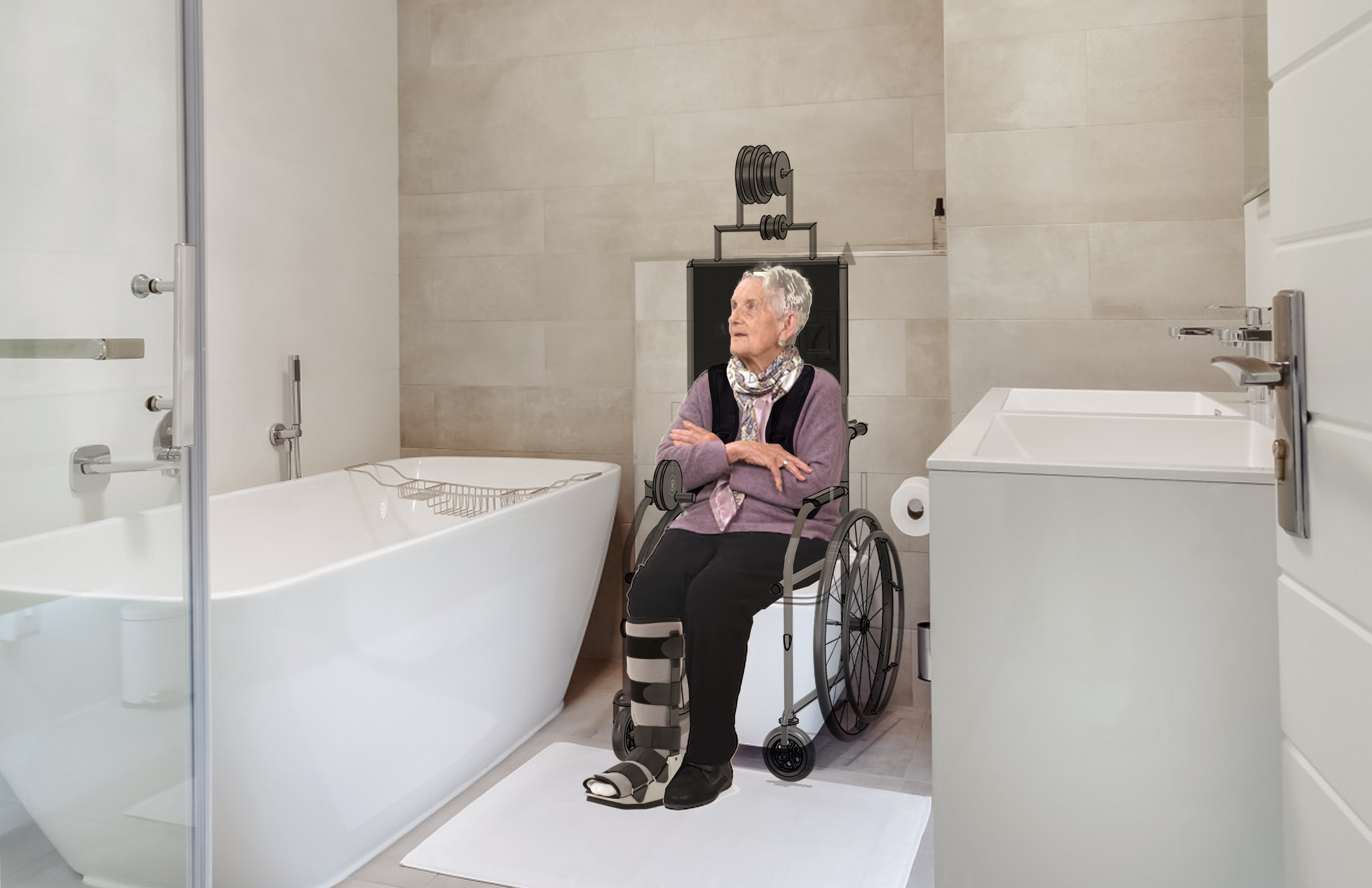
Elevaid Toilet Compatibility
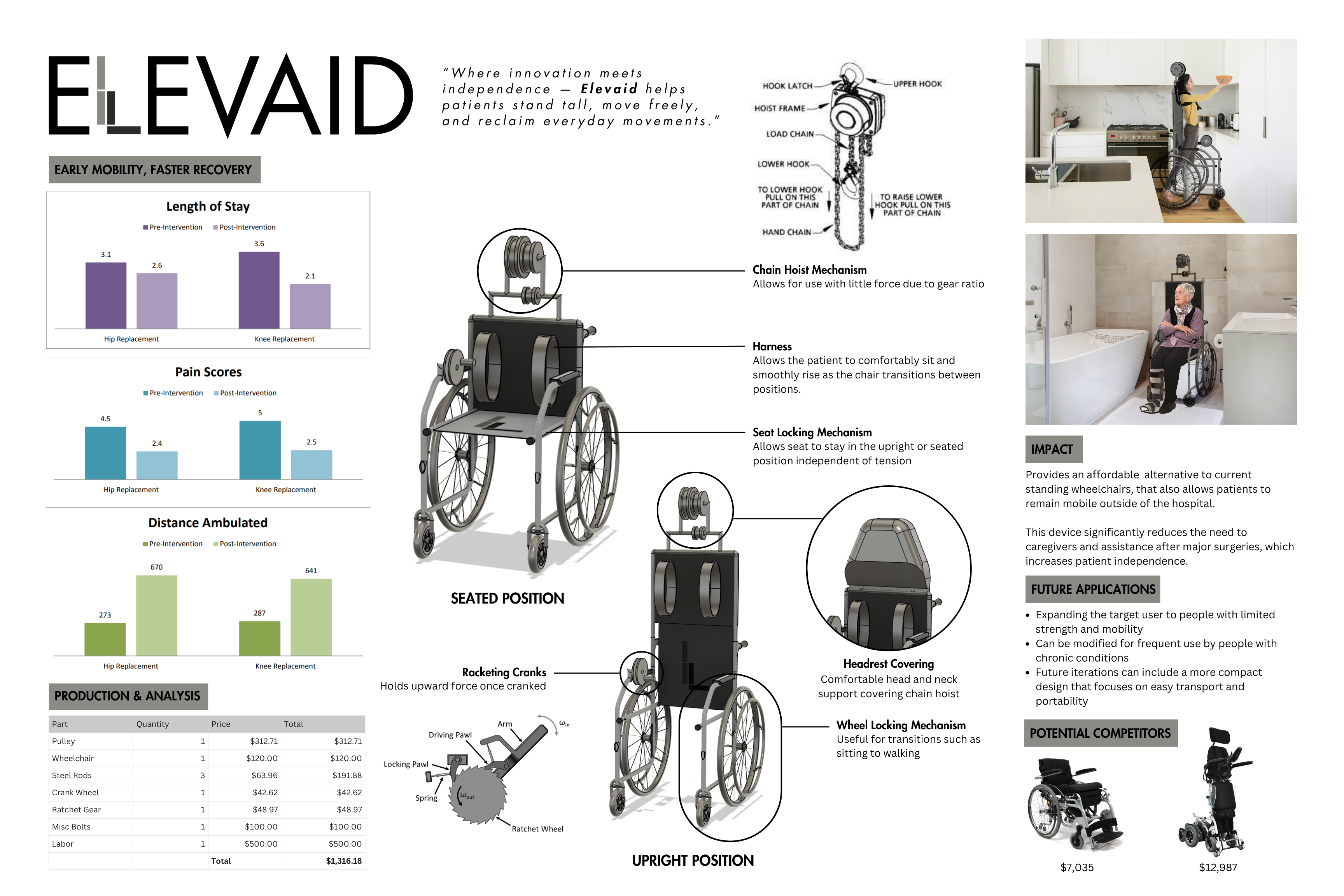
Inspiration
Stemming off of a standard wheelchair, Elevaid is a mobility assistor for patients at home recovering from recent knee, hip, and leg surgeries. Elevaid preserves the functions of a traditional wheelchair, but more importantly transforms into a standing structure that supports an adjustable amount of the patient’s body weight. This encourages patients to practice movement in their early recovery stages by alleviating pressure and duress on the legs. Over 1 million hip and knee replacements are performed annually in the U.S. alone, with most patients requiring 4–6 weeks of partial mobility assistance. Many rely on caregivers for standing, toileting, and early walking support — often leading to delayed rehabilitation. Elevaid addresses this gap by allowing users to stand, reposition, and move with minimal assistance, promoting early mobility while preserving safety and comfort. Enhanced Recovery After Surgery (ERAS) research states that early mobilization after surgery “reduces the risk of postoperative complications”, and “accelerates the recovery of functional walking capacity” (Tazreean). Our design aims to provide motion, weight, and positioning interventions which are proven to reduce hospital stays and overall recovery time (Mahdhiya). By extending the existing use of the wheelchair into a standing mobility aid, the Elevaid aims to provide independent movement for patients, adding motivation to walk around or stand when they are recovering at home. In daily use, a patient can independently transition from sitting to standing by turning the hand crank. This allows for less or no reliance on caretakers for daily assistance, and empowers patients to take initiative in improving their recovery experience, overall health, and wellbeing. An adjustable height to the structure allows for a comfortable and ergonomic fit for patients of all heights, and an adjustable weight relief system allows for varying degrees of aid dependent on the patient’s stage of recovery.
What it does
Elevaid relies on an outer frame that branches off of the wheelchair — All the patient needs to do to transform from a seated to standing position is to turn a hand crank that is attached to the right arm rest. This hand-cranked mechanism winds a rope connected to a chain hoist and pulley system, providing a significant mechanical advantage. The design enables patients to lift themselves using a maximum of 5% of the patient’s body weight. Its fully mechanical construction makes it a reliable and affordable solution for home rehabilitation and assisted mobility. With no reliance on a battery or motor, Elevaid is guaranteed to be ready to assist at any moment for as long as the patient’s recovery needs. The rope incorporates a self-locking ratcheting mechanism with a friction brake release, allowing patients to safely control the level of assistance and gradually lower themselves back into a seated position. Additionally, the seat folds upright for standing support and can recline backward with a locking “click” position, enabling users to comfortably lower themselves for bathroom use or other seated activities.
How we built it
This design builds upon proven wheelchair concepts while introducing innovative assistance for standing and using the bathroom. Its optimized gear ratio enables users with limited strength to lift their own body weight with ease. Because all components are standard off-the-shelf parts with slight modification, the system is affordable to produce. Unlike many mobility aids that rely on expensive motors and batteries, this fully mechanical design offers greater durability, lower maintenance, and a longer service life.
Challenges we ran into
Future versions of Elevaid will focus on improving space efficiency, structural reinforcement, and overall portability. The current prototype prioritizes mechanical reliability and ergonomic support; however, future designs aim to refine the frame geometry to minimize bulk and allow for easier storage in tight home or hospital environments. Reinforced load-bearing joints and lightweight composite materials, such as carbon-infused aluminum, will enhance durability while reducing total weight. Additionally, modular quick-release components will enable the system to fold or collapse for transport in vehicles, making Elevaid suitable for both in-home and outpatient rehabilitation settings. These advancements will further increase user independence and make Elevaid more adaptable to a wider range of recovery environments.
Accomplishments that we're proud of
Elevaid successfully merges two essential rehabilitation tools — a wheelchair and a standing aid — into one simple, purely mechanical system. Its design demonstrates that accessibility and innovation do not have to depend on costly electronics or batteries, but can instead come from thoughtful engineering and user-centered design.
What we learned
Through the development of Elevaid, we learned the importance of balancing mechanical simplicity with ergonomic function. We gained experience optimizing gear ratios for human mechanical advantage, integrating safety features like self-locking ratchets, and designing structures that maintain stability under dynamic loads. The process emphasized how much thoughtful design can improve quality of life for patients in recovery.
What's next for Elevaid
Future versions of Elevaid will focus on improving space efficiency, structural reinforcement, and overall portability. The current prototype prioritizes mechanical reliability and ergonomic support; however, future designs aim to refine the frame geometry to minimize bulk and allow for easier storage in tight home or hospital environments. Reinforced load-bearing joints and lightweight composite materials, such as carbon-infused aluminum, will enhance durability while reducing total weight. Additionally, modular quick-release components will enable the system to fold or collapse for transport in vehicles, making Elevaid suitable for both in-home and outpatient rehabilitation settings. These advancements will further increase user independence and make Elevaid more adaptable to a wider range of recovery environments.
Built With
- autodesk-fusion-360
- solidworks


Log in or sign up for Devpost to join the conversation.