-
-
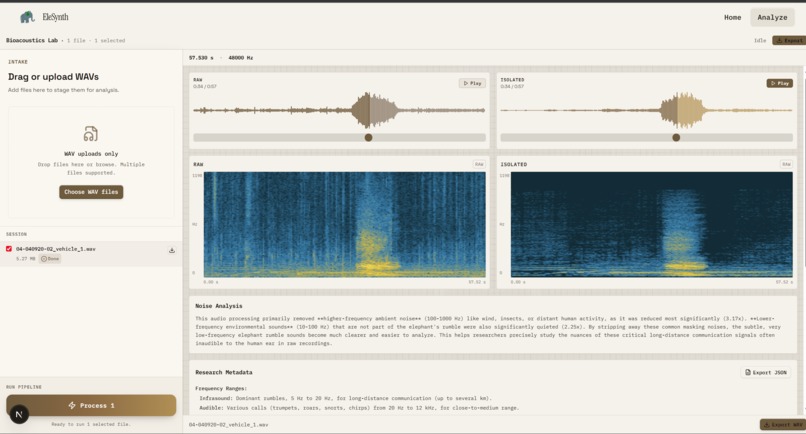
Process Page
-
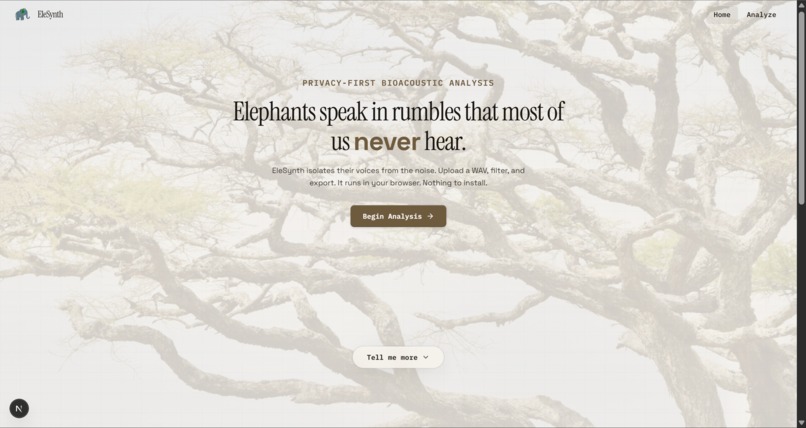
Home Page
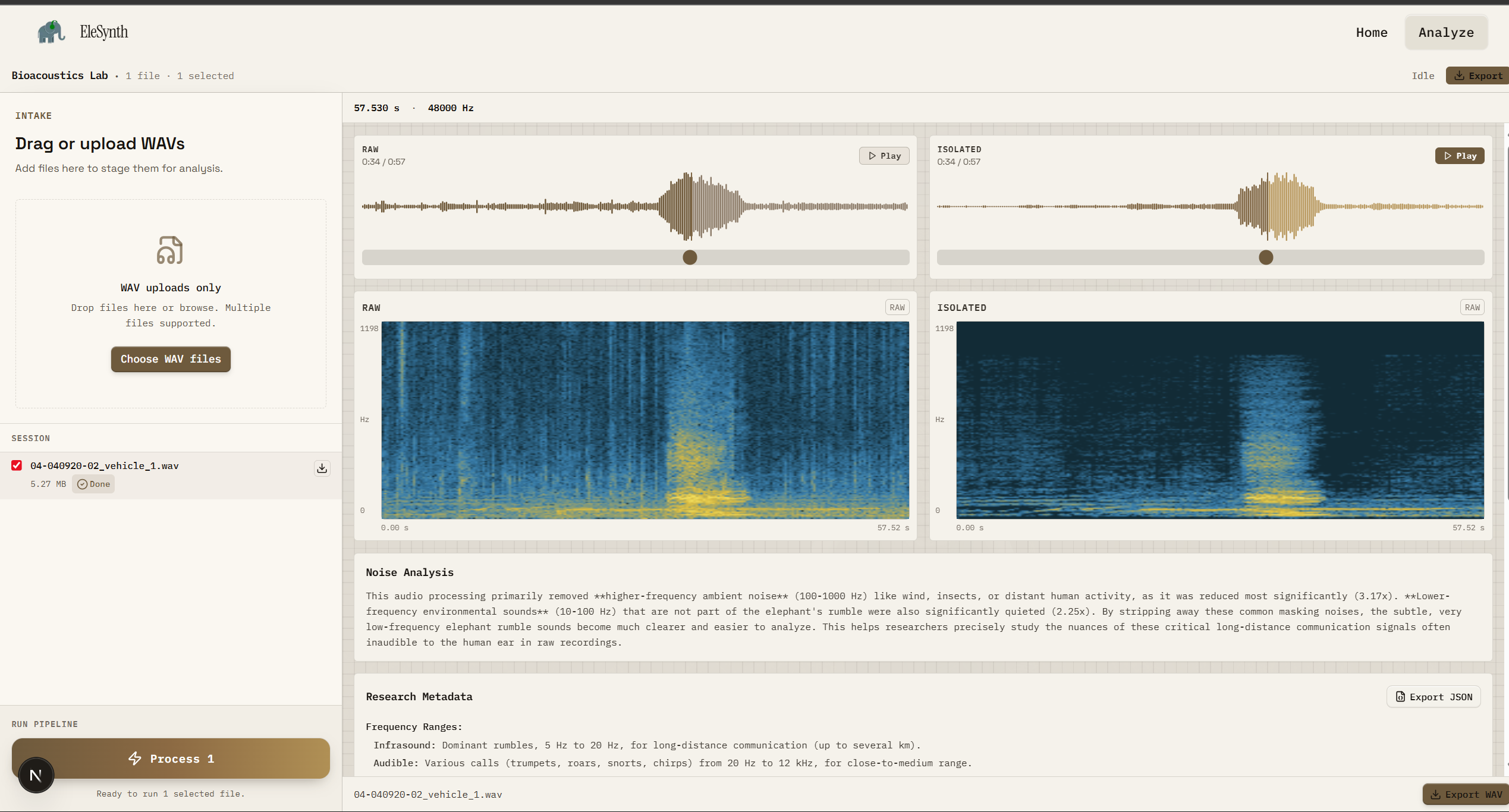

Inspiration
Years of elephant field recordings sitting unused because of background noise from cars and planes, and we wanted to give those recordings a second life.
What it does
Removes mechanical noise from elephant recordings and returns a clean audio file with before and after spectrograms so researchers can verify the result.
How we built it
FastAPI backend running a DSP pipeline. STFT converts audio to a spectrogram, HPSS separates the elephant signal from noise, noise floor subtraction removes residual hum, and a bandpass filter locks the output to 10 to 1000 Hz. Frontend handles upload, visualization, and download.
Challenges we ran into
FFT resolution at low frequencies. Standard FFT sizes can't distinguish a 10 Hz elephant call from noise a few Hz away, so we dynamically calculate the FFT size per clip to stay under 2 Hz per bin.
Accomplishments that we're proud of
The before and after spectrograms. You can visually see the noise disappear and the elephant's harmonic bands emerge cleanly.
What we learned
Elephant calls are almost entirely inaudible to humans. The fundamental frequency sits below what most speakers can reproduce. Mechanical noise and biological sound behave very differently in a spectrogram, which is what made our approach work.
What's next for Elesynth
Video analysis of elephant gestures paired with cleaned audio to add behavioral context to every vocalization, moving closer to understanding what elephants are actually saying to each other.

Log in or sign up for Devpost to join the conversation.