Hand-tracking controls
Elementalmons can be played entirely with bare hands. When you put the controllers down, the game switches to hand tracking automatically. Pick them up again and it switches back. Nothing needs to be set up.
Walking with your hands - innovative point finger and go/turn system
Walk: point your index finger, with the other fingers curled, roughly where you want to go. You walk in that direction, at the same speed as with the thumbstick. Turn: point to the side, left or right. You turn smoothly or in snap steps, depending on your comfort settings. Stop: relax your hand or open it. No accidental movement: A short hold is needed before you start moving. Pointing at a menu or button never moves you. Pointing down at the floor or up at the sky does nothing. Walking is off in the main menu and while the tablet is open.
Battle controls
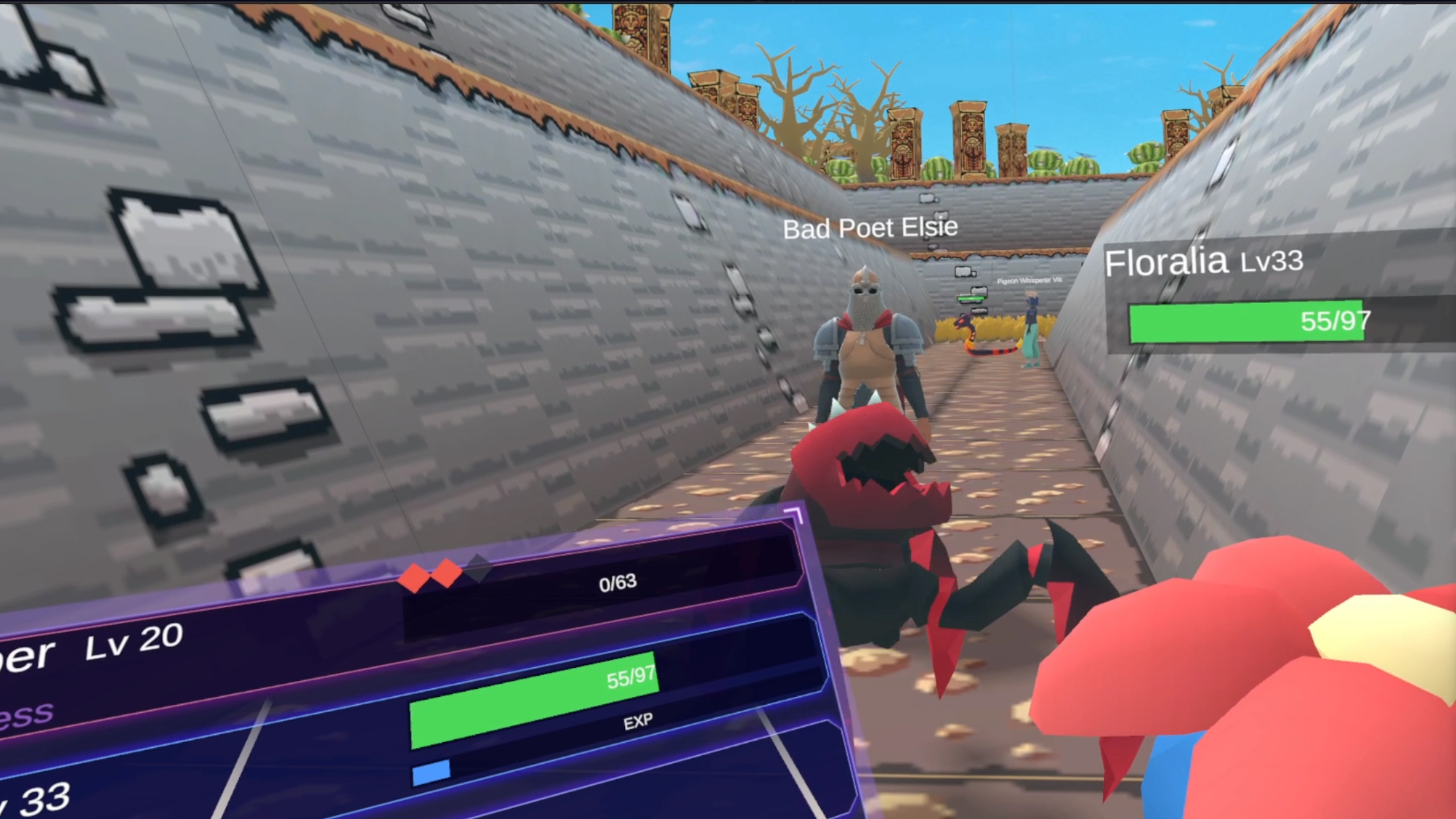
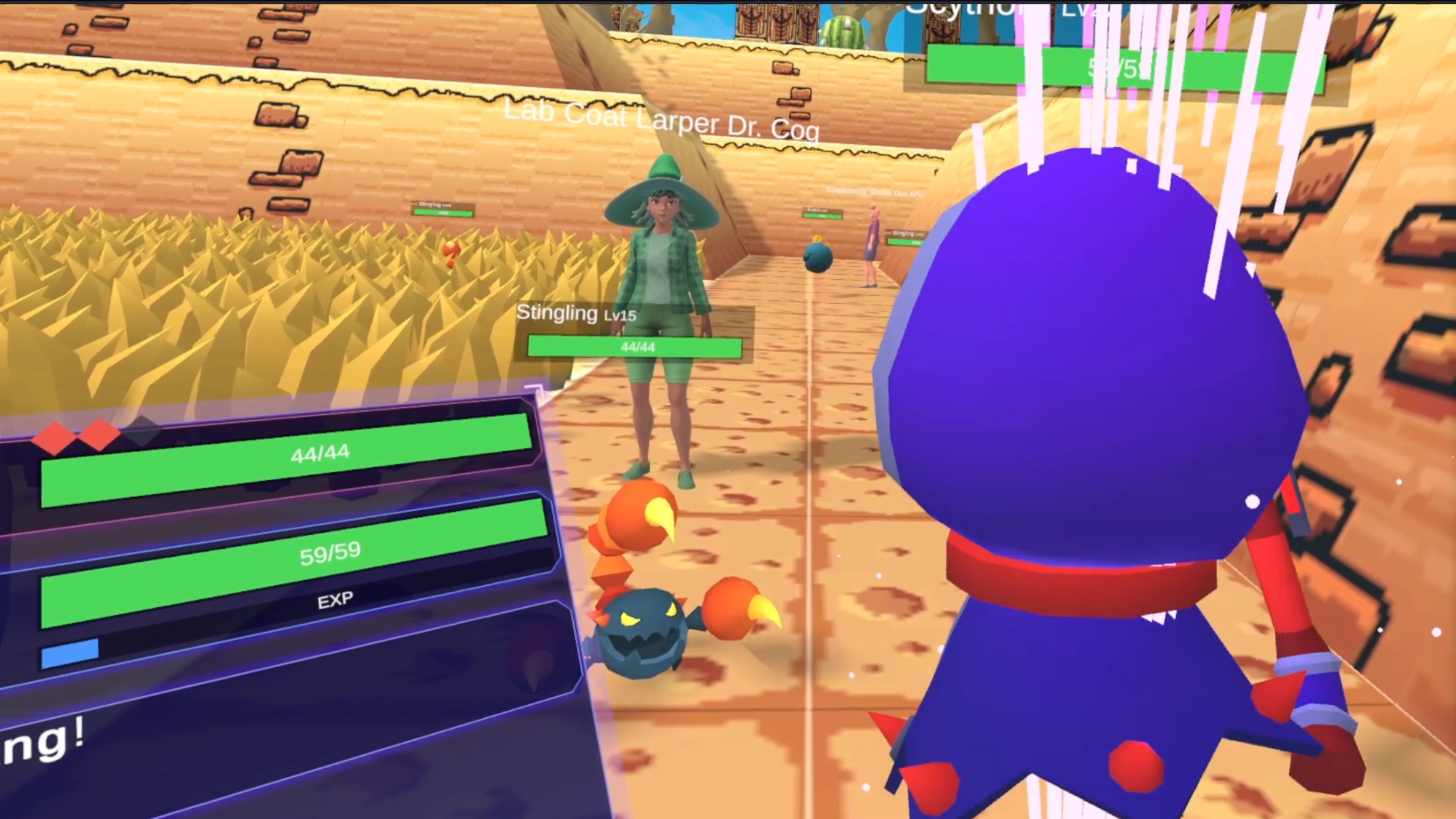
Pressing buttons: you can press battle menu buttons (moves, items, swap, run) in two ways: Poke: touch the button with your fingertip, like a real button. Ray + pinch: aim the ray from your hand at the button, then pinch your thumb and index finger to click. This works from a distance. Timing orbs: touch the orbs with your fingertips or palm to land critical hits and blocks. Your monsters: you can pet them with your bare hand.
The tablet
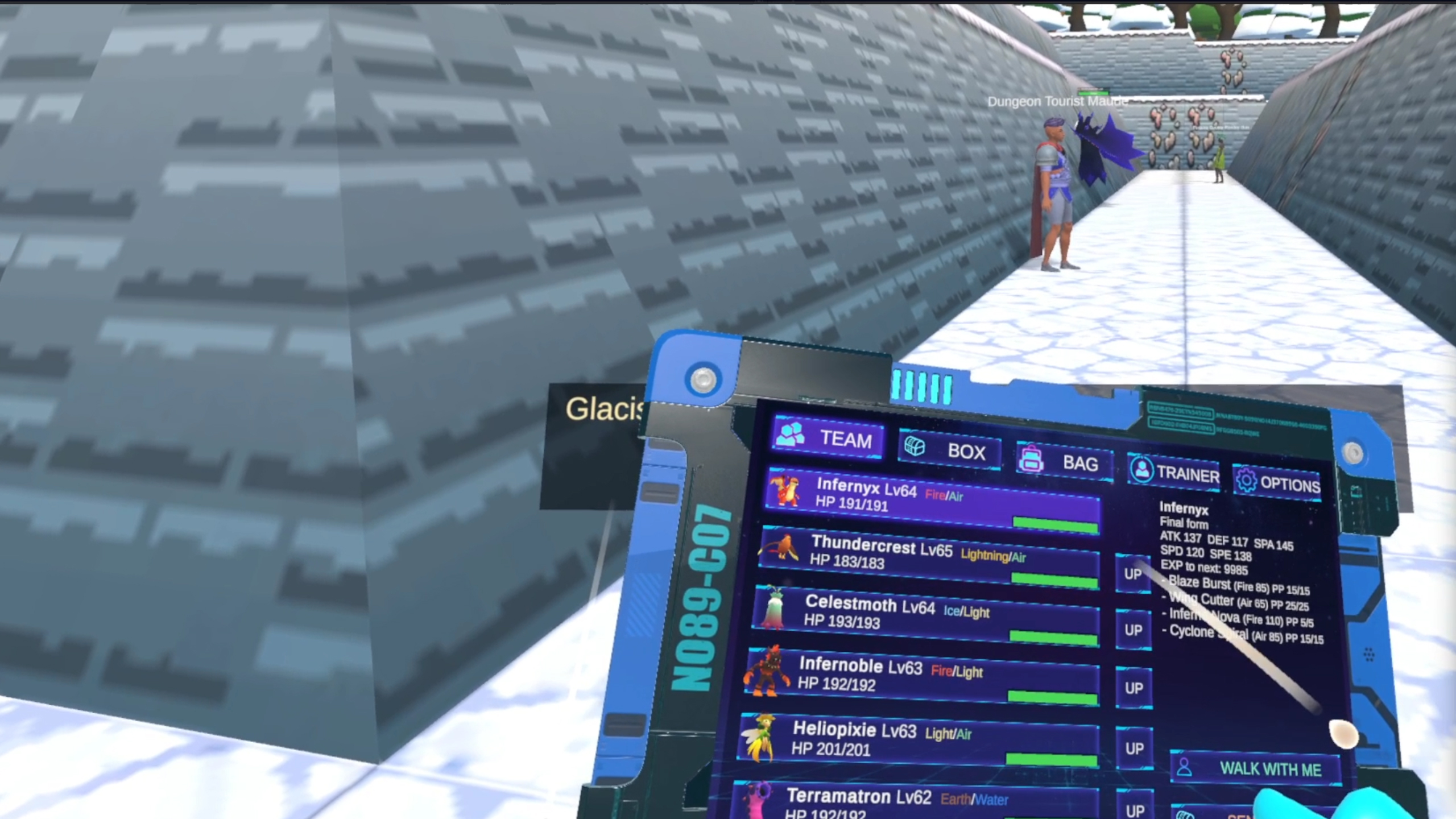
Opening it: turn your left palm toward your face. The tablet appears in your hand, upright and facing you, and follows your hand smoothly. Using it: tap it with your other hand’s index finger, or point and pinch. It holds your team, your Elementalmons collection, items, the map and settings. Closing it: turn your palm away and it disappears. While it is open: walking is paused, and the hand holding the tablet can’t trigger anything by accident. Left-handed players: if the tablet is set to the right hand in the settings, the right palm opens it instead.
Main menu
There is no walking in the main menu. Everything can be clicked with the hand ray and a pinch, or by poking the buttons directly.
Inspiration
We grew up with monster-taming games and always wanted to step inside one: to walk the routes ourselves, meet our monster at its real size and fight next to it instead of choosing options from a menu. VR finally makes that possible, so we built Elementalmons, a full monster-taming adventure made for Meta Quest from the ground up.
What it does
Elementalmons is a complete VR monster-taming RPG:
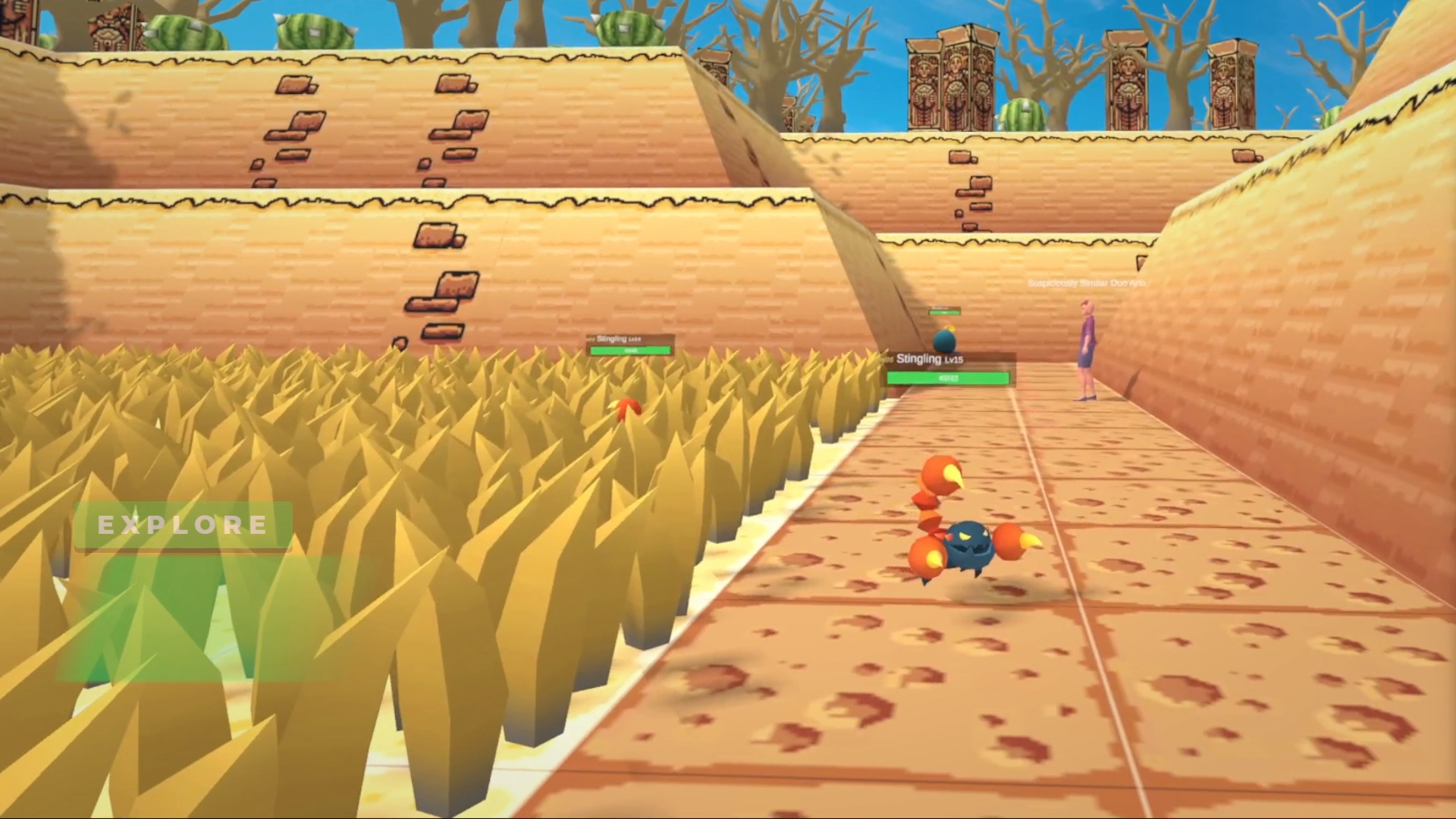
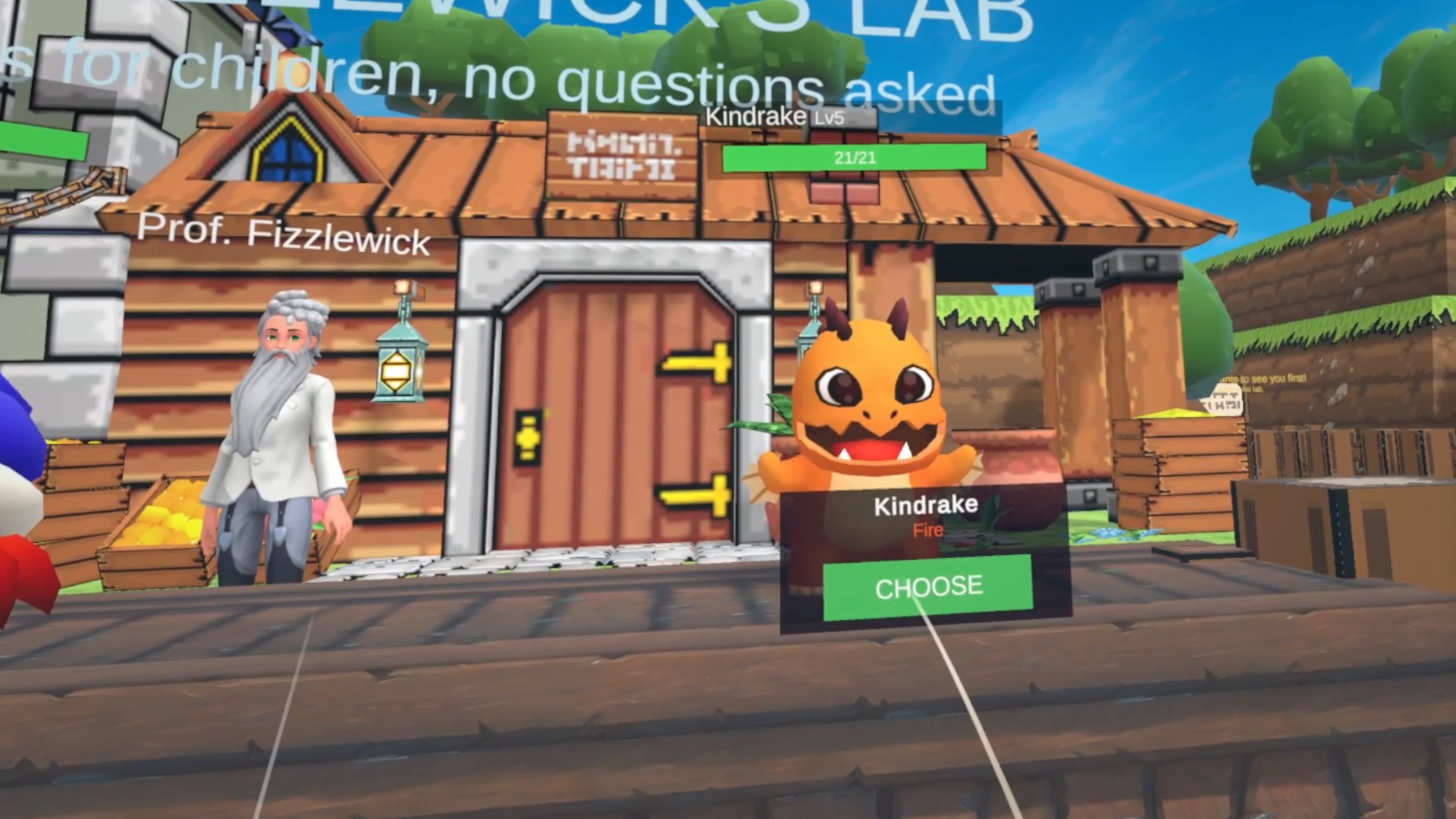
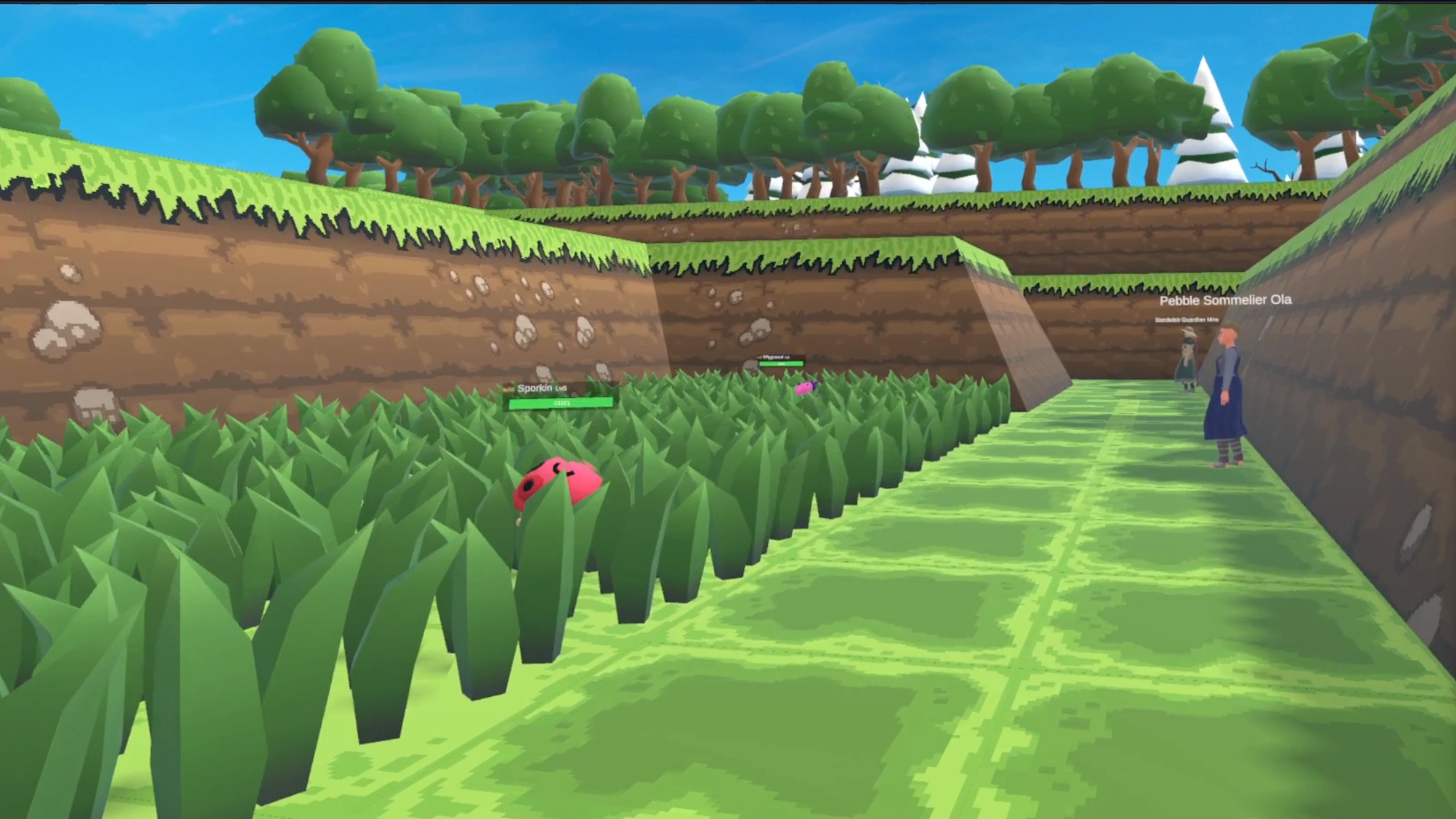
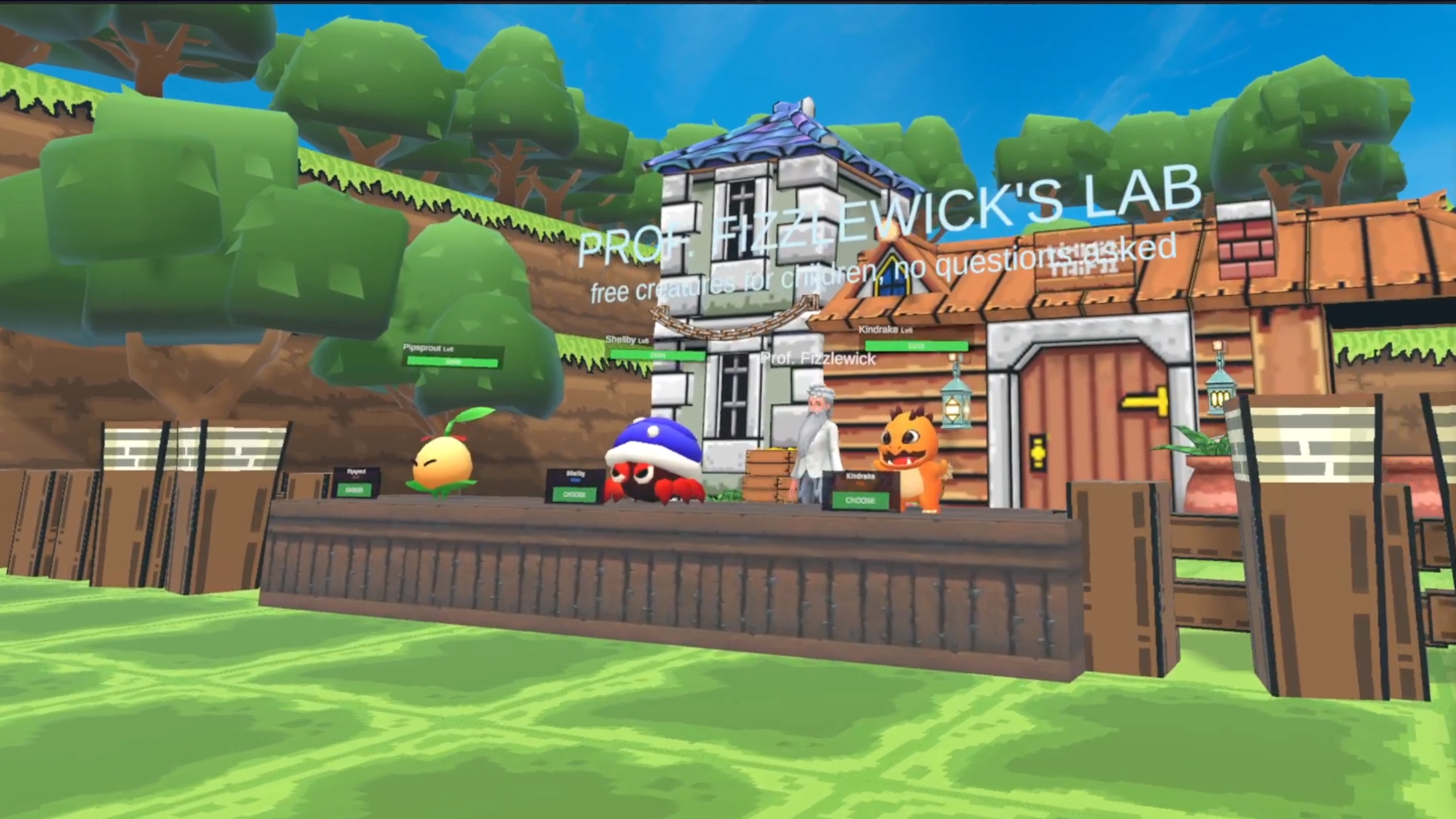
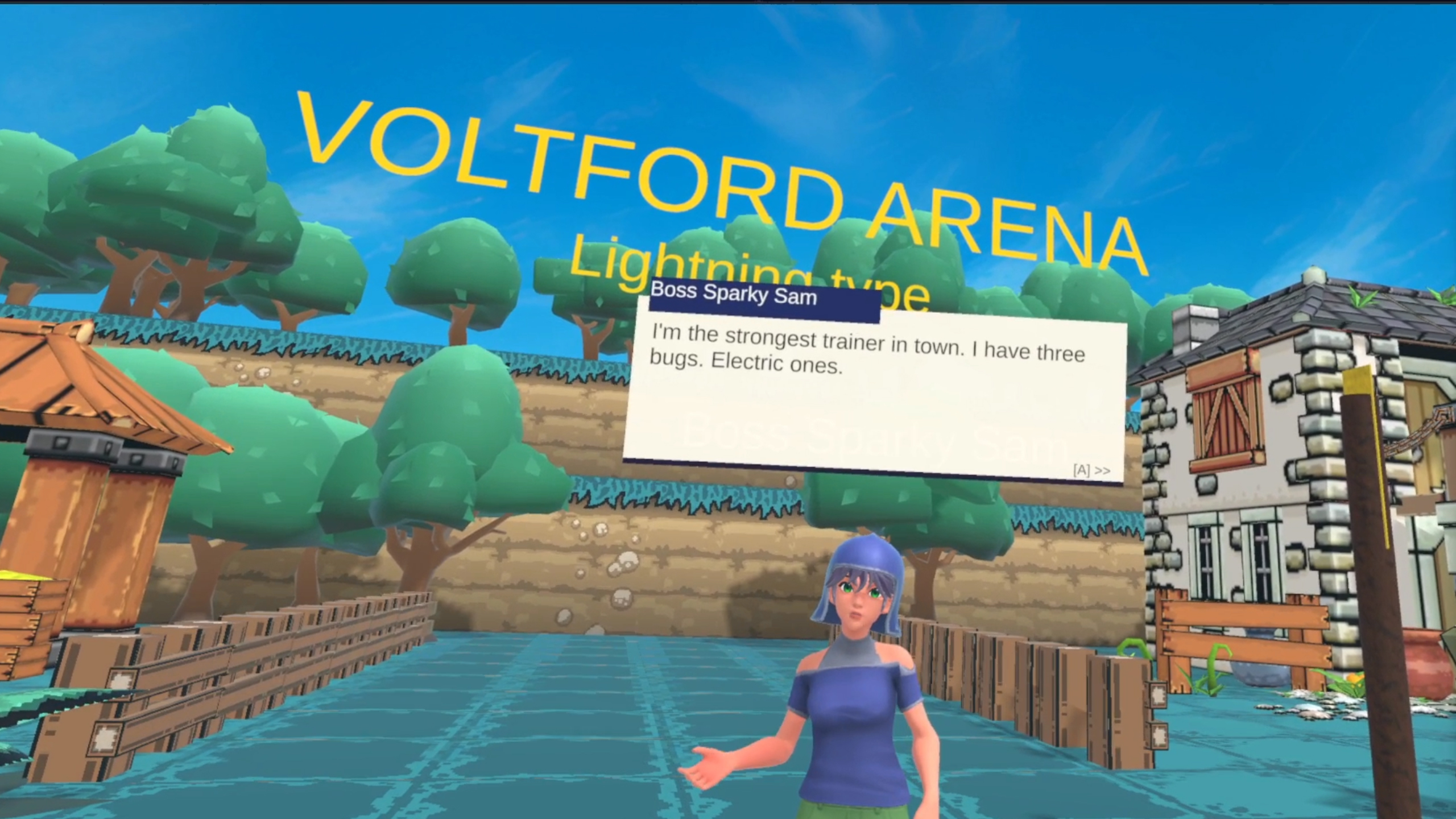
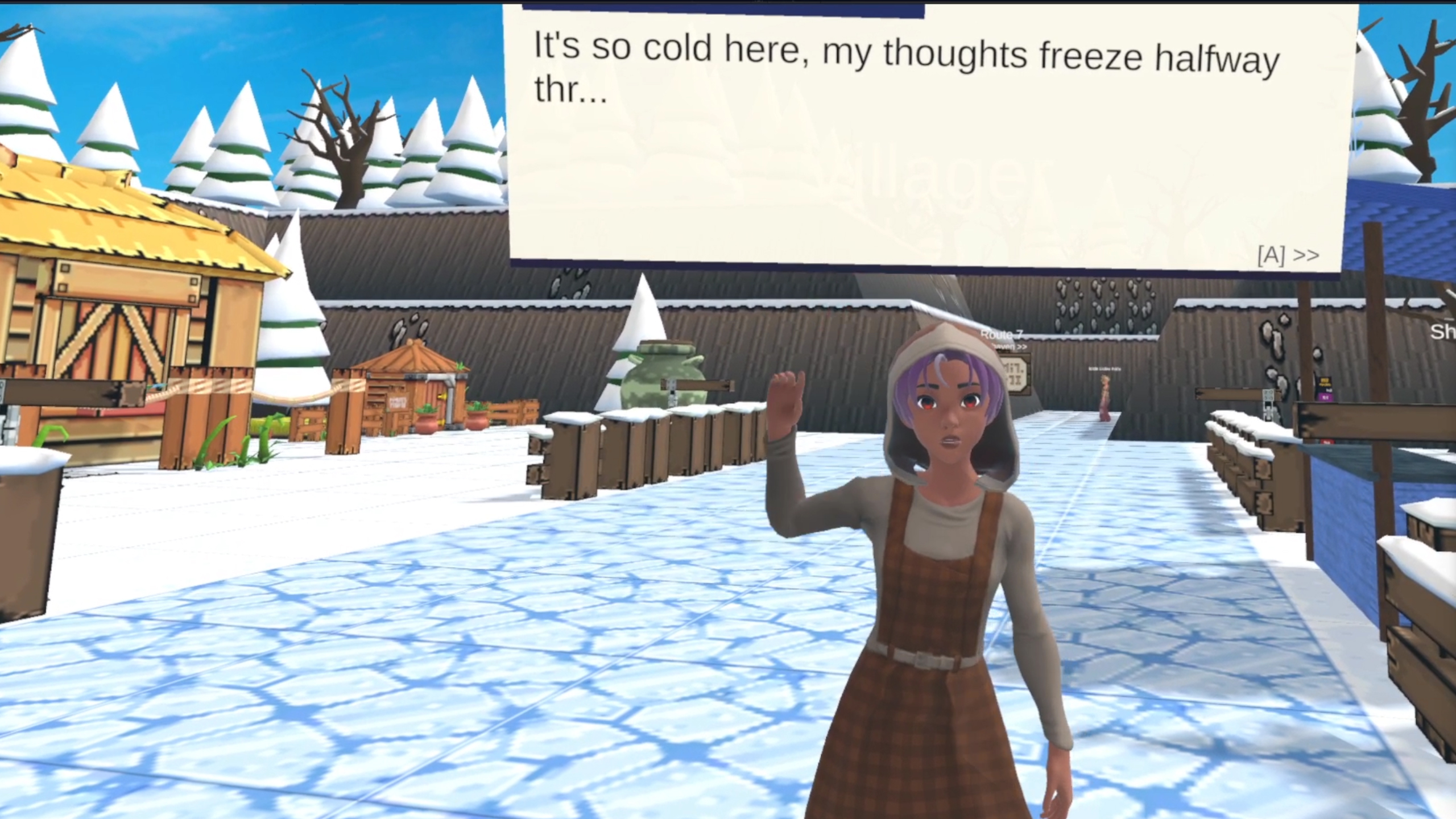
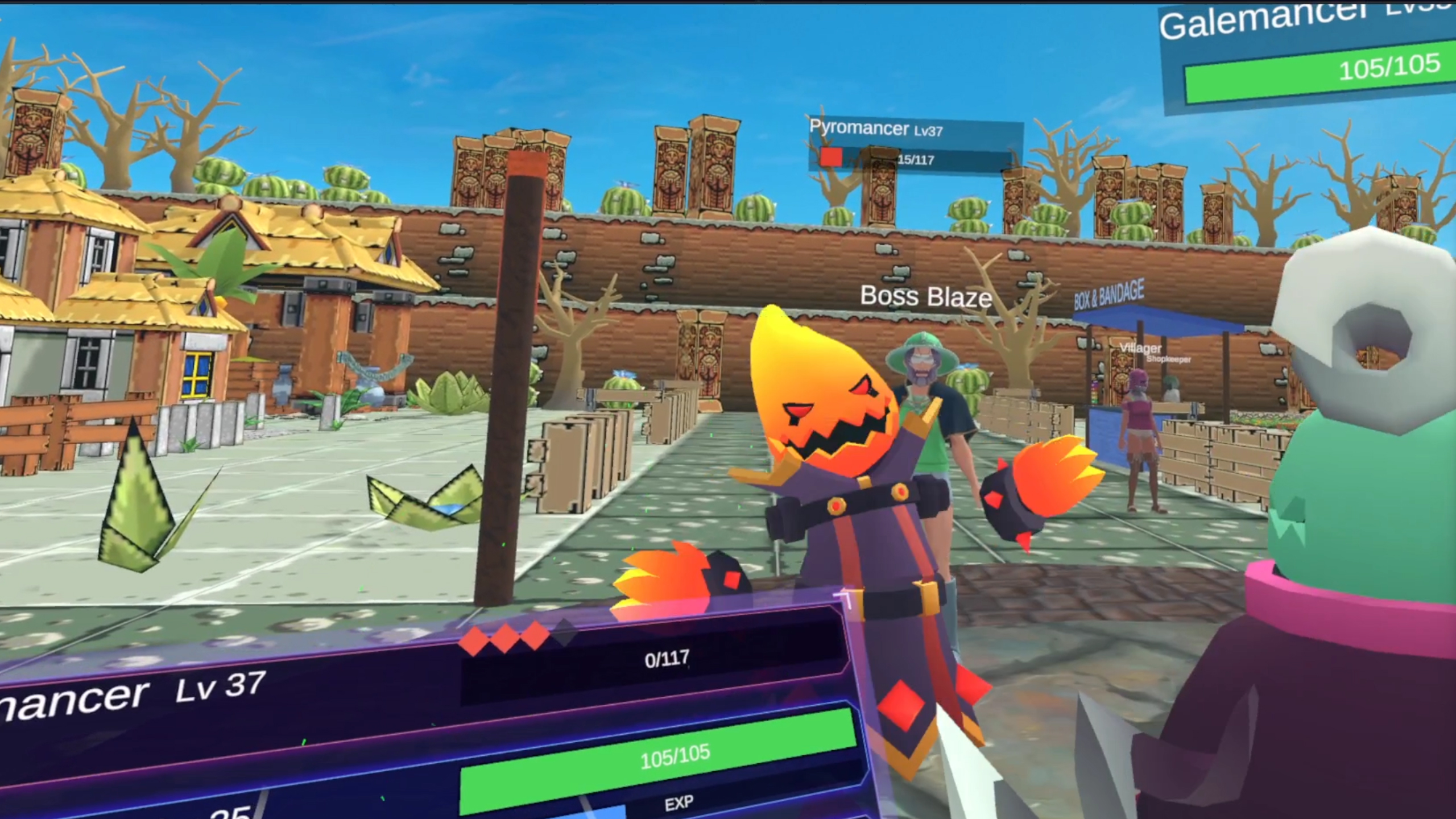
123 Elementalmons in 8 elements. You catch them with Capture Boxes, build a party of 6 and watch them evolve right in front of you. One seamless world. 8 towns and 8 winding routes, with no loading screens between areas, 112 trainers to beat, 8 town bosses with medals and a final Champion. Physical battles. When you pick an attack, glowing orbs appear within arm’s reach and you hit them in rhythm. Your timing sets the damage, from 30% to 110% with PERFECT hits. When the enemy attacks, one well-timed hit dodges and cuts the damage to 30%. A companion that walks with you. Any monster from your team or box can follow you through the world, and you can reach out and pet it. A living world. About 700 voiced lines, every character with their own voice and lines (no two characters share a sentence). NPCs gesture, look at you and move their lips when they talk. The writing is full of humour and fourth-wall jokes, with trainer classes like Snack Kid, Pebble Sommelier and Icicle Licker. Comfort and accessibility. Seated or standing play, snap or smooth turning, a run toggle, a wrist tablet for the left or right hand, and 18 languages, including Arabic (right-to-left), Japanese, Korean and Chinese. Fully offline. Your progress is saved automatically, and saves are kept compatible across game updates.
How we built it
Engine and platform: Unity 6 with URP, OpenXR and the XR Interaction Toolkit. Vulkan, IL2CPP/ARM64 and foveated rendering, targeting Quest 2, Quest Pro, Quest 3 and Quest 3S. Data-driven editor tools. The species database, moves, items, UI and the whole world map are generated by our own Unity editor builders. The map is about 32,000 editable tiles, baked into merged chunks with GPU instancing, colliders and a NavMesh. Balance by simulation. Boss levels are set by simulating a playthrough that fights every trainer in order and tracking the experience earned. Voices: a Python pipeline with ElevenLabs Voice Design gives every character a unique voice with emotion tags. Each recording is checked automatically with speech recognition to confirm it says its line. Art and audio: licensed asset packs (Meshtint monsters, BoZo characters, Zerin Labs terrain, WowSound music, Kevin Iglesias animations), brought together with custom code for sizing, effects and animation. AI pair programming: much of the code and tooling was written with Claude Code, connected live to the Unity Editor through MCP and Meta VR CLI.
Challenges we ran into
Scale in VR. 123 models from different packs came in different sizes and pivots, and attack effects ranged from 20 to 160 m. We measure each model’s real mesh in its idle pose, set battle heights by evolution stage, give larger final forms extra room in the arena, and scale every effect to its target. A dragon that looks huge on a monitor looked small at 1.8 m in VR, so we let big final forms grow up to 2.8 m. Saves that never get lost. A Quest app can be closed at any moment. Every save goes to two places (an atomically written file and PlayerPrefs) and passes through version migrations, so updates never wipe progress. The editor isn’t the headset. Some bugs appeared only on device: healing-machine boxes invisible on Quest, and voice lines loading too late. We learned to test every build on the headset. VR comfort. We removed the 180° turn that kept triggering by accident, fixed recentering during battles, and fixed a seated-mode bug where the camera rose a little every frame. Store requirements. We met Meta’s VRC requirements, including target API 34, pausing when the app loses focus, and fixing a manifest entry that would have made the game install only on Quest Pro. Our own identity. We went through every name, line and joke so the game stands on its own and doesn’t lean on the genre’s famous franchises.
Accomplishments that we’re proud of
A full-length RPG on standalone VR: 123 species, 112 trainers, 8 bosses and a Champion, in one continuous world. A battle system that gets you moving, built for VR rather than ported from a gamepad. About 700 voiced lines with a unique voice for every character, in a game you can play in 18 languages. Small moments players love, like petting your companion and seeing hearts appear.
What we learned
In VR, size and distance are game design: the same monster feels completely different at 1.8 m and at 2.8 m. Generating the world and data with tools let us rebuild and rebalance the whole game in minutes. Comfort settings and safe defaults matter as much as features. Automated checks (speech recognition for voices, playthrough simulation for balance) catch problems that would take a human tester hours to find.
What’s next for Elementalmons
Launch on the Meta Quest Store. A PC release, in VR and in flat-screen mode. Post-launch updates driven by player feedback: new Elementalmons, new areas and more battle moves. Ideas we are exploring: trading and battling with friends.


