-
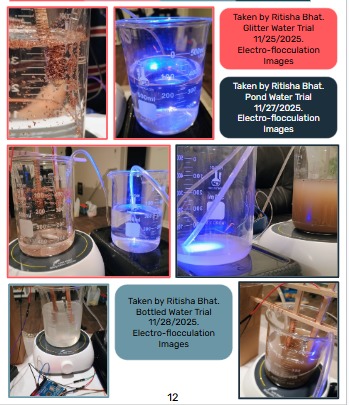
Prototype Results Images
-
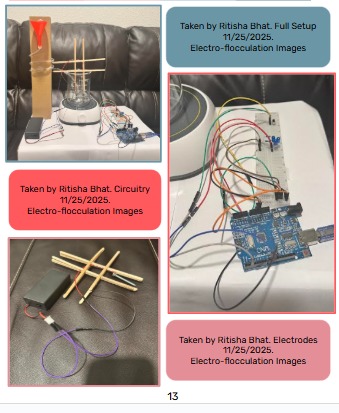
Prototype Images
-
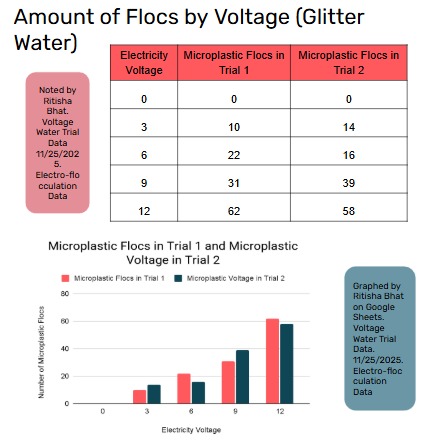
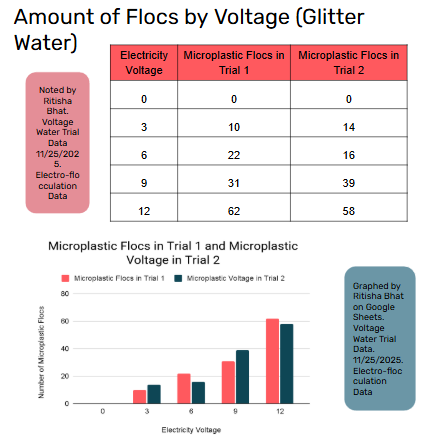
Data #1
-
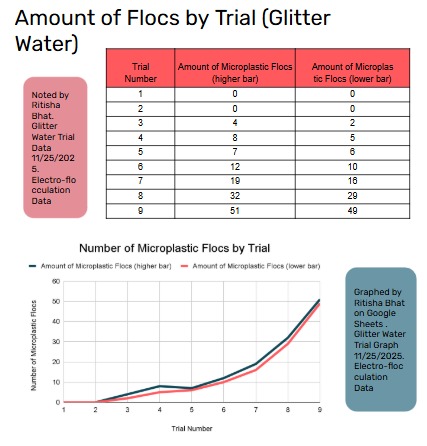
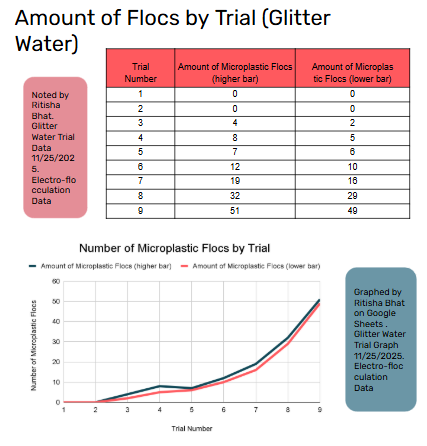
Data #2
-
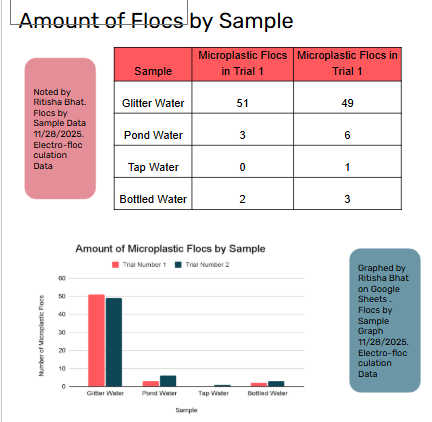
Data #3
-
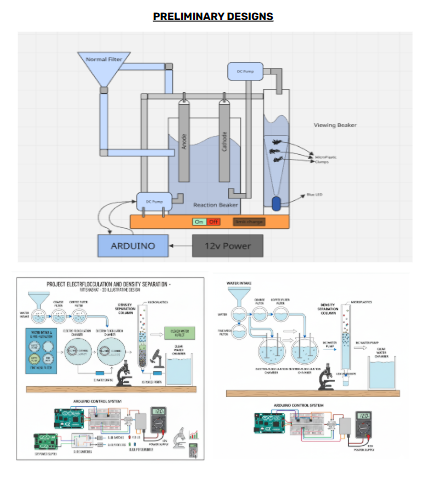
Preliminary Designs
Inspiration
The idea for this project originated from an article about electrocoagulation. The idea was to recreate this on a small scale and using cost-effective materials which fall in the budget of an everyday household. Many diseases can be caused my microplastic contamination, and this prototype aims to find a way to separate the microplastics from the water that conventional methods are not able to.
What it does
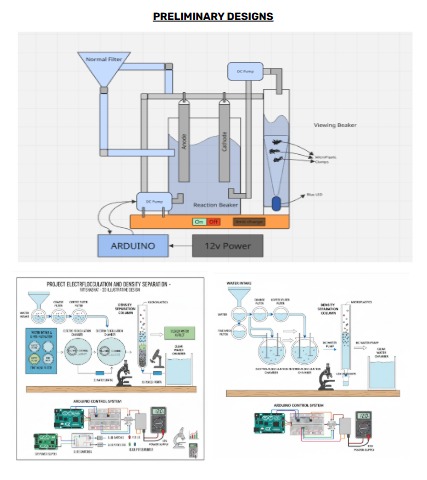
It basically runs electricity through a copper cathode and a stainless steel anode, both of which are suspended in a sample of water containing microplastics. The electricity excites the particles of microplastics, causing them to stick to each other so that they can be easily removed.
How we built it
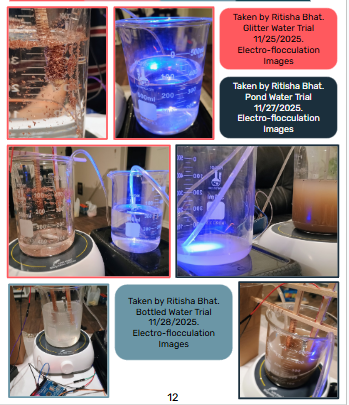
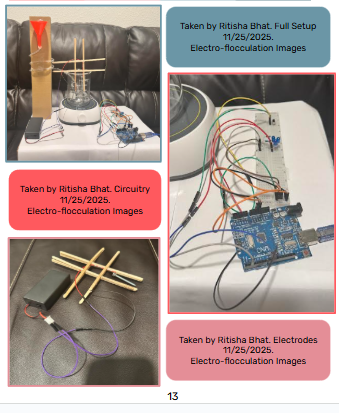
The prototype was assembled by mounting an anode and cathode over a 500 ml beaker, wiring them to a 12V DC supply, and placing the beaker on a magnetic stirrer. Another beaker was placed on the side, into which clean water would be dispersed. There were a few problems for leaking and the conduction of the current in the chamber, but they were fixed by reinforcing the pipes with hot glue and adding salt to the water being electroflocculated. The prototype does meet the design criteria: it successfully flocculated the microplastics in the water and attracted them to the electrodes and other parts of the prototype. The design was tested by varying the electricity voltage of the electrodes and by water sample. Revisions included differences in the spacing and voltage of the electrodes as well as changes in the tubing of the prototype.
Challenges we ran into
Sources of error include the following:
- Inconsistency with sample microplastic concentration may have resulted in lows and highs in the counting of the microplastics.
- Differences in the samples and the low visibility of the pond water may have impacted observations about microplastics in those specific samples.
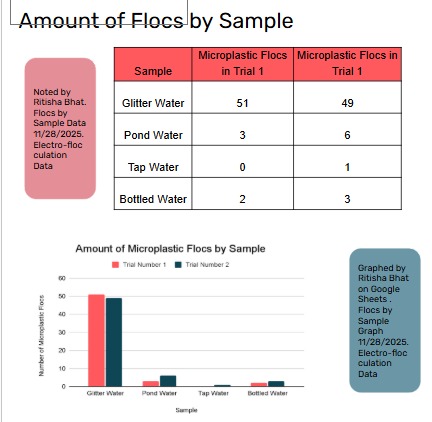
- Measurement errors and subjective assessment of the clarity of water could also be a source of error, but this means that the results should be read as approximates, which still proves the prototype to be a success.
Accomplishments that we're proud of
After around 16 hours of testing, I was able to achieve results.
What we learned
Sources of error include the following:
- Inconsistency with sample microplastic concentration may have resulted in lows and highs in the counting of the microplastics.
- Differences in the samples and the low visibility of the pond water may have impacted observations about microplastics in those specific samples.
- Measurement errors and subjective assessment of the clarity of water could also be a source of error, but this means that the results should be read as approximates, which still proves the prototype to be a success.
What's next for Electroflocculation And Density Separation.
This prototype can be scaled and integrated into pre-existing water treatments for communities and households. Since it has been proven to be more useful towards visible microplastics that are in large percentages of a liquid, this method could also be used in large plastic manufacturing plants and packaging plants. Another use for this prototype could be on farms that need water for their livestock and crops. Beneficiaries include areas around plastic manufacturing plants, including rivers and water bodies nearby. Future research should focus on testing a wider range of samples, testing with more than 2 electrodes, and making the prototype scalable and more energy efficient.


Log in or sign up for Devpost to join the conversation.