Challenge 5: The Dean’s Challenge: Making Flying Healthier for the Air Traveler by Decreasing the Spreading of Germs on an Airplane
“More than 1 billion people fly every year.” (Administration, 2019)
There were a few scenarios that we considered. Solutions before entering secured area. Solutions while on the plane. Solutions after guests have left the plane.
Seemingly, the most direct way to attack this problem is aggressively before the passengers are past the security gates.
Early signs of viral and bacterial disease can be detected by thermometer and heart rate monitor, due to increase of internal body temperature and heart rate being the first signs to most concerning contagious disease. This is the most aggressive form of germs that we should have the most concern about.
Current Solution and Their Flaws:
Handheld Infrared Thermometer: Not much evidence that it measures internal temperatures accurately, at a distance there are many factors that affect reading. Ear Gun Thermometer: Contamination issues with device & very expensive, need to be calibrated very often. Full Body Infrared Thermometer: Measures skin temperature which isn’t always comparable to internal temperatures, can easily be fooled by passengers.
What it does:
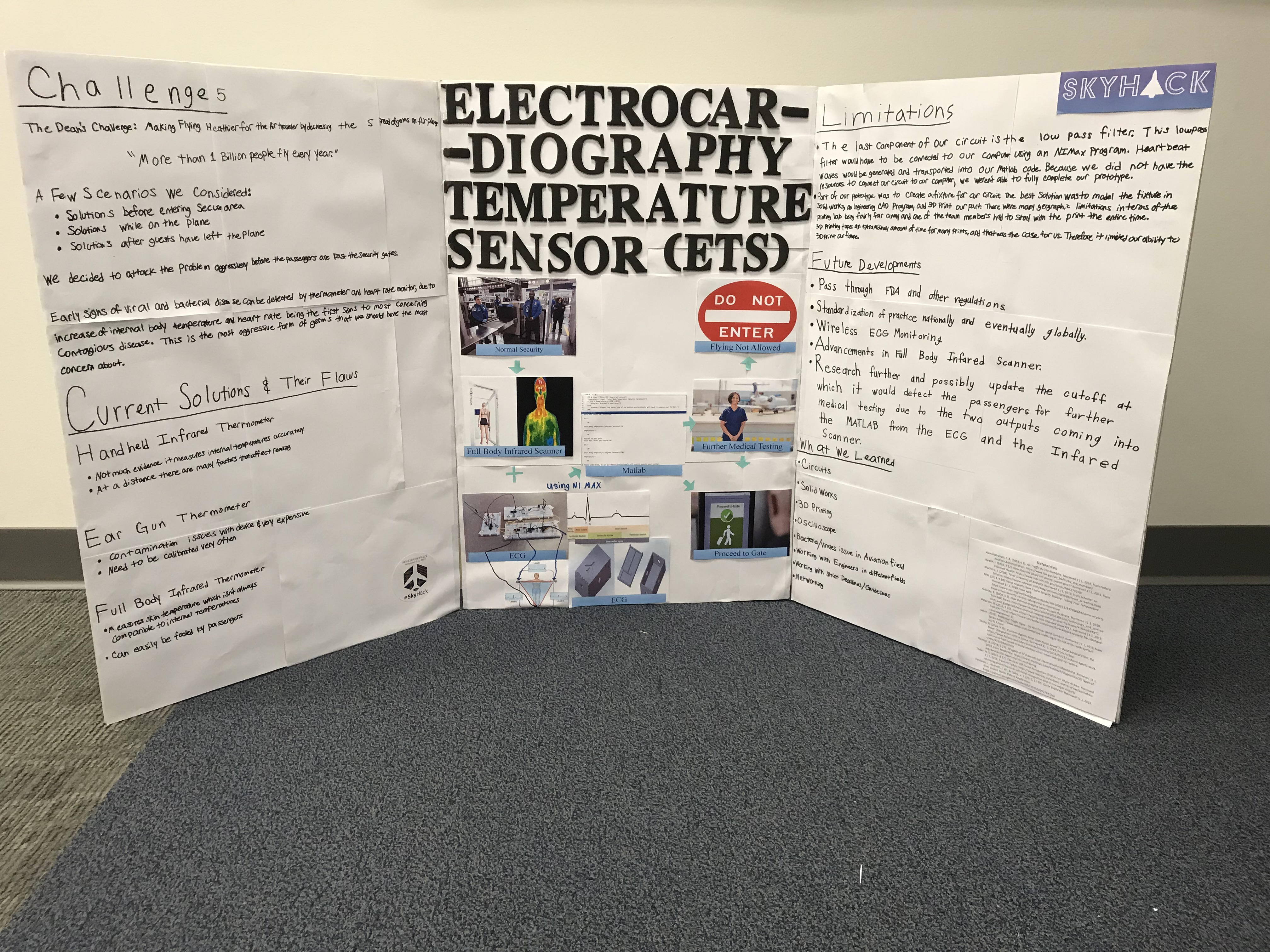
Electrocardiography temperature sensor (ETS) is a device that will be put in place directly following the normal security that the airports currently have. The first step includes a passenger walking through a full body infrared scanner that will measure the persons external body temperature. Step 2 includes the passenger cardiac electrical output measure by an ECG machine. These two values are converted into the MATLAB code that analysis the relationship between the two. Concluding these the passenger will be either prompted to continue to move to their gate or receive further medical testing from a medical professional already working at the airport. This process will be repeated with each passenger.
How we built it:
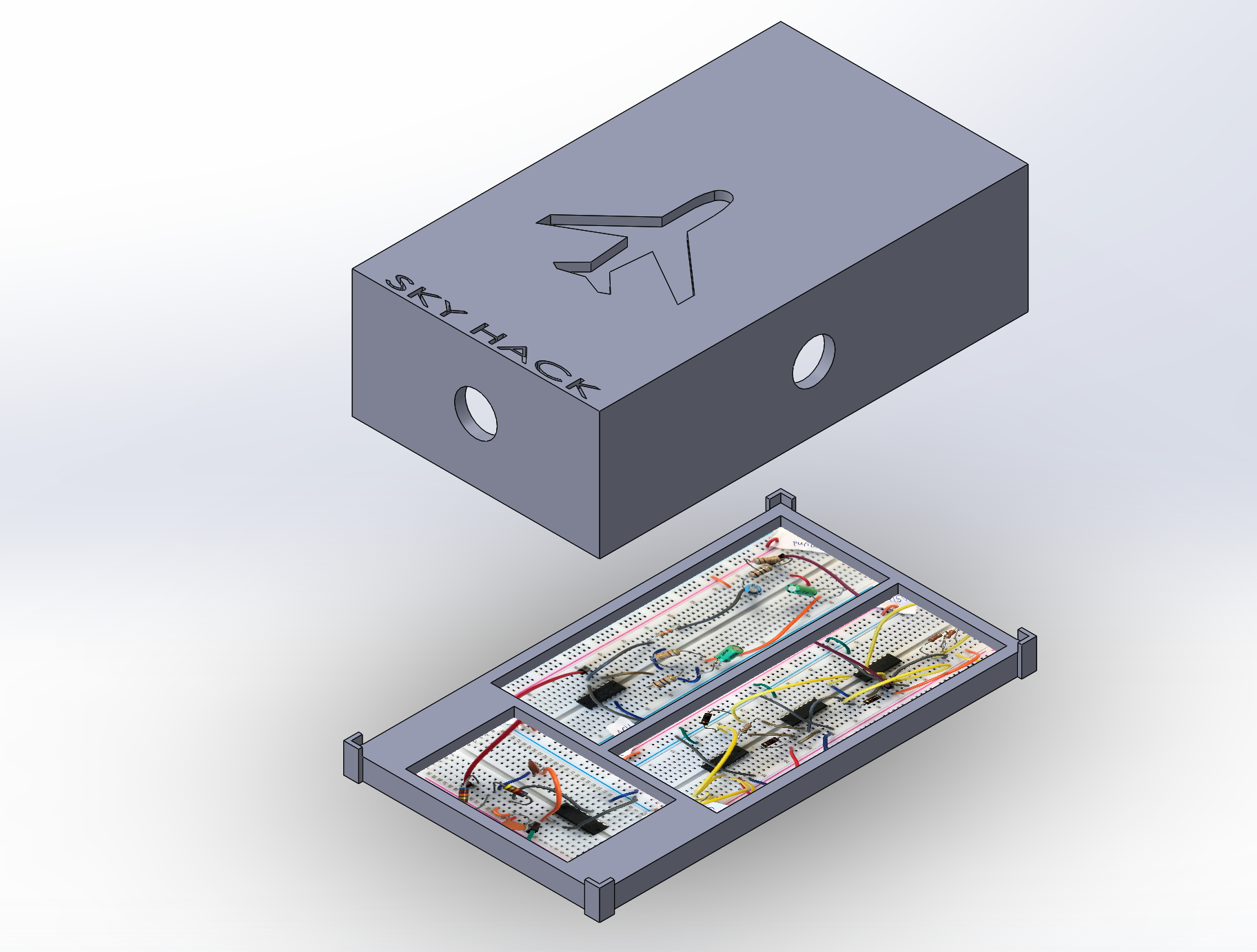
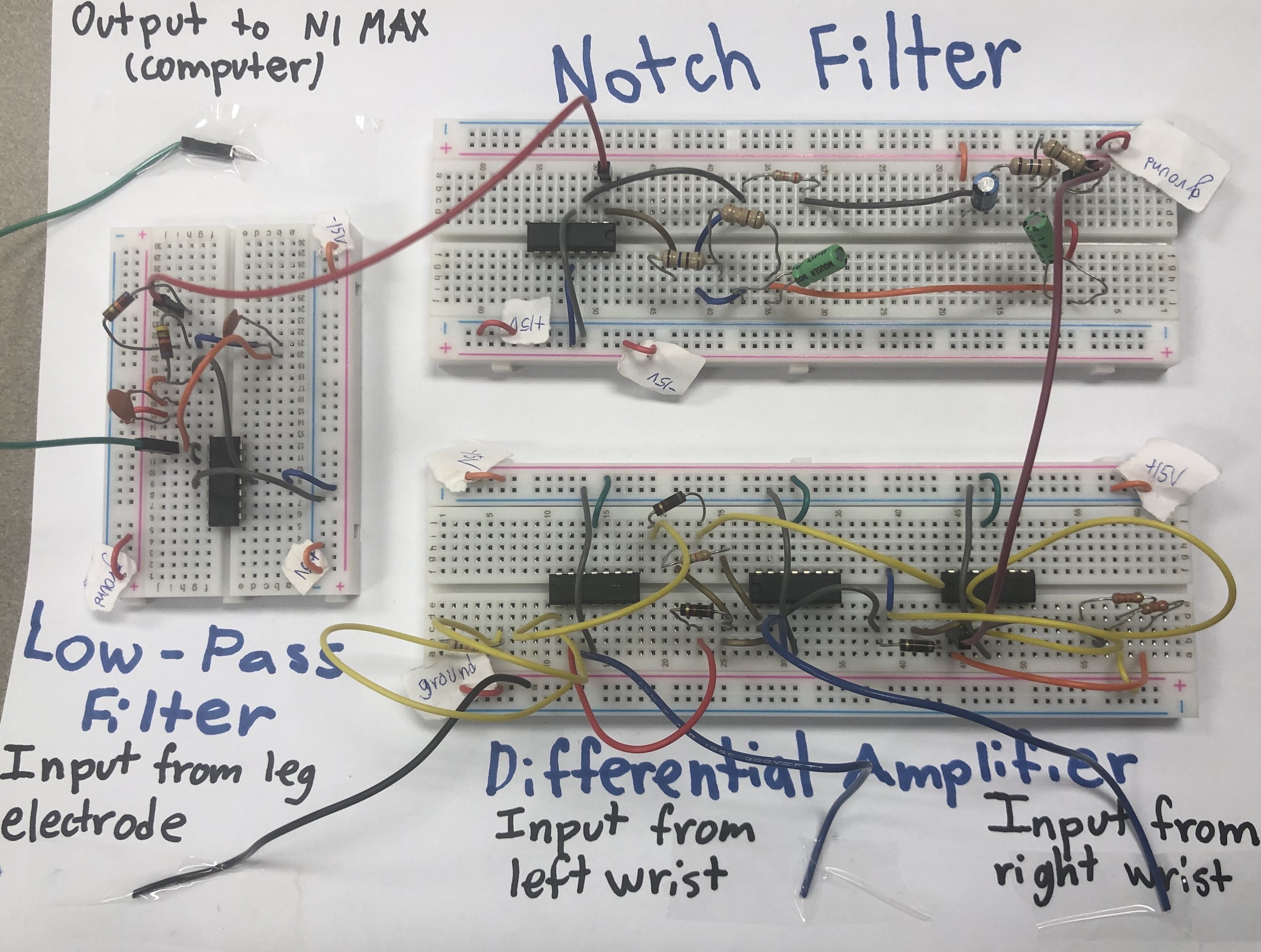
Using Circuits that include differential amplifier, notch filter and low pass filter. Solidworks and 3D printing was used to create the fixture and MATLAB was created to analyze the two.
Challenges we ran into/ Limitations:
The last component of our circuit is the low pass filter. This low pass filter would have to be connected to our computer using an NI MAX program. Heartbeat waves would be generated and transported into our Matlab code. Because we did not have the resources to connect our circuit to our computer, we weren’t able to complete our prototype. Part of our prototype was to create a fixture for our circuit. The best solution was to model the fixture in Solidworks, an Engineering CAD program, and 3D print our part. There were many geographic limitations in terms of the printing lab being fairly far away and one of the team members had to stay with the 3D printer the entire time. 3D printing takes an extraordinary amount of time for many prints and that was the case for us. Therefore limiting our ability to 3D print our fixture.
What we learned:
Circuits, Solidworks, 3D Printing, Bacteria/ Virus issue in the Aviation field, Working with Engineering in different fields, Working with strict Deadlines/ Guidelines, Networking
Future Development:
Pass through FDA and other regulations. Standardization of the practice national and eventually globally. Wireless ECG Monitor. Advancements in Full Body Infrared Scanner. Research further and possibly update the cutoff at which it would detect the passengers for further medical testing due to the two outputs coming into the MATLAB from the ECG and the Infrared Scanner.
References:
Administration, F. A. (2019, 6 6). Air Traffic By The Numbers. Retrieved 11 1, 2019, from Federal Aviation Administration: https://www.faa.gov/air_traffic/by_the_numbers/ Health, I. (2010, 3 12). How does the blood circulatory system work? Retrieved 11 1, 2019, from Informed Health: https://www.ncbi.nlm.nih.gov/books/NBK279250/ Macinnis, J. (2008). Fever Screening at Airports. Retrieved 11 1, 2019, from Schneier on Security: https://www.schneier.com/blog/archives/2008/06/fever_screening.html NPR. (2014, 9 18). Some Airports Have A New Security Routine: Taking Your Temperature. Retrieved 11 1, 2019, from NPR: https://www.npr.org/sections/goatsandsoda/2014/09/18/347996684/some-airports-have-a-new-security- routine-taking-your-temperature Ortutay, B. (2009, 5 1). How thermal-imaging cameras spot flu fevers. Retrieved 11 1, 2019, from NBC News: http://www.nbcnews.com/id/30523865/ns/technology_and_science-tech_and_gadgets/t/how-thermal-imaging-cameras-spot-flu-fevers/#.Xb4pikVKgY1 Peterson, B. (2016, 9 10). How Airport Security Has Changed Since 9/11. Retrieved 11 1, 2019, from CN Travel: https://www.cntraveler.com/story/how-airport-security-has-changed-since-september-11 Seton. (2019). Reflective Traffic Signs - Do Not Enter (With Symbol). Retrieved 11 1, 2019, from Seton: https://www.seton.com/reflective-traffic-signs-do-not-enter-with-symbol-vc1713.html Sibilla, N. (2018, 5 15). Customs Agents Seize Cash Nurse Saved To Build Medical Clinic, But Never Charged Her With A Crime. Retrieved 11 1, 2019, from Forbes: https://www.forbes.com/sites/instituteforjustice/2018/05/15/customs- agents-seize-cash-nurse-had-saved-to-build-medical-clinic-never-charged-her-with-a-crime/#2142fbb67bc9 Thomas, A. (2018, 5 27). 10 types of ECG devices for Heart Rhythm Monitoring. Retrieved 11 1, 2019, from MedicWiz: https://www.medicwiz.com/medtech/diagnostics/10-types-of-ecg-devices-for-heart-rhythm-monitoring Today, H. S. (2019, 8 27). TSA Kicks Off Facial Recognition Trial in Las Vegas Airport. Retrieved 11 1, 2019, from HS Today: https://www.hstoday.us/subject-matter-areas/biometrics-id-management/tsa-kicks-off-facial-recognition- trial-in-las-vegas-airport/ Ventures, J., Bennett, J. W., & Coles, V. J. (2015, 11 19). Germ Shield Kit. Retrieved 11 1, 2019, from United States Patent Application: https://patents.google.com/patent/US20150329274A1/en
Built With
- 3dprinting
- curcuits
- matlab
- nimax
- solidworks


Log in or sign up for Devpost to join the conversation.