-
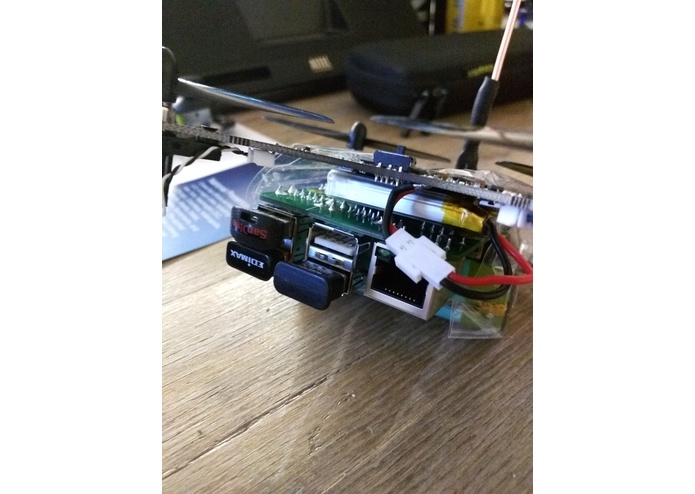
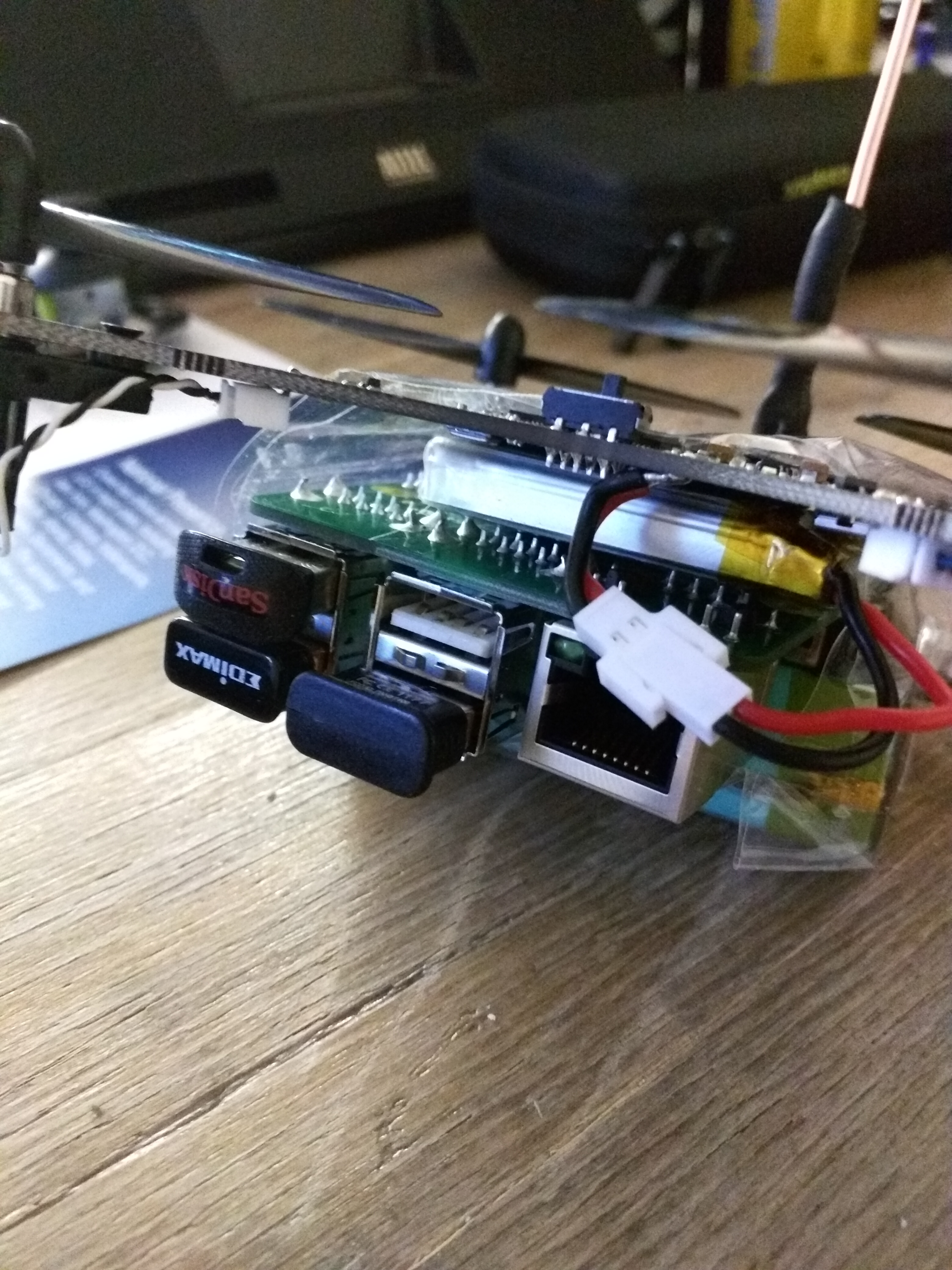
Bluetooth, WiFi, and USB storage adapaters
-
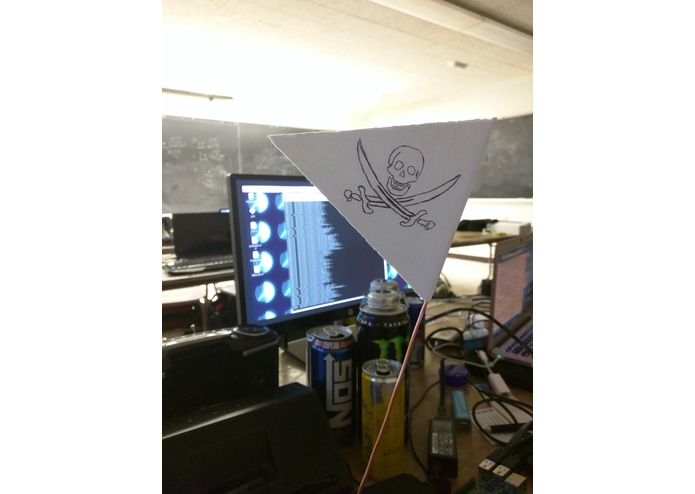
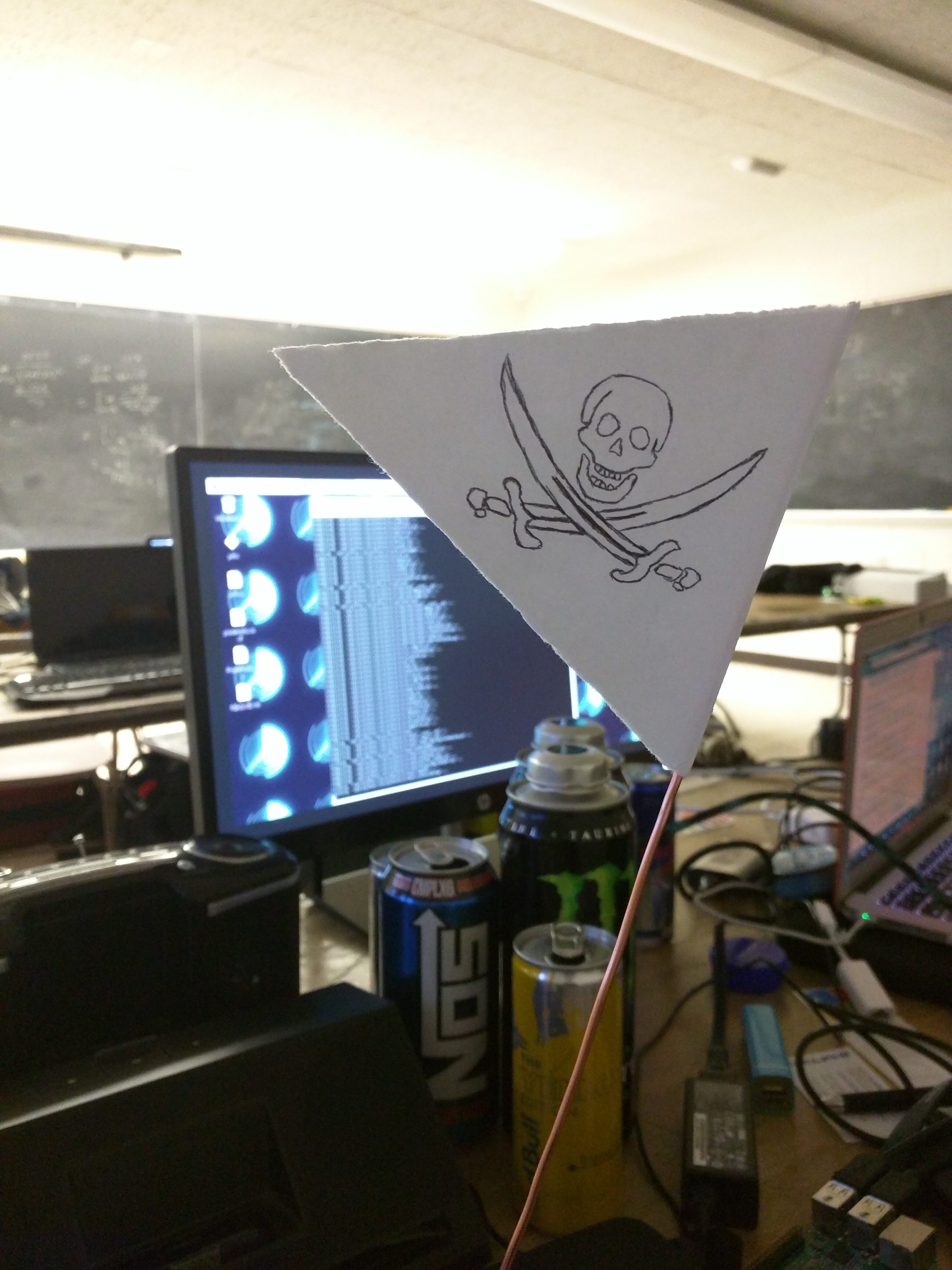
Swag Flag
-
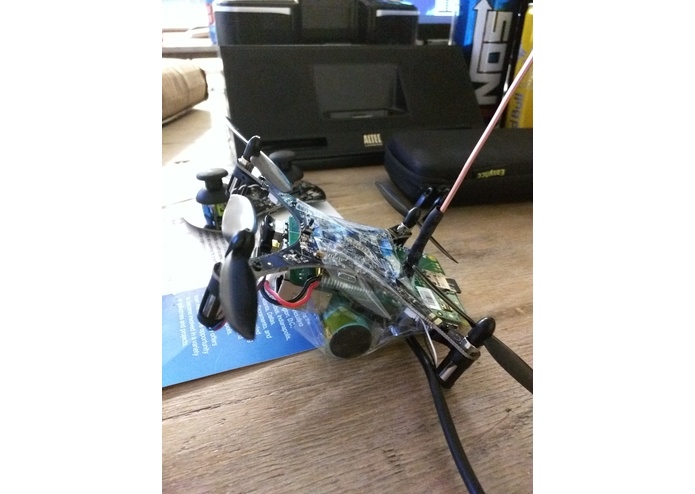
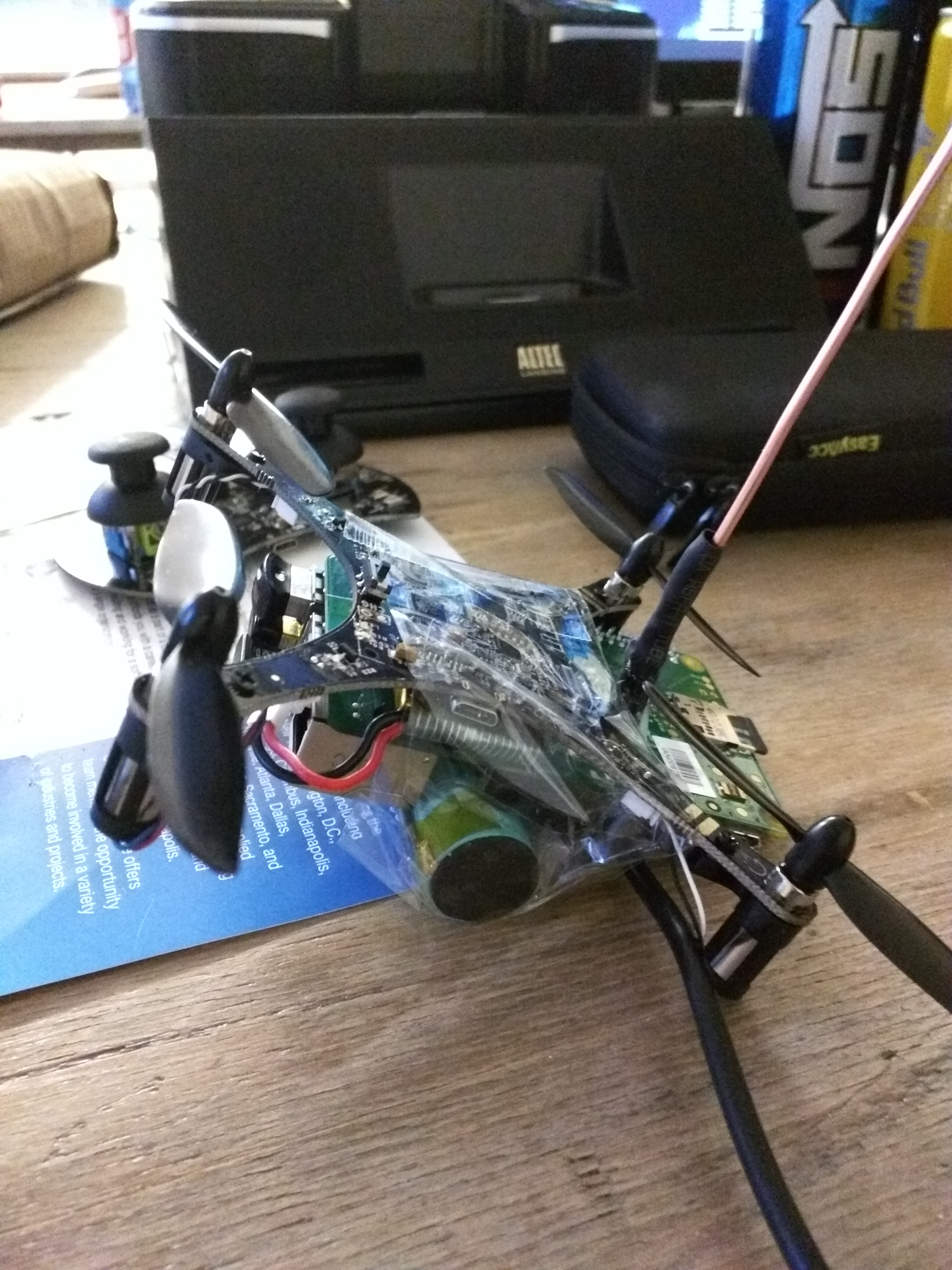
Sideview
-
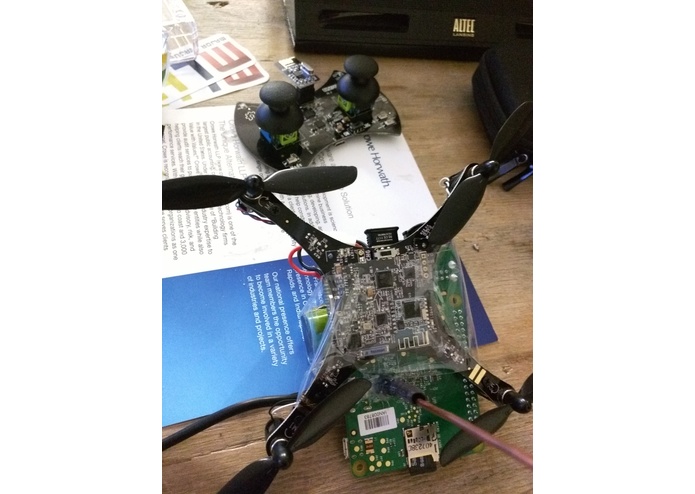
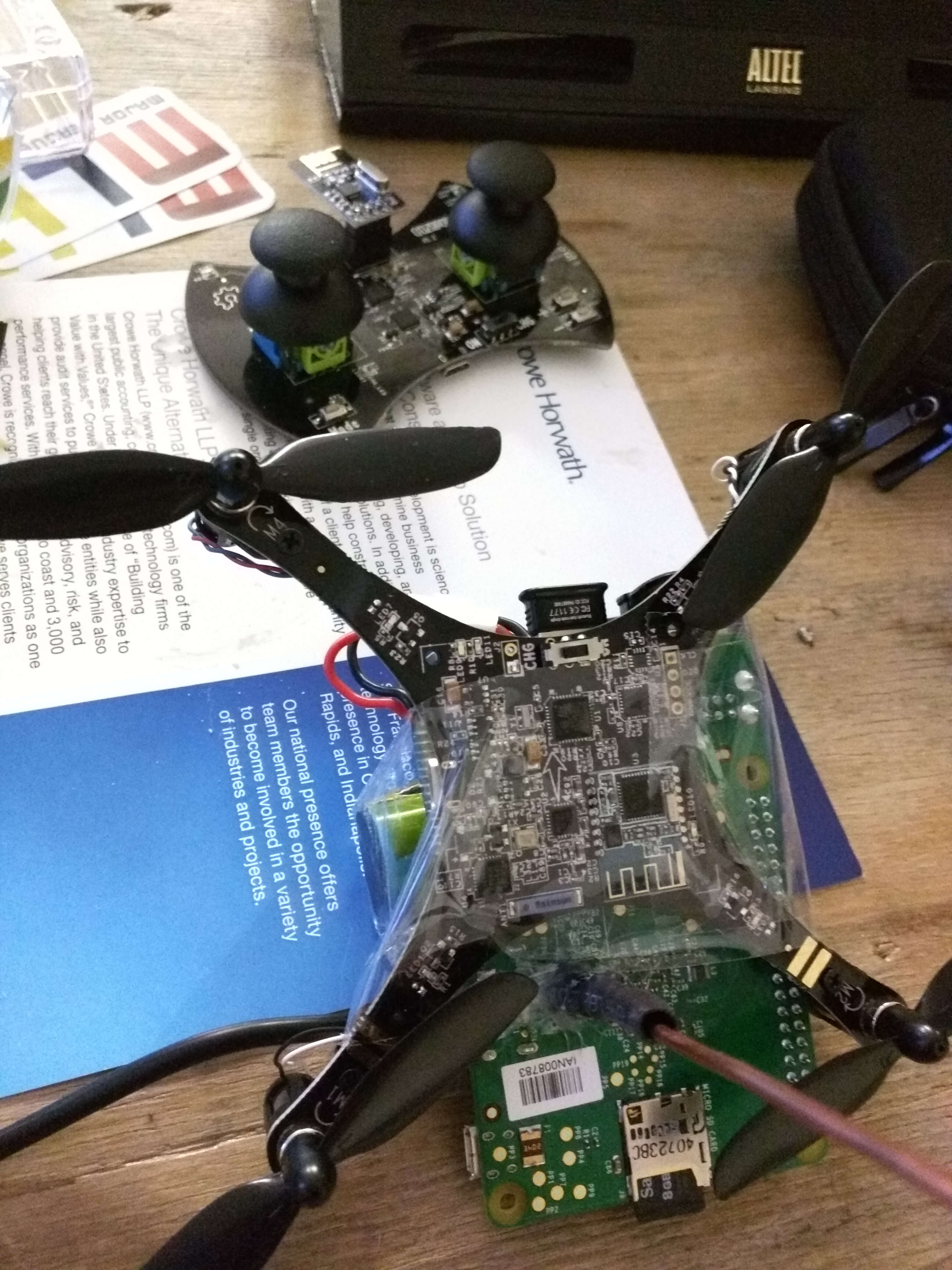
The drone used
Inspiration
My love for electronic music harshly conflicted with the fact that no radio stations in Chicago play electronic dance music during the day or commutes to the city, so I decided to create and share a station just for electronic music.
What it does
Broadcasts FM radio in a 40 ish meter radius while following you around on a drone (the bigger your antenna, the larger the radius). Currently plays any music files with optionally custom sample rates on any radio frequency specified between 1 and 250MHz, although legally operating on 87.5 - 107.9MHz. Has the capability to connect to devices through Bluetooth (although not completely functional), sync files from a remote computer or server through WiFi (also not completely functional), and store music locally on its 128GB USB drive. Great for attracting unwanted attention from police and tech enthusiasts alike.
How I built it
The half-wave dipole antenna was built using 3 prototypes made of 12 AWG solid copper wire, measuring at 37.5cm for half the optimal 70cm length because of weight issues. The drone came with an abundance of resources on GitHub due to it being completely open source, allowing utilization of that code both on Android and the drone itself, despite a good majority of the documentation being written in Chinese. The Raspberry Pi Model B+ had a custom image flashed before having Raspbian as the operating system, with Bluetooth, WiFi, and USB adapters installed in its USB ports as well as the required software and packages downloaded. The antenna was affixed to GPIO pin 4 with a female pin connector, housing, solder, heat shrink tubing, hot glue, super glue, and a smaller wire to connect the pin and large copper wire together. The stylish flag was designed by only the most masterful hands in Michigan State's Spartahack college student population, by tracing the picture of a pirate flag I found on Google. A mobile battery was also completely broken apart and the inside lithium battery attached to the drone structure for powering the Raspberry Pi.
Challenges I ran into
Apparently the FAA doesn't like unregistered drones flying around, so legal issues had to be studied and resolved. This meant the drone wasn't permitted to fly on Michigan State University campus property, so the automated flight controls were left out as plausible methods of following the user instead of being implemented. The weight of the drone is about 4-10 times as heavy as before, so it may not fly very well or for more than a couple minutes (the maximum advertised flight time on a full battery is 6-7 minutes). Bluetooth ended up being complicated because of corrupted or out-of-date packages being replaced by new packages, some of which weren't compatible with the Raspberry Pi Model B+ operating system, "Wheezy". Cloud storage involved some more complex coding and design we didn't have time for, so we ended up putting a skeleton of it within the code for future implementation.
Accomplishments that I'm proud of
Learned Python; used C programming knowledge; learned more about Bash and the Linux services on boot; met with sponsors who loved to hack as much as I do and also went to Defcon; successfully soldered my first wires; made something that looks ridiculously cool in my opinion.
What I learned
Python; FAA, Michigan, and Michigan State University drone regulations, policies, restrictions, and exceptions; a few great companies to possibly seek out for internships and more information; and more than any normal human should know about half-wave dipole copper antennas.
What's next for Electro Rave Party Flying Pirate Ship
Full flight automation, full Bluetooth functionality, cloud storage and sync capabilities, decreased weight proportion, larger broadcast range, longer battery life, advanced customization of Python and Bash scripts.
Built With
- antenna
- bash
- batteries
- bluetooth
- double-sided-tape
- drone
- linux
- python
- raspberry-pi
- usb
- wifi


Log in or sign up for Devpost to join the conversation.