-
-
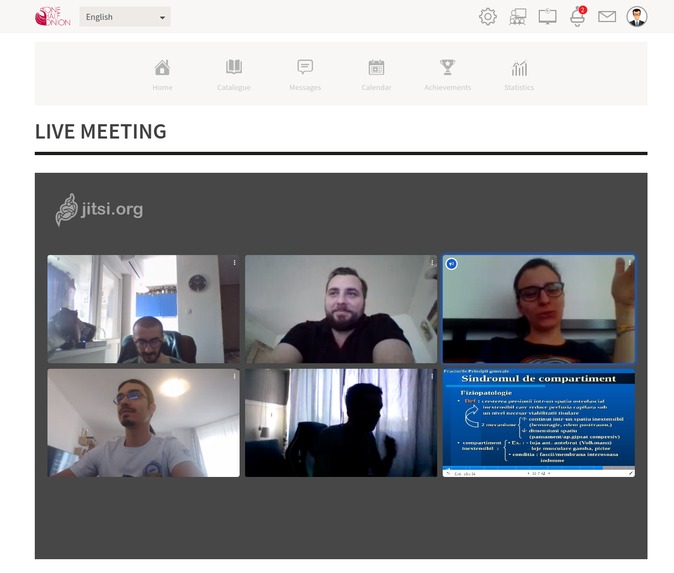
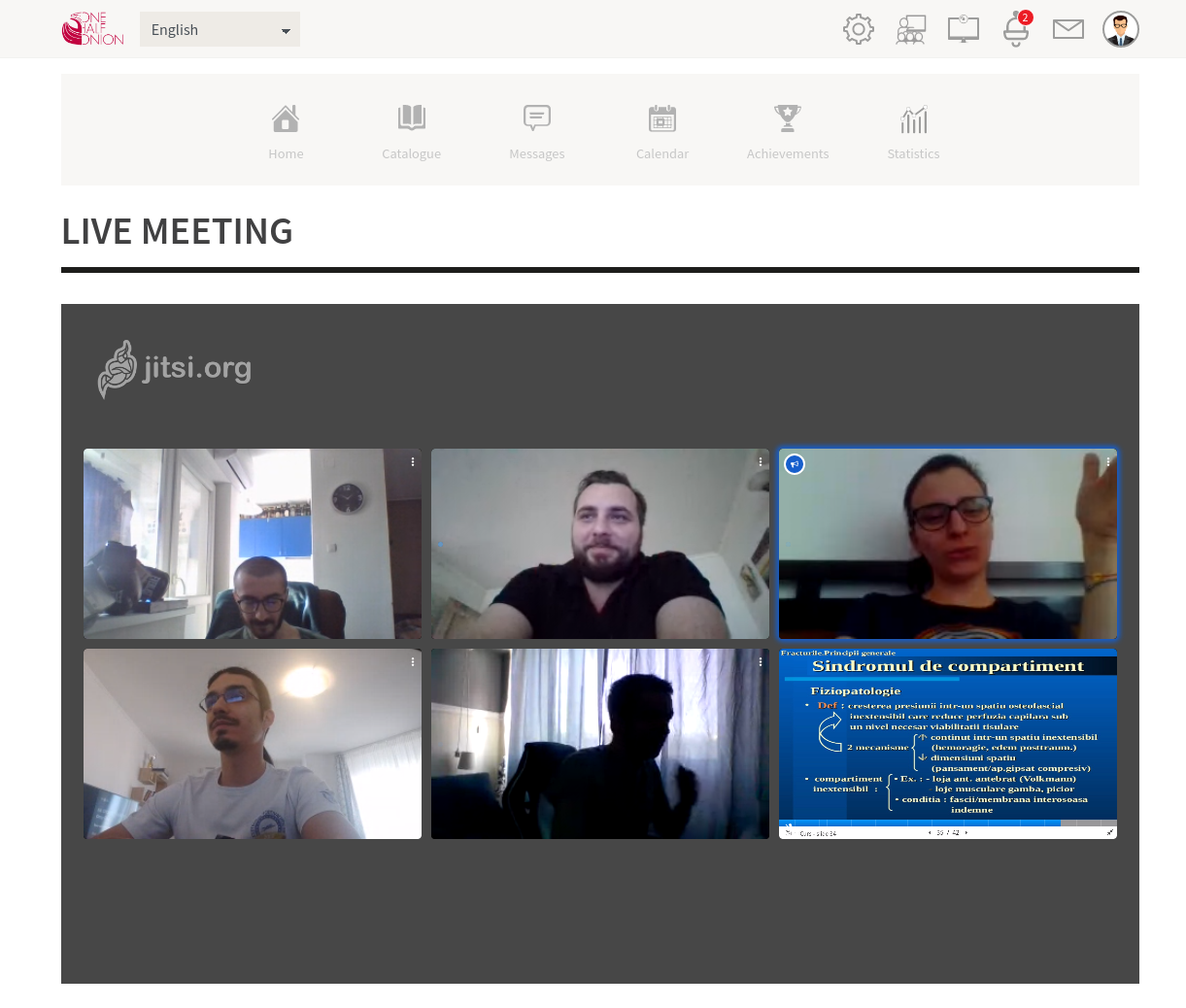
Live meeting
-
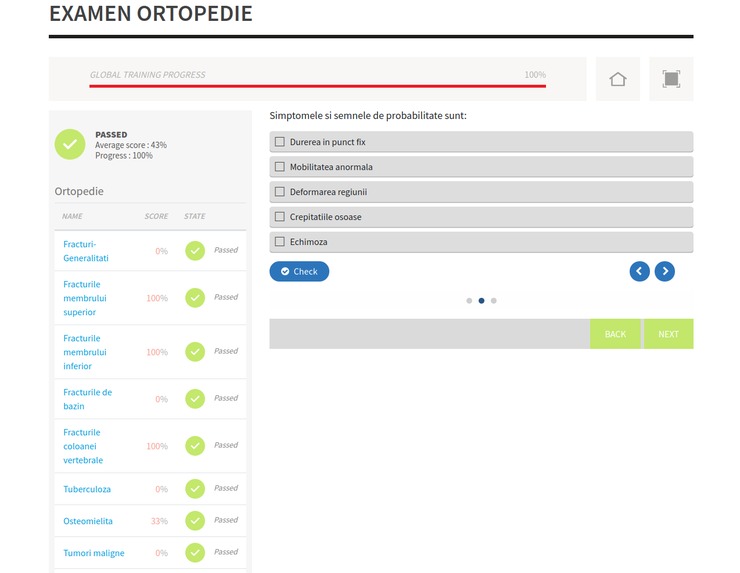
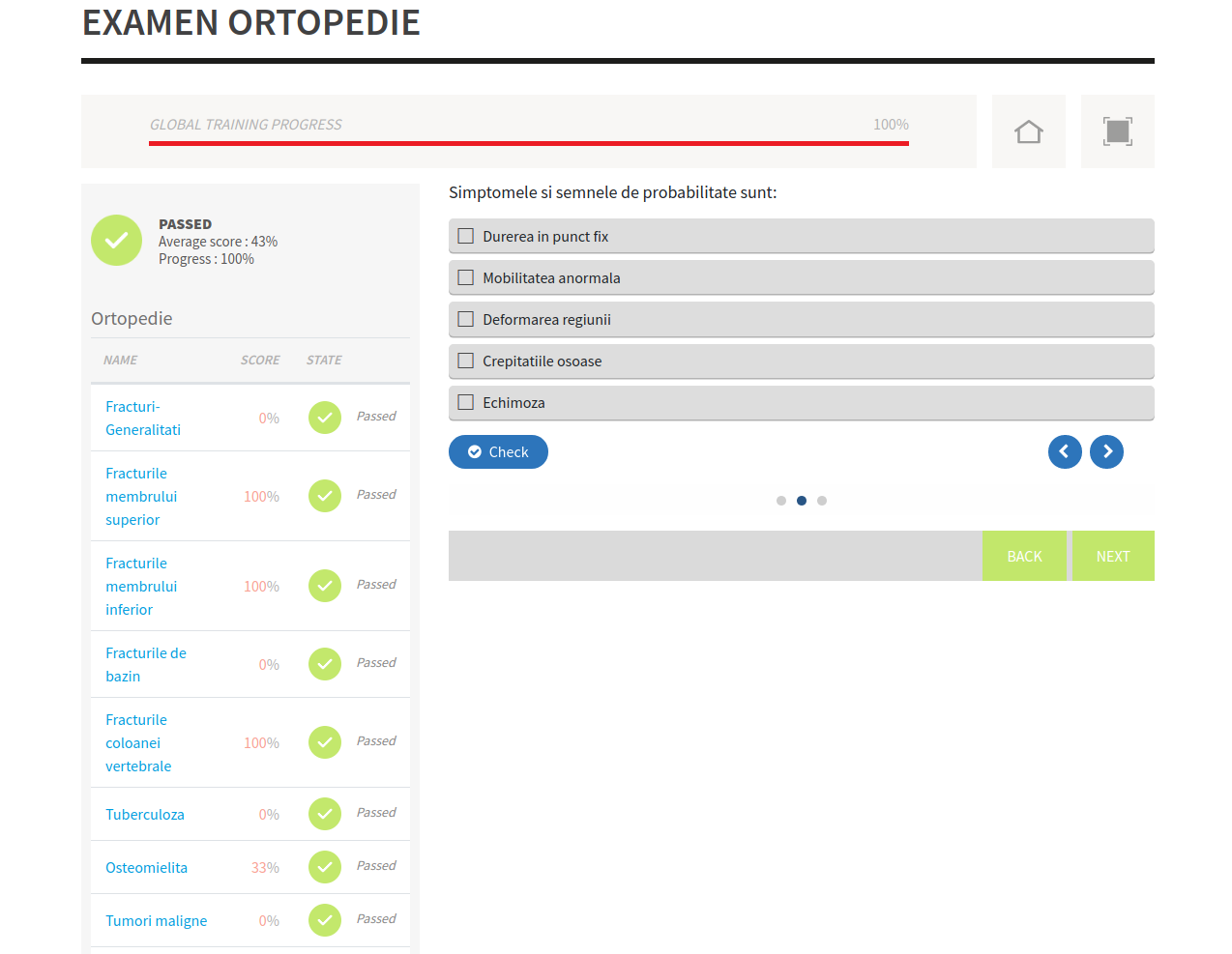
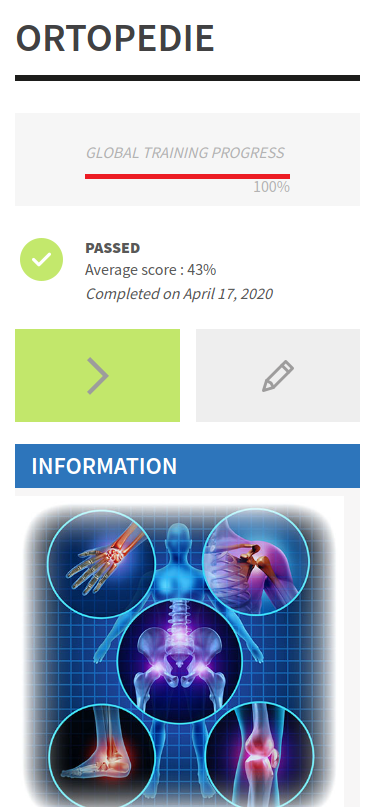
Exam interface
-
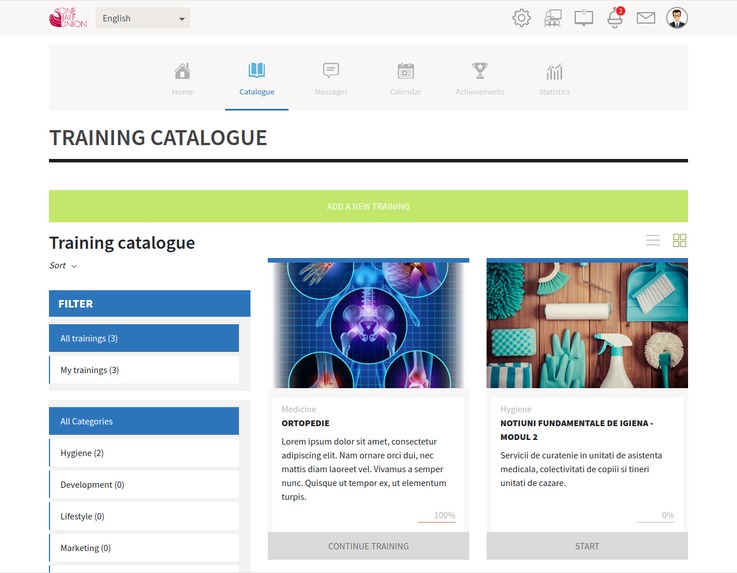
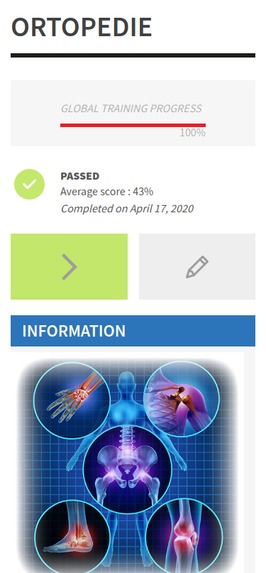
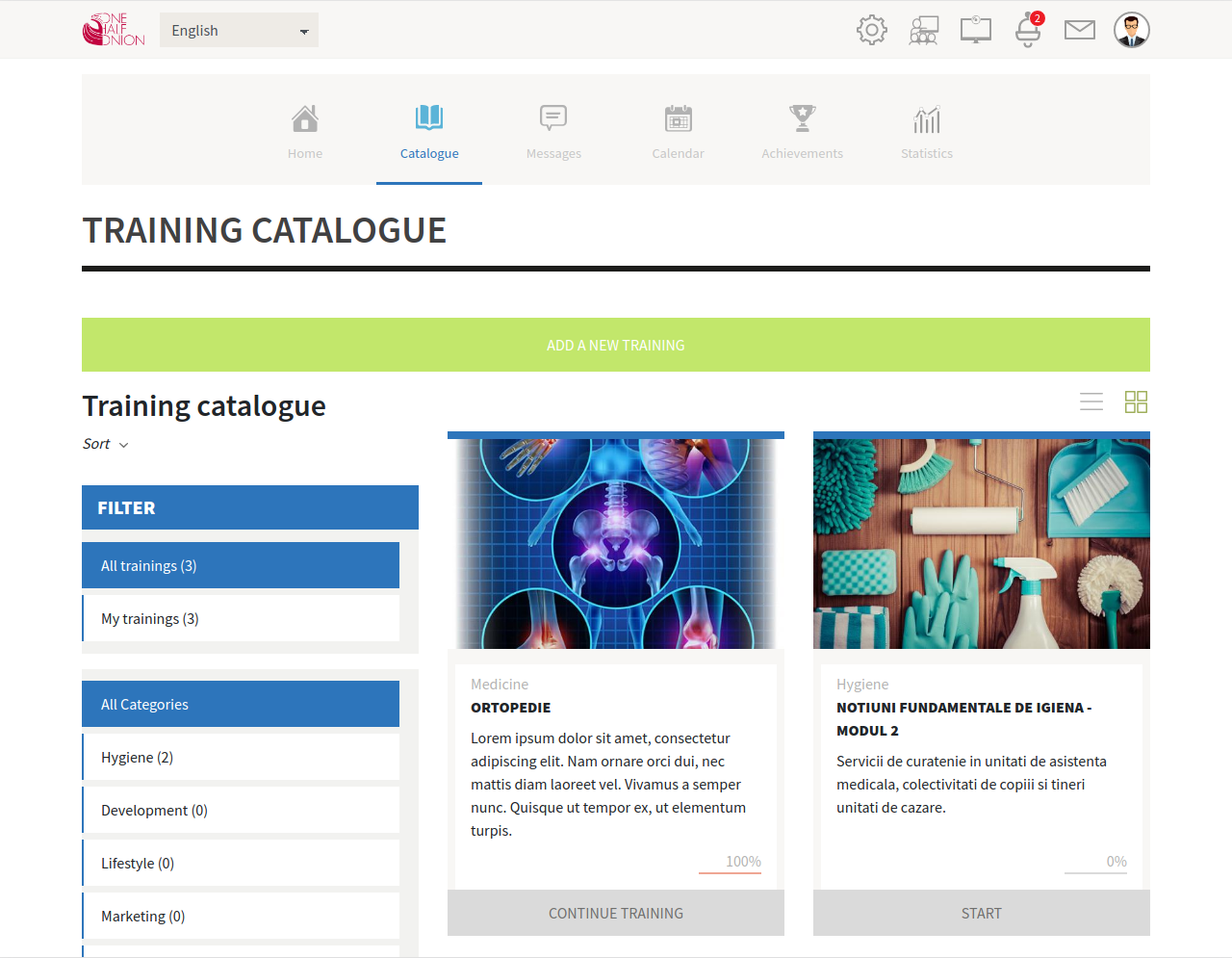
Training catalogue
-
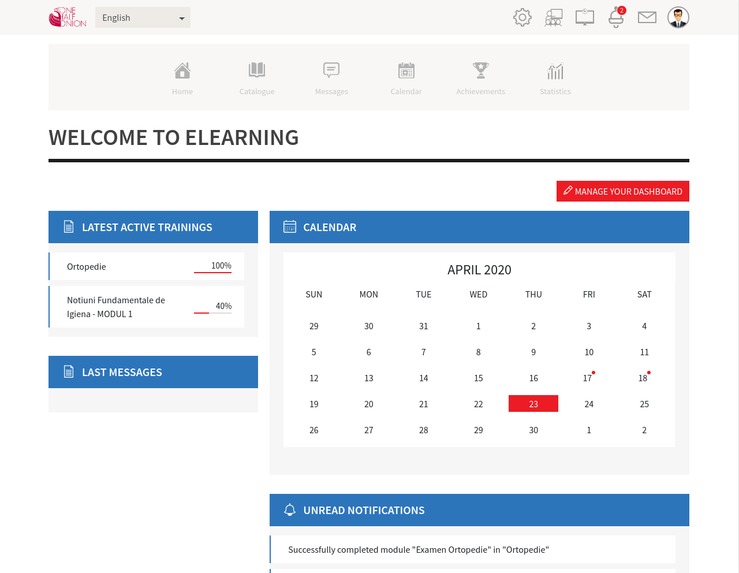
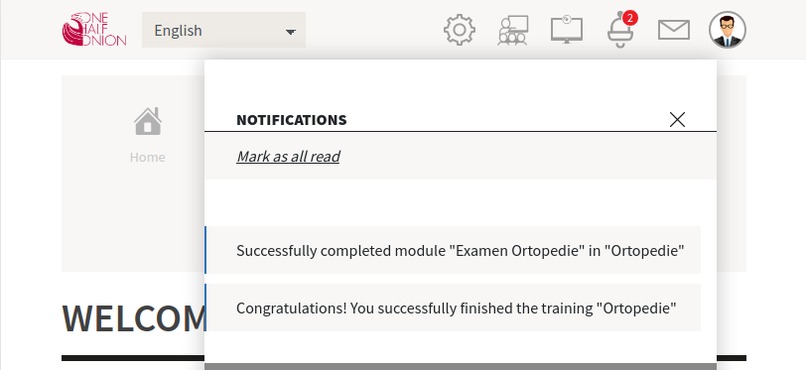
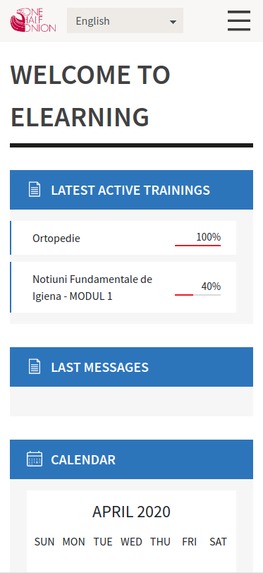
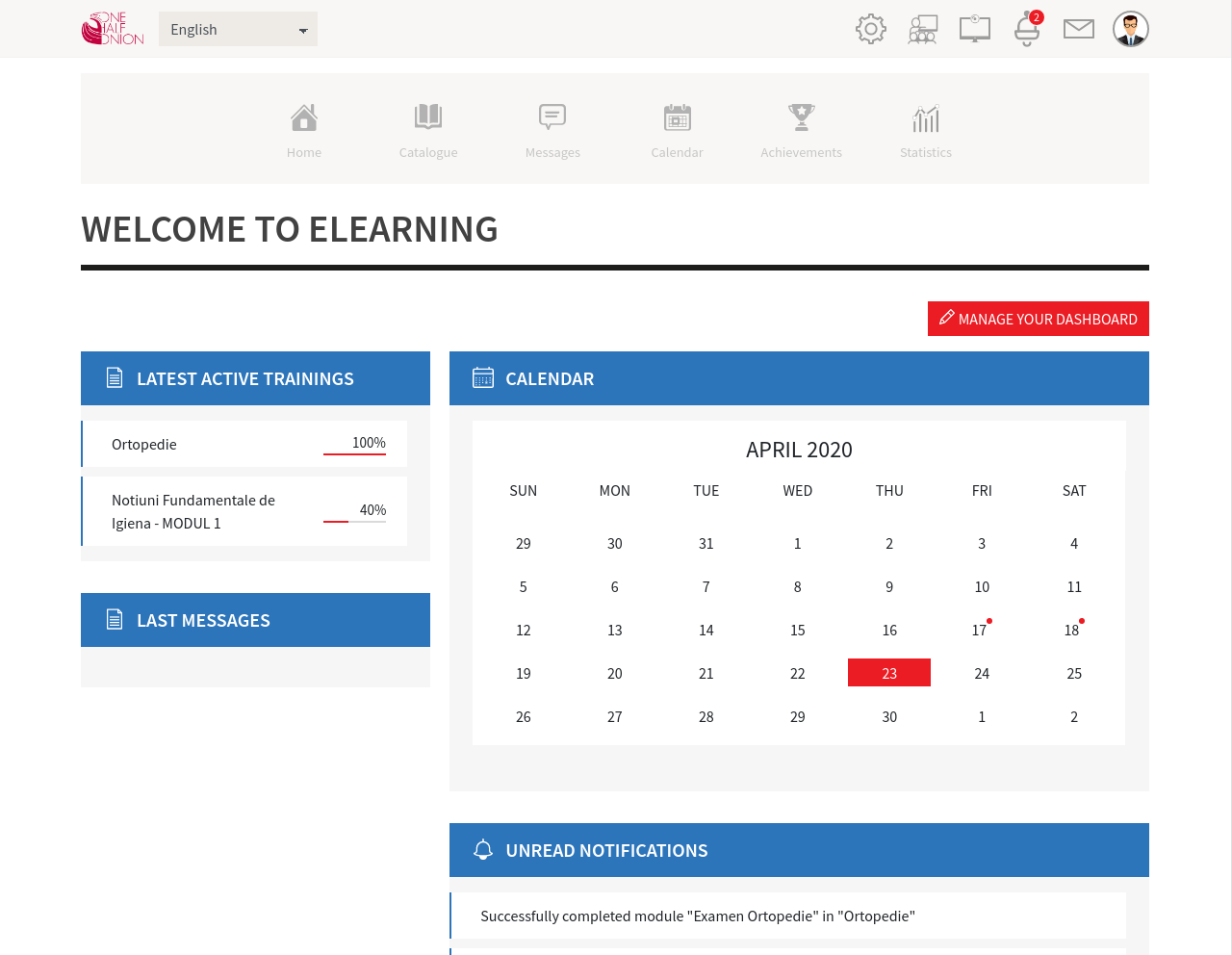
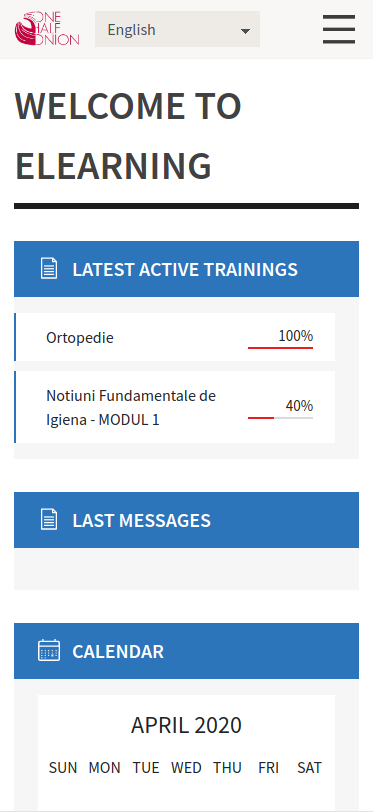
Dashboard
-
-
-
Inspiration
We live unusual times which force us to unusual interactions. Yesterday online education was considered somehow a second tier one, today, for many EU countries is the norm for delivery the knowledge.
In the last months we noted how teachers struggled to move their activity in online, how tools that were not primarily meant for the purpose of knowledge delivery were used, and how authorities couldn't fully endorse one or the other e learning tool to support literally any form of education.
Current problem:
Actually there are very few e-learning platforms with sufficient capabilities in order to properly respond to a complex learning process. Nowadays a teacher would frequently use three different solutions to partially solve the elearning conundrum: google class room or equivalent for written course dissemination and "class handling", google meets, skype, zoom, or equivalent for live sessions, and finally youtube for recorded lectures. There are indeed a plethora of other SaaS that offer various e-learning functionalities, but those appear more as marketplaces, CMS oriented, than fully fledged e-learning platforms.
In the weeks that passed we recognised the following shortages in the e-learning market:
- Lack of "flexible complexity" in e-learning solutions (we define the flexible complexity by the existence of certain tools and features that enables a single solution to perform various agregated tasks; simplicity does not every time translate into efficiency)
- Lack of e-learning "metadatas" (usually, when teachers use a bunch of different apps, a big chunck of the learning process data related to each student is lost; metrics such as time spent on watching a lecture or reading an article, time spent answering a question, safely recording and storing a written or oral examination, all of those are spread on multiple systems with various degrees of security, either unscrutinised under GDPR rules, or worse, never captured)
- Lack of proper examination tools that offer a certain level of trust and traceability (There are certain powerful examination modules on the market but they are usually non open source, and therefore they are not widely implemented in e-learning platforms which generates in practice the lack of a completeness of any course or class attended online)
What it does
To address all those issues we present you our alfa stage development of an online e-learning platform that combines a classic asynchronous open source learning platform with an open source live feed solution. At this moment the platform is already stable and can accommodate a variety of learning methods. It is SCORM compliant and it has (at least from our point of view) a very straightforward architecture:
- User-wise:
- student account
- teacher account
- content manager (courses builder)
- user manager
- Structure-wise:
- the course editor is structured on a modular basis (a course can have one or multiple modules, a module can have one or multiple activities, an activity is composed from an array of approx. 20 functionalities like multiple types of questions, multiple learning content viewers that embed videos, ppts, pdfs in courses, live meetings with class attendees, capabilities of uploading files from the student accounts, etc.)
- metrics for every student/course
- resource library/repository of activities/learning material that can be reused in the creation of new courses
During the hackathon we developed the first phase of an examination module, and made some mockups for the other two phases that completes the examination module. The full examination module has the purpose of securing a remote exam to a certain high degree against cheating attempts. The approach we take into consideration for completing our goal is the following:
- Securing the interaction between student and the device on which the examination is carried out. This phase was developed during the hackathon and has the following features:
- forced full screen on the duration of the exam-for deterring access to other web pages, or resources stored on the device
- alert system when the mouse pointer leaves the examination page; it can be configured time wise, number of attempts wise, etc. and can also be configured to automatically close the examination if the configured criteria are met, as this feature is useful if the student takes the exam from a device with multiple displays
- alert system about the examination page being inactive for certain amount of time - this feature can be used in corroboration with the second one above, under the assumption that page inactivity could hide an attempt to activate other page/program on the device, the student will be invited to move the mouse pointer in the exam page to reactivate it; for "control gods" this feature can be further updated and translated in a special zone in the exam view where student will constantly move the mouse pointer in the periods when he/she is thinking about the answer and does not effectively interact with the exam interface
- Securing the interaction between student and his proximity environment. This phase is based on the open source live feed solution we already incorporated and assumes online proctoring via webcam and mic done by a human proctor. It consists in a special interface for proctors that will have a parallel view composed from the live feed/recording of student webcam and mic and the live/recorded students' screen capture, both coupled with the system notifications generated from the software developed in phase 1. We estimate that in approximate 2 weeks from now it will be completed
- Further enhancing the monitoring capabilities. This phase consists in enhancing the proctoring system with AI modules-we already identified an open source software named OGAMA-open gaze an mouse analyser that appears to be a perfect candidate for this integration, furthermore we will try to integrate an AI that decodes the sound produced by keystrokes and transforms them in the actual typed letters, in order to identify key strokes that have no correspondent in the exam inputs). For this phase we are estimating that a couple more months will suffice.
How I built it
The project is being built on Drupal framework and integrates external open source services in order to achieve the desired functionalities.
Drupal CMS was chosen because of its seamless and robust content management workflow and its powerful API on which to develop new components. The video conference system is based on Jitsi Meet, but it is fully integrated within our application. We are also going to incorporate an eye movement analyzer (e.g. http://www.ogama.net/) for the examination section of the platform which will considerably improve the correctness of the evaluation process, minimizing the chance of having cheating students.
During the hackathon we implemented the javascript exam security which has 3 main parts:
- forcing the application to be ran in full-screen mode
- warning the user when the mouse cursor leaves the application window and expelling him out of the exam on multiple cheating attempts
- inactivity warning and expulsion on long continuous afk status
The solution impact to the crisis
Today we present you our concept designed to solve one huge problem that is actually missed by the media: the almost total lockdown of lifelong learning businesses.
Learning is not only about schools or universities is about small businesses too. Businesses that deliver every day continuous training packages for professionals, all over Europe. This kind of knowledge transfer is vital nowadays. The unemployment will go through the roof all over EU, individuals will be forced to gain new skills and competences in order to adapt to the new eras "in covid" and "post covid". Usually this type of training is done in physical classes and the exams are proctored by government employees. Social distancing made impossible to deliver this kind of learning partially because the present elearning platforms does not have rigorous examination modules, accessible for governments in order to verify the integrity of the examination results. Our solution offers a breathe of air for those businesses and a hope for those who want to improve their competency level.
We understand the scale and the limited time frame in which we are working, therefore our solution is based on open source software, and will remain open source, there is room for every developer that wants to work at it improvement and sell the final product where is needed. An open source business model means low costs for all the parties and faster implementation than proprietary solutions.
We can deploy right now for a small or medium training enterprise a platform capable to host dozens of separate courses and hundreds of simultaneous trainees, with live feed capabilities included and thanks for #euvsvirus, with some examination capabilities, all of those at prices far bellow others. The total cost of ownership in the firs year for a lifelong learning supplier will be under 10.5 euros/trainee, calculated at an estimated 100 trainees/month input. From the second year of ownership the price will reduce drastically, being composed actually just by monthly cost of cloud servers and the recurrent maintenance (if the client wants to stay with us, we'll bill him 200 euros/month for weekly security updates and 5 hours of included dev work at his disposal). The first 20 businesses to deploy our solution will benefit for a one year free update and implementation for all functionalities that we'll develop, including full examination module.
What about the very small ones? Individual authorized trainers? People that have just a side job in teaching? Companies that offer punctual training for their own employees and do not have the need for a dedicated platform? Worry no more, in a couple of months we'll deploy the SaaS version with an affordable price plan per trainee.
Now, let us summarize: the impact? It will be small, or big, depending on your viewing angle. If we'll deploy 50 stand alone solutions (estimated by our current team capability and sales projections), at a flat projected rate of 100 trainees/month, our clients reach a total of 60000 trained persons in a year. A drop in an ocean. Romania alone registered over a million of unemployed persons since the covid outbreak started. Even more, from those 60000 maybe just 5% actually will make an use of the newly acquired skills/specializations, so, all for 3000 individuals?
But think about it: 3000 individuals will not be a potential burden for community, on the contrary, they will provide added value for their households. In comparison with ESF (European Social Fund) financed projects we propose a straight forward natural business chain that starts from a small StartUp, disseminates through training businesses, and finally improves the lives of thousands, without any costs for EU budget. And this is just a fraction of the whole picture; being an open source project, other development teams across EU can use it and scale up in other places.
A droplet that foretells the rain.
The necessities in order to continue the project
First of all…good health. Secondly, funds and/or skilled individuals. In the last months we dedicated all our efforts into shaping this solution and into the finalization of past contracted projects. We need fresh blood to maintain the current rhythm:
- At least one senior dev with c# skills and experience in image AI
- Two junior devs with php knowledge, preferably proficient in drupal
- UX and UI designer with front end capabilities
- Country representatives with marketing/sales skills, trained to understand the solution in order to offer support/pitch it, with good English, both written and spoken
And this is the human resources part. We don't bother you now with all the digits, we're good at math, if a spreadsheet will be asked, it will be provided.
The value of our solution(s) after the crisis
We are here to stay. Truly we are thinking that our solution, even if it's born from a gruesome time, it's meant for better days too. A platform of its kind has the power to lower the cost of continuous learning and to make it affordable for more. Also, remote communities will have better access to certified education. The core software which will power the examination capabilities can be the cornerstone for other solutions like more traceable remote-work, learning patterns model generators or tools for UX testing.
Demo
The code can be found on github: https://github.com/One-Half-Onion/elearning
If you want to try the application, go to https://elearning.onehalfonion.ro and login with the following credentials:
- Username: student
- Password: password
Note: We'll properly populate our landing page in a matter of days, as already stated we're in a constant race against time and we lack content creators for polishing rough edges.
Built With
- drupal
- html
- javascript
- php


Log in or sign up for Devpost to join the conversation.