-
-
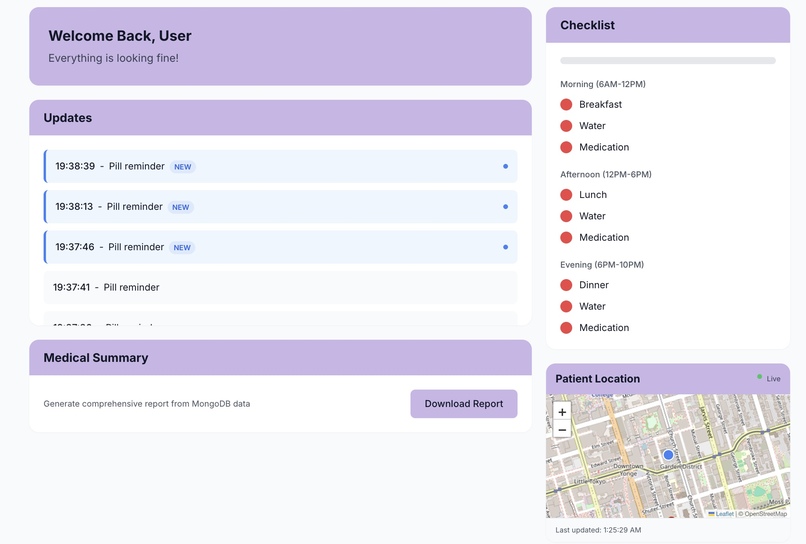
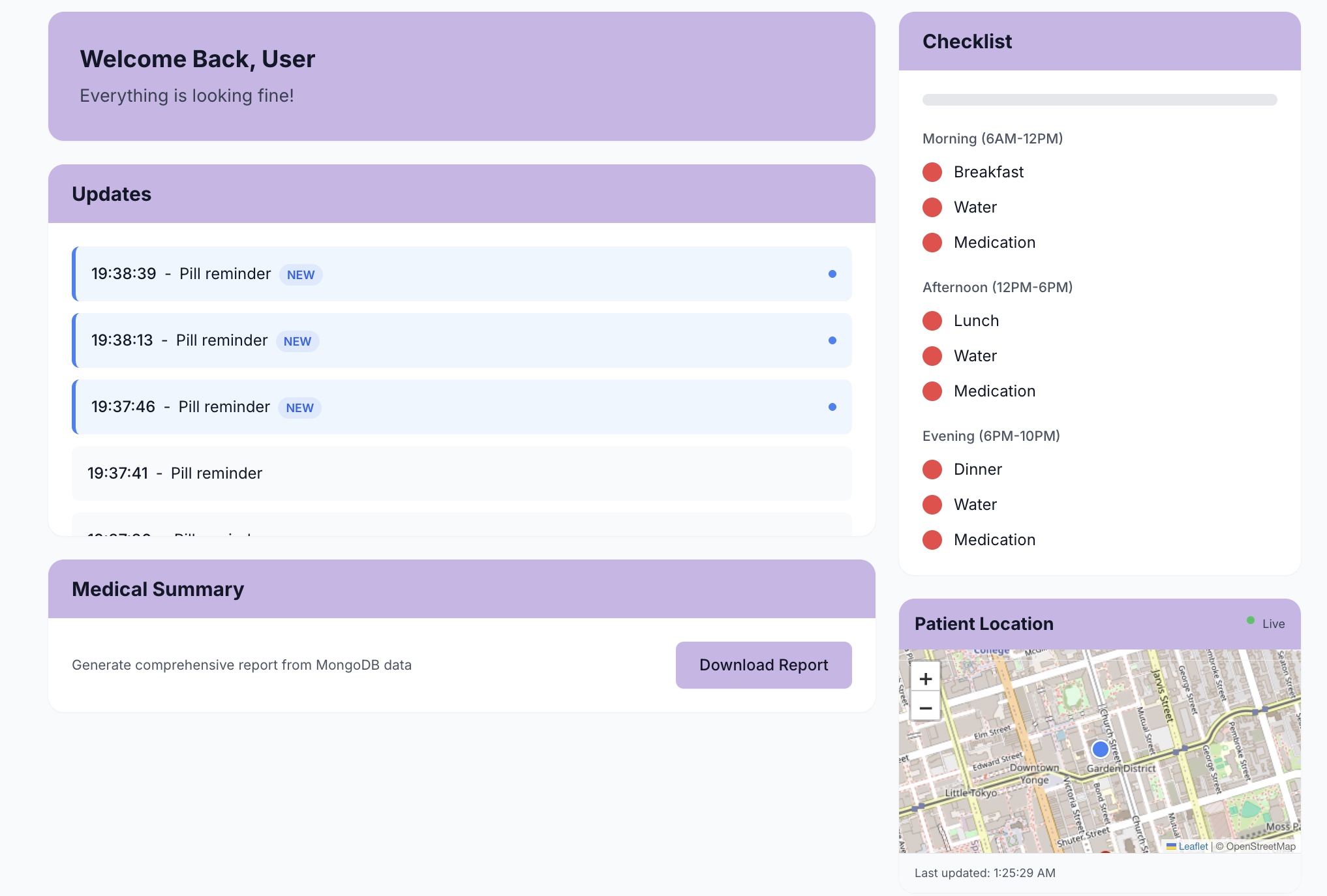
Caregiver-facing UI
-
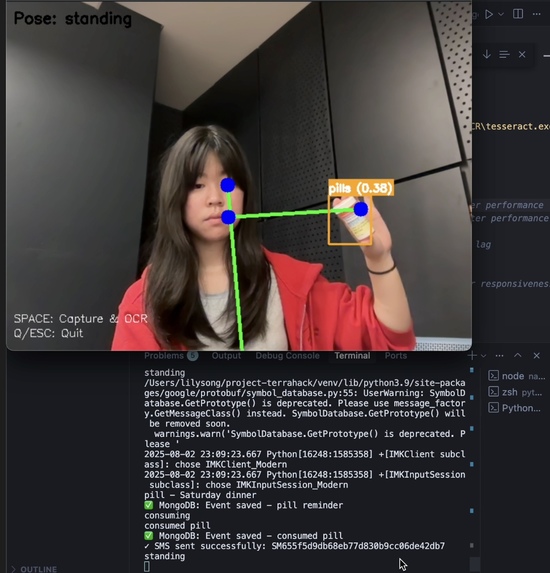
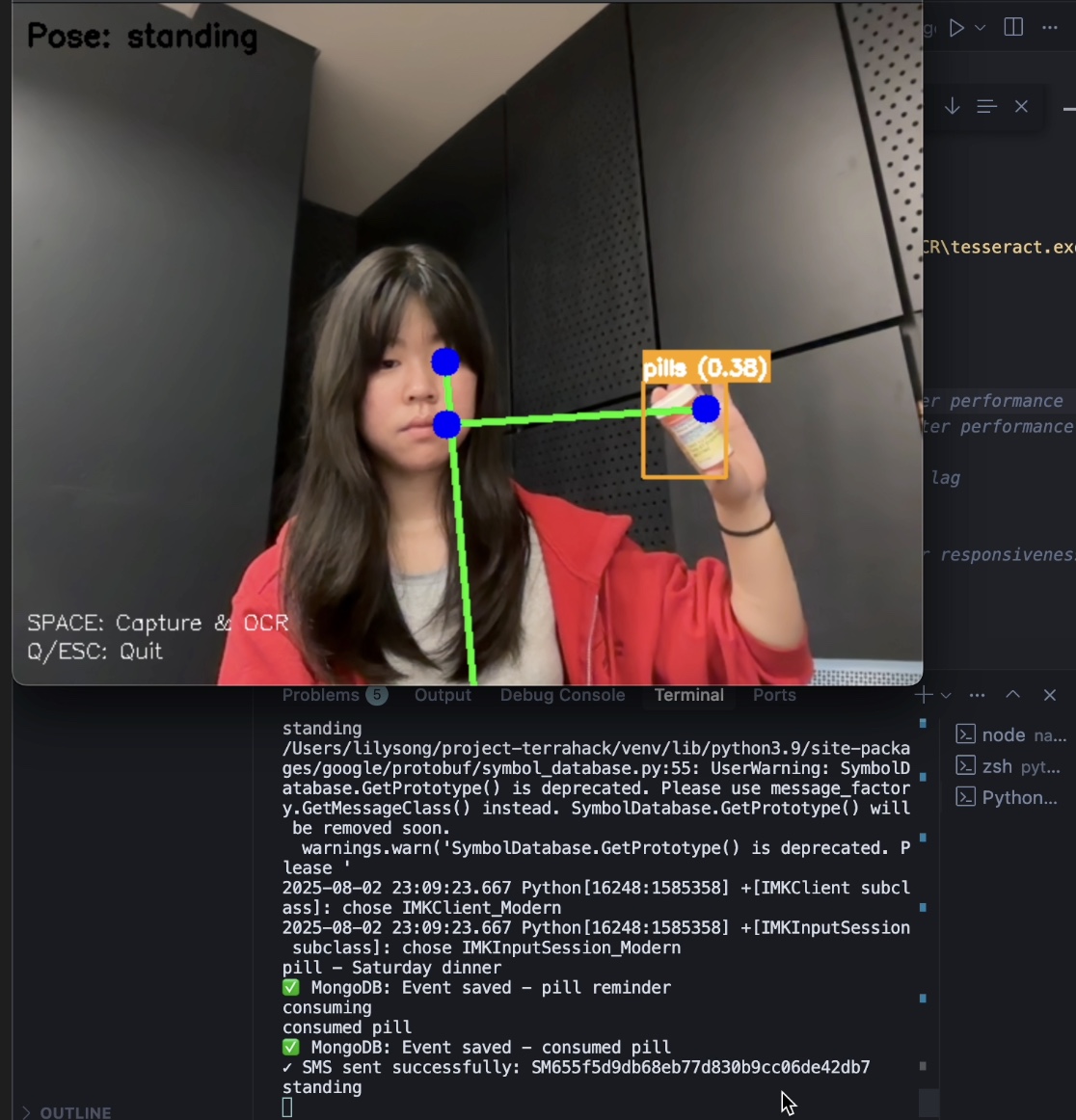
YOLO + Mediapipe Computer Vision
-
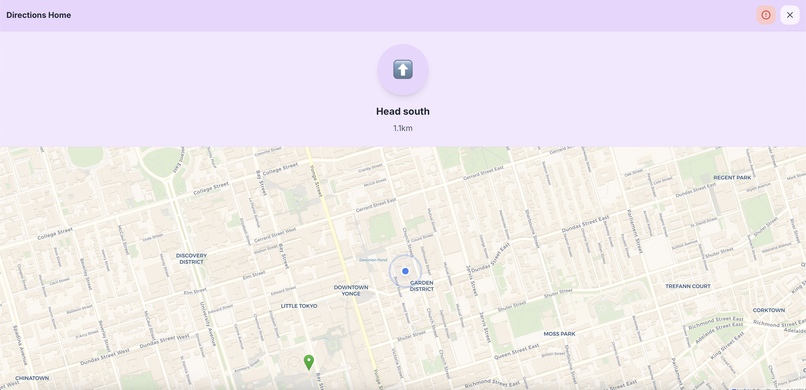
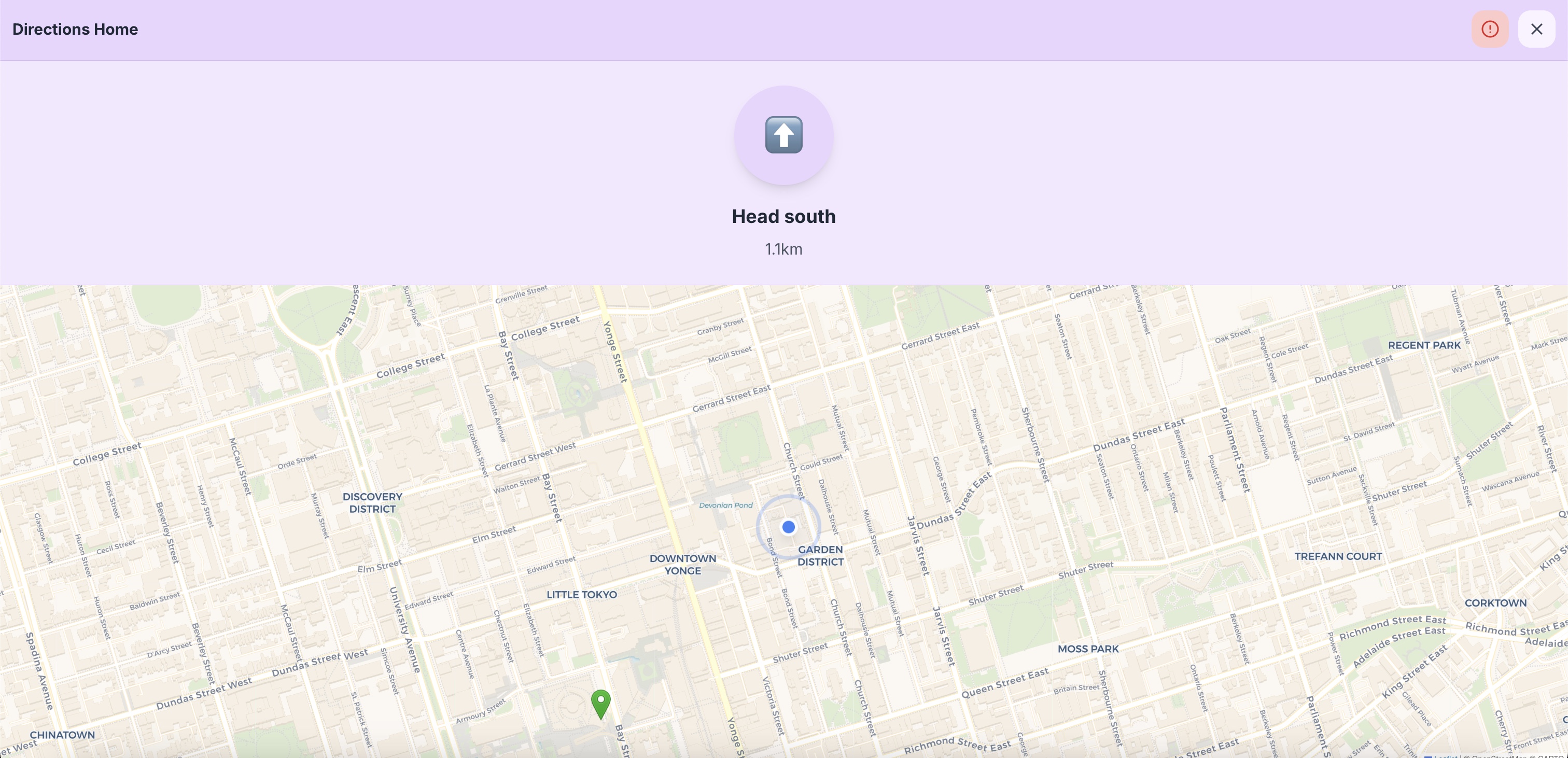
Patient-facing UI
-
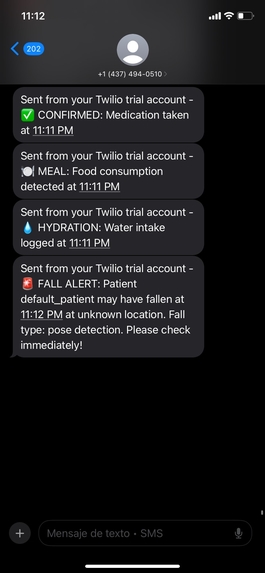
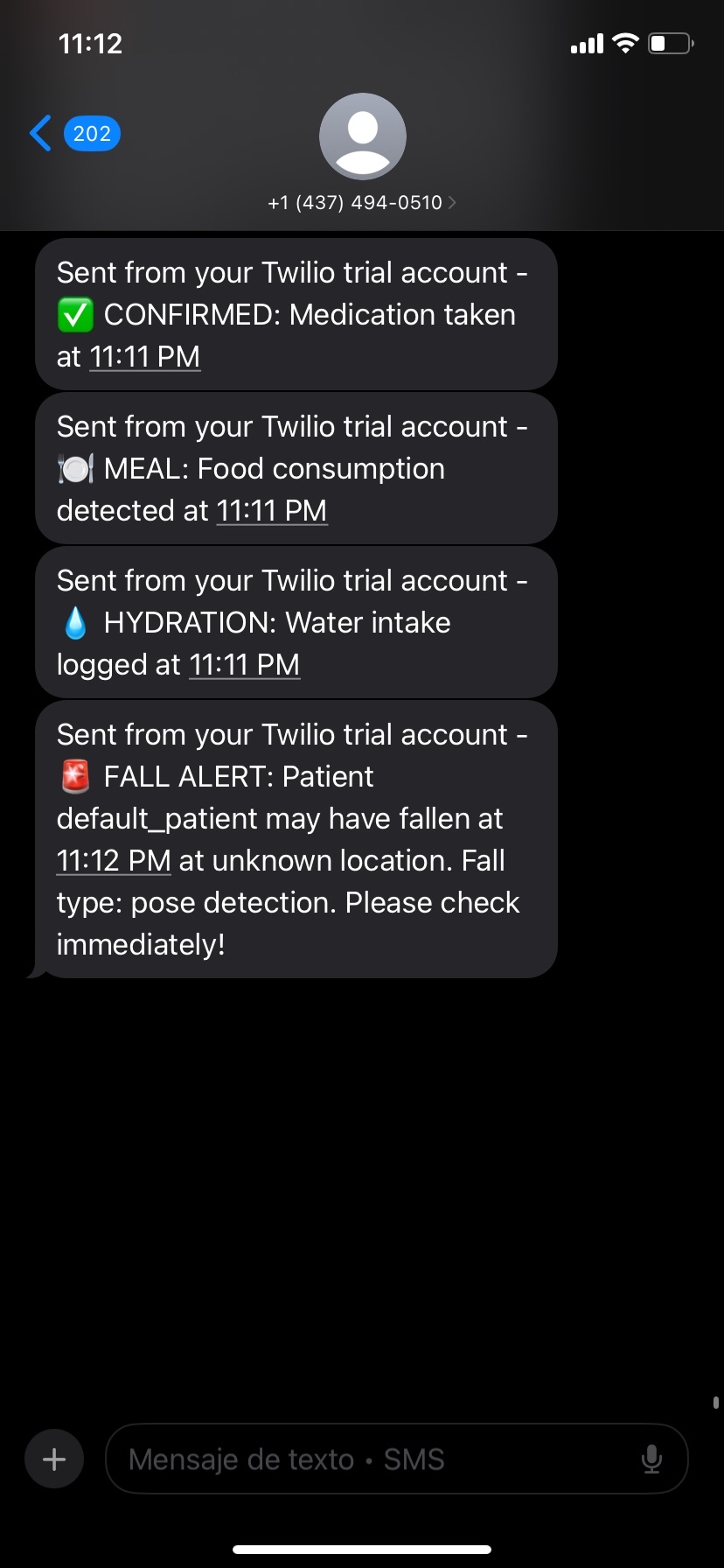
SMS Notifications Received by Caregiver
Inspiration
The elderly already face many challenges, and with the added risk of mental conditions, life can become nearly impossible. Conditions like Alzheimer’s cause people to forget basic daily tasks, which can lead to skipped meals, missed or incorrect medication intake, and dehydration. Combined with broader concerns, such as getting lost or injured and being unable to call for help, this was a clear call-to-action for us: to make remote elderly care easier. As digital care continues to shape the future of healthcare, we aim to reduce barriers between caregivers, the elderly, and the healthcare system. We want all fall-related injuries to be reported automatically and the consequences of forgotten daily tasks significantly reduced.
What it does
AgeWell is a multi-dimensional tool that monitors an elderly person's routine activities and flags potential issues. Its features include:
- Fall Detection – Falls are the leading cause of injury and injury-related death in the elderly population. When a fall is detected, AgeWell instantly contacts emergency services with an automated message requesting urgent assistance and also alerts the caregiver.
- Navigation When Lost – The elderly user interface is simple and intuitive, allowing them to choose between being guided home or requesting help. In the latter case, messages are sent to both the caregiver and emergency services.
- Daily Checklists for People with Memory Loss – Older adults, especially those with conditions that cause short-term memory loss (such as Alzheimer’s or dementia), frequently forget whether they’ve completed essential daily tasks, like taking medications, eating meals, or staying hydrated. AgeWell enables caregivers to track task completion in real time and receive alerts if tasks are skipped, reducing the need for constant manual check-ins.
- Automated voice reminders – These help ensure the user remembers to take the correct medications and eat meals on time. These reminders support the users if they forget to eat at a certain time of day, or try to take pills at an inappropriate time.
- Summaries for Medical Appointments – The system tracks habits and identifies trends (e.g., regularly forgetting lunch), generating summary reports that are automatically sent to the user's primary care provider. This prevents key details from being missed or forgotten during checkups.
By automatically contacting caregivers and emergency services (when necessary), AgeWell ensures elderly individuals get the attention they need, while enabling caregivers to stay informed without constant in-person monitoring.
How we built it
We built AgeWell using a full-stack architecture with multiple integrated components.
Frontend (React + TailwindCSS):
- Built a responsive web application using React 18 with Vite for fast development
- Implemented real-time dashboards for both patients and caregivers using React
- Created interactive mapping components with Leaflet and OpenStreetMap for GPS navigation
- Designed an intuitive UI with Tailwind CSS for accessibility and ease of use
Backend:
- MongoDB Atlas - Cloud database for storing patient activity logs, events, and health data
- Computer vision with YOLOv8 and MediaPipe - Fall detection and activity detection using shape/object and body posture analysis
- OCR using Tesseract for reading medication labels and other descriptions to help with object analysis
- Real-time camera monitoring for safety alerts
Communication & Emergency Systems:
- Twilio API - For automating SMS messages to the caregiver whenever the elderly person eats, takes pills, drinks water, or is in an emergency situation
- Real-time event logging and alert system for immediate response to emergencies
AI/ML Components:
- YOLOv8 – Advanced object detection
- MediaPipe – Body pose estimation for monitoring patient movement and posture
- Tesseract OCR - Text recognition
Key Technologies:
- Frontend - React, Vite, Tailwind CSS,
- Backend - Node.js, MongoDB, Python Flask
- AI/ML - YOLOv8, MediaPipe, OpenCV, Tesseract
- Communication - Twilio API
- Database - MongoDB Atlas with real-time sync
Architecture Highlights:
- Real-time data synchronization between all components
- Modular design allowing independent scaling of detection services
- Event-driven architecture for immediate emergency response
- Secure environment variable management for API keys and sensitive data
This approach ensures reliable monitoring and an intuitive user experience for both Alzheimer's patients and their caregivers.
Challenges we ran into
There were a few challenges with connecting the MongoDB database. The usage of MongoDB in different languages was another roadblock. We worked in Python and in Node.js, therefore differentiating between backend implementation and how to integrate it with the frontend was challenging.
Accomplishments that we're proud of
- Addressing an issue that was personal to a few of our group members. This tool would directly improve the lives of elderly in our family, along with their caregivers.
- Using knowledge from our current co-op jobs, including one member who works at a hospital with AI CDS tools, and implementing it in our project to bring a real-world aspect to our solution.
- Intersecting the field of healthcare with technology. Tech is the future of healthcare, and we are honoured to be contributing to the goal of saving and improving lives.
What we learned
We learned a lot of different backend tools. This included computer vision, multiple different APIs, and database integration. We have been able to increase our toolbox when it comes to things we are able to import and utilize freely as API and library calls.
What's next for AgeWell
Future integration with EMRs will allow AgeWell to support clinical care seamlessly, requiring little to no extra effort from healthcare providers. To support large-scale adoption, AgeWell will be built with interoperability in mind to ensure it can connect with a wide range of healthcare platforms, including hospitals and long-term care facilities. We envision AgeWell being prescribed or recommended by physicians as part of routine elder care, eventually becoming a standardized tool in aging-in-place strategies.
Built With
- css
- express.js
- figma
- html
- javascript
- leaflet.js
- lucide-react
- mediapipe
- mongodb
- node.js
- opencv
- python
- react
- tailwind-css
- tesseract
- tesseract-ocr
- twilio
- typescript
- vite
- yolo



Log in or sign up for Devpost to join the conversation.