-
Check it out !
Inspiration
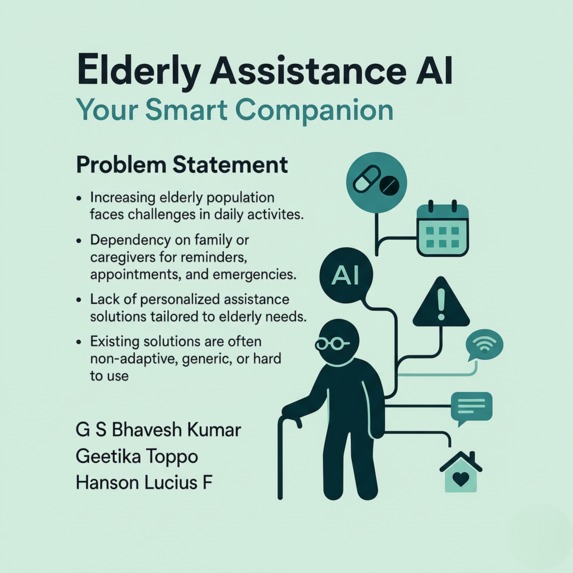
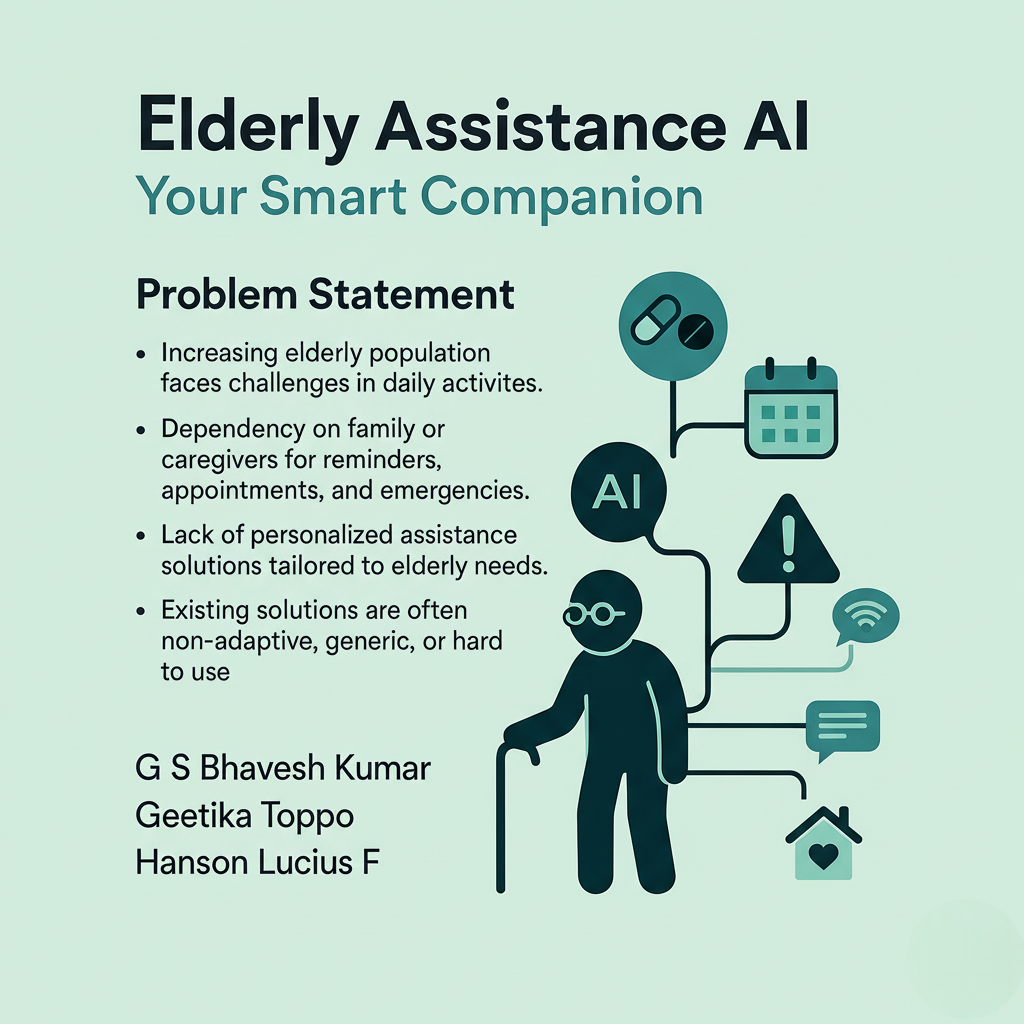
We were inspired by the everyday struggles faced by elderly people around us—missing medications, difficulty booking appointments, or managing digital payments. We also saw how families constantly worry about their loved ones when they live alone. We wanted to create something that gives seniors independence while keeping families reassured.
What it does
The Elderly Assistance AI Companion acts like a smart helper for seniors. It reminds them to take their medicines, helps them book doctor appointments, manages bill payments safely, and can even send out emergency alerts with location details. Families get updates and alerts, while seniors enjoy a simple, voice-friendly experience in their own language.
How we built it
We combined speech recognition, a reasoning engine (LLM), and action tools like calendars, payments, and messaging. Using Hugging Face models for speech-to-text, text-to-speech, and OCR, we built a workflow where the AI listens, understands, and performs tasks. The system runs on a backend built with Python/Node.js, with a caregiver dashboard in React.
Challenges we ran into
Getting speech recognition to work well in Indian languages was tricky.
Balancing privacy with family visibility required careful design.
Bill payment flows were hard to keep both simple and secure.
Making the interface accessible for seniors (large fonts, easy buttons, clear speech) needed extra attention.
Accomplishments that we're proud of
Built a working demo that can set reminders, book appointments, and trigger emergency alerts.
Designed the system to work in multiple languages, making it more inclusive.
Added safety guardrails so that payments and alerts are always monitored.
Created a caregiver dashboard that shows logs and summaries in a simple way.
What we learned
We learned that technology for seniors must focus on simplicity, trust, and family involvement. We also discovered how powerful agentic AI can be when it doesn’t just remind users but actually performs actions. Most importantly, we realized how small design decisions (like voice confirmations or caregiver approvals) can make or break user trust.
What’s next for Elderly Assistance AI Companion
Integrating wearable devices for fall detection and health monitoring.
Expanding medical knowledge for checking drug interactions.
Making the system run more smoothly on low-cost devices like Raspberry Pi.
Partnering with clinics, NGOs, and community health providers to pilot real-world use.
Built With
- huggingface
- meta-llama/meta-llama-3.1-8b-instruct
- node.js
- postgresql
- python
- react
- tailwind