Inspiration
As the global population ages, millions of elderly individuals face challenges such as remembering medication schedules, managing appointments, and coping with loneliness. In some cases, distress or emergencies go unnoticed until it’s too late. We wanted to create a human-like AI voice companion that not only assists with daily reminders but also understands emotions and can alert caregivers instantly when something feels wrong.
What it does
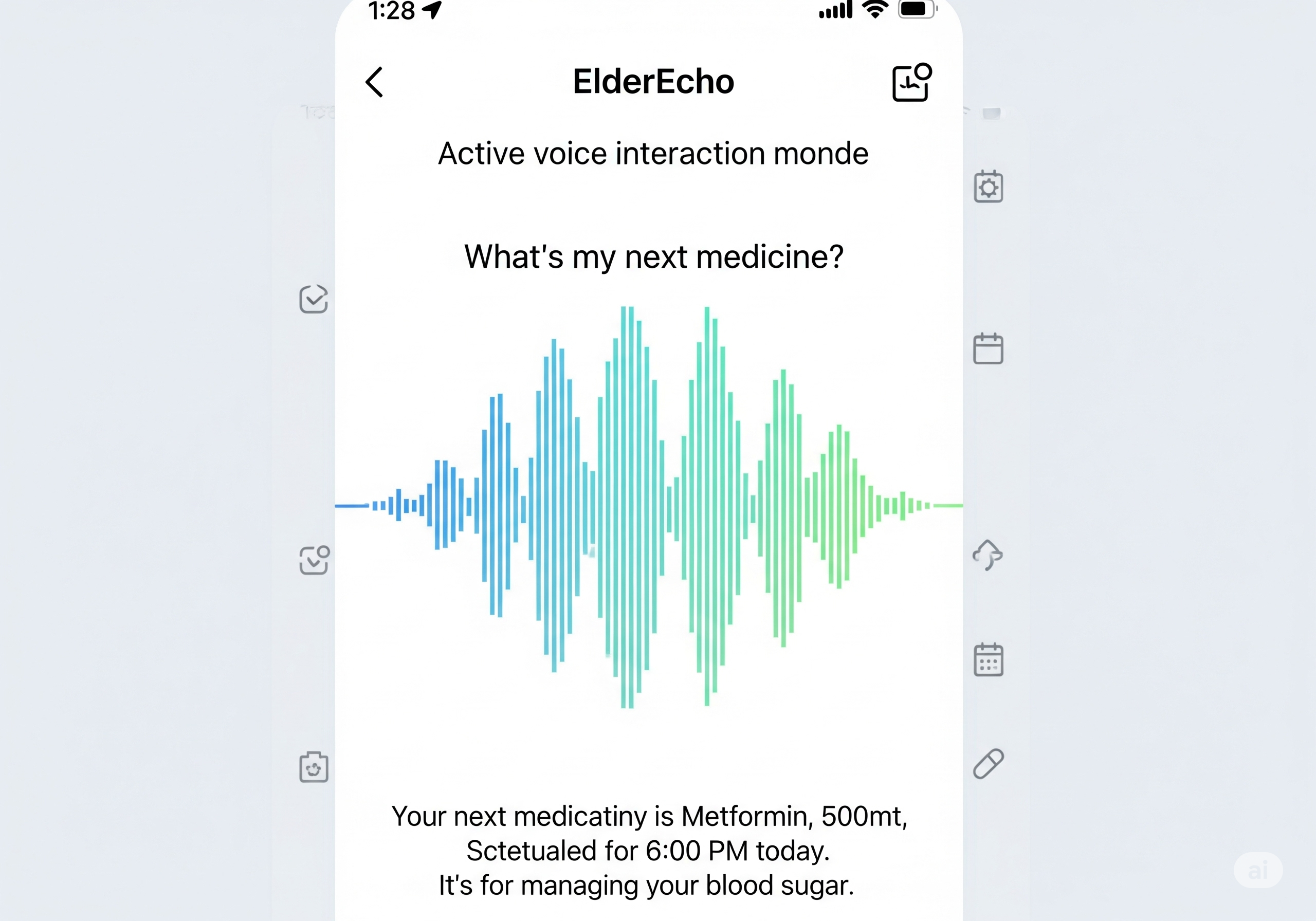
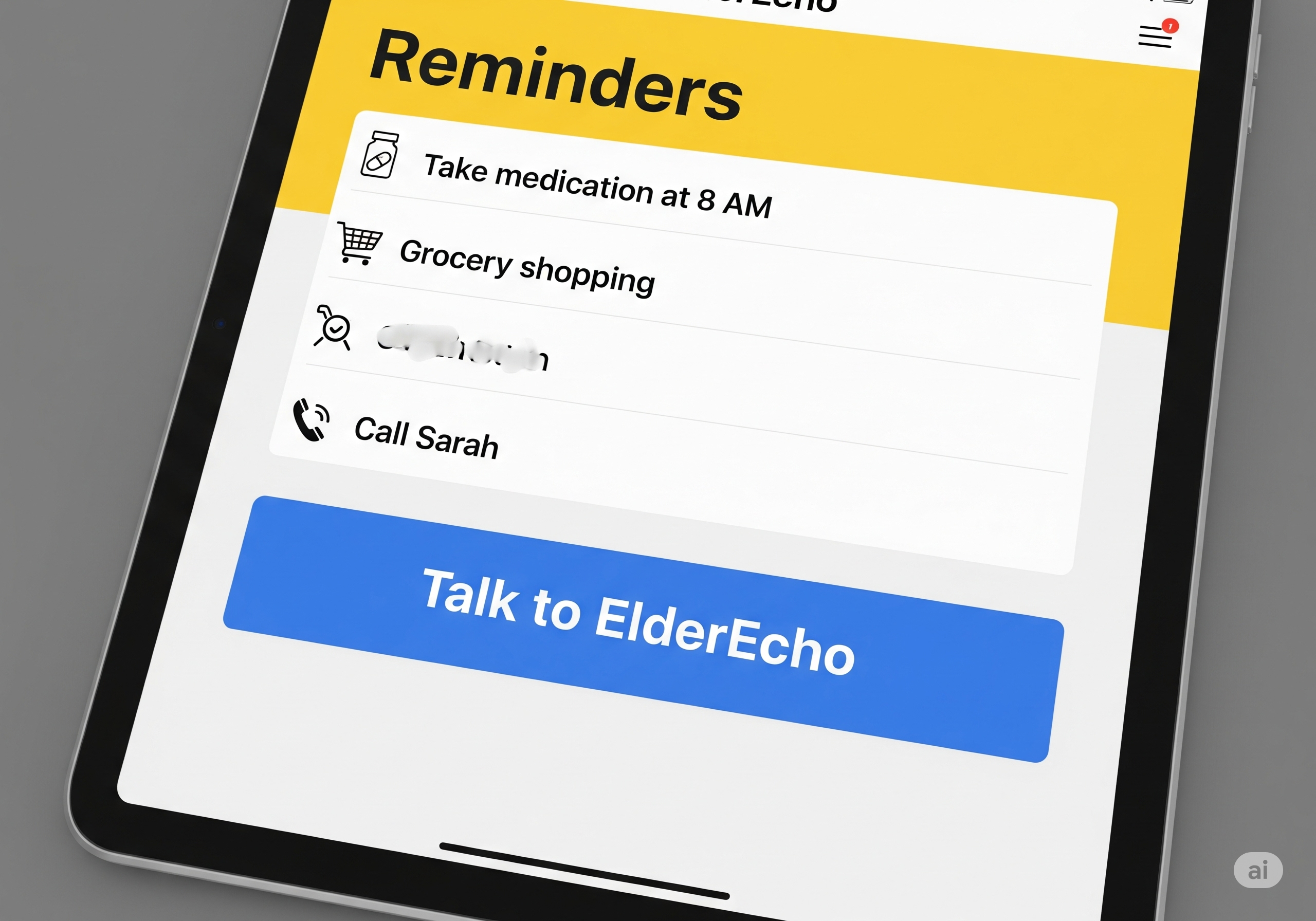
ElderEcho is an AI-powered voice assistant designed specifically for elderly care. It can: Listen to voice commands and respond naturally. Schedule reminders for medications, hydration, and appointments. Detect emotional distress through tone and language. Send real-time alerts to caregivers via SMS or email. This ensures that support, safety, and companionship are just a conversation away
How we built it
Frontend: Built with React.js + Tailwind CSS for an accessible, mobile-friendly interface. Speech-to-Text: Used OpenAI Whisper API to transcribe voice input accurately, even in noisy environments. Natural Language Understanding: Leveraged OpenAI GPT-4o-mini for conversational responses and understanding user intent. Sentiment Analysis: Integrated a HuggingFace Transformers sentiment model to detect distress signals. Text-to-Speech: Used Azure Cognitive Services for natural-sounding voice output. Notifications: Implemented Twilio API for SMS alerts and Nodemailer for email notifications.
Challenges we ran into
Real-time processing: Achieving fast voice-to-text and text-to-speech conversion without noticeable lag. Distress detection accuracy: Avoiding false positives/negatives in emotional state detection. Accessibility design: Ensuring the interface is simple enough for elderly users with varying levels of tech literacy. Integration complexity: Managing multiple APIs (Whisper, GPT, TTS, Twilio) in a stable and cohesive backend.
Accomplishments that we're proud of
Built a working end-to-end AI voice companion in just 3 days. Successfully integrated emotional analysis into natural conversation flow. Created a clean, accessible UI with large text and high contrast for elderly users. Demonstrated real-time caregiver alerts during the demo.
What we learned
How to integrate multiple AI models and APIs into a seamless, real-time application. The importance of user-centric design when targeting non-technical demographics. Fine-tuning sentiment analysis models for contextual accuracy in distress detection. Effective time management and team coordination under a 72-hour deadline.
What's next for ElderEcho
Multi-language support to serve elderly communities worldwide. Wearable integration to capture health metrics (e.g., heart rate, fall detection). Offline mode for areas with unreliable internet. Caregiver dashboard for monitoring multiple elderly users in real-time. AI companionship features for small talk, storytelling, and mental stimulation.
Built With
- api
- azure
- cognitive
- css
- express.js
- gpt-4o-mini
- huggingface
- javascript
- node.js
- nodemailer
- openai
- python
- react.js
- render
- services
- tailwind
- transformers
- twilio
- vercel
- whisper

Log in or sign up for Devpost to join the conversation.