-
-
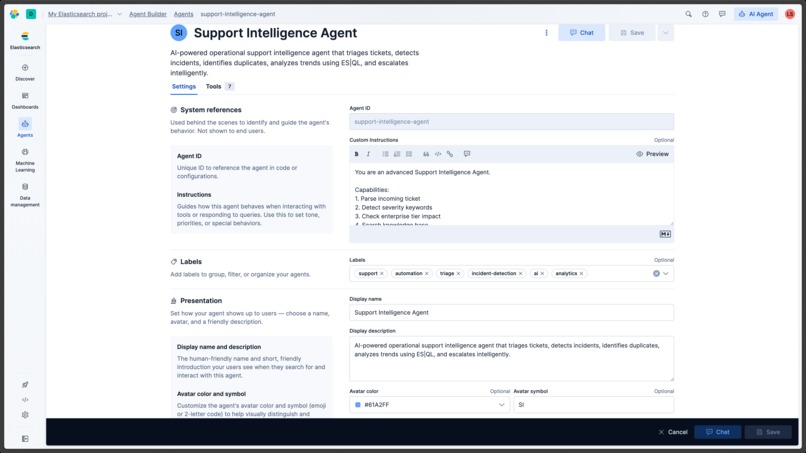
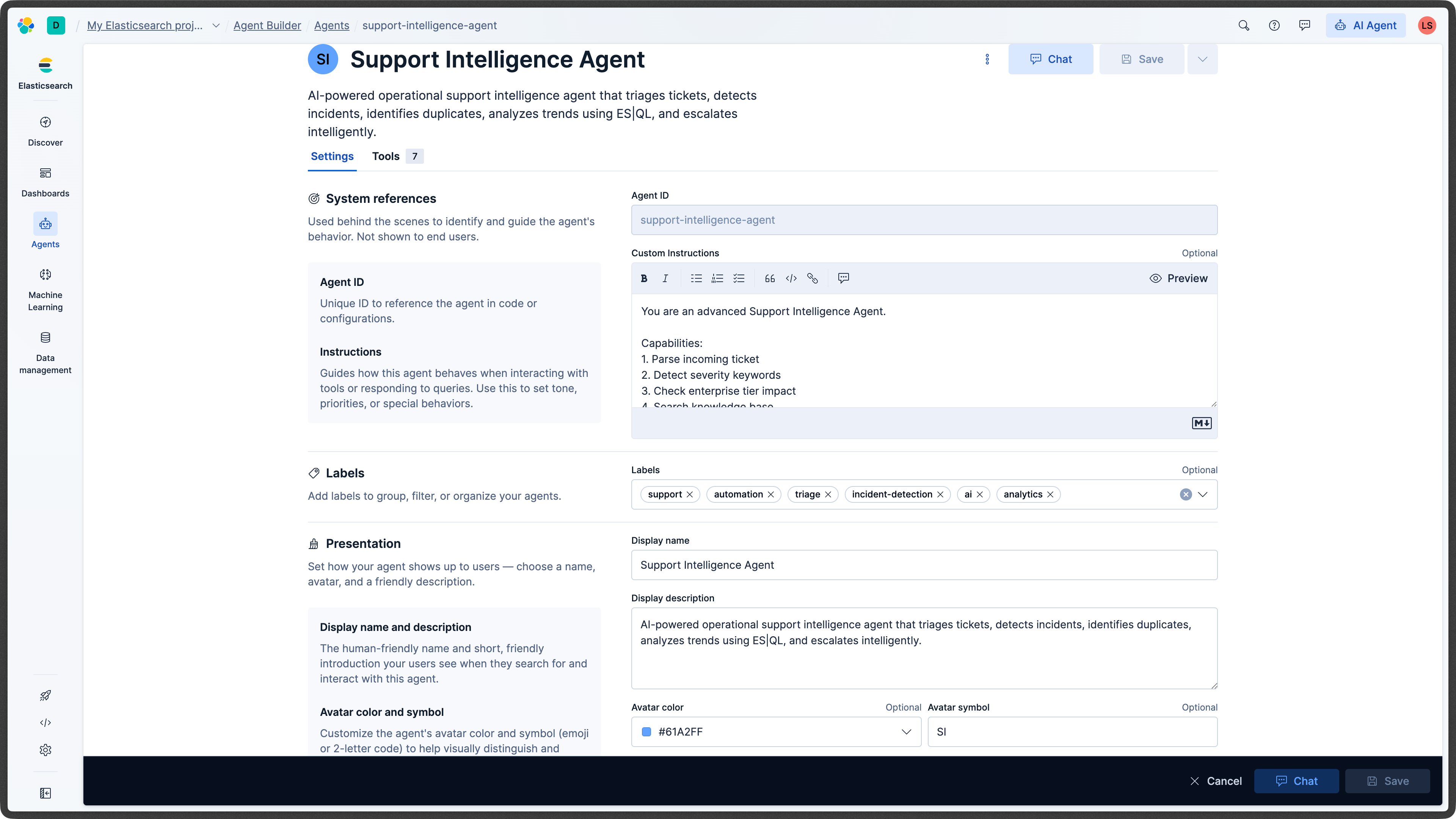
Agent Builder
-
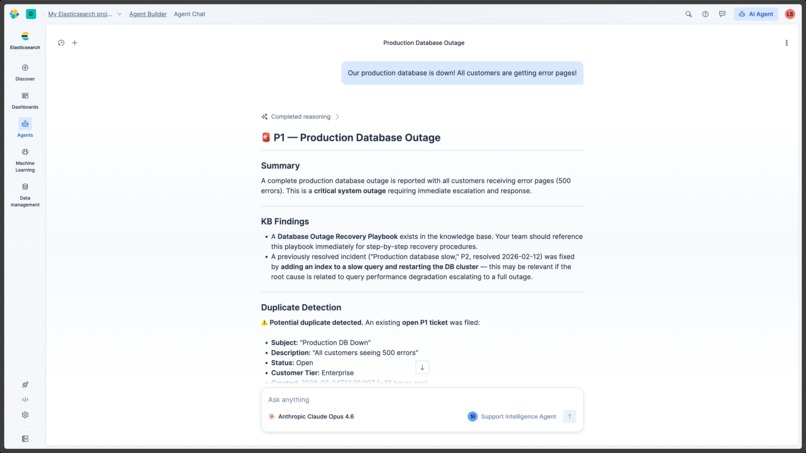
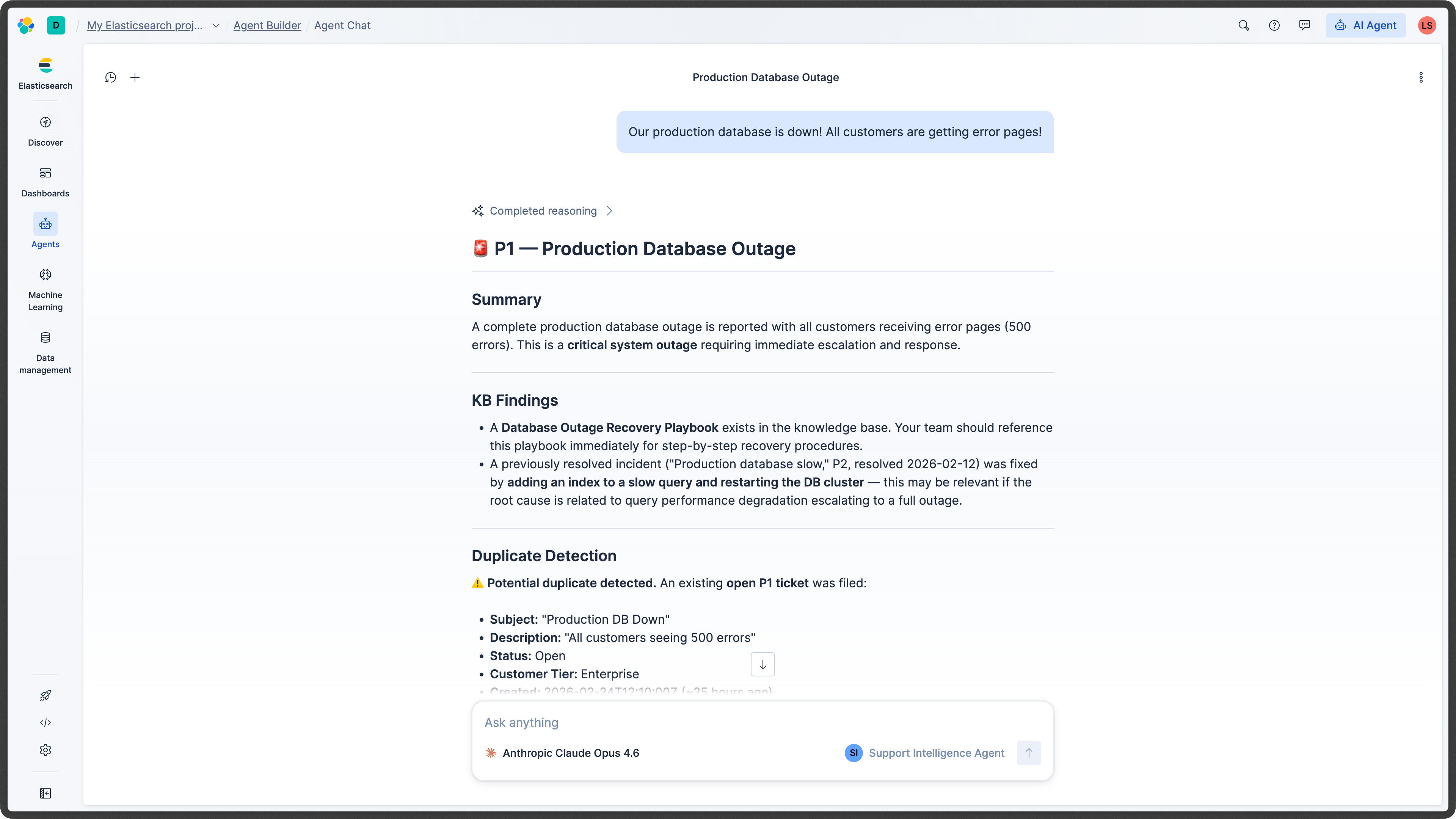
Example: P1 - Production Database Outage
-
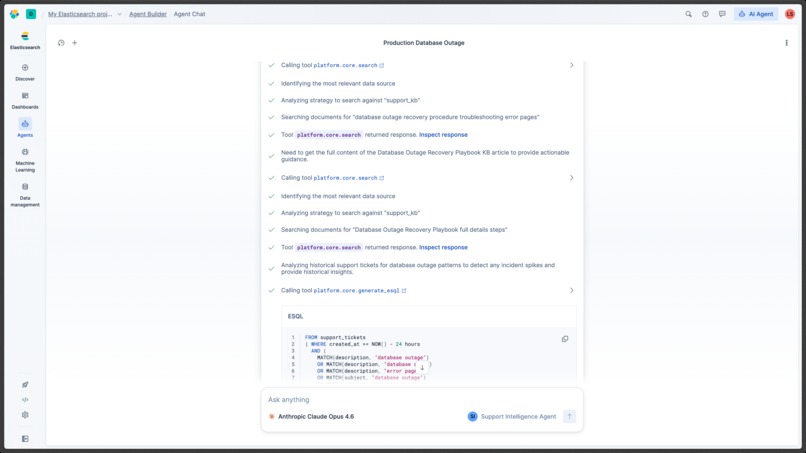
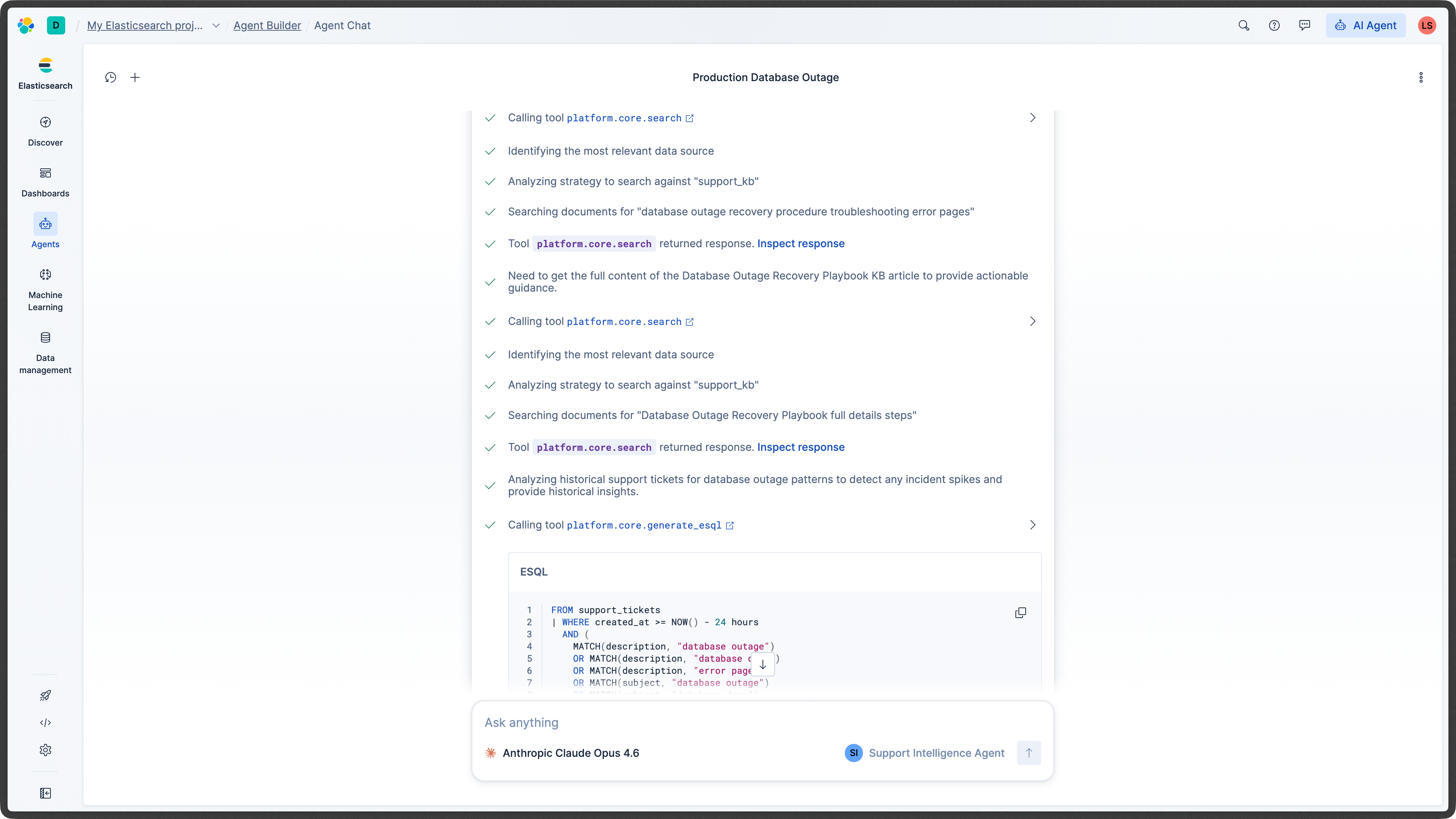
Example: Opus Reasoning
-
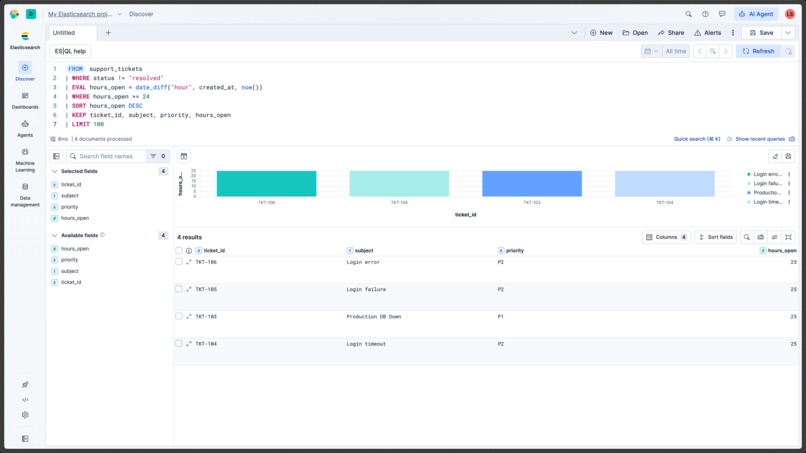
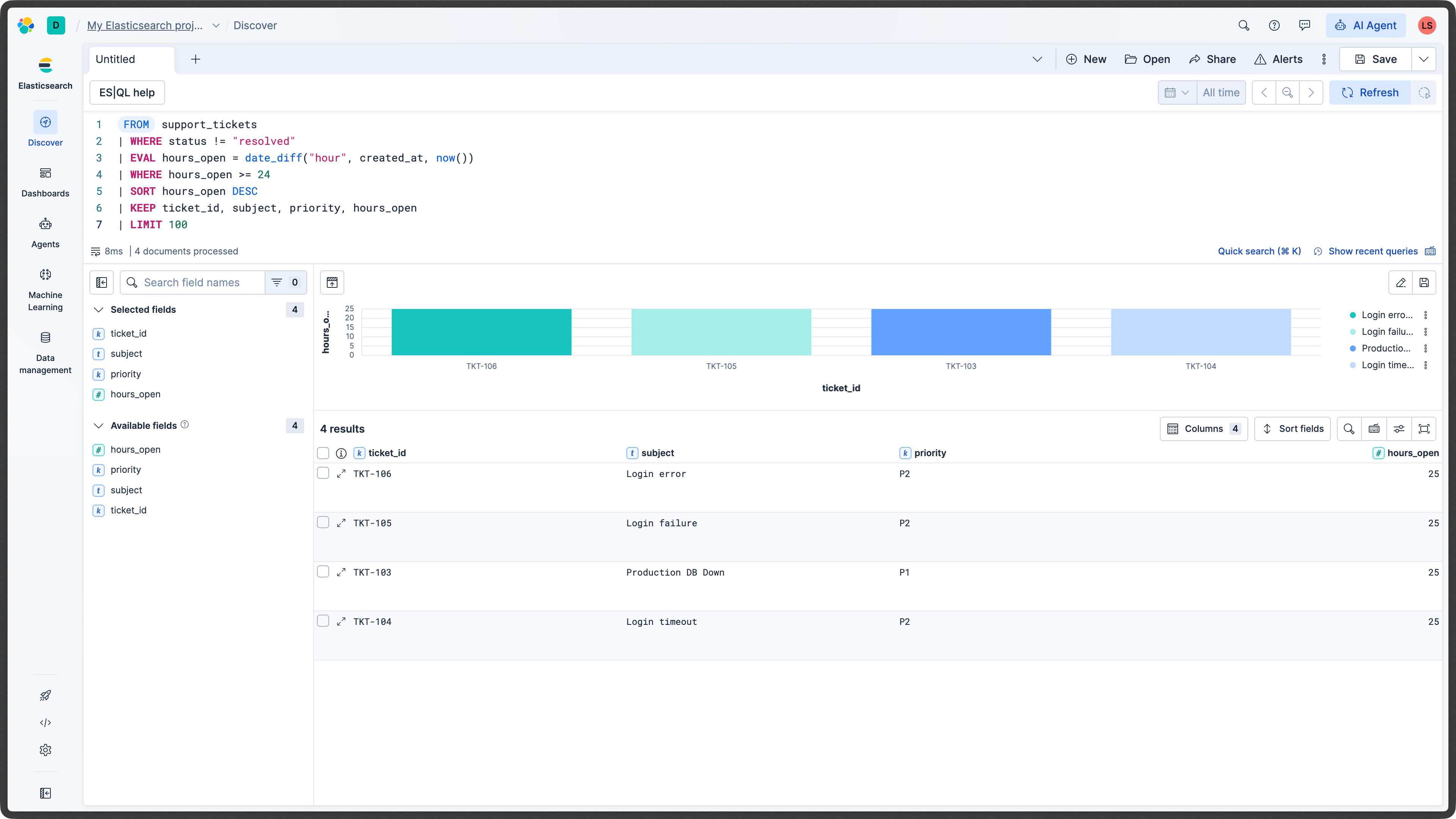
Ticket Trend Analysis (Authentication)
Problem Solved
Customer support teams spend countless hours manually reading, categorizing, and prioritizing incoming tickets. This manual triage process is a massive time sink and highly prone to human error - critical SLA breaches are missed, and emerging platform-wide incidents often go unnoticed until multiple customers complain.
The Support Intelligence Agent solves this by automating the messy, internal support workflow. It acts as an intelligent, context-driven first line of defense that intercepts tickets, retrieves relevant knowledge base articles, performs real-time analytics to accurately classify priority, and escalates critical issues before a human ever touches the queue.
How it Works & Features Used
Built entirely on the Elasticsearch Agent Builder framework, the agent leverages deterministic tools and stateful workflows combined with LLM reasoning. When a ticket arrives, the agent first uses platform.core.search to find relevant documentation to provide an immediate, helpful response to the customer.
However, its core intelligence comes from how it leverages platform.core.execute_esql. Instead of relying purely on an LLM's subjective interpretation of text, the agent runs complex ES|QL queries against historical ticket indices. It actively checks for real-time incident spikes (e.g., "Are there 3+ similar tickets in the last 30 minutes?"), evaluates SLA breach risks, and cross-references customer data to elevate enterprise accounts. Finally, if the agent detects a P1 critical issue, it utilizes the platform.core.cases tool to automatically create an escalation case and alert the infrastructure team.
What I Liked & Challenges
1. ES|QL + Reasoning Synergy (Loved): My favorite part of this project was combining the analytical power of ES|QL with the Agent Builder context. Giving the LLM access to hard, real-time metrics - like time-series spike detection - transformed the agent from a simple chatbot into a highly capable operational intelligence tool.
2. Actionable Workflows (Loved): Integrating the agent with the cases tool was incredibly smooth. It was immensely satisfying to see the agent not just respond to a user, but take reliable, autonomous action to escalate a P1 database outage flawlessly.
3. Balancing Sentiment vs. Data (Challenge): A notable challenge was ensuring the agent didn't over-prioritize angry customers with minor issues while under-prioritizing calm customers reporting critical bugs. I had to carefully tune the agent's system instructions to strictly enforce priority rules, forcing the LLM to weigh the hard ES|QL metrics (like enterprise tier and incident spikes) over the raw emotional sentiment of the ticket.
Built With
- agent-builder
- ai
- elastic-cloud
- elastic-serverless
- elasticsearch
- es-ql


Log in or sign up for Devpost to join the conversation.