-
-
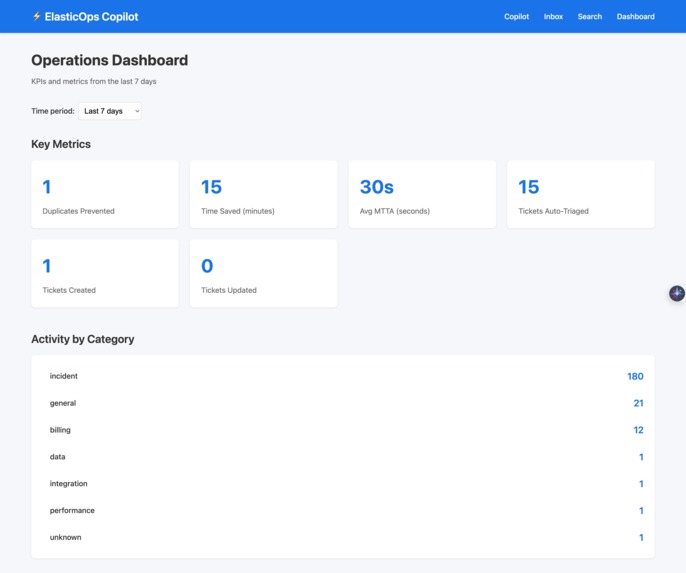
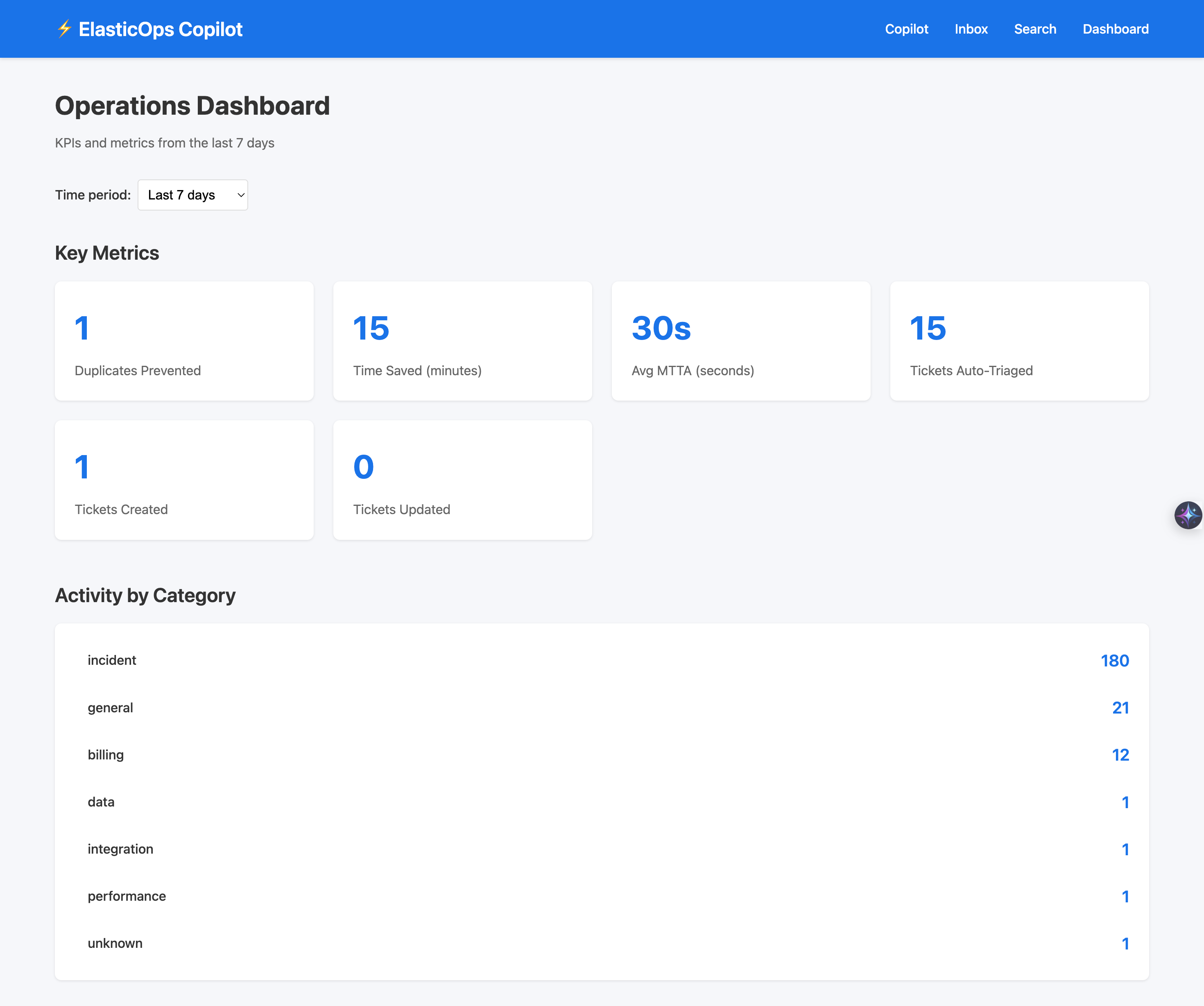
Operational intelligence dashboard. Tracks duplicates prevented, MTTA reduction, auto-triaged tickets, and overall efficiency.
-
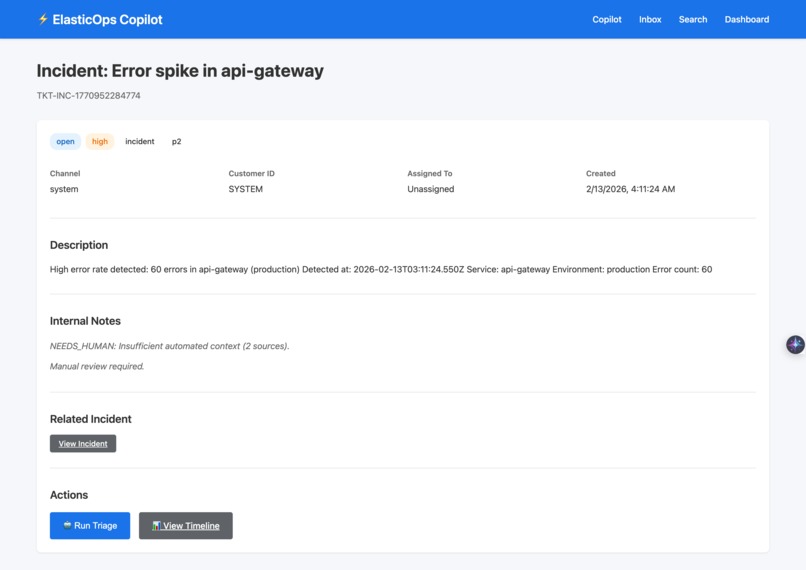
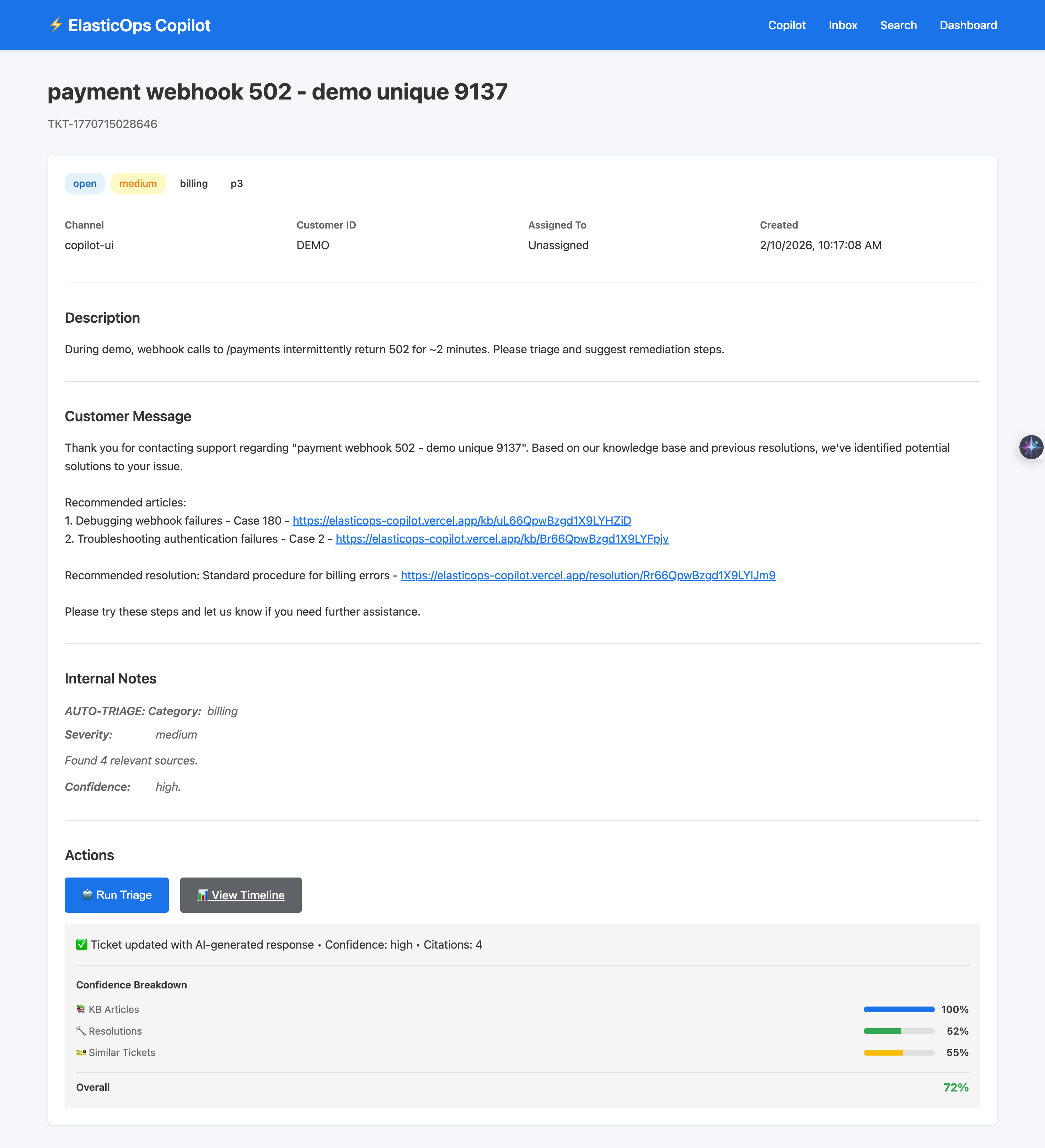
Evidence-backed ticket resolution. Includes AI-generated response, direct citation links, and confidence breakdown across KB, resolutions.
-
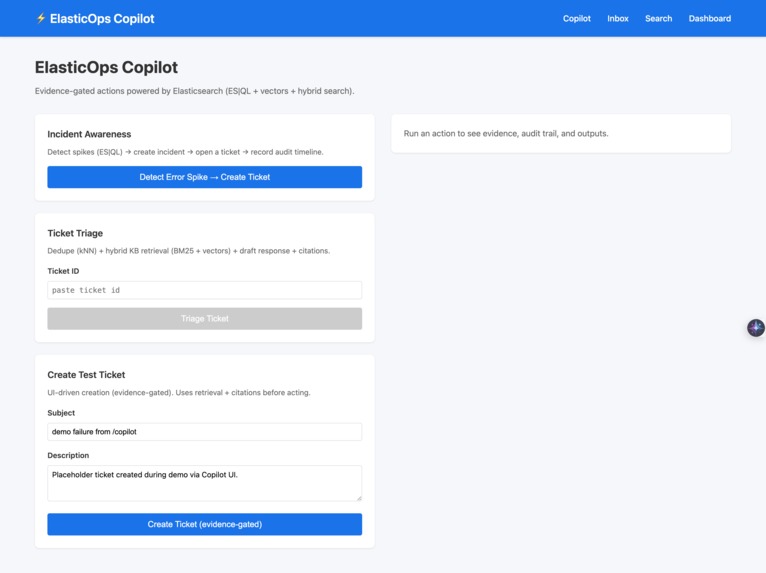
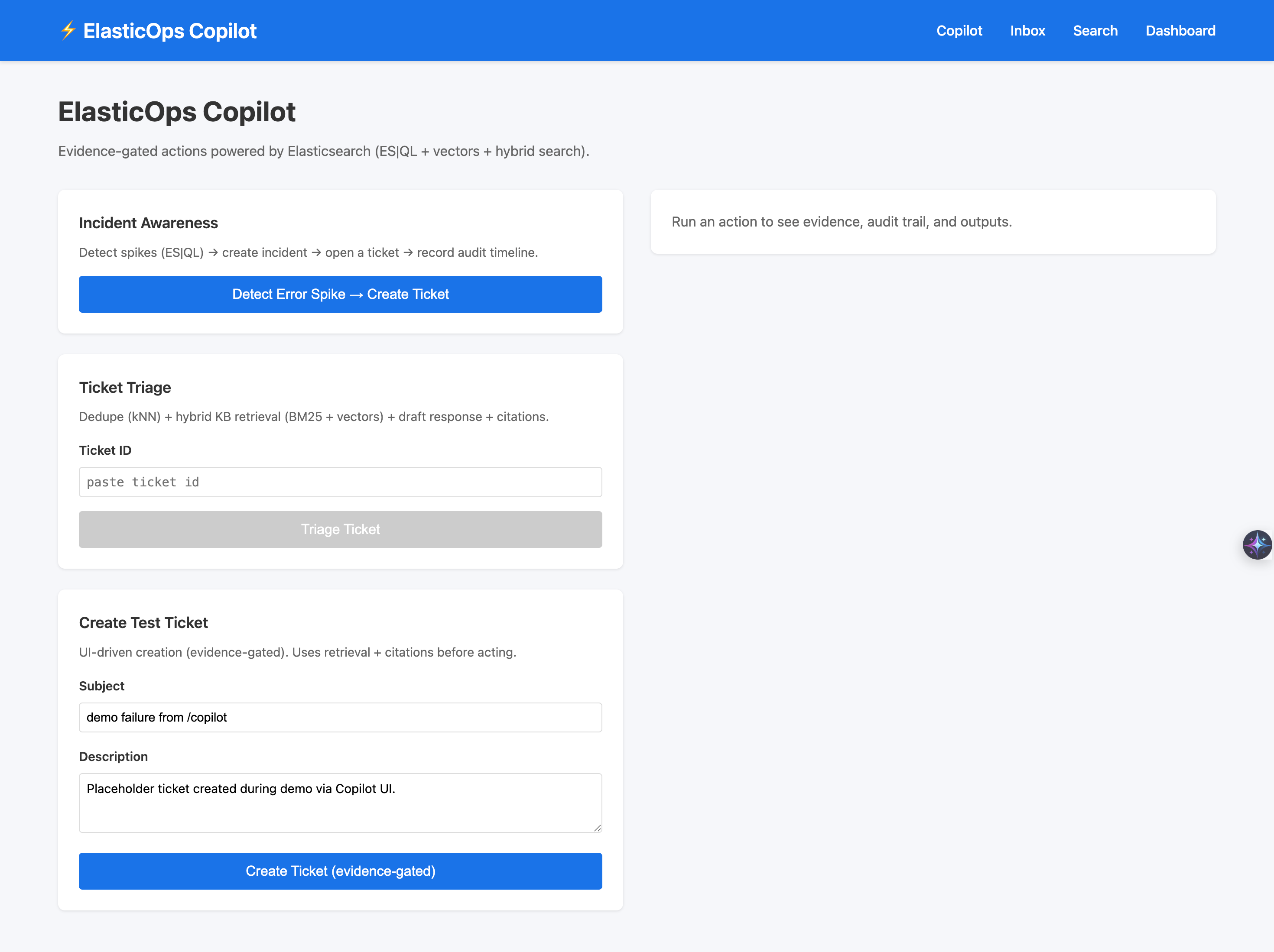
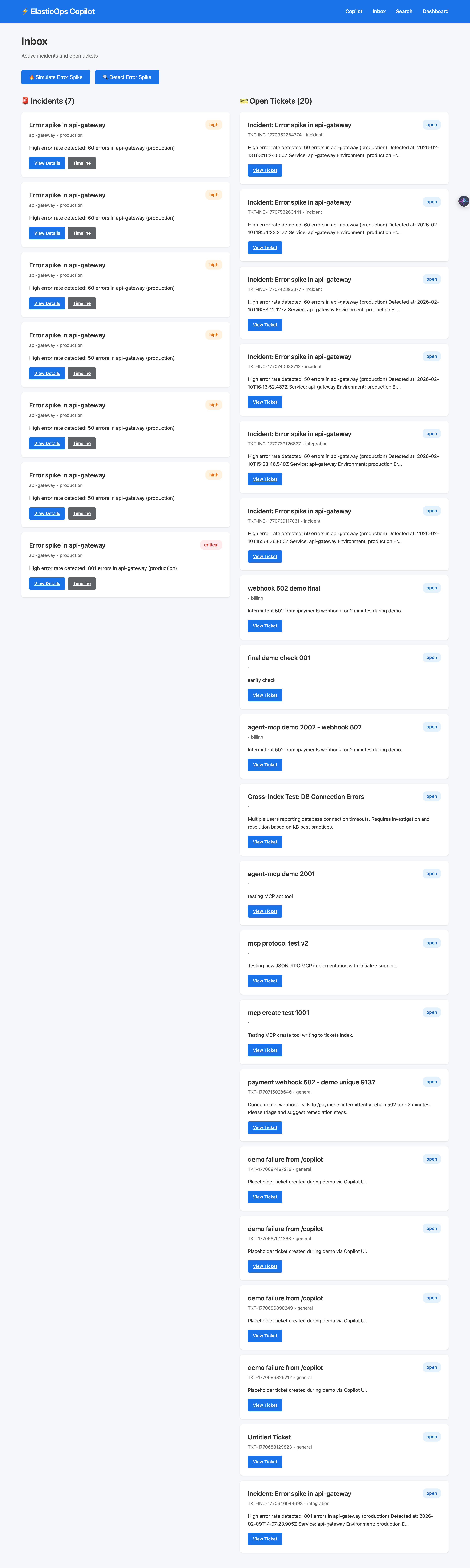
Central orchestration interface. From here, incidents are detected via ES|QL, tickets are triaged using hybrid search, and actions are recor
-
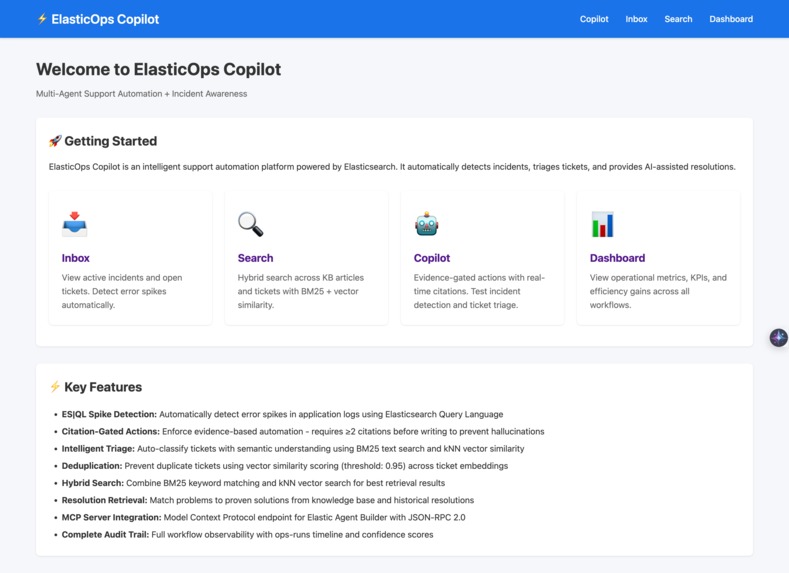
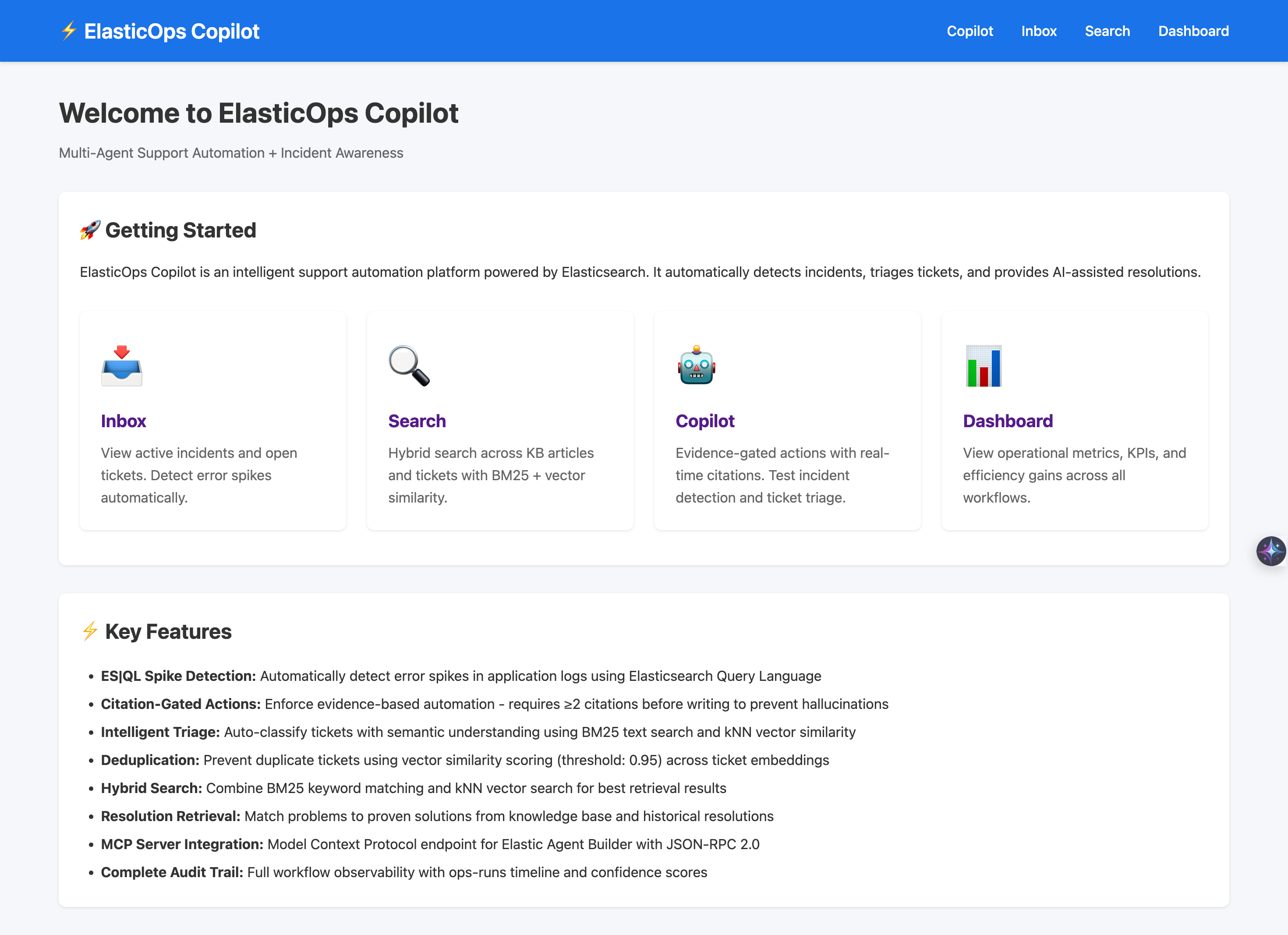
High-level overview of ElasticOps Copilot — an evidence-gated AI support automation system combining ES|QL, BM25, kNN vectors, and RRF.
-
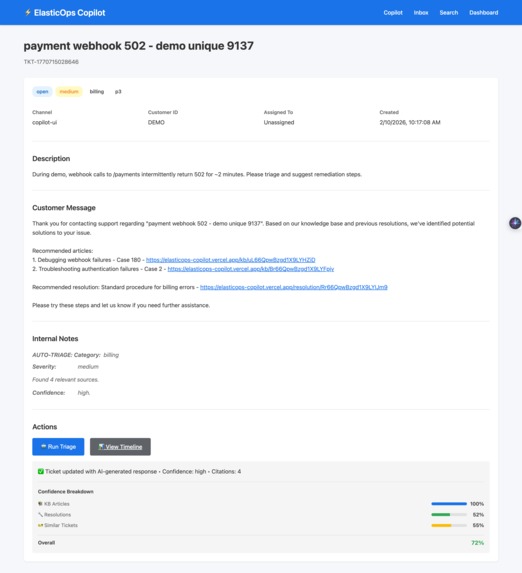
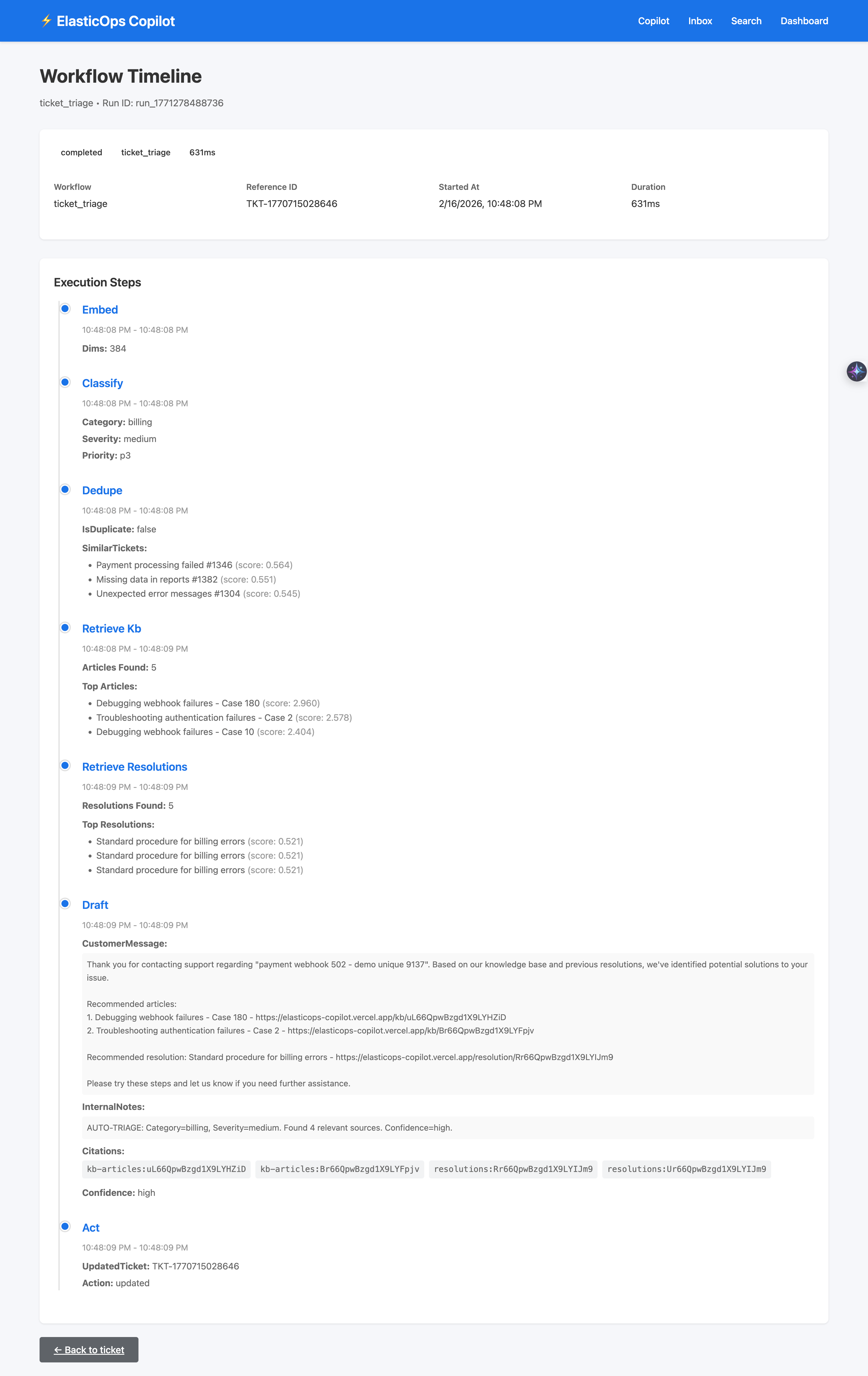
AI triage pipeline execution. Automatically classifies category, severity, priority, retrieves knowledge, deduplicates via vectors.
-
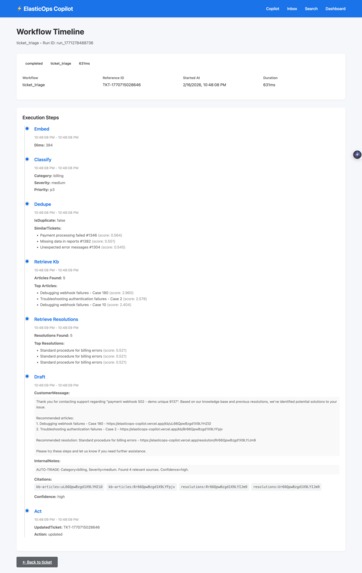
Complete audit trail of AI execution. Every step is logged: embedding, classification, deduplication, hybrid retrieval, drafting, and action
-
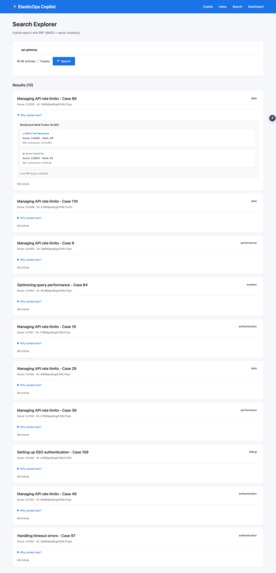
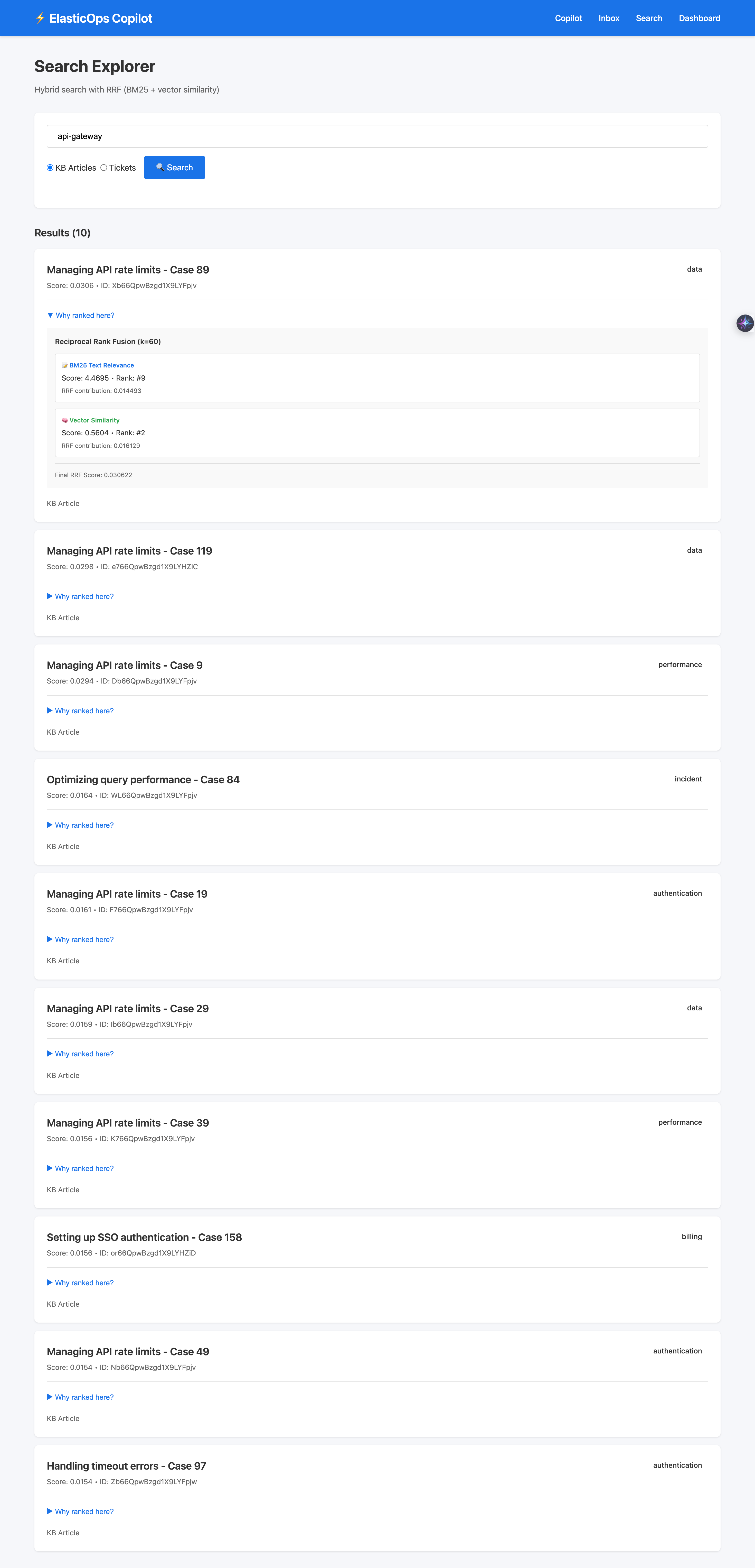
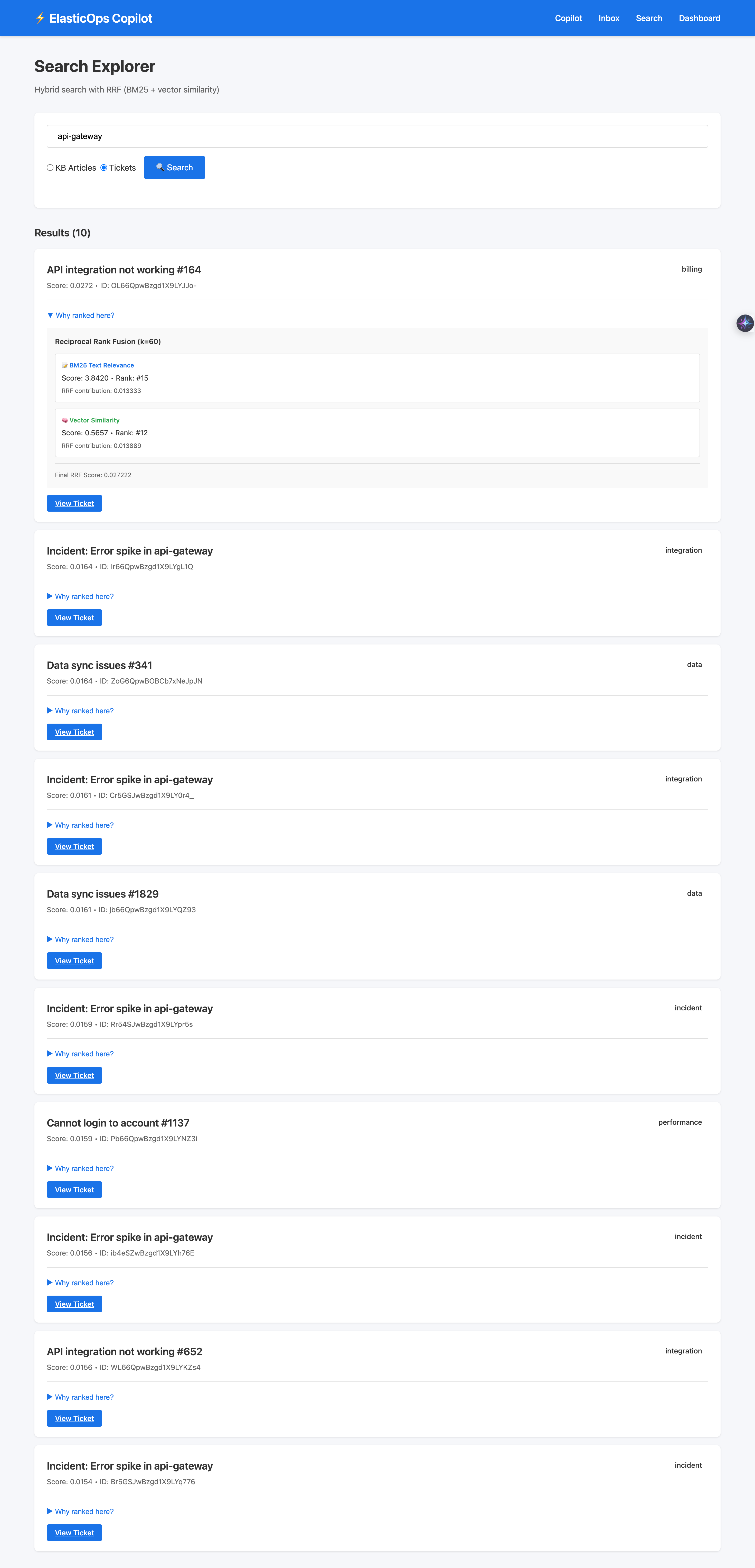
Hybrid retrieval explorer using Reciprocal Rank Fusion (RRF). Combines lexical relevance (BM25) and semantic similarity (kNN) for ranking.
-
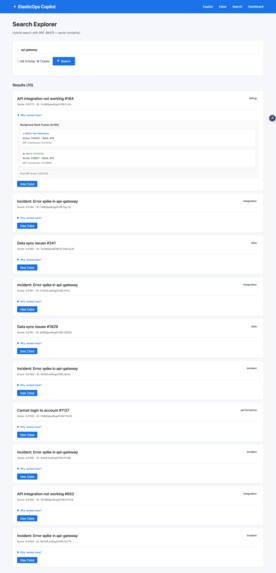
Cross-index hybrid search across tickets. Shows BM25 score, vector similarity score, and final fused ranking for full transparency.
-
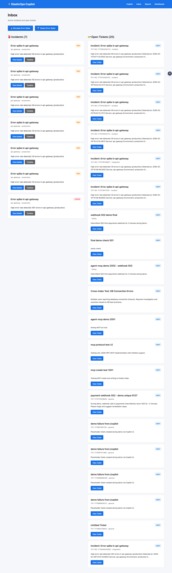
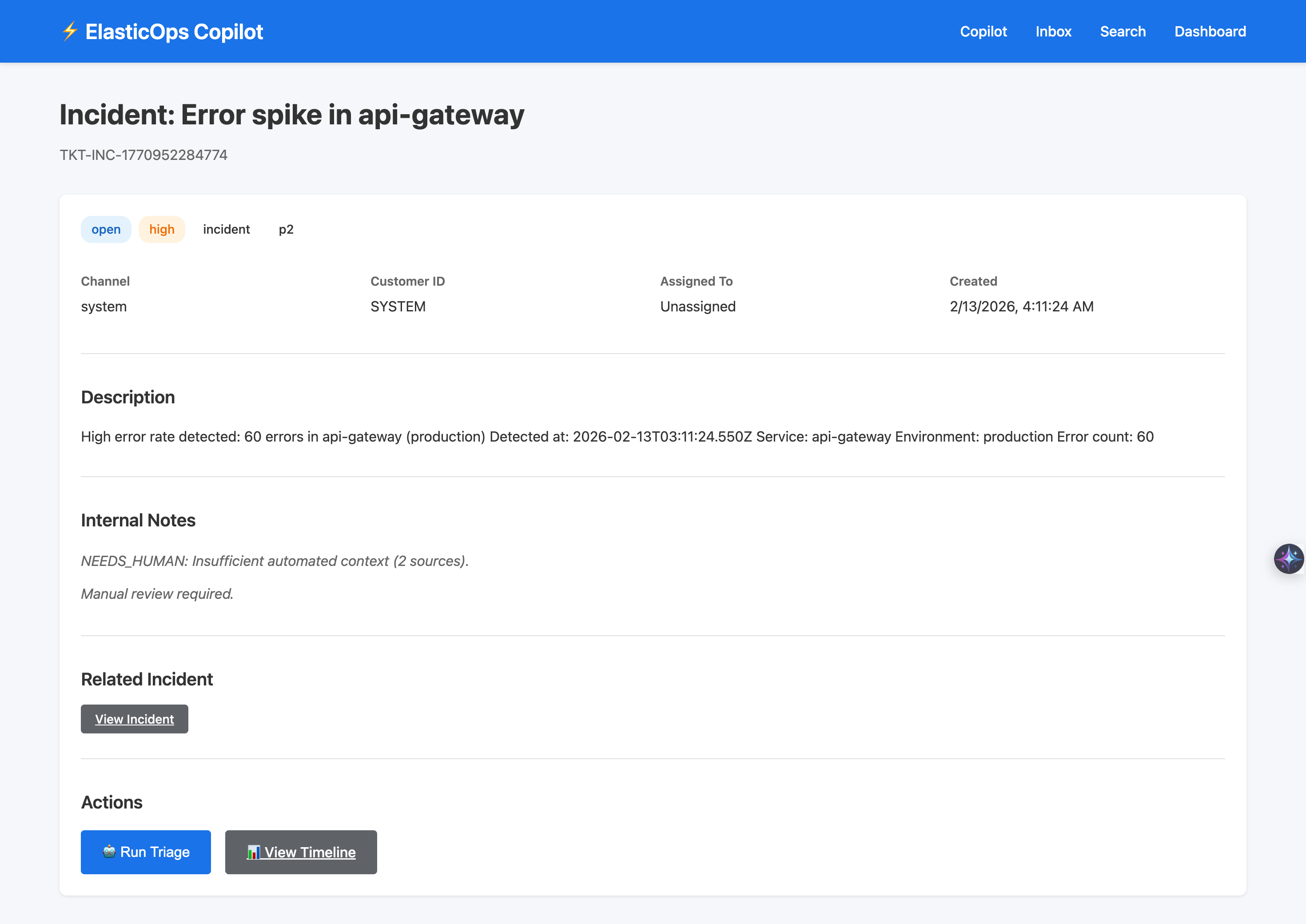
Unified incident and ticket inbox. Real-time ES|QL spike detection automatically generates incidents and opens linked tickets.
-
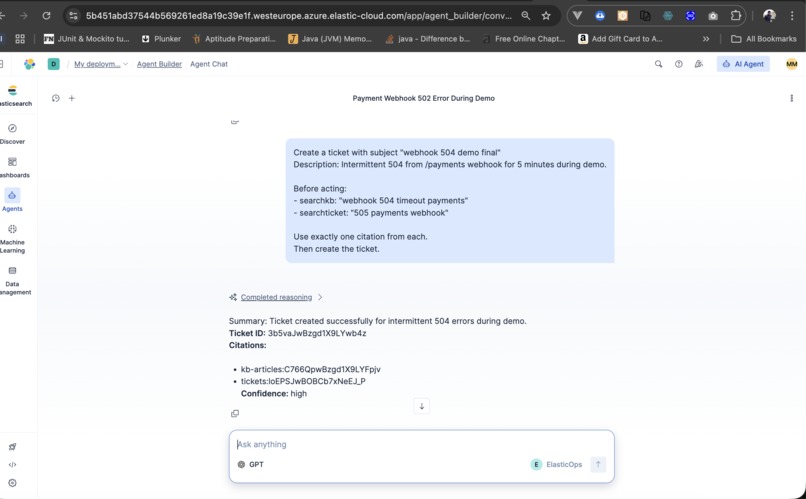
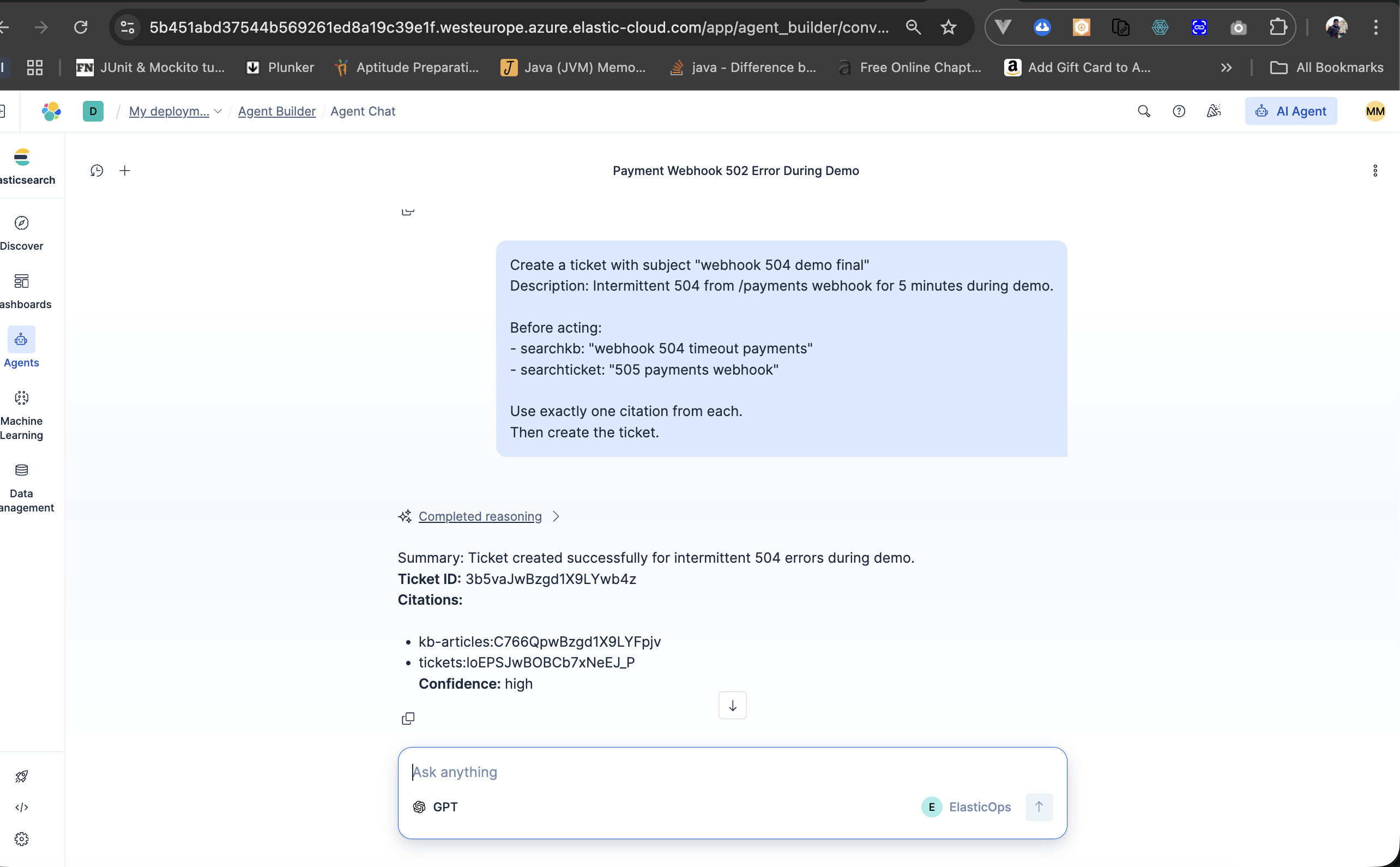
Elastic Agent Builder in action. The AI Agent creates a ticket only after retrieving ≥2 independent citations (KB + historical tickets).
-
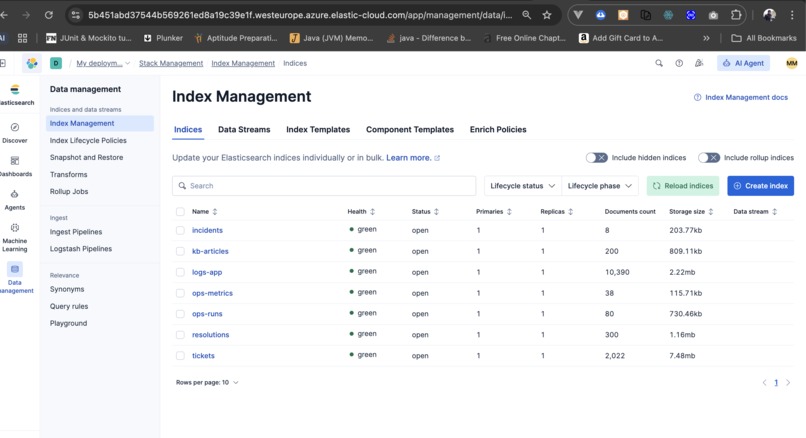
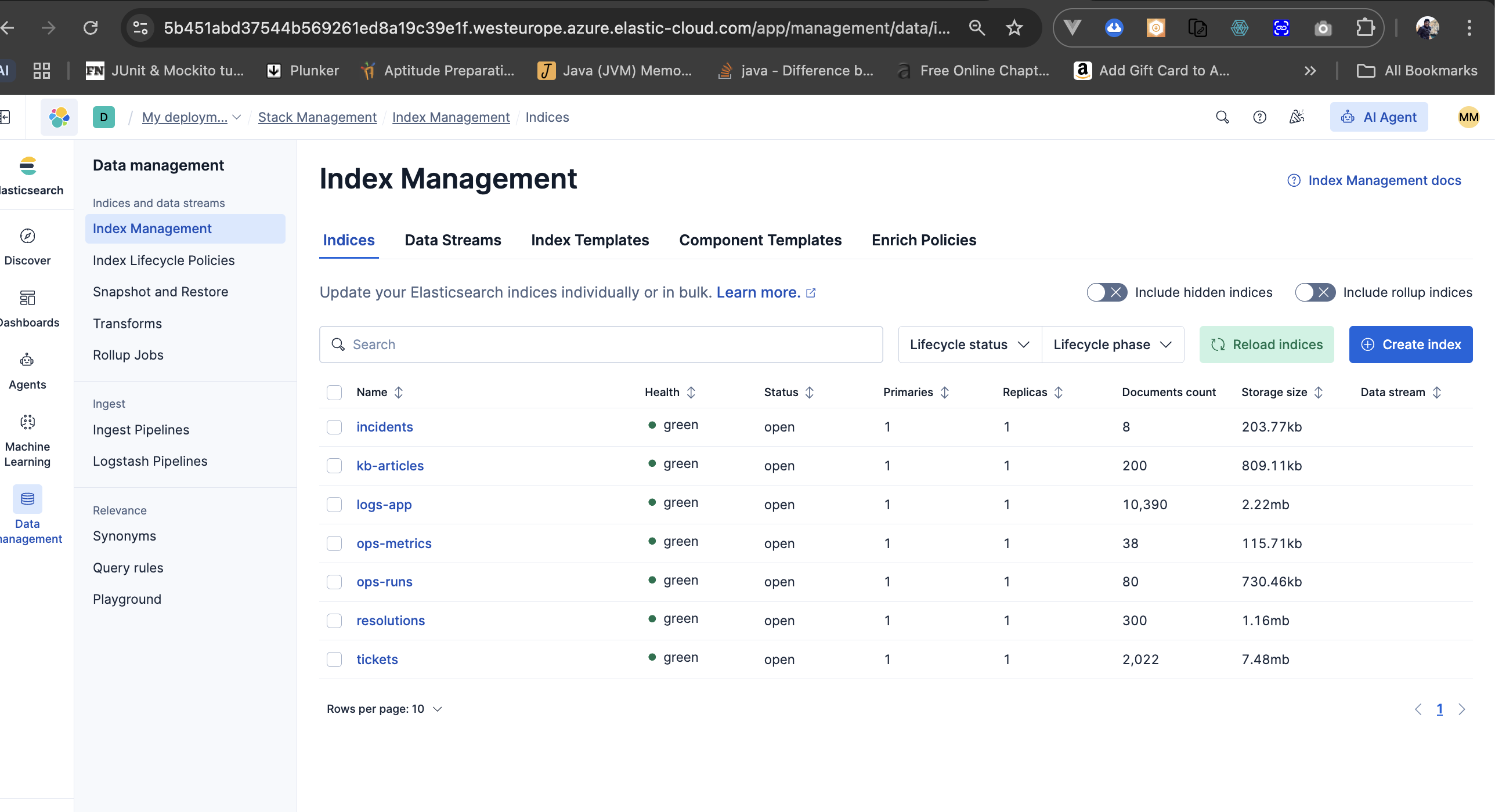
Elasticsearch as the system backbone. Multiple indices power the workflow: tickets, kb-articles, resolutions, logs-app, and ops-runs
Inspiration
Support and operations teams face two recurring problems:
- Incidents happen fast — but triage is slow.
- AI can draft responses — but often without verifiable evidence.
Large language models are powerful, but in production environments, hallucinations are unacceptable. I wanted to explore a simple but powerful idea:
What if an AI system refused to act unless it had independent evidence?
Elastic’s Agent Builder and Elasticsearch provided the perfect foundation to build an evidence-gated AI support copilot — one that combines real-time detection, hybrid search, and strict citation validation before automation.
What it does
ElasticOps Copilot is an AI-powered support automation platform built on Elasticsearch.
It provides:
- Real-time incident detection using ES|QL spike queries
- Intelligent ticket triage using semantic + lexical retrieval
- Duplicate prevention via kNN vector similarity
- Hybrid search using BM25 + vector search + Reciprocal Rank Fusion (RRF)
- Evidence-gated automation (requires ≥2 independent citations before writing)
- Full audit timeline for transparency and observability
Unlike typical AI tools, ElasticOps Copilot refuses to update or create a ticket unless it retrieves at least two independent citations from different indices (e.g., knowledge base + prior tickets or resolutions).
This dramatically reduces hallucinations and increases operational trust.
How we built it
ElasticOps Copilot is built on:
- Elasticsearch Cloud
- Elastic Agent Builder
- ES|QL for spike detection
- BM25 full-text ranking
- kNN vector similarity search
- Reciprocal Rank Fusion (RRF) to combine lexical + semantic scores
- Next.js + Vercel frontend
- Custom MCP server for tool integration
Real-time log detection
We use ES|QL queries such as:
FROM logs-app
| WHERE @timestamp >= NOW() - 5 minutes
| WHERE level == "ERROR"
| STATS errors = COUNT(*) BY service, env
| WHERE errors >= 40
If thresholds are exceeded, an incident is automatically created.
Hybrid retrieval architecture
We combine:
- BM25 (lexical match)
- kNN vector similarity
- RRF score fusion
This allows precise keyword matches and semantic understanding to work together.
Evidence gating
Before ticket creation or update:
- Retrieve KB articles
- Retrieve resolutions
- Retrieve similar tickets
- Validate ≥2 independent citations
- Only then allow action
All actions are recorded in an audit timeline, including:
- Embedding step
- Classification
- Dedupe results
- Retrieval results
- Draft
- Final action
Challenges we ran into
- Implementing MCP server correctly for Agent Builder integration
- Ensuring citations were truly cross-index (not same-source)
- Balancing RRF weights between BM25 and vector similarity
- Designing UI transparency (confidence breakdown, “Why ranked here?” panels)
- Managing token efficiency and retrieval limits
The biggest challenge was ensuring the system did not "appear intelligent" — but was provably intelligent and evidence-backed.
Accomplishments that we're proud of
- Fully working ES|QL spike detection pipeline
- Hybrid search with visible RRF transparency
- Confidence breakdown visualization (KB / Resolutions / Similarity)
- Evidence-gated automation logic
- Complete audit trail with run timelines
- MCP server integration for Elastic Agent Builder
- Production-style UI with observability and metrics dashboard
Most importantly:
The system refuses to hallucinate.
What we learned
- Hybrid search (BM25 + kNN + RRF) is significantly stronger than either alone.
- ES|QL enables elegant real-time operational logic.
- Evidence gating dramatically increases AI trustworthiness.
- Transparency (score breakdowns, timelines) is as important as accuracy.
- Agent Builder enables structured automation workflows beyond simple chat.
We also learned how critical explainability is in production AI systems.
What's next for ElasticOps Copilot – Evidence-Gated AI Support
Next steps include:
- SLA-aware routing
- Incident root-cause clustering
- Adaptive threshold detection
- Multi-tenant support environments
- Confidence-aware auto-escalation
- Production observability dashboards
- Self-healing playbooks triggered by ES|QL
The long-term vision is:
AI automation that is fast, safe, and provably grounded in search evidence.
Built With
- bm25
- elastic-agent-builder
- elasticsearch-cloud
- es|ql
- knn-vector-search
- mcp
- nextjs
- node.js
- rrf
- vercel

Log in or sign up for Devpost to join the conversation.