Inspiration: Reimagining Business Processes
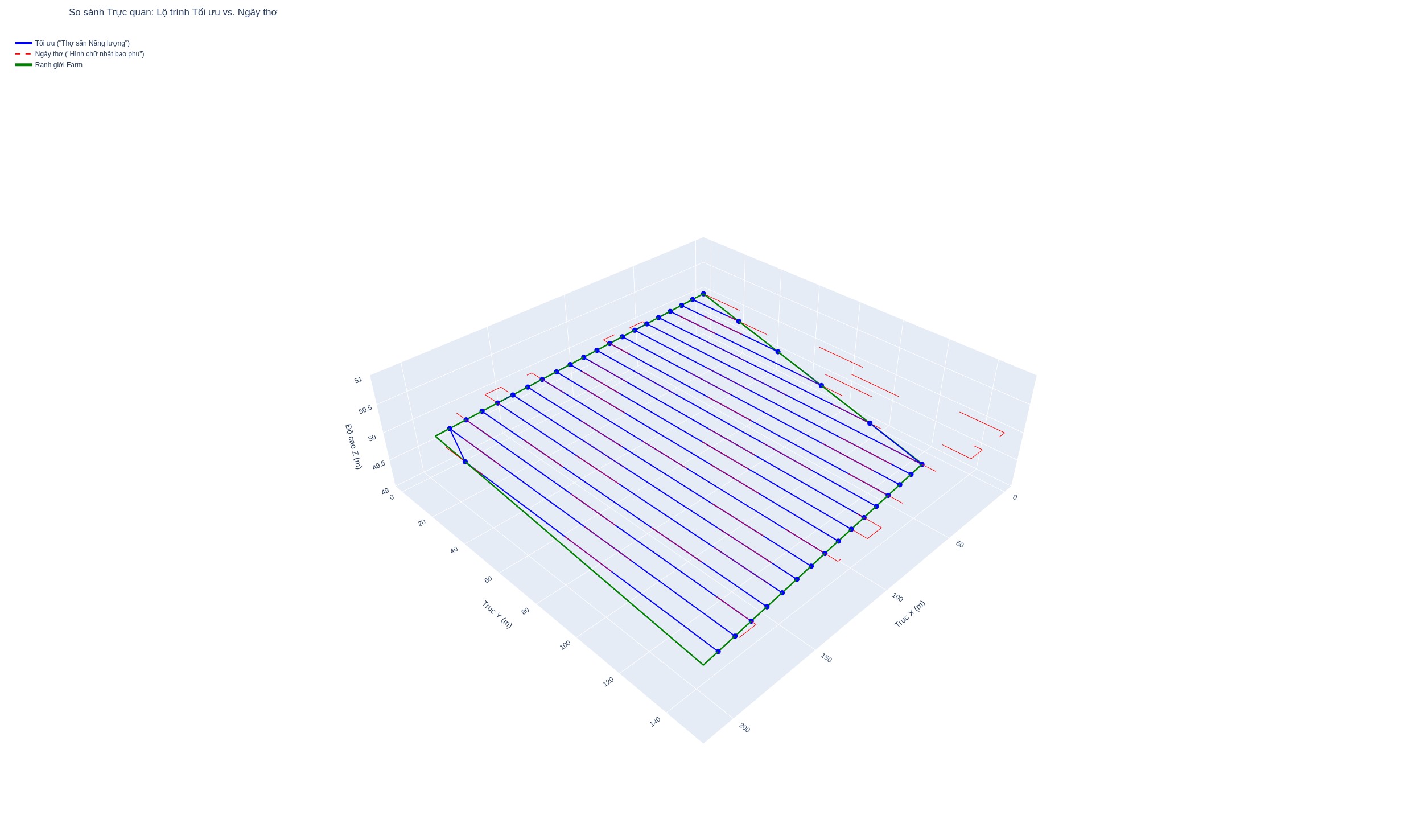
Industrial drone surveys, especially for large areas like solar farms, suffer from a major inefficiency: wasted energy. Standard flight plans fly in simple rectangles, wasting significant battery life on areas outside the actual target zone. We were inspired by the "AI Accelerate" challenge to reimagine this business process with an intelligent, context-aware solution.
What it Does: The "Energy Hunter" AI
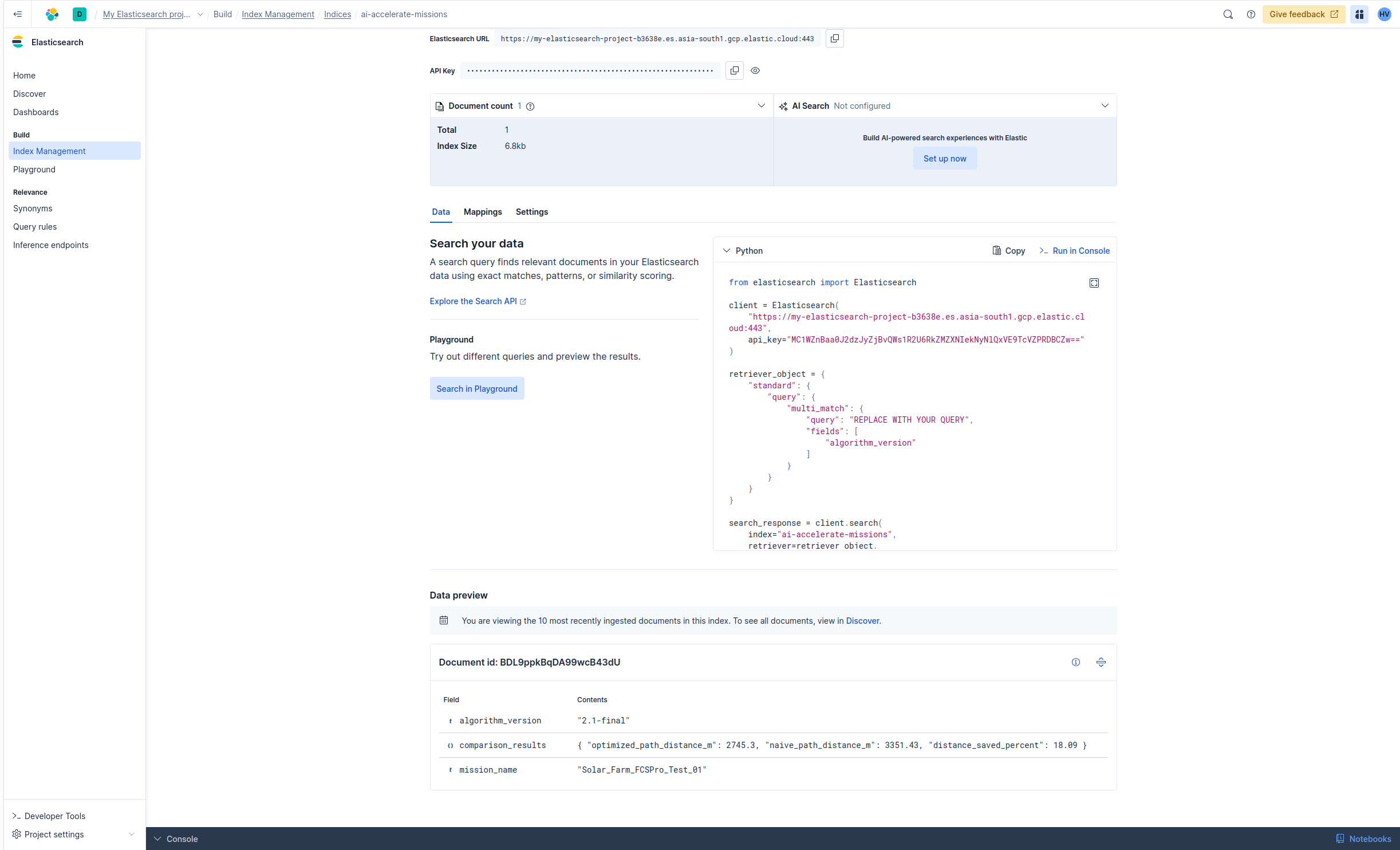
Our project, "Energy Hunter AI," is a complete solution that automatically calculates a hyper-efficient flight path for a drone, executes it in a validated physics simulation, and—most importantly—logs all mission results directly to Elastic Cloud for real-time analysis.
Our core algorithm saves 18.09% in flight distance compared to standard methods. For a fleet of drones, this translates to thousands of dollars in saved operational costs and energy.
How We Built It
Our system is a complete toolchain:
1. The "Energy Hunter" Algorithm (Python & Shapely)
We created a Python algorithm (route_optimizer_v2.py) that uses the Shapely library to analyze the precise geometry of a target area. It generates a "Boustrophedon" (zig-zag) path that perfectly follows the area's contours, eliminating all wasted travel.
2. The Validated "AI Brain" (MATLAB/Simulink to Python)
We first built a high-fidelity drone model in Simulink to tune the perfect PID control parameters. We then translated this "brain" into a clean, standalone Python class (autopilot.py). This AI controller was then validated in a lightweight Python-based simulator (mission_executor.py), proving it can successfully fly the optimized mission.
3. The Elastic + Google Cloud Integration (The Core Challenge) This is where we meet the challenge head-on.
- The entire solution is hosted on Google Cloud.
- We built a Python module (
elastic_logger.py) that uses the officialelasticsearchlibrary. - After every simulated mission, our main script (
compare_efficiency.py) automatically sends the key results—likedistance_saved_percent: 18.09andoptimized_path_distance_m: 2745.30—directly to our Elasticsearch index (ai-accelerate-missions).
This creates an "intelligent" and "interactive" solution where stakeholders can instantly see mission results and analyze fleet efficiency from an Elastic dashboard (Kibana).
Challenges We Ran Into
The biggest challenge was debugging the connection to the brand-new Elastic Serverless platform. The standard client.ping() method failed with a 401 error, even with valid credentials. We overcame this by writing a custom debugging script (debug_elastic_connection.py), which proved the network connection was fine. We then re-engineered our logger to bypass the unreliable ping and log data directly, which worked perfectly.
What We Learned
We learned that a powerful AI algorithm is only half the solution. The real value comes from integrating it into a scalable, observable platform like Elastic Cloud. We successfully built a solution that is not just a concept but a production-ready system for intelligent, data-driven operations.
What's Next
The autopilot.py code is ready to be deployed on a physical "AI Brain" (a Raspberry Pi) to control a real drone, completing the full "simulation-to-production" pipeline.
Built With
- elastic-cloud
- elasticsearch
- google-cloud
- kdenlive
- matlab
- numpy
- python
- shapely
- simulink

Log in or sign up for Devpost to join the conversation.