-
-
Hemp "Super Plant" Vs Cotton - How is hemp fabric made?
Inspiration
Our village Tirah valley, Khyber agency is the world 2nd largest cannabis/hemp producer in the world. What our people make out of it - Hashish/weed out of it. Why not make something good out of it. From Illegal to legal. Our idea is to make hemp cloth out of it that can have national, and international impact on the climate change. As per the global research, Textile industry is the 2nd most polluted industry worldwide. What I do will make me proud - for my family, my village people, and also for my beloved country. Following SDG's goals no: Goal 9 :Industry, innovation and infrastructure - Goal 12 : Responsible consumption and production - Goal 13: Climate Action - Goal 5: Gender Equality.
What it does
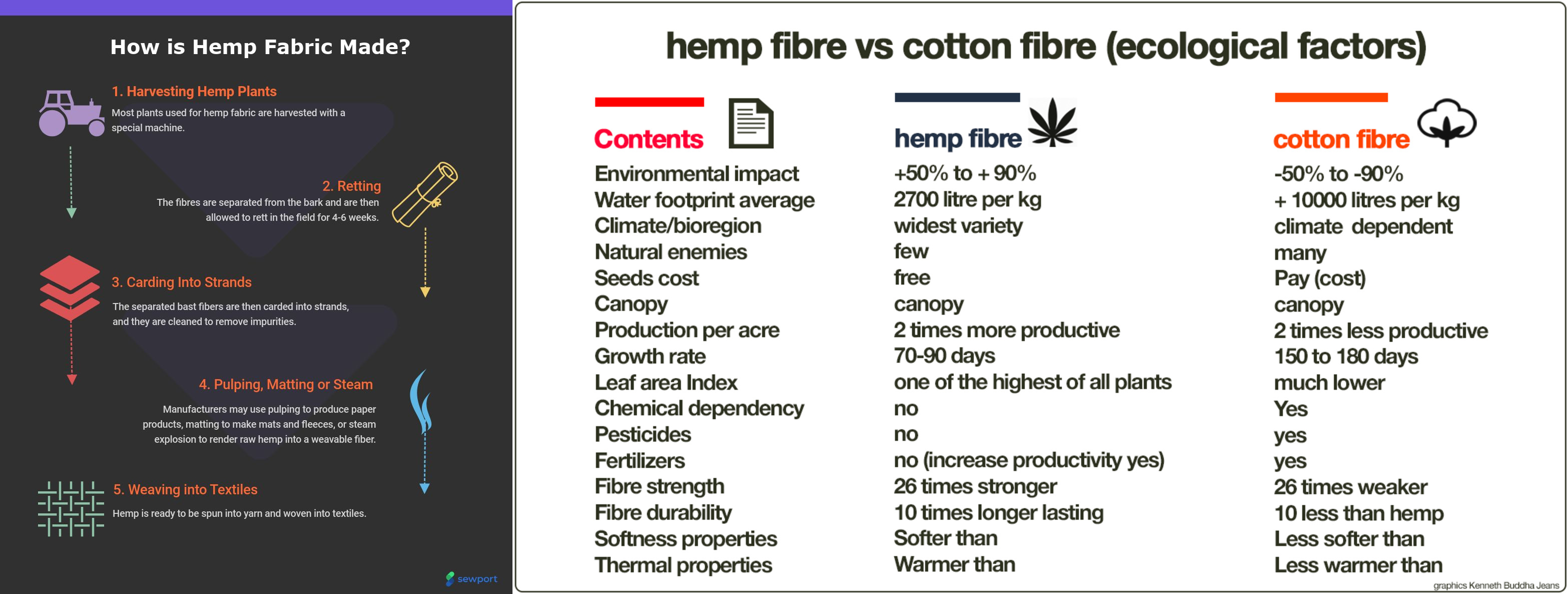
Our idea is make eco-friendly, sustainable, 100% organic and completely organic cloth from hemp plant. It's regenerative agriculture crop and the most everything that you can make with cotton can be made with hemp, with way less impact on the Earth. Hemp a "super plant" promoting the pace of sustainable fashion, because hemp is very friendly-crop. It requires no pesticides and need little water, yet it renews the soil with each growth cycle. Hemp clothing benefits include: four times the strength of the cotton, Very strong and durable, UV resistant, cost-effective, weather resistant, versatile, easy on the environment, soft feeling and get softer over time, water absorbent, naturally bio-degradable, zero chemical or fertilizers required, long lasting fabric, resist bacterial growth and breathe excellently, also preventing odors. Hemp uses only 1/20th the amount of water as regular cotton to grow and process.
How I build it.
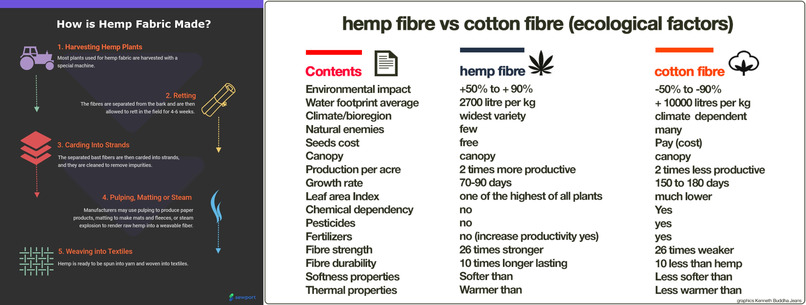
The plant is harvested during the early to mid-flowering stage. Running cutter bars 4 to 5 feet above ground harvest bot the hemp fiber and seed. After this, stalk is cut and baled. The hemp fibers are separated by retting, which is the process of decaying pectin that binds the hemp fiber to the core of the stem. by retting, the long bast fibers are separated from the non fiber parts of the stalks. this is done either using Chemicals like enzymes or by natural physical method like field and water retting. Once the fiber are separated, they are spun together to produce long and continuous yarn.
Challenges I ran into:
The biggest challenge our idea faced is that converting hemp plant into hemp yarn. the machinery is not available for doing this in Pakistan. It's requires specialized machinery that convert hemp plant into hemp yarn, that is available in china (Yak technology, Shenjeng engineering corporation) and also in America and Israel.
Accomplishments that I'm proud of
In-depth research of hemp clothing industry, complete know of hemp industry. Once we get hemp yarn, then converting hemp yarn into fabric or cloth is easy because all the rest of facilities is easily available locally in Peshawar and Pakistan. We are also in network with local manufacturing. We have been also networking with Pakistan's fashion brand's like Khaadi, J.Jamshed, Alkaram for joining hands with our idea for sustainable fashion. Pakistan's fashion industry is polluting the environment, that's why hemp clothing is the best alternative for cotton.
What I learned
I learned a lot about hemp industry after clearly doing in-depth research from last 8 Months. I read different articles and research about hemp plants. Hemp can improve Pakistan economy, increase employment opportunities, increase incomes for farmers - Change the negative stigma attached to hemp plants Hemp is miracle plant, having many medicinal & other properties. From hemp you can make up to 25,000 of different products of different industry in a more sustainable way with low impact on Earth.
Built With
- hemp-industry
- knowledge
- research
- research-and-development


Log in or sign up for Devpost to join the conversation.