-
-
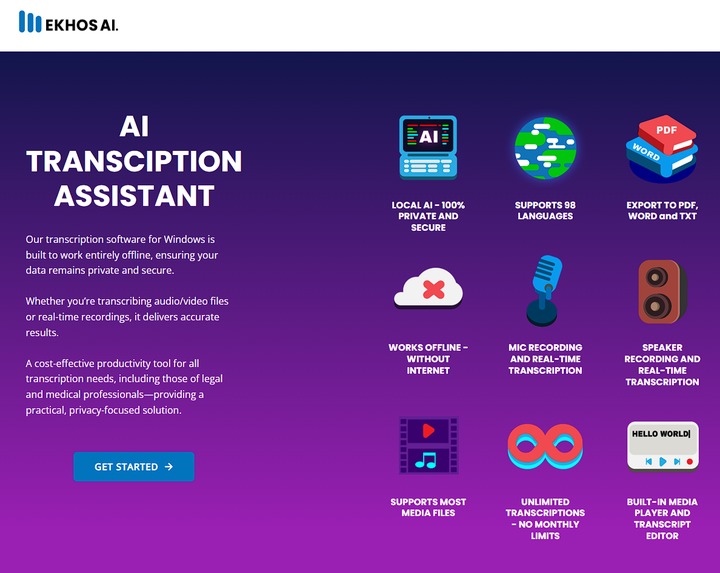
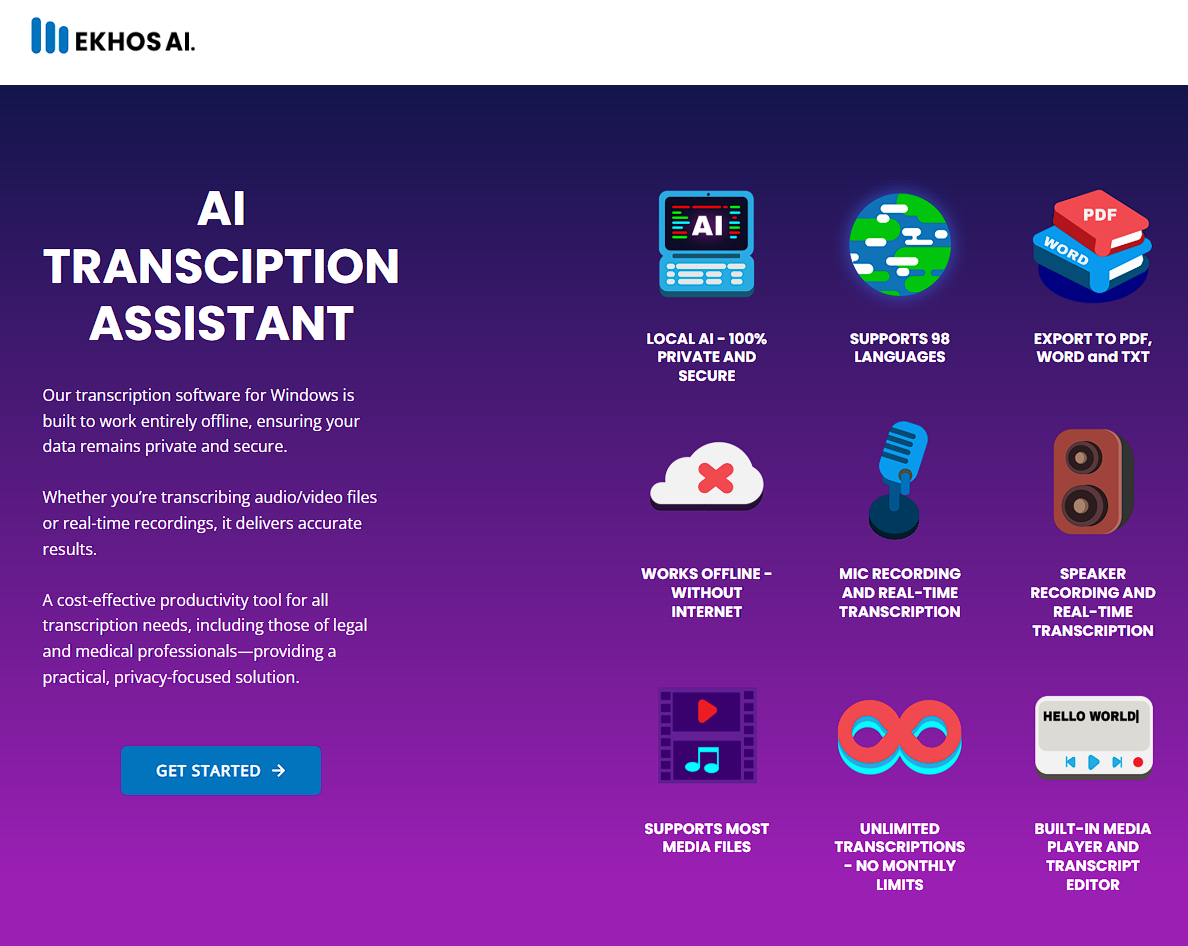
EKHOS AI Features
-
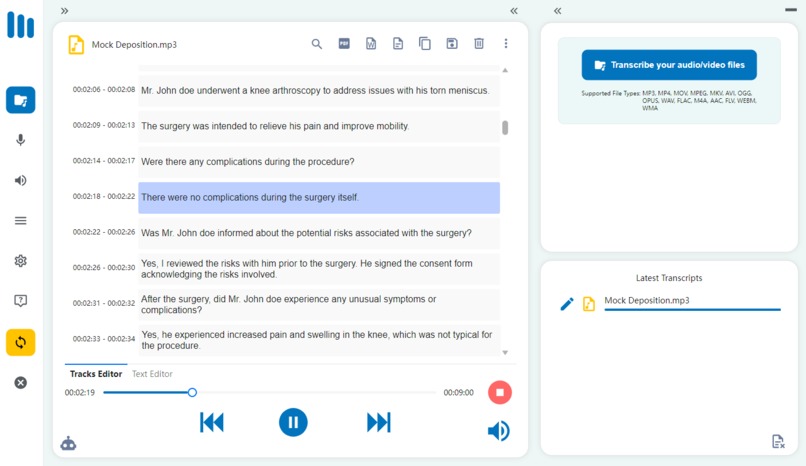
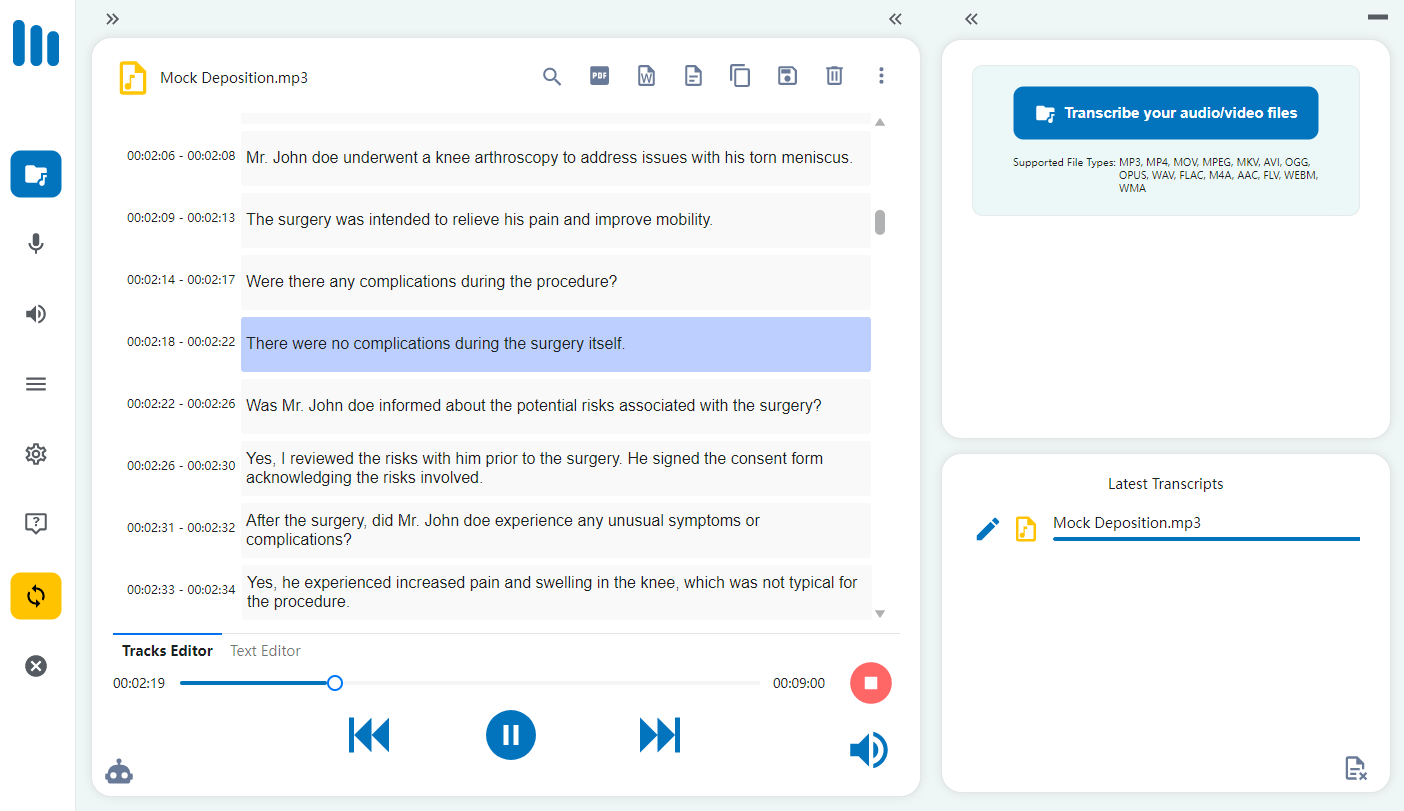
EKHOS AI Screenshot
Inspiration
The idea for EKHOS AI came from a real-world problem: transcription services for legal and medical professionals are often expensive, slow, and require uploading sensitive audio files to the cloud. We saw an opportunity to build a secure, offline alternative powered by AI, one that puts privacy and speed first, without compromising on accuracy.
What it does
EKHOS AI is a privacy-first AI transcription app that runs entirely offline on Windows. It records high-quality audio, automatically transcribes it using AI, and includes proofreading tools tailored for legal, medical, and professional use. The app can identify speakers, mark timestamps, and generate clean transcripts without sending anything to the cloud.
How I built it
We built EKHOS AI using a combination of Python and .NET for performance and UI flexibility. The core transcription engine uses Whisper (faster-whisper for local speed optimizations), integrated with PyTorch. The desktop app UI is powered by Avalonia UI, which allowed us to create a modern, cross-platform interface while keeping everything lightweight. We also used SQLite for local storage and C# threading to handle concurrent audio processing tasks.
Challenges I ran into
One of the biggest challenges was memory management when running AI models locally, especially on machines with limited resources. Ensuring fast inference without crashing the system took careful tuning of model size, batch processing, and audio chunking. Speaker diarization was another complex area—we had to find the right balance between speed and accuracy. Finally, integrating Python AI components with a C# interface required a lot of debugging and interop handling.
Accomplishments that I'm proud of
We're proud to have built a fully offline transcription solution that matches the quality of many cloud-based services. The app is already being used by digital court reporters and professionals who value data privacy. We also managed to make the installer small, the UI fast, and the transcription impressively accurate—without relying on an internet connection.
What I learned
Building EKHOS AI taught us how to bridge the gap between AI research and real-world usability. We learned the importance of optimizing for local environments, handling edge cases in audio input, and designing interfaces that help users trust and understand the AI’s output. Most importantly, we realized that privacy can be a competitive advantage in AI.
What's next for EKHOS AI
Next, we plan to add multi-language support, advanced formatting tools, and team collaboration features. We're also exploring licensing options for enterprise use and expanding to macOS. Feedback from early adopters is helping us shape future updates including features like automatic summaries, voice notes tagging, and live transcription mode.

Log in or sign up for Devpost to join the conversation.