-
-
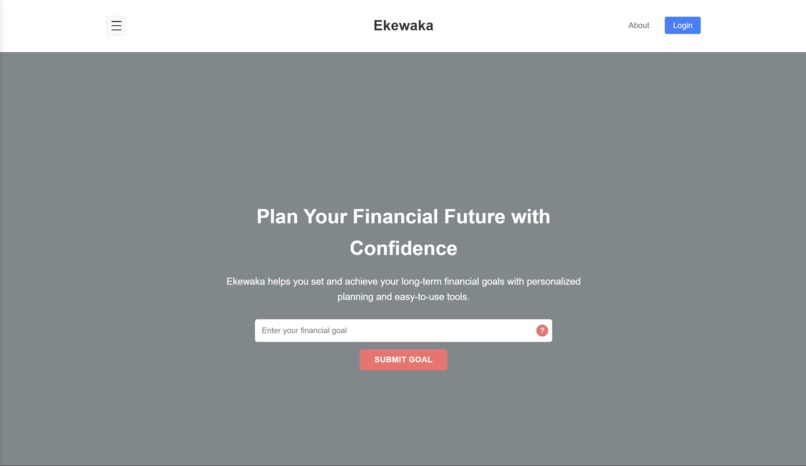
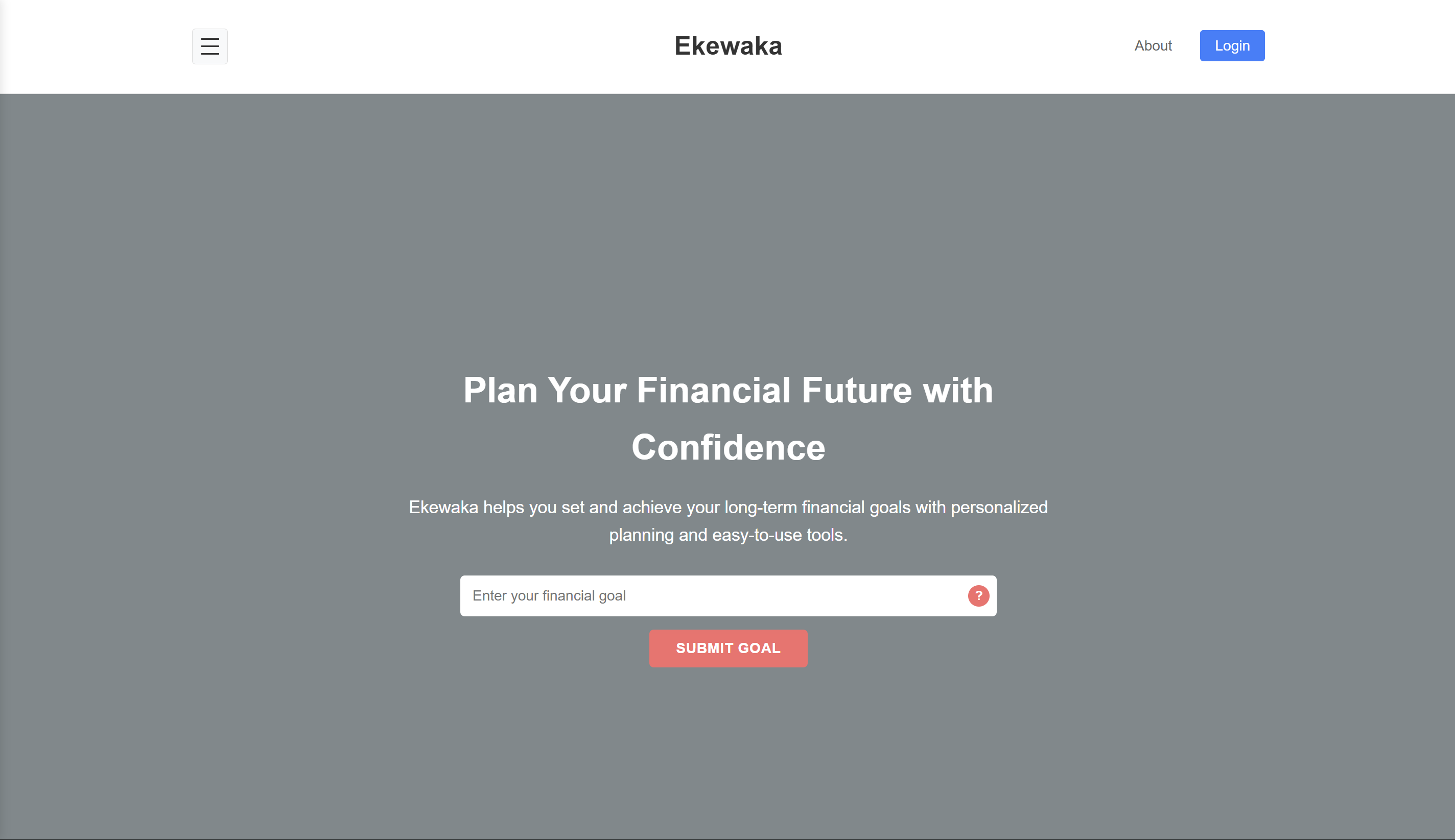
The home page of Ekawaka
-
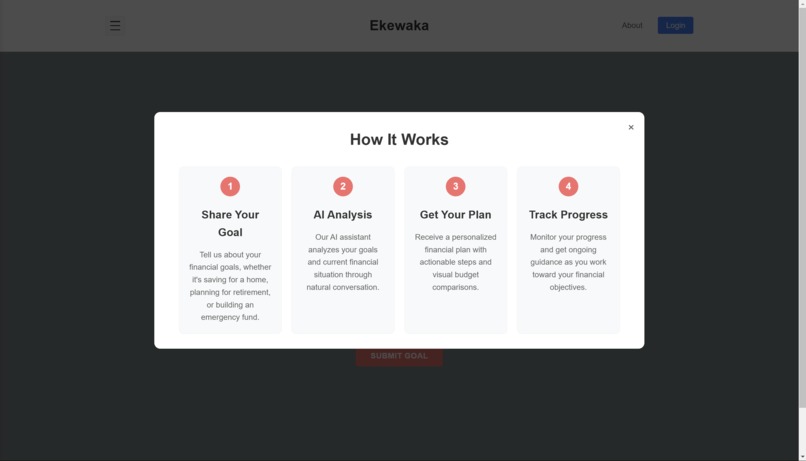
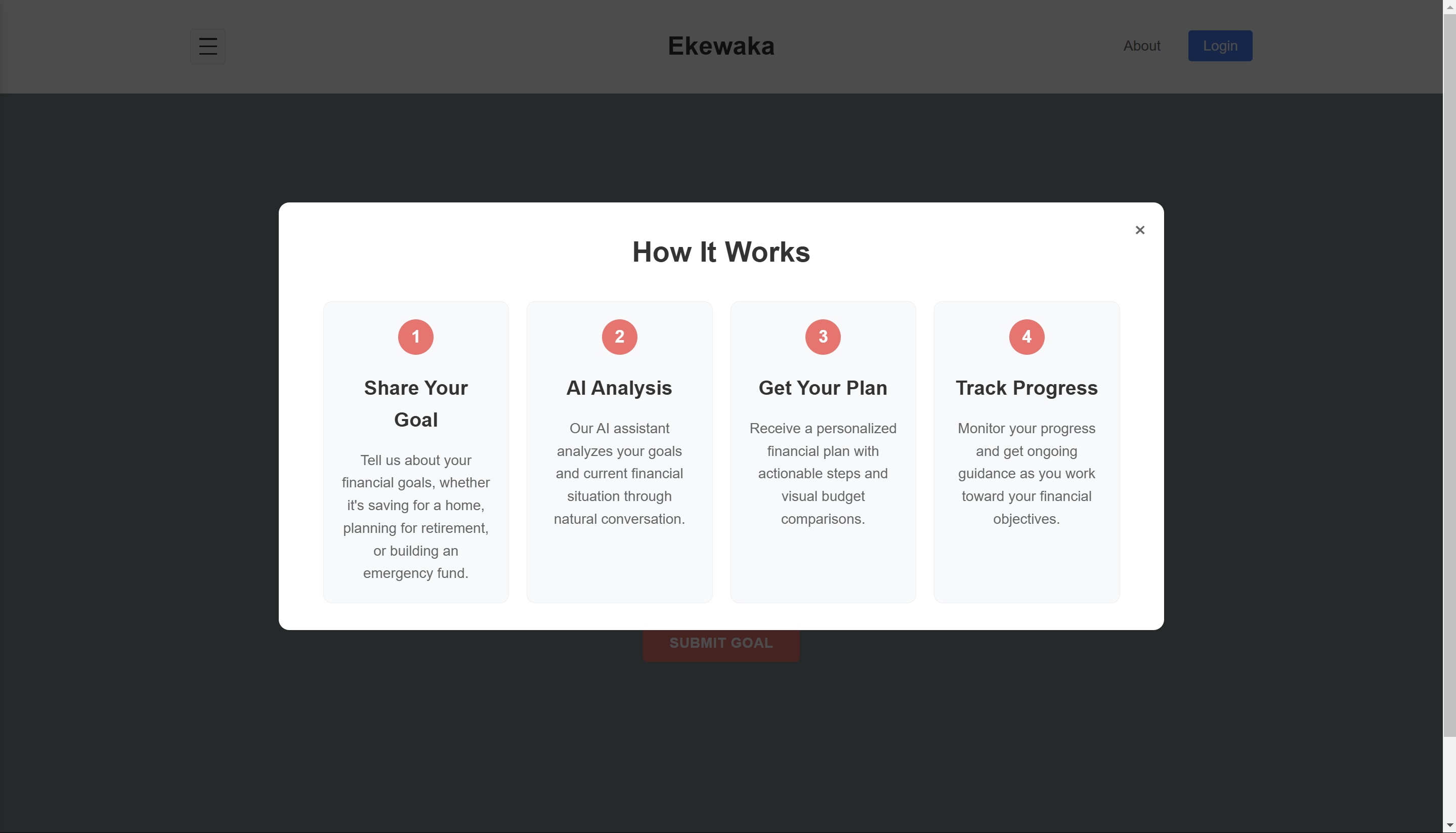
The help popup
-
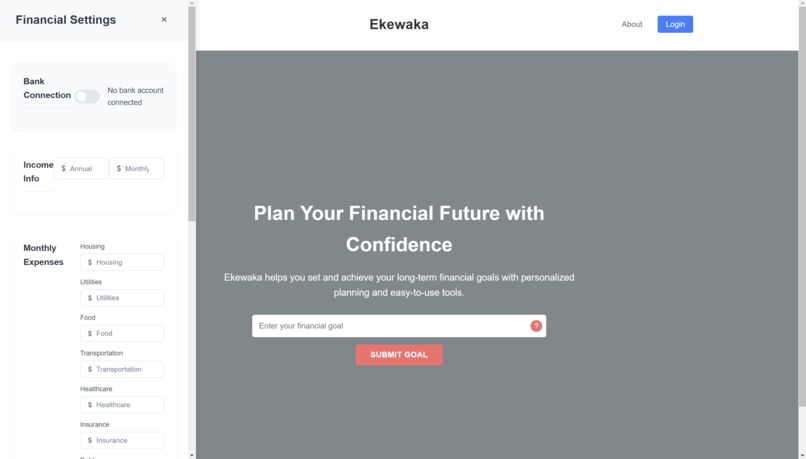
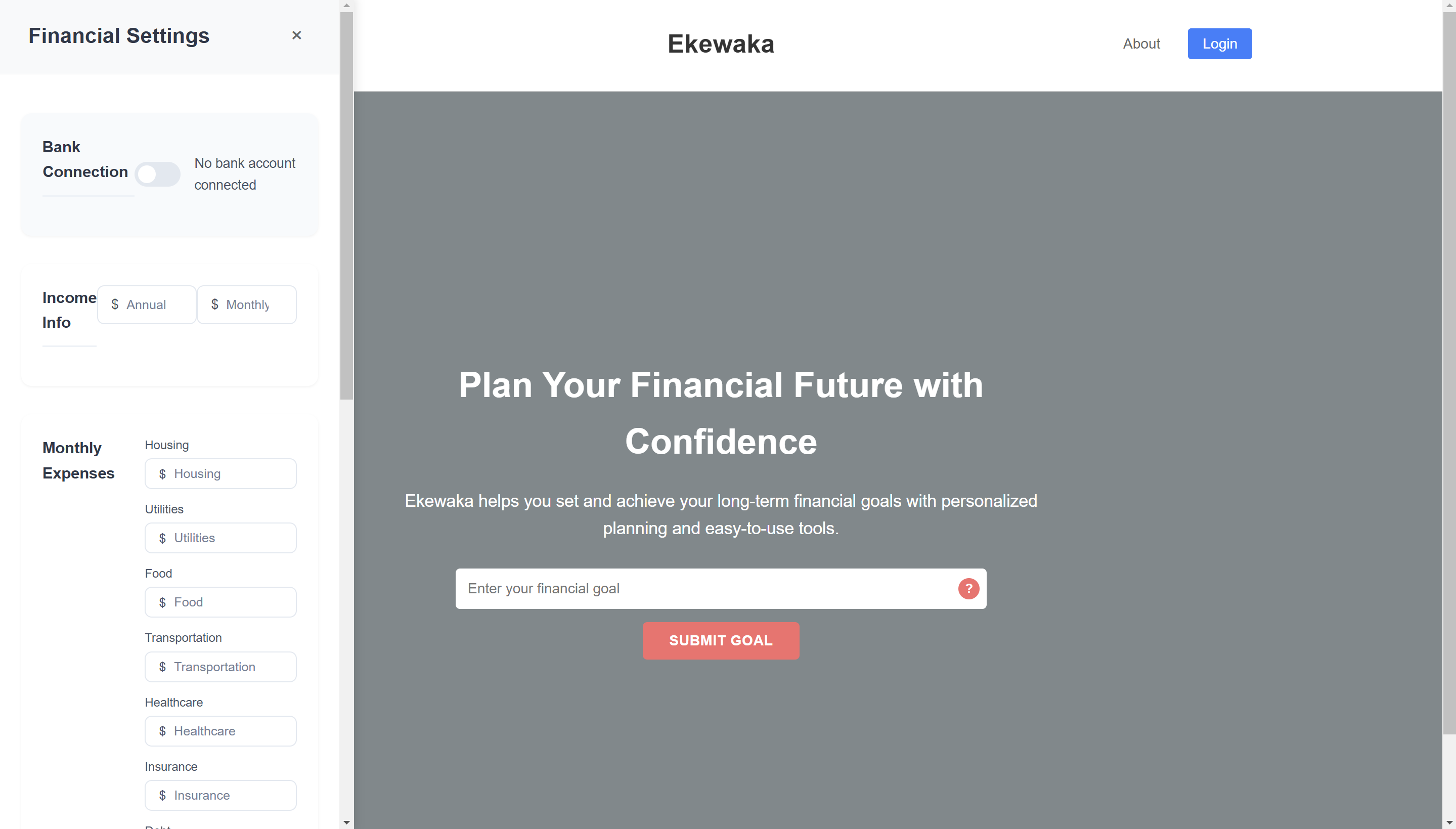
Option to input your own financial data
-
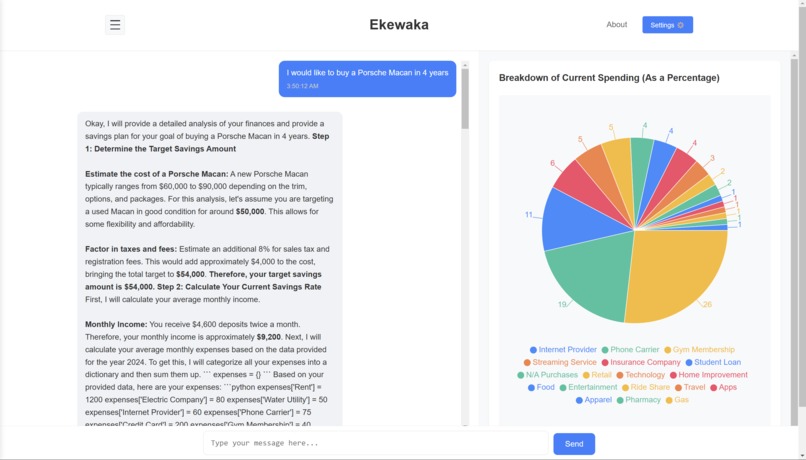
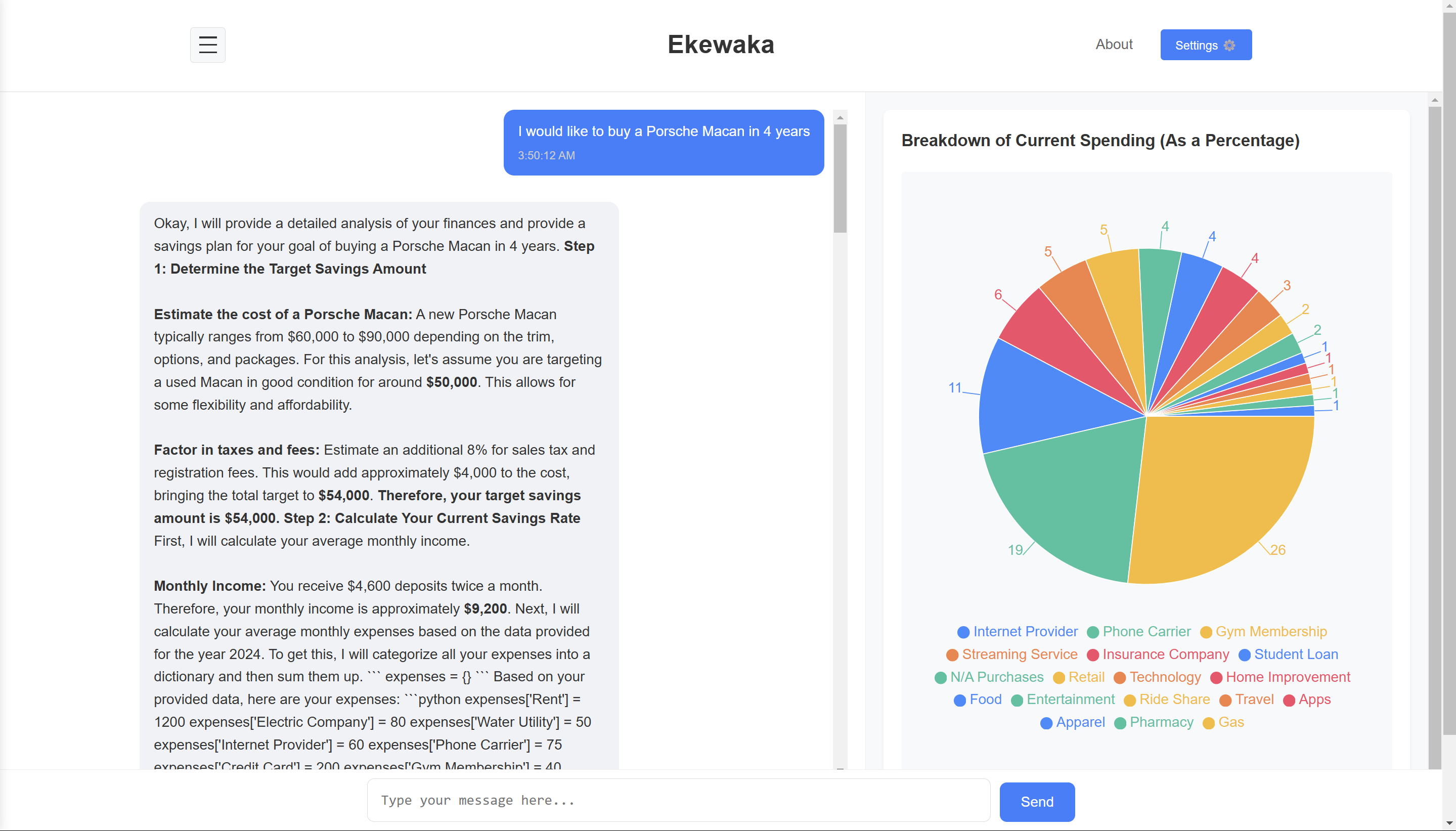
Personalized plan with graphics based on your automatically retrieved or manually input financials
Inspiration
- Throughout our lives, all of the adults were very adamant about one thing: be careful with your assets. Growing up, this was a lesson that we just nodded along with, but going into college and beyond it is all-too-real advice... and all-too-hard to follow. There are countless grand expenses that will be thrust upon us in the coming future, like cars, student loans, and even houses. We created Ekawaka as a means to look beyond the scope of next weekend or even spring break and set both ourselves and others up for success in the future.
What it does
- Ekawaka uses AI to analyze your existing financial data - such as purchases, bills, and deposits - to see where money is being unduly spent and examine how to realistically cut back in order to save for long term goals.
How we built it
- We built the base of Ekawaka using ReactJS to provide a aesthetic, user-friendly interface. This interface is in turn used to get data about the user's finances through Capital One's Nessie API, which simulates real-world banking records. Finally, we used Google's Gemini API to get insights as to where the user might be able to adjust their spending habits.
Challenges we ran into
- Going into HackIllinois, our team as a whole had very little experience in ReactJS or API usage. Thus, we taught ourselves on the go through tutorials, reading the docs, and helping each other along the way. Moreover, we had very little experience coding in a collaborative environment, and we very much felt the effects of a learning curve when trying to figure out whose turn it was to push, pull, or merge. In the end, it was through communication and collaboration that we were able to overcome our relative inexperience to create something we can be proud of.
Accomplishments that we're proud of
- We are proud that we were able to learn so much in such a short span of time. This was the first time any of us have worked heavily with API calls - particularly AI API calls - and it was very cool to see a genuinely helpful app be born of nothing but a blank file and a keyboard.
What we learned
- Our main takeaway beyond the new technical skill is definitely how to apply the things we learned in class to the real world. For the first couple of hours of this hackathon, we were simply trying to set up an environment and figure out where to start. Where were the instructions? Why wasn't everything already defined for us? It was a great experience to be able to build an app fully from the ground up, and it provided us with the nudge to begin frequently working on our own passion projects.
What's next for Ekewaka
- Moving forward, we hope to enhance Ekawaka by providing functionality to actually connect to your financials, rather than the simulation provided by Capital One's Nessie API. Moreover, we hope to expand our back-end database to cache information about the user and we aim to implement security practices to ensure the privacy of our user's data. We firmly believe that, with a little polishing, our app could be used by countless people to lead them to a brighter future.

Log in or sign up for Devpost to join the conversation.