EIS — EVE Industry Simulation
Inspiration
We started with a question: *What if we could simulate and manage an entire industrial economy through one unified platform? *
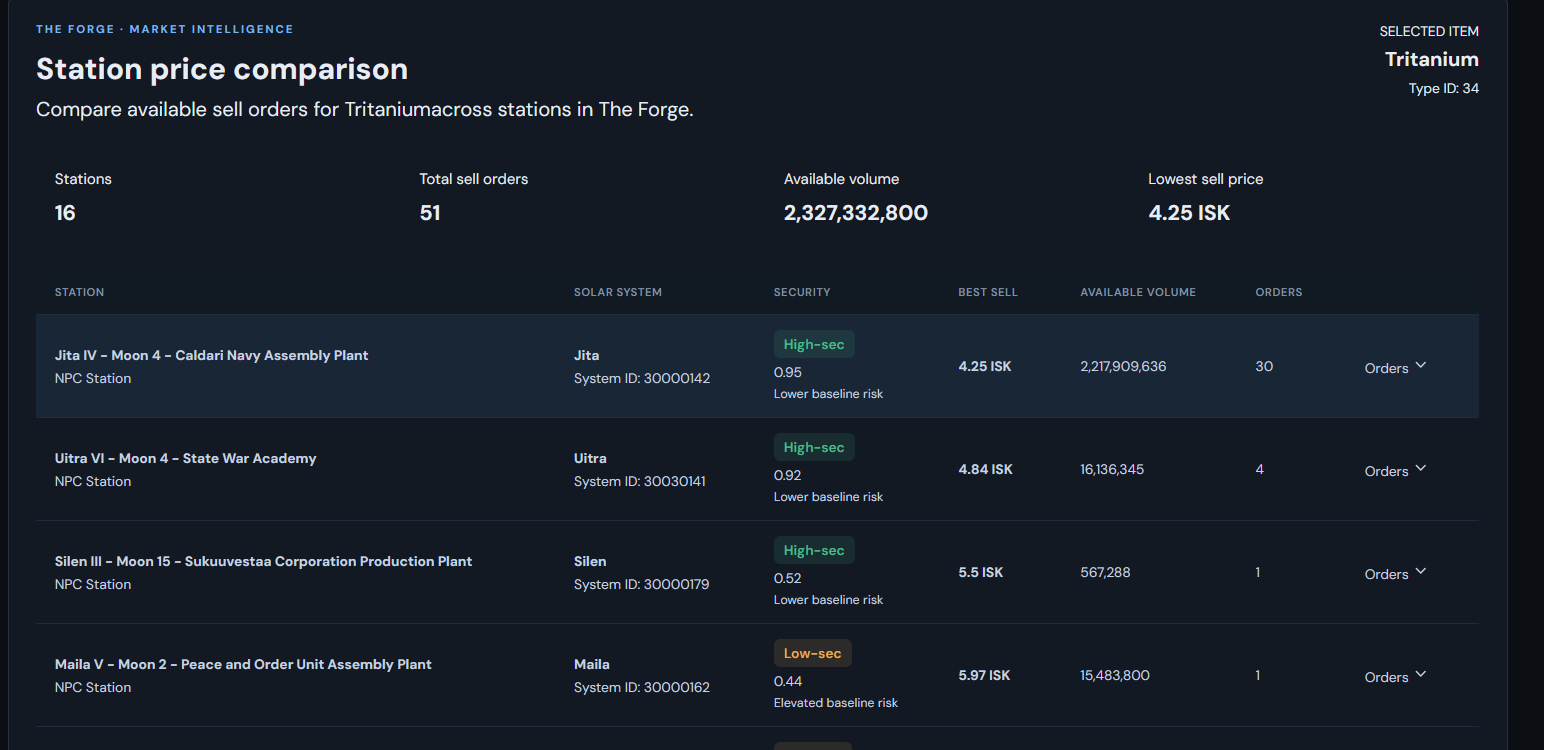
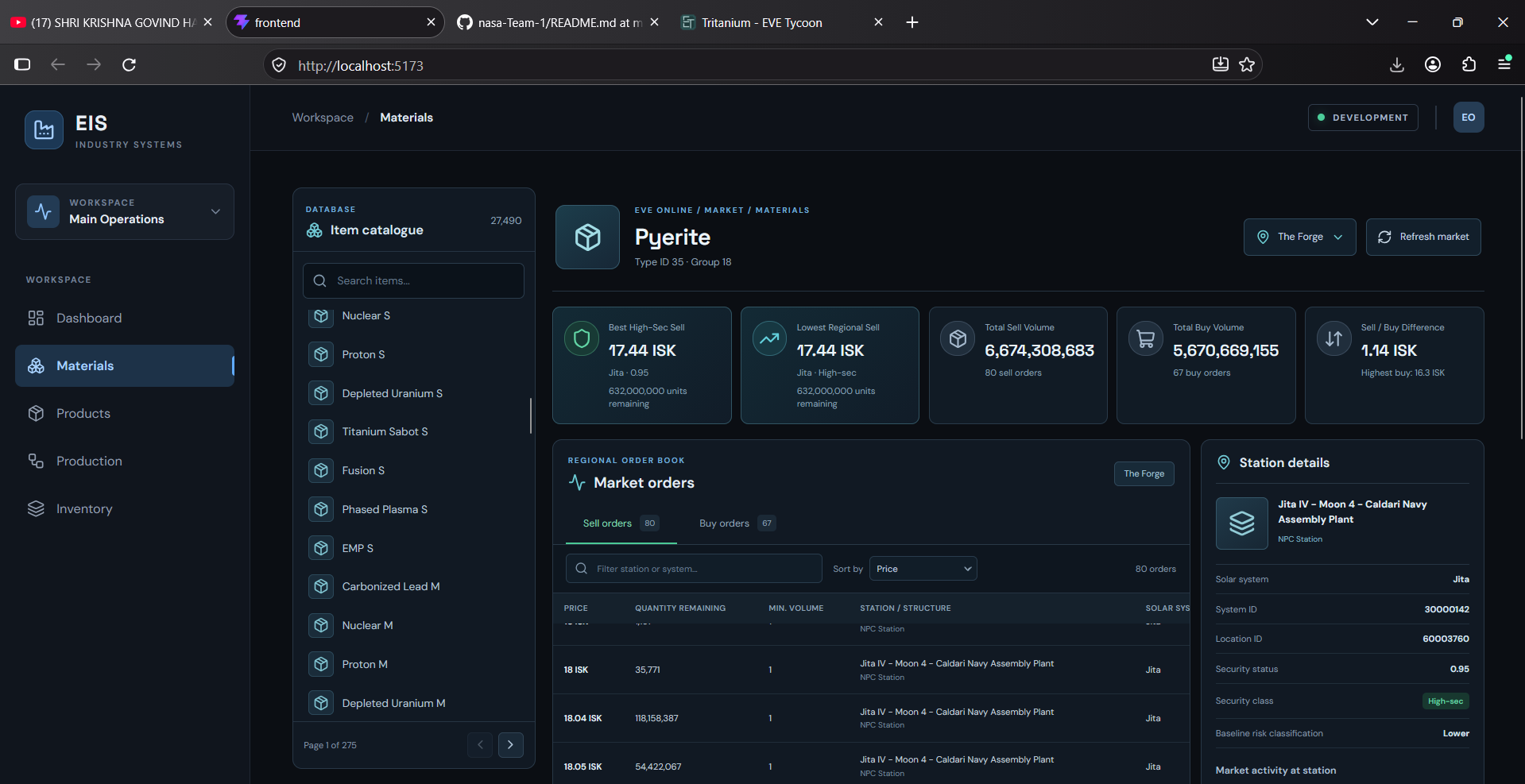
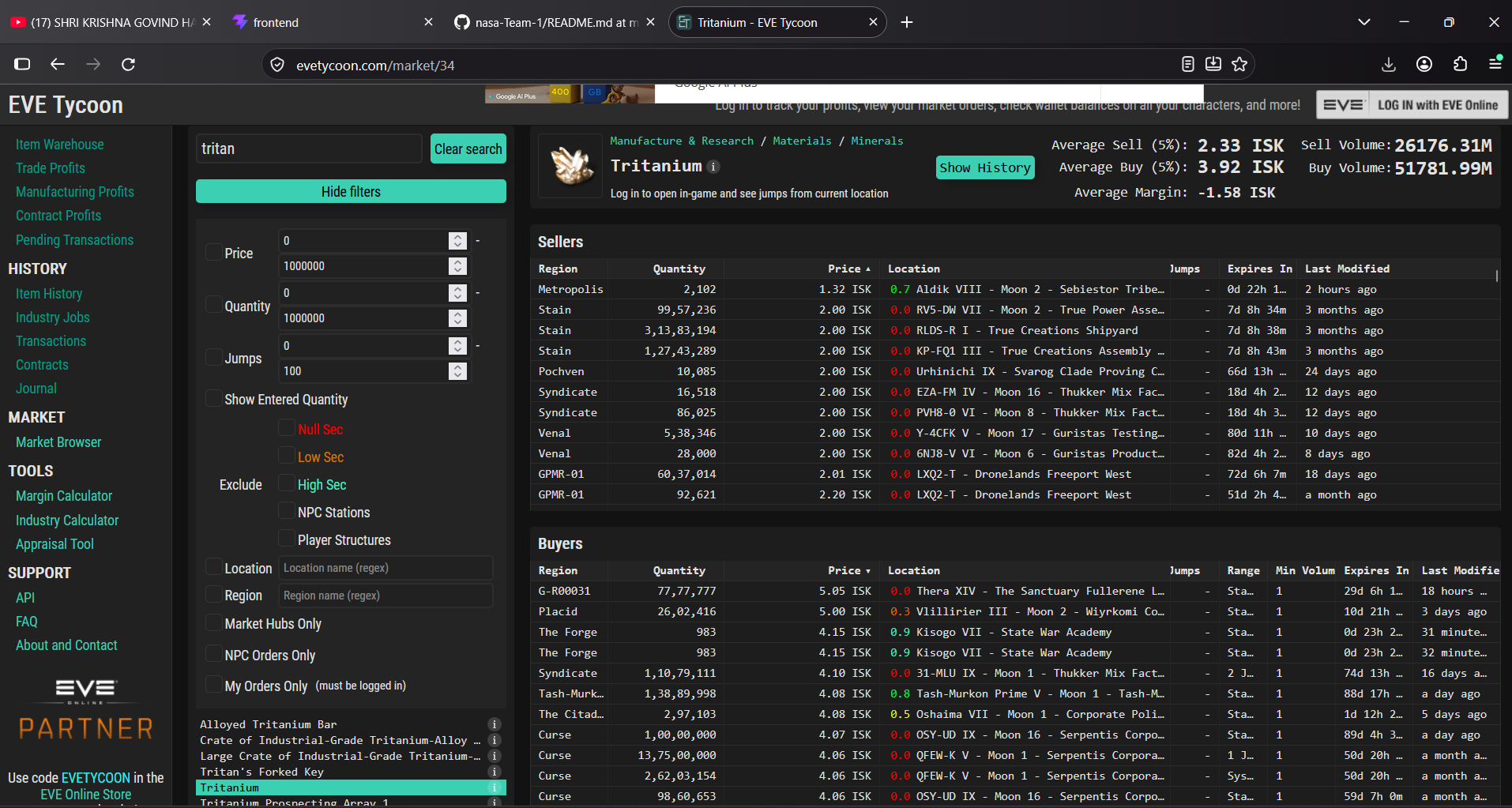
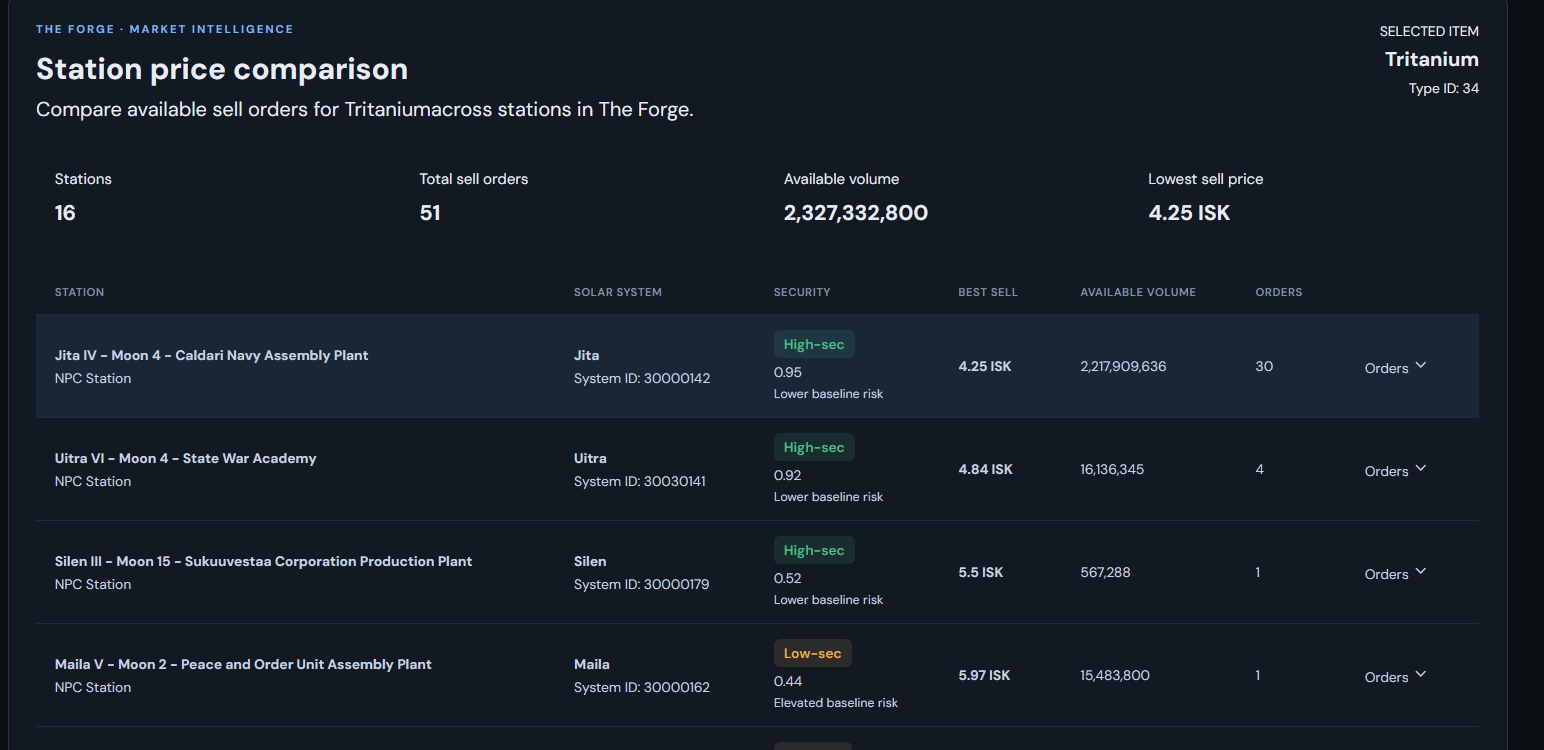
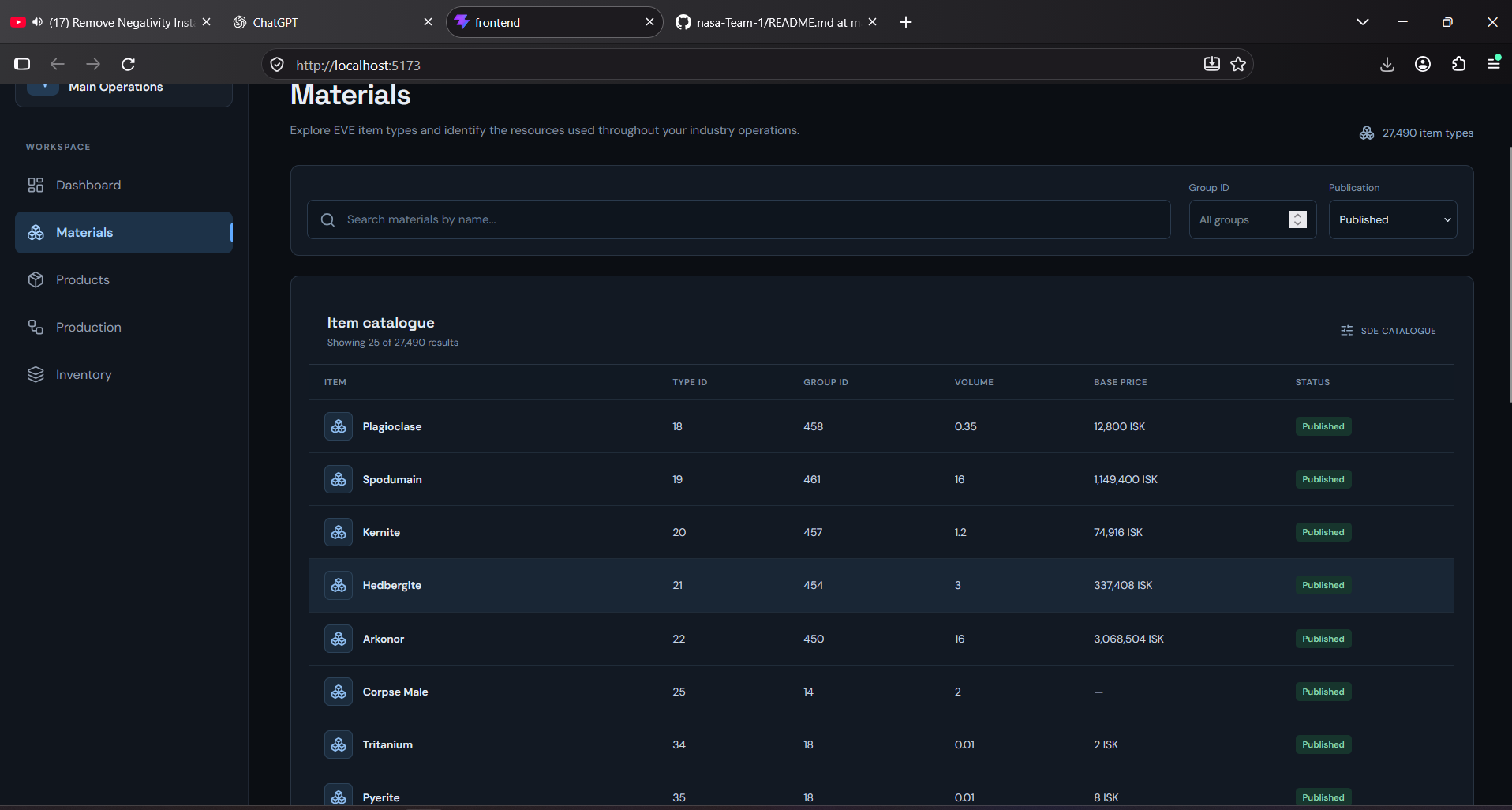
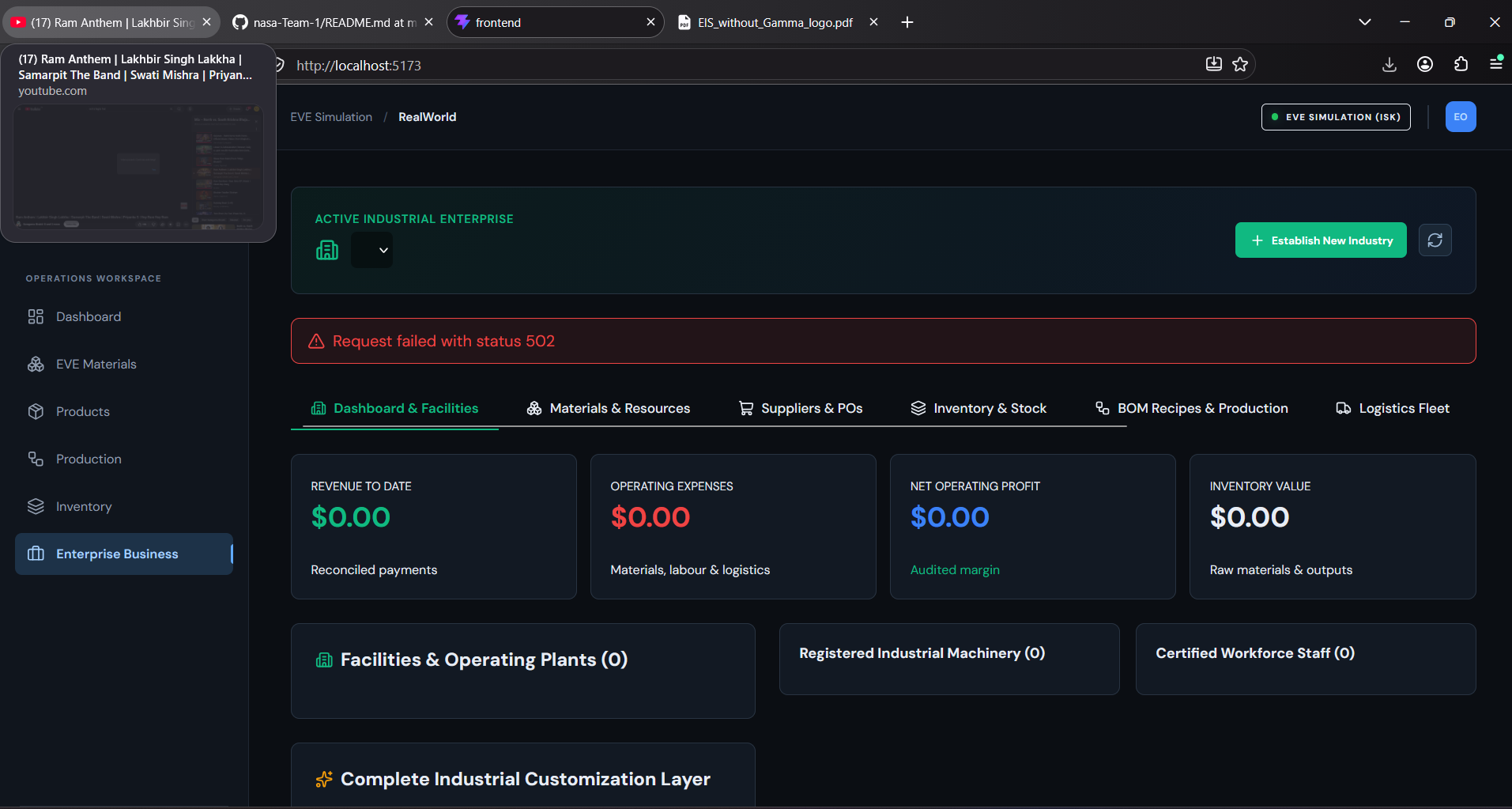
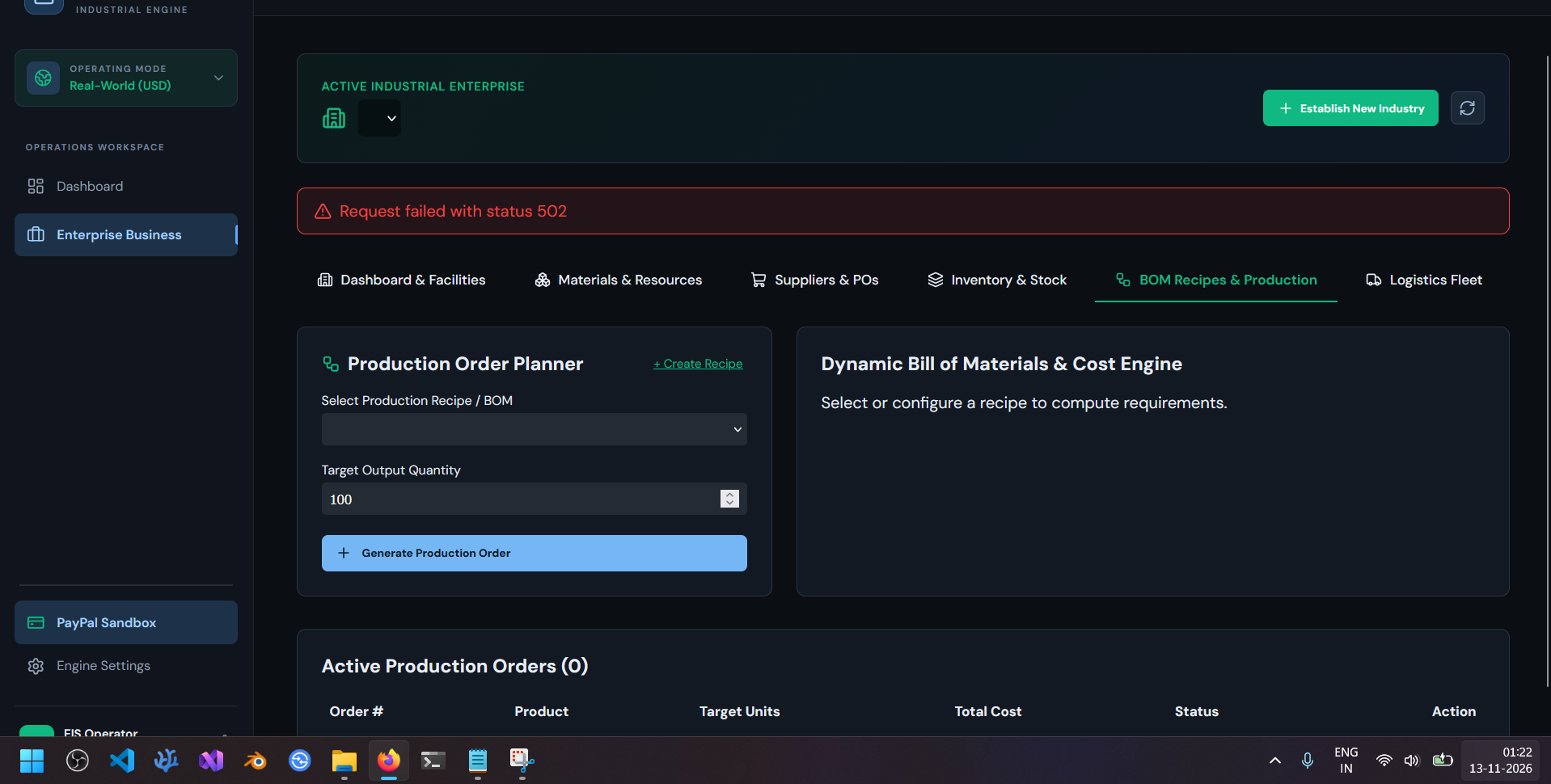
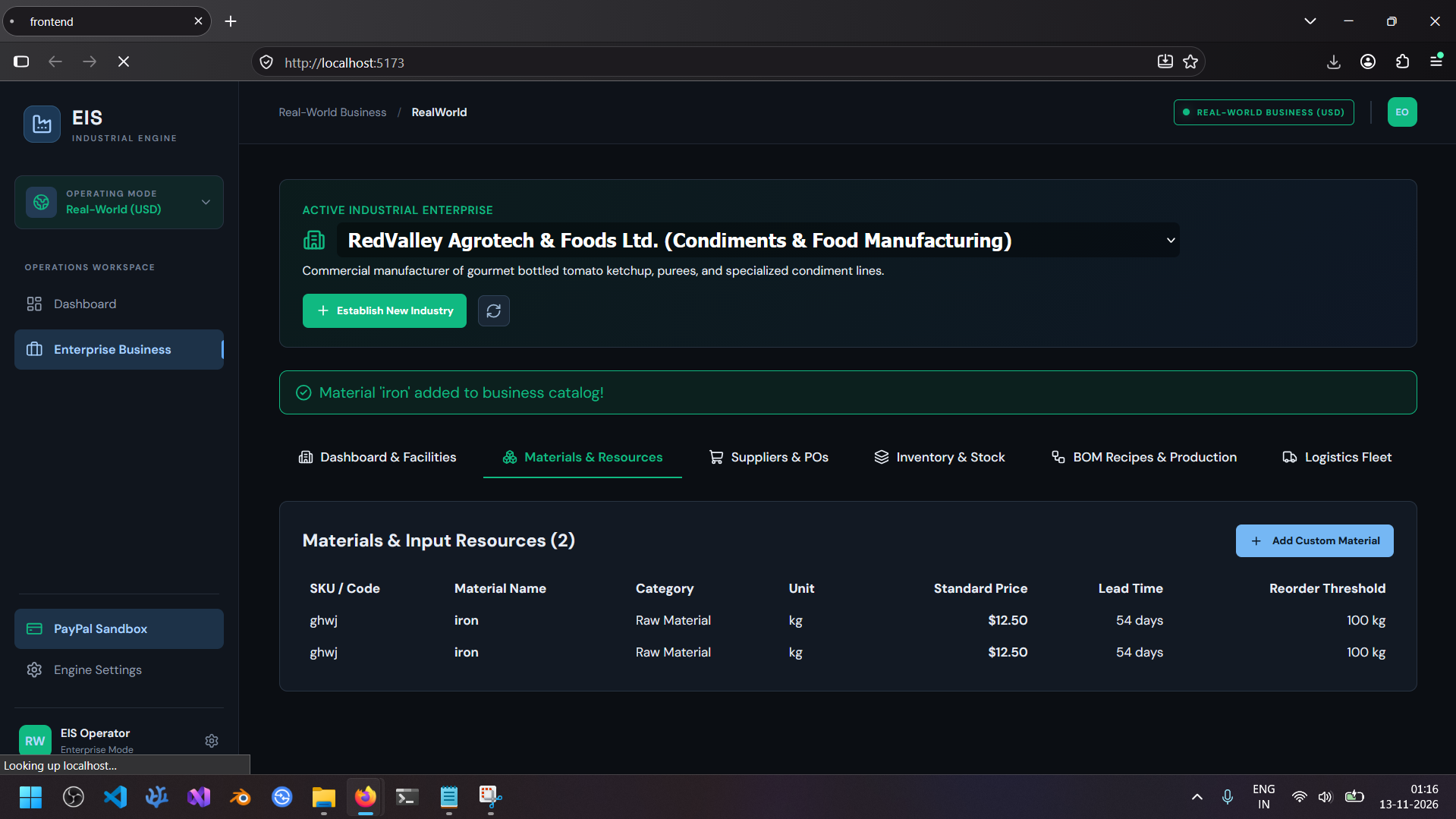
Do we really thought for this direct question after all to make a unified platform for to run a small-scale industry or a large-scale industry? well not really, to be honest I do not have much prior interest in business and finance, and about the payment related Api integration well not really my domain. but after working on a graphics programming, it felt like a big bottleneck to even develop a system that runs on the web and have a payment related integration. But the perspective changes little when spreadsheet in space walk in the story. being an industrialist in eve online, who actually spends a whole day in calculating the profit and loss, for each and every ship he manufactures, or even the smallest module, to every single ammo he does spends, he seeks for profit and loss. He do finds the cheapest minerals possible across the entire NEW EDEN map, hauling the minerals from the depths of dangerous low sec and null sec spaces, through the ganking capital of uedama and sivala, and being alpha clone fighting for almost 7.5% of actual sales tax on every module he do sell, along with the 2.5% of terrifying broker fees, the total of all 10 percent of actual tax he do pays, along with the job cost for almost every single module he manufacture. finding a station where he can safely keep the manufacturing blueprints safe, and even after all these risks and threats, he was running a complex industry platform, and then he does say that he does not have prior interest in finance and business, so actually that not seems right. so, while looking for the idea, which we can build for the event… so problems statement was actually saying that you do have freedom to choose any topic idea which you want to build or you like. And there are no restrictions in choosing any of those, but actually in the problem statement it was mentioned, that you actually needed a PayPal integration, which is actually a payment sending receiving platform. so there, he thought that in eve online you are actually running a dynamic industry simulation platform, where your actual decisions was the cause of your own Proft and loss. There he is an industrialist who spends a lot of time in calculating Proft margins, and spends isk (interstellar currency) for to buy minerals, and blueprints. Buying a constant supply of minerals, from the market places, where the prices was actually decided by the players’ themselves, who mines and refines those raw ores into minerals, and then lists on the market called jita moon 4 caldari navy assembly plant, which is the biggest market in the entire game, so from there industries buys a lot of minerals in bulk quantity, so their industry runs constantly. So actual idea appears like what an eve player does in game, was actually an industrialist does in the real life. Well, let’s take an example of a ketchup factory startup. Suppose you are building a startup for tomato sauce, so what you will do. Well, he will first look for an initial investment, as majority of business were funded by person’s own savings so actually, he will use his savings to build a startup. Now he uses that initial capital, to look for a good and reliable machinery, even if he didn’t use a big machinery, but he still needed to invest some money first in manpower, where he can create the tomato ketchup from the raw tomatoes. For an instance if we keep the machinery and manpower aside for a little second, so what he actually needs for to begin his first batch of ketchup was the raw minerals. So, he will first find the finest but affordable tomatoes in the market, suppose he will go to a retailer for to look for the good tomatoes but at the affordable price. But then he will discover that in retail market he was getting the tomatoes at higher price, but the quantity was likely to be very low. for an initial batch, if he aims to create 1000 bottles of tomato ketchup, and each bottle needed at least 5 to 6 tomatoes or even more, so actually so actually he needed much more tomatoes that a retail seller can have. So, he will look for wholesaler or to a distributor who will sell him this huge quantity at much affordable price. But then he discovers that he will also taking his own commission and to earn his own profit from the sale. So maybe he could buy from him too, because the even if he is paying the little amount to a wholesaler but actually, he is getting a much larger quantity of tomatoes at one go. Which is actually what he needed. But then on the exact moment his called his farmer friend who have recently planted the organic tomatoes in his field, asking for a Favor that he will buy his tomatoes direct form him at the market price, so actually his friend was getting a bit profitable and he was likely saving a handful on broker fees or charges. But its not for about broker fees actually, but its about opting a fresh batch of tomatoes, direct from the farm rather than a distributed variety. (hauling risk in eve online terms) So now he has the finest and fresh batch of tomatoes at the same wholesale price or at market price. He will look for the supply for a clean water, preservatives, and a bunch of other raw minerals, based on the recipe needed to make the tomato ketchup. Now he runs his machinery, or I say along with machinery he uses manpower to complete his first batch of 1000 bottles of fresh made ketchup. Now while the process he uses electricity, water, or some other more resources, for which he pays a little tax or amount, for labour actually. Now after creating and packing it he again went to broker or a distributor who will actually promote his brand to different stores, or he will market his own product. So even in both the scenarios he is actually paying to someone for something. Now, after getting orders may be from online or even from offline stores, now he will send them to the stores, to sell. Now this is again same as hauling principal of eve online. After making his first sale, he calculates his profit. Along with when his industry or business grows, he will have to pay a handful of the tax to the government. Now imagine this same thing an industrialist is doing in eve online. He looks for cheapest possible mineral on the market, then risking his ship and time he hauls to that station, and putting the expensive minerals inside the cargo hold he hauls back to the station, where his blueprints are kept. suppose he has to manufacture a frigate, called punisher, so he will look for the original blueprint (unlimited runs) or a blueprint copy with limited runs. So, in the station which supports industry module, he will begin his job, he pays the station a handful to setup his industry, along with ssc surge charge, which a fee, based on how much industry jobs are pressed per hours in that respective system. It’s something similar to real life market, if you find a place to start your industry in the high populated area, or at the city centre, you might get the place at much higher price and might you get much more restriction for sound, and safety related concerns, but likely if you do same industry in remote place or outside the city, so might you will not get that much restrictions on you, because you are not disturbing anyone while doing your job. So similar thing happens in eve also, if you start a job in high market selling and manufacture places like jita or perimeter you will to face a lot of tax from the respective systems. Then after a dedicated time you will get your ship ready, now you again haul it to the station, or the market, to sell your ship. suppose you take your ship to the jita, so what will happen, you can sell the ship into two different ways, which is listing for a sell order, where you are paying broker a fee, so he will finds a customer for you, or you will sell to those who have listed their buy orders to the broker. Like in first case you are paying to the broker for the ship you build, but in second case buyer has paid to the broker his fees and now you are selling him directly at the price which he is asking to you. so that does depend. So now idea was that like if, we are doing industry in eve online and same work in real life industry, then why not to test the actual model using eve data along with the real-life industry simulation platform in a unified from. In eve we are paying isk but in real life we are paying by usd or inr or any currency. So now might you come with one more question that if we are doing all industry in both the worlds like eve and in real life, then where does the actual payment methods comes to existence. As problem statement was asking us the same question. Well, the answer is very simple. keep the layer separate and only accessible for the real-life industry module. What I mean? Well, here like you are doing an industry job, now you will have created a unified platform where you can look at your industry at any time you want, you have listed raw minerals, the tax the profit the loss, everything on the platform, so when the time of payments comes then there needed to have a payment integration method, so from the same platform you can actually pay your job bills. So, there comes the PayPal integration.
How We Built It
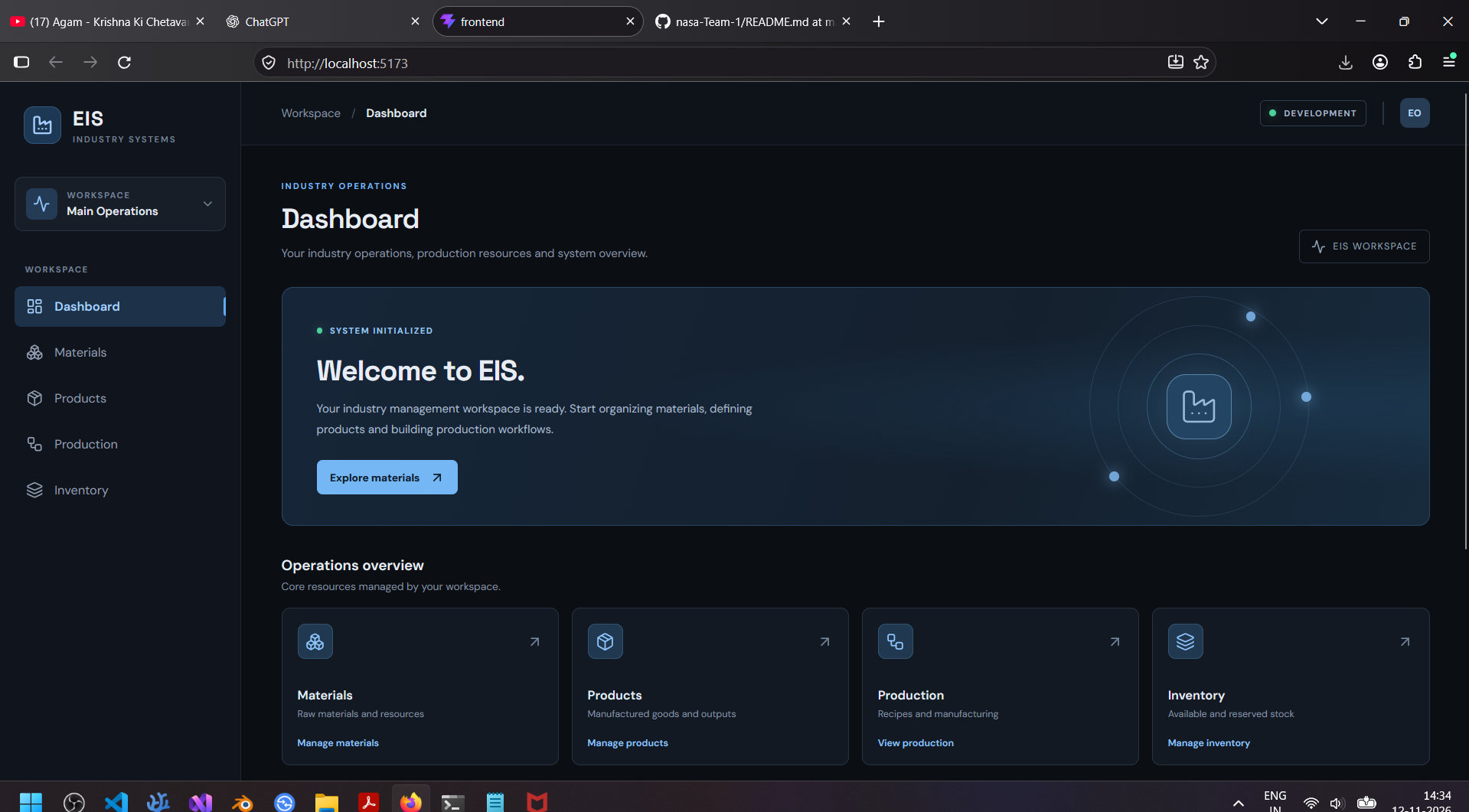
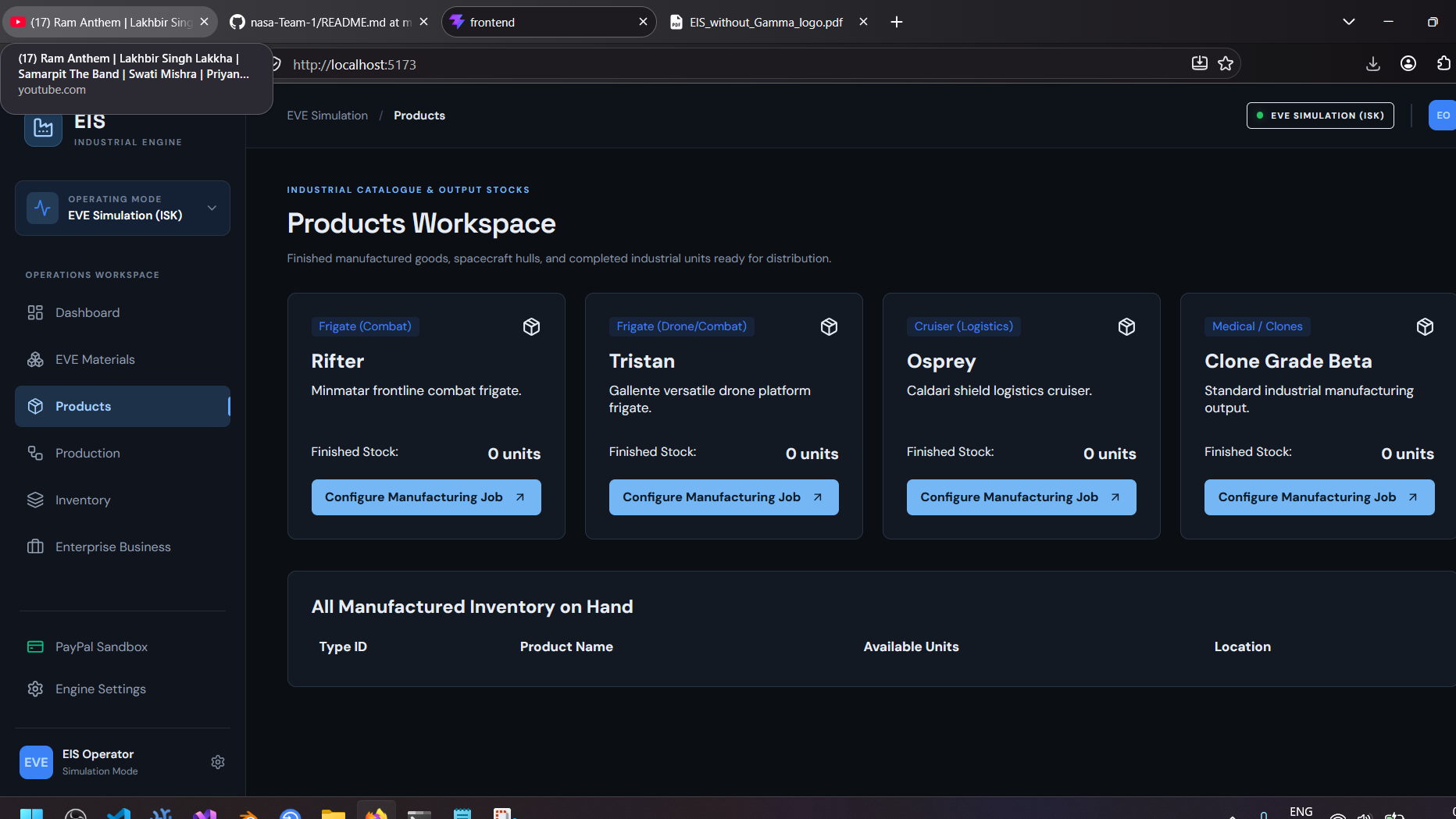
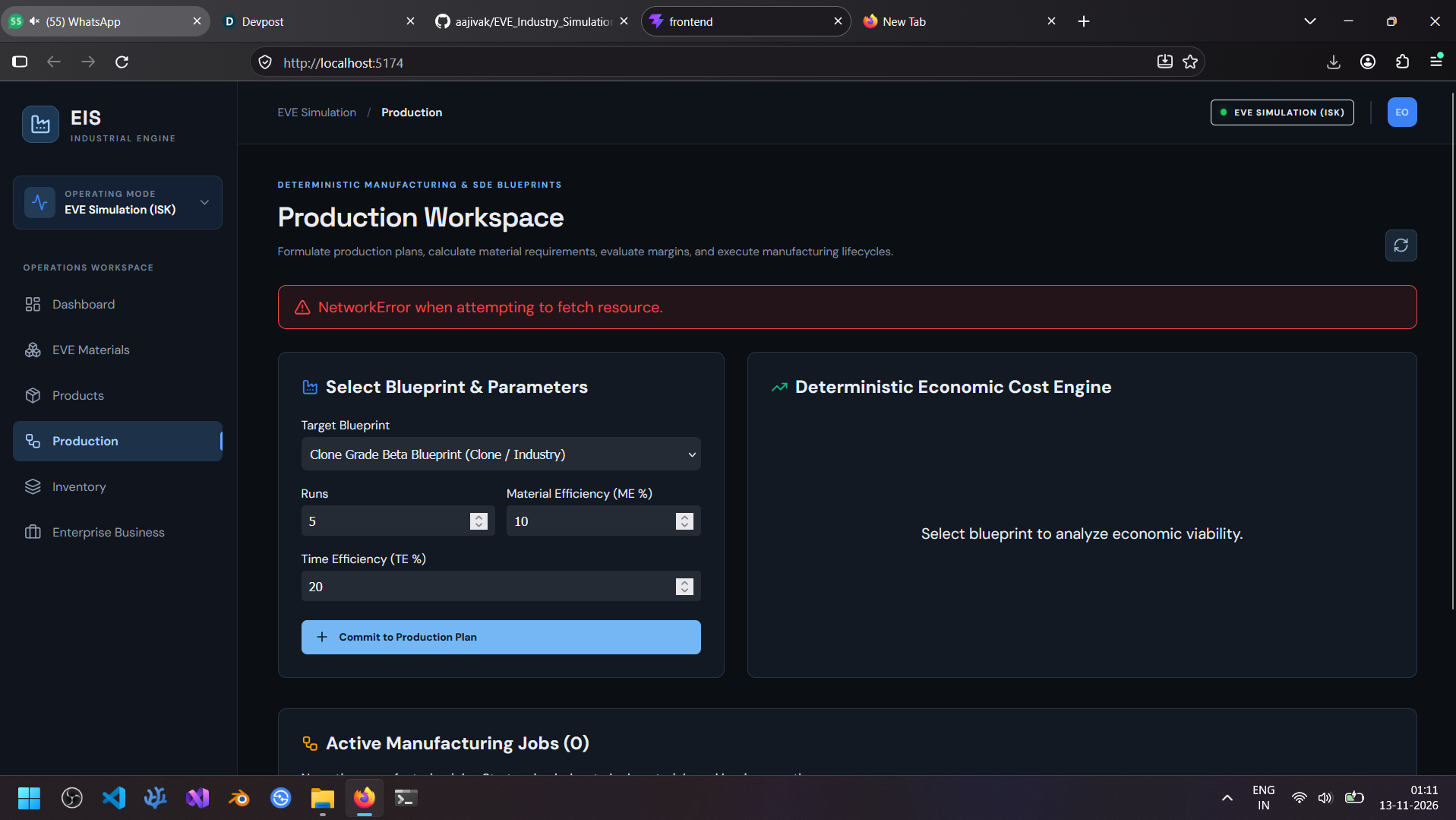
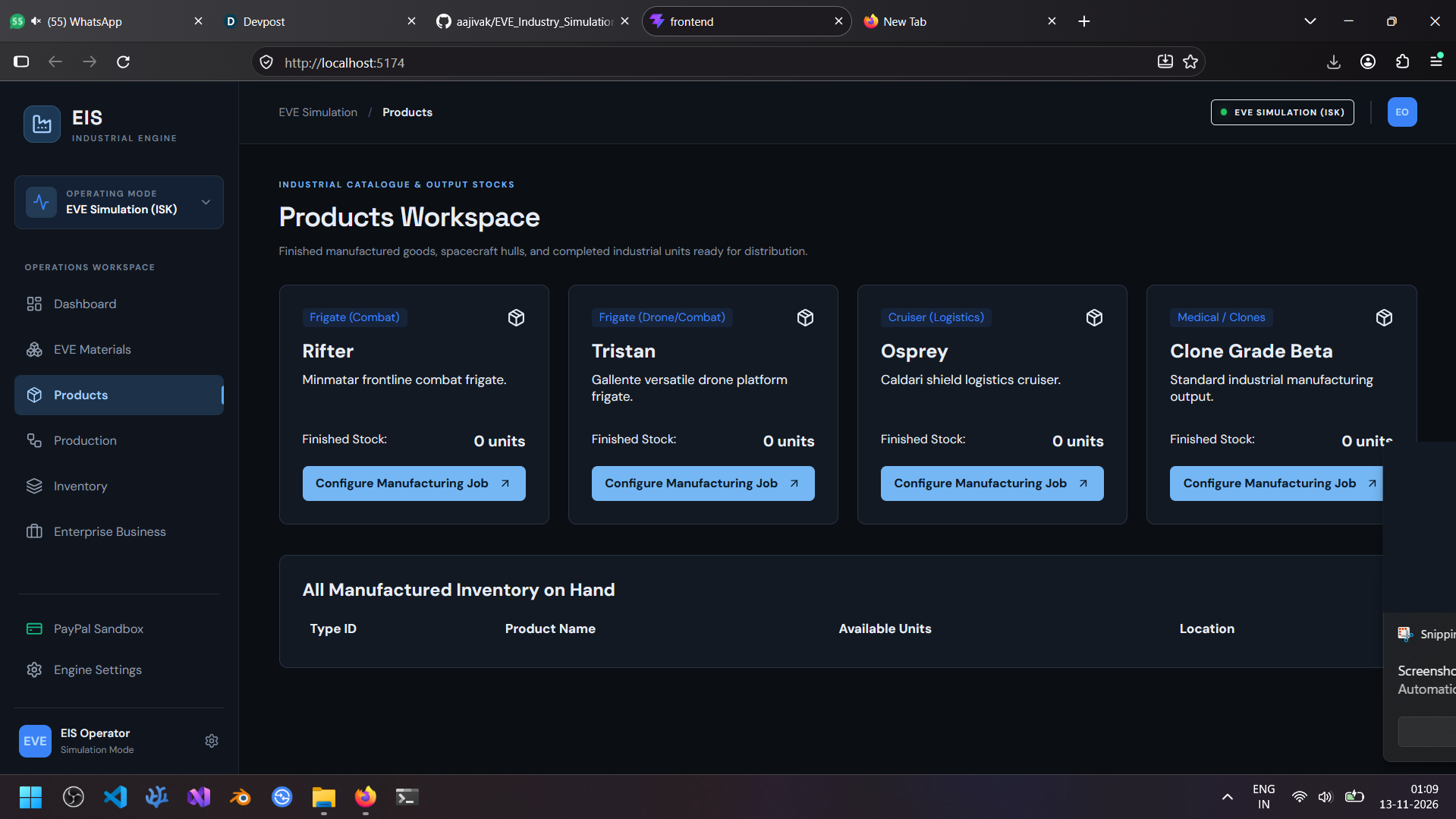
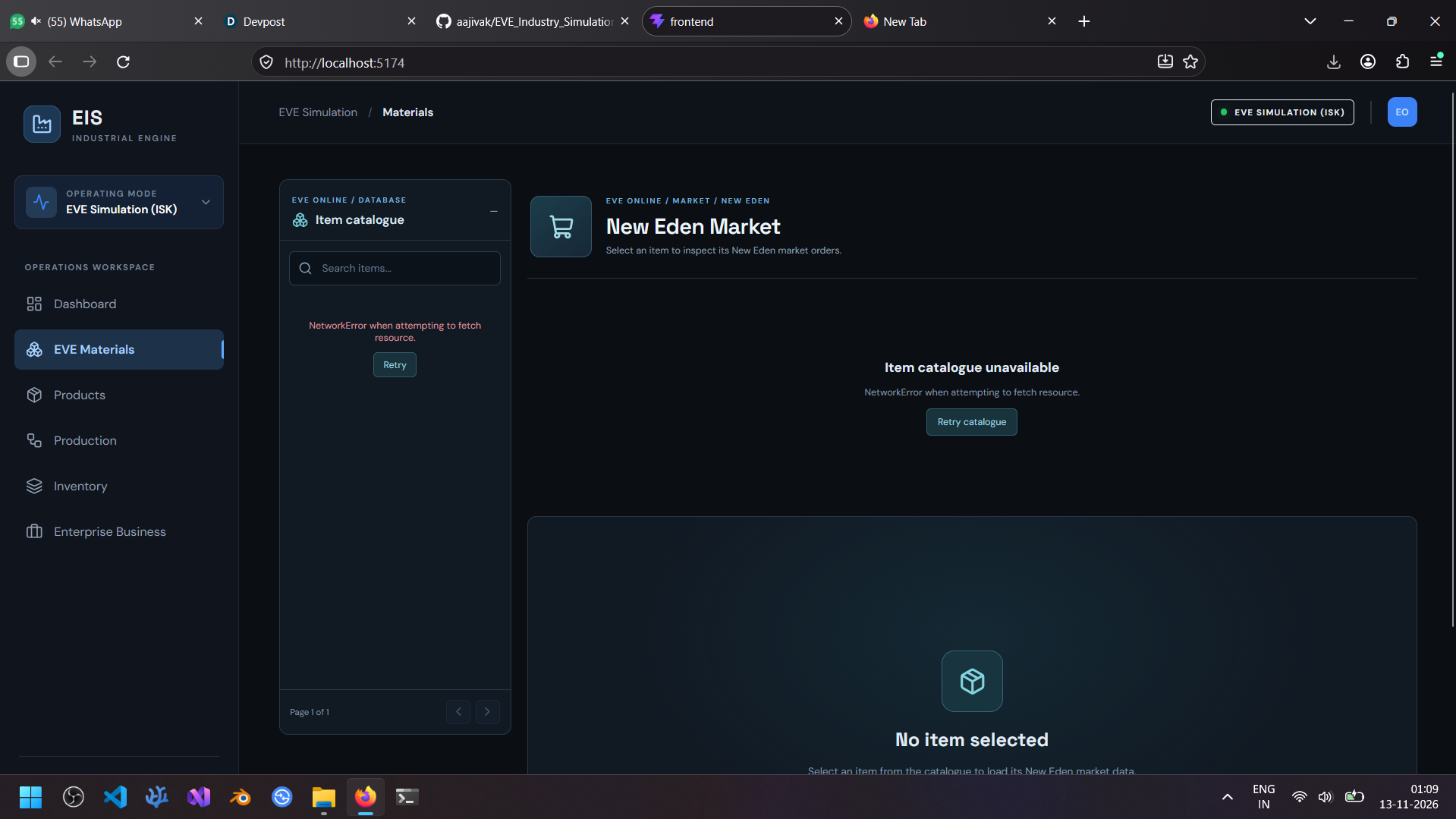
Well actually here comes a different perspective of making: Actually, there are a lot of ways, but here we tried actually two ways of building it and one way which actually possible but likely reasonable for a business model. The two models we have used was likely written below: The dot net approach, In this approach, using a dotnet runtime environment, we tried to build a react based web application system where we can actually track use all the above criteria to fulfil the requirements. For this actually we tried to use Postgres sever for the database, along with Vite and react based runtime sever which can actually runs on the web, without any system overhead. Now comes next approach, as dotnet was a time-consuming process, and error handling becomes a tougher part, so actually we have switched the whole backend into the typescript module, rather than forcing the c# to run everything in backend. Due to the buggy code ai was producing the whole idea was still being as held as prototype. Another approach was a python approach, we can also use fast Api and Vite sever with uvicorn to build a runtime environment, but the problem with that is python is good for runtime that’s no objection but for choose dotnet over python, was the constant running time and data phrasing. Well python is fast with data, but actually for a required model which is related to the business actually we didn’t needed much complex ai to analyse only if there comes a big data problem, if we are looking to build an industry from a small scale so let the user understand the core principles which he will learn while doing business, rather than guiding him on every step, if we can help him to organise his tasks, so that might be help full. But if he still not wants to use it so why to take load, use eve layer, to maximise your industry profit. As eve is the base of the whole model so for an industrialist is actually one of the best things to organise his work. And as eve provide a custom data Api for to look for players’ own inventory, and his data actually, like how much minerals do he has in his inventory, how much industry slots he do has available ,how much assets he do have, so likely this platform can be a personalised eve industry simulator for the players.
Challenges We Faced
One of our biggest challenges was designing a system that could represent two fundamentally different economic environments without mixing their rules. Well might gpt will answer this question like this, but one of the major challenges is to explain gpt how to make, and even after getting a buggy code from him, well that’s the one of the worst parts of the entire project. But likely architecture was not that difficult to think actually. There have to be three layers, one is data layer, which is being separated in two modules, like one is eve data and real-life data, then in second layer comes engine, well here all Api related work will have to happen, like spreadsheet in space or spreadsheet in real-life, both are build here. Now the third layer was the payment layer, this is where a game changes, well this layer is only being activated for real life modules, rather than keeping it alive for eve.
What We Learned
Throughout development, we gained experience in:
- Designing modular software architectures.
- Integrating external APIs and large structured datasets.
- Modelling procurement, inventory, and manufacturing workflows.
- Building deterministic financial calculation systems.
- Separating business logic from environment-specific rules.
- Thinking about scalability, extensibility, and data consistency.
Most importantly, we learned that building an industrial simulation platform requires more than calculating production costs. It requires understanding how resources, suppliers, inventory, production, logistics, customers, and finances influence one another. Well, the above were all gpts answers but, likely, we have learned that even if gpt or coding agents builds you or writes you the code and makes you a project, but on time they get fumbled, and actually you are facing a lot a time struggling with those bugs.
What's Next
EIS is an evolving project. Well, yes, it’s an evolving project, but likely it does take a time. Our next priorities are to strengthen the unified industrial model, expand user-defined business configuration, improve end-to-end manufacturing workflows, and validate the system using multiple industries and custom datasets. Even if this is just a protype idea, but due to some bugs, it was still useful to find a cheapest possible mineral in the eve market, so yeah, currently at the porotype phase, so likely, yes…. this is the entire story.
Built With
- .net
- api-integration
- automation
- business-management
- c#
- data-analytics
- digital-twin
- economic-simulation
- eve-online
- express.js
- financial-modeling
- fintech
- industrial-simulation
- inventory-management
- manufacturing
- market-analysis
- node.js
- paypal
- postgresql
- procurement
- react
- supply-chain
- typescript
- vite
- web-application


