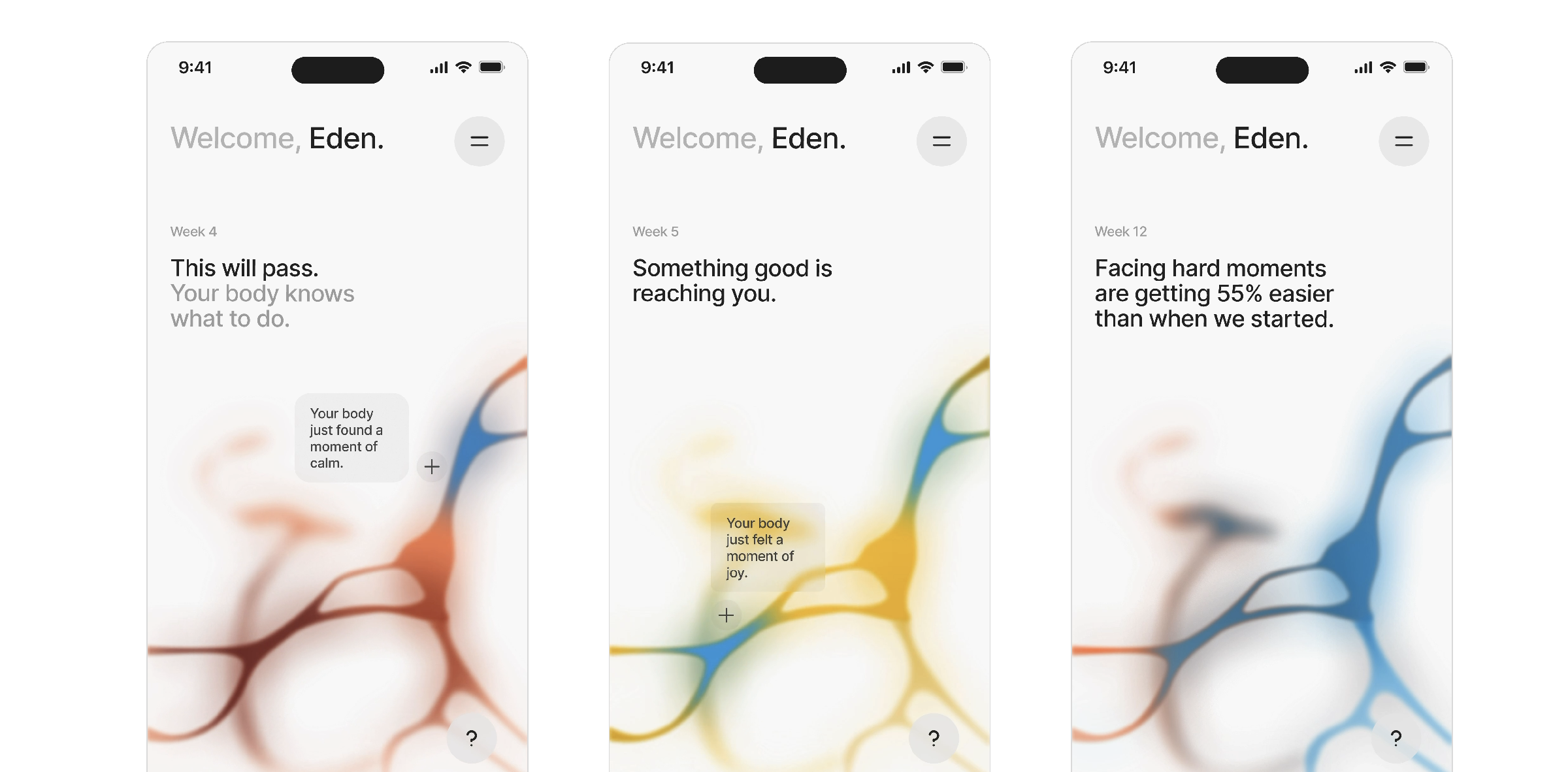
Eir: Your nervous system, made visible.
** Neuroception reimagined **
Inspiration
This project really came from process. From searching, getting stuck, reframing, and then finally finding the right problem to solve. As UX designers, that shift mattered. We stopped asking, “What new sense can we build for?” and started asking, “What real human problem might become addressable if an invisible bodily signal could finally be perceived?”
That shift changed everything.
We came across a paper on interoception that opened up a new line of thinking around how the body senses, interprets, and responds before conscious awareness catches up. That became the real spark behind Eir. From there, we started thinking less about a futuristic gadget and more about trauma, regulation, safety, and what it might mean to design for healing in daily life.
What it does
Eir is a trauma recovery ecosystem that helps make the nervous system more legible in everyday life. It detects shifts in regulation, supports users in the moment, and creates space for reflection afterward. The goal was never to build another tracker. It was to design a calmer, more thoughtful system that could support healing beyond the therapy room.
How we built it
We built Eir as a system, not just a tool. That shaped the whole process. We mapped the journey across activation, support, regulation, reflection, and long-term healing. Then we designed how the glasses, stimulation device, and mobile experience would work together. A lot of our process came down to timing. What should happen in the moment. What should happen later. What should stay in the background. We kept returning to that question again and again.
Challenges we ran into
The hardest part was balance. How do you make the nervous system visible without making the user hyperaware in a harmful way? How do you support someone quietly without taking away agency? How do you design for trauma without making the experience feel clinical, cold, or performative? Those tensions stayed with us through the whole project.
Accomplishments that we're proud of
What we are most proud of is that Eir feels connected. It does not feel like a single speculative feature. It feels like a full ecosystem with a reason for each part to exist. We are also proud that the concept stayed emotionally grounded. The flows are intentional. The interactions are gentle. And the system includes safeguards, not just features.
What we learned
This project taught us that good speculative design still needs a real anchor. It cannot just be imaginative. It has to be meaningful. We also learned that designing for trauma asks for a different kind of restraint. Sometimes the most important design decision is not what you add, but what you choose not to surface.
What’s next for Eir: Your nervous system, made visible.
The next step would be making Eir more adaptive and more context-aware. We would want to better understand how support changes across environments, triggers, and recovery patterns. We also see room to deepen the reflection layer, so users are not just receiving support, but gradually building their own understanding of what safety feels like in daily life.
Built With
- claude
- figma
- figmamake
- kling.ai
- photoshop
- premierpro


Log in or sign up for Devpost to join the conversation.