-
-
-
-
-
-
-
-
-
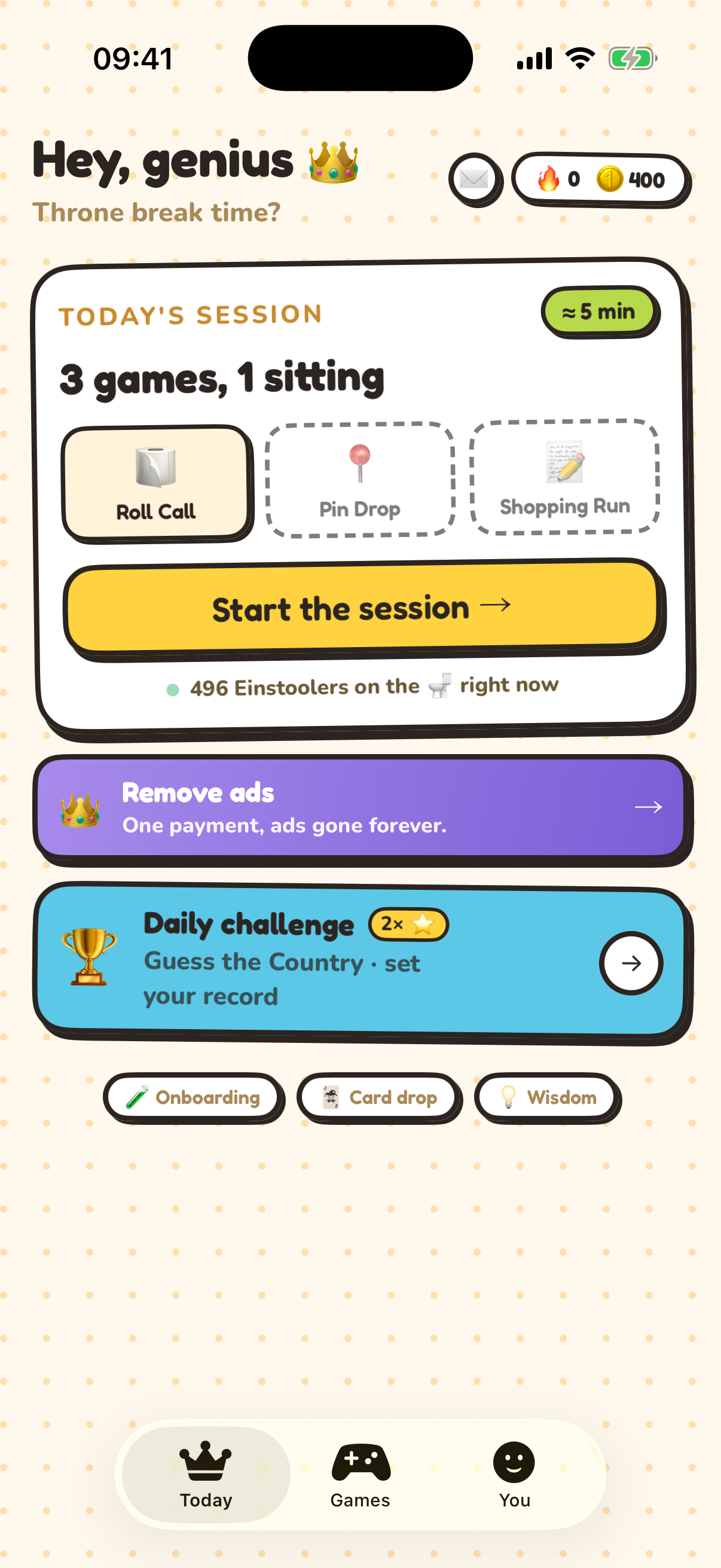
app screenshot
-
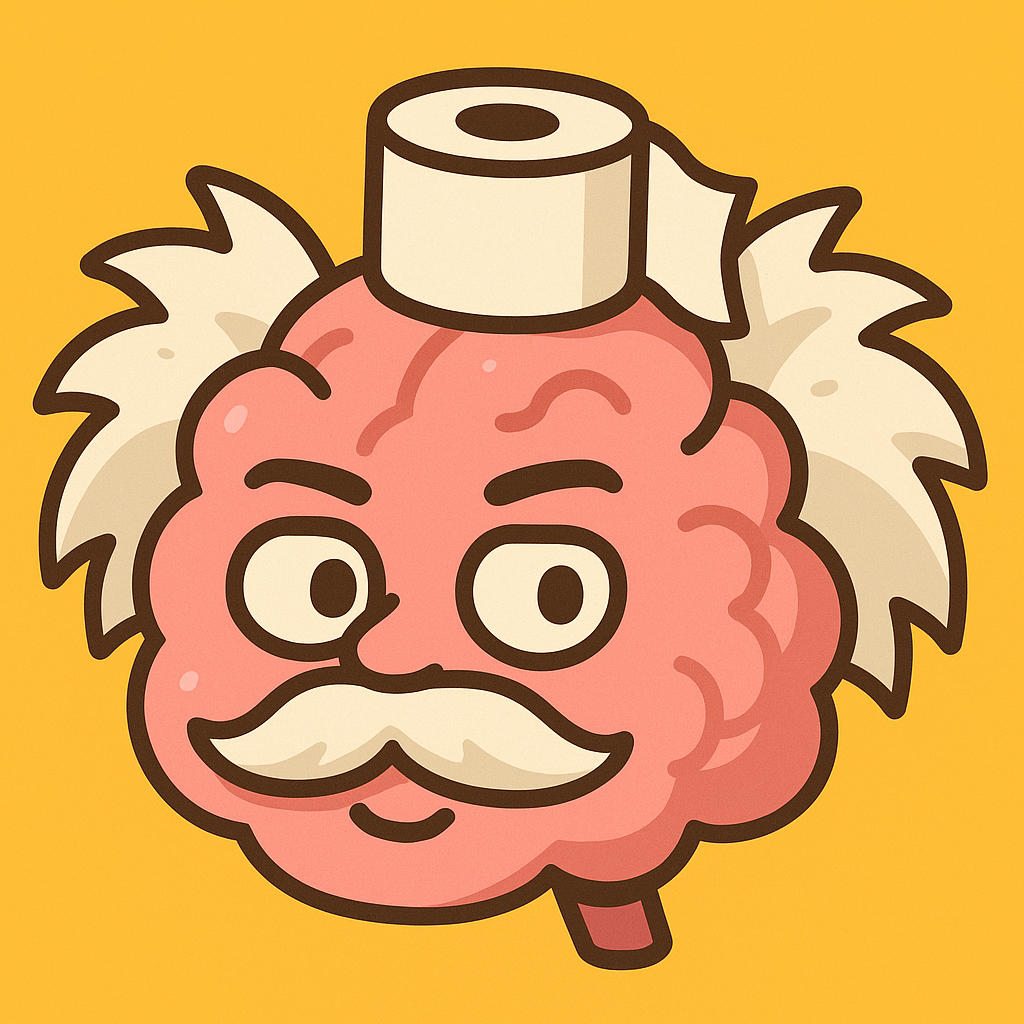
app icon
Inspiration
I take my phone to the bathroom, like everyone. And every time I had two bad options: scroll social media and stand up dumber than I sat down, or dig through the App Store — where every brain game trains one single thing, so you need four of them, and the good ones are either buried in ads or locked behind a $30-40/year hard paywall on day one.
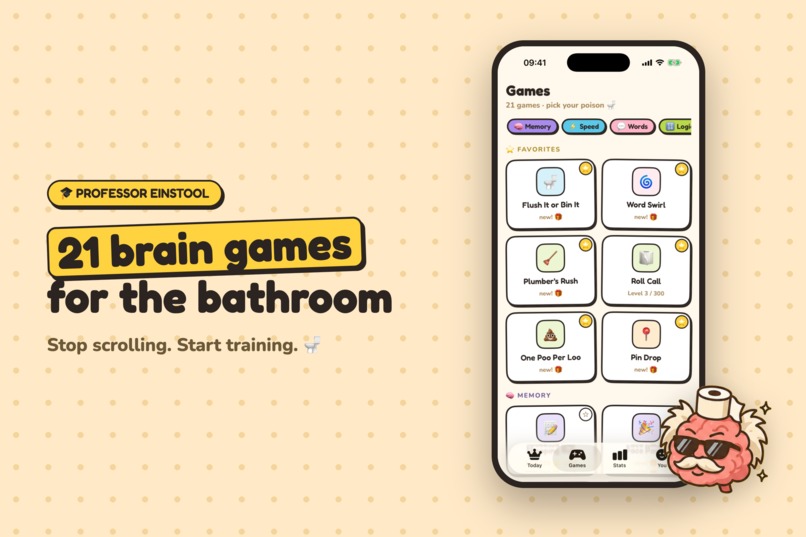
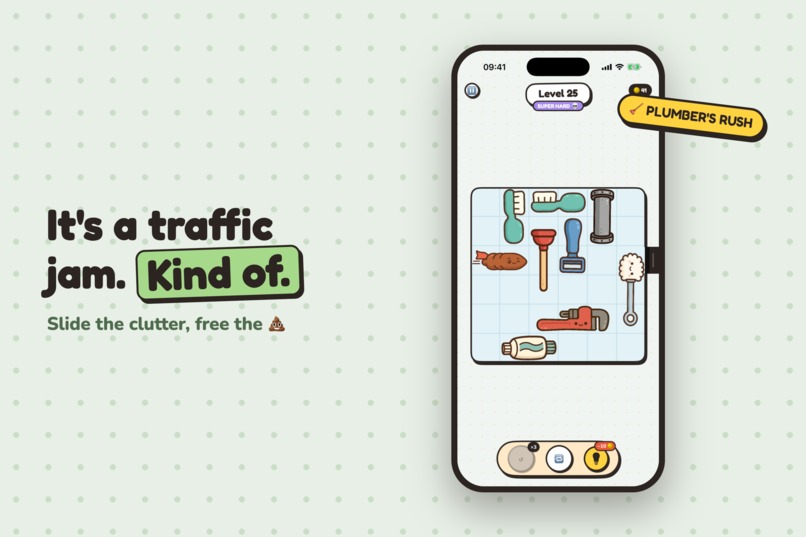
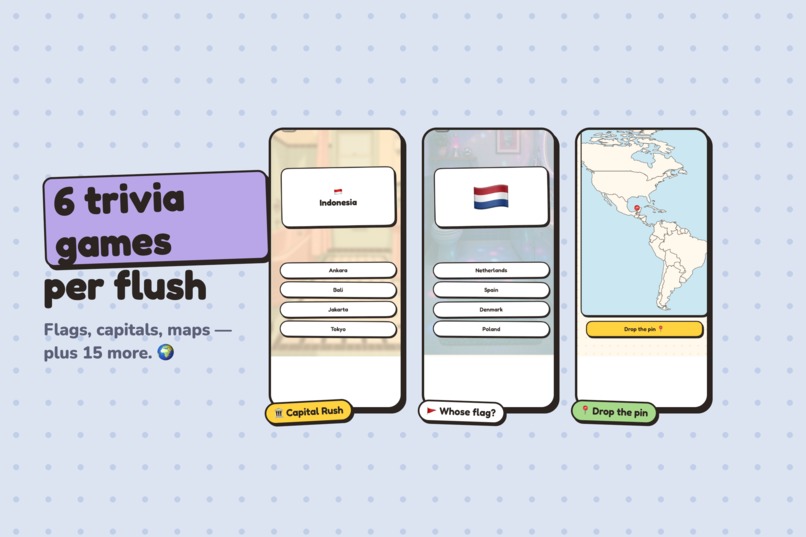
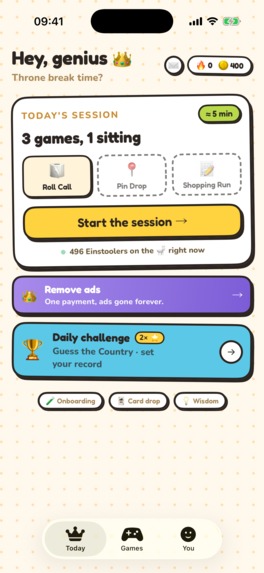
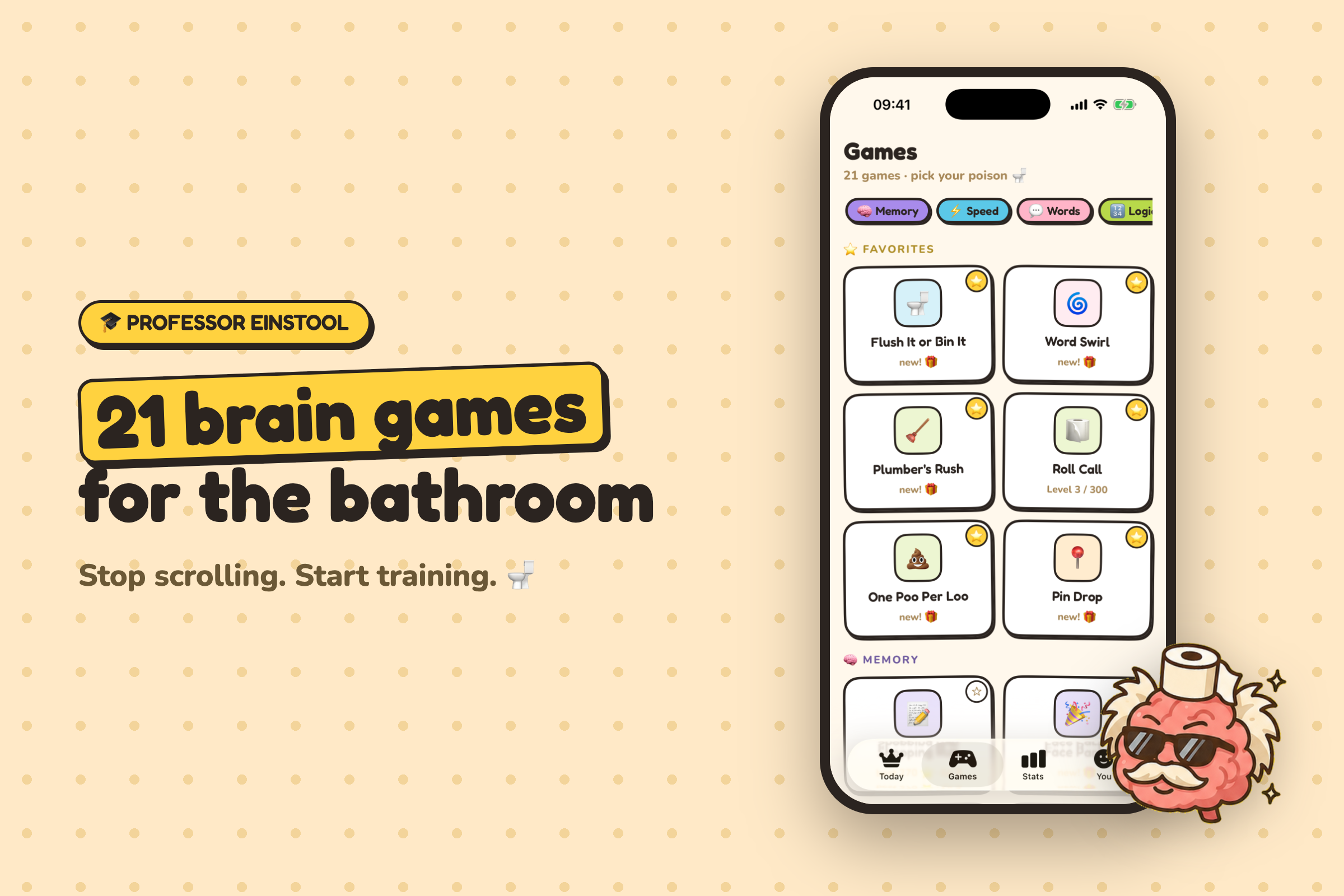
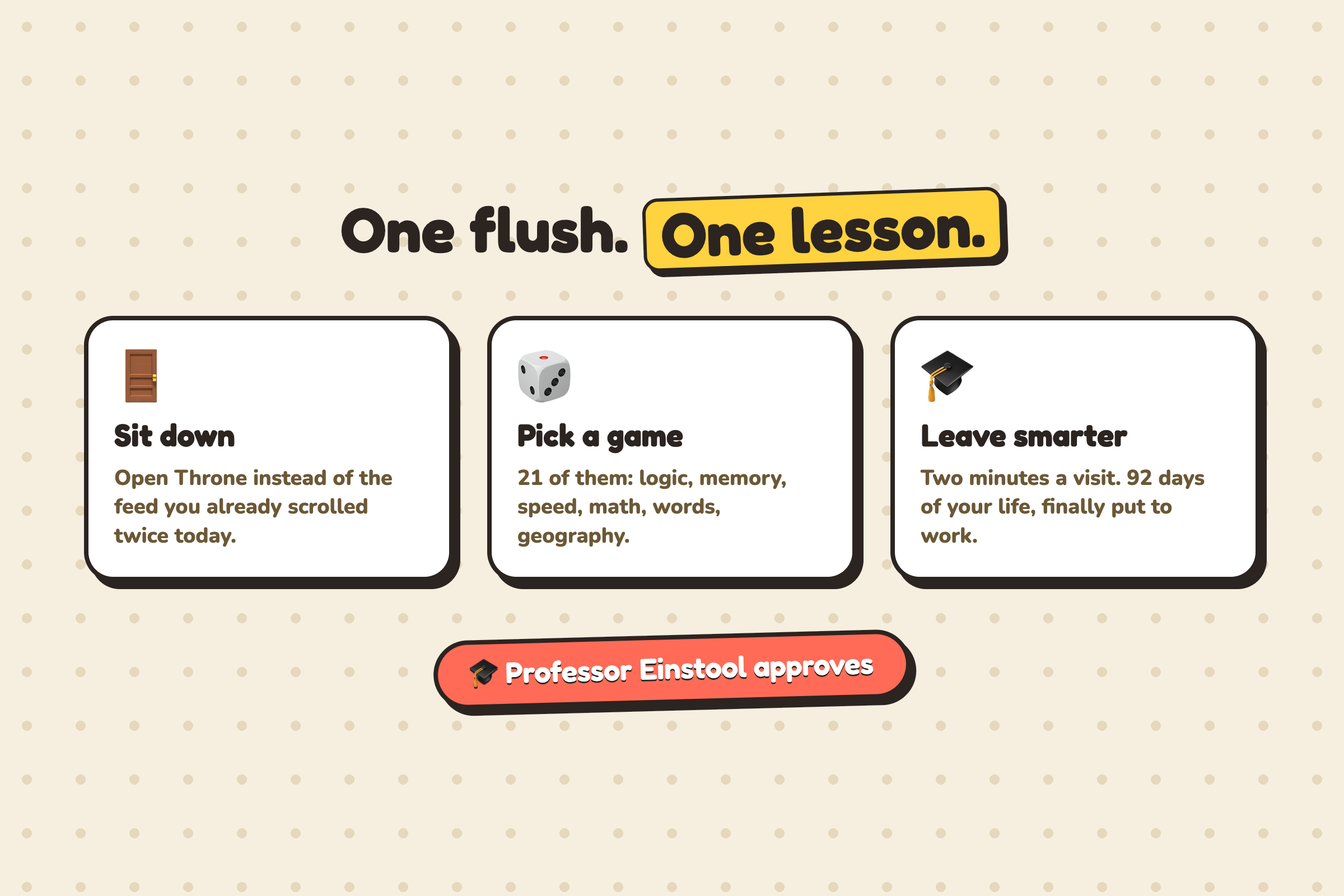
So I built the thing I wanted: 21 mini-games in one app, a daily workout that picks three for you, no ads ever, at a price that isn't insulting.
What it does
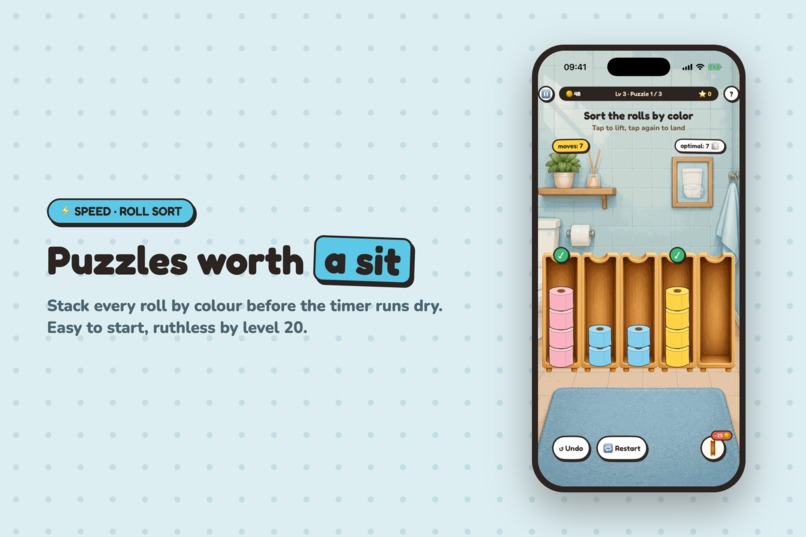
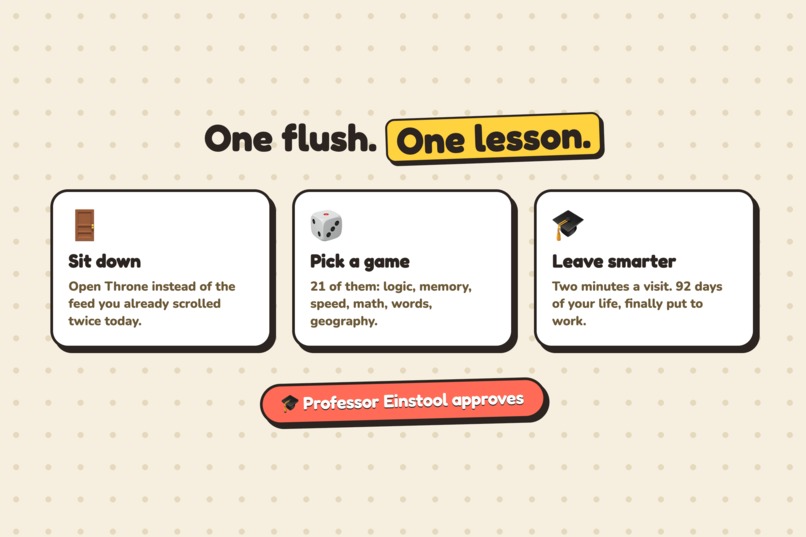
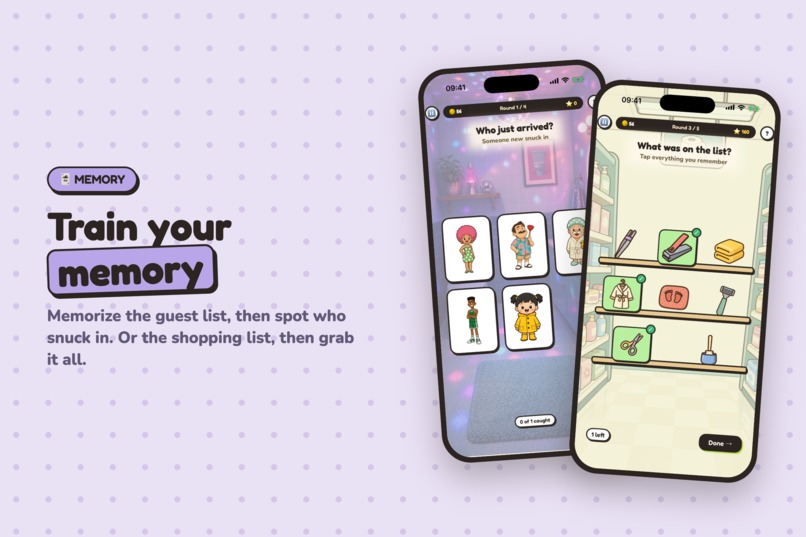
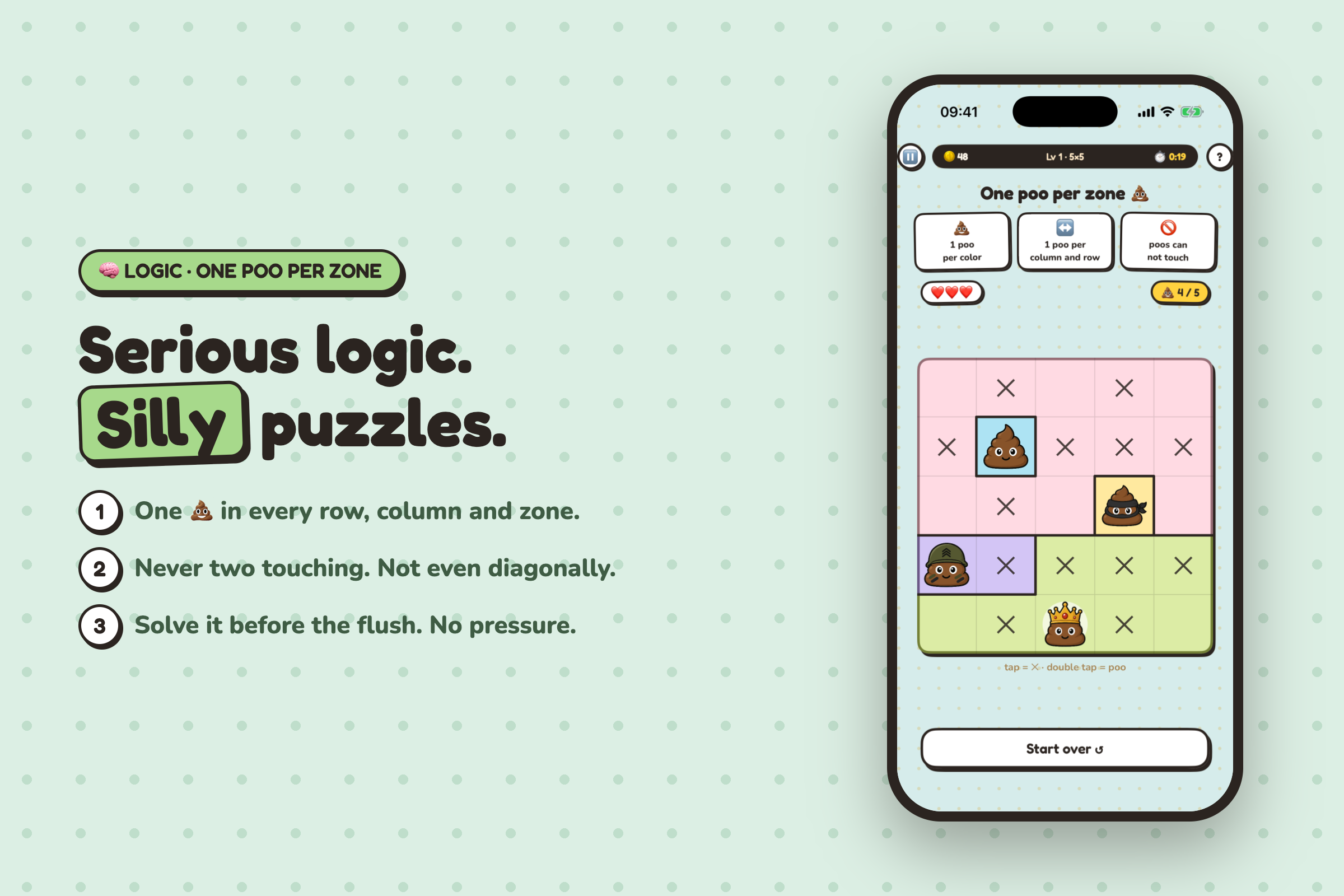
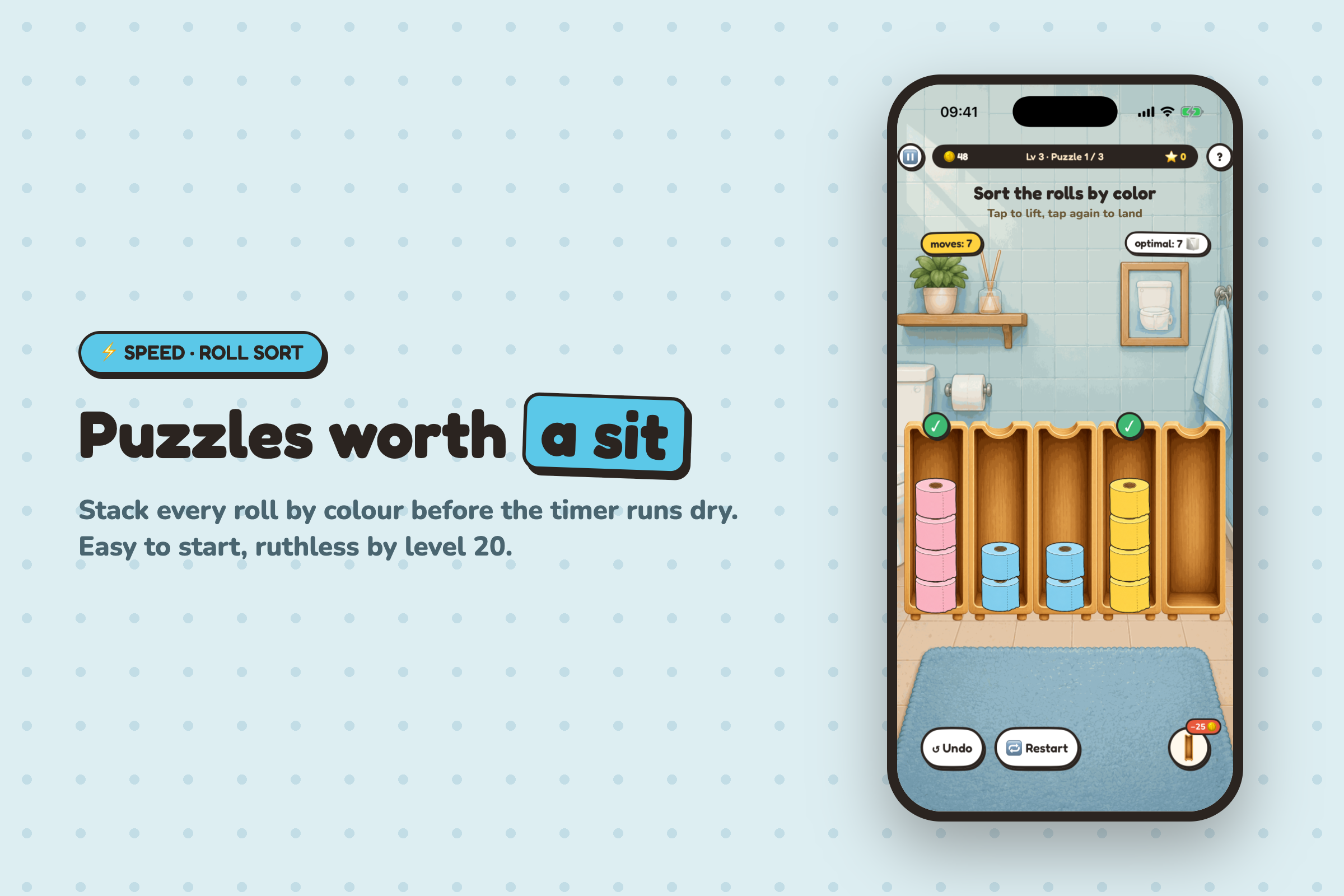
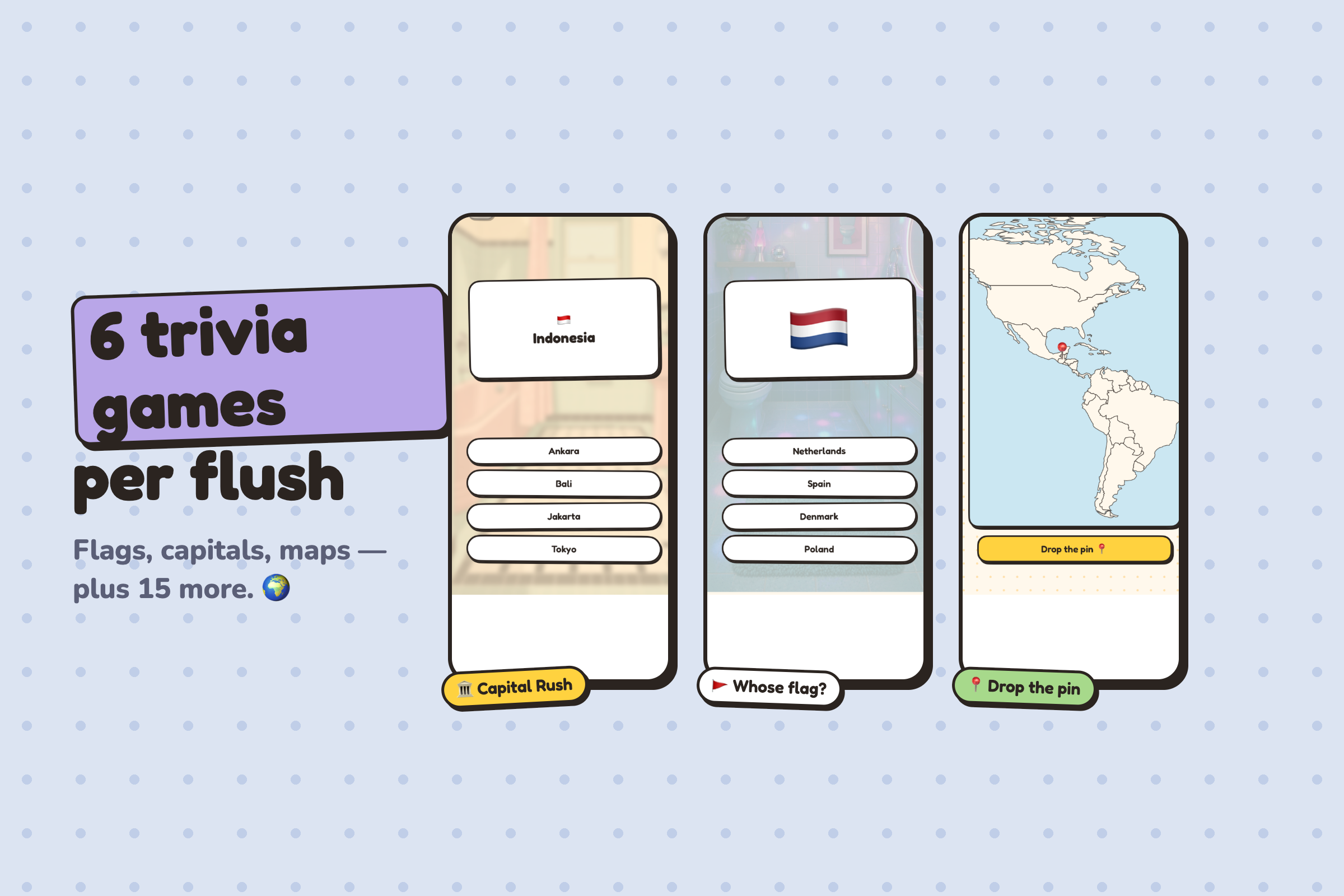
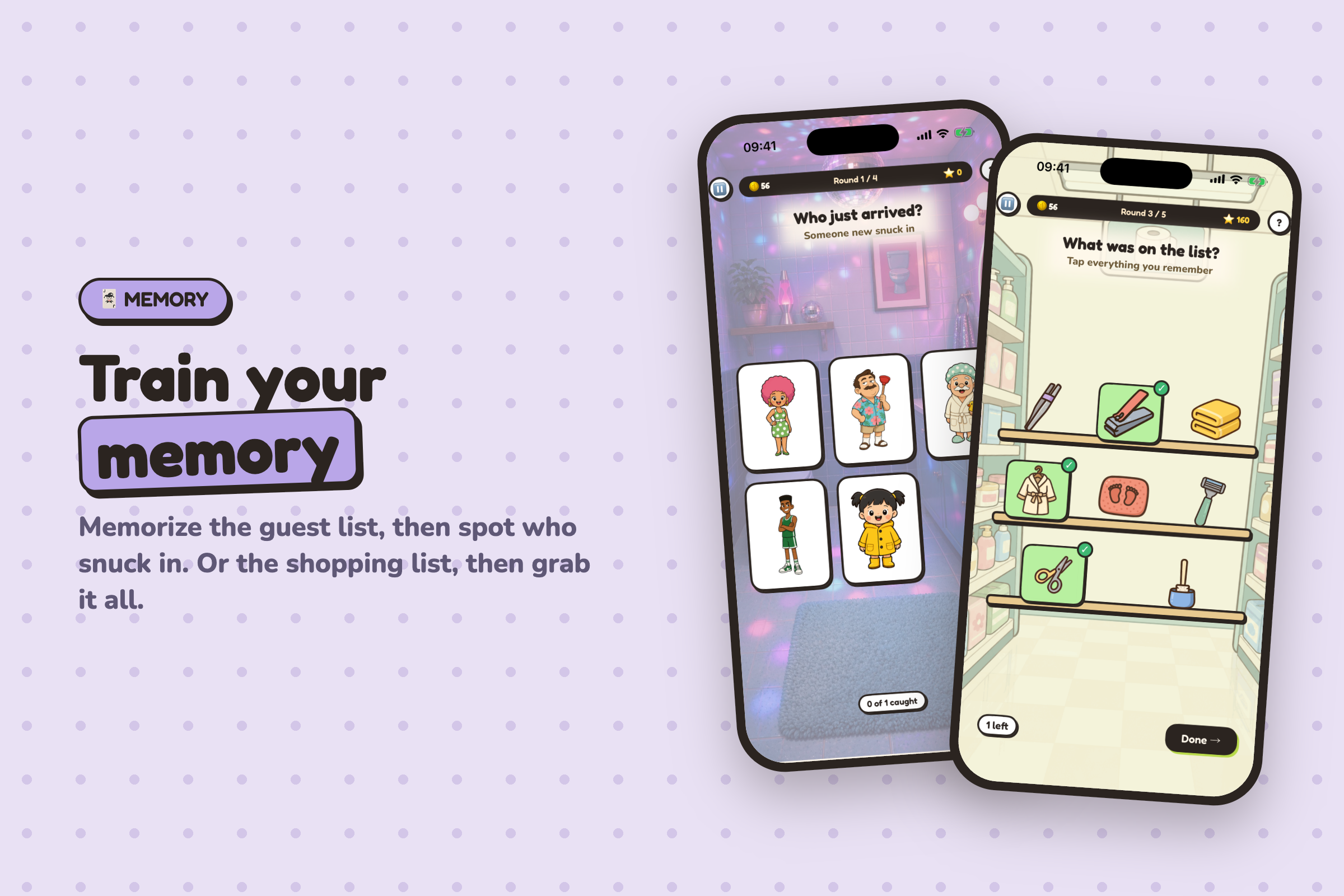
Einstool is brain training for your daily sit. Today's Session serves three games from three different skills — memory, speed, words, logic, geography — in about five minutes, with a streak to keep. Along the way you earn stars (even when you fail), level up each skill 1-10, and collect a 51-card series built to be shared. The puzzle games carry 250-300 hand-tuned levels each.
All of it wrapped in bathroom humor that's clever, never crude, and a mascot called Professor Einstool.
How we built it
Native iOS, solo: SwiftUI + SwiftData, RevenueCat for subscriptions, PostHog for analytics.
The monetization is a product decision before a business one: the full daily loop is free forever, with no ads and no free trial — the daily workout is an infinite trial. Pro unlocks the full catalog, but the lock is UI-only, so progress is always saved and buying late costs you nothing. Every completed workout also grants one free play of a locked game of your choice, turning the paywall into a high-intent moment instead of an ambush.
Challenges we ran into
First game I've ever built, and it broke most of my assumptions.
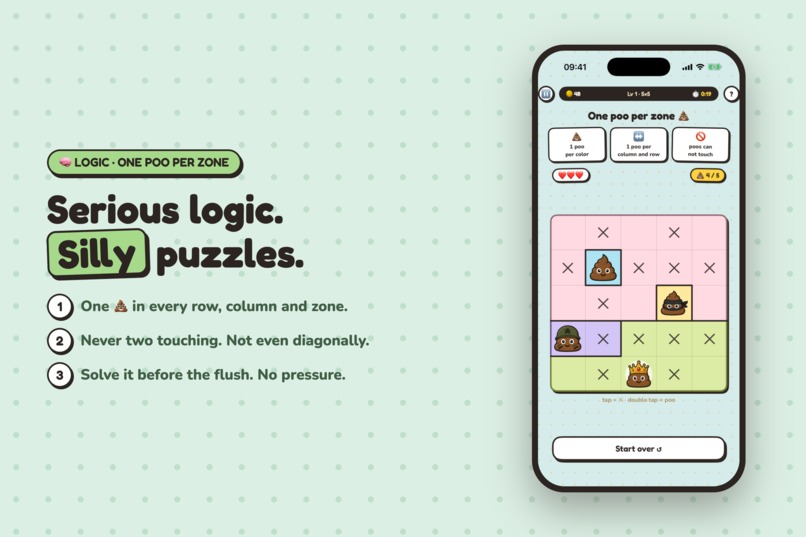
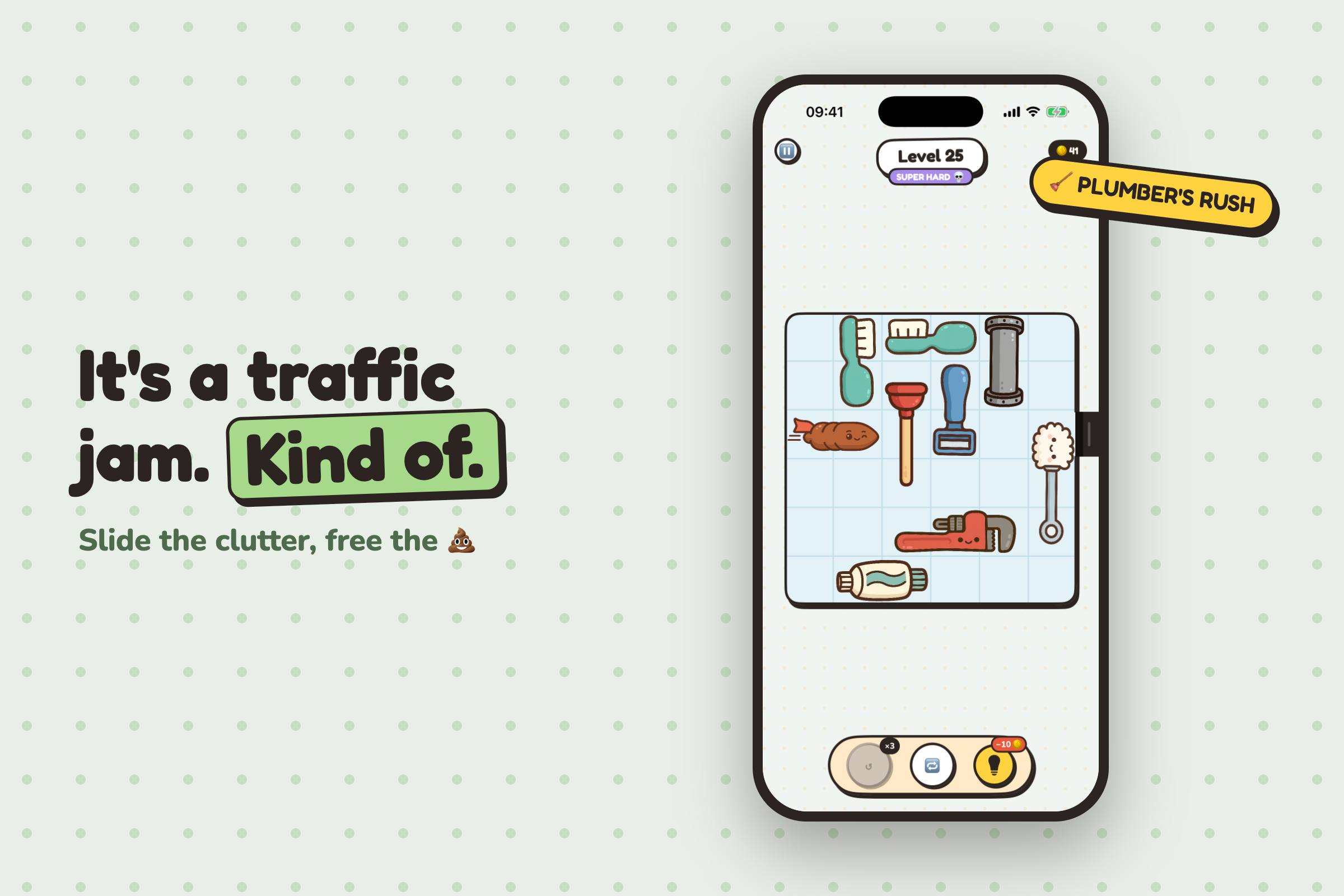
- Writing game logic is one problem; writing solver logic is another. For deduction games it isn't enough to generate a board — you have to prove it's solvable by human reasoning, not by brute force.
- Perceived and real difficulty are two separate dials. A level should look intimidating and feel like a win. Backwards, and players quit blaming themselves.
- Monotony kills a mini-game faster than difficulty does. Each game needed new mechanics introduced on a schedule so level 80 isn't level 12 with more pieces.
- There's no unit test for "is this fun." Hundreds of levels played by hand, hunting unsolvable states and edge cases that only show up at level 214.
Accomplishments that we're proud of
21 complete, themed games shipped solo — not 21 reskins, 21 different mechanics. Difficulty curves across ~1250 puzzle levels that hold up. And a monetization model I'd be happy to explain to a user's face.
What we learned
The hard part of a game isn't the code — it's the curve. And positioning is a feature: every brain trainer out there is solemn and scientific. Being the one that makes people laugh is why someone shows it to a friend.
What's next for Einstool
Focusing on marketing, and growing the game.

Log in or sign up for Devpost to join the conversation.