Inspiration
I'm an architect and XR developer. Every day I see how much a building's model knows, and how little it tells you. Most 3D models arrive "raw": a GLB file with no BIM, no labels. Understanding who can enter, move through and leave such a space takes days, and its future users — the family with a suitcase, the traveller in a wheelchair — stay invisible until it is built. I wanted the building to explain itself, and to hold it in my hands while it does.
Who it's for
Anyone who has to check complex architectural systems: architects and engineers, accessibility and fire-safety consultants, facility and security managers of airports, stations, hospitals and museums. EiDETICA gives them a shared, living model to see how a building works for the people in it — and where it fails them — before the problems are built.
What it does
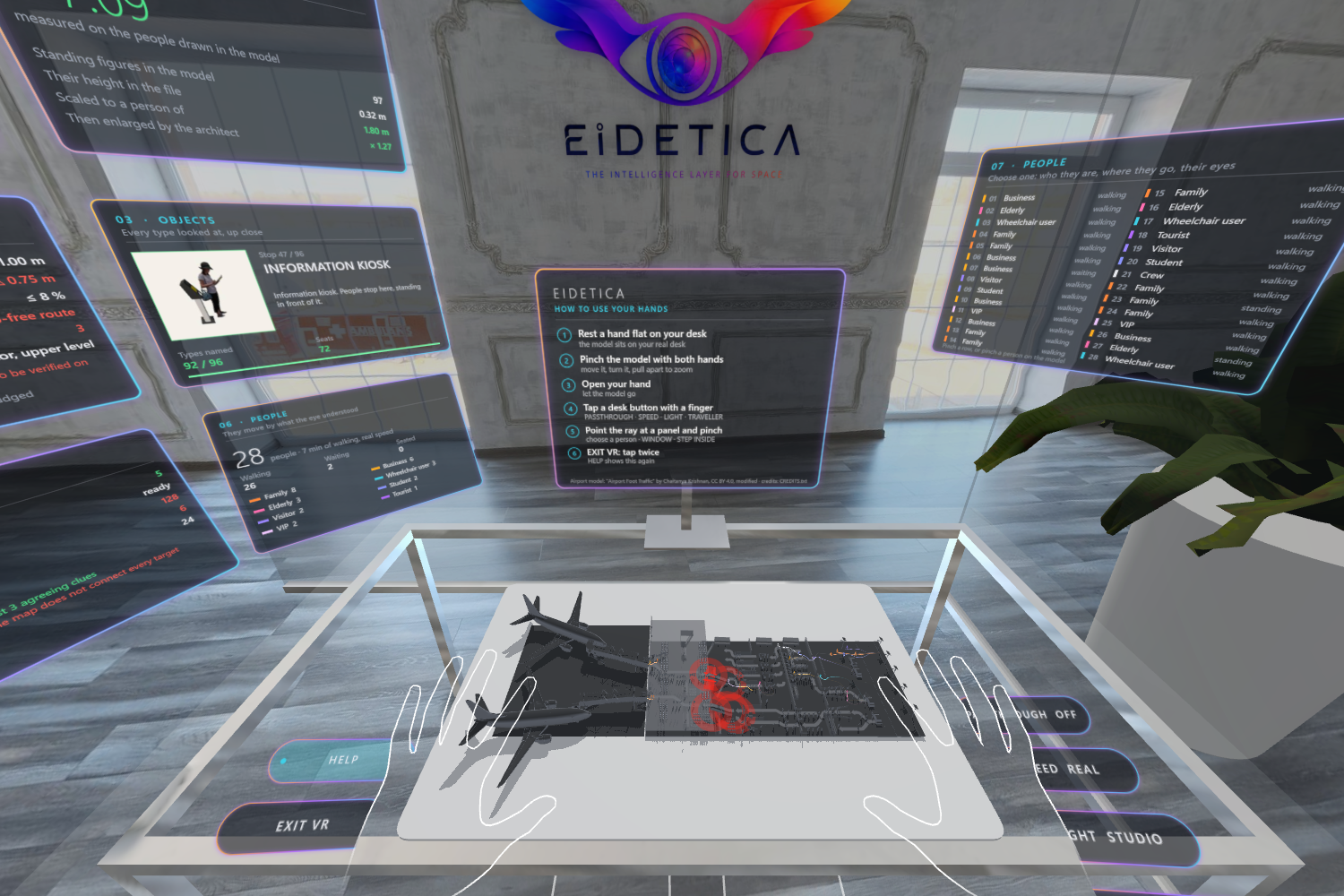
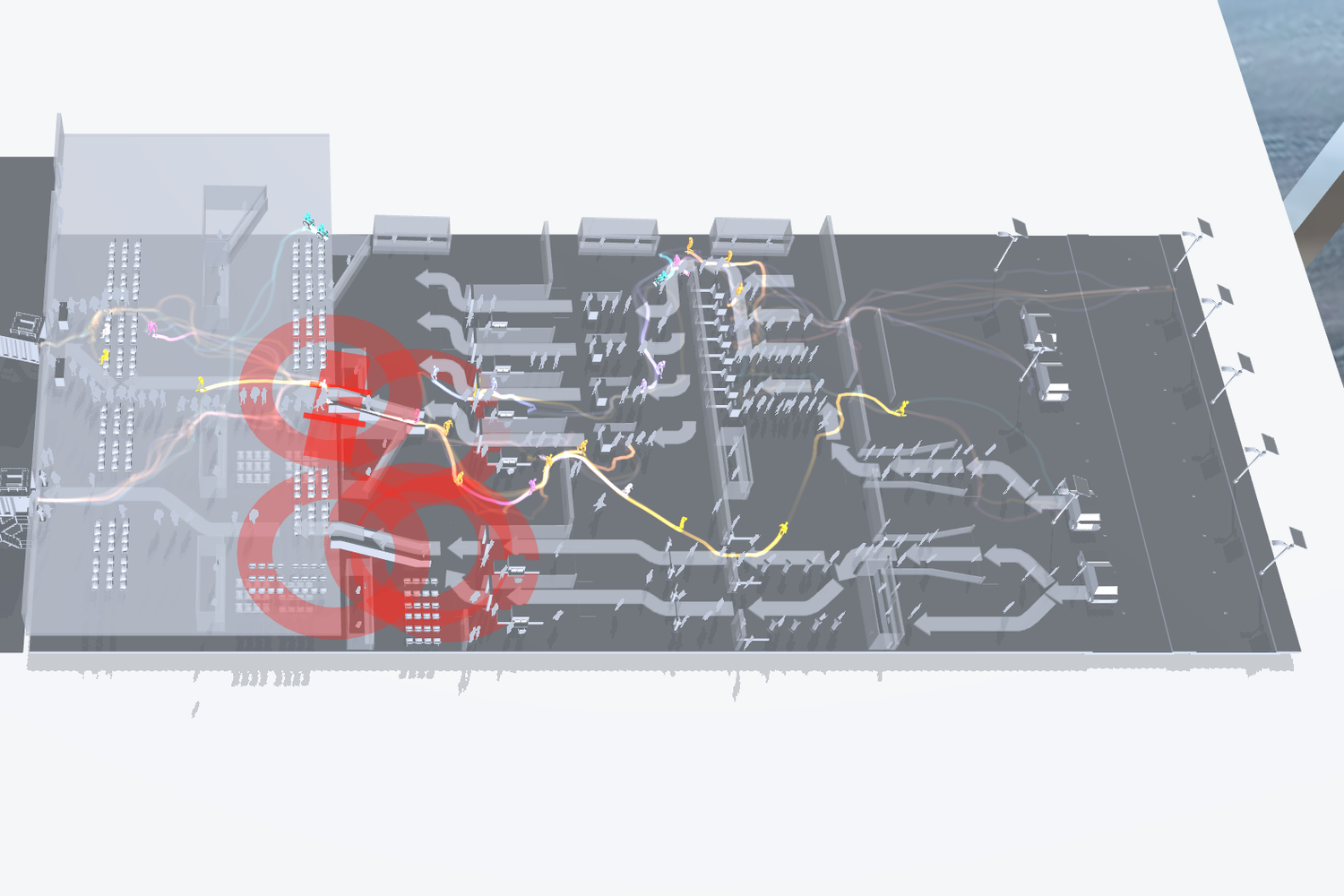
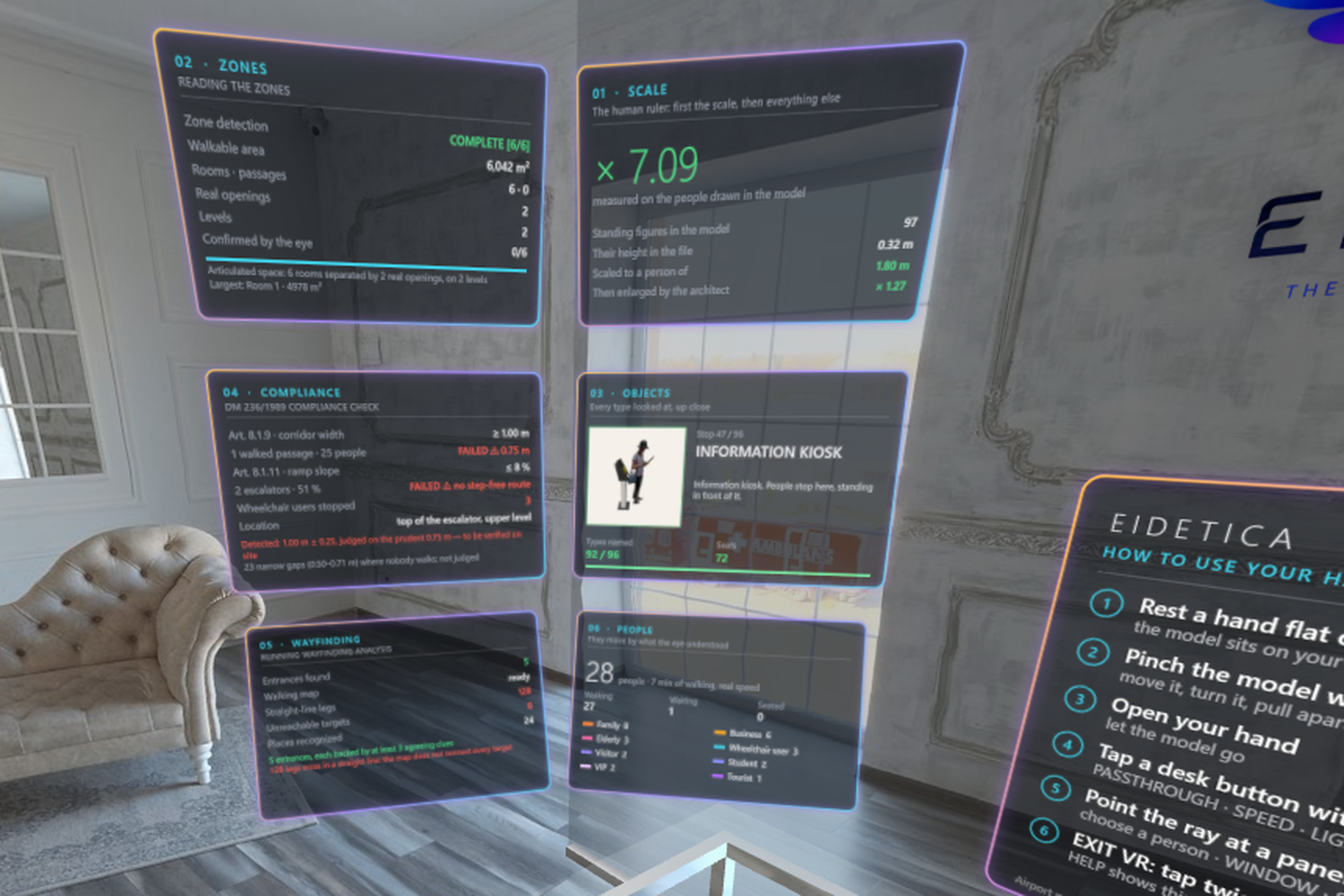
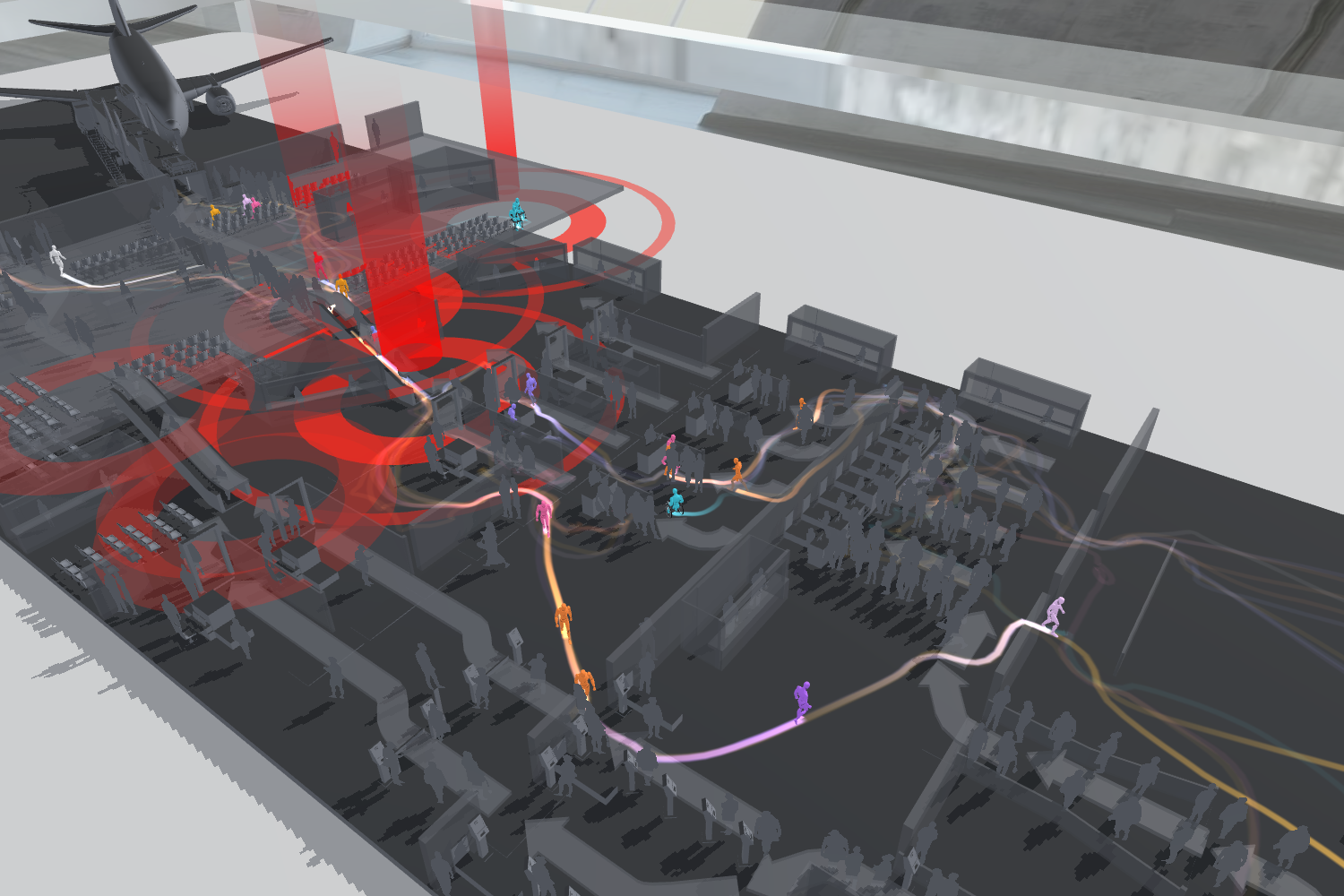
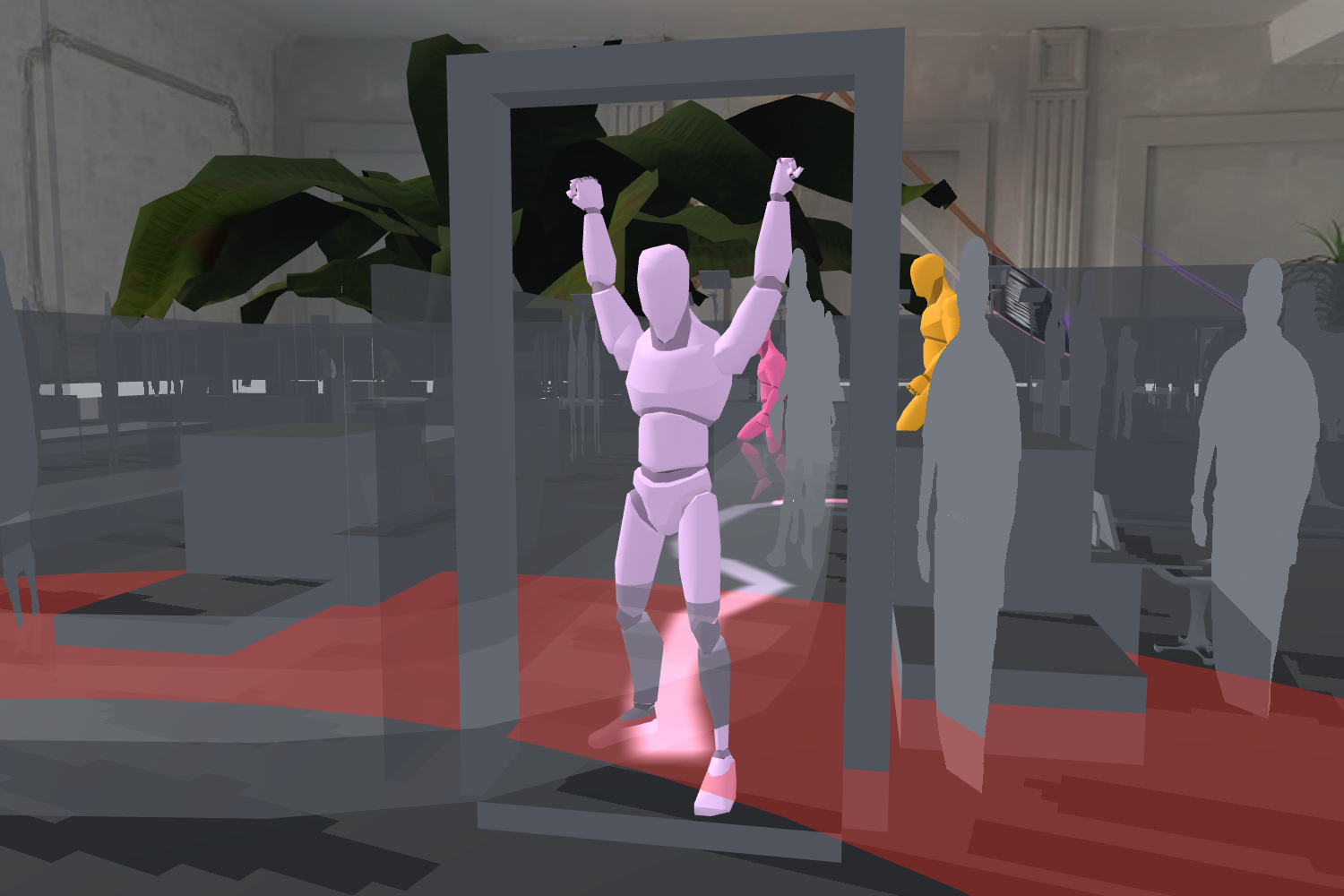
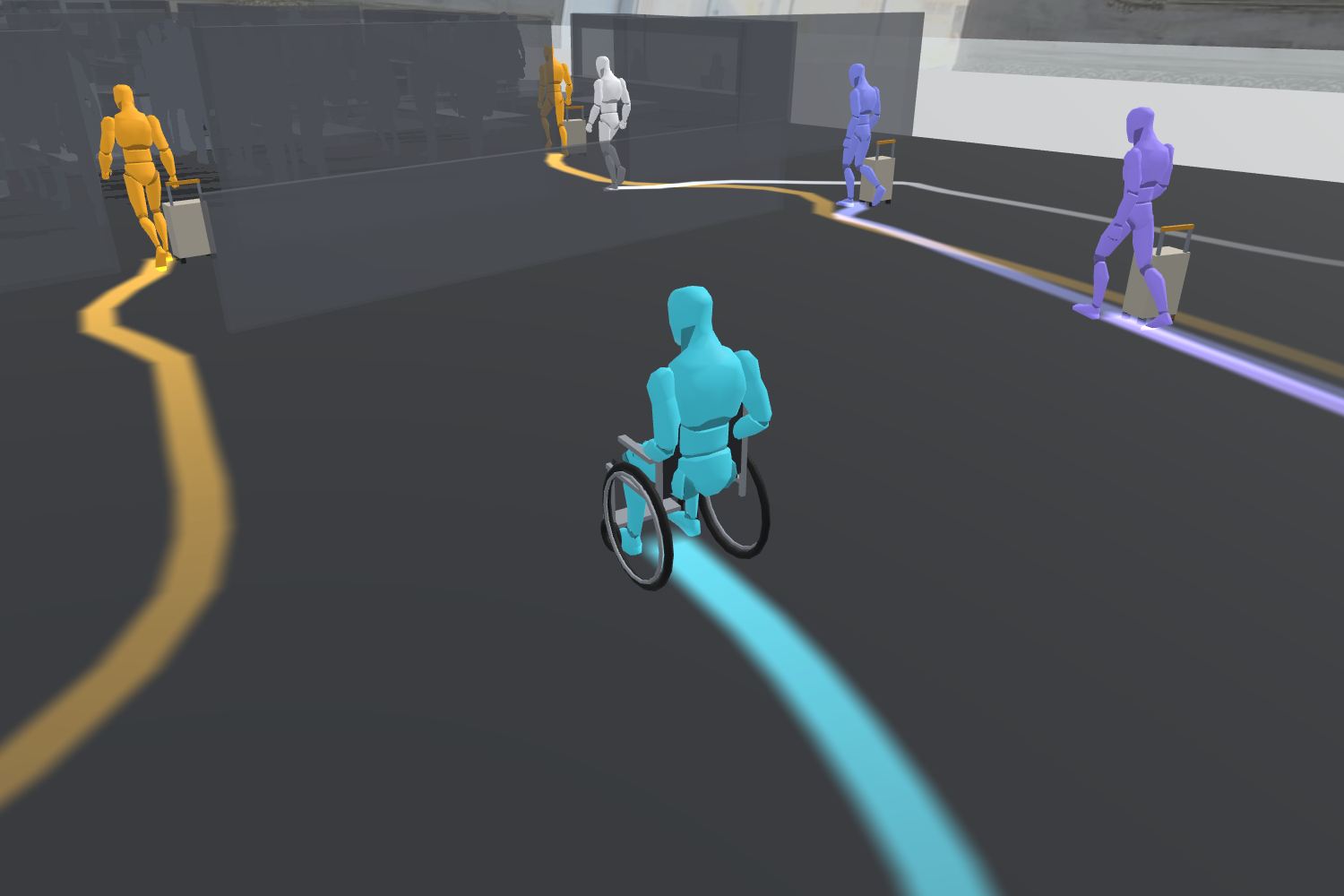
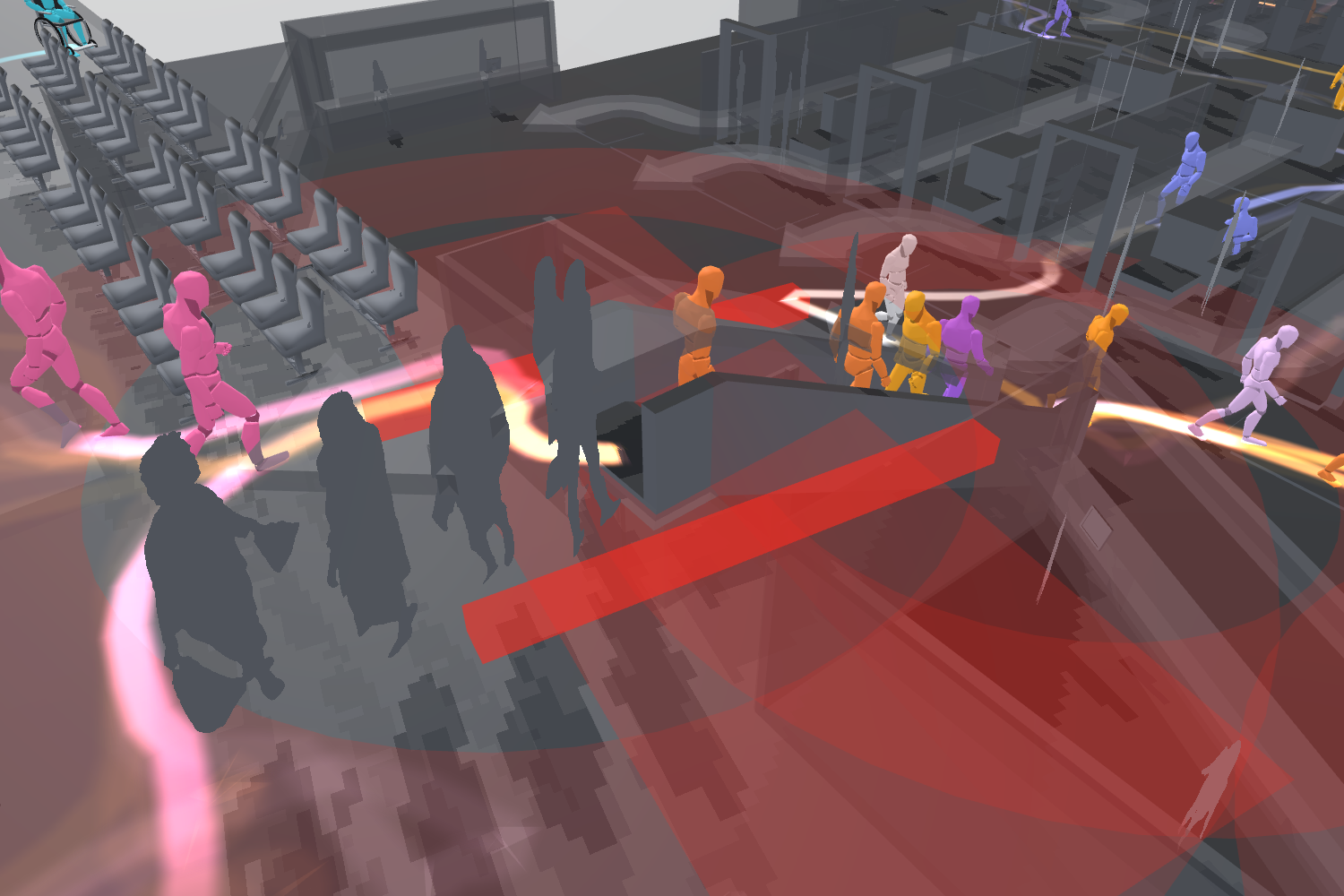
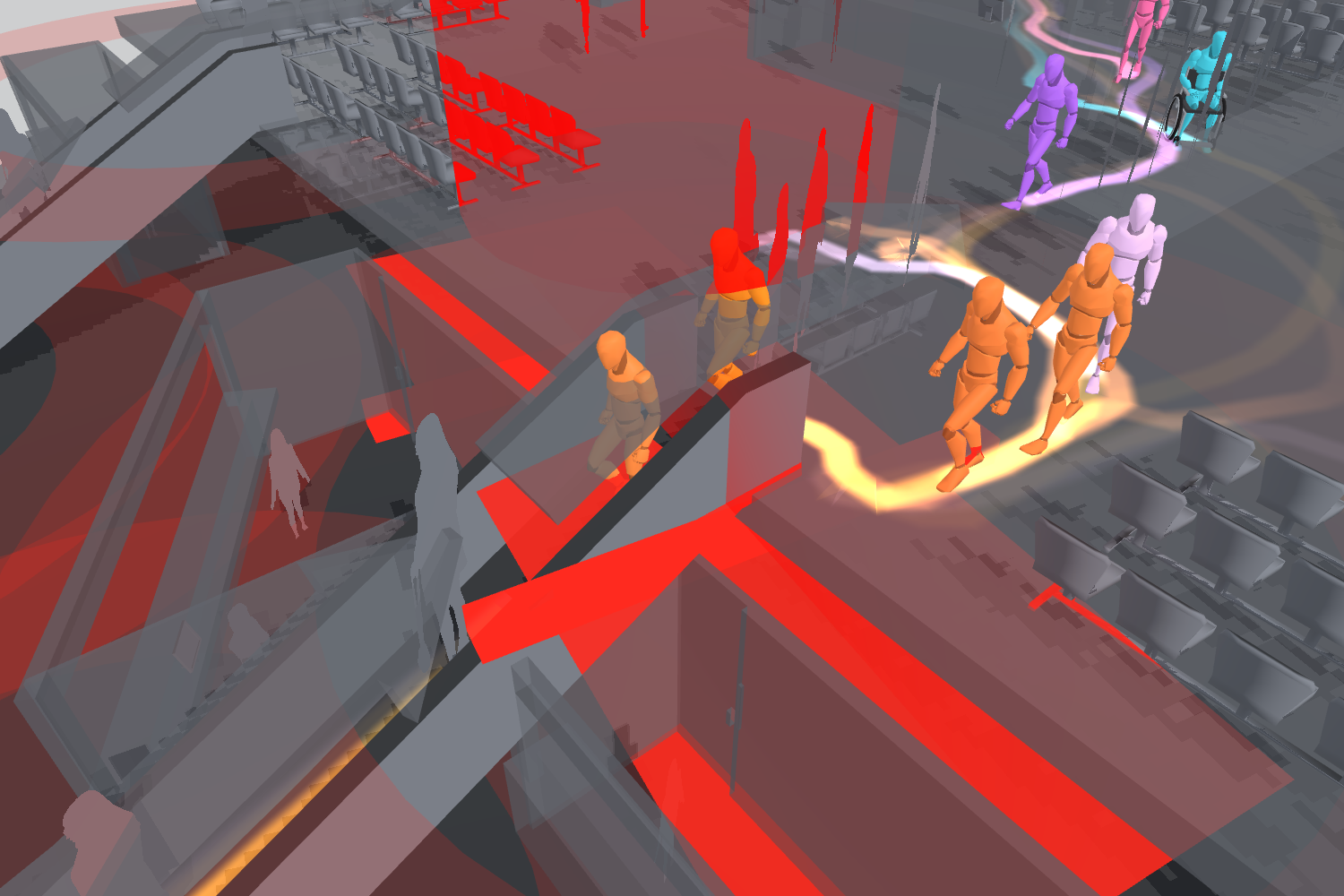
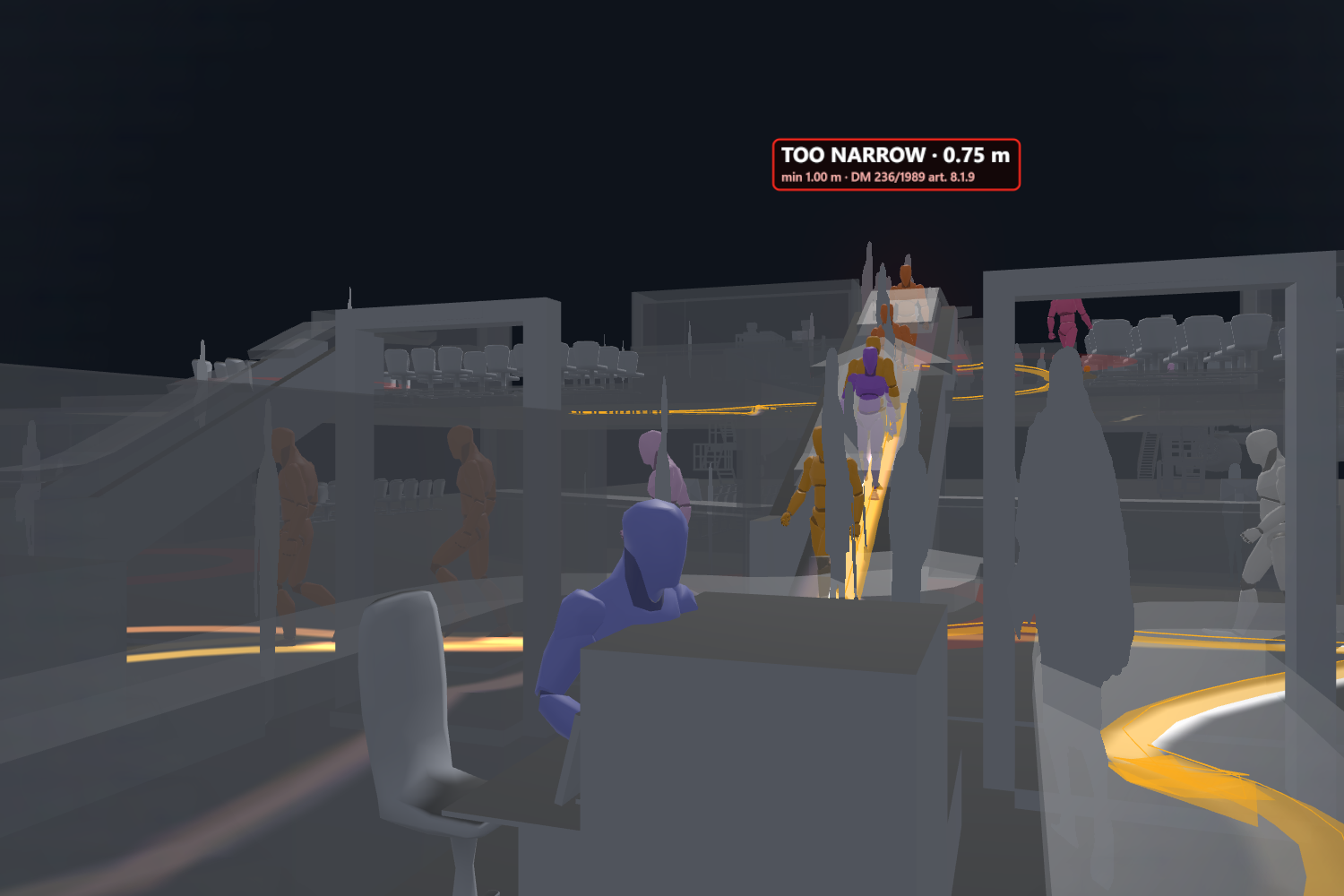
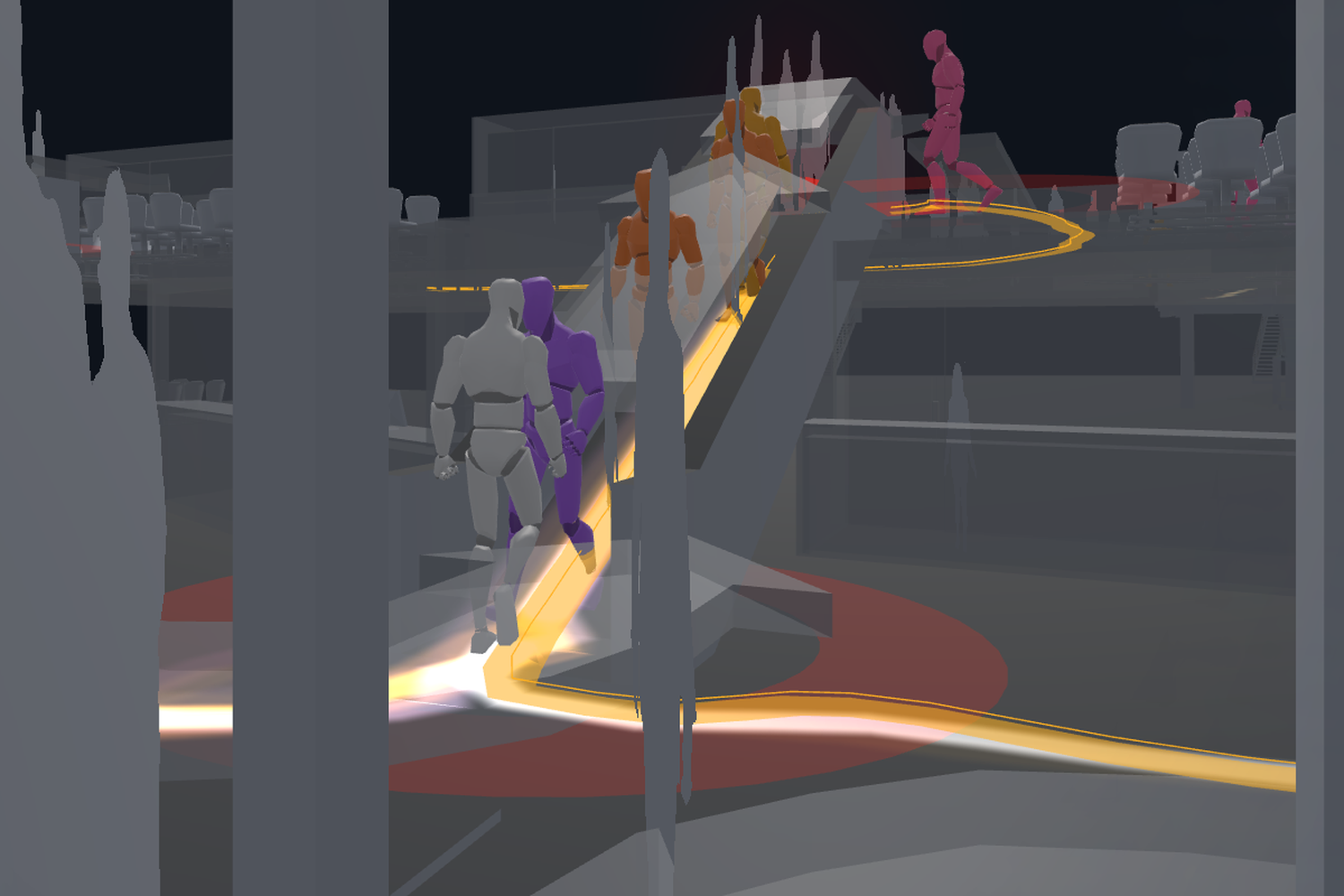
EiDETICA takes a raw 3D building and understands it on its own: scale, spaces, levels, openings, objects — escalators, check-in desks, security gates, seats. After the analysis it writes a set of report cards — scale, zones, objects, compliance, wayfinding, people — short summaries of what it found, with the main problems that emerged. Then the building comes alive: 28 travellers, each with a mission, queue, leave their suitcase on the belt, raise their arms at the metal detector, sit and board.
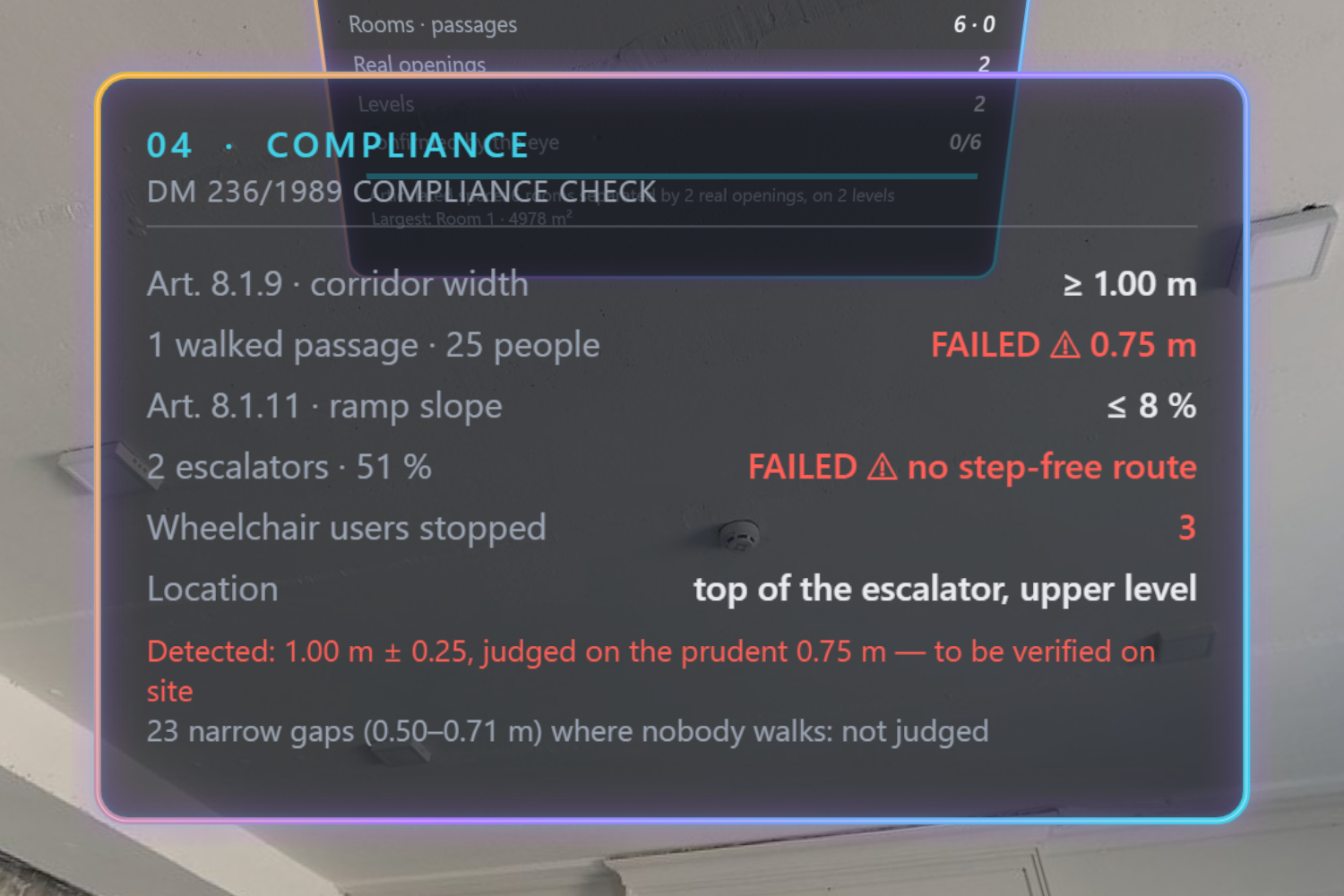
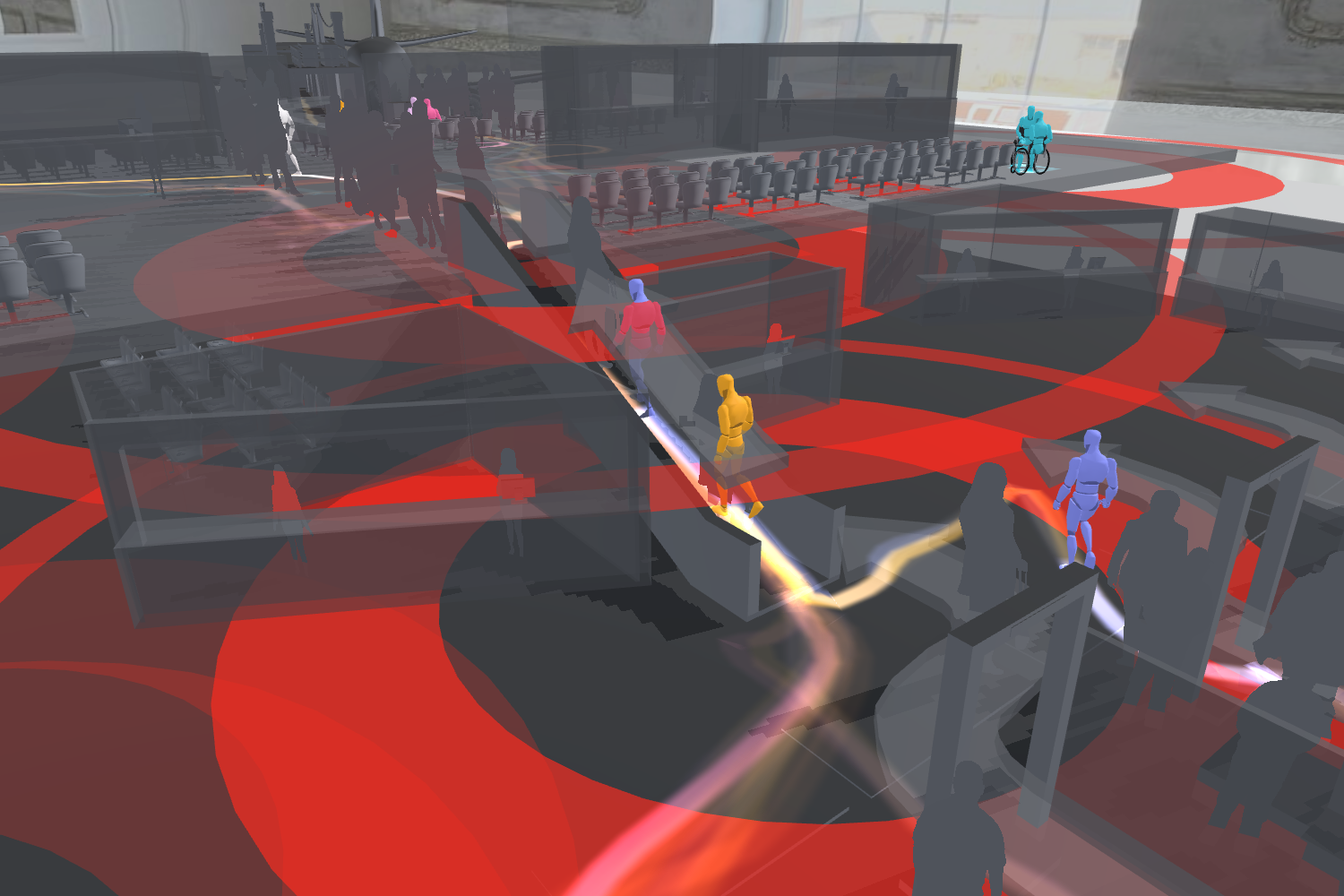
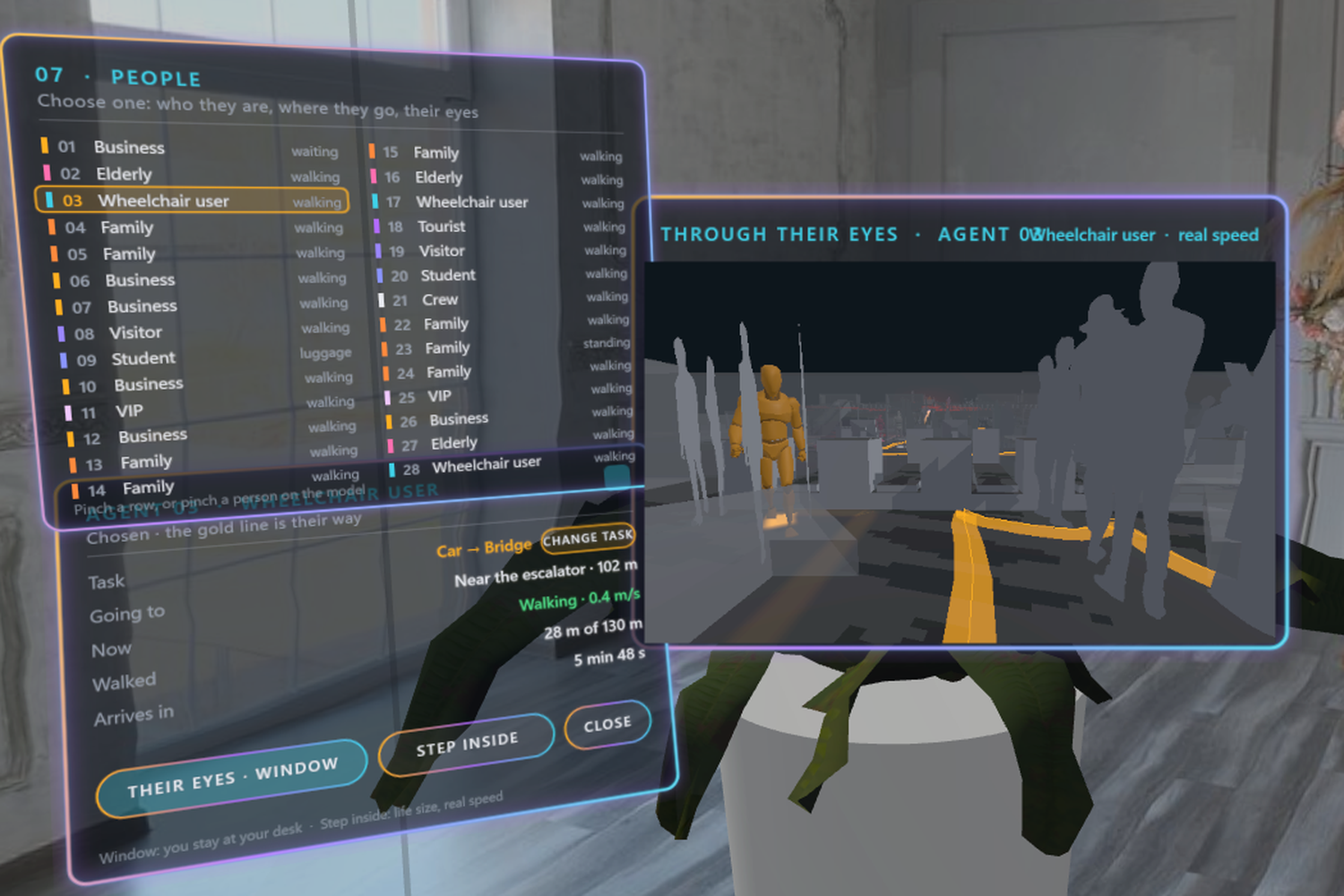
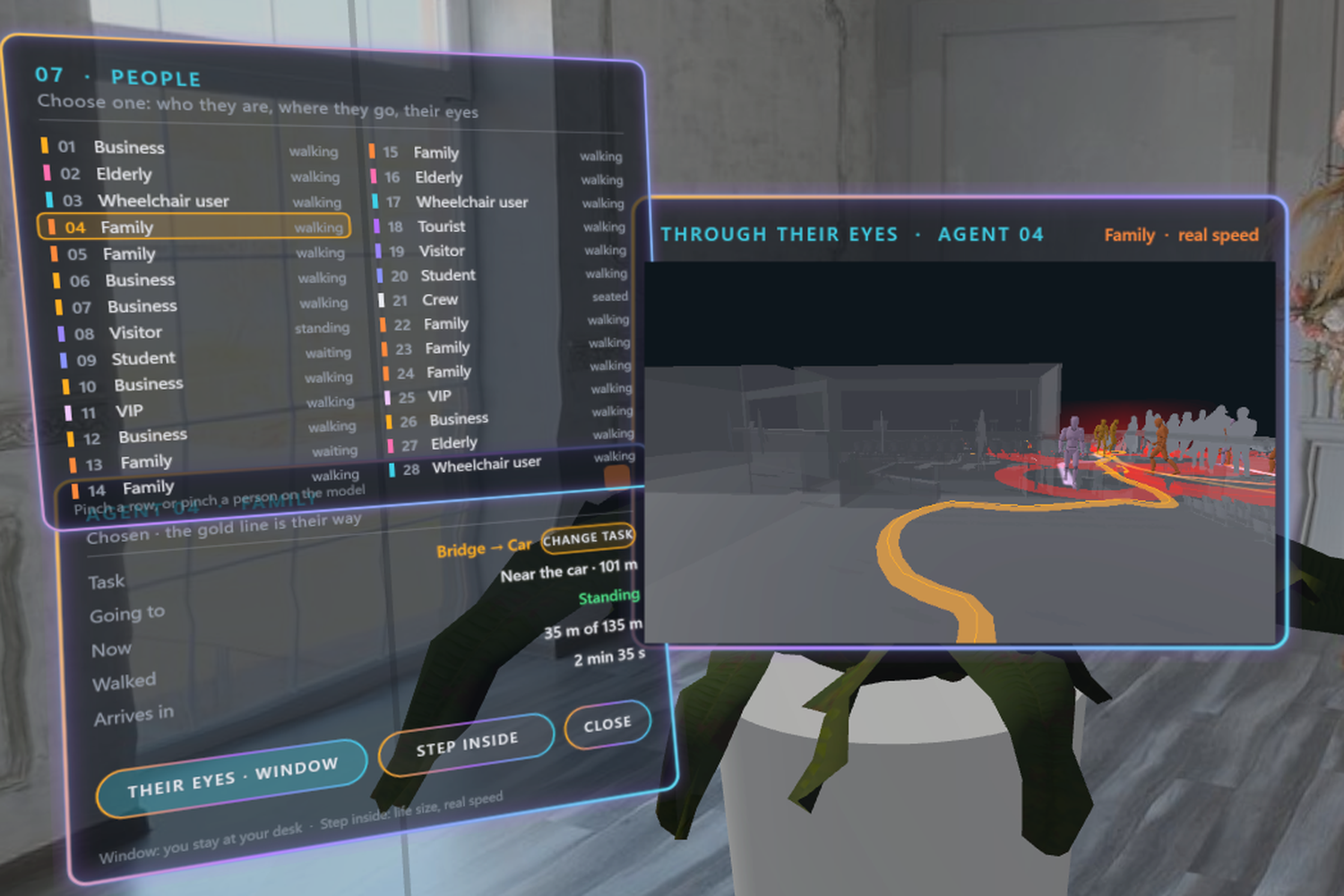
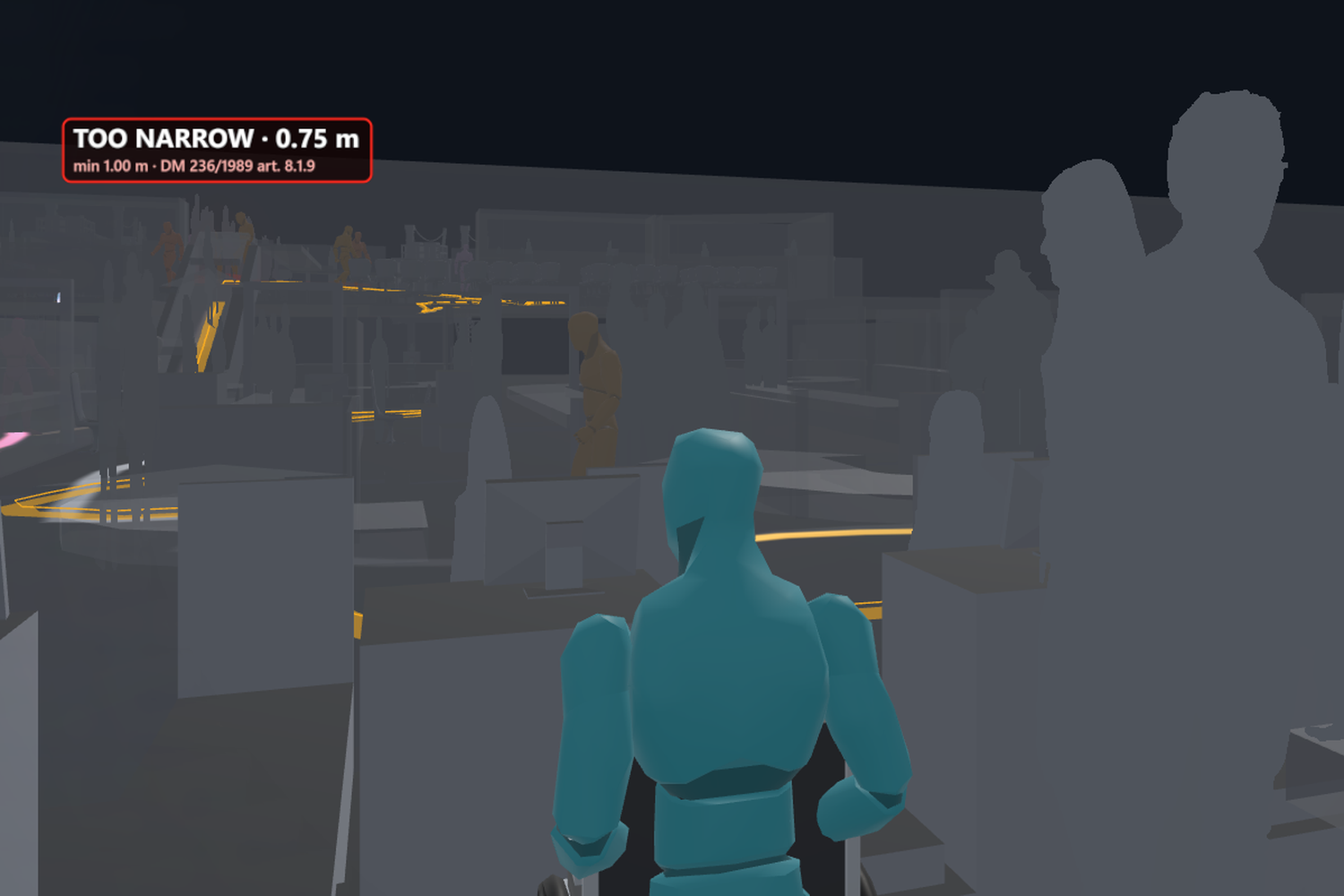
On Meta Quest the building is a clay study model on your desk that you move, turn and scale with your hands. Problems light up where they are, with the standard they break — NO STEP-FREE ROUTE, TOO NARROW, CONGESTION — and a sound marks the moment a wheelchair user gets stuck. A compliance card checks the walked passages against accessibility and fire-safety thresholds (Italian DM 236/1989, ADA 2010, IBC; Fruin). You can step inside any traveller's eyes, at full scale.
Why it matters
A problem found on a drawing costs a line; found on site, it costs a fortune. EiDETICA turns days of manual checks on accessibility and people flow into a few minutes of analysis, gives a design team one shared, living model to discuss with clients and authorities, and leaves report cards they can act on. It is built as a product for architecture and engineering firms, consultants and building operators — accessibility first: wheelchair users walk in every simulation, and where they are left behind is the first thing you see.
How we built it
EiDETICA started as a web platform built with Three.js. For this competition it gained a body in VR with Meta's Immersive Web SDK, on the same Three.js foundation: the spatial engine analyses the model beforehand and writes a project package that the headset plays back. Hands-first and seated, within arm's reach. The airport (186,074 triangles) becomes a 31-part study model and the 28 people are drawn in one call: about 70 fps at 72 Hz on Quest 2.
Challenges we ran into
- Geometry alone: a corridor and a gap between two pieces of furniture can look alike, so we judge only the passages people actually walk.
- Walking a building at real scale doesn't work seated, so we turned it into a tabletop model you explore with your hands — and made stepping inside a person's eyes comfortable.
Accomplishments that we're proud of
- A raw model becomes a living, measured building without anyone drawing on it.
- Problems are felt, not buried in a report: light and sound on the model, where they happen.
- The first five minutes: the model lands on your real desk, a panel teaches the gestures, and within a minute the building is full of people.
- Every threshold carries its source and is marked pending professional validation.
What we learned
A building model already contains the answers; the hard part is asking it the right questions. And in VR, less is more: one gesture, one room, one clear answer.
What's next for EiDETICA
- Bring your own model: upload any GLB — target early 2027 (this build ships with one airport already analysed).
- Museums, stations, hospitals, schools; Gaussian splats as input.
- Pilot studies with architecture firms; accessibility reports to share with a client in minutes.
- People avoiding each other everywhere: today they can still brush through one another on escalators.
Try it
Open the link in the Meta Quest Browser, tap Enter VR, sit at a desk, rest one hand flat on it. A panel shows the gestures (HELP brings it back). After about a minute people start walking: try SPEED ×4 with the volume up.
Credits: airport model "Airport Foot Traffic" by Chaitanya Krishnan, CC BY 4.0, modified. Figures: Quaternius (CC0). Studio and plant: Poly Haven (CC0). Hands: WebXR Input Profiles (MIT). Video: footage from a Meta Quest emulator and from a Meta Quest 3 (passthrough); voice and music by ElevenLabs.
Built With
- immersive-web-sdk
- javascript
- meta-quest
- three.js
- vercel
- vite
- webxr


