-
-
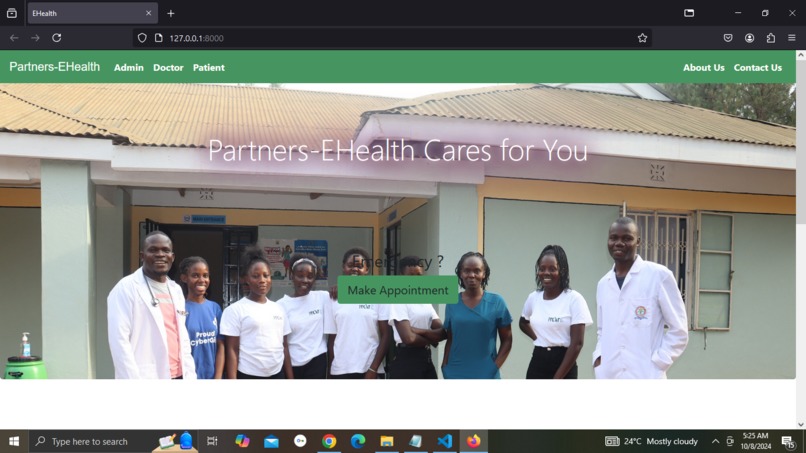
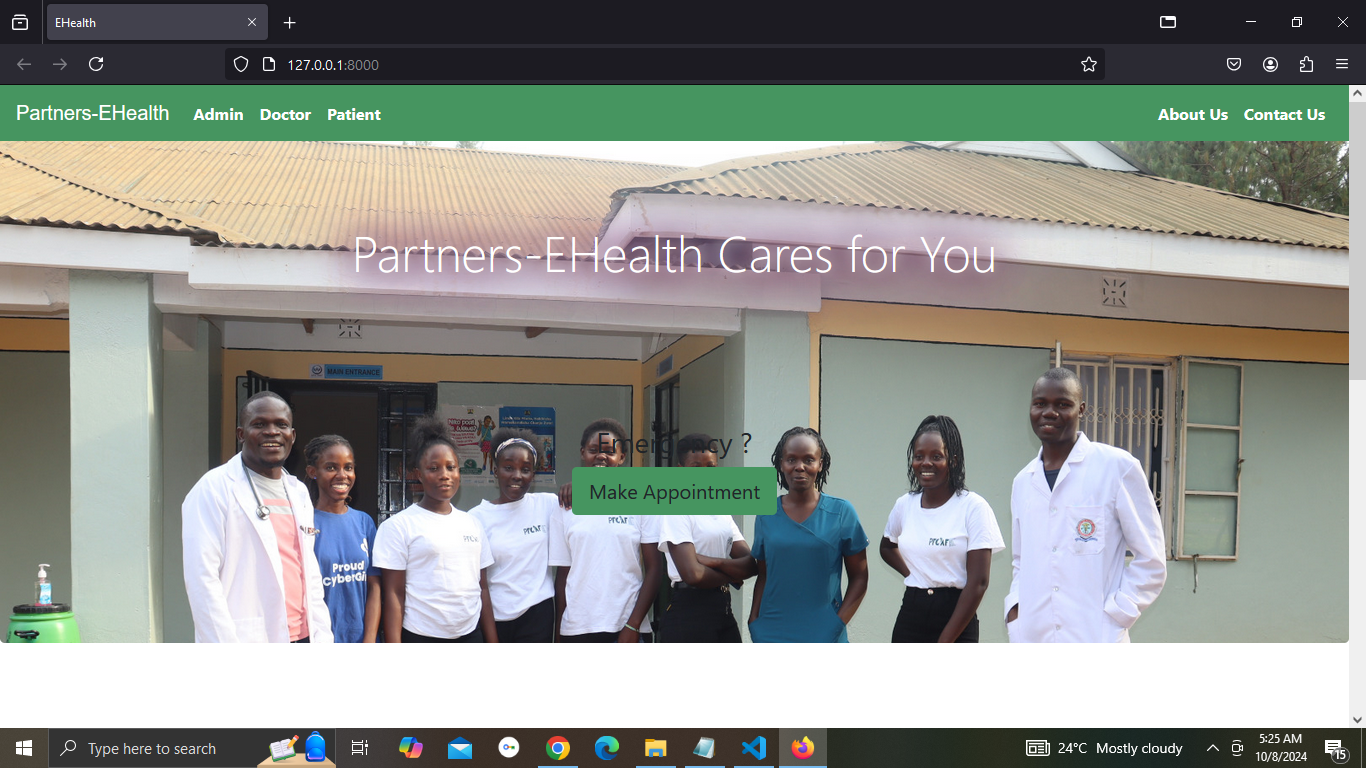
This is the homepage
-
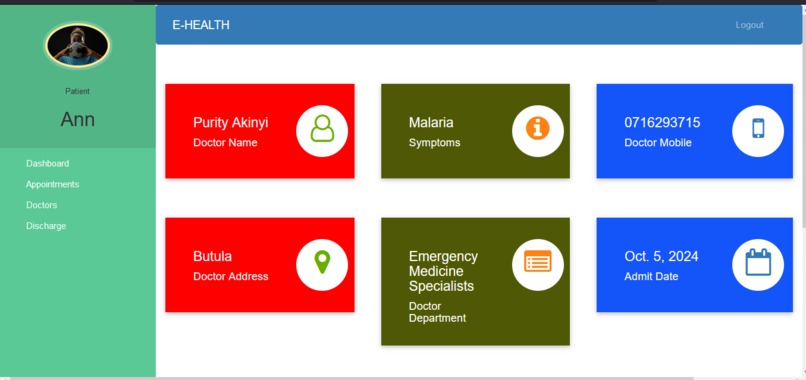
-
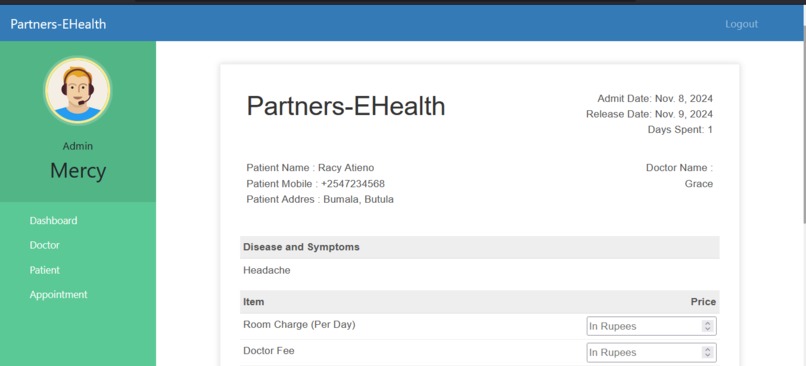
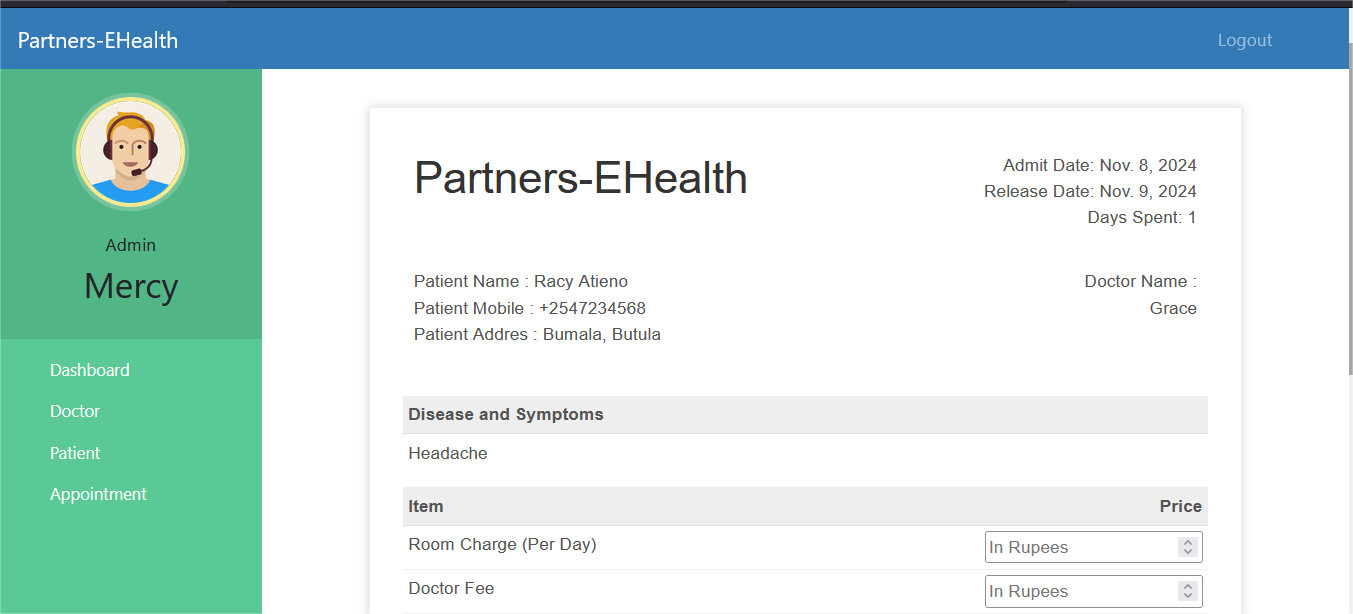
This is the discharge patient report
-
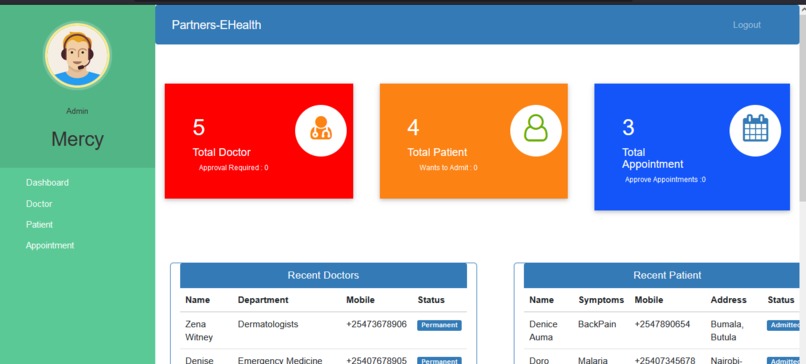
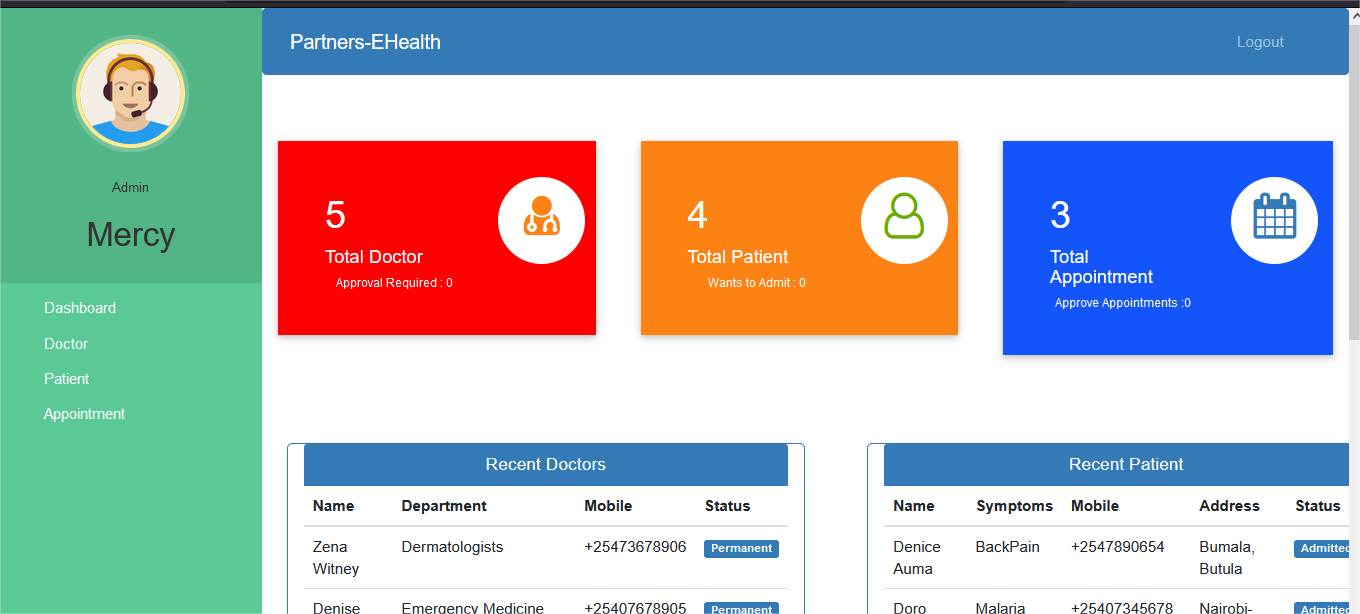
This is the admin section
Inspiration
Inspiration
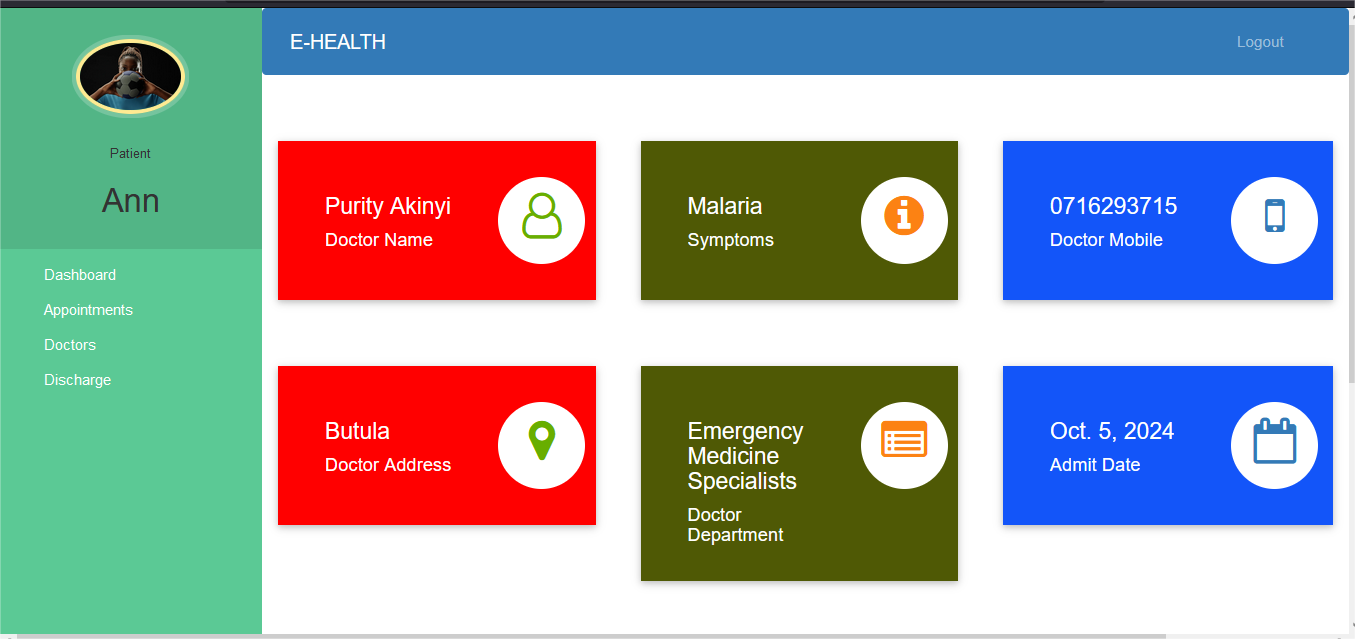
- The inspiration behind EHealth emerged from the urgent need for accessible healthcare in remote and underserved areas. The situation of Mercy, a student from Partners for Girls who is critically ill without immediate access to medication or nearby healthcare facilities, highlighted the lack of reliable resources for emergency medical needs. This situation underscores a widespread issue: the urgent need for a solution that bridges healthcare access gaps in areas where people are far from hospitals or pharmacies. ## What it does EHealth facilitates seamless communication and connection between doctors and patients, particularly in remote or underserved areas, by providing an accessible platform that bridges the gap in healthcare access. Here’s how EHealth connects doctors and patients to improve medical support and consultation:
- Online Consultations and Telemedicine Virtual Consultations: Patients can request virtual appointments with doctors directly through the platform. EHealth offers a video or chat consultation feature where patients can connect with verified healthcare providers for real-time medical advice, diagnoses, and follow-ups. Chat and Messaging System: EHealth includes a secure messaging system allowing patients to communicate symptoms, share photos of visible health issues (like skin conditions or injuries), and get feedback from doctors without needing to travel. Telemedicine Tools: Through integrated telemedicine tools, doctors can conduct assessments, review patient histories, and provide advice, all through a single, secure platform.
- Doctor Availability and Appointment Scheduling Doctor Search: Patients can search for available doctors based on specialty, location, or availability. This feature is particularly useful for finding healthcare providers within reachable distances for in-person consultations if necessary. Appointment Booking: Patients can book appointments with doctors directly from the platform, which also provides real-time availability of doctors. EHealth syncs schedules and automatically updates patients on appointment slots, cancellations, or rescheduling options. Notifications and Reminders: Patients receive notifications for upcoming appointments, helping ensure they don’t miss essential consultations. Doctors also get reminders to prepare for patient interactions.
- Health Record Sharing Secure Patient Records: EHealth allows patients to securely upload and share their medical records, prescriptions, and previous diagnoses with doctors, making it easier for doctors to review patient history and make informed decisions. Integrated Health Profile: The platform stores key patient information such as known allergies, medications, and past consultations in a profile that doctors can access with patient consent. This promotes continuity of care and ensures accurate, personalized treatment.
- Real-Time Health Monitoring and Follow-ups Remote Monitoring: For patients with chronic conditions or those requiring ongoing care, EHealth allows doctors to monitor their health status remotely. Patients can input daily health metrics (like blood pressure, glucose levels, etc.), which doctors can review to track health progress. Automated Follow-Up Reminders: The platform sends patients reminders for follow-up consultations or health check-ins. Doctors can schedule automated messages for follow-ups based on treatment plans, ensuring patients receive consistent care.
How we built it
Frontend Technologies HTML: Used to structure and organize content across the web pages, creating a clear and accessible layout for users. CSS: Provided the styling and design to ensure that the interface is visually appealing, user-friendly, and responsive on all devices. JavaScript: Enabled interactive elements on the site, allowing for dynamic user interactions, such as real-time chat, form submissions, and navigation. With guidance from our coding tutor, we implemented JavaScript to enhance the user experience. Backend Technologies Python: Python served as the main language for the backend, allowing us to handle core functionality and implement complex business logic required for EHealth's medical service features. Django: Leveraged the Django framework for building a robust and scalable backend, enabling secure user authentication, data handling, and API creation. We are planning to use Gemma to aggregate data from patient records and also Gemini for intergrating chat-bot where patients can easily have a chat with their prefered doctors and vice-versa User Testing and Feedback
User-Centered Design: We conducted user research with both patients and healthcare providers to understand their needs and challenges. Continuous feedback loops allowed us to refine the platform’s usability. Testing and QA: Comprehensive testing, including unit, integration, and stress testing, was conducted to ensure the platform can handle high traffic and complex interactions without compromising performance. Deployment and Continuous Integration
CI/CD Pipelines: We used GitHub Actions for continuous integration and deployment, ensuring that new updates are tested and released seamlessly. Monitoring and Analytics: To ensure platform stability, AWS CloudWatch and Google Analytics were integrated for monitoring app performance, usage patterns, and server health.
Challenges we ran into
Internet Access: Many potential users, particularly in remote areas, faced unreliable internet connectivity. We needed to find solutions to optimize the platform for low-bandwidth situations, such as enabling offline functionalities or reducing data usage during consultations. Real-time Communication: Maintaining real-time communication during virtual consultations, especially in areas with poor connectivity, was a constant challenge. We had to develop fallback solutions for users who experienced interruptions. Trust Building: In areas where telemedicine was not previously available, building trust with users about the efficacy and safety of online consultations was crucial. This involved continuous communication and demonstration of the platform’s reliability.
Accomplishments that we're proud of
Successfully integrating real-time location tracking for pharmacies and healthcare facilities, even in remote areas. Building a scalable and user-friendly app with an intuitive interface that makes it easy to locate and request medical assistance. Incorporating AI-driven predictive models to help anticipate medication shortages and prioritize at-risk locations. Establishing a verification system for healthcare providers to ensure reliable and safe resources are listed on the platform.
What we learned
Trust and Communication: Establishing trust with users in telemedicine is essential. Transparent communication about our processes, security measures, and the qualifications of healthcare providers significantly improved user acceptance and engagement.
Technical Resilience: Building a robust backend with Django and employing CI/CD practices reinforced the importance of system resilience. Comprehensive testing and monitoring helped us maintain performance and user satisfaction, even during high traffic periods.
The Power of Analytics: Integrating analytics tools provided us with critical insights into user behavior, which informed our ongoing development efforts and helped us prioritize feature enhancements that align with user needs.
What's next for EHealth
Mobile Application Development: To reach a wider audience, we plan to develop a dedicated mobile application, ensuring that users can access healthcare services conveniently from their smartphones, even in low-connectivity areas.
Integration of AI and Machine Learning: We will incorporate advanced AI algorithms to enhance patient triage and personalized health recommendations. This could include predicting health risks based on user data and suggesting preventive measures.
Partnerships with Local Healthcare Providers: Establishing partnerships with local clinics and pharmacies will improve service delivery and ensure that users have access to medications and follow-up care.
Continuous User Education: We will implement ongoing educational campaigns to inform users about telemedicine benefits, digital health literacy, and how to navigate the platform effectively, thereby promoting engagement and trust.


Log in or sign up for Devpost to join the conversation.