-
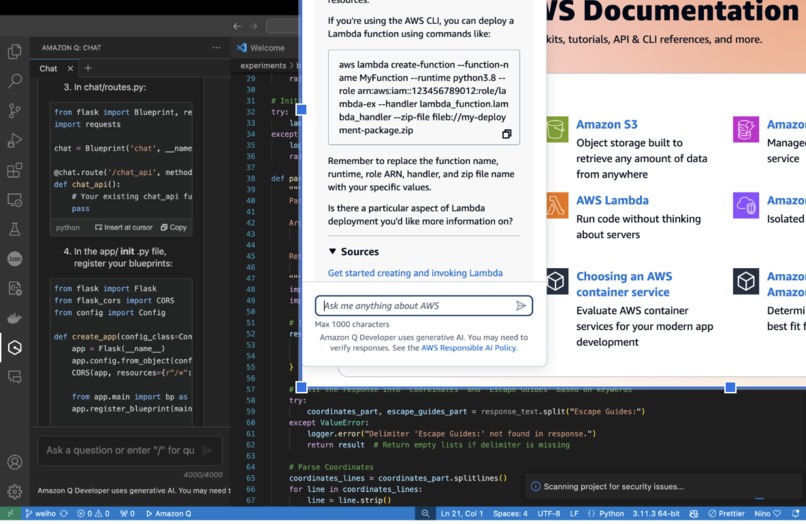
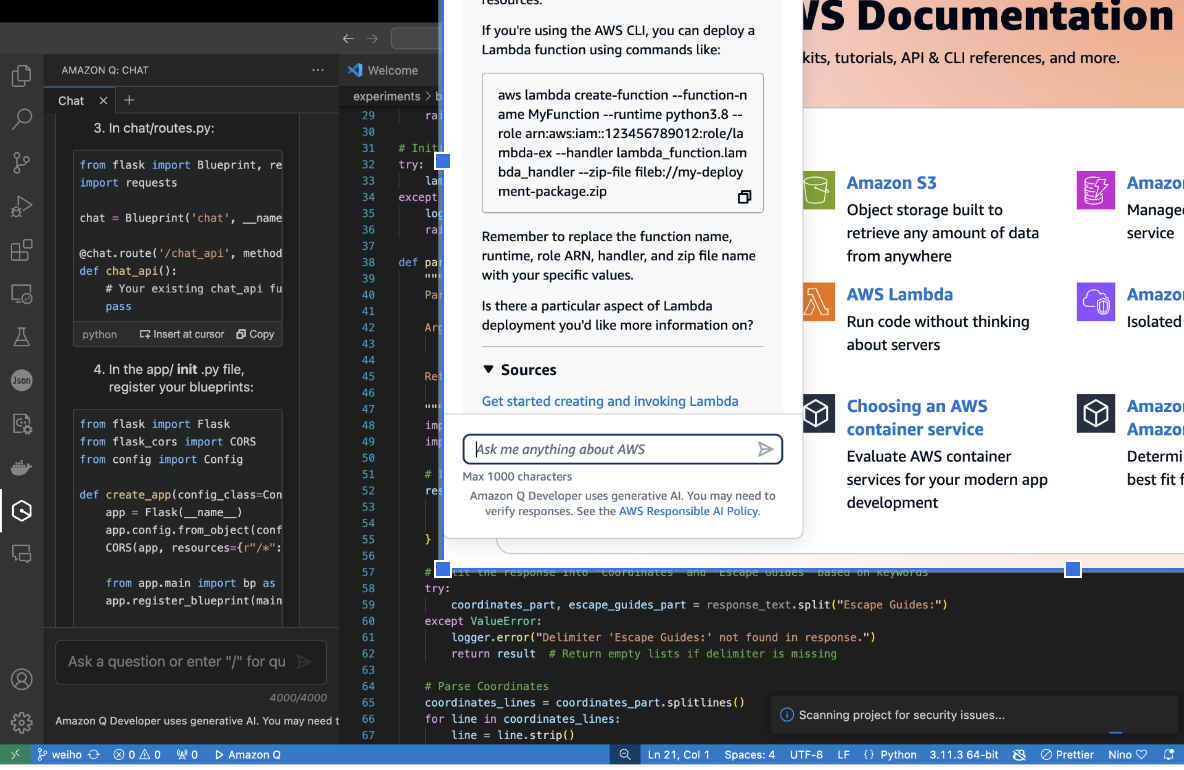
using Amazon Q to auto generate code and find potential security issue such as hardcode credential.
Inspiration
The inspiration for Egress came from the need to provide real-time, AI-driven disaster navigation assistance, ensuring safety to bring the community back together.
What it does
Egress offers users personalized action plans during disasters, including escape routes, risk assessments, and resource information, all powered by a fine-tuned language model.
How we built it
We utilized the Perplexity API to create a dataset from real-time data, then used it to fine-tune an LLM on AWS Bedrock and Databricks, and developed the frontend using React. The backend is built with Node.js, integrating various components to deliver a seamless user experience.
Challenges we ran into
We faced challenges in ensuring data accuracy and timely updates, handling asynchronous data fetching, and maintaining a responsive UI under varying network conditions.
Accomplishments that we're proud of
We're proud of successfully integrating real-time data with AI-driven insights, creating a user-friendly interface, and providing actionable guidance during critical times.
What we learned
We learned the importance of robust error handling, the value of user feedback in refining features, and the complexities involved in real-time data processing.
What's next for Egress
Future plans include expanding the dataset for more comprehensive coverage, enhancing mobile support, and integrating additional safety features like real-time alerts and community support networks.
Built With
- amazon-web-services
- bedrock
- flask
- gateway
- javascript
- perplexity
- python
- react
- react-capacitor
- s3
- tailwind-css


Log in or sign up for Devpost to join the conversation.