-
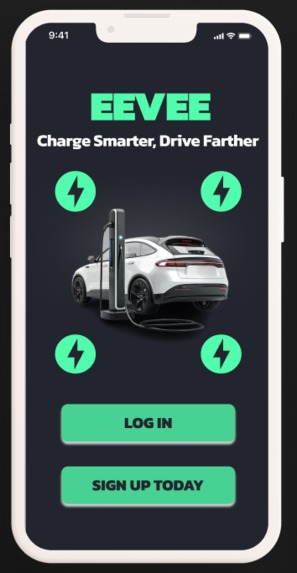
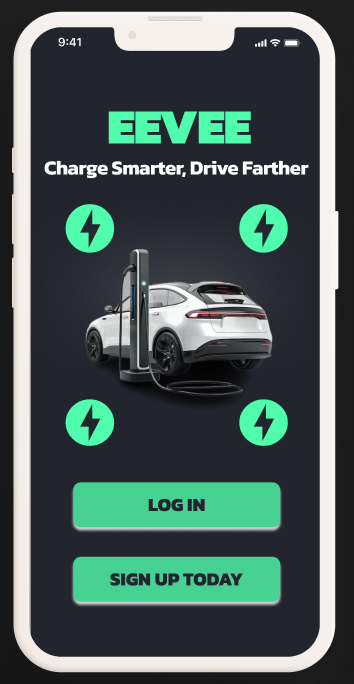
App Start Page
-
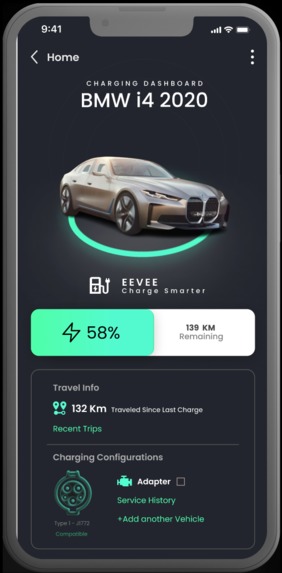
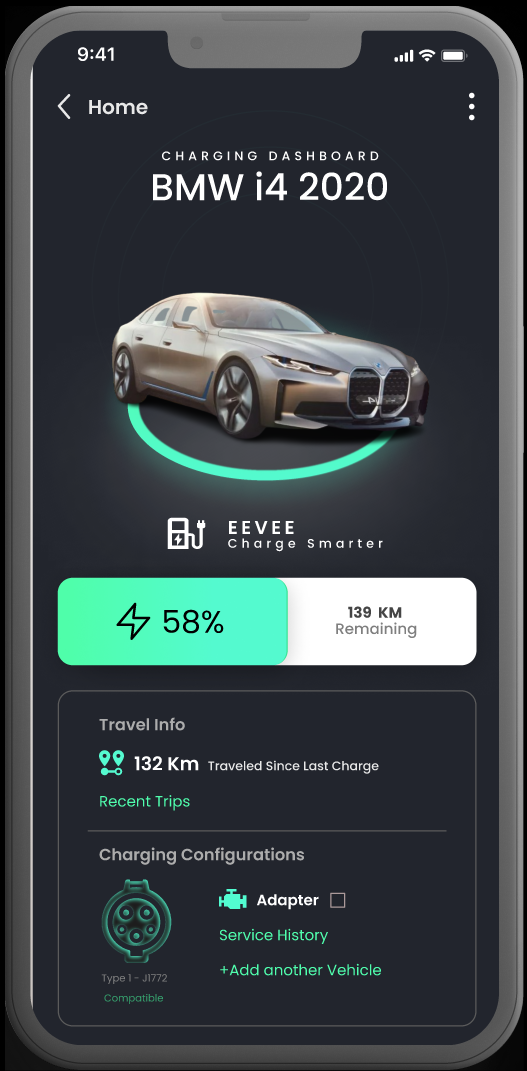
Charging Dashboard
-
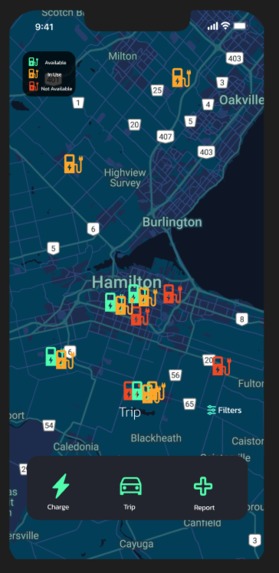
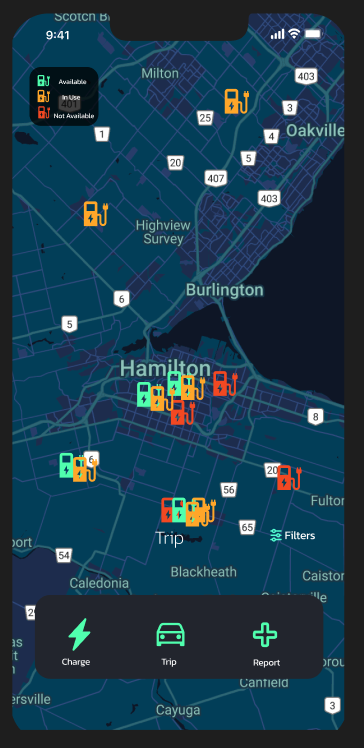
Home Page (Map)
-
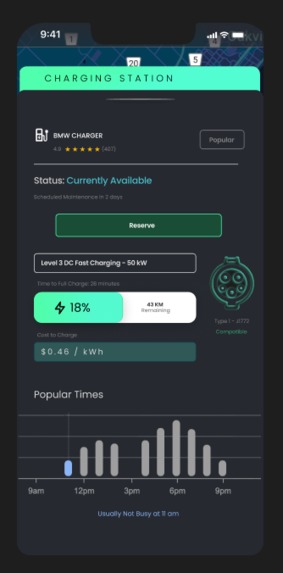
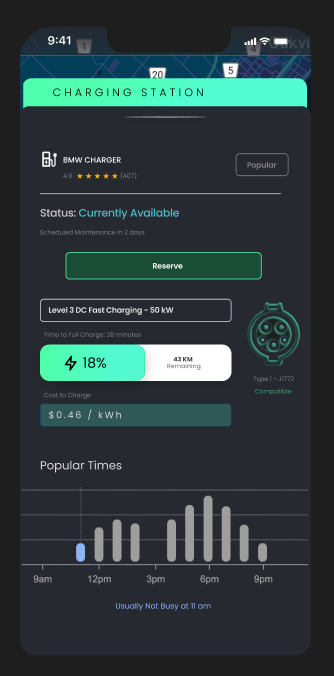
Charging Station Info
-
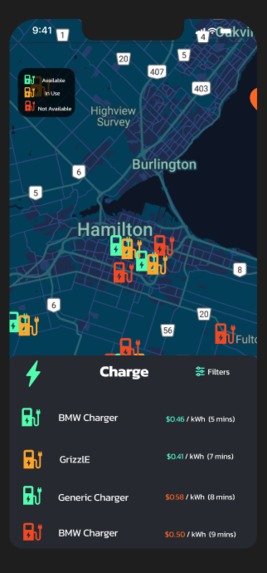
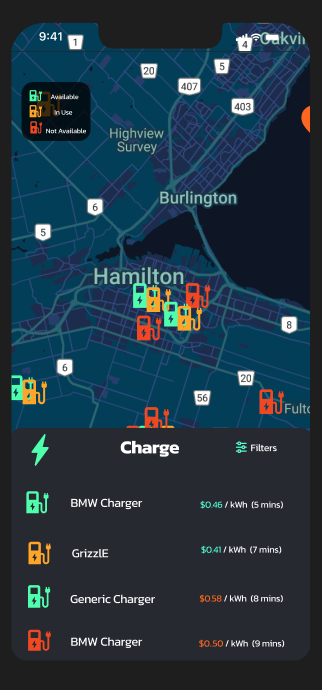
Charge Options
-
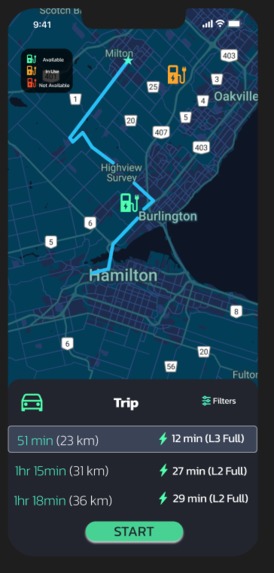
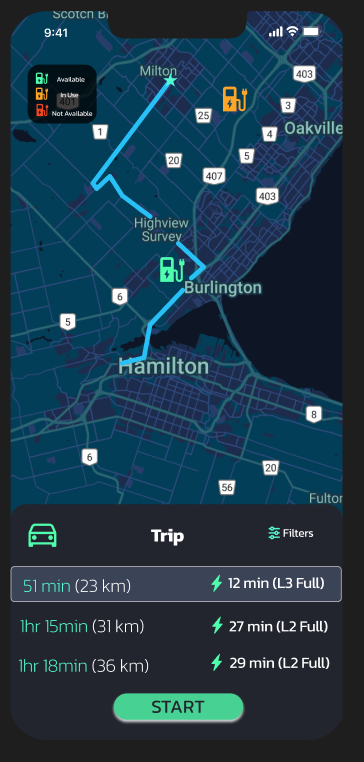
Trip Options
-
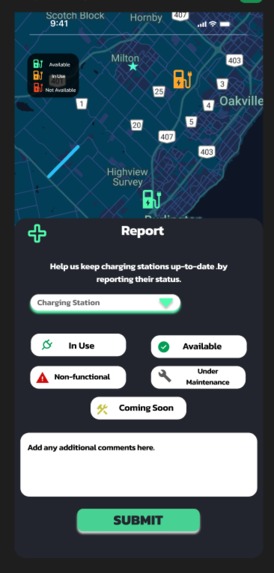
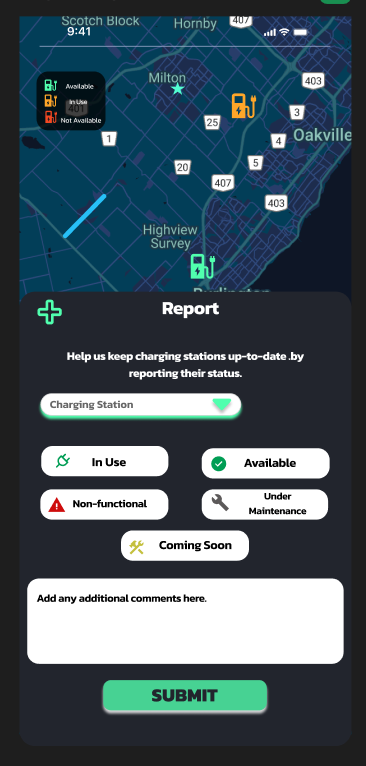
Report Options
Inspiration
As electric vehicles grow in popularity, we realized that many EV users struggle with finding compatible charging stations and navigating the complexities of charging station availability, costs and maintenance. We noticed that the information about EV charging stations is scattered across different apps, making it difficult for users to access everything they need in one place. This inspired us to create a simple and user-friendly platform that brings all the essential features together to make charging EVs easier and more convenient.
What it does
Overview Eevee is a smart and user-friendly app designed to completely change the EV charging experience by eliminating the hassle of finding compatible chargers. When users first join the app, they create an account and input their car's make and model. Eevee automatically identifies the plug type and charger compatibility, provides real-time updates on charger statuses, including availability, maintenance schedules, and timestamps for the most recent updates.
Community-Powered Updates Eevee leverages a crowdsourced approach to ensure the most accurate and up-to-date information about charging stations. Much like Waze, Eevee relies on its community of users to provide real-time updates on the status of chargers. When a user charges their EV, they can report the condition of the station—whether it’s functional, in use, broken, or under maintenance. These reports are aggregated, and as more users confirm or update the status of a charger, the app adjusts its display to reflect the most reliable information. If a station is reported as broken or under maintenance multiple times, it’s flagged on the map to alert other drivers.
Intelligent Trip Planning Eevee integrates directly with your EV’s battery State of Charge (SoC) data to monitor range and recommend charging stops as needed. If a planned destination exceeds the vehicle’s range or passes through areas with sparse charger density, the app proactively adjusts to optimal charging points along the route and includes the estimated charging time in your trip’s ETA. This intelligent trip planning ensures you’ll never be caught off guard by a low battery.
Unified Payments A standout feature of Eevee is its unified in-app payment system, allowing users to pay for charging sessions directly through the app. This eliminates the need for multiple apps to access different charging networks, solving one of the biggest frustrations for EV drivers. With secure technology like blockchain for payments and Auth0 for authentication, Eevee makes transactions seamless, reliable, and hassle-free. Users can pull up to any compatible charger, plug in, and pay—all through the app.
How we built it
We built Eevee using Figma to design a clean, intuitive and modern user interface that reflects the functionality of a fully-featured app. Our focus was on creating an accessible and user-friendly experience, so we used Figma’s prototyping tools to make the app interactive. This allowed us to simulate key features like navigation between pages, dropdown menus, and user input fields, giving the impression of a real app. By using Figma, we were able to focus on the design and user experience, ensuring that the interface is both functional and visually appealing.
Challenges we ran into
As first-time users of Figma, we faced a steep learning curve in understanding how to design each page of the app and create a cohesive user experience. From layout structuring to prototyping interactions, mastering these tools was both challenging and rewarding.
Understanding how to convert our visual designs into functional code for an iOS app was a major stepping stone, we felt like we had our path laid out in front of us beginning with front-end to communicate our idea clearly first and foremost, then port that into code that will run on iOS and be usable on a phone, and finally add the back-end functionalities like We had to learn the development process for each page and figure out how to implement features like navigation and real-time updates.
Establishing a clear, impactful concept was critical. We worked through multiple brainstorming sessions to craft an idea we believed in, ensuring it had tangible value for EV users.
Binding buttons to actions, managing text fields, and organizing page hierarchies while keeping the app intuitive and responsive also required careful planning and problem-solving from us, as well as starting from scratch many many times.
Accomplishments that we're proud of
We’re proud to have designed a prototype that offers a comprehensive solution to a common problem faced by EV users. Eevee’s clean, modern interface reflects hours of brainstorming, collaboration, and iteration to make it intuitive and effective. We built in features that foster community engagement, such as reporting station statuses, ensuring a more reliable experience for all users. Despite time constraints, we’ve created a concept that feels practical, innovative, and scalable for real-world use.
What we learned
We gained valuable insight into the EV charging ecosystem, including the differences between networks, charger types, and user pain points. We also learned to work efficiently as a team, leveraging Figma to bring our ideas to life visually and iterating quickly based on feedback. Most importantly, we understood how critical real-time data is for the success of an app like Eevee and even the most competitive apps right now as it is the biggest issue directly affecting EV users.
What's next for Eevee
The next step for includes advanced functionality such as introducing peer-to-peer charger sharing, enabling users to rent out private chargers to other EV drivers. In emergencies, Eevee will connect users to nearby EV drivers or services for assistance when stranded with a low battery.
Eevee incentivizes eco-friendly behaviour with a Carbon Points system, rewarding users for charging during off-peak hours, reporting charger statuses, or using renewable-powered stations. Points can be redeemed for discounts, eco-friendly products, or donations to environmental causes. The app also tracks users’ lifetime carbon impact, showing CO₂ saved compared to driving gas-powered vehicles, and providing drivers with tangible metrics of their environmental contribution.


Log in or sign up for Devpost to join the conversation.