Inspiration
This idea stemmed from an original venture project me and my partner wanted to work on. We were always fascinated by EEG's and the ability to connect neural activity to conscious movement. Originally we worked on a project that used an EEG sensor, arduino board, and basic code on C++ to move a prosthetic limb based on the amount of neural activity and the relative strength of the brainwaves. As the waves got strong, the limb would tighten its grip. It added a new dimension to virtual augmentation we wanted to experiment with. This led to the idea this weekend of using an EEG in horror games to mould the virtual experience for its user specifically. The VR horror games program would interpret these brainwaves and play the game accordingly, making sure to always keep the user scared and the game interesting.
What it does
At its core, EEGsquisite Scare is a module that can be used by VR horror game producers. It allows for the game to understand what the player is feeling via the strength of their brainwaves. This means the lower the brainwaves, the more relaxed the player and vice versa. With this information, the game can be programmed to tense the environment or scare the user based on how much neural activity they are undergoing. It can be set to levels where it would react as soon as the number of microvolts falls under a certain threshold. This creates an emmersive and unique player experience as the game adapts to its players emotions. The module currently assigns a distress rating to its user and as soon as that rating falls into a "calm" range, the game would react and change its environment to tense the user, keeping them on their feet.
How we built it
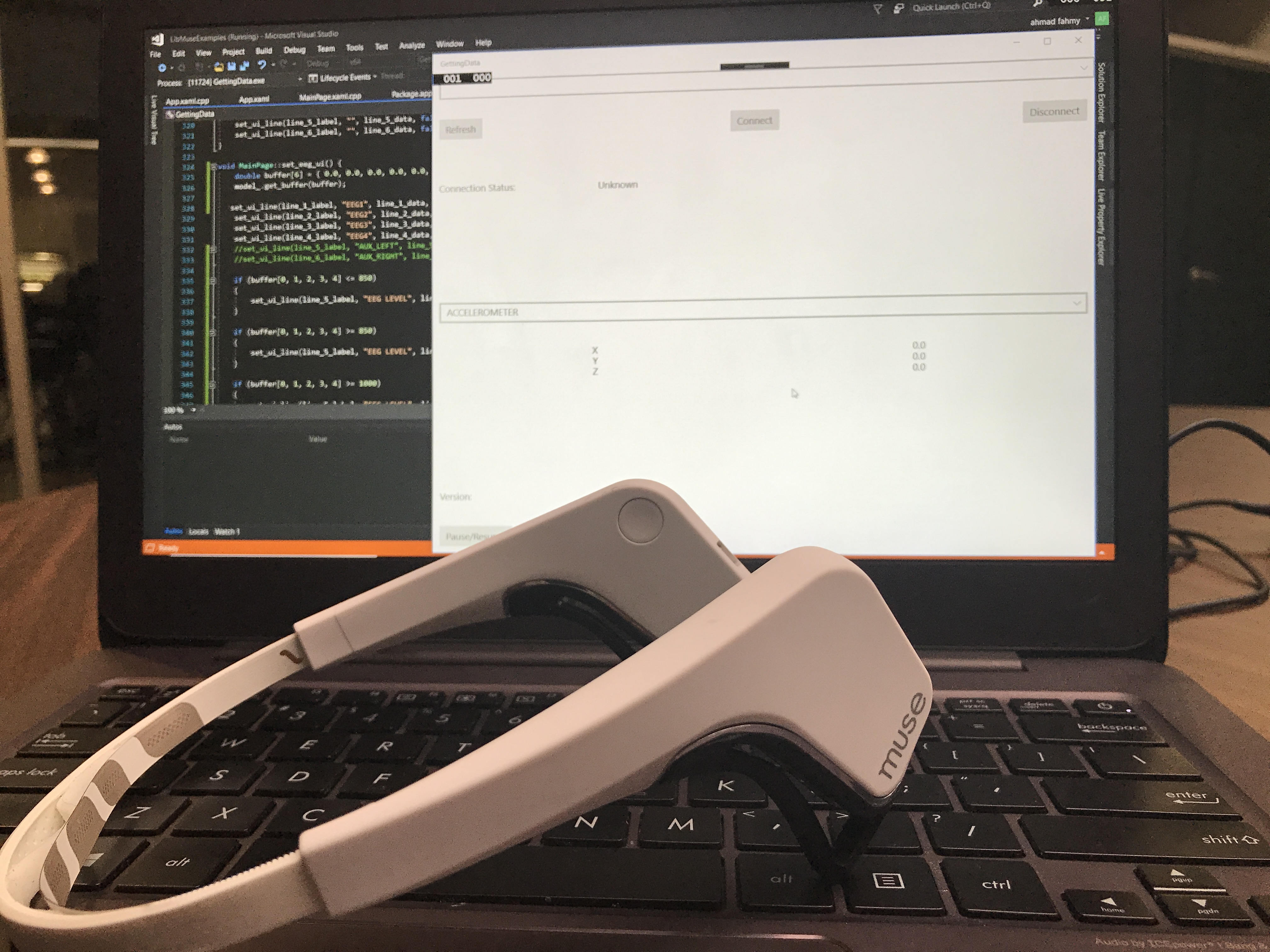
The muse headband was used as the EEG sensor for this program. It was linked to an open source muse program that displayed its data in graphs during realtime. This data was transported into code using a template found on Muse's website. This allowed for the data to be shown in a program which we could alter. We then changed this program to process the information and data being inputted by the EEG which can be useful for game designers. They can use this information and more sensitive EEG sensors to create triggers that can mould the gaming experience specifically for their users.
Challenges we ran into
At first, we were unable to transfer the muse data into a format which we could work with, in this case being C++. Eventually using a template, we got access to this code and we began working. Our final program displays the live EEG readings, however we cannot access the individual packets of data limiting us from interpreting the real time input. We also struggled with understanding how we would code a program that would process live data and give outputs based on that immediately, however we solved our problem with some mentor help.
Accomplishments that we're proud of
The biggest thing is the fact that we managed to display live data from the EEG via code on a screen. This was particularly challenging as we had to both deal with the mass of raw data being inputted and turning those into clear values depicted by microvolts.
What we learned
This project built a bridge between our reality and the virtual reality around us. It connects the users most primitive emotions to a program that can interpret them and alter itself accordingly to create a more immersive VR experience. We learned how to use EEG sensors properly and to their maximum potential. With this knowledge we can work to create many more projects using EEG technology that could help bridge the gap between our world and the worlds we create.
What's next for EEGsquisite Scares
We plan on making this program a module that can be used by VR horror game makers so they can add a new dimension of fear into their games. Every game will be different based on it's users and their specific fear. A program module like this opens the doorway to adding a new dimension to virtual reality that takes into account the users emotions and actions, bringing us one step closer to completely immersing users in virtual realities.
Built With
- c++
- muse-headband

Log in or sign up for Devpost to join the conversation.