-
-
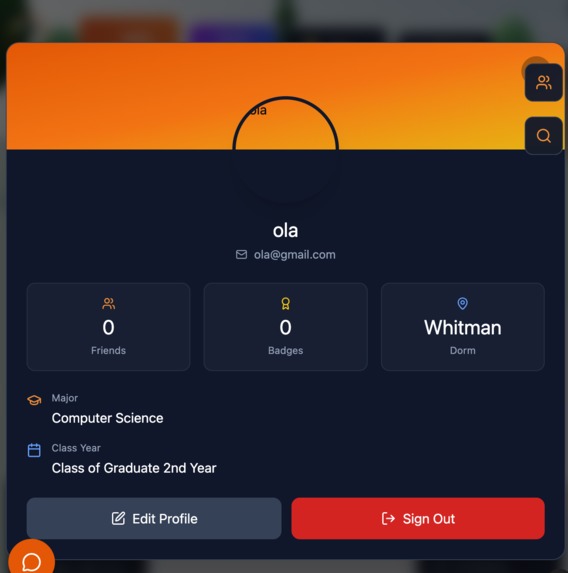
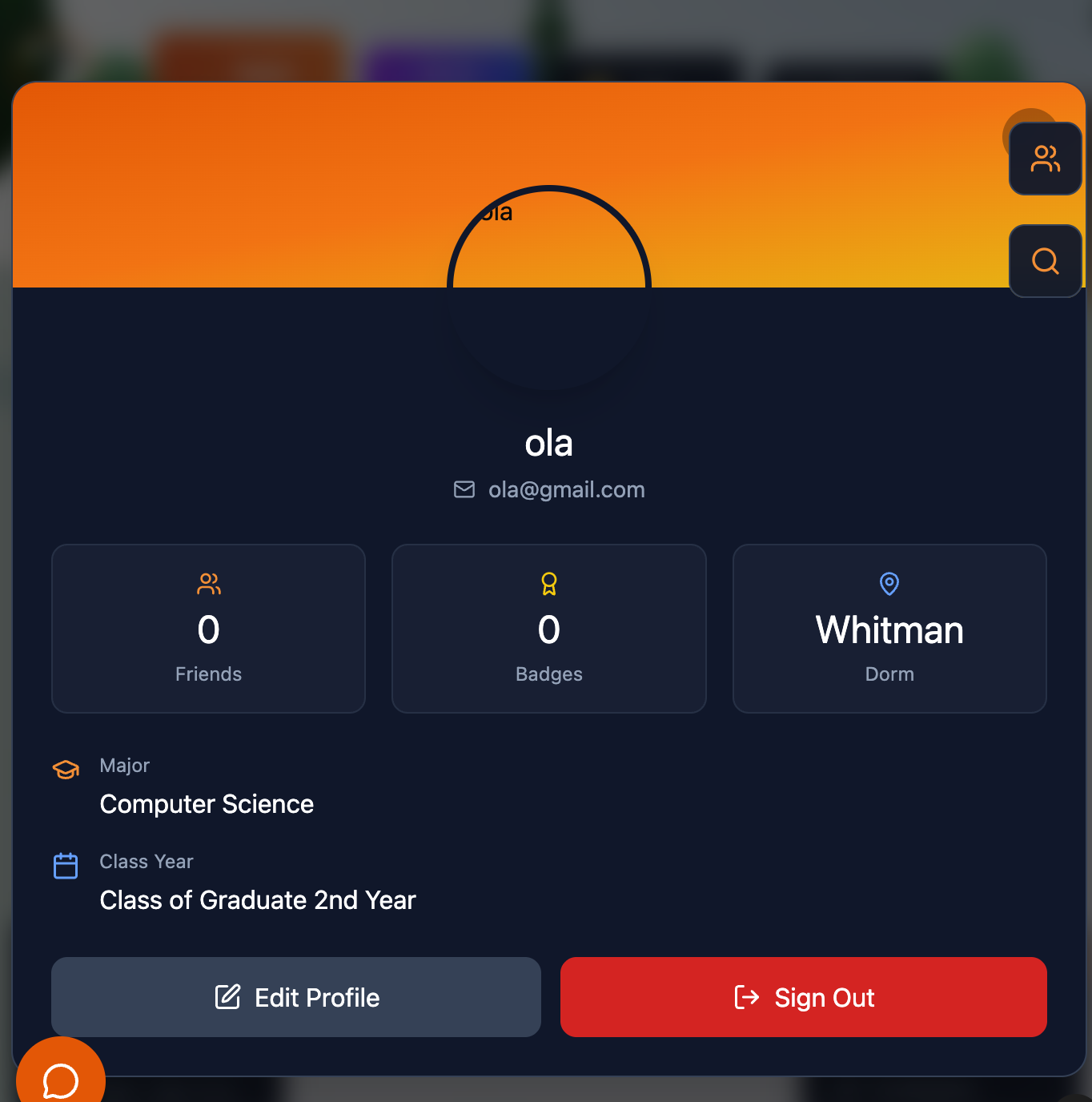
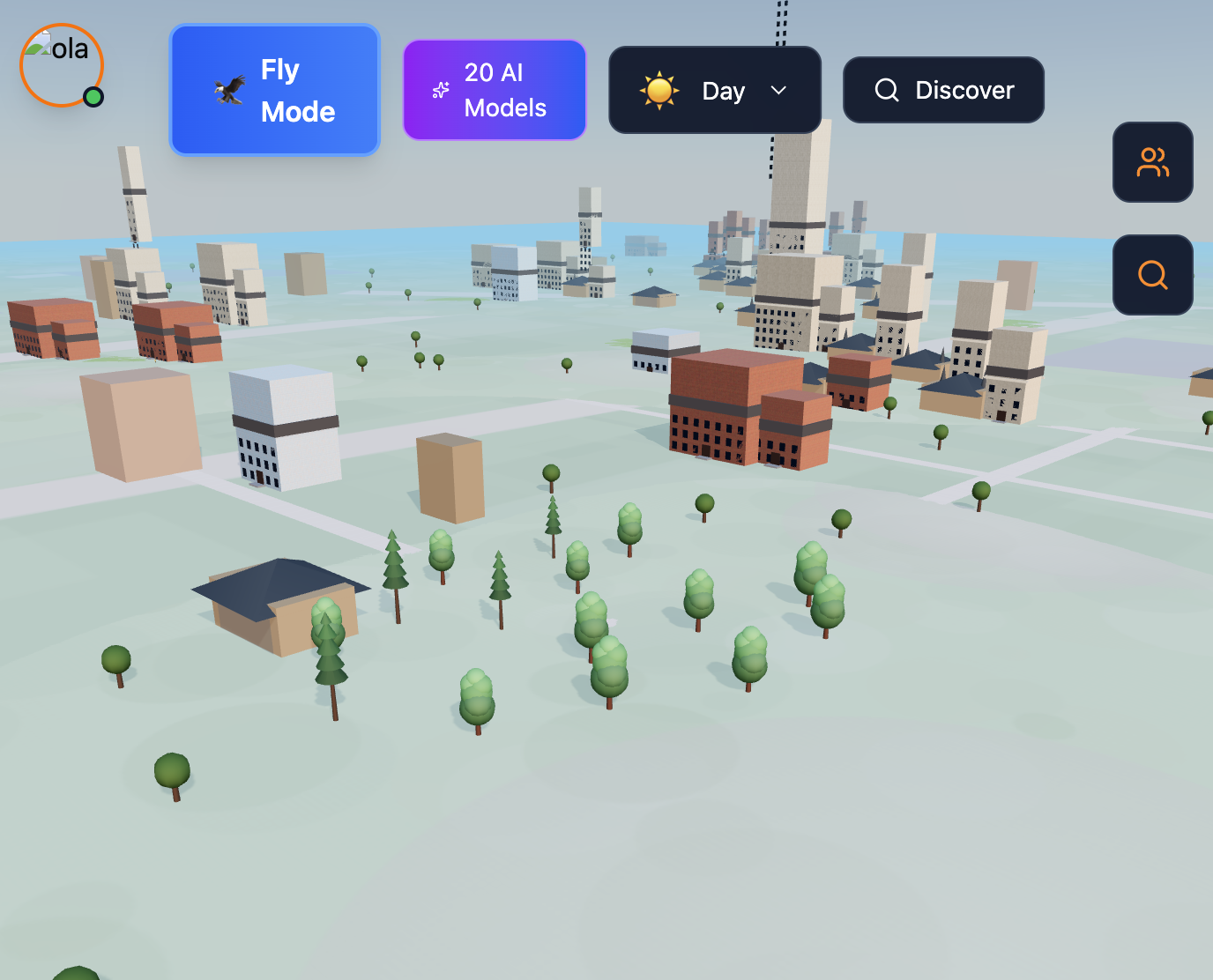
User Profile
-
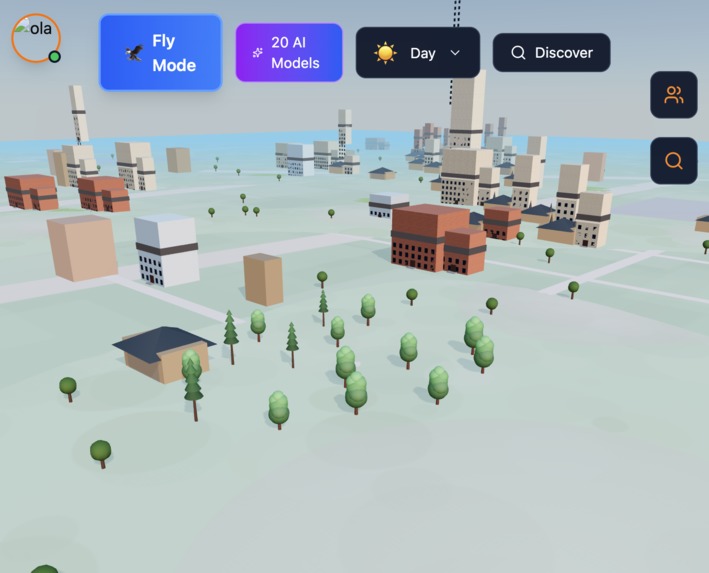
High View of 3d Princeton University Campus
-
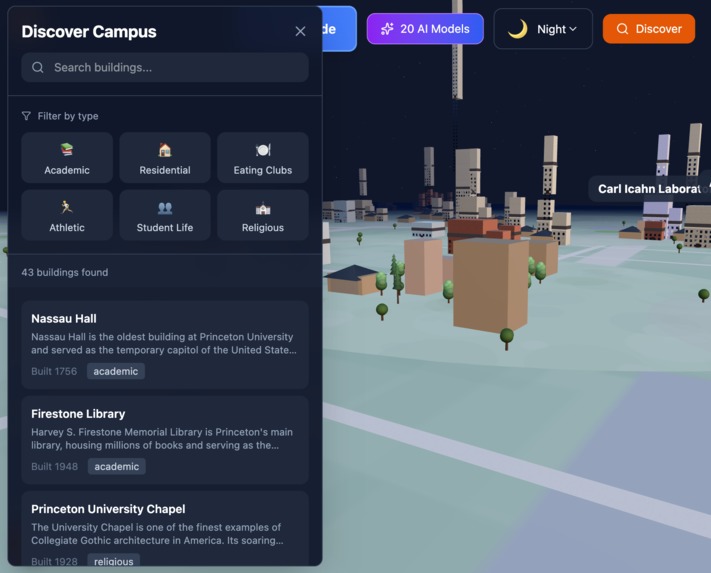
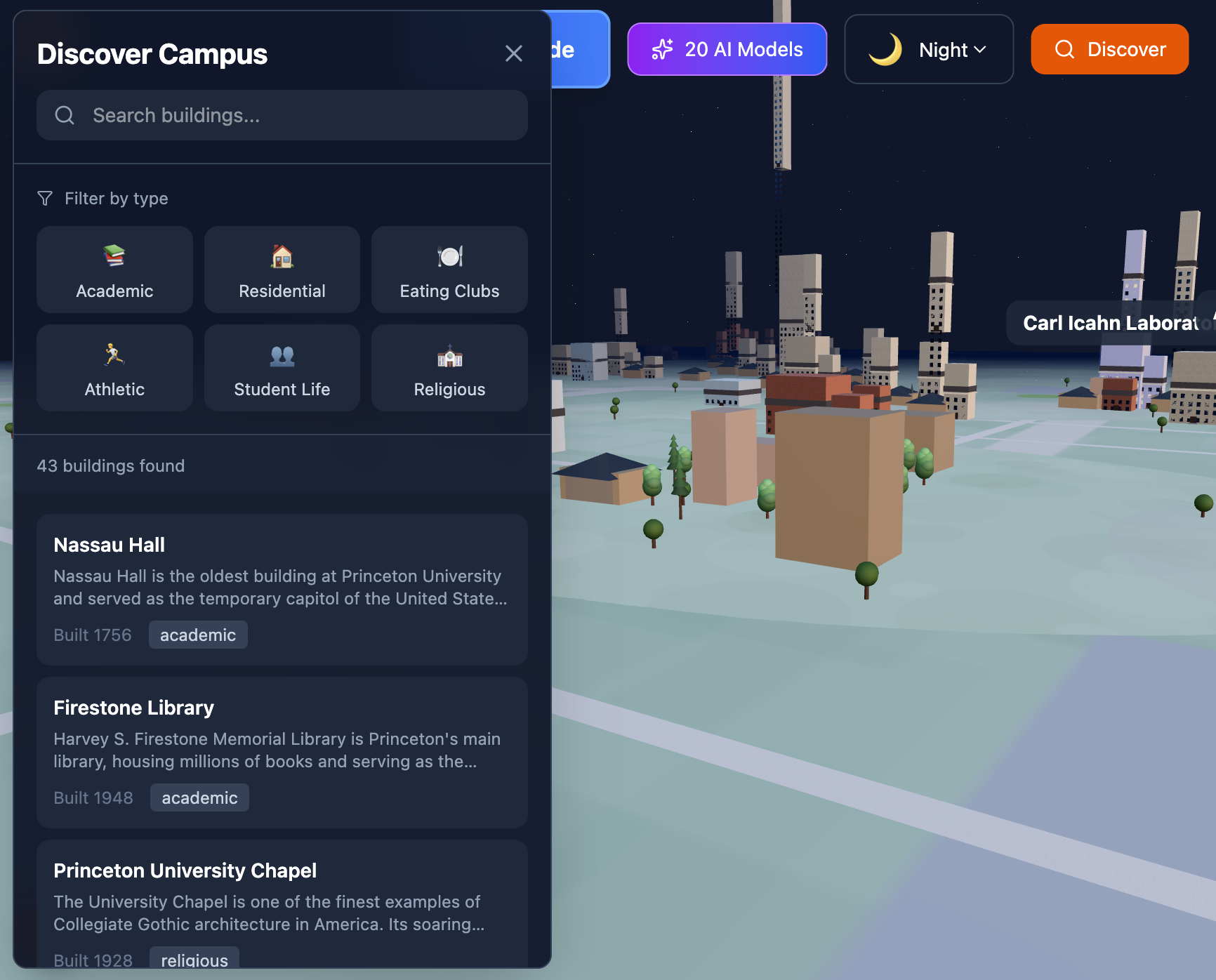
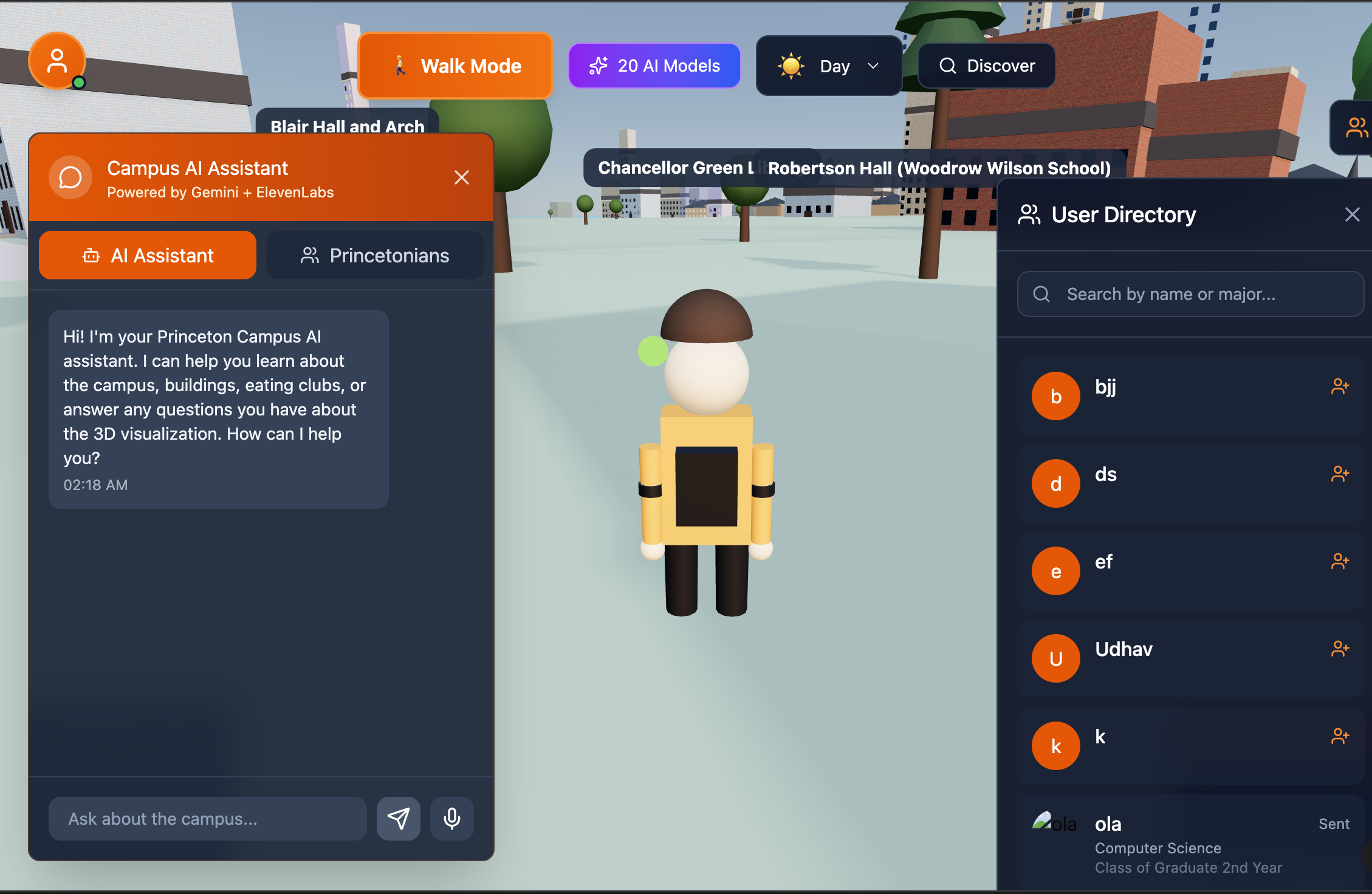
Directory
-
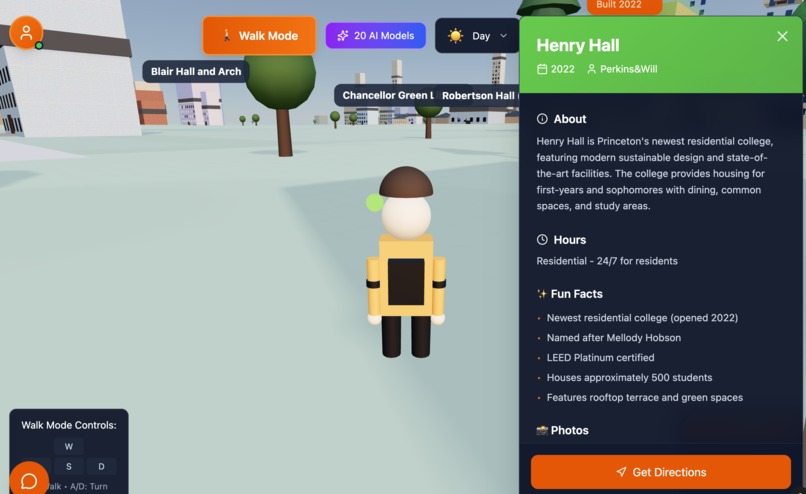
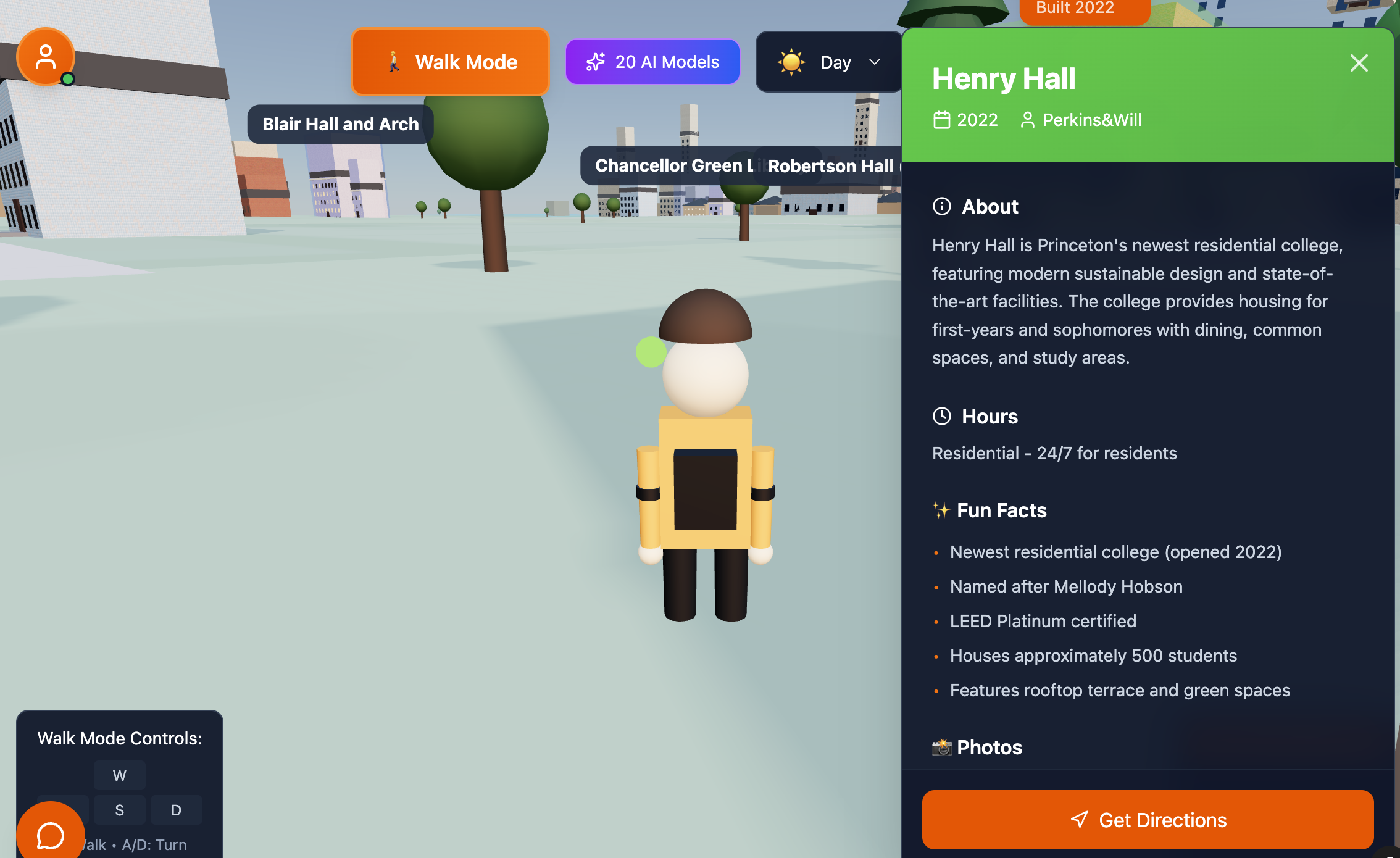
Buildingss Info
-
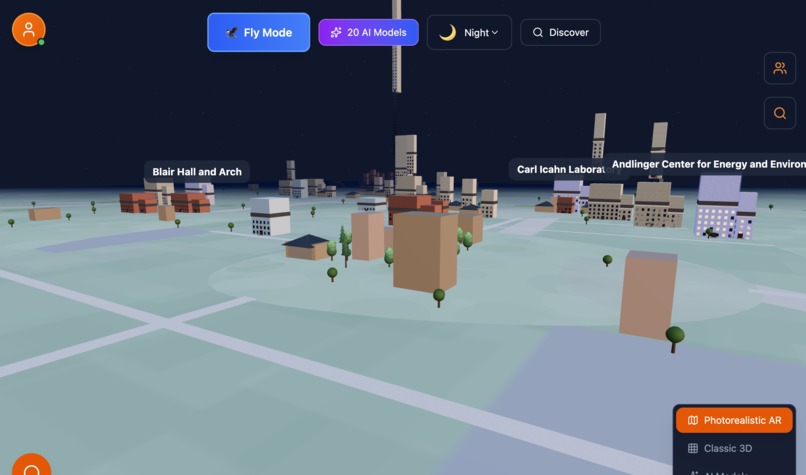
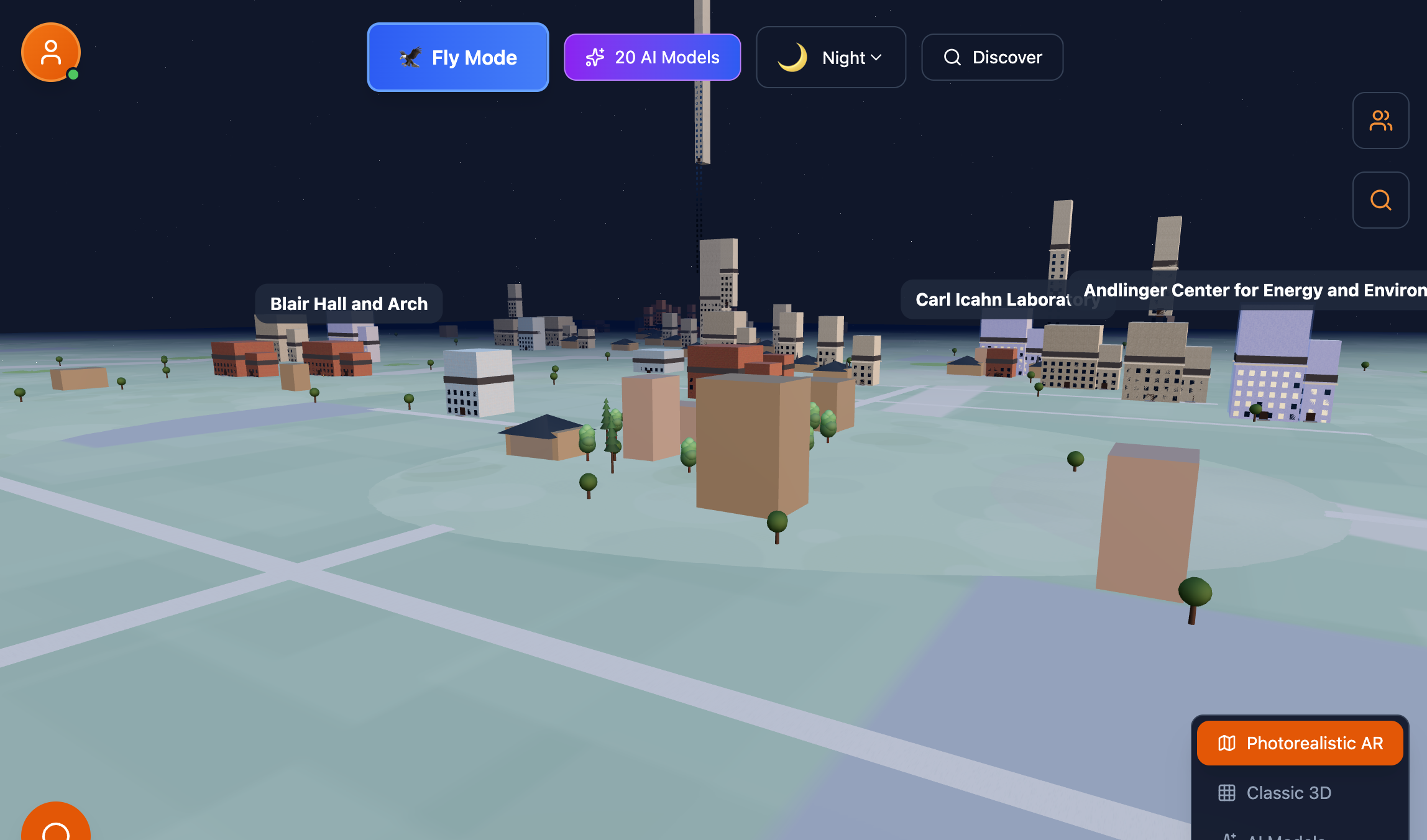
Night View
-
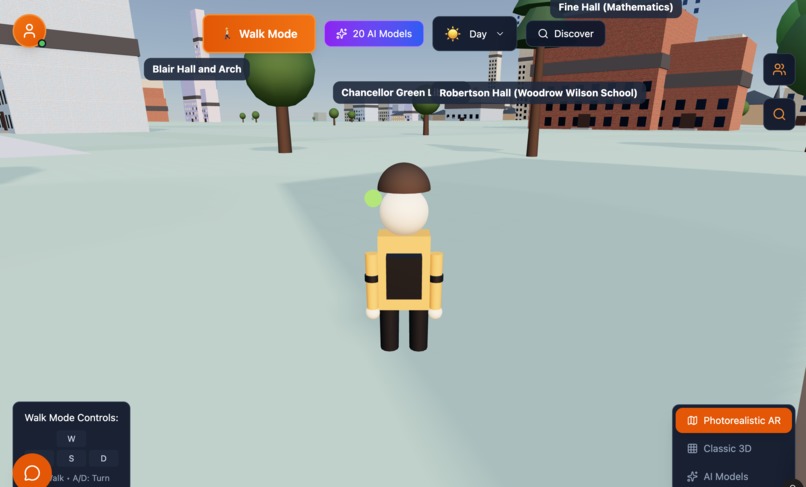
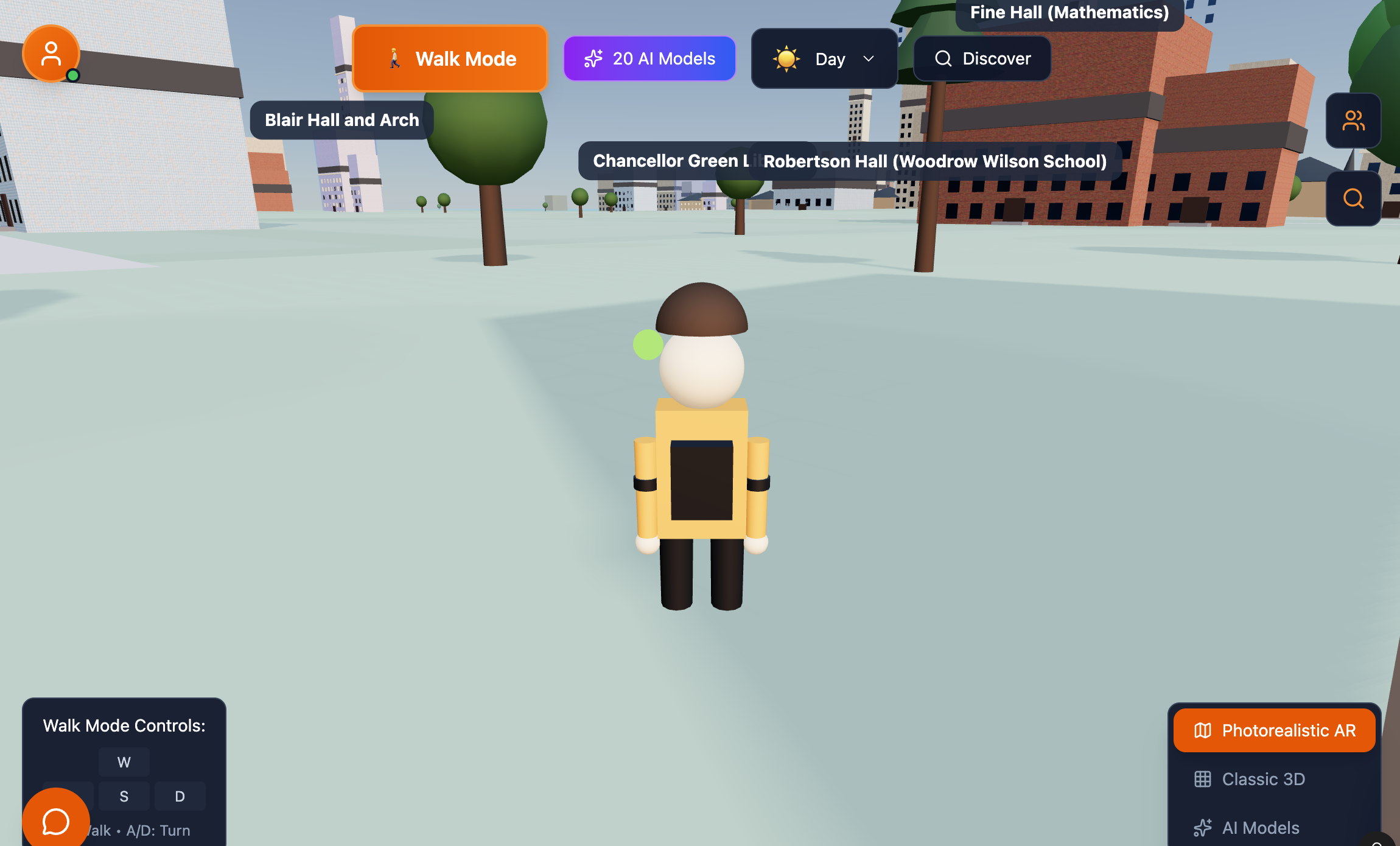
Walking Model View
-
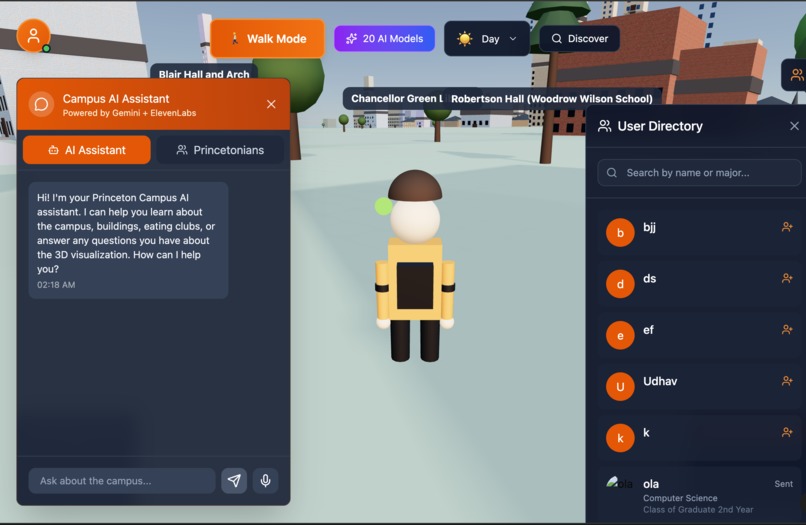
Chat Assistant
Inspiration
I’ve always been deeply passionate about transforming education — in India and beyond. Back in high school, I often felt disconnected from my peers. Whenever I visited university campuses, their vastness fascinated me, yet I never truly got the chance to explore or experience them. Then came my favorite movie, The Social Network, which sparked my obsession with connectivity and creation. Building things became my language. At the same time, I was hooked on Pokémon GO, my all-time favorite game. One day, I wondered — what if students could explore their campus like that? Imagine walking through Princeton or any university in a photorealistic 3D world, meeting other students virtually, and feeling genuinely connected to the community, whether you’re on campus or across the world. That thought led to the birth of EdVerse — a vision to merge the social spirit of early Facebook with the immersive adventure of Pokémon GO, crafted especially for college students.
What it does
EdVerse is a photorealistic 3D metaverse for college campuses. Right now, we've built Princeton's campus, but the vision is to expand to universities worldwide, starting with institutions across India.
Here's what students can do:
Explore: Walk through campus at street level with your personalized 3D avatar. See buildings, pathways, and landmarks exactly as they look in real life, thanks to Google Maps 3D integration and Gemini AI-powered photorealistic rendering.
Connect: Meet other students in real-time. See who's online, chat with friends, send friend requests, and form study groups - all within the virtual campus.
Discover: Use voice commands to talk to an AI assistant that helps you navigate campus, find buildings, learn about eating clubs, and get campus information instantly.
Socialize: Access the "Princetonians" social network - a campus-exclusive community where verified students can connect, share experiences, and build meaningful relationships.
It's like Pokémon GO meets The Social Network, but for higher education.
How we built it
We used a modern tech stack to bring this vision to life:
Frontend: React with Three.js and React Three Fiber for 3D rendering. The campus runs in real-time 3D with photorealistic graphics, smooth camera controls, and interactive building models.
3D World Creation: We integrated Google Maps 3D Tiles API to pull real satellite and Street View data of the Princeton campus. Then we used Gemini AI (Google's multimodal AI) to analyze building images from multiple angles and generate detailed 3D geometry, textures, and architectural details.
Avatar System: Built with Three.js, featuring procedurally generated human models with Princeton-themed clothing, walking animations, and real-time GPS positioning. We also integrated Gemini AI to let users describe their avatar in text, which then generates a custom 3D model.
Voice AI Agent: Implemented using Gemini for natural language understanding and ElevenLabs for voice synthesis. Students can talk naturally to ask questions like "Where is Nassau Hall?" or "Tell me about eating clubs."
Backend: Supabase for real-time database, authentication, and friend/social features. Real-time multiplayer uses Supabase's real-time subscriptions to show nearby students' avatars.
Deployment: Built on Figma, connected to GitHub, and also deployable through Vercel, making it accessible and easy to iterate.
Challenges I ran into
Converting 2D Images to Photorealistic 3D Models The biggest technical challenge was taking Google Maps imagery and converting it into walkable 3D environments. We couldn't just use flat satellite images - students needed to feel like they were really walking through Princeton.
Real-time Multiplayer Synchronization Showing multiple students' avatars walking around campus in real-time was complex. We had to handle GPS positioning, smooth avatar movement, and network latency.
Browser Performance Rendering an entire 3D campus with dozens of buildings, trees, avatars, and shadows is heavy for browsers.
Microphone Permissions & Voice AI in Web Getting voice input to work smoothly across different browsers was tricky, especially with permissions.
Accomplishments that we're proud of
I built a fully functional 3D metaverse for Princeton — complete with photorealistic buildings, walking avatars, and social features — all within a hackathon timeframe.
Ground-level exploration that actually works — You can walk through Princeton’s campus at street level, see every building from realistic perspectives, and genuinely feel immersed in the environment.
AI is integrated everywhere — From generating 3D buildings from photos using Gemini to adding voice assistants and custom avatar creation, AI is woven into every part of the experience.
Real-time multiplayer — Seeing other students’ avatars walking around campus in real-time creates a true sense of connection and community. Photorealistic graphics — With accurate lighting, shadows, and Google Maps 3D data, it feels like you’re actually walking through Princeton.
Voice AI that feels natural — Students can simply talk to the system, ask questions about campus, and get clear, spoken responses back. But most importantly, I proved the concept works. This isn’t just a demo — it’s a real, functional platform that students could start using today.
What I learned
Technical:
How to work with Three.js for complex 3D scenes at scale
Integrating Google Maps 3D Tiles API for real-world geometry
Using Gemini AI's multimodal capabilities for image-to-3D conversion
Real-time multiplayer architecture with Supabase
Optimizing 3D graphics performance in browsers
Design:
Students want immersion, not just information - walking through campus feels more engaging than clicking through a map
Social features are crucial - students don't want to explore alone
Default options matter - when AI generation fails, seamless fallbacks keep the experience smooth
Market Insights:
There's massive potential for virtual campus tours, especially for international students who can't visit physically
Current university VR/3D tours are static 360° photos - there's nothing like this in the market
Students are desperate for better ways to connect on large campuses
What's next for EdVerse
Advancing the Model and making it into the production phase, connecting to universities, and integrating new features. There is almost 10+ billion dollars potential in this idea if it can capture 30-40 % of the market.
Built With
- elevenlabs
- figma
- gemini
- google-maps
- meshy
- react
- supabase
- three.js
- vite


Log in or sign up for Devpost to join the conversation.