-
-
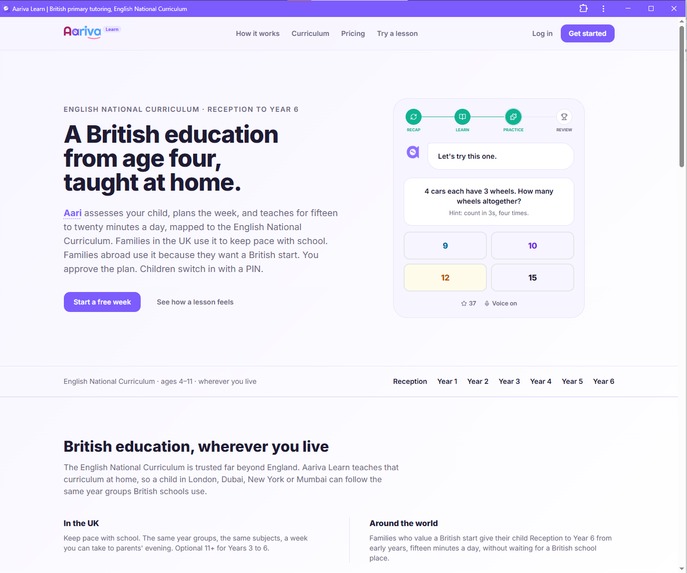
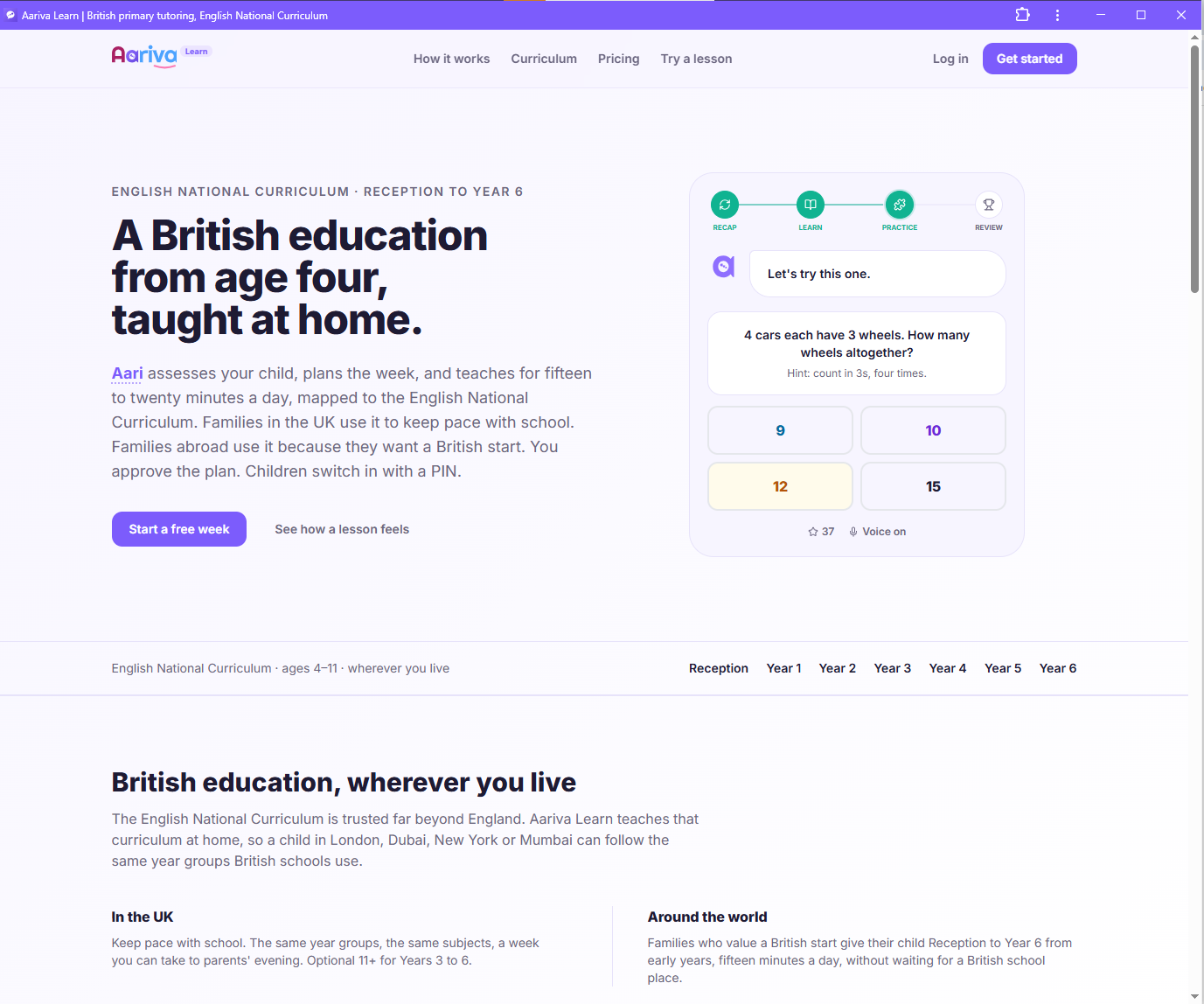
Aariva-learn homepage
-
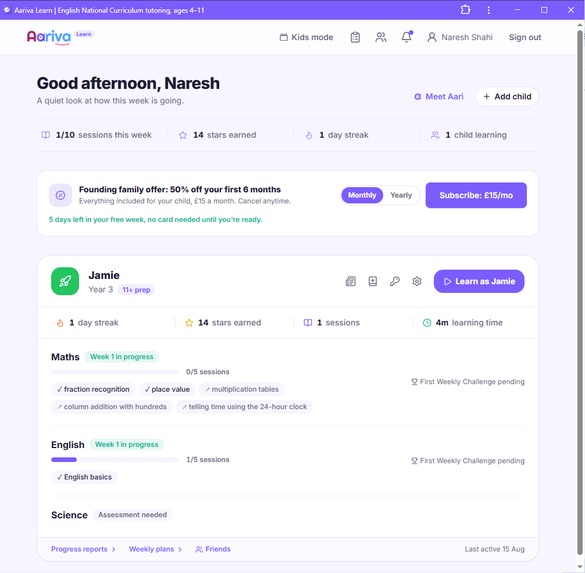
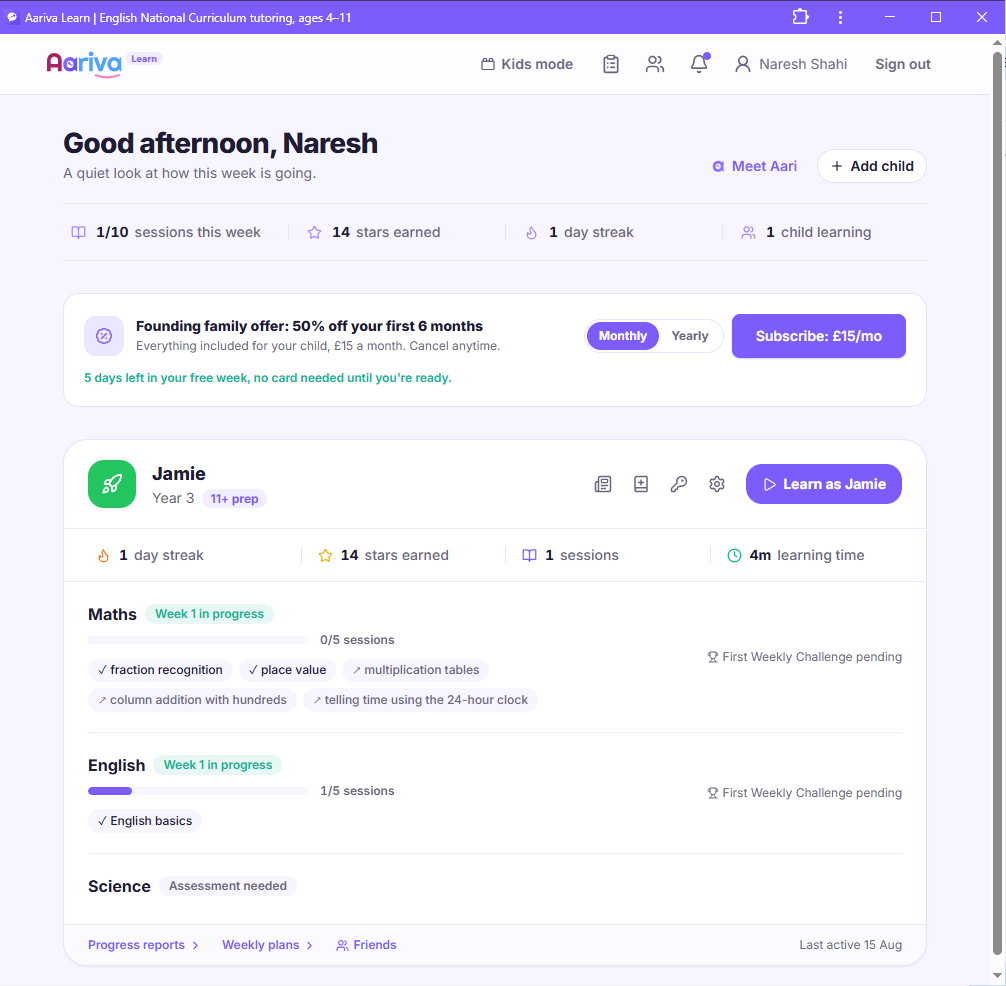
Parent Dashboard
-
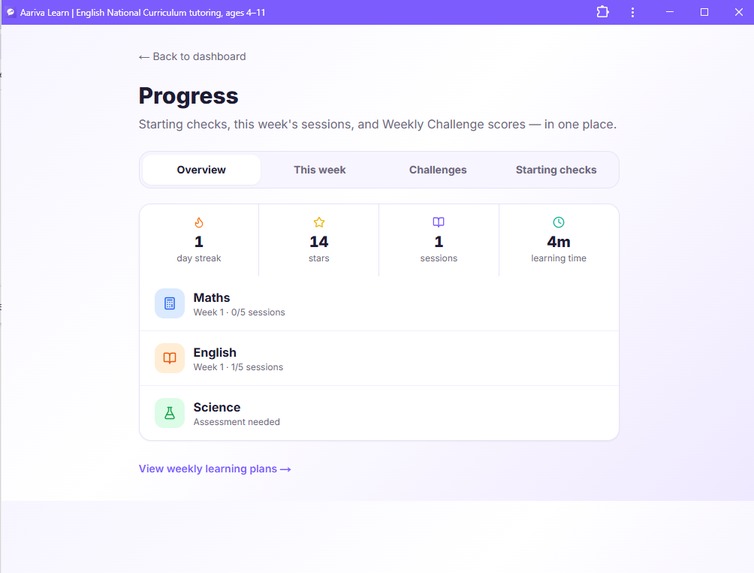
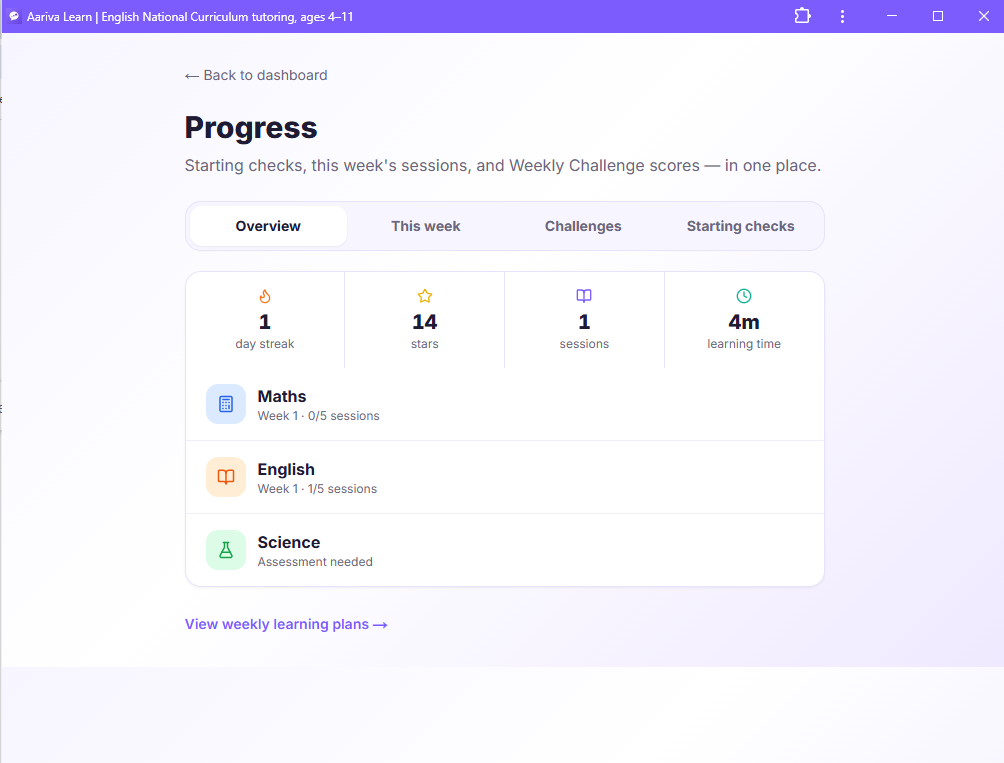
Parent View Progress report
-
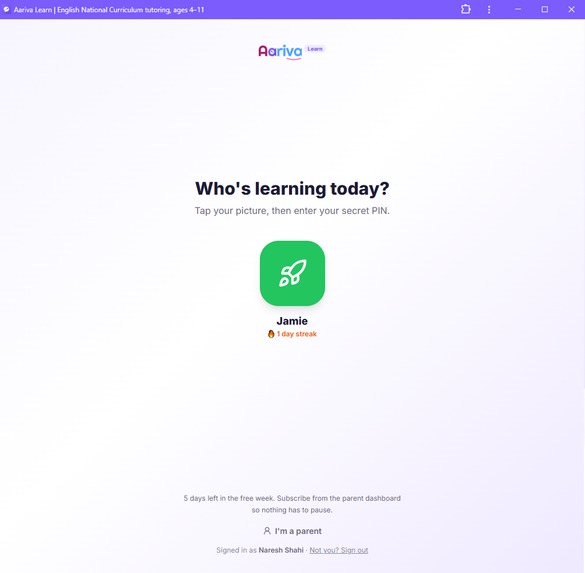
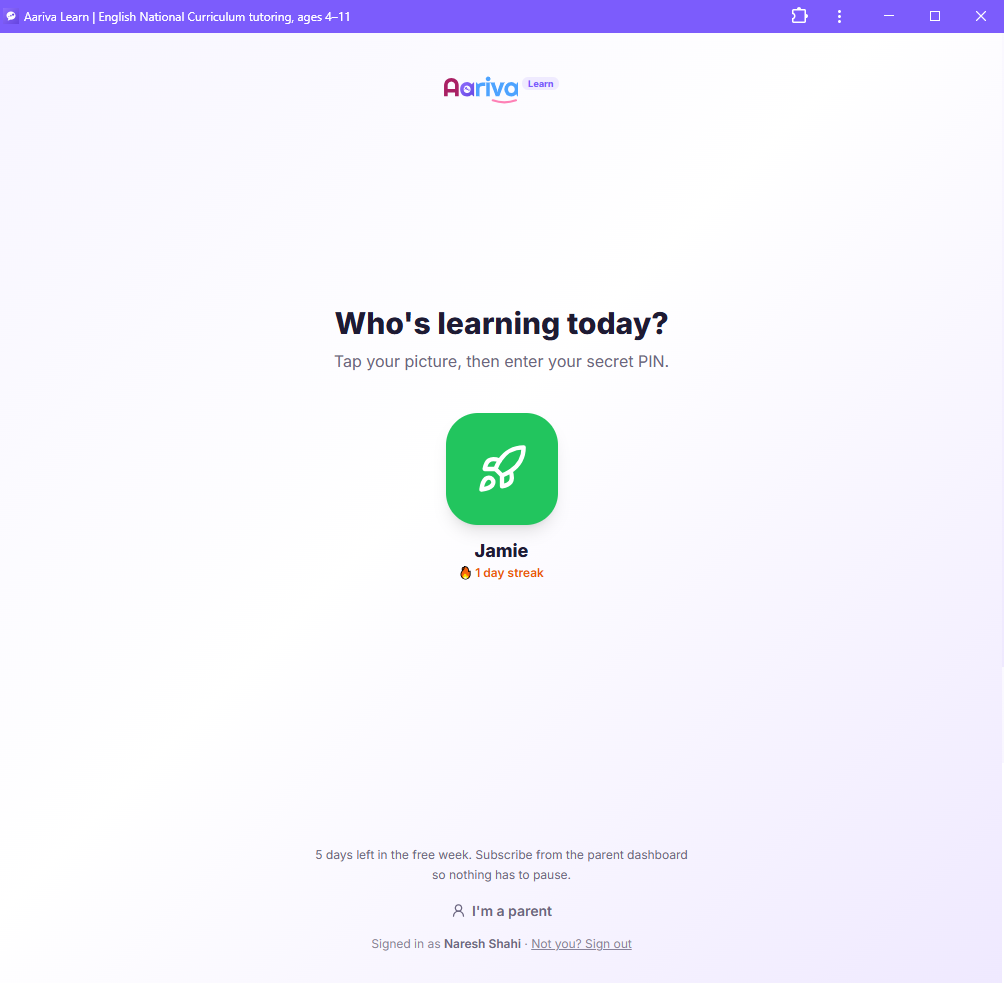
Child mode access using PIN
-
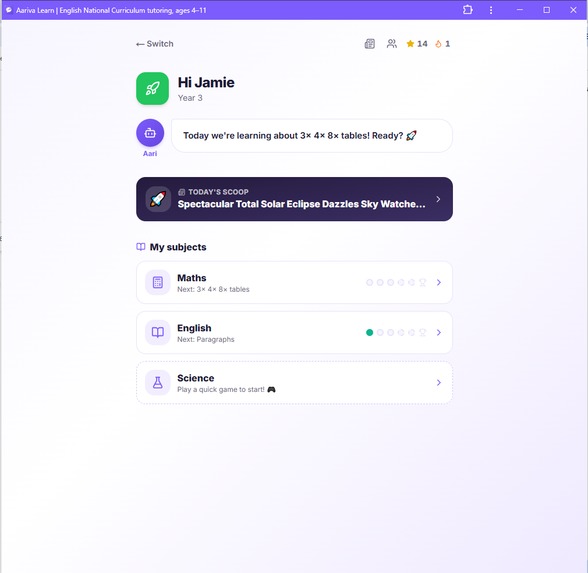
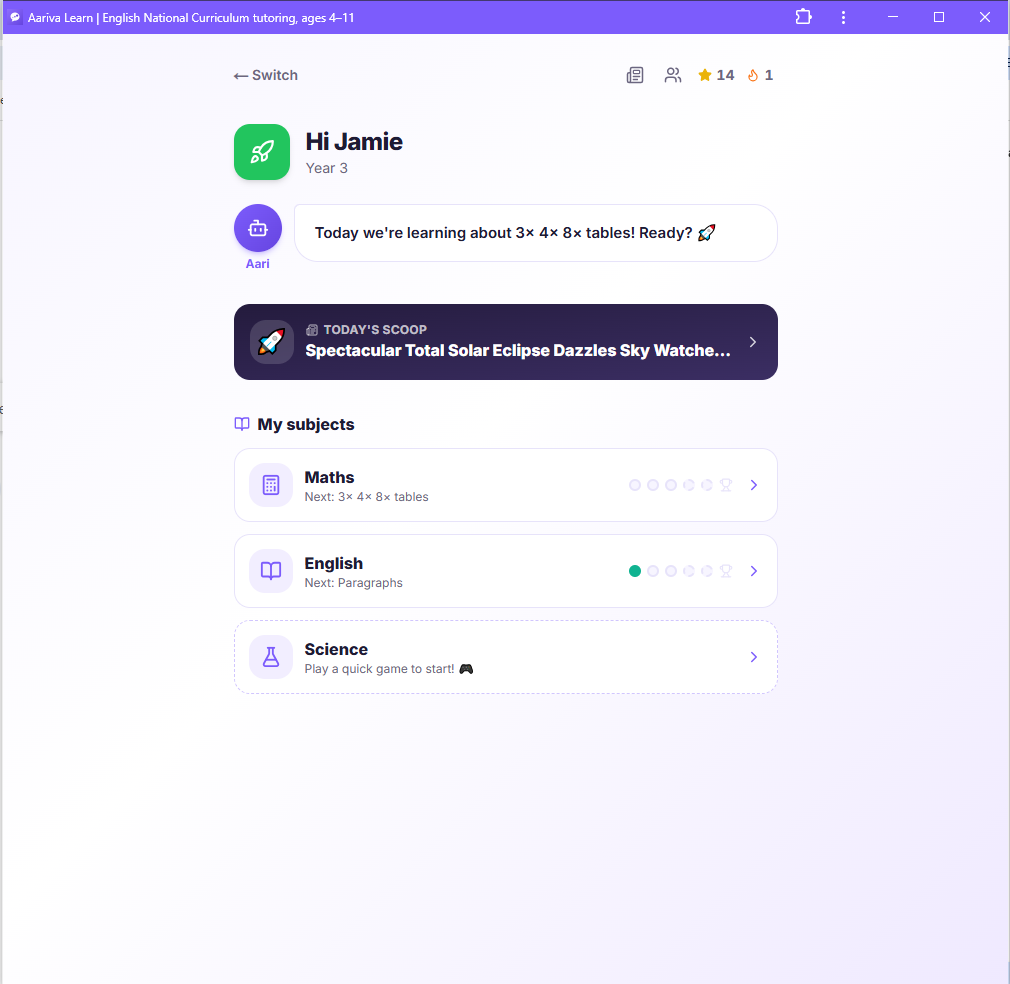
Child weekly session view
-
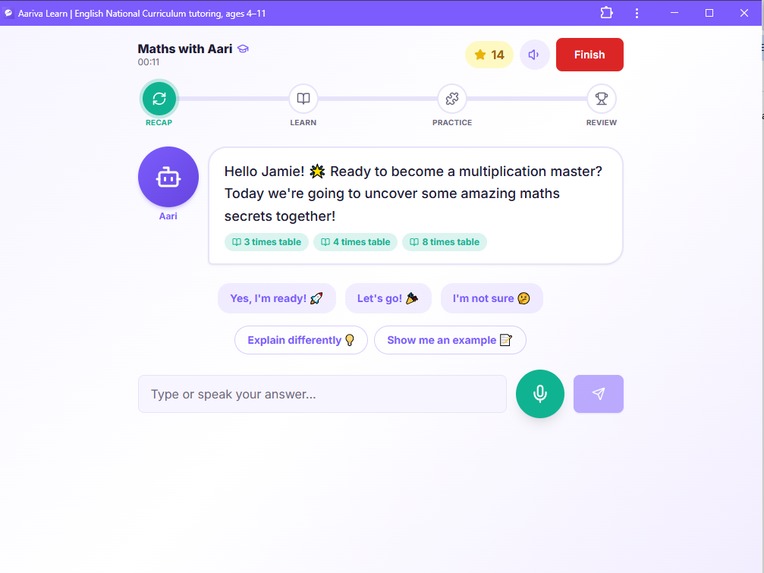
Tutor Frontier
-
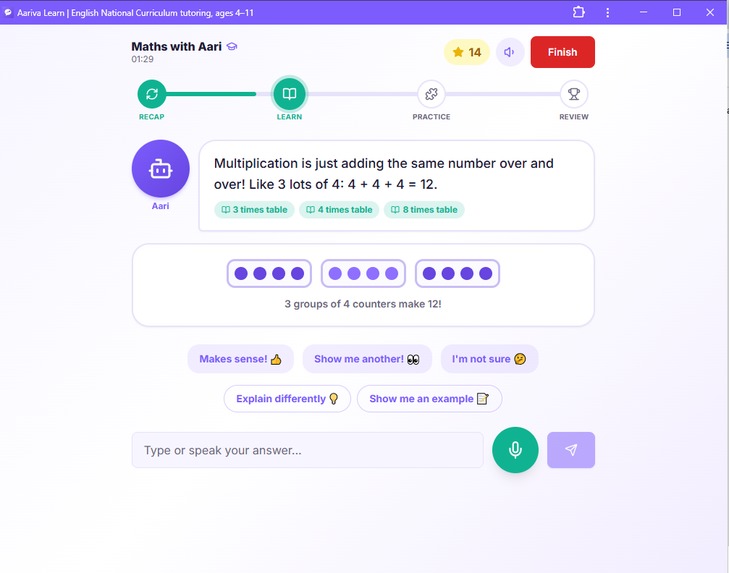
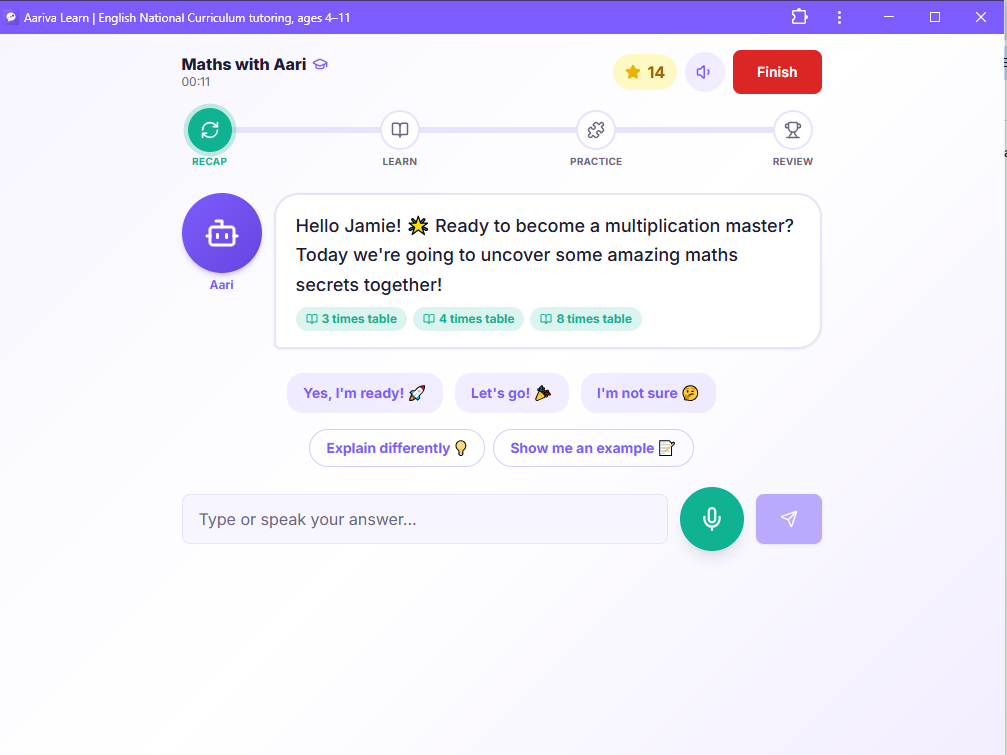
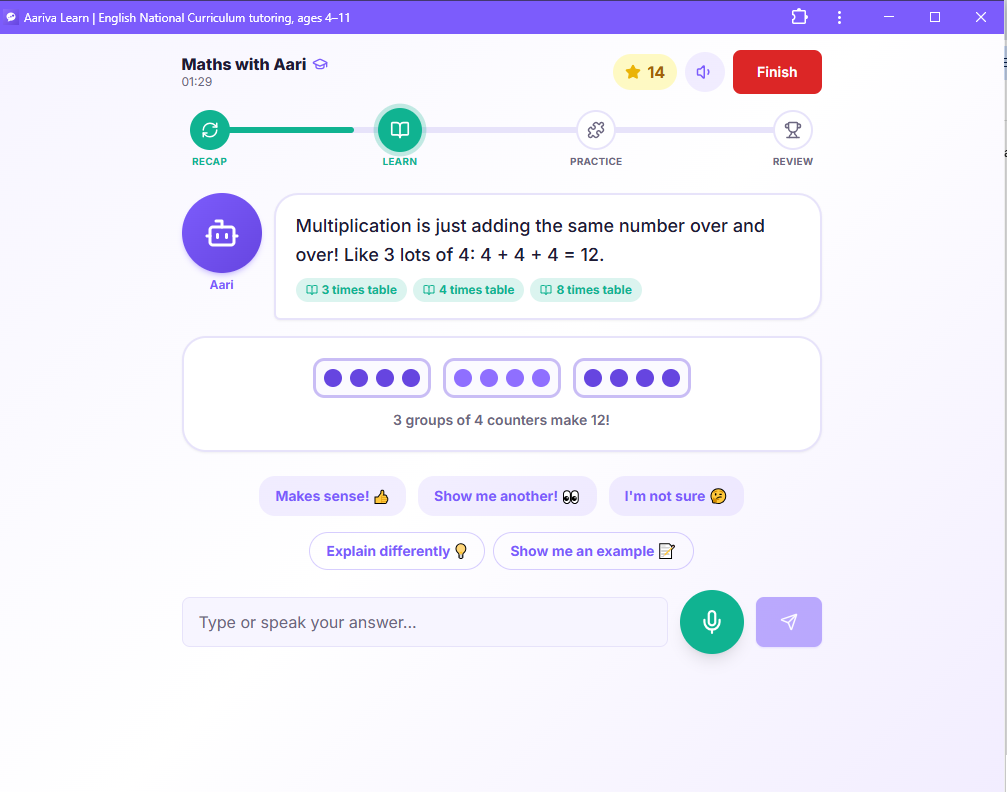
Tutor teaching 4 times table
-
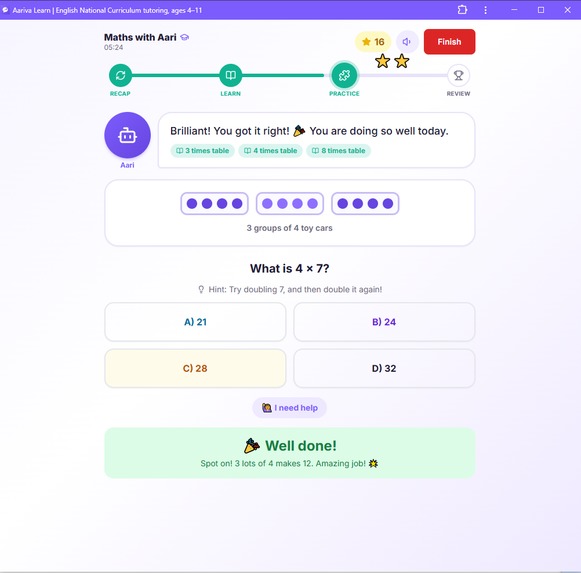
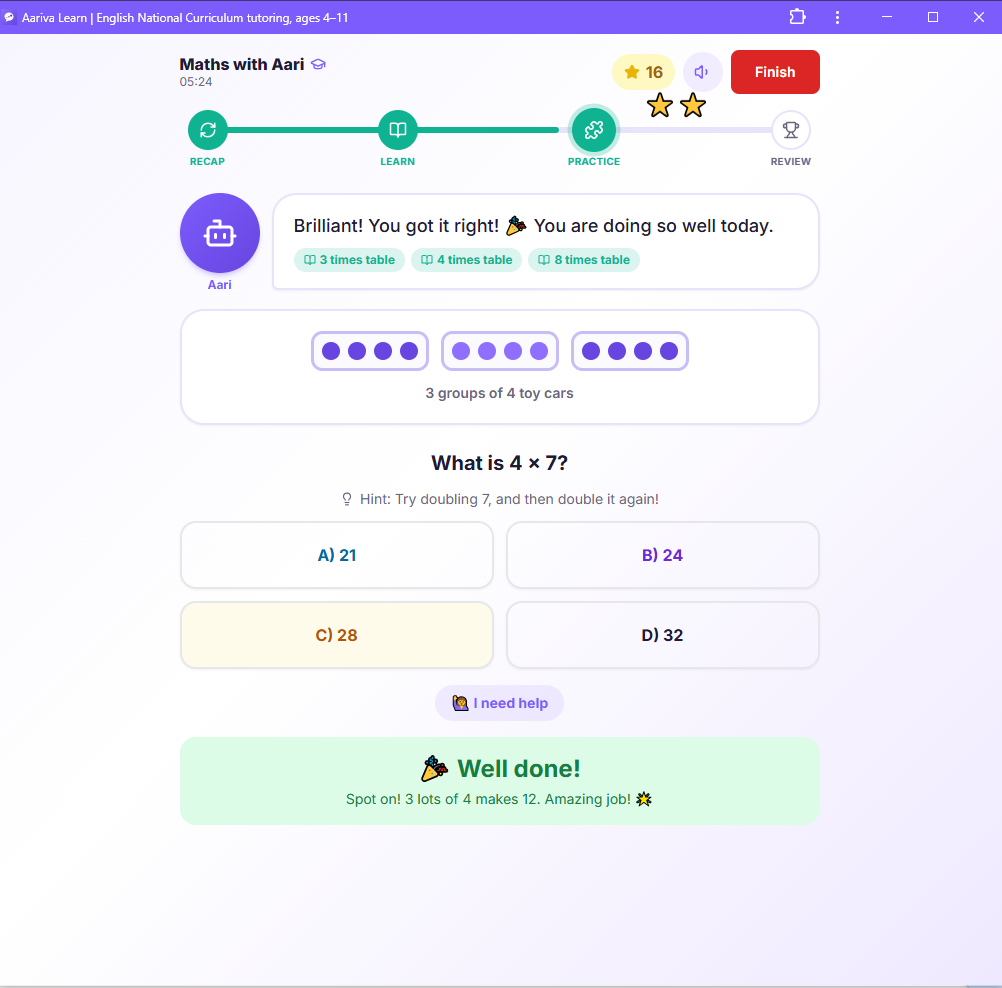
Tutor asking quiz
-
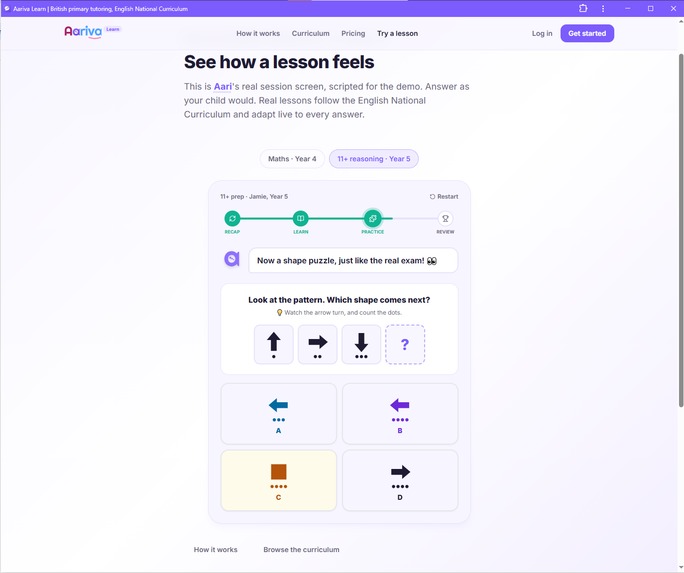
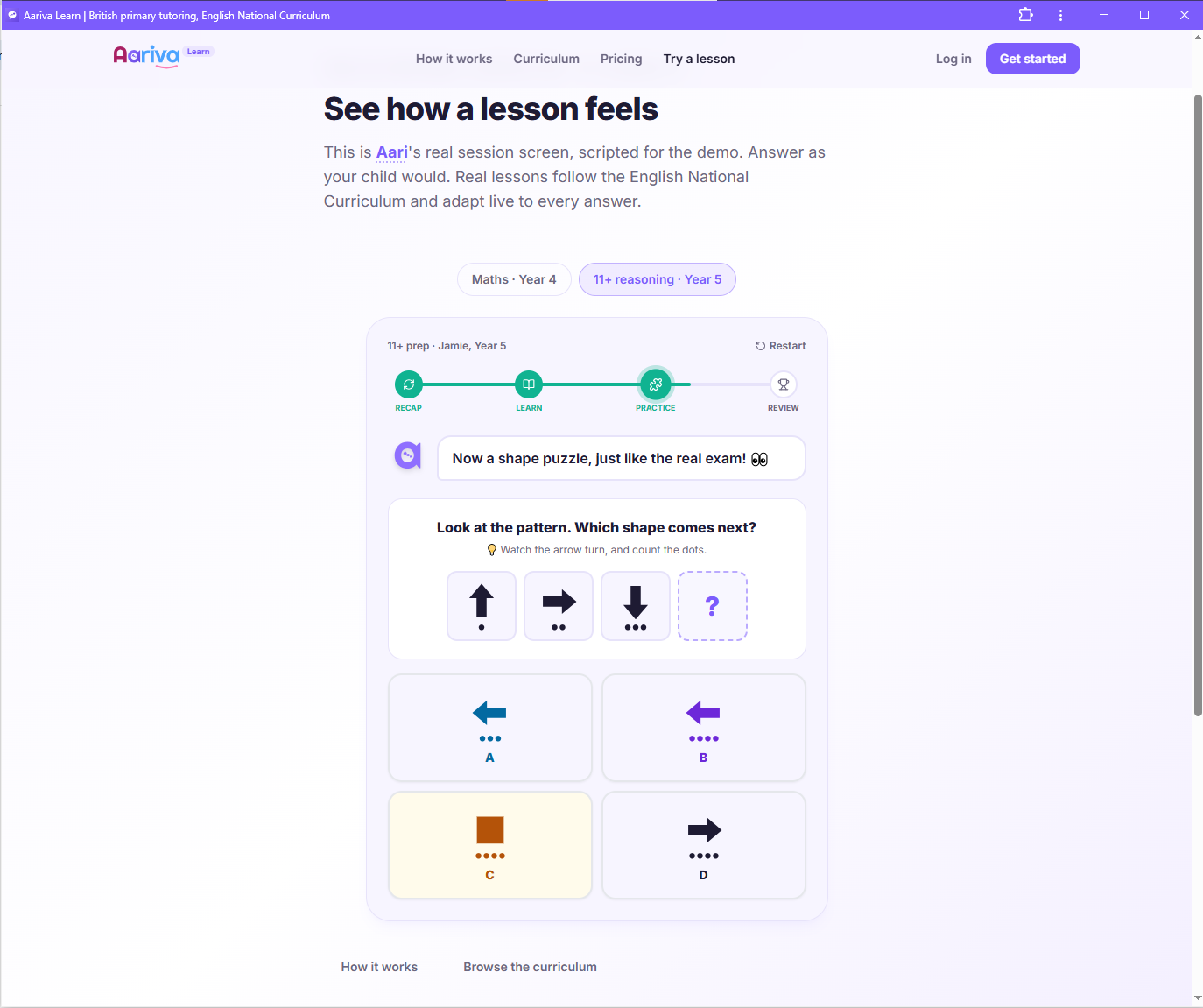
Aariva-learn-nvr-demo
-
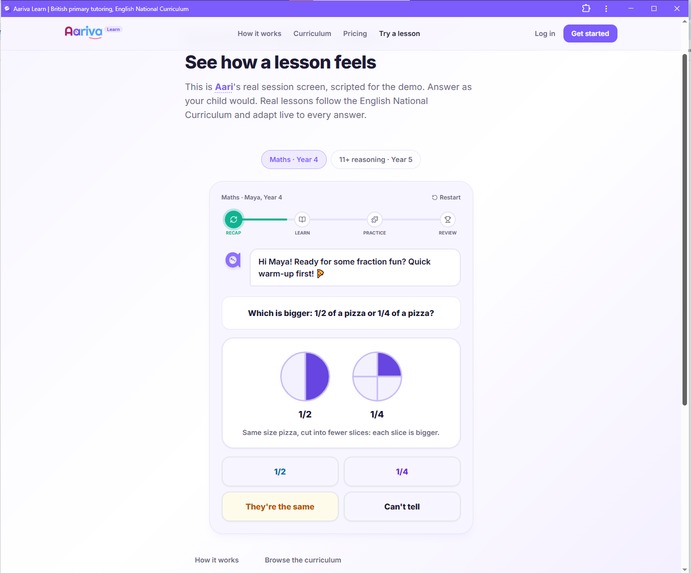
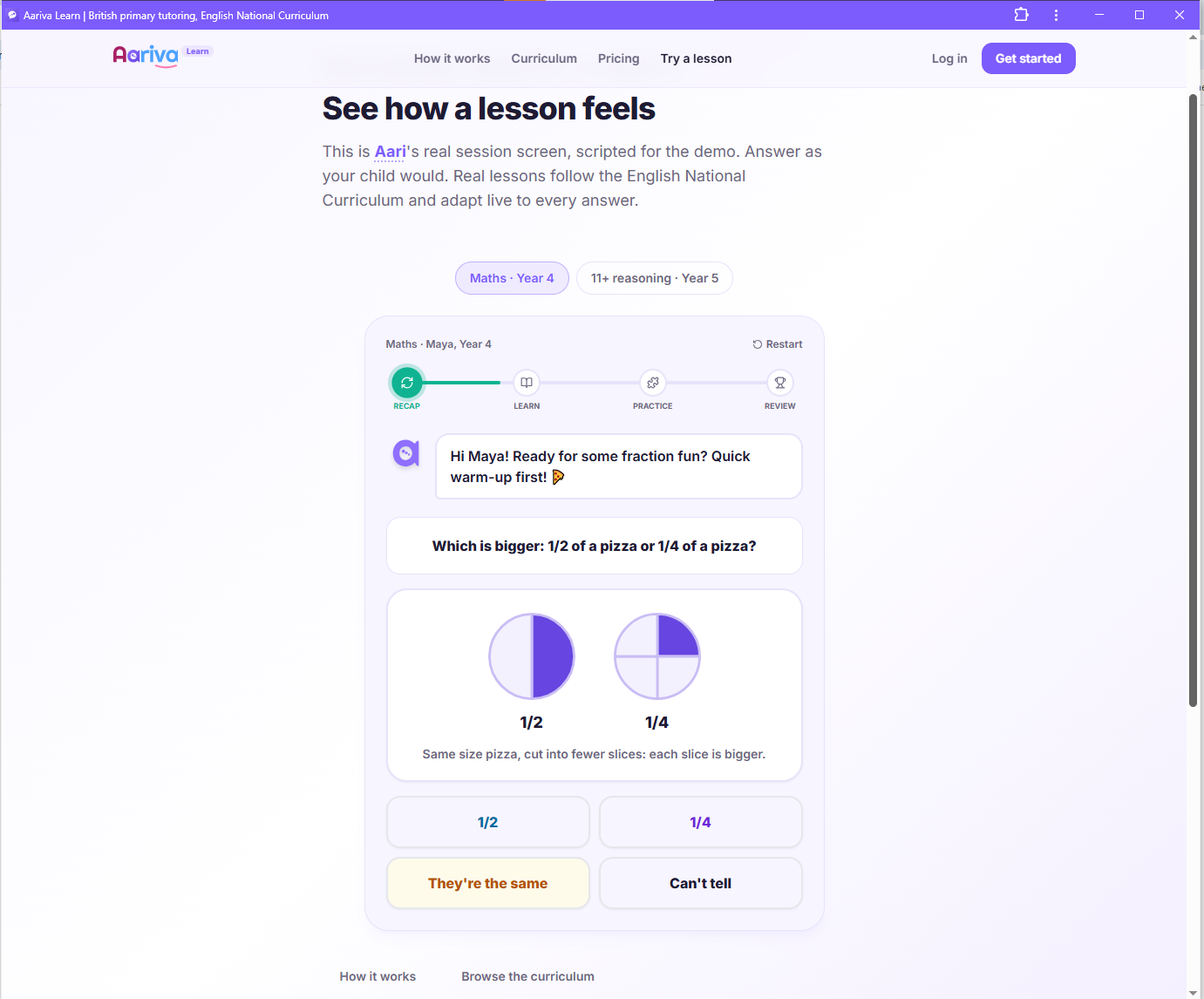
Aariva-learn-teaching-fraction
Inspiration
Private tutoring in the UK has become a shadow school system. Families routinely pay £40 to £80 for a single hour, often for a year or more, just to keep pace with the English National Curriculum and, for some, the 11+ grammar and selective-school exams. The children who miss out aren't less capable. They simply don't have that budget, and the gap compounds every year they go without help.
The same curriculum is also a global signal. Families in the United States, the Gulf, and South Asia already pay a premium for British schools, British year groups, and a British start from age four. What they couldn't buy, without a British school place, was a serious daily tutor mapped to that curriculum rather than a generic chatbot.
Most "AI tutor" products we looked at were a chatbot bolted onto a subject picker. They didn't diagnose what a child actually struggled with, didn't build a real week, and had no memory of last week when deciding what to teach this week. A parent can't take that to parents' evening. A six-year-old can't type into it. A family abroad can't trust it as a British education.
We wanted something closer to how a genuinely good tutor works: assess the child, plan the week around the gaps, teach it in small daily sessions, test what stuck, and use that test to plan the next week. Mapped to the English National Curriculum. Affordable enough to use every day. Usable from Reception. Available wherever the family lives.
What It Does
Aariva Learn is an AI-native tutoring platform for Reception through Year 6 (ages 4 to 11). One parent account. Children switch in with a PIN. The tutor is Aari.
The spine is the English National Curriculum: British year groups, key stages, and the subjects and topics for that year. Admins own those lists, so Maths, English, and Science can be joined by History, Geography, and other National Curriculum subjects without a deploy. Gemini then assesses, plans, and teaches from those topics.
For each child and subject, Aari runs a continuous weekly cycle:
- Diagnostic assessment: a short, turn-based session that adapts to the child's age and scores level, gaps, and strengths.
- Weekly plan: three learning days aimed at those gaps, then two practice days that make the new material stick.
- Daily tutoring: fifteen to twenty minutes covering warm-up, teach, practice, review. UK spelling, tappable answers, voice for pre-readers, quiet star rewards.
- Weekly Challenge: a test of the week. Optional 11+ verbal and non-verbal reasoning can be blended in for Years 3 to 6.
- Next week's plan: built from this Challenge, not from the original diagnostic.
Oak National Academy is optional extra classroom material. Where a topic matches an Oak unit, the child gets an "Explore this topic" resource and Gemini is grounded with that lesson's key points. Where it doesn't, the National Curriculum week still runs. Oak is not the syllabus.
Parents approve each week's plan, or let Aari run. Families in the UK use it to keep pace with school. Families abroad pick the British year group that matches their child's age and give them that education at home.
How We Built It
- Frontend/backend: Next.js 14 (App Router) and TypeScript, so agent logic, API routes, and UI share one codebase.
- Auth and data: Firebase Authentication for parents, Firestore for everything else, running on Google Cloud. Children are managed learners under the parent, unlocked with a 4-digit PIN.
- AI agents: five purpose-built Gemini agents (assessment, weekly plan, tutor session, content library, weekly test), each with its own system prompt and trigger in the cycle, rather than one general-purpose chatbot.
- Model tiering: Flash by default. Pro plus Google Search grounding only for the content-library agent, which generates a lesson once and reuses it for every child who hits that year, subject, and topic.
- Curriculum: year-group topic maps in Firestore, including new subjects an admin adds. Gemini plans from that map. Oak's bulk export is matched locally by topic title, with a title-relevance check, so a wrong citation is never preferred over no citation.
- Reliability: cache-first content generation with race-safe writes, agent execution logs, and local fallback banks so a slow Gemini response never strands a seven-year-old mid-lesson.
- Payments: Stripe is live for family subscriptions.
Challenges We Ran Into
- Scope. The original idea was a general tutoring marketplace. We cut it to Reception to Year 6 and parent accounts, because trying to be everything by the deadline would have meant being mediocre at all of it. Young children never sign themselves up.
- Curriculum without overclaiming. Oak National Academy is excellent classroom material, and it's easy to name-drop as if it were the syllabus. The honest design is harder: the English National Curriculum is the map, admins own the topics, Gemini teaches them, and Oak attaches only when a topic truly matches.
- Children who can't type yet. Reception and Year 1 needed tappable answers and voice as first-class UI, not an accessibility afterthought.
- Making week 2 depend on week 1. A diagnostic quiz is easy. A plan generator that takes last week's Challenge and produces a genuinely different week, while still returning usable JSON, is not.
- An international British product. Year groups, Reception, 11+, and parents' evening are native to UK families and foreign to everyone else. The product had to stay curriculum-true without pretending every customer already has a British school.
- Cost and races. Gemini can silently fall back to a weaker model under load, and two children hitting the same new topic can both trigger generation. We instrumented which model actually served each request, and made shared content writes race-safe.
Accomplishments That We're Proud Of
- A real closed loop: assess, plan, teach, test, replan, with last week's results as the input to the next cycle.
- A curriculum model that can grow: admins add National Curriculum subjects and topics, Gemini teaches them, Oak links in when it can.
- 11+ prep folded into the same week as an opt-in, not a separate product.
- An app a six-year-old can actually use: PIN switching, tappable answers, voice, one thing on screen at a time.
- A cost model that's thought through: cheap model by default, expensive model only where reuse amortises it, and logs for which model actually served each request.
- A live family product, not a demo: production Gemini, Firebase, and Stripe, for families in the UK and for families abroad who want a British start.
What We Learned
- Narrowing to British primary, Reception to Year 6, produced a complete product rather than a half-built marketplace.
- The English National Curriculum is the asset. It's what UK schools teach, and it's what international families are already trying to buy. Oak is a bonus when it matches, not the thing you sell.
- If we can't do a thing, we shouldn't write it and shouldn't sell it. Aariva Learn does not certify anyone. Later, we can make it easy for a school or centre that already holds a validated programme to enrol and teach remotely. Their validation stays theirs.
- Designing each Gemini agent around a specific moment in the week is far more reliable than one long-lived chat agent guessing where it is.
- Instrumenting for cost and reliability isn't polish when the user is a child mid-lesson.
What's Next for Aariva Learn
- Keep the Reception to Year 6 week excellent for paying families in the UK and abroad. That's the business we're in now.
- School accounts next: a school owns its subjects and topics for pupils already on roll, and teachers can see the week. The data model exists; the teacher UI is the next build.
- We will not issue certificates, diplomas, or exam results. If a partner already has a programme validated by their governing or awarding body, Aariva can later be the rails: enrolment, the weekly teach loop, and billing. No validation, no listing.
- Older years (KS3, IGCSE, GCSE, A-level) only if a named partner already teaches them under a real licence. Aariva will not invent those courses.
- A cached diagram library for topics a picture teaches faster than text, and Gemini context caching for the tutor-session prompt, the remaining cost driver that isn't already cached the way plans and lessons are.
Built With
- cloud-firestore
- dnd-kit
- firebase
- firebase-admin-sdk
- firebase-authentication
- gemini-2.5-flash
- gemini-2.5-pro
- gemini-api
- google-cloud-text-speech
- google-genai-sdk
- google-search-grounding
- javascript
- next.js
- nextjs-api-routes
- node.js
- react
- resend
- stripe
- tailwindcss
- typescript
- vercel
- web-speech-api


Log in or sign up for Devpost to join the conversation.