-
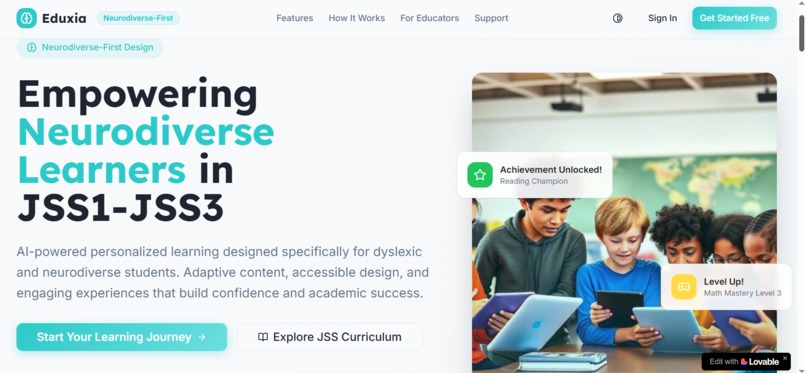
Eduxia Hero Section
-
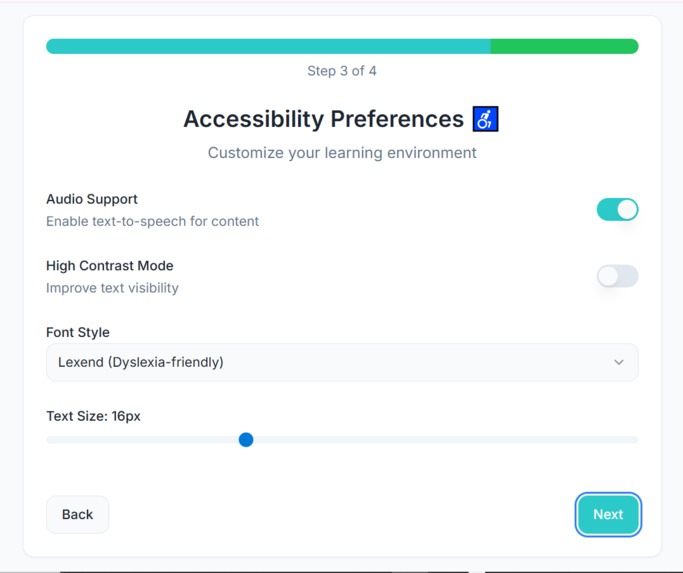
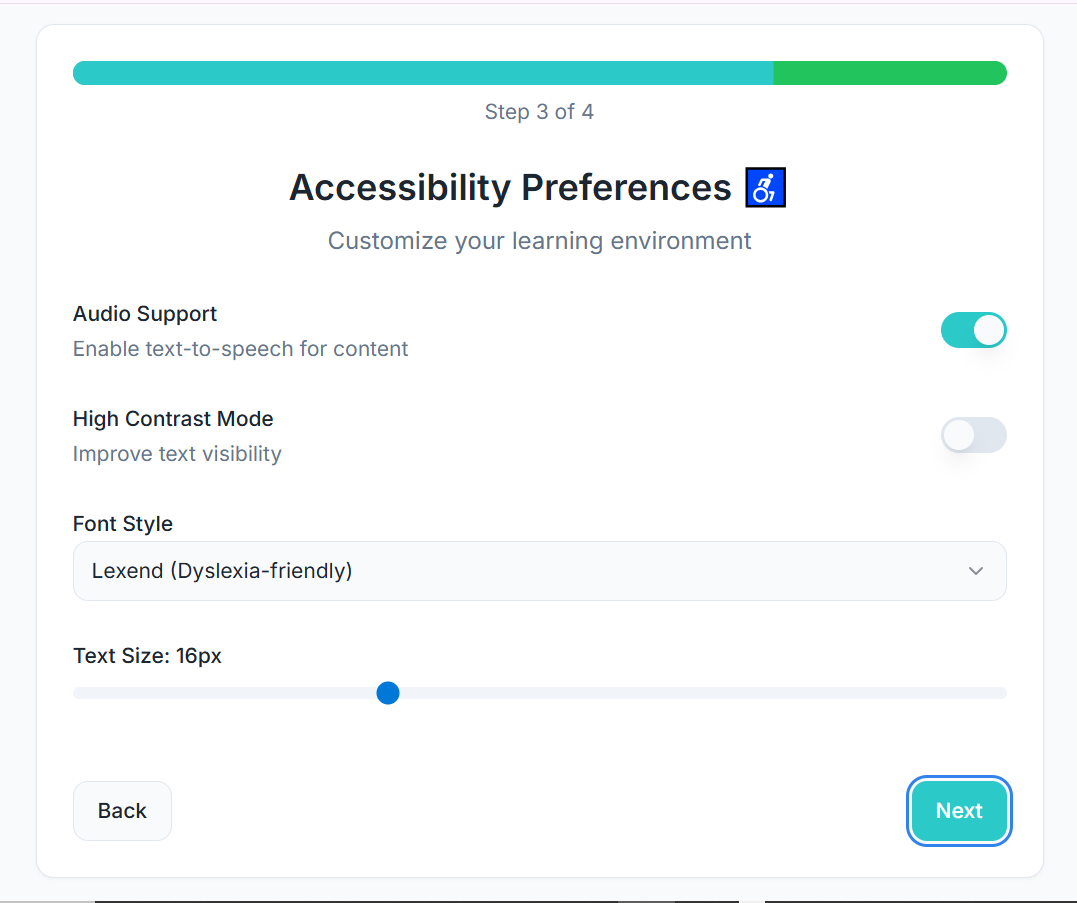
Accessibility Preferences
-
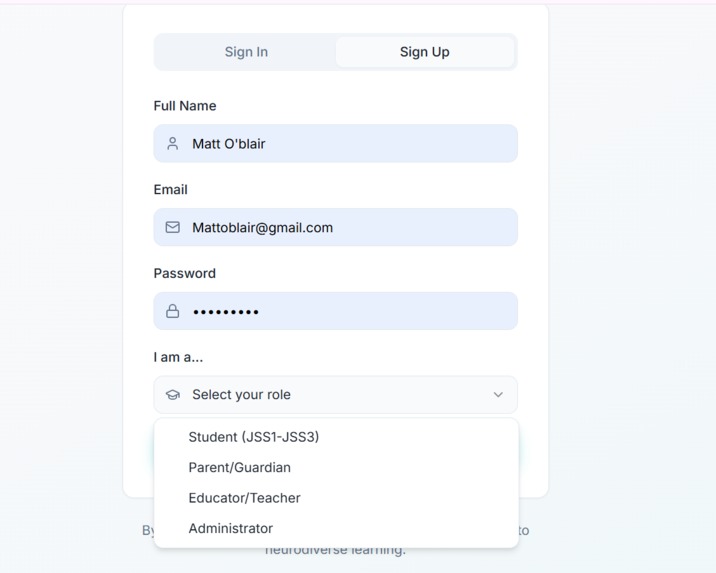
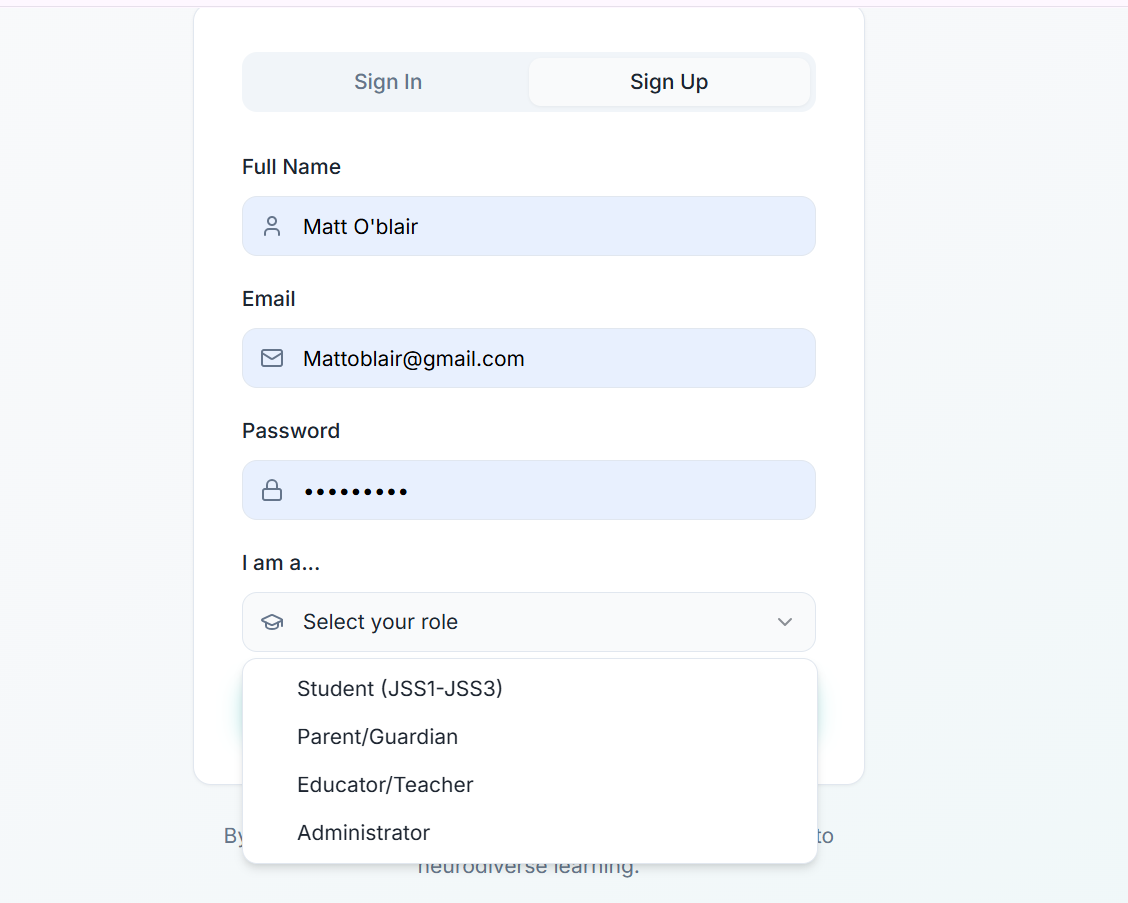
Sign up and Sign In Page
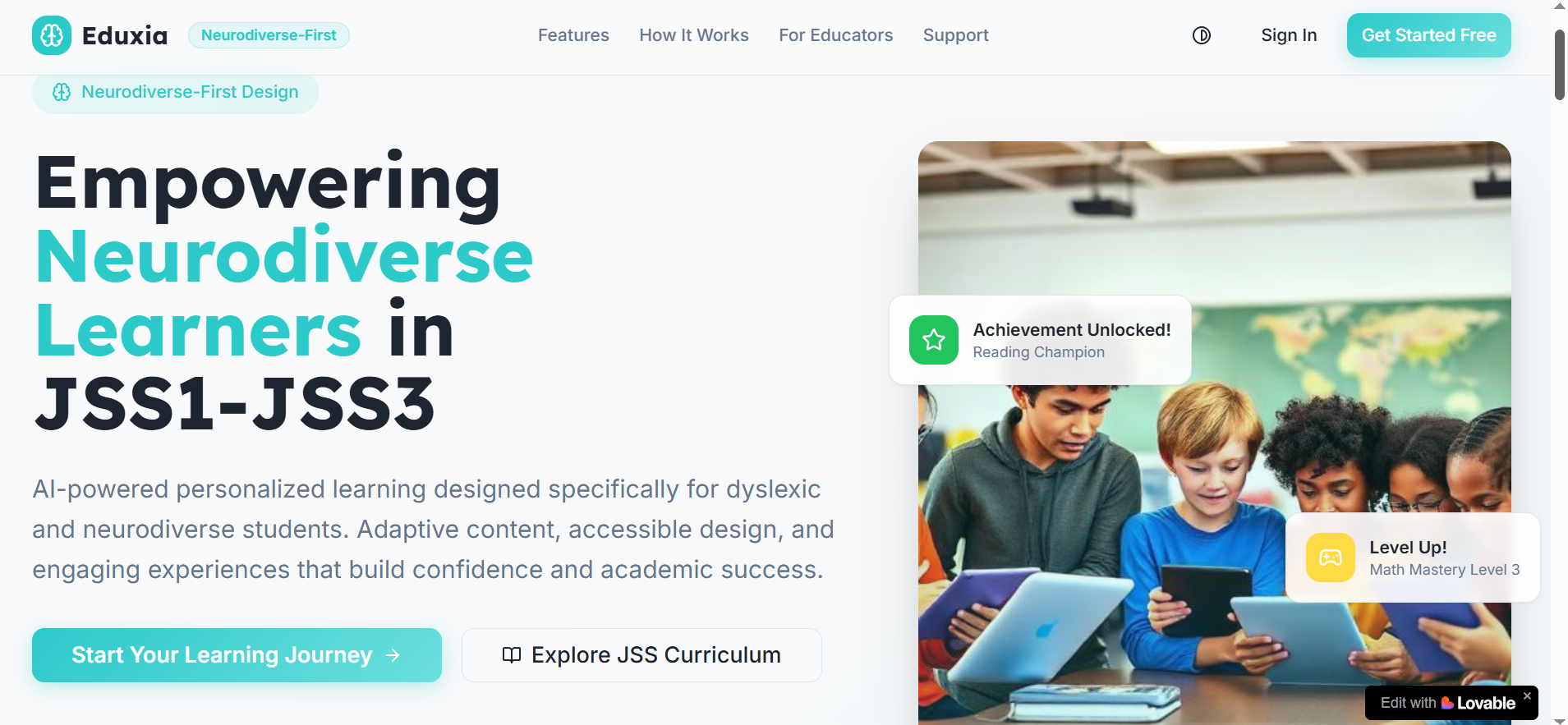
Inspiration
Eduxia was born from a deeply personal story.
Growing up, I dreamed of becoming a medical doctor. But everything changed when I transferred from a public school to a private one. I joined late in the term, and the curriculum was already in full swing. The pace was faster, and I struggled to catch up. There was no structured support to help me bridge that gap. I hadn’t even finished copying my notes when the first test of the term came.
That one test, just one, was used to decide who stayed in the science department. I didn’t pass. Not because I wasn’t capable, but because I hadn’t been given the time or tools to adjust. I was advised to leave science for another department. Just like that, a single moment redefined my future.
But I wasn’t a failure.
I switched to the commercial department and eventually graduated as the best student in my class. That experience opened my eyes to the flaws in our education system, especially how it fails students who are neurodiverse, come from underserved schools, or simply need time to adapt. Too often, potential is dismissed because it doesn’t fit into a rigid, one-size-fits-all model.
That’s why I created Eduxia.
Because no learner should be written off due to timing, pace, or difference. Everyone deserves a fair, personalized chance to learn, grow, and thrive.
What it does
Eduxia is an AI-powered personalized learning platform designed to help students, especially neurodiverse learners, learn at their own pace. The platform provides adaptive lessons tailored to students' learning styles, curriculum-based content (starting with the Nigerian Junior Secondary School curriculum), and critical thinking-based assessments.
Eduxia doesn't just aim to deliver content; it empowers students to understand themselves, track their progress, and develop confidence in subjects they might otherwise struggle with. Our first MVP focuses on English Studies for JSS1, across all three terms, with plans to scale into more subjects and levels.
How we built it
We built the MVP using Lovable.dev, an AI agent platform that allows no-code product building. We provided Lovable with a detailed product requirement document (PRD), defined user flows, and structured learning content using the official Nigerian curriculum from the National Educational Research and Development Council (NERDC).
We also incorporated adaptive methodology into the learning flow, including nanoscale learning objectives, progress-based pacing, and student reflection checkpoints. Each lesson is structured around goals, simplified explanations, and mini-assessments to ensure engagement.
Challenges we ran into
One major challenge was fine-tuning the AI (Lovable) to interpret the PRD and build the user experience as intended. We had to rebuild the project from scratch three times due to misalignment with the desired learning flow and experience. This took a lot of trial, tweaking, and persistence.
Another challenge was sourcing the full Nigerian junior secondary curriculum. We expected it to be publicly available and easy to use, but accessing it required a lot of time and manual extraction from old PDF files. Additionally, adapting this curriculum into a digital, personalized learning format required more work than anticipated, especially aligning lessons with adaptive objectives, thinking methodology, and local student needs.
Accomplishments that we're proud of
I'm proud that as a team, we were able to turn personal experience into a functional prototype without a coding background. We are also proud that Eduxia speaks to a real need that many students across Africa silently face but rarely talk about.
Another major win was successfully converting a rigid, offline curriculum into a modern, digital-first learning experience. It feels like a small but significant step toward democratizing quality education for every learner, regardless of their background or learning speed.
What we learned
We learned that product design with AI requires patience and clarity. Working with an AI agent like Lovable taught us the importance of structured input, iteration, and detailed user journey mapping.
We also learned that accessibility isn’t just about providing tools; it’s about adapting those tools to real-world contexts. Every student learns differently, and effective learning platforms must reflect that. We also gained deep insights into adaptive learning design, local education policy gaps, and the long journey ahead to make personalized learning a norm in Africa.
What's next for Eduxia
The next steps for Eduxia are focused on impact, refinement, and growth:
Pilot Testing in Schools We'll launch a pilot program across selected public and low-income private schools in Nigeria to collect real-world usage data, feedback from students and teachers, and measure learning outcomes.
Improving the AI & Adaptive Engine Using pilot data, we’ll fine-tune the AI to improve how it adapts to each student’s pace, struggles, and preferred learning styles — especially for dyslexic and neurodiverse learners.
Multi-Language & Offline Support We plan to add local Nigerian languages and full offline capability, ensuring accessibility for students in underserved, rural, or low-bandwidth environments.
Subject Expansion & Curriculum Completion After English, we’ll fully integrate other JSS1–JSS3 subjects like Mathematics, Basic Science, and Social Studies — all aligned with the latest Nigerian curriculum.
Teacher Companion Dashboard We'll build a version for educators to track progress, assign custom lessons, and provide real-time support to struggling students.
Partnerships & Grants We’re actively seeking educational partnerships, government collaboration, and grants to scale Eduxia nationally and eventually across West Africa.
Certification & Learning Paths Over time, we’ll introduce learning milestones, badges, and certificates to motivate learners and help them showcase their progress.
Built With
- elevenlabsapi
- javascript
- openaiapi
- react18
- superbase
- typescript
- vite
- webaudioapi


Log in or sign up for Devpost to join the conversation.