-
-
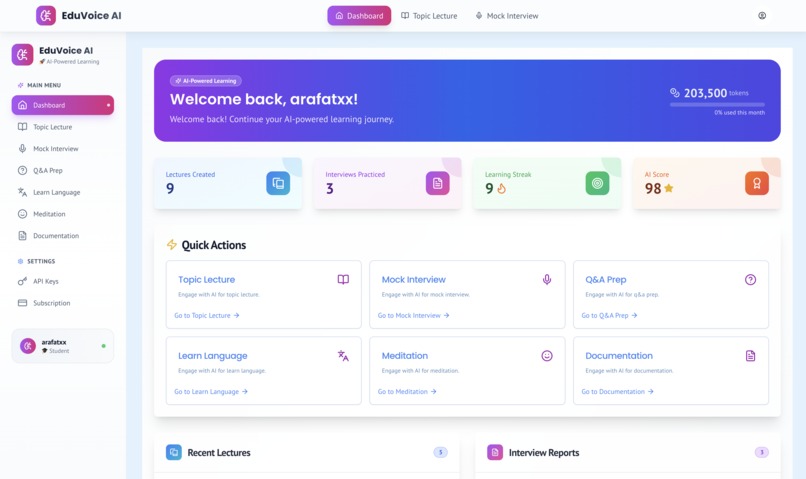
Dashboard
-
-
-
-
-
-
-
-
Inspiration
We were inspired by the limitations of traditional education and the growing need for personalized, accessible, and adaptive learning experiences. Many students struggle with one-size-fits-all approaches, lack opportunities for realistic practice, and face barriers in language acquisition. We envisioned an advanced platform that harnesses the power of AI to bridge these gaps, offering tailored content, real-time feedback, and immersive practice environments, making high-quality education available to everyone, everywhere.
What it does
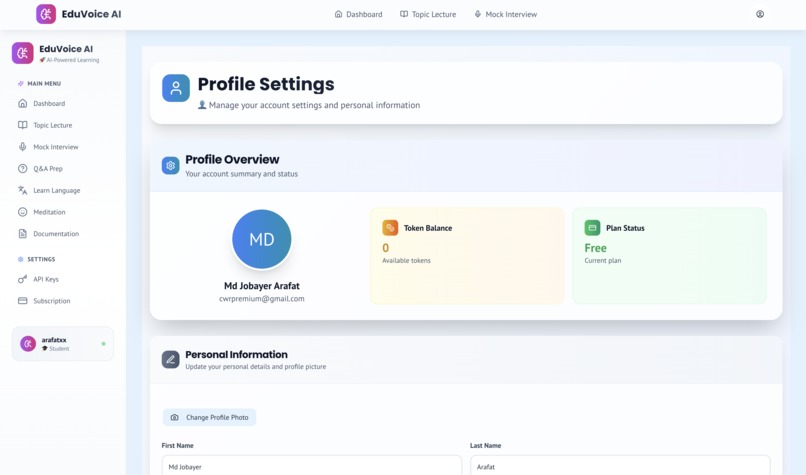
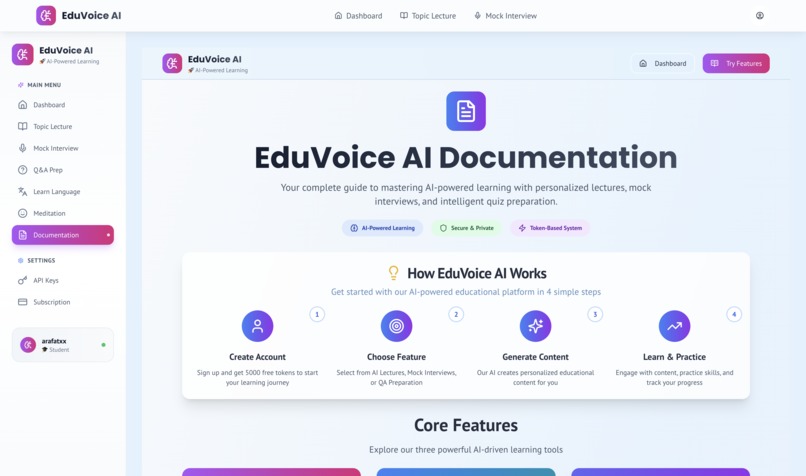
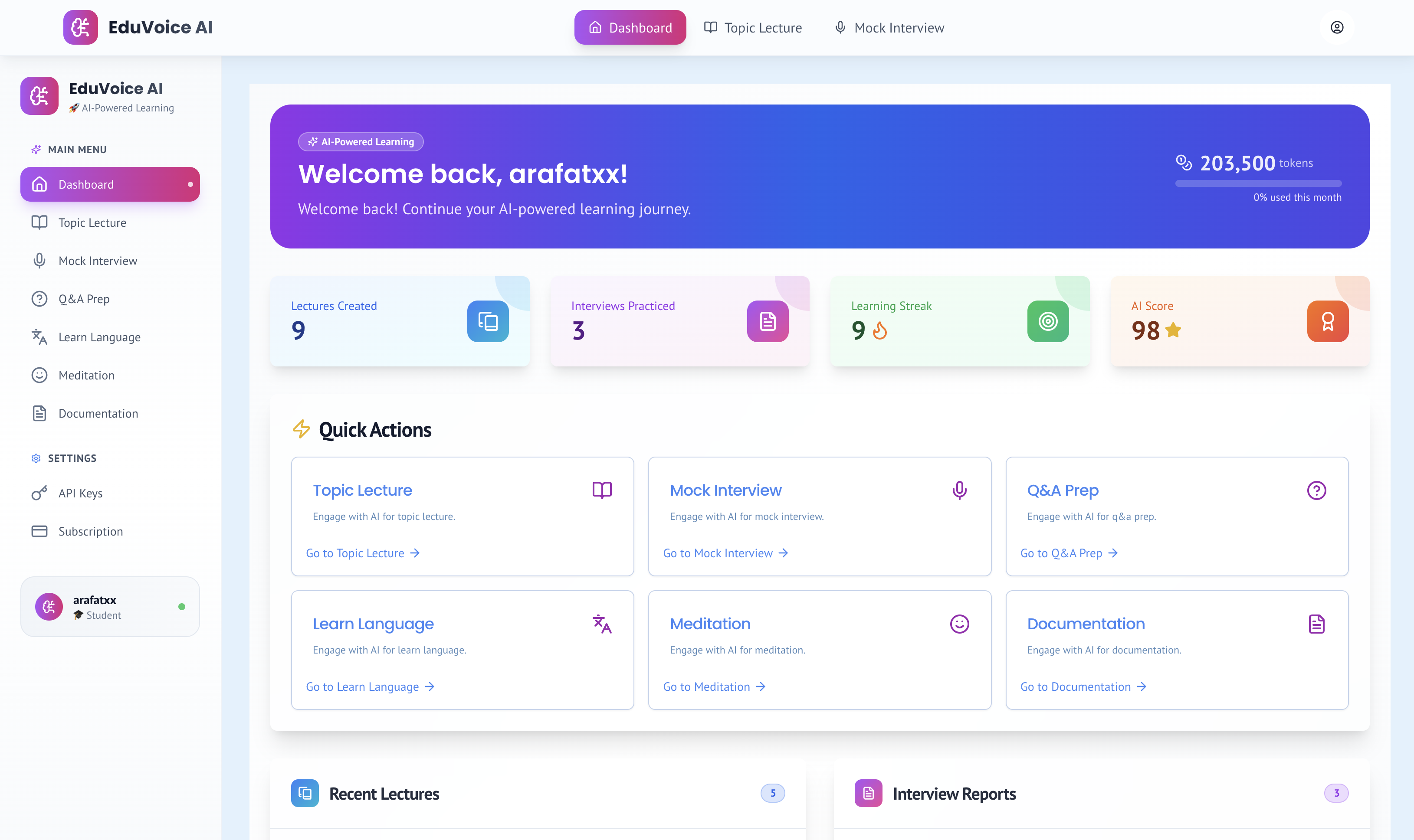
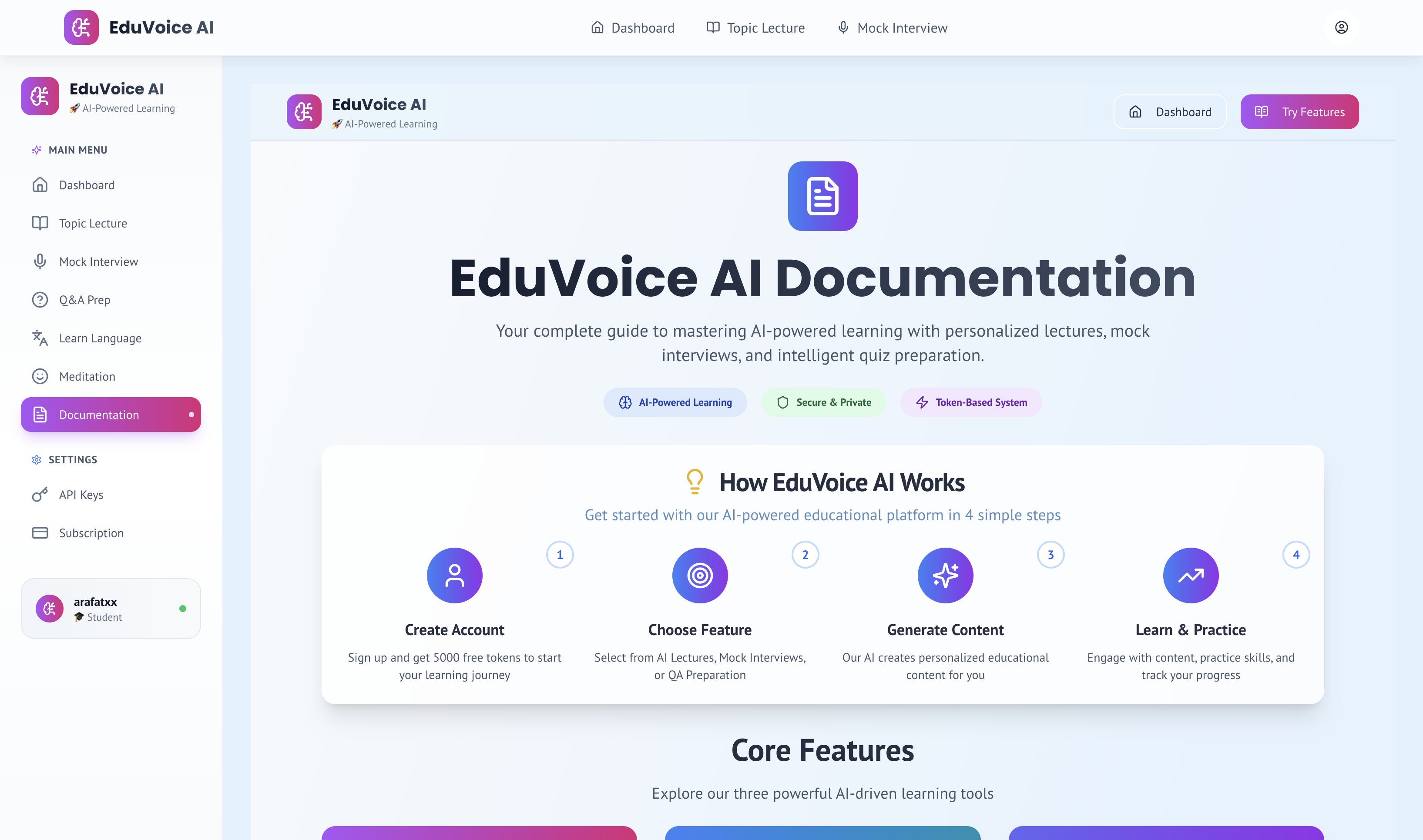
EduVoice AI is a comprehensive educational platform that leverages cutting-edge AI to provide a holistic learning experience. It revolutionizes how students learn, practice, and assess their skills through four core features:
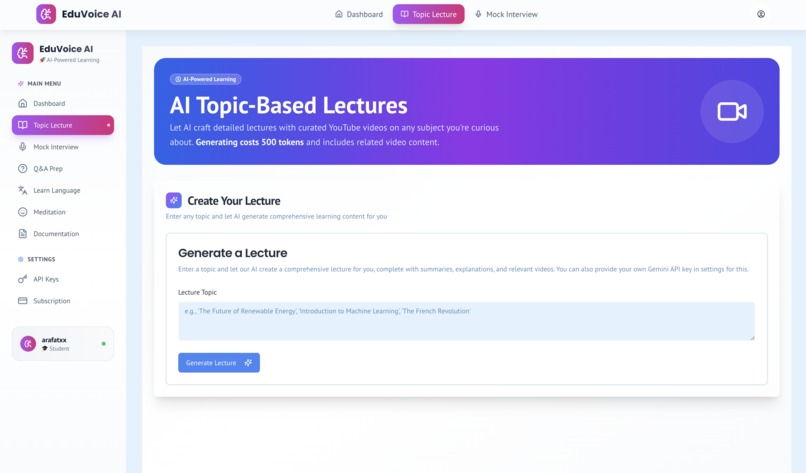
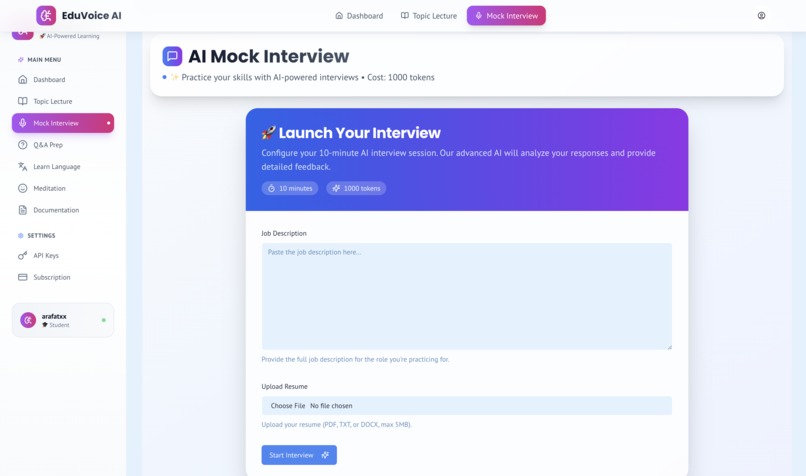
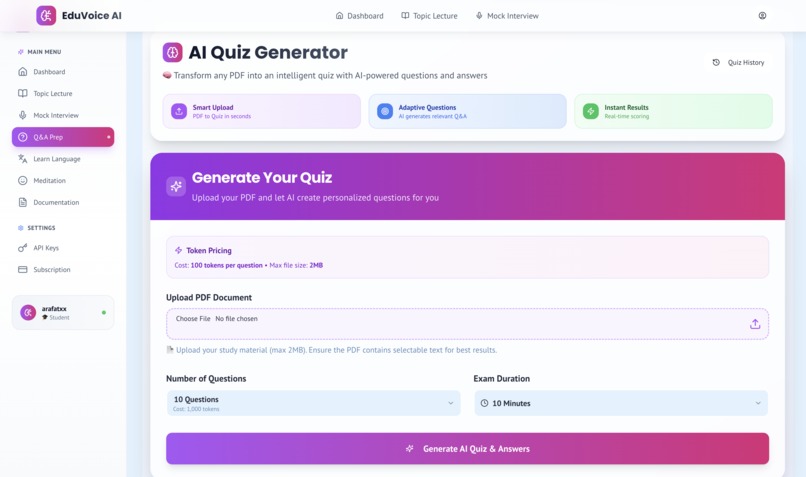
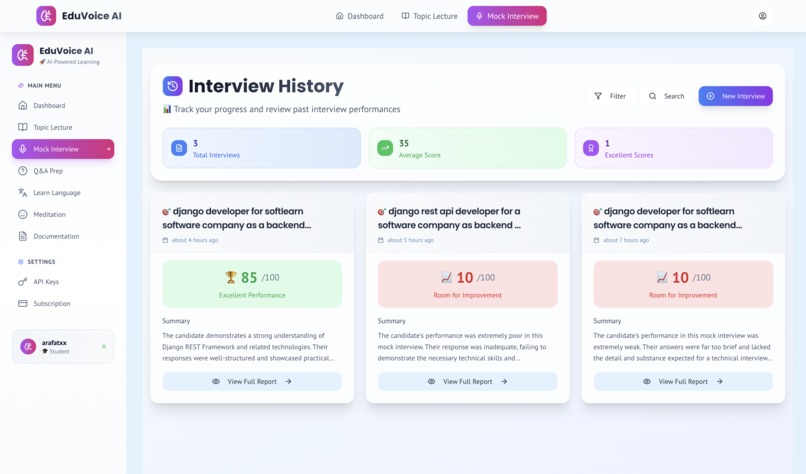
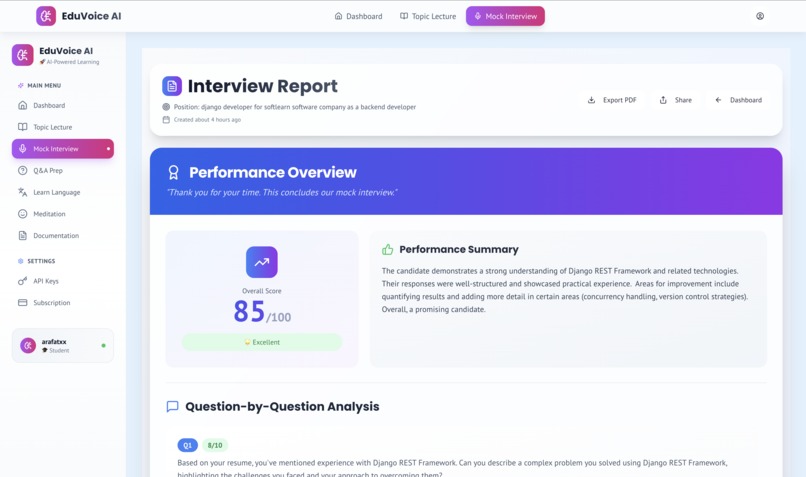
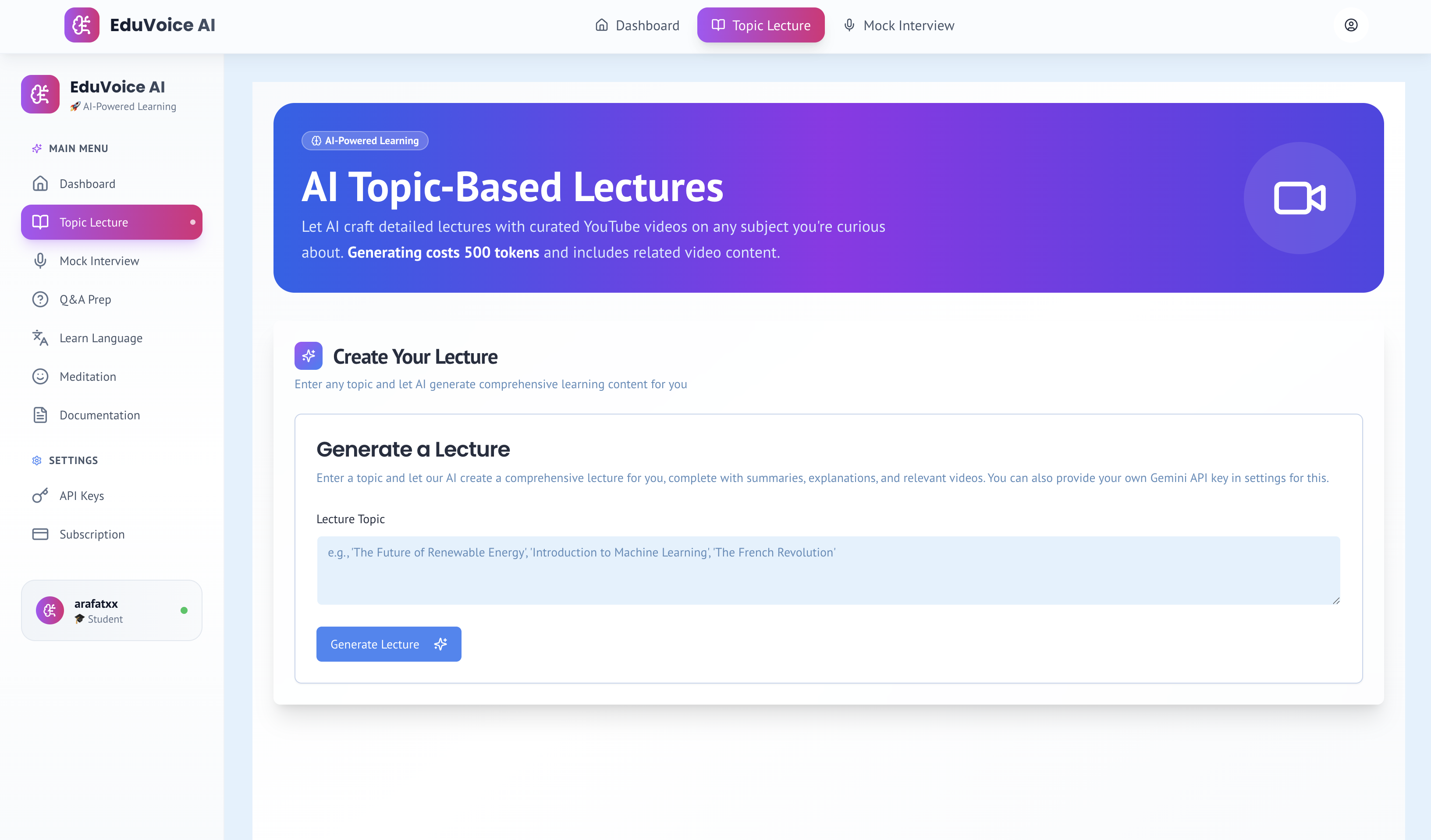
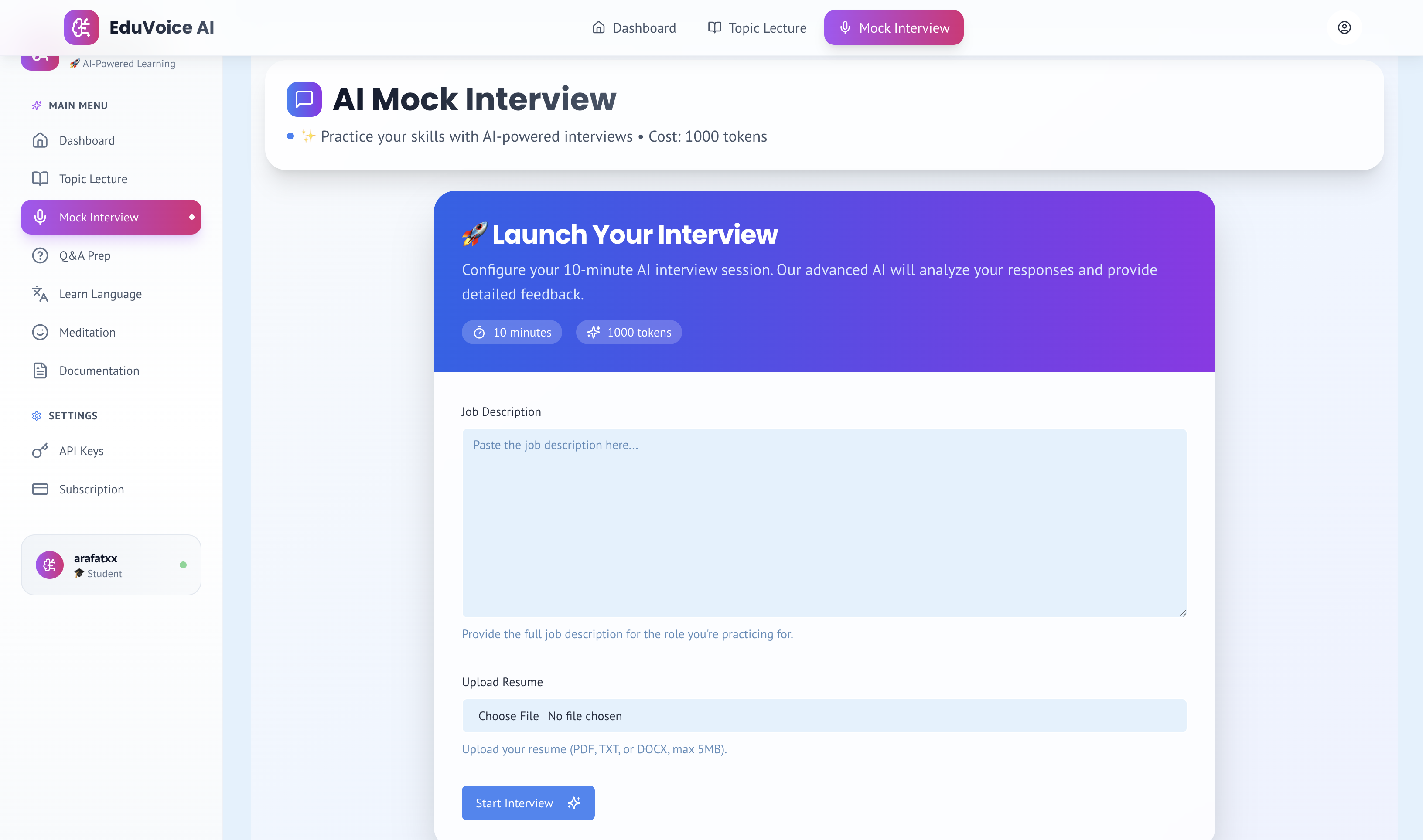
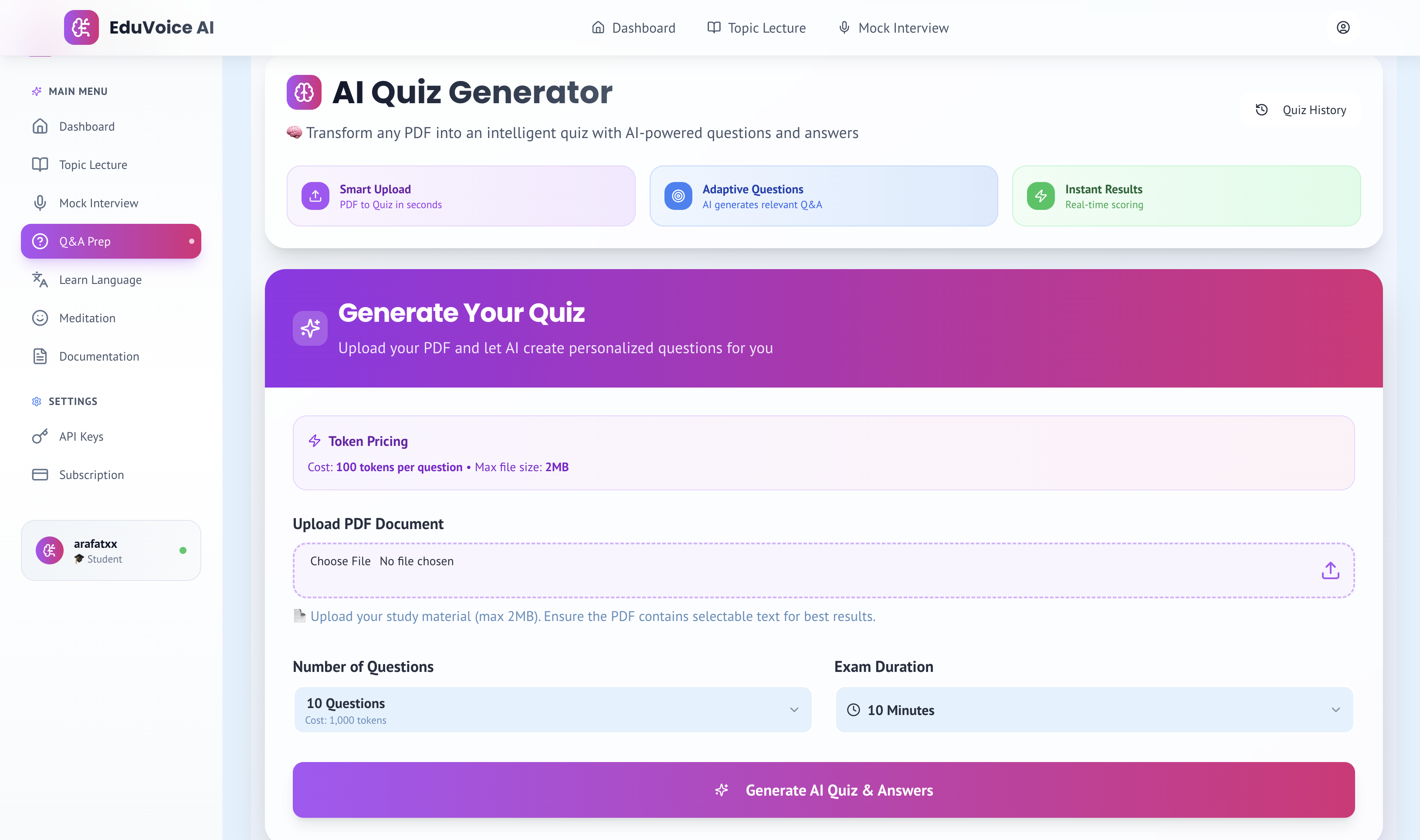
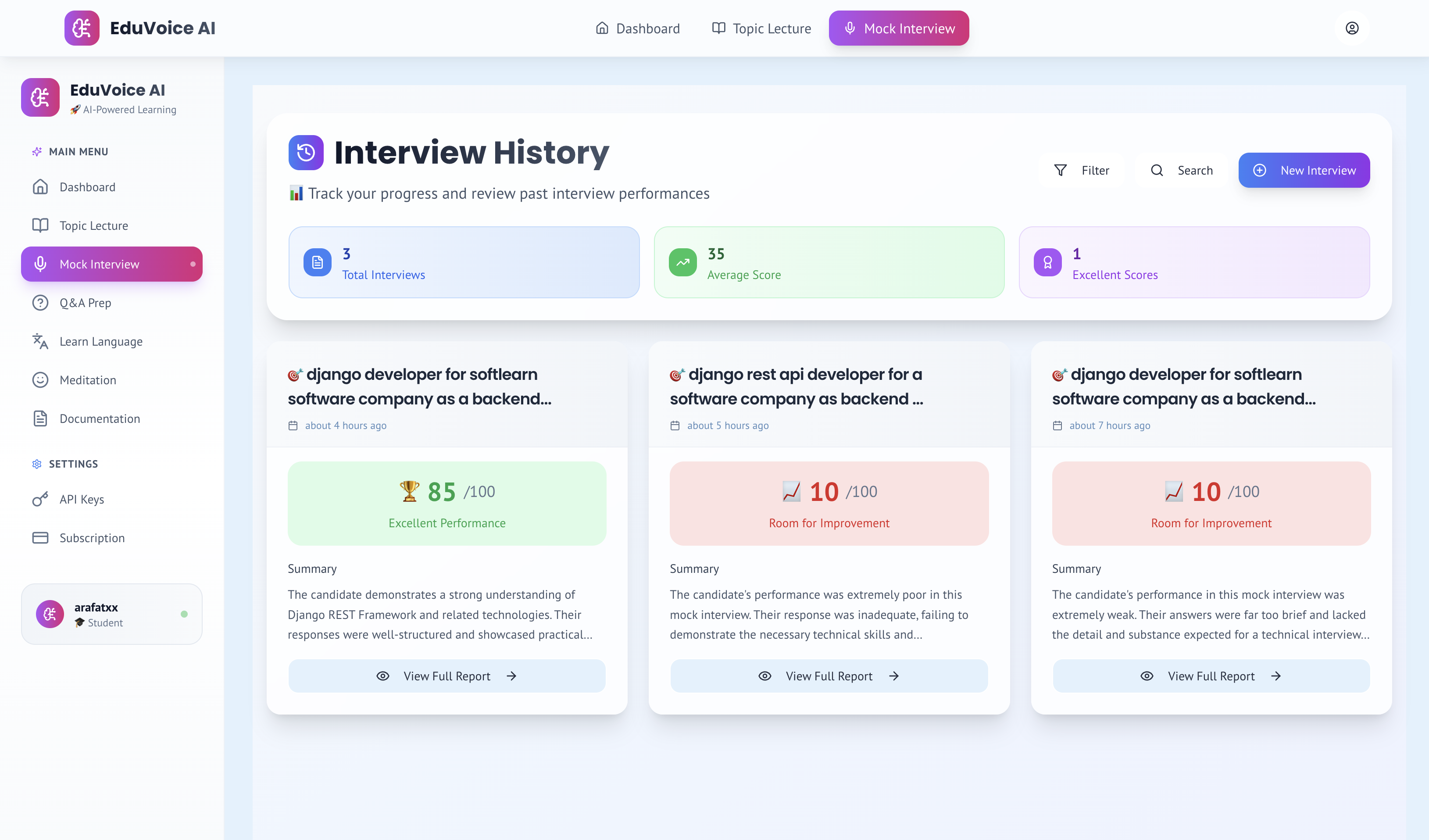
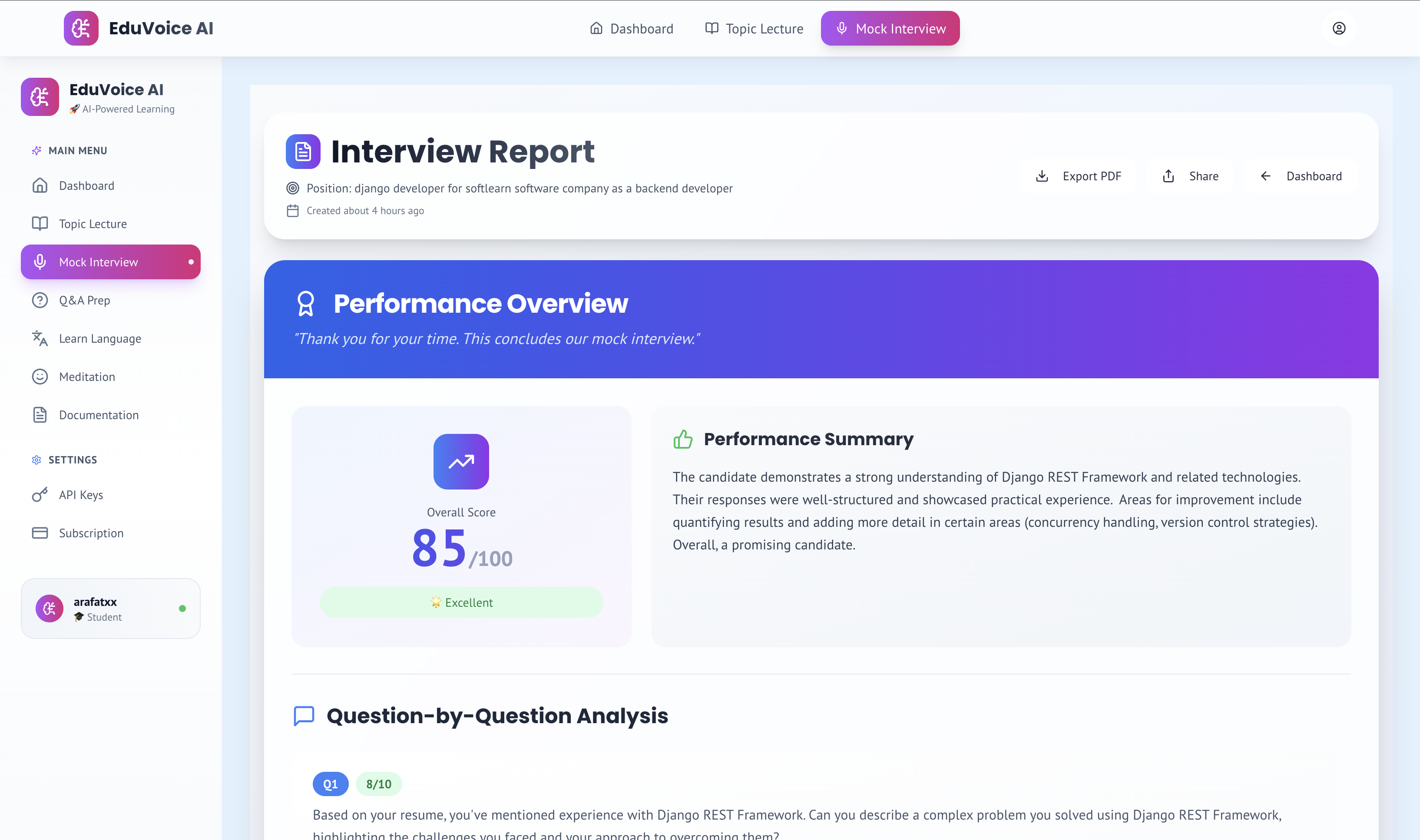
AI Lecture Generation: Instantly creates detailed lectures on any topic, complete with AI-curated YouTube video integrations, summaries, and explanations. AI Mock Interview: Offers voice-based AI interview practice with personalized questions (based on uploaded CVs), real-time feedback, and scoring, powered by ElevenLabs voice AI. AI Quiz Generator: Generates custom quizzes from PDF materials in five different formats (MCQ, True/False, Fill-in-the-blank, Short Answer, Essay), including timed exam simulations. Language Assessment Hub: Provides comprehensive language testing through video assessments, supporting 13+ languages with Tavus AI video integration for conversational interactions and CEFR-based scoring.
How we built it
EduVoice AI was built as a modern, full-stack application.
For the frontend, we utilized Next.js 15 with TypeScript, styled using Tailwind CSS and Shadcn/ui for accessible components. This allowed us to create a highly responsive and intuitive user interface.
On the backend and for database management, we integrated Appwrite, which served as our Backend-as-a-Service platform, handling authentication, user data storage, file storage (for PDFs, audio, profile images), and real-time subscriptions.
The intelligence of the platform comes from its robust AI and Machine Learning integrations. We primarily used Google Gemini (Gemini 2.0 Flash for content generation and Gemini 1.5 Flash for evaluations), with support for user-provided API keys for OpenAI and Anthropic Claude. Google Genkit was crucial for orchestrating our AI flows.
For realistic voice and video interactions, we integrated:
ElevenLabs for natural text-to-speech conversion and real-time audio in mock interviews. Tavus AI for conversational video interfaces, enabling AI avatar interactions in language assessments. Additional technologies like React Hook Form, Zod, React Query, React Markdown, and Recharts were used to streamline development, validation, data fetching, rendering, and visualization.
Challenges we ran into
Building EduVoice AI presented several interesting challenges:
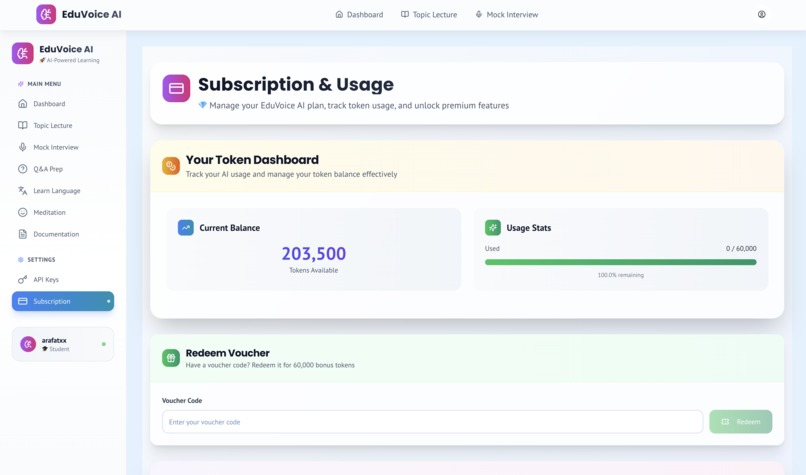
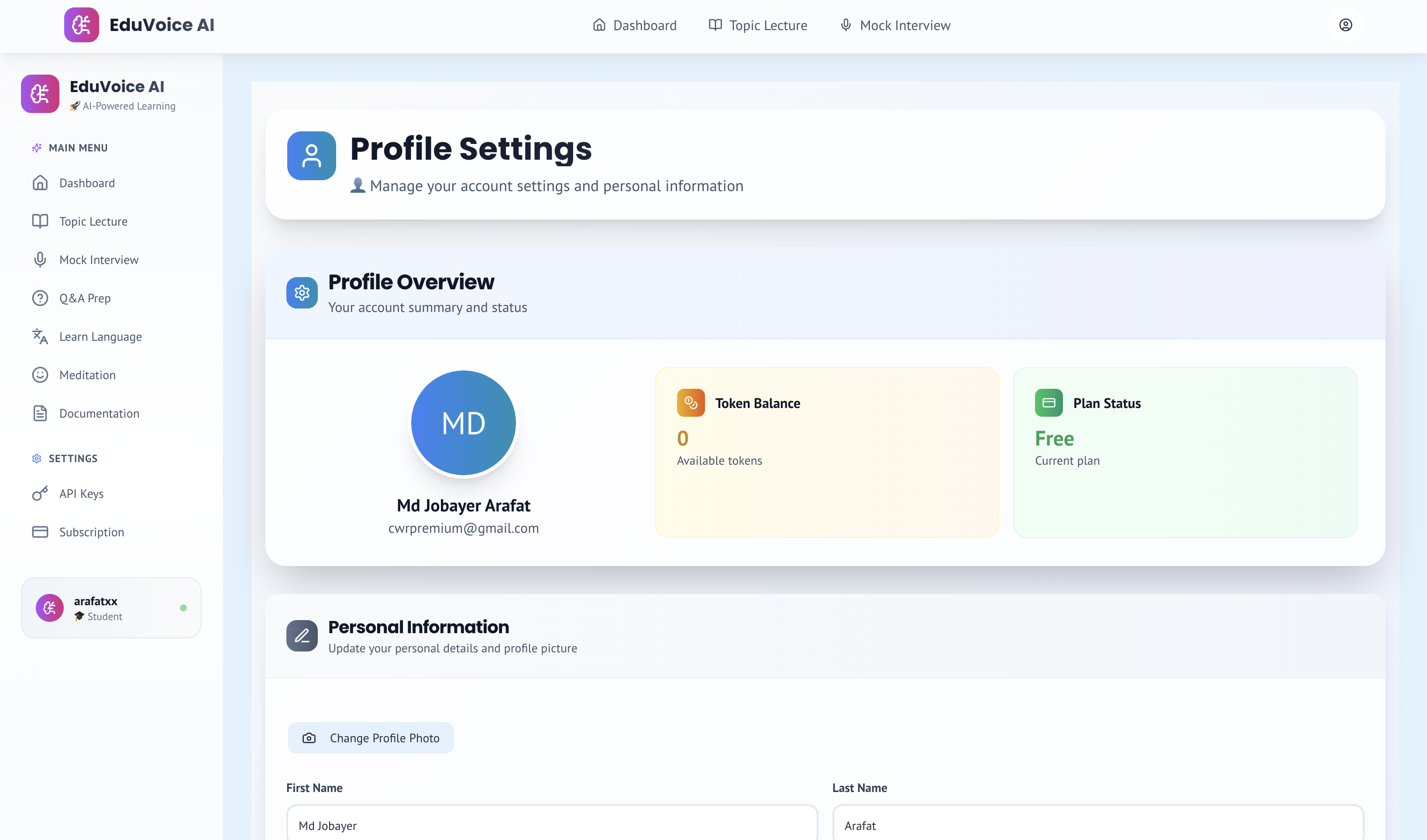
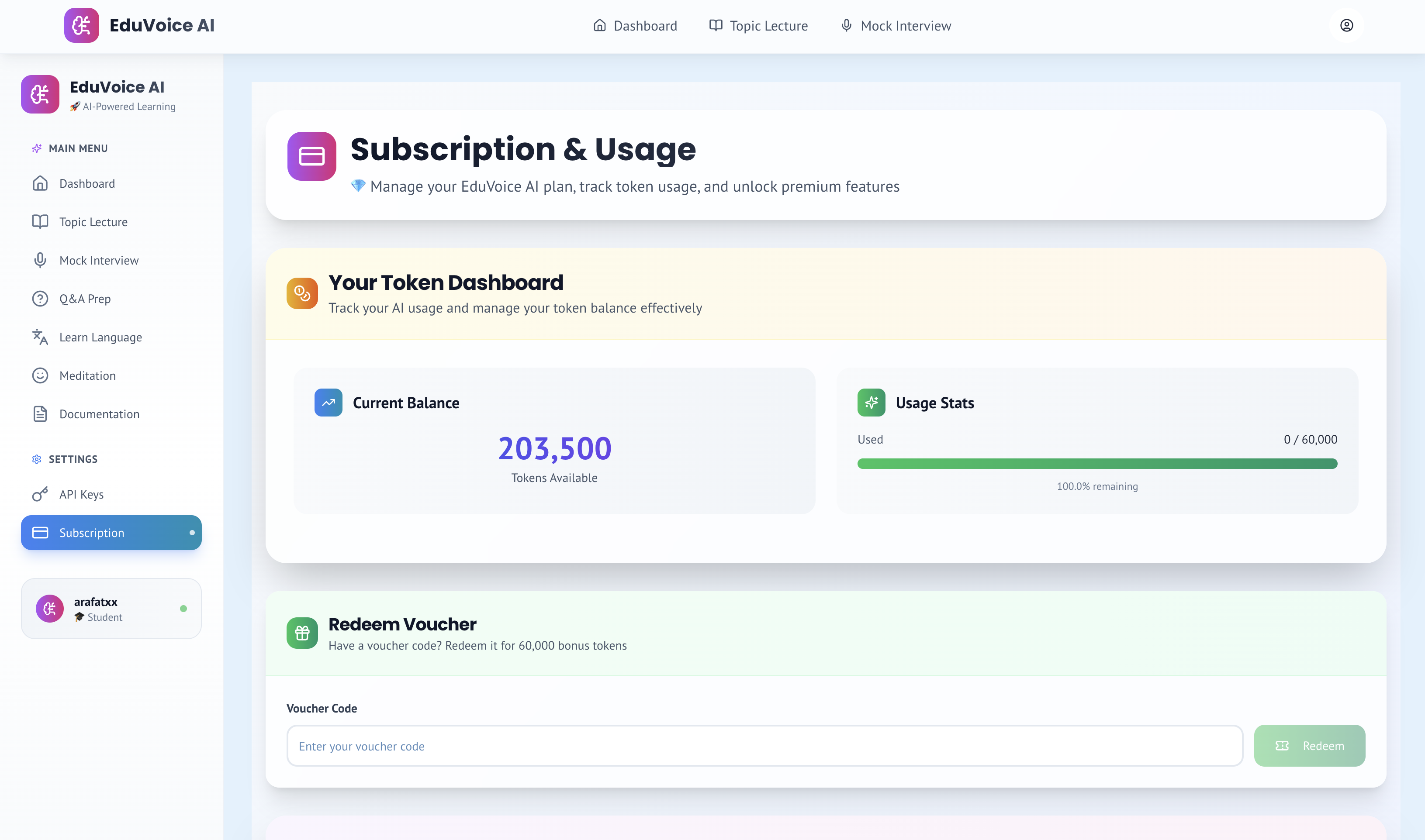
Complex API Orchestration: Integrating multiple sophisticated AI APIs (Gemini, ElevenLabs, Tavus AI) and ensuring seamless, real-time interaction between them was complex, especially for voice and video features. Real-time Processing: Handling real-time audio and video streams for mock interviews and language assessments required careful optimization to minimize latency and ensure a smooth user experience. Token System Management: Designing and implementing a robust token-based pricing system that accurately tracks usage across diverse AI features with varying costs was intricate. Scalability for AI Workloads: Ensuring the infrastructure could scale to handle concurrent AI generation and evaluation requests efficiently. Responsive UI with Rich Media: Developing a user interface that gracefully handles various media types (text, audio, video, images) and remains fully responsive across all devices, while maintaining a modern aesthetic.
Accomplishments that we're proud of
We are incredibly proud of several key accomplishments:
Comprehensive Feature Set: Successfully implementing all four core features—AI Lecture Generation, AI Mock Interview, AI Quiz Generator, and Language Assessment Hub—into a cohesive platform. Seamless AI Integration: Achieving smooth and effective integration of diverse AI models like Google Gemini, ElevenLabs, and Tavus AI to power sophisticated functionalities. Voice & Video AI in Action: Bringing natural voice conversations (ElevenLabs) and AI avatar video interactions (Tavus AI) to life, offering a truly immersive learning experience. Robust Token System: Developing a functional and transparent token system that allows for both free exploration and premium access, ensuring the project's sustainability. User-Friendly Interface: Creating an intuitive and aesthetically pleasing UI with Tailwind CSS and Shadcn/ui, making advanced AI accessible to all users.
What we learned
Through this project, we gained invaluable experience in:
Advanced AI API Integration: Deepened our understanding of how to effectively integrate and manage multiple external AI services, handling their unique requirements and potential limitations. Real-time Media Processing: Learned best practices for handling and streaming real-time audio and video in a web application, including optimization techniques for performance. Backend-as-a-Service (Appwrite): Explored the benefits and challenges of using BaaS solutions for rapid prototyping and robust backend development, including authentication, database management, and file storage. Building Scalable AI Applications: Understood the architectural considerations for designing applications that can efficiently handle compute-intensive AI workloads. User Experience Design for AI: Emphasized the importance of designing AI-powered features in a way that is intuitive and helpful to the end-user, not just technologically advanced.
What's next for EduVoice AI
For the future of EduVoice AI, we plan to:
Expand Language Support: Introduce more languages to the Language Assessment Hub to reach a wider global audience. Advanced Personalization: Implement more sophisticated AI algorithms for even deeper personalization of learning paths and content recommendations. Collaborative Learning Features: Integrate features that allow users to share lectures, interview experiences, and quiz results with peers or educators. Mobile Application Development: Develop native mobile applications to provide a seamless learning experience on iOS and Android devices. Additional AI Models & Integrations: Explore integrating new and emerging AI models to further enhance existing features or introduce new learning modalities.
Built With
- appwrite
- claue
- gemini
- nextjs
- openapi
- vps


Log in or sign up for Devpost to join the conversation.