-
-
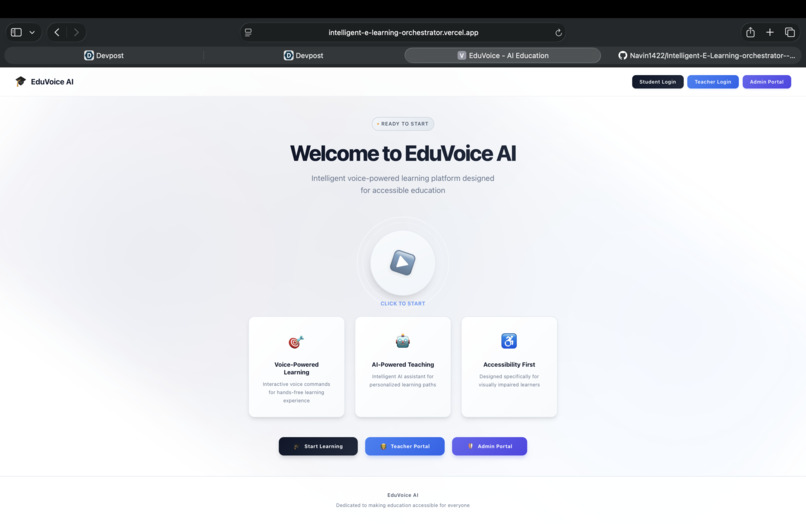
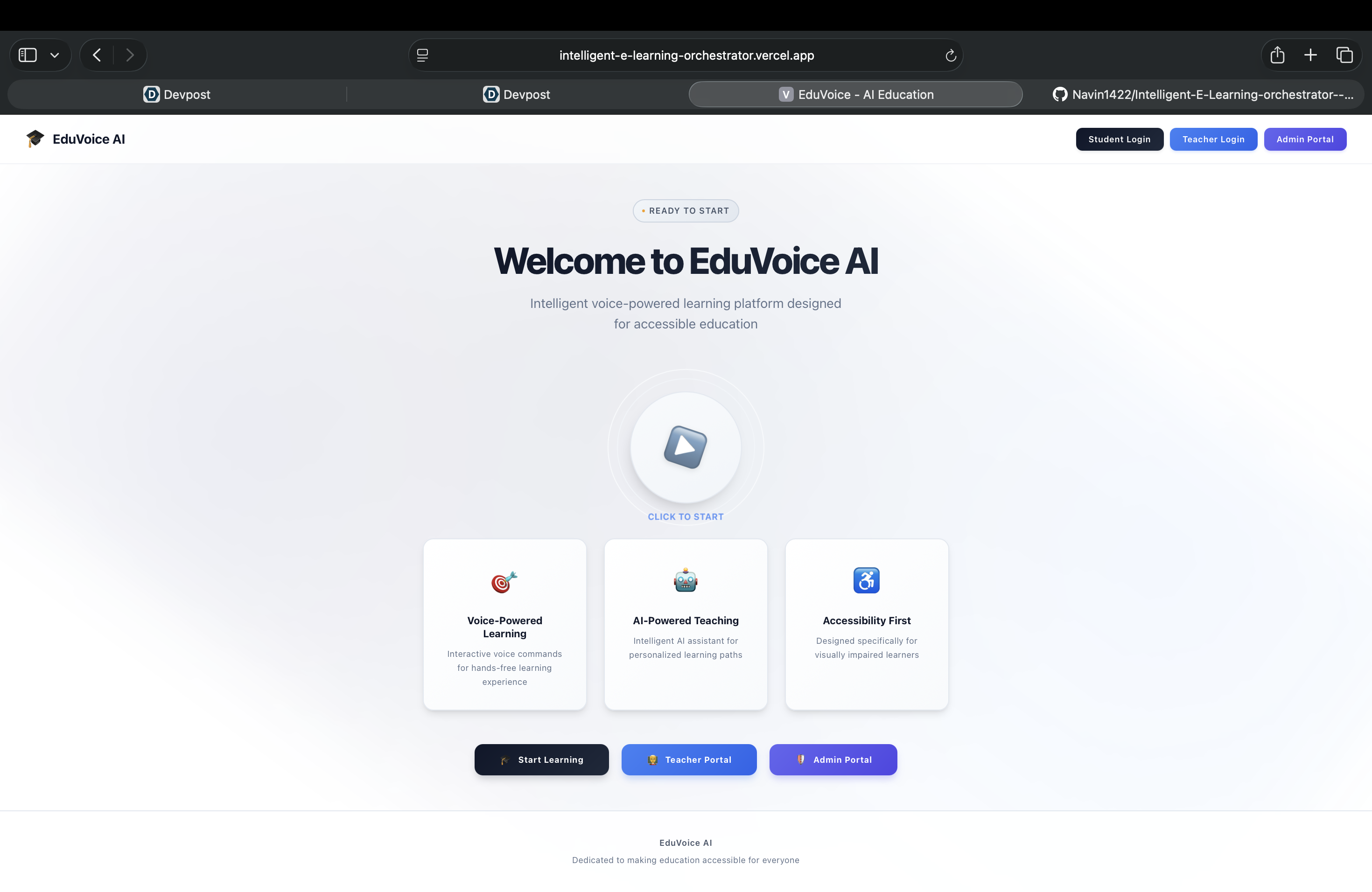
Homepage
-
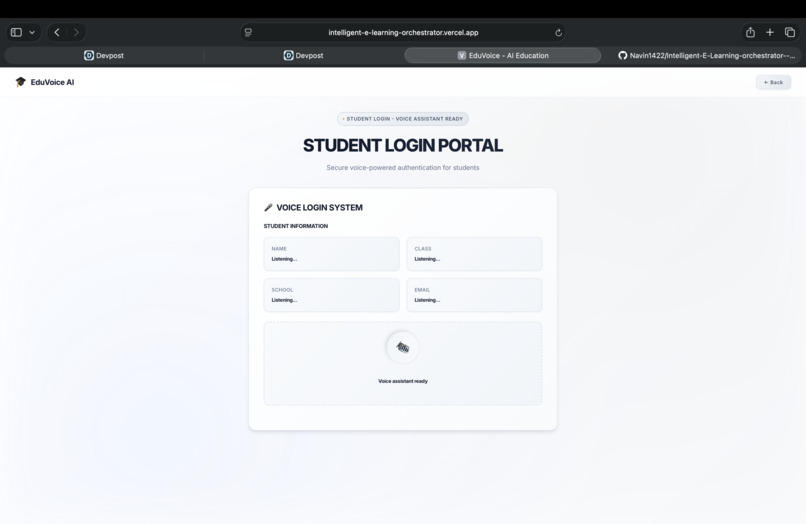
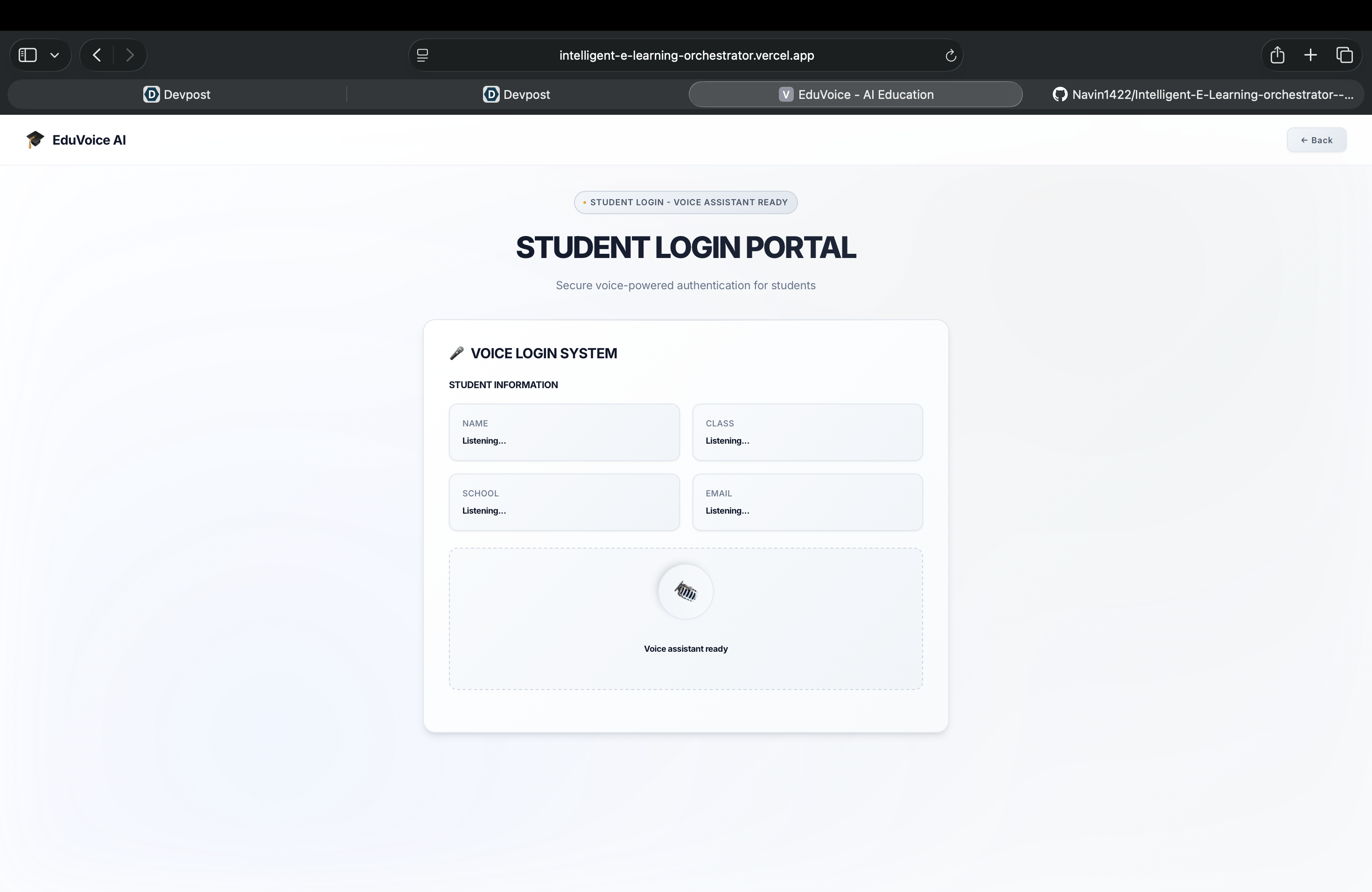
Student Login by logging assisting agent
-
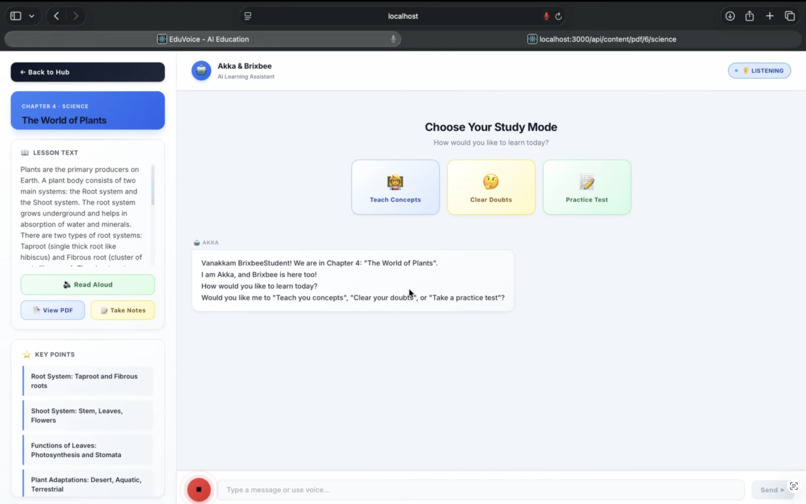
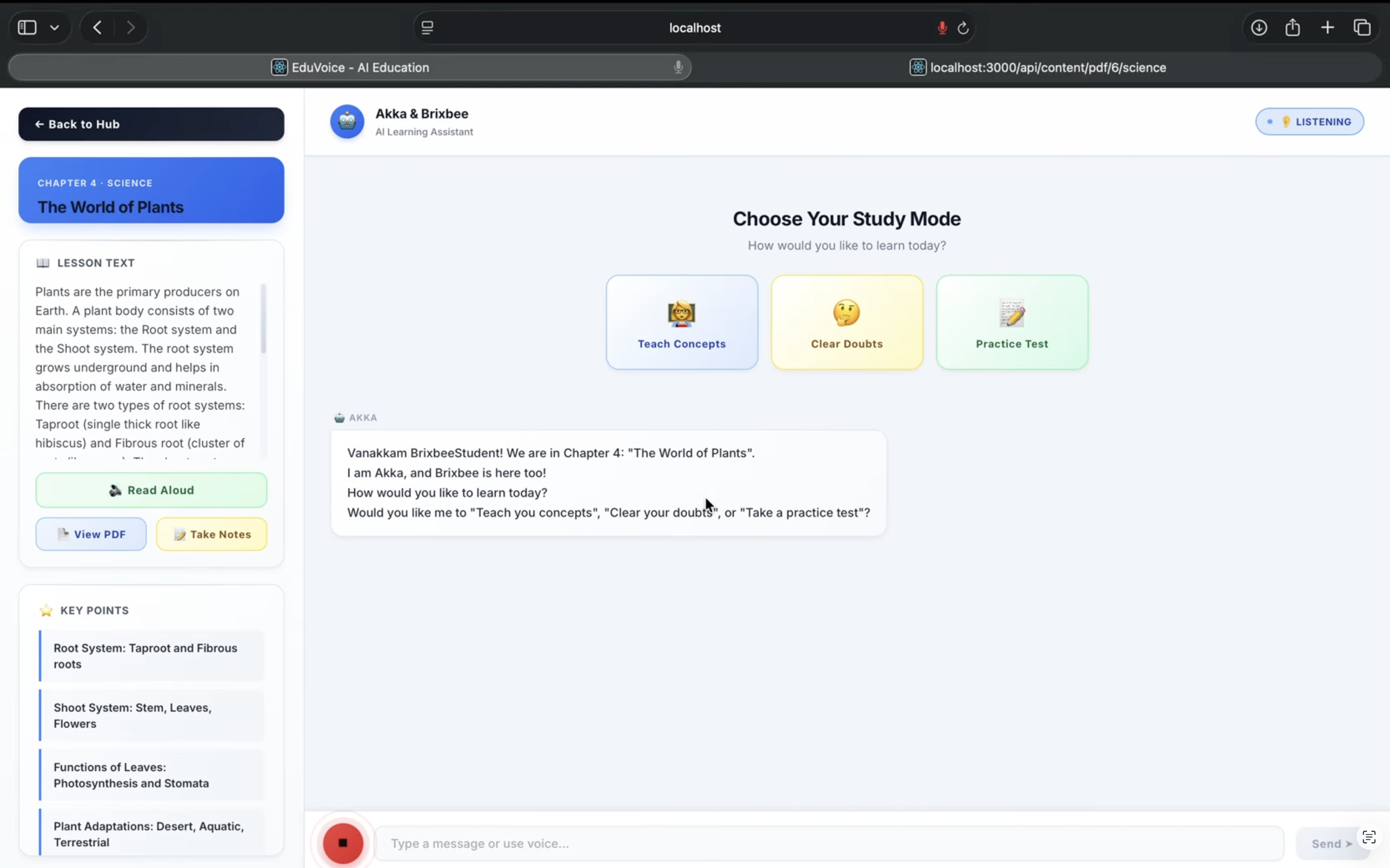
Student learning through Teaching agent
-
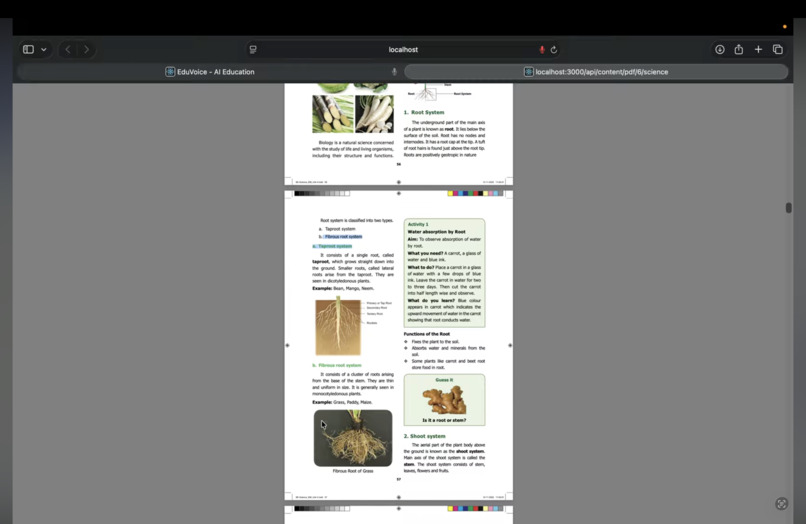
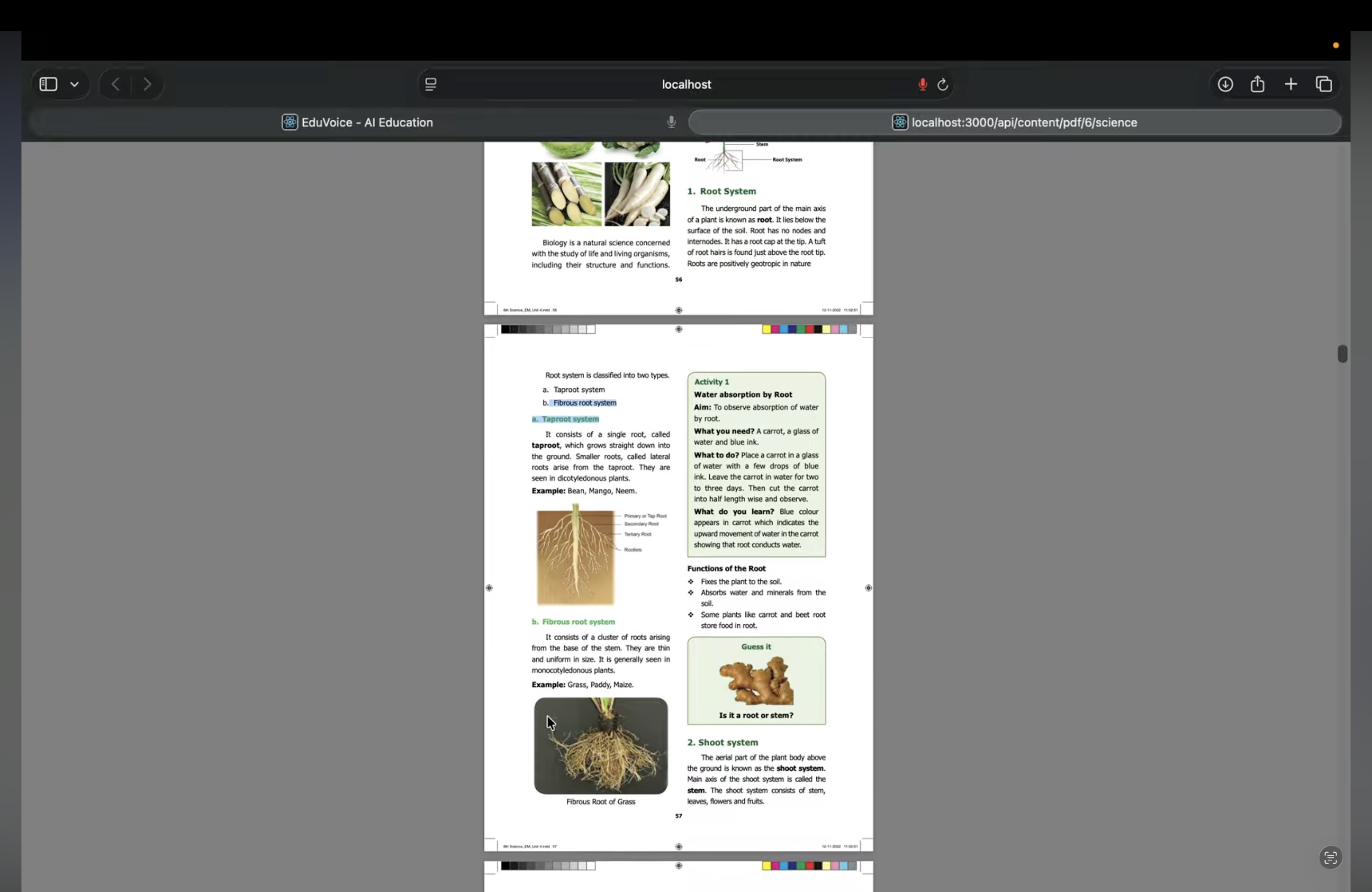
Contextual Source for agent to scrap contents
-
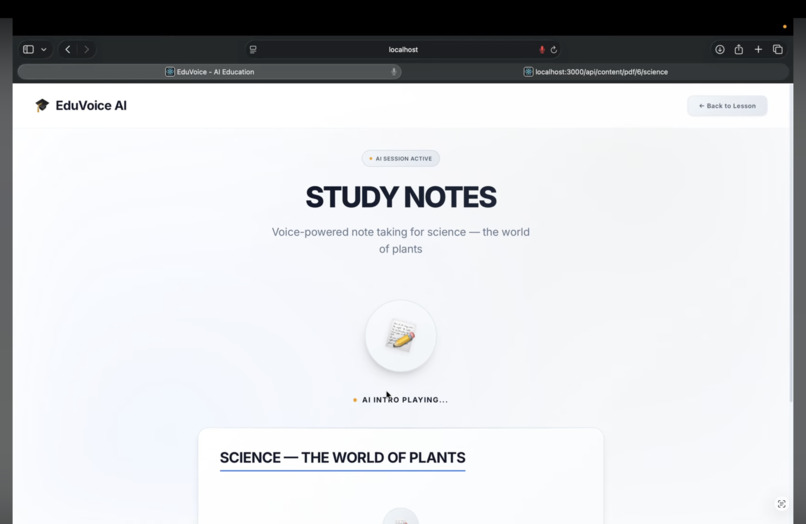
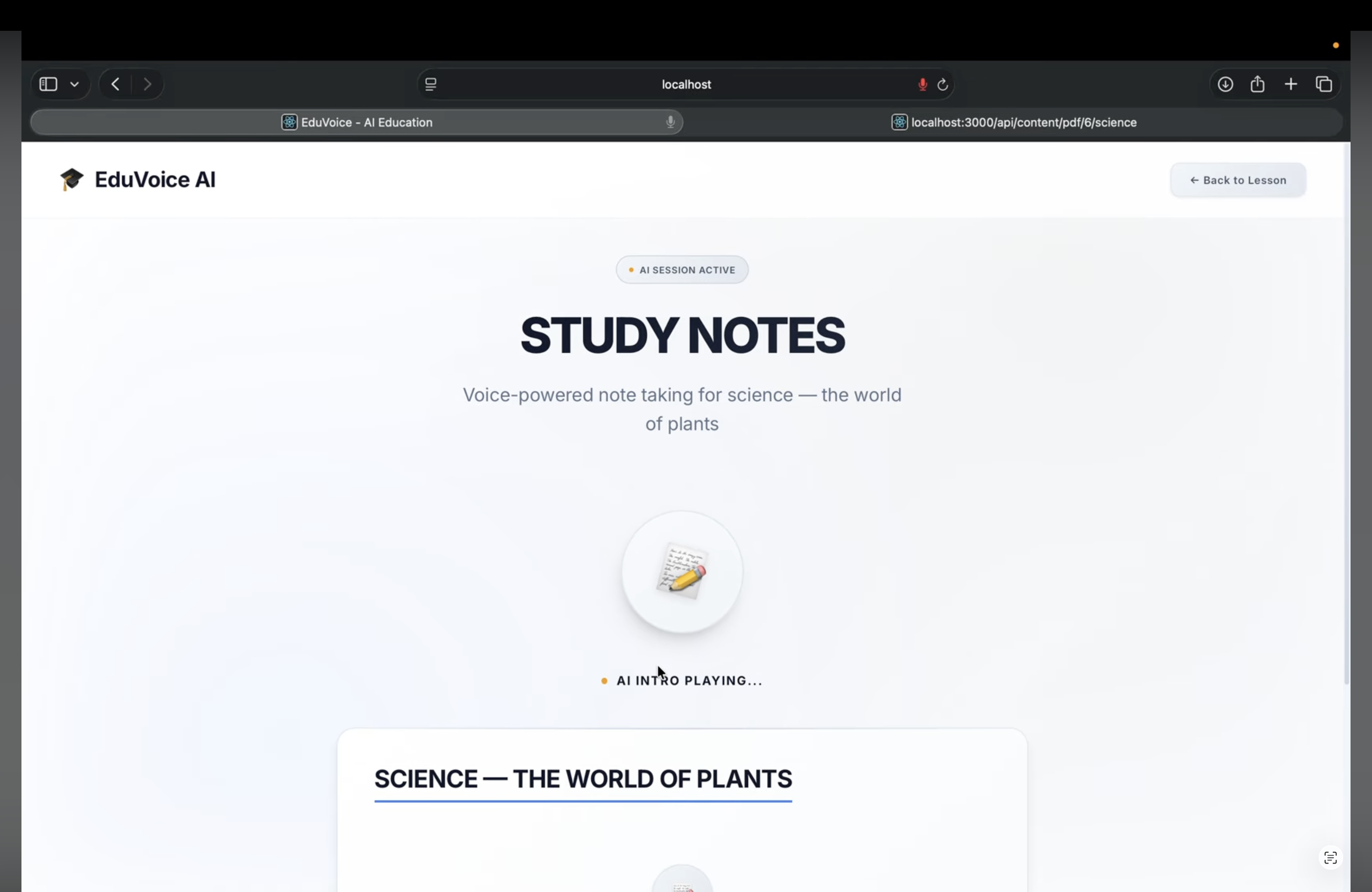
Voice based notes tracking for students
-
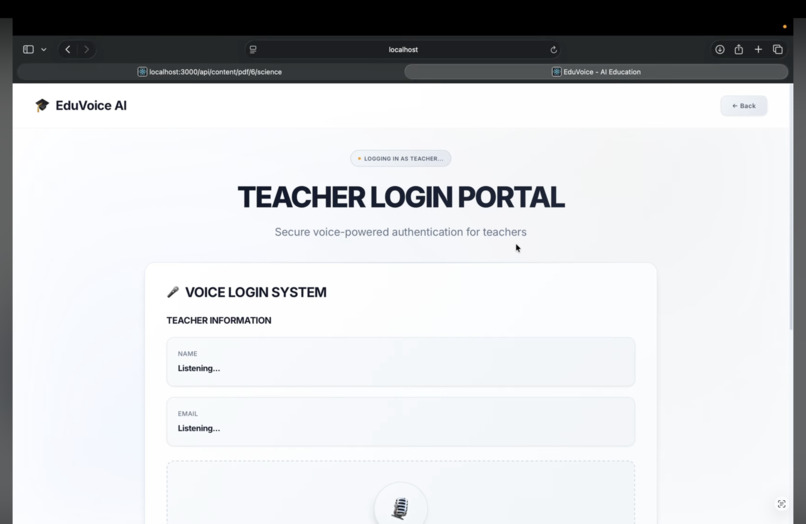
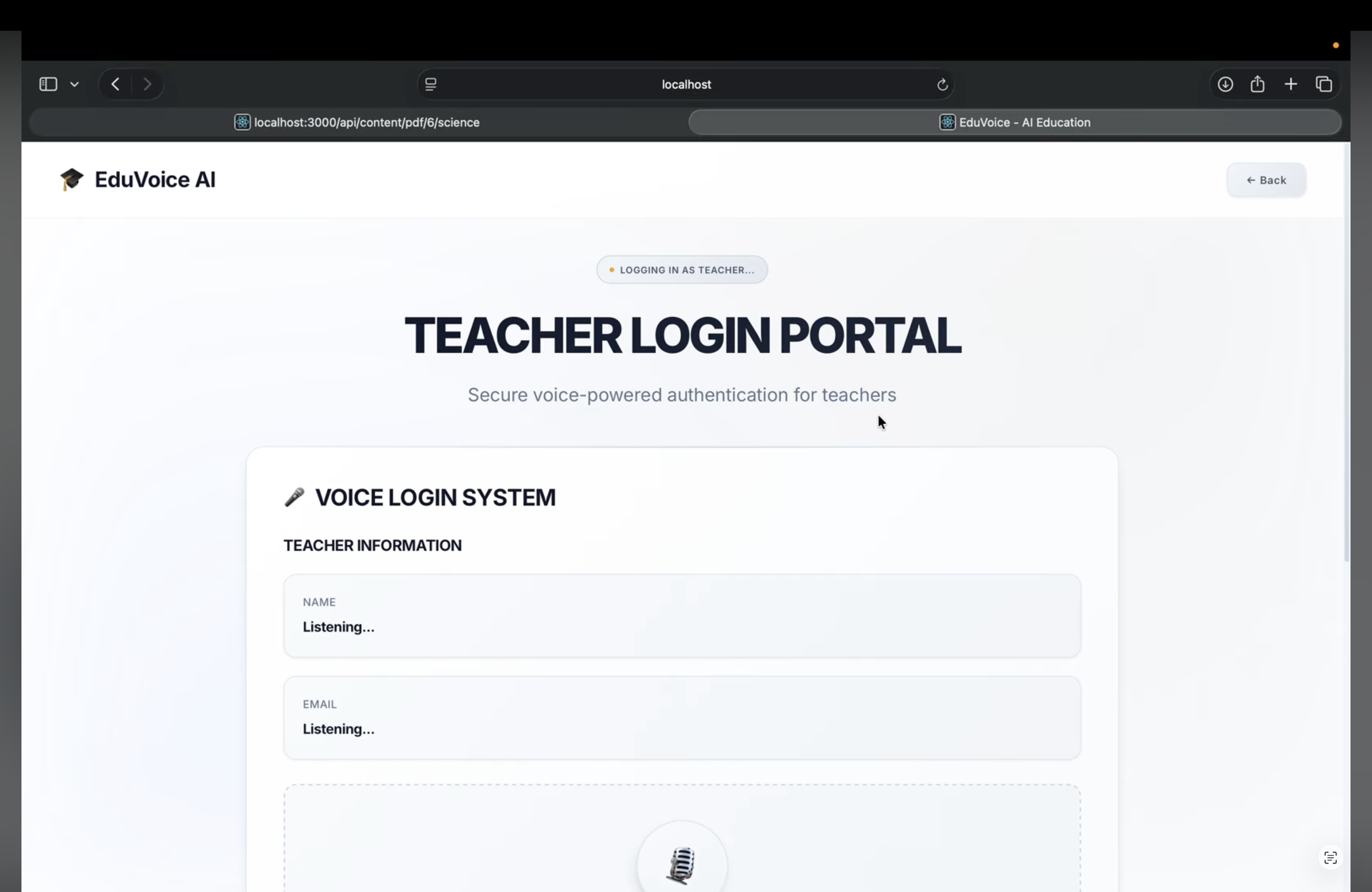
Teacher Login
-
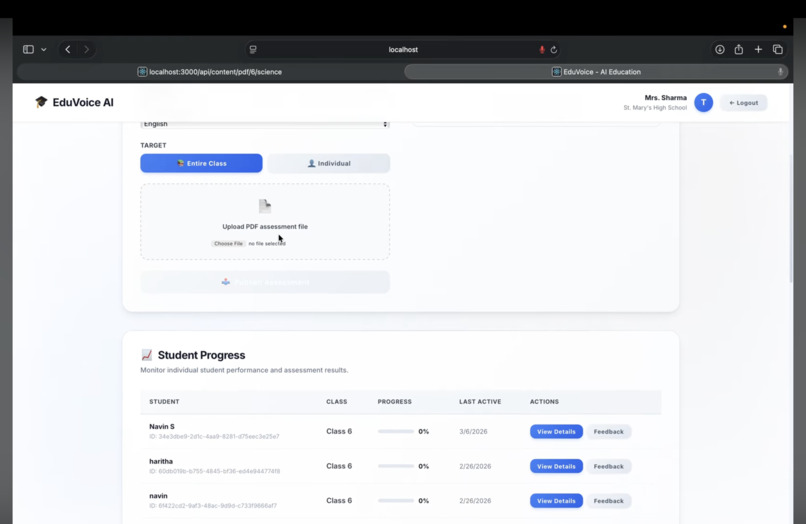
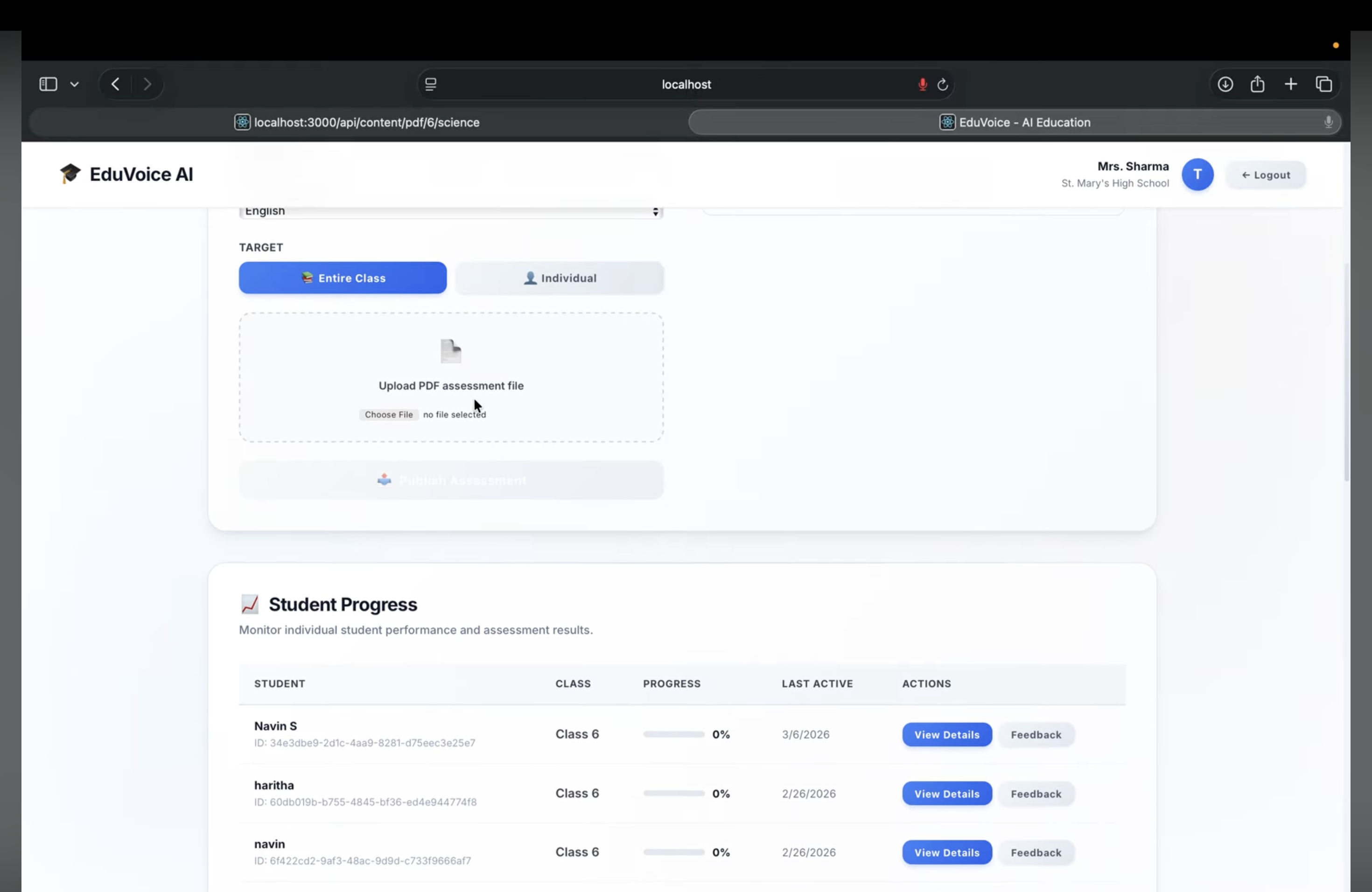
Teacher Checking progress of each student
-
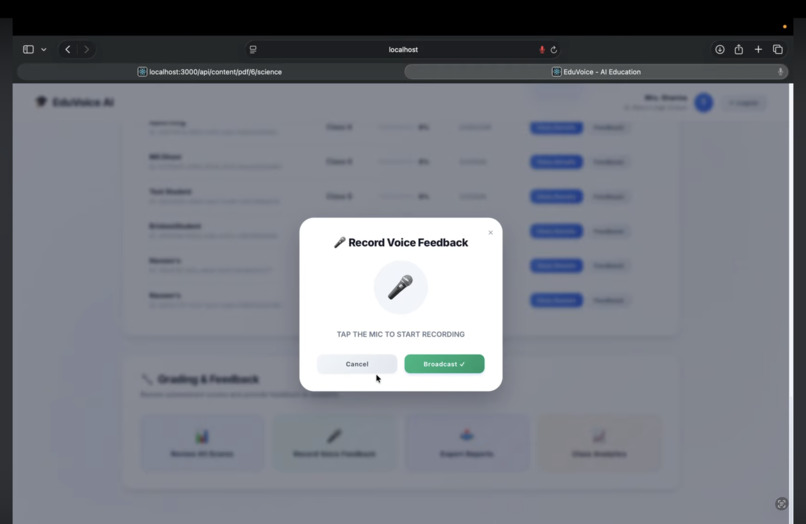
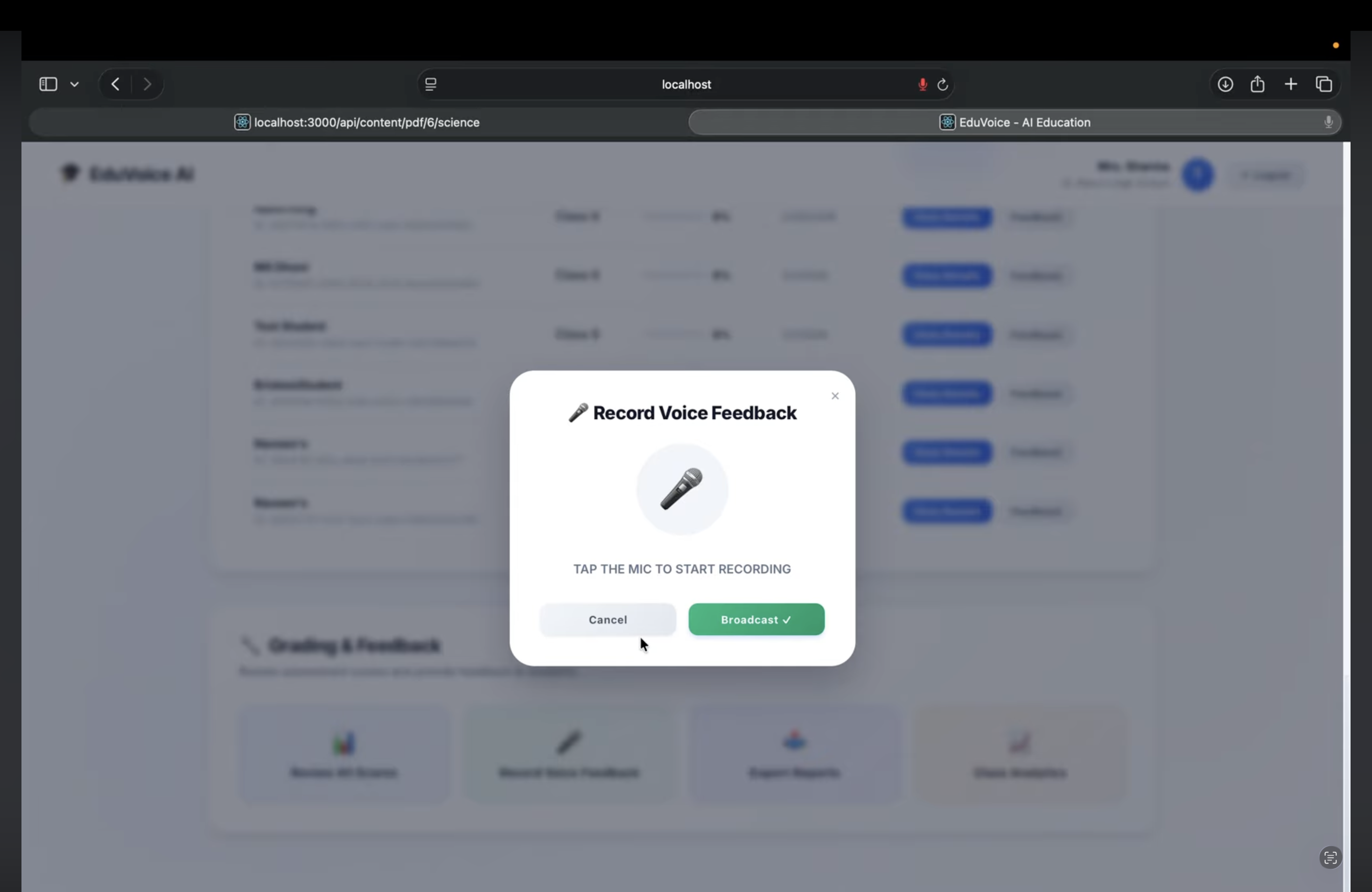
Teacher Feedback recording to student
-
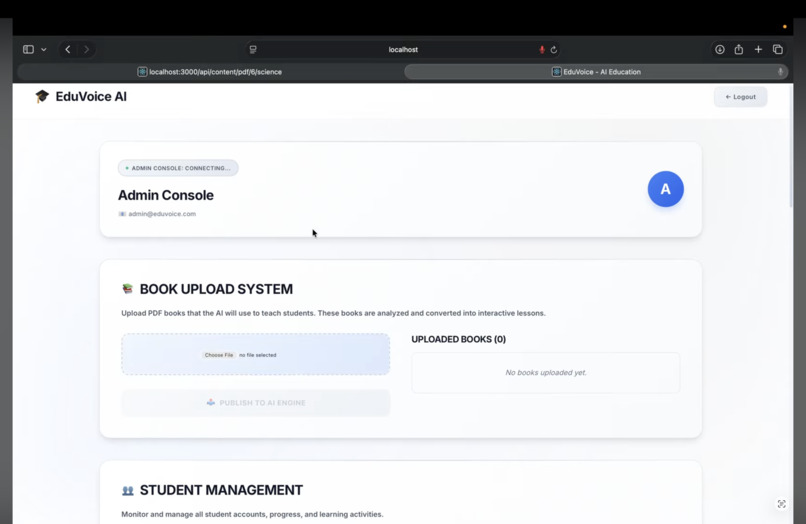
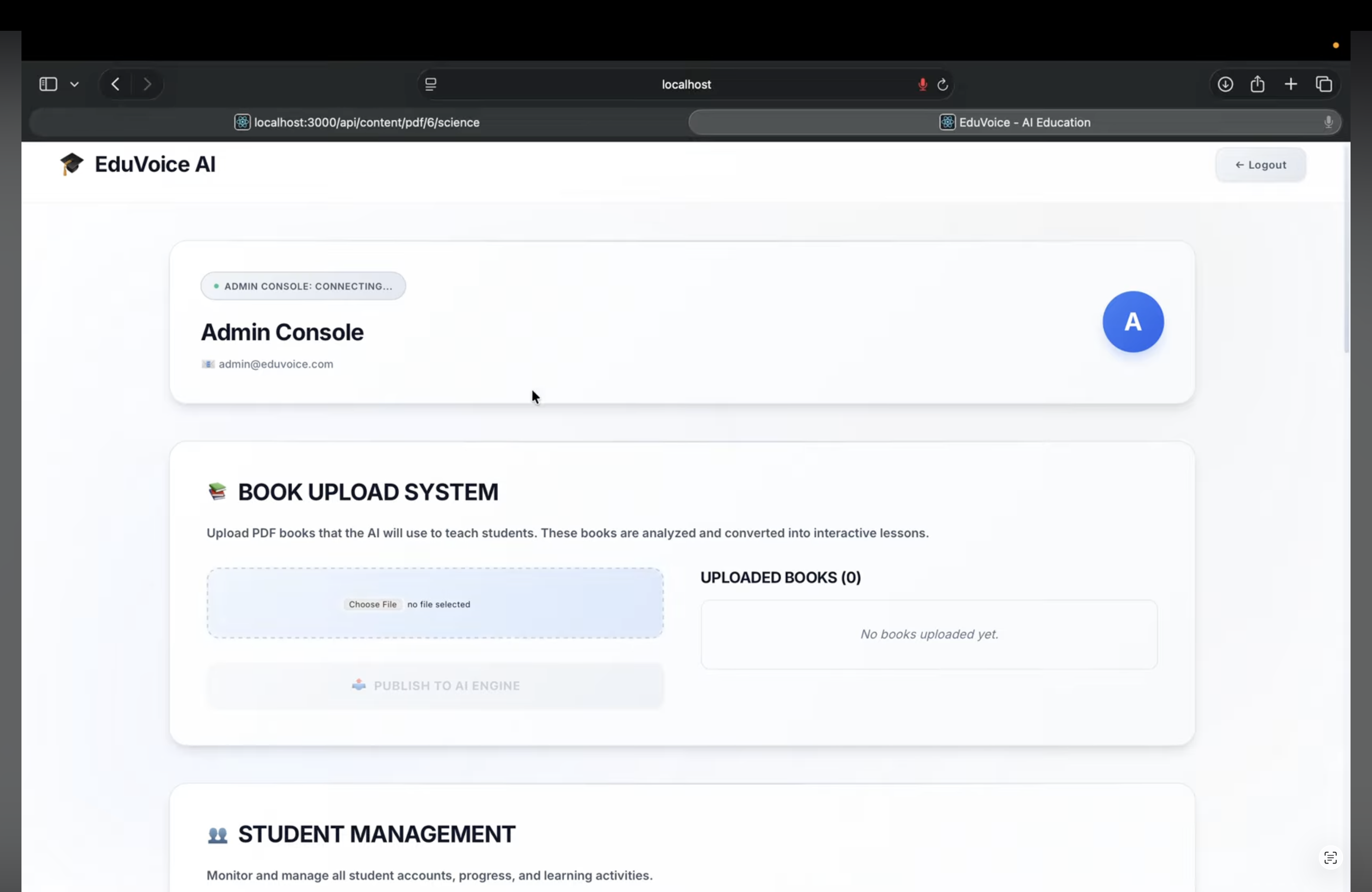
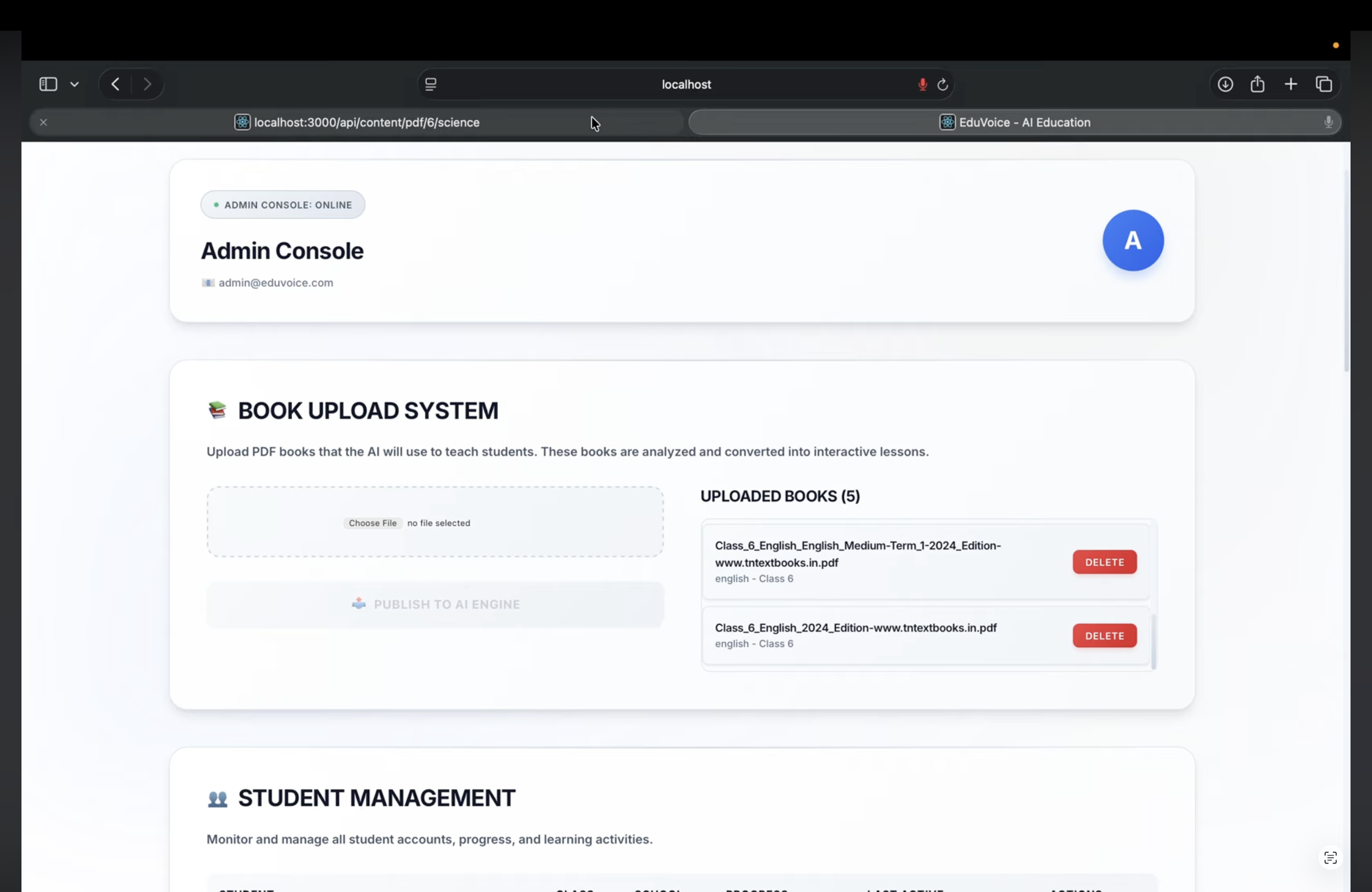
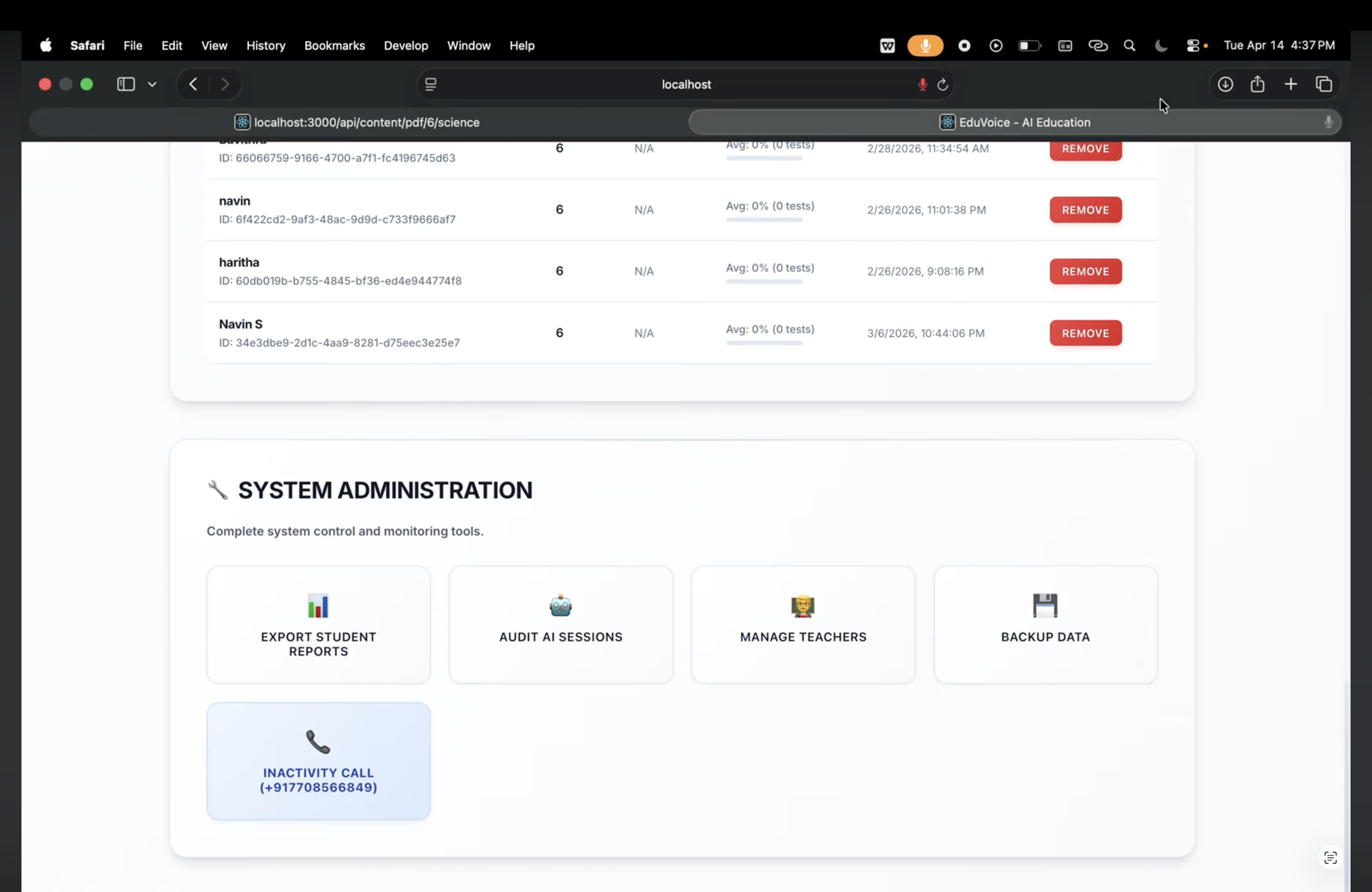
Admin Console
-
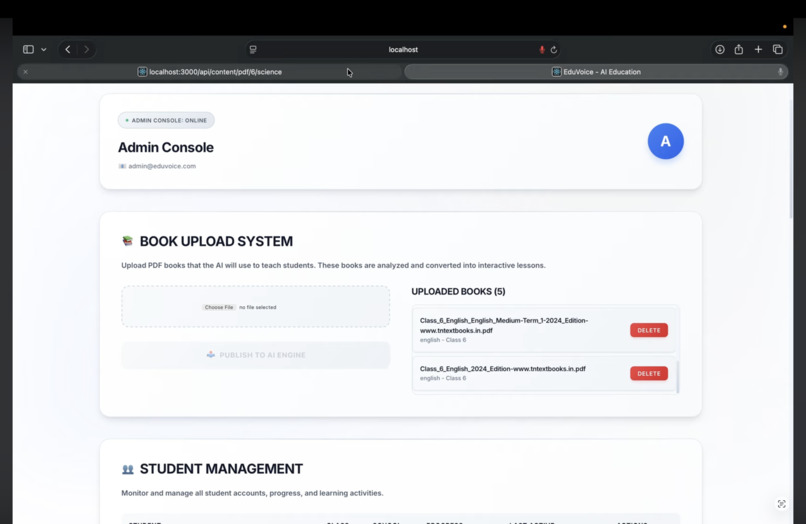
Admin upload materials and track student
-
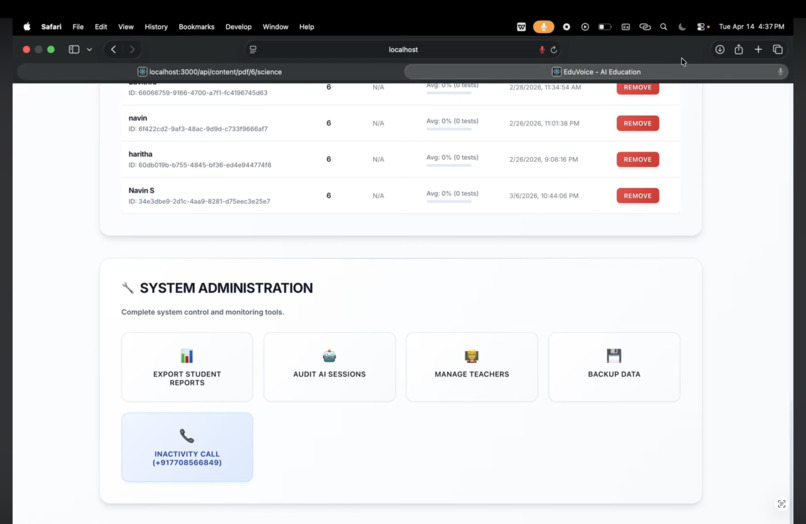
automatic call if a student is inactive in learning progress , Audit AI sessions and other admin activities
Inspiration
Education should not become dependent on someone's ability to see. We were inspired by a simple but important problem: a visually impaired student can study using Braille, but when they encounter a doubt, they often have to depend on a parent, teacher, or another person to explain the concept. A sighted student can simply read a textbook, search for an explanation, watch a video, and continue learning independently. We wanted to change that experience. Our goal was to build more than a voice-enabled chatbot. We wanted to create a voice-first AI learning assistant specifically designed around the learning needs of visually impaired students — one that can understand their questions, access their study materials, provide contextual explanations, remember their learning journey, and help them maintain notes through voice interaction. That idea became EduVoice.
What it does
EduVoice is a voice-powered AI learning platform for visually impaired students. Instead of requiring students to navigate traditional visual interfaces, EduVoice allows them to interact primarily through voice. With EduVoice, a student can: Upload and learn from their study materials such as PDFs. Ask questions naturally using their voice. Get answers based on their own learning materials. Receive explanations through text-to-speech. Ask follow-up questions and maintain conversational context. Save important information as notes using voice. Track learning progress and continue from where they left off. Receive a more personalized learning experience based on their previous interactions.
The key difference is that EduVoice is not simply a chatbot that answers questions. It acts as an intelligent learning assistant that can understand the student's request, decide what information it needs, use the appropriate tools, retrieve relevant learning content, and then provide a contextual response.
How we built it
We built EduVoice as a full-stack AI application with a voice-first learning experience. Frontend React Accessible and voice-oriented user interface Backend Node.js REST APIs for application and learning operations Database MongoDB Stores student profiles, conversations, notes, and learning progress AI Agent LangGraph Used to create an agent-based workflow where the AI can reason about a student's request and decide which action or tool is required. RAG (Retrieval-Augmented Generation) When a student asks a question about an uploaded PDF or lesson, EduVoice does not rely only on the model's general knowledge. The study material is processed and divided into smaller pieces. Relevant content is retrieved based on the student's question and provided to the language model as context. This allows the AI to generate an explanation grounded in the student's actual learning material. Model Context Protocol (MCP) We also designed tools that allow the AI agent to interact with application data and functionality. These tools can support tasks such as retrieving student information, accessing learning content, and managing learning progress. Voice interaction The student's voice is converted into text using speech-to-text. After the AI generates the response, text-to-speech converts it back into spoken output. This creates the core interaction: Voice Input → AI Agent → Tool/RAG Retrieval → Contextual Explanation → Voice Output
Challenges we ran into
Building an AI system for accessibility introduced challenges beyond simply connecting an LLM to a chatbot.
One major challenge was making the AI response context-aware rather than generic. A student asking about a topic from their textbook should receive an explanation based on the material they are actually studying. This led us to implement a RAG-based approach.
Another challenge was designing the AI workflow so that it could decide when it needed additional information or tools instead of generating every answer directly. This is where the agent-based architecture with LangGraph became important.
We also had to think about the interaction from the student's perspective. A visually impaired student should not have to navigate a complicated visual interface just to ask a simple question. This pushed us toward a voice-first experience.
Maintaining conversation context and learning progress was another challenge. We wanted EduVoice to feel like a continuing learning assistant rather than a completely new chatbot every time the student returns.
Accomplishments that we're proud of
Our biggest accomplishment is turning the idea of independent learning for visually impaired students into a working AI-powered platform.
We are particularly proud that EduVoice combines several technologies into one learning experience:
Voice-based interaction AI agents with LangGraph RAG for study-material-based answers Tool-based AI interaction using MCP Speech-to-text and text-to-speech Conversational context and memory Notes and learning-progress tracking MongoDB-based student data management
Instead of building another general-purpose chatbot, we focused on a specific accessibility problem and designed the AI workflow around it.
Our vision is simple: a student should be able to ask, understand, take notes, and continue learning without constantly waiting for someone else.
What we learned
This project taught us that building an AI application is not just about choosing a powerful language model.
We learned how to design agentic workflows, connect AI models with external tools, implement RAG for grounded responses, manage conversational memory, and combine multiple AI capabilities into a single user experience.
More importantly, we learned that accessibility has to be considered at the core of the product architecture, not added as a feature at the end.
The project changed our perspective from asking "What can AI answer?" to asking:
"What can AI enable a person to do independently?"
What's next for EduVoice
We want to take EduVoice beyond a prototype and make it a more complete AI learning companion for visually impaired students.
Our next steps include:
Better understanding of diagrams, images, and educational figures. More natural and multilingual voice interaction. Adaptive explanations based on the student's learning level. Personalized quizzes and practice sessions. Better progress analytics for students and educators. Integration with more educational content and textbooks. Improved accessibility and voice-first navigation across the entire platform.
Ultimately, our goal is to make EduVoice a platform where a visually impaired student can learn, ask, understand, revise, and track their progress independently — through a natural conversation with AI.
EduVoice — Learn. Ask. Understand. Independently.
Built With
- agentic
- agenticai
- ai
- artificial
- artitficialintelligence
- fullstack
- mcp
- rag

Log in or sign up for Devpost to join the conversation.