-
-
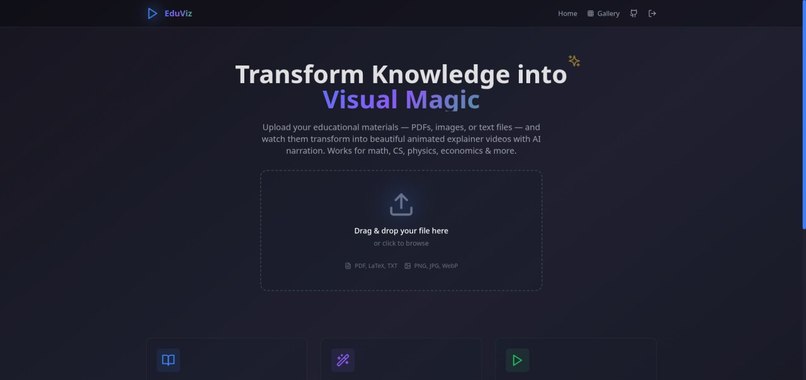
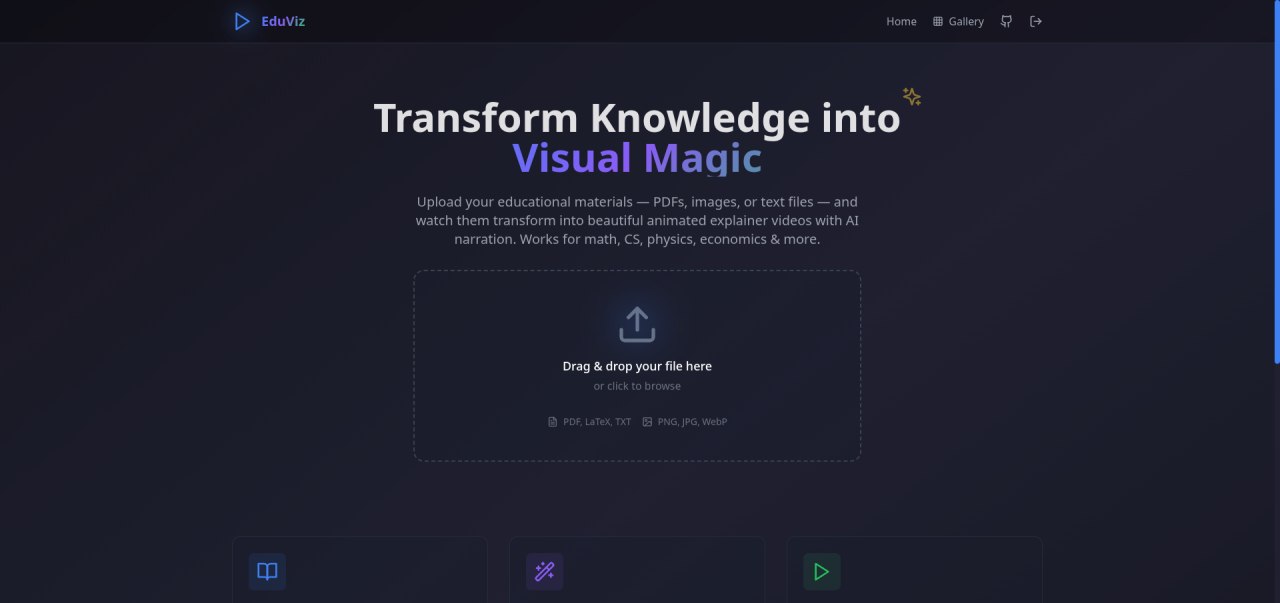
Home Page
-
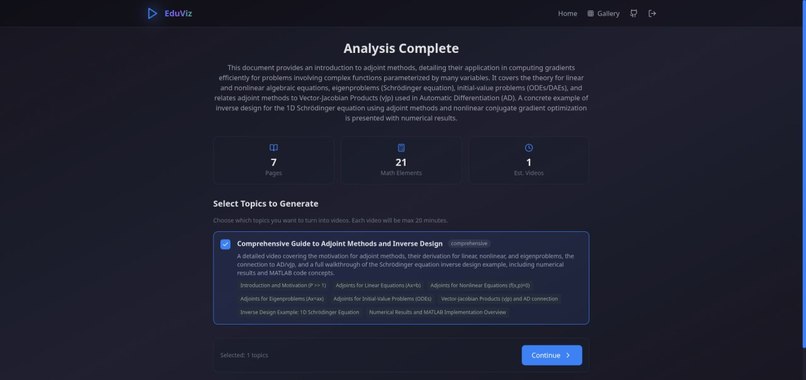
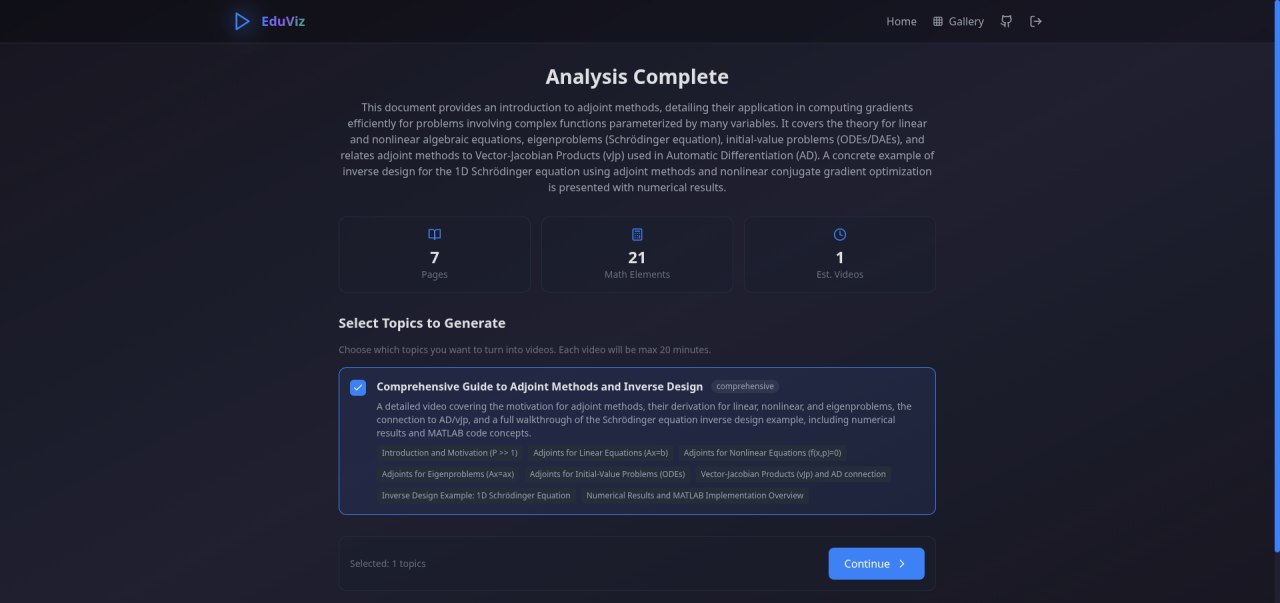
Document Analysis
-
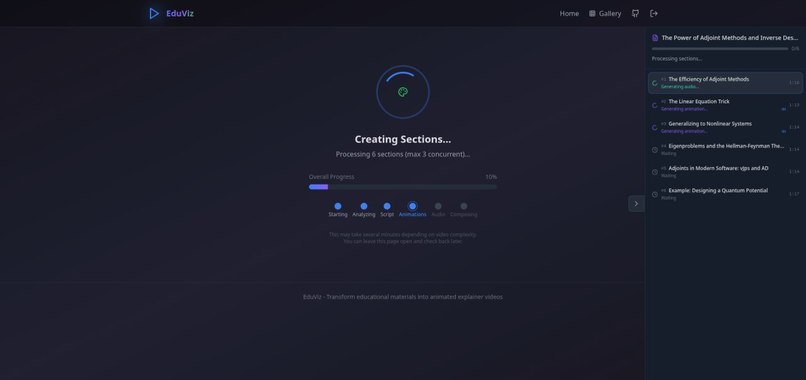
Video Generation
-
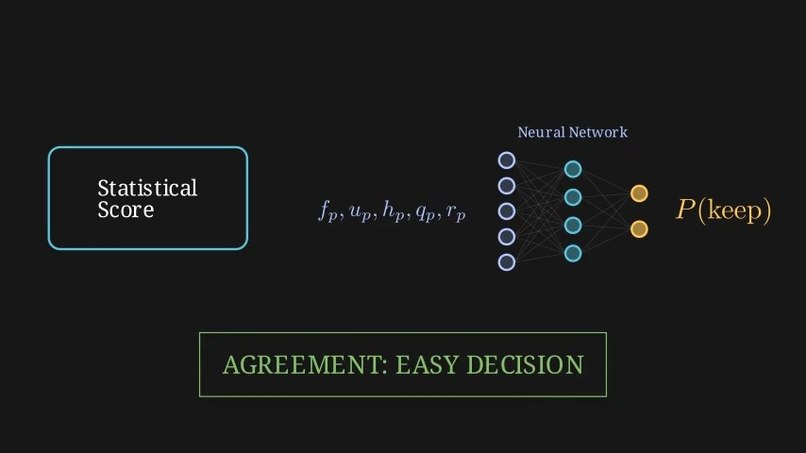
-
-
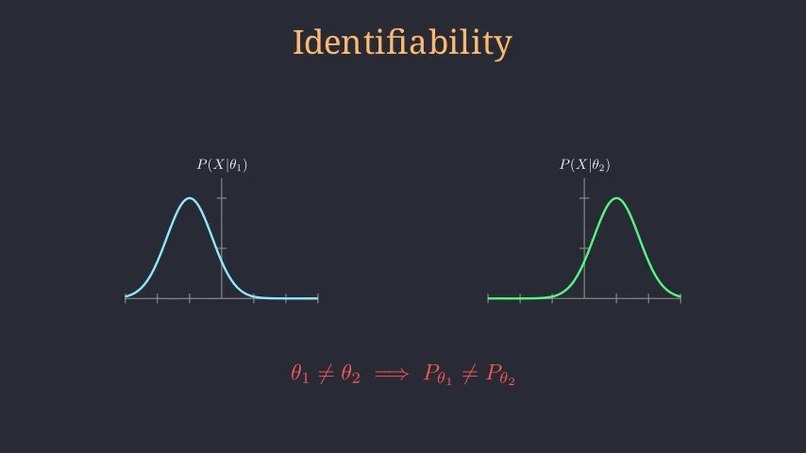
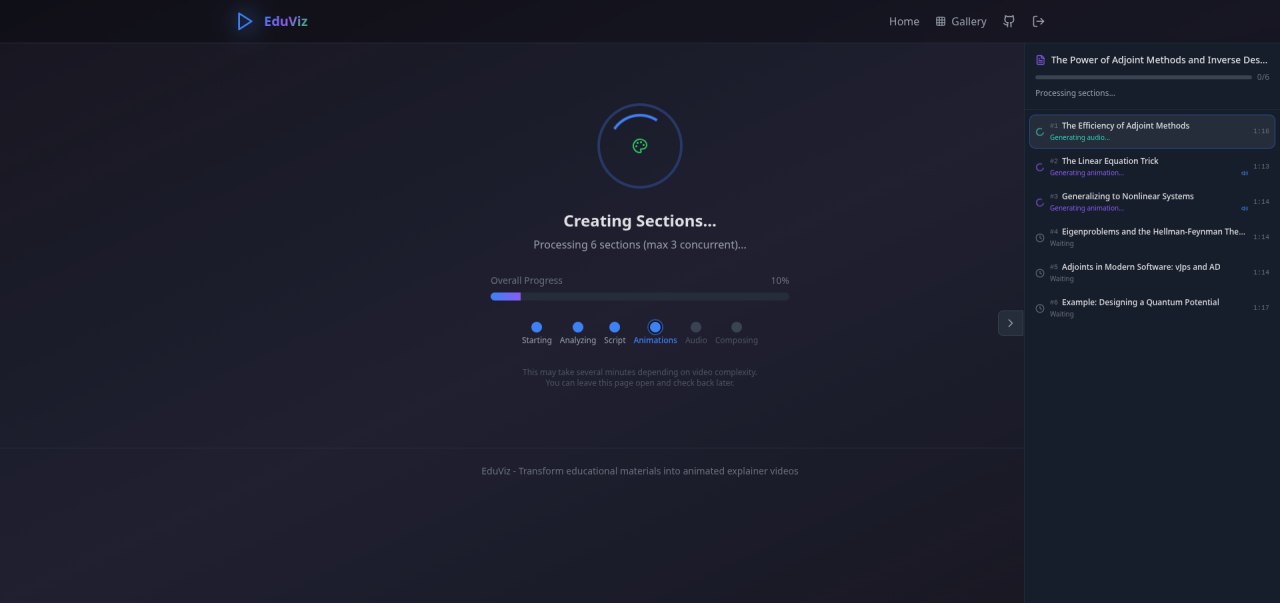
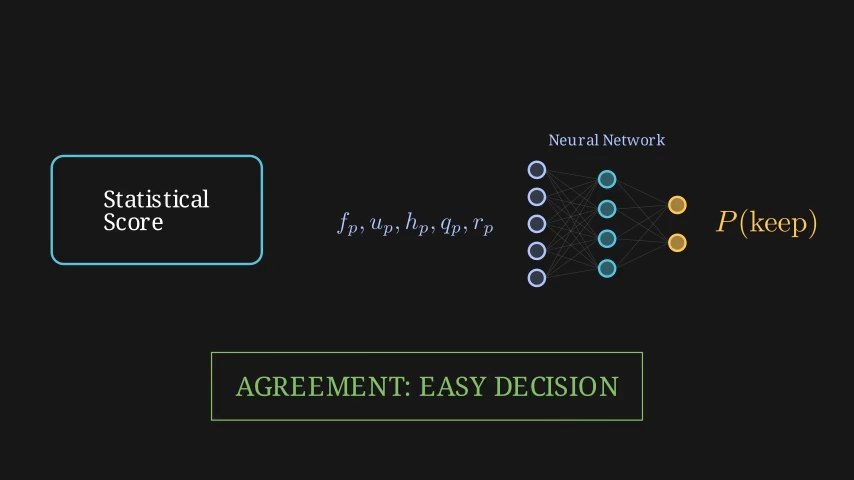
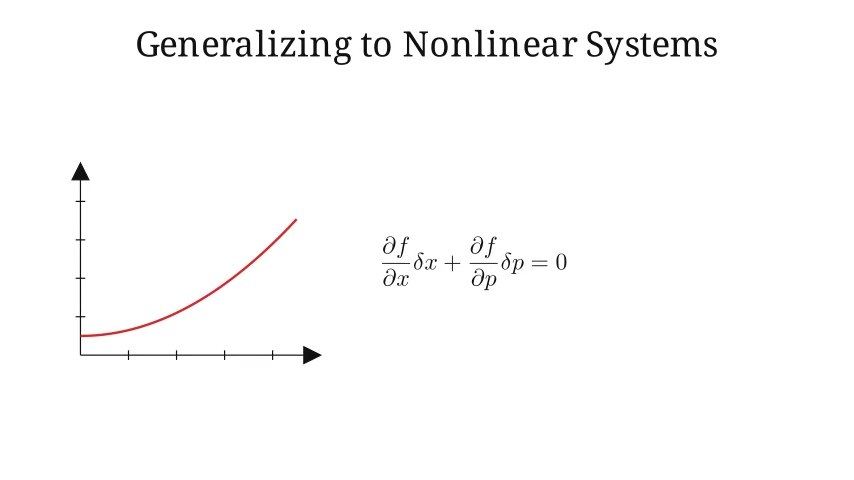
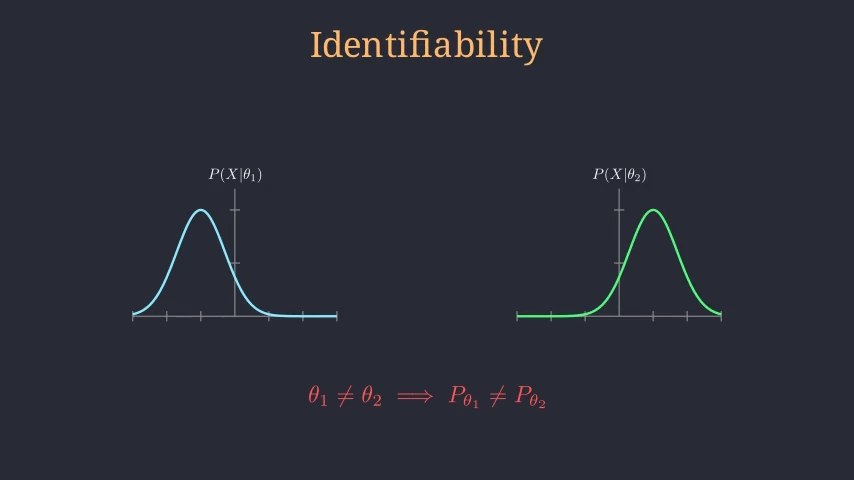
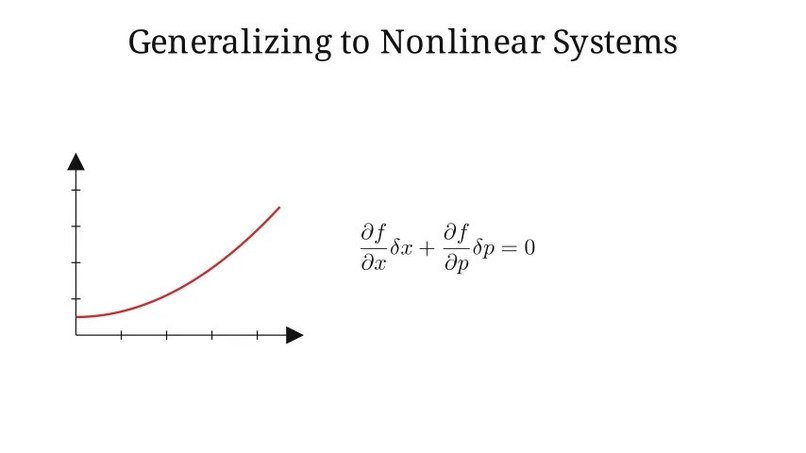
EduViz: Visualizing the Future of Learning
Inspiration
Learning from long PDFs and dense technical papers does not scale. As topics become more specialized, raw text becomes increasingly inefficient, while available videos are often scarce, misaligned with curricula, or pitched at the wrong level. When time is limited, manually summarizing documents or searching for explanations is impractical.
EduViz was built to replicate the experience of a skilled teacher translating a document into a clear, step-by-step visual explanation, with structure, pacing, and validation.
What it does
EduViz transforms documents (PDFs, notes, and text) into short, structured explainer videos tailored to the learner.
Users can:
- Upload a document
- Select specific topics to be explained
- Choose explanation depth (overview or comprehensive)
- Configure learning style, prior knowledge level, language, voice, and visual style
EduViz automatically generates:
- A pedagogically structured explanation
- Visual animations synchronized with narration
- A clean, downloadable explainer video
The output is curriculum-aligned and scoped to the learner, not a generic summary.
How we built it
EduViz is built around a deliberately fine-tuned, multi-stage generation pipeline designed to make AI-generated educational animations reliable by construction. Instead of end-to-end document-to-video generation, the system decomposes the task into constrained stages, where each step explicitly guides and validates the next.
The backend, implemented in Python, orchestrates the following pipeline:
Semantic Document Analysis
Extracts core concepts, definitions, and dependencies, independent of presentation.Didactic Structuring
Organizes concepts into a teaching-oriented sequence based on user-selected depth and prior knowledge.Choreography-First Visual Planning
Defines scene structure, spatial layout, and precise timing before any animation code is generated.Constrained Manim Code Generation
Generates Manim animations strictly within choreography constraints.Layered Validation and Repair
Applies static analysis, runtime execution checks, spatial layout validation, and vision-based validation on rendered frames, triggering adaptive fixes rather than full regeneration.
Reliability emerges from the structure of the pipeline itself, not from any single model call.
Challenges we ran into
Multi-Stage Animation Quality Control
AI-generated Manim code frequently fails due to syntactic, runtime, or spatial issues. We implemented a four-layer validation system:
- Static validation
- Runtime execution checks
- Spatial layout validation
- Vision-based validation
Vision-based quality control using Gemini Vision analyzes rendered frames to detect spatial and visual errors that static analysis cannot, significantly reducing false positives.
Synchronizing Audio and Animation
Precise alignment between narration and animation required accurate duration estimation and segmentation. A choreography-first approach ensured animations matched narration pacing.
Balancing Cost and Quality
Multiple LLM calls per video can be expensive. We introduced cost tracking, prompt optimization, document sampling, and selective use of stronger models only where necessary.
Handling Edge Cases in Code Generation
Common failures such as overlapping text or off-screen elements were addressed using deterministic CST-based fixes combined with targeted LLM edits for complex cases.
Gemini TTS Integration Constraints
Gemini TTS provides substantially higher audio quality, but very low usage limits prevented full integration into the pipeline. While the supporting infrastructure is already implemented, these limits made large-scale usage infeasible during development, requiring fallback TTS solutions despite lower audio fidelity.
Accomplishments that we're proud of
- A reliable, fine-tuned animation pipeline for AI-generated educational visuals
- Vision-based validation using actual rendered frames
- Fully automated workflow from document upload to video download
- Professional-quality results without animation or video-editing expertise
What we learned
- End-to-end AI generation is not production-ready for complex visual outputs
- Guardrails, constraints, and validation are essential for reliability
- Prompt engineering must be stage-specific and tightly scoped
- Strategic model selection reduced costs by ~60% without quality loss
- Fail-fast systems with precise error reporting dramatically improve iteration speed
What's next for EduViz
Gemini TTS Integration
Increasing Gemini TTS usage limits and completing full integration to significantly improve narration quality and overall video polish.Multilingual Support
Enable end-to-end translation to generate videos in arbitrary target languages.Public Video Library
Allow users to share and discover educational videos created by the community.Remix Capability
Enable users to build upon and customize existing videos rather than starting from scratch.


Log in or sign up for Devpost to join the conversation.