-
-
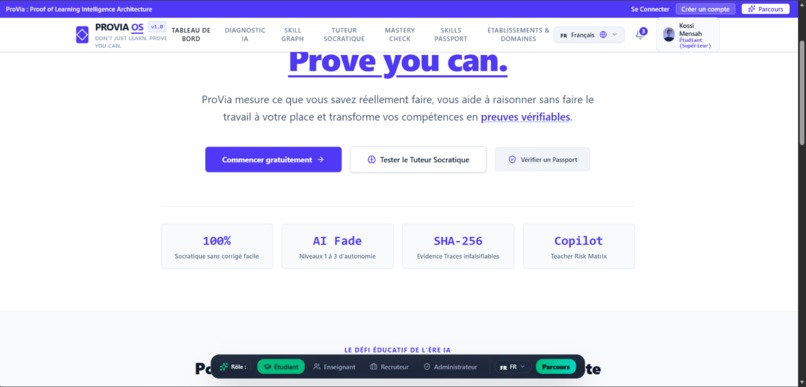
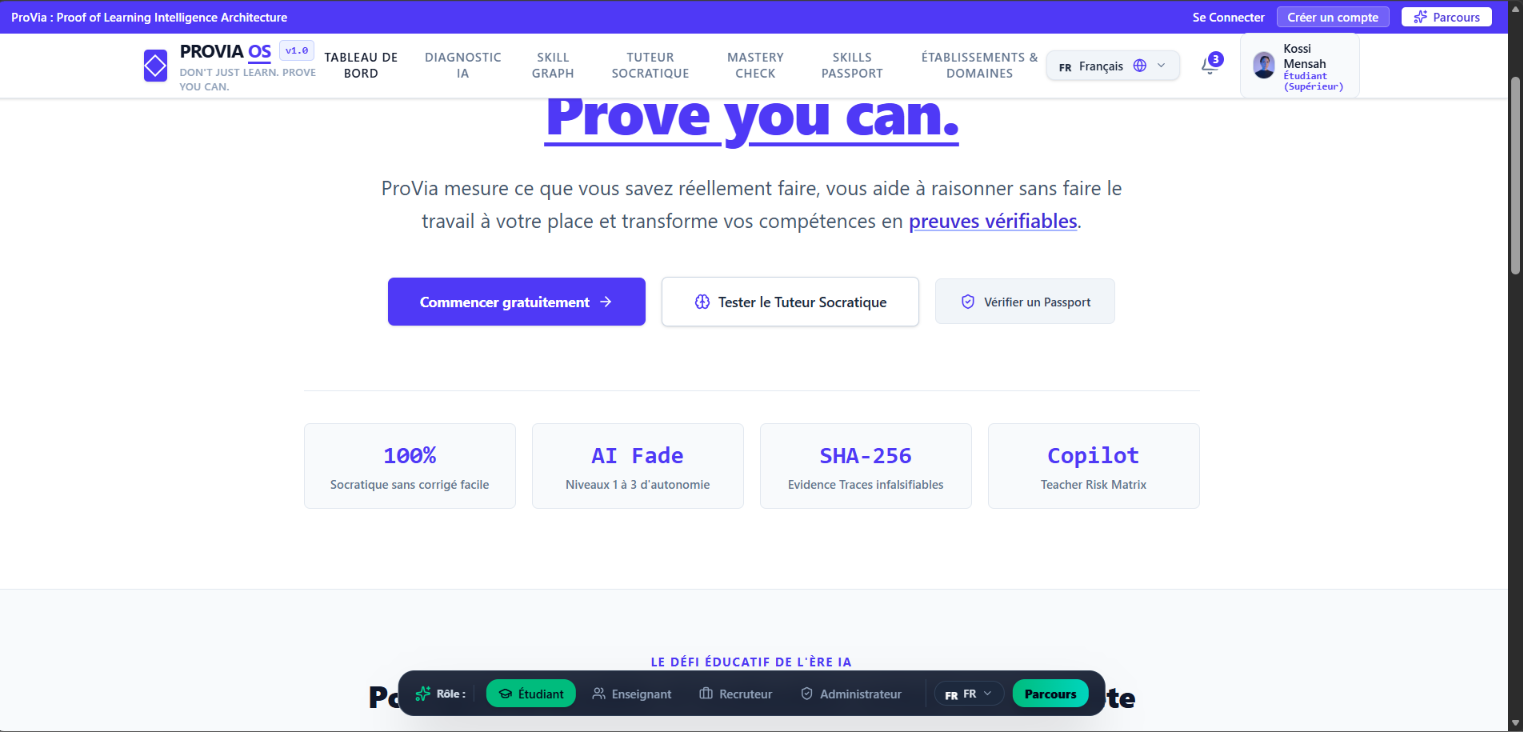
ProVia OS homepage showcasing socratic learning and proof-of-reasoning features.
-
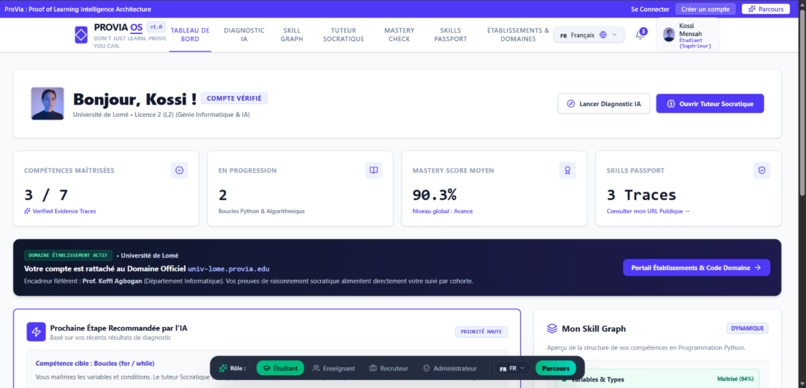
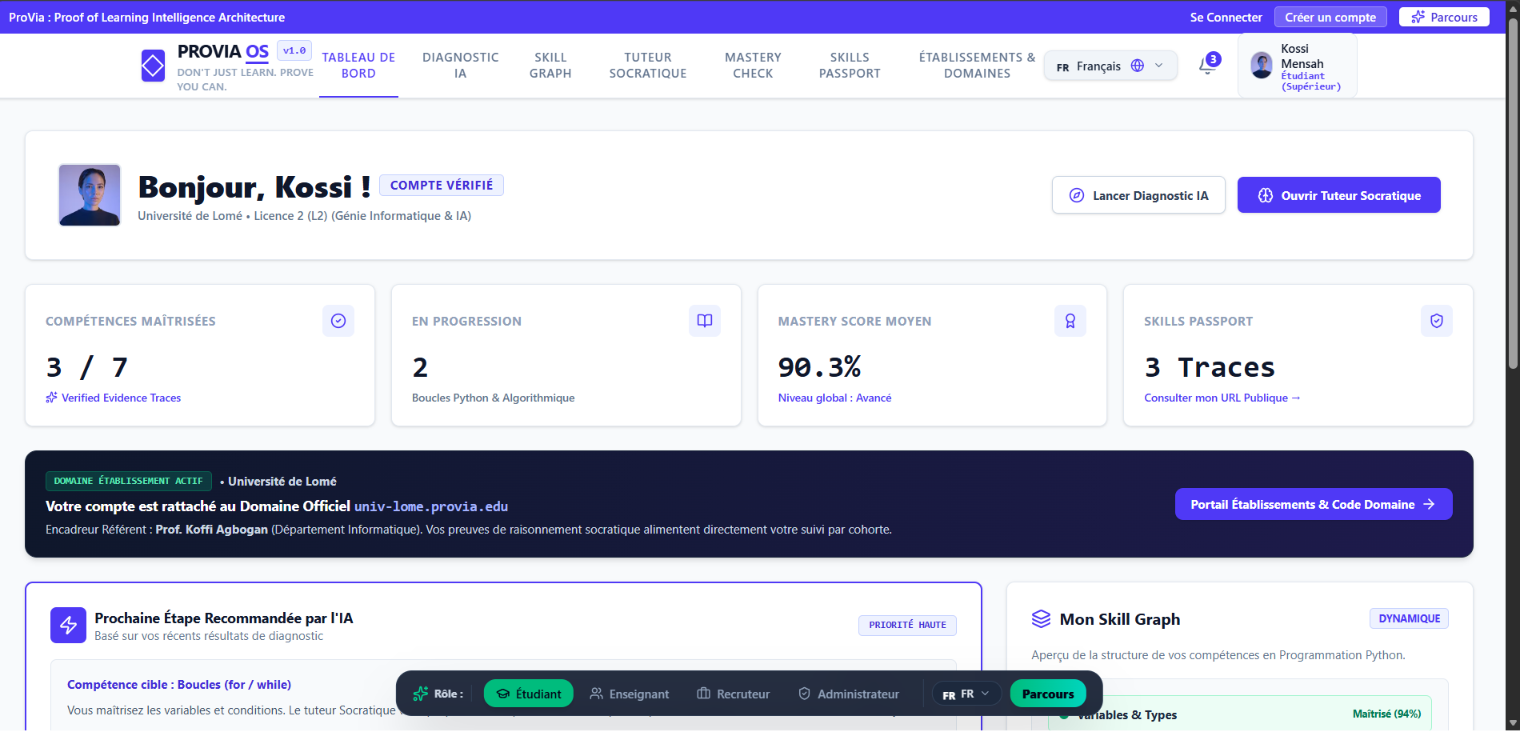
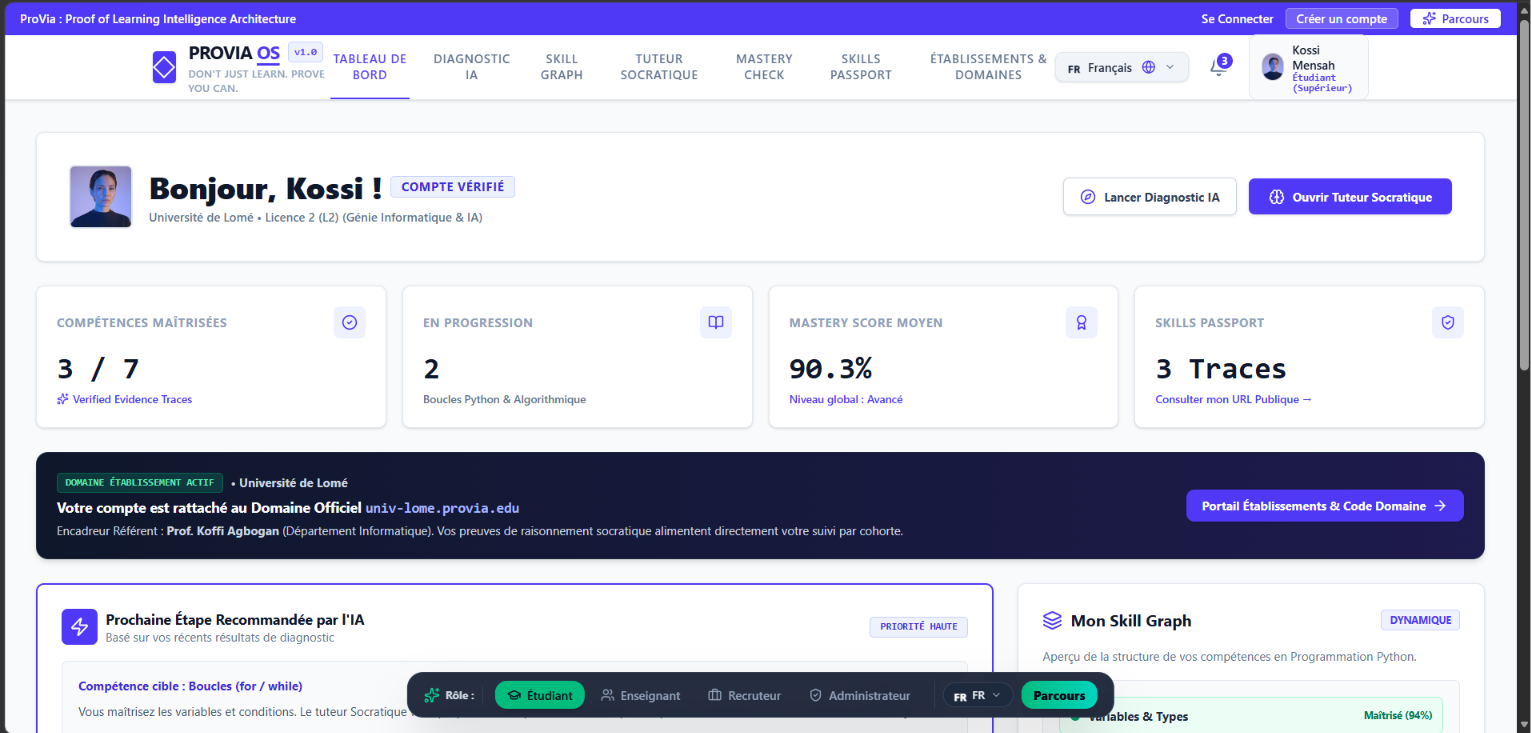
Student dashboard displaying mastery score, verified skills, and university affiliation.
-
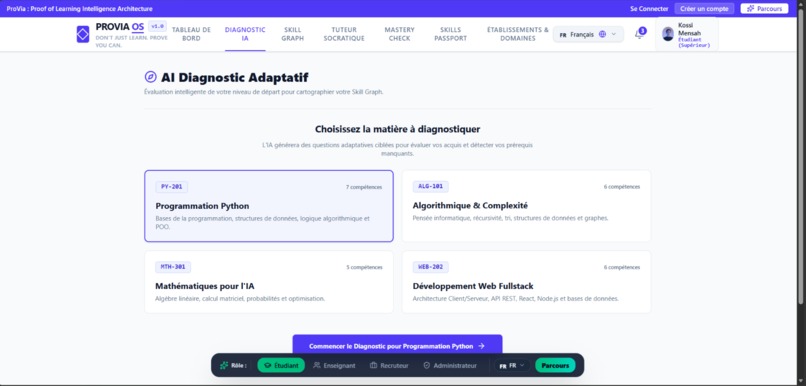
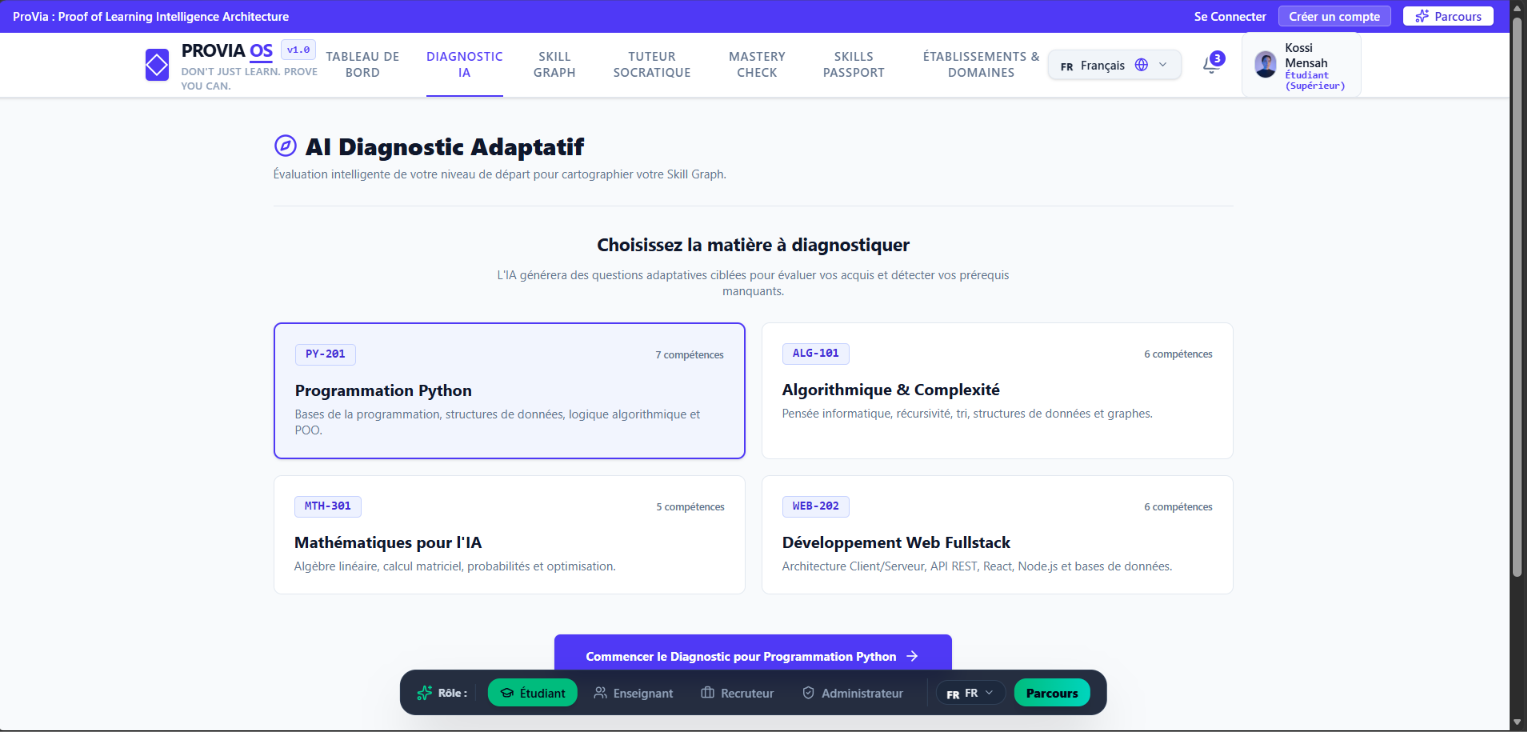
Subject selection screen to assess initial skill levels and detect missing prerequisites.
-
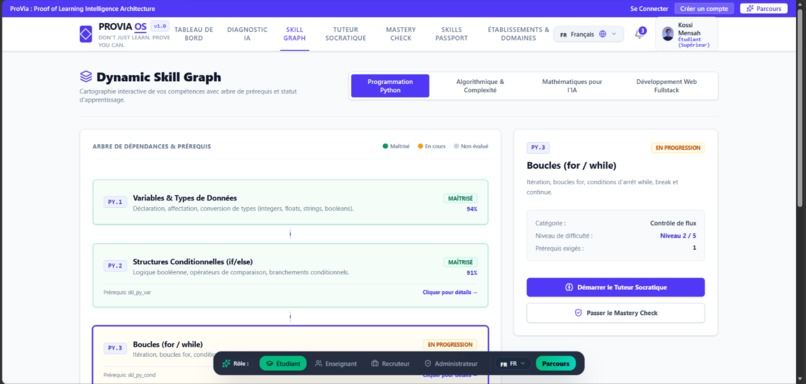
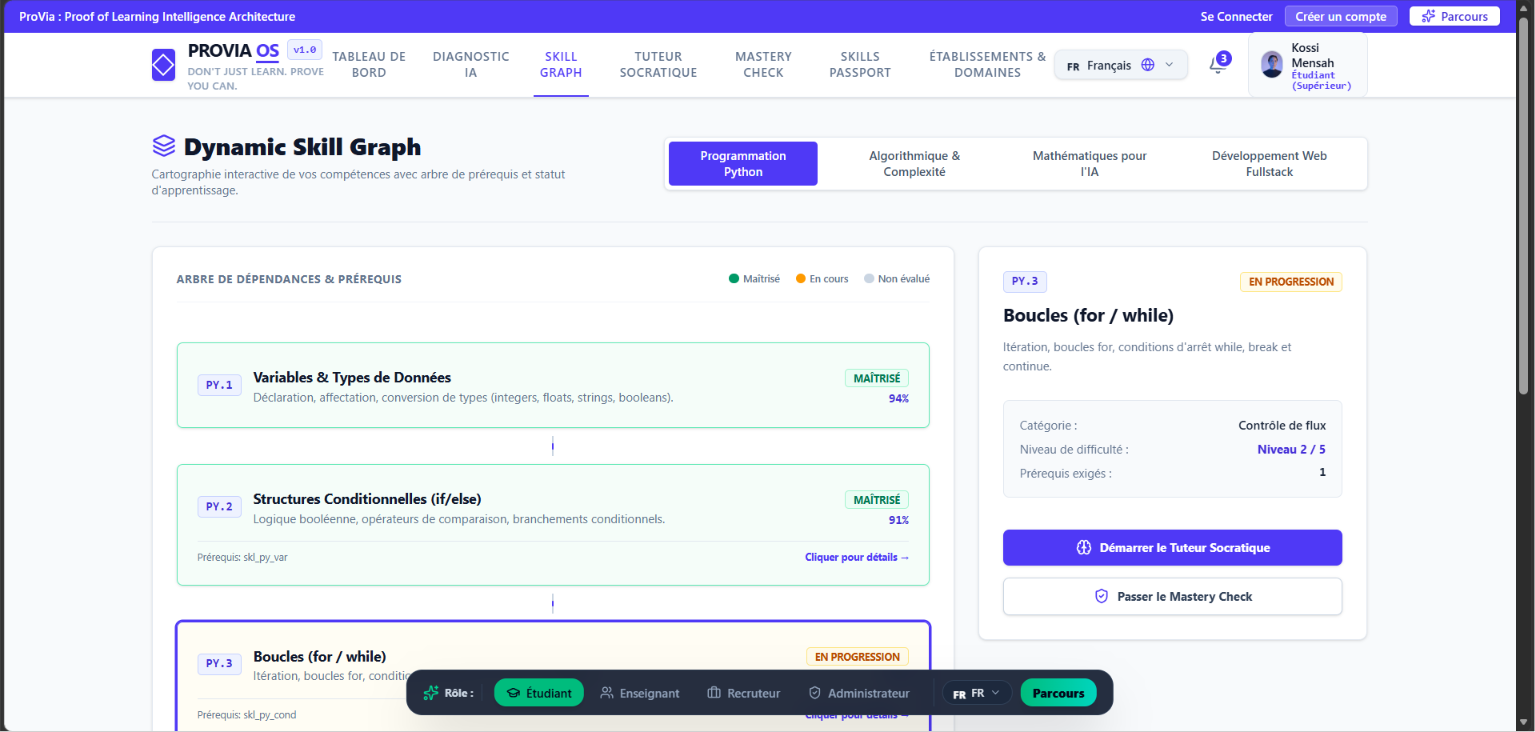
Interactive map showing prerequisite trees and skill mastery progress.
-
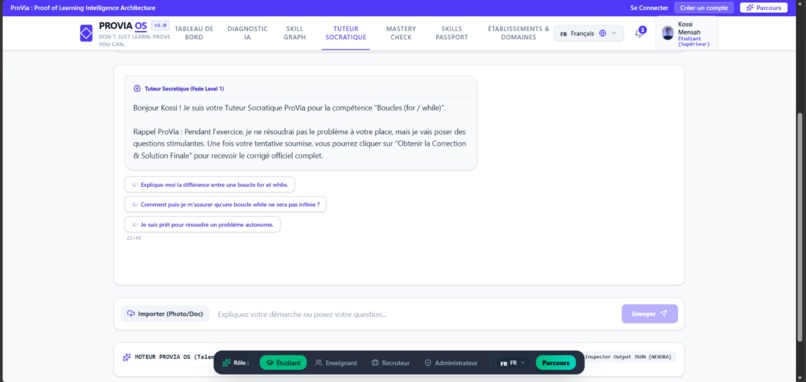
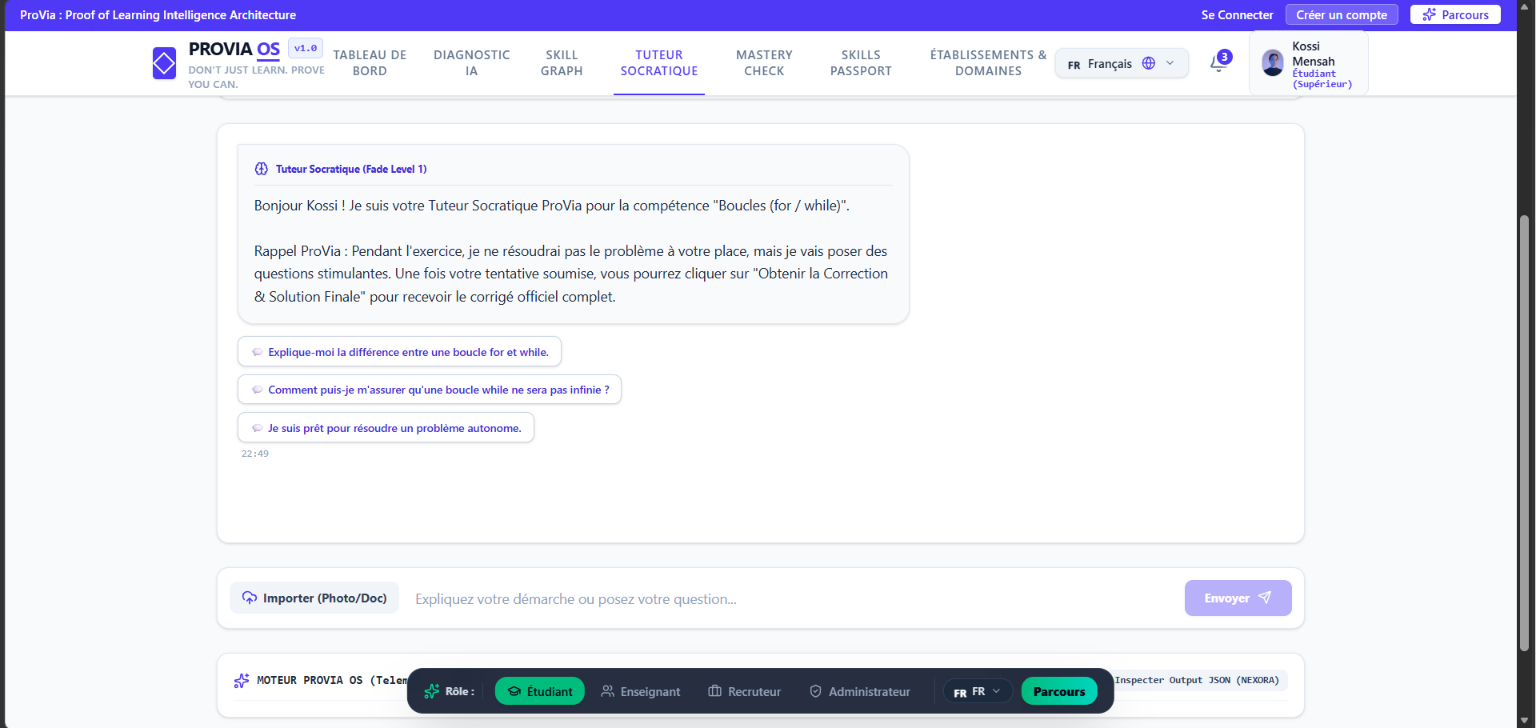
Guided AI chat posing thought-provoking questions to drive student reasoning.
-
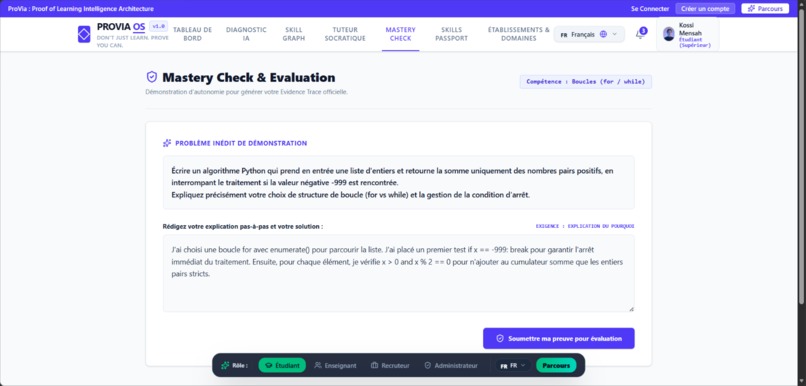
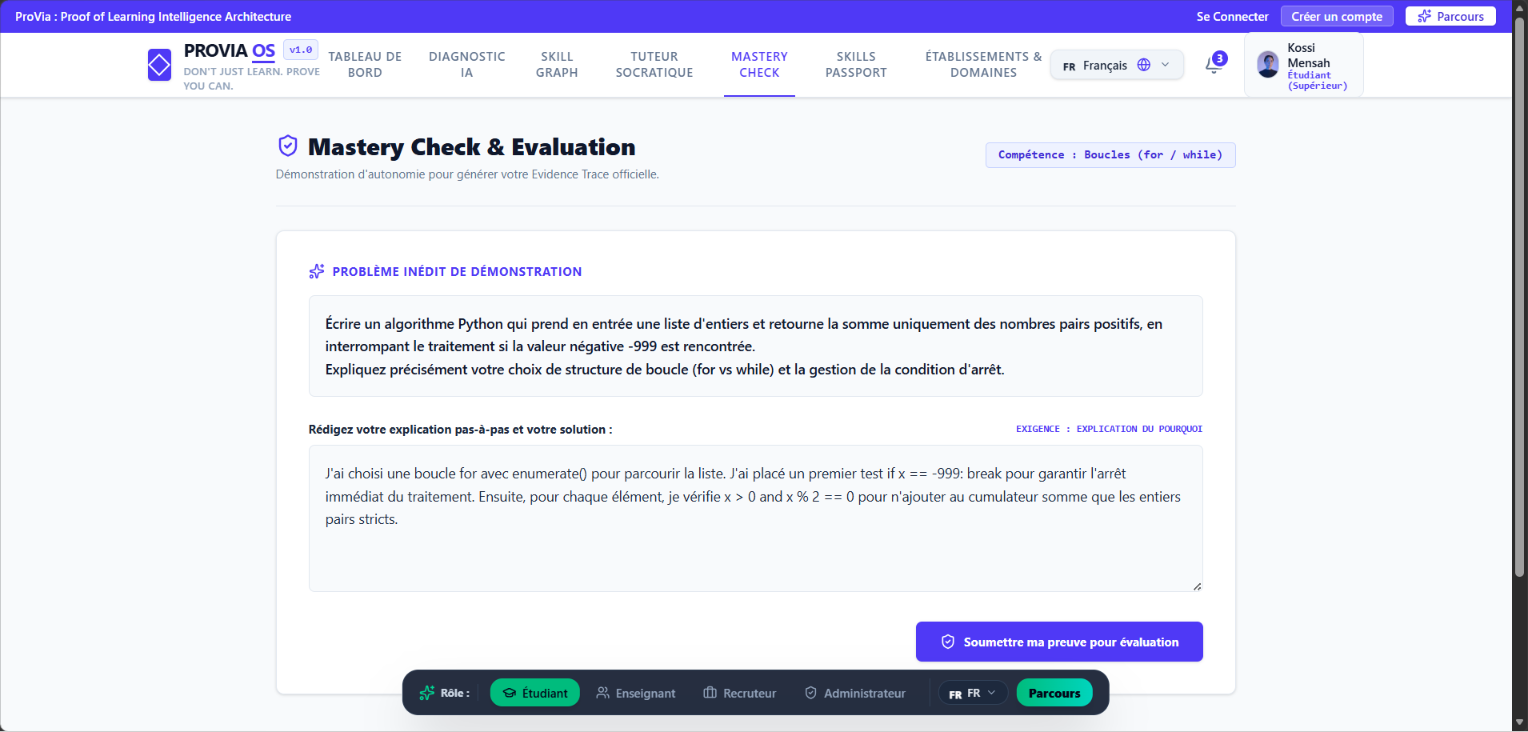
Autonomy test requiring step-by-step reasoning submission to validate skills.
-
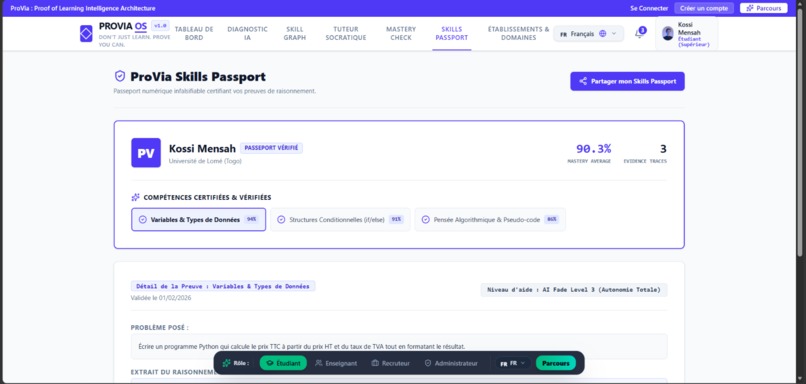
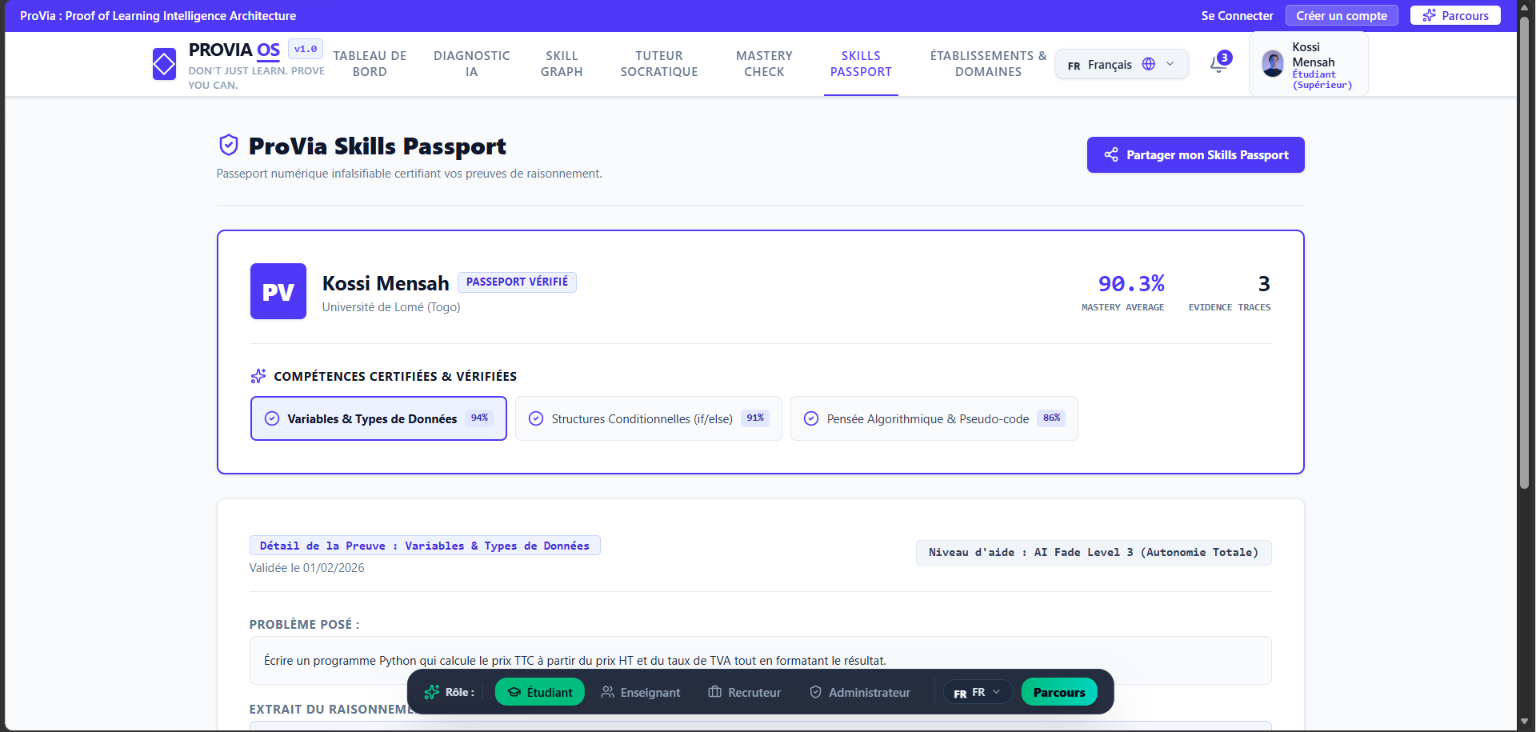
Verified digital certificate of learning proofs, shareable on LinkedIn and networks.
-
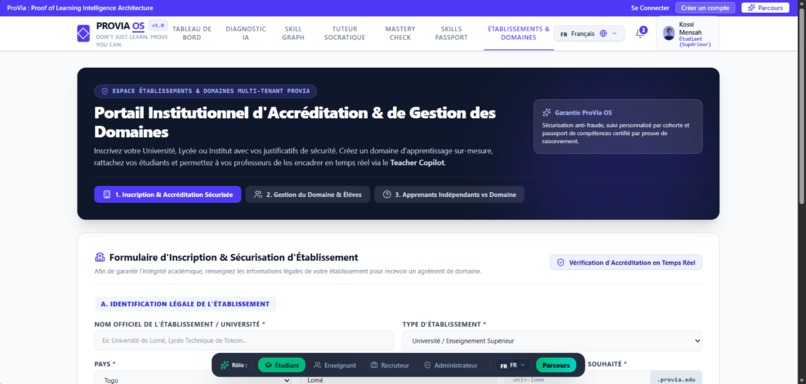
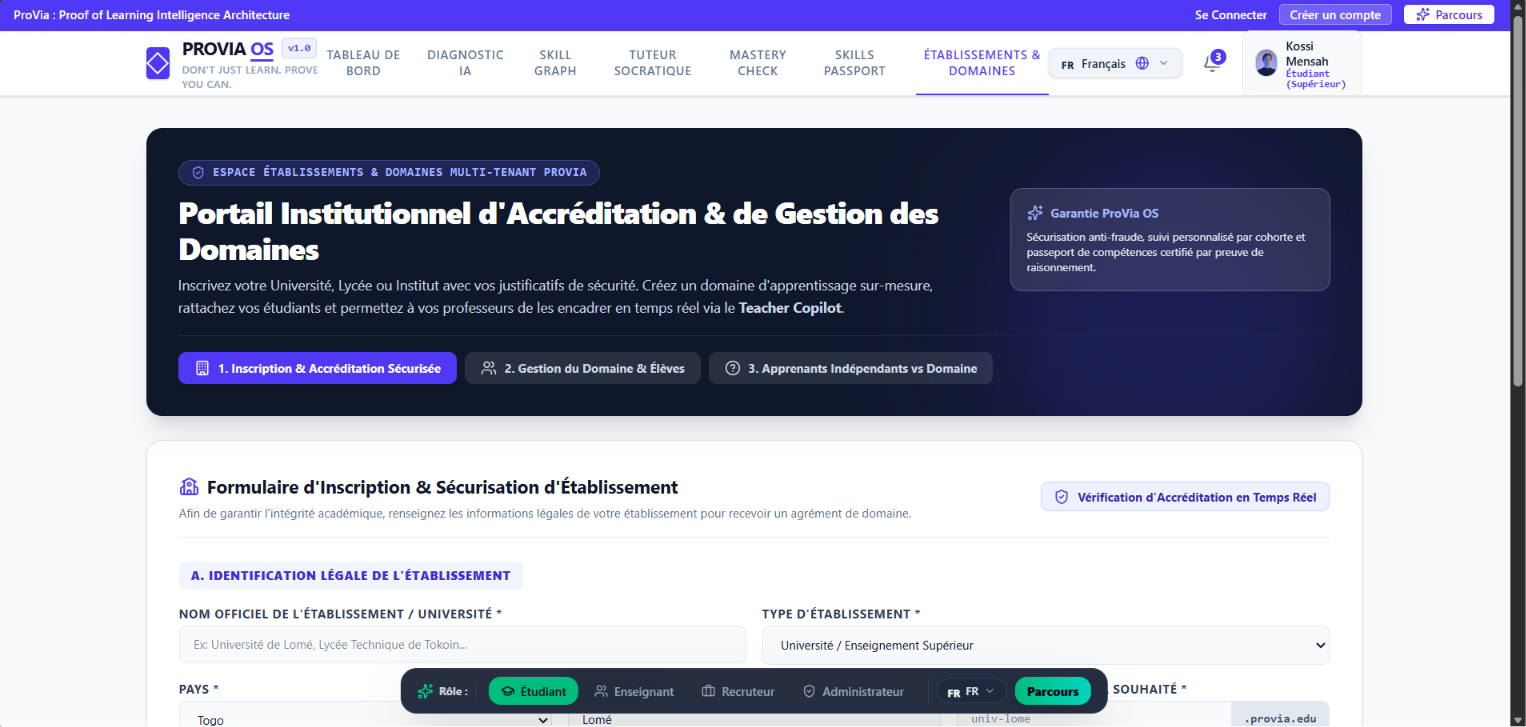
Multi-tenant workspace for universities to manage custom learning domains and cohorts.
-
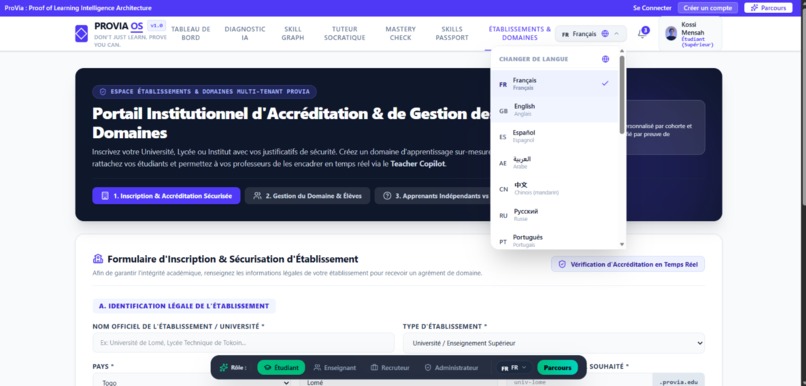
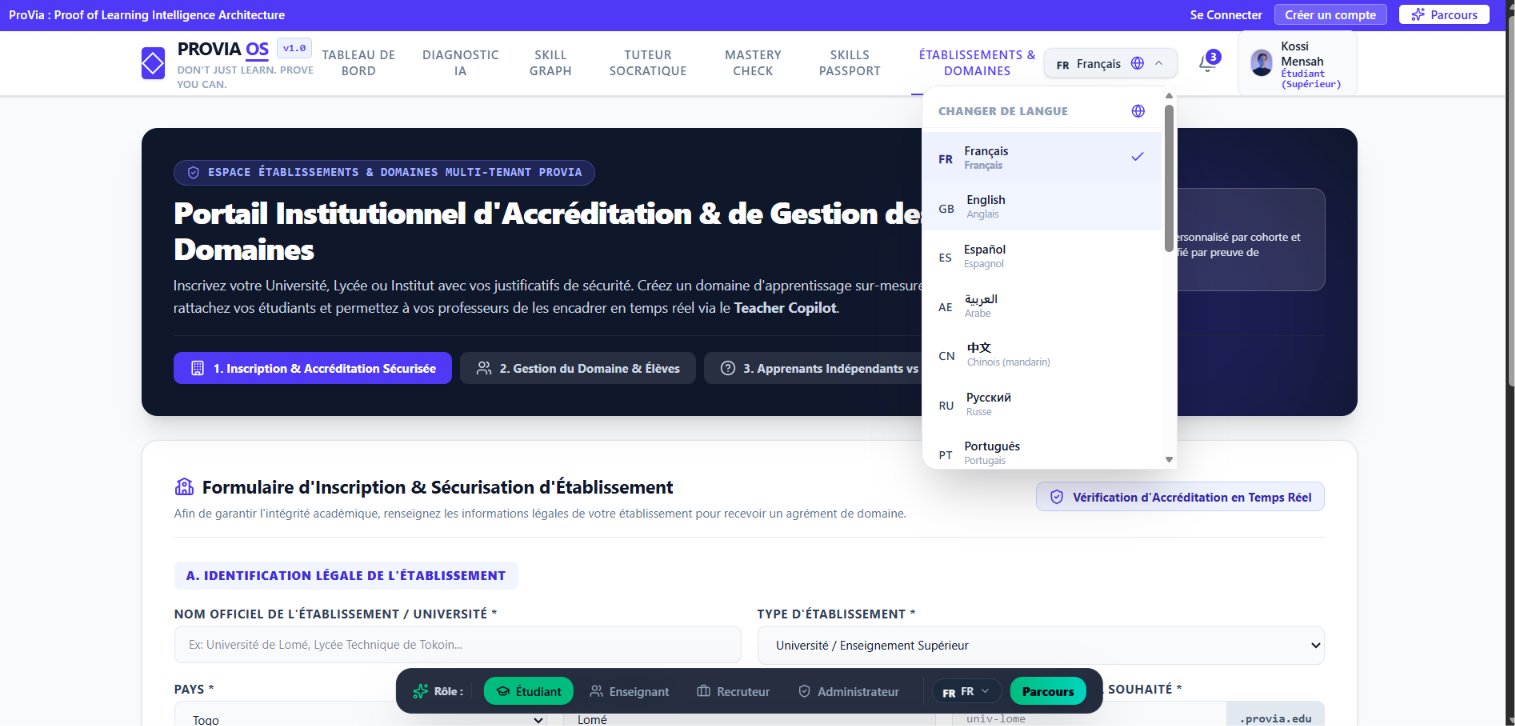
Language selector demonstrating full platform localization in 7 global languages.
-
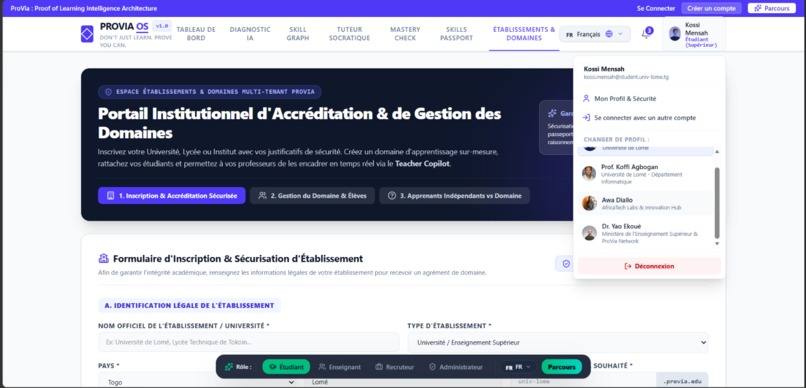
Account switcher to toggle between Student, Teacher, Recruiter, and Admin roles.
-
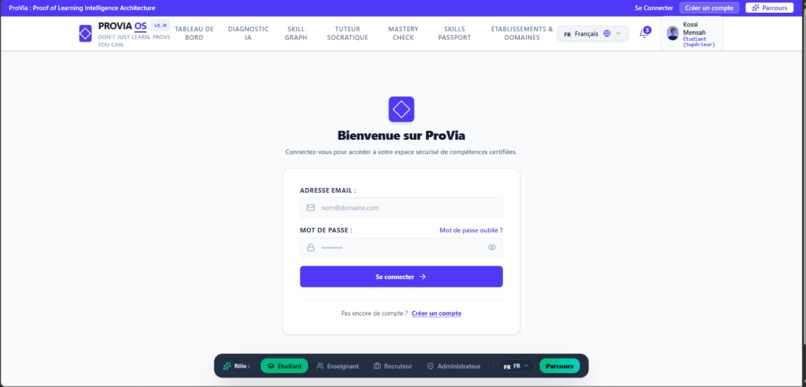
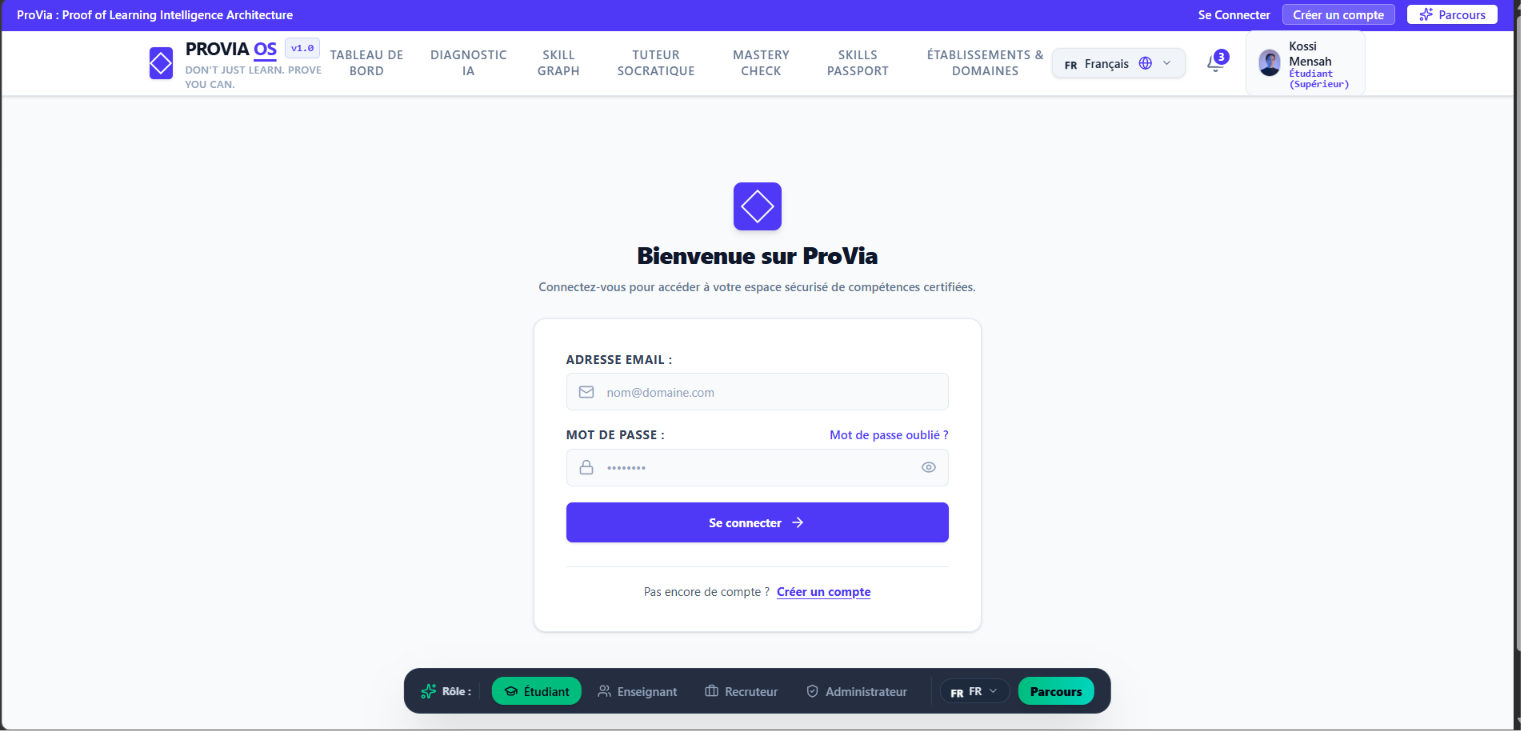
Login interface for users to access their secured proof-of-learning workspace.
-
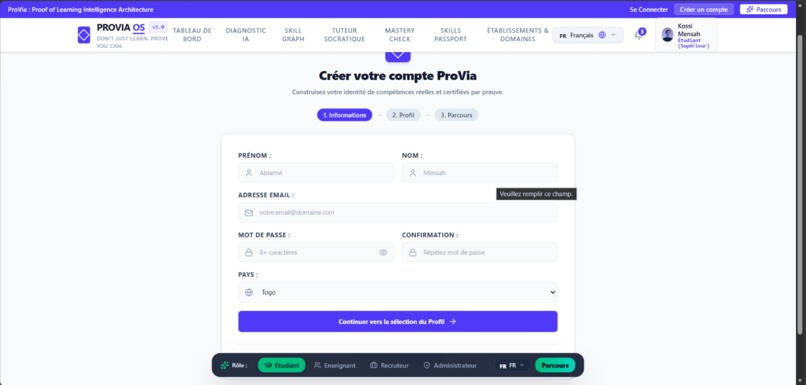
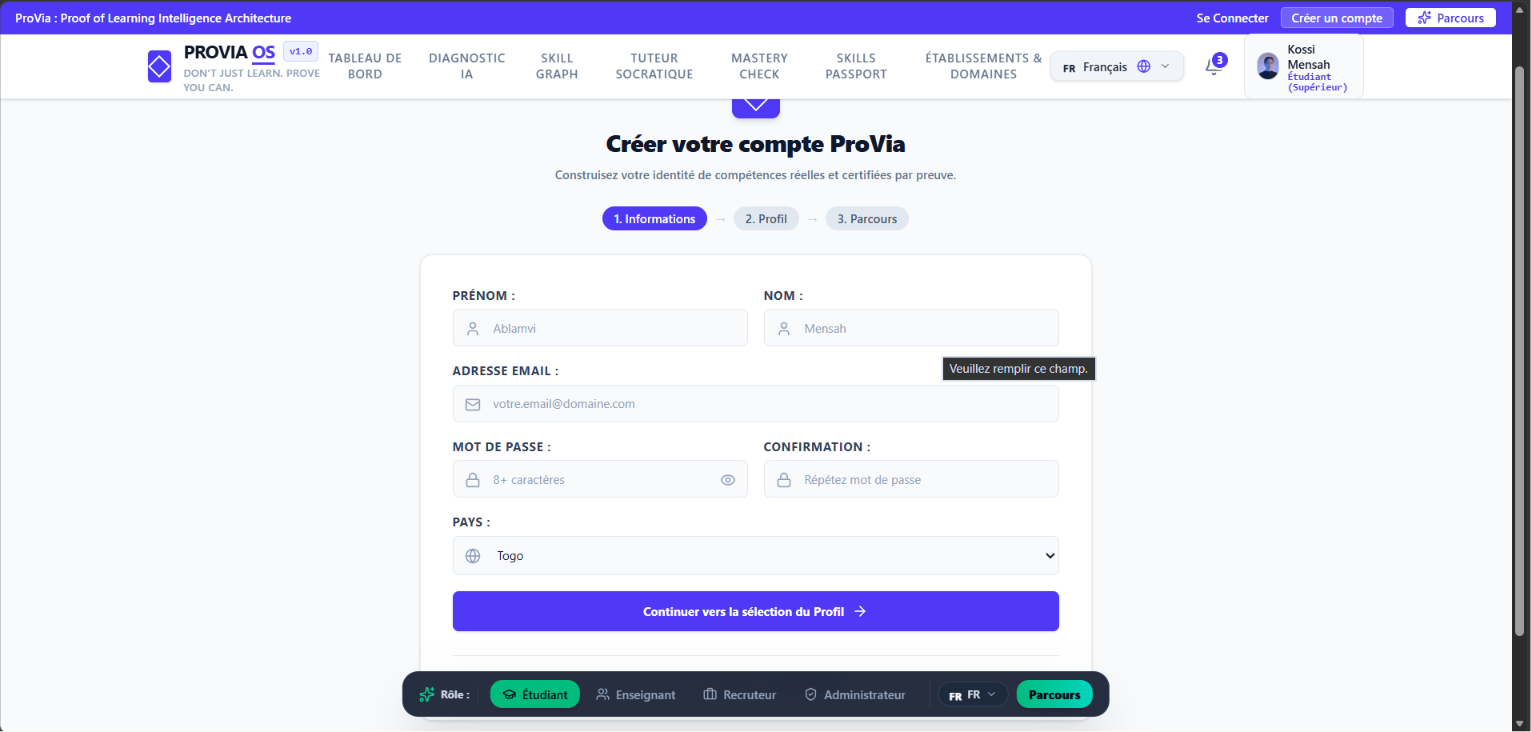
Multi-step registration form collecting user identity details and country location.
-
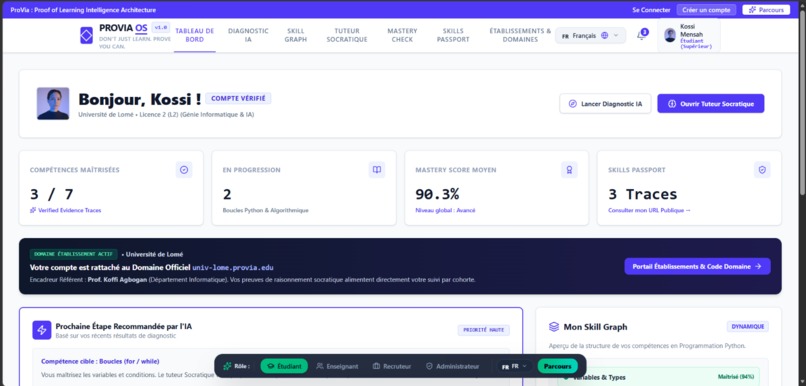
Main dashboard displaying verified profile details, learning statistics, and institutional affiliations.

Inspiration
In 2026, generative AI can write essays, solve complex equations, and pass standardized exams in seconds. While this unlocks incredible possibilities, it creates a major crisis in global education: a high grade no longer proves real learning.
According to recent global reports, over 80% of graduates face skills-mismatch issues in the workplace, and students increasingly risk developing a false sense of mastery by relying on direct AI outputs.
Inspired by real-world education challenges in emerging markets like Togo (our pilot environment), we set out to answer a crucial question:
How can we use AI not to do the work for students, but to make their real thinking visible?
That is why we built ProVia — the AI-powered skill-proof infrastructure that turns superficial course completion into verifiable mastery.
What it does
ProVia is a Socratic AI & Skill Intelligence Engine that shifts education from passive grading to active skill verification through 5 core components:
- Adaptive Diagnostic Engine: Assesses initial learner knowledge and builds an interactive Skill Graph showing exact mastered concepts, gaps, and prerequisites.
- Socratic AI Tutor (AI Fade Method): Never gives direct answers. It uses guided questioning to prompt critical thinking, gradually fading AI assistance as the student gains autonomy.
- Mastery Check & Evidence Engine: Requires students to explain concepts in their own words or solve novel problems independently. ProVia evaluates reasoning, depth, and originality to issue a Verifiable Skill Proof.
- Verifiable Skills Passport: A dynamic learner profile summarizing verified competencies backed by transparent reasoning traces—ready for schools, universities, and employers.
- Teacher Copilot Dashboard: Provides educators with real-time class intelligence, highlighting specific conceptual bottlenecks and flagging early learning dropout risks.
How we built it
ProVia was engineered using a modern, scalable, multi-agent AI architecture:
- Frontend & UI/UX: Built with Next.js (React), TypeScript, and Tailwind CSS for an accessible, ultra-responsive experience across devices.
- Backend & Database: Powered by Supabase (PostgreSQL) with pgvector to manage relational learner data, Skill Graphs, and vector embeddings.
- AI Orchestration & LLMs: Integrated Google Gemini API with multi-agent system prompts:
- Socratic Agent (guided learning without cheat solutions)
- Mastery Evaluator Agent (reasoning & evidence verification)
- Risk Detector Agent (learning trend analytics)
- Deployment: Hosted on Vercel with continuous integration.
Challenges we ran into
- Designing True Socratic AI: Tuning system prompts so the AI gently guides students without accidentally revealing answers or frustrating them required extensive prompt iteration.
- Designing the Skill Graph Architecture: Mapping interdependent learning prerequisites into a clean, dynamic PostgreSQL structure while computing real-time mastery scores was technically demanding.
- Contextual Equity & Accessibility: Ensuring the platform remains low-bandwidth friendly and intuitive for students in low-resource environments (like rural pilot areas in West Africa).
Accomplishments that we're proud of
- Built a working multi-agent architecture that actively prevents AI cheating while boosting deep understanding.
- Successfully created the Skills Passport, transforming qualitative learning data into clear, verifiable proof.
- Designed a globally replicable framework (Core Engine + Country Curriculum Layer) tested against real educational metrics from Togo.
What we learned
- AI should amplify human thinking, not replace it: True EdTech innovation in 2026 isn't about automated homework generation, but about making learning visible.
- Pedagogy must drive technology: Combining cognitive psychology concepts (like Socratic dialogue and scaffolding) with generative AI produces dramatically higher engagement and recall.
What's next for ProVia
- Togo Pilot Expansion: Deploying ProVia across a pilot cohort of 300 high school and university students in Lomé and regional centers.
- Offline & Low-Tech Integration: Extending Socratic tutoring capabilities to WhatsApp, SMS, and voice-based interfaces for zero-internet regions.
- Employer Verification API: Enabling local and global companies to directly verify candidate Skills Passports for internships and job placements.
Built With
- ai-agents
- gemini-api
- next.js
- postgresql
- react
- supabase
- tailwind-css
- typescript
- vector-embeddings
- vercel


Log in or sign up for Devpost to join the conversation.