-
-
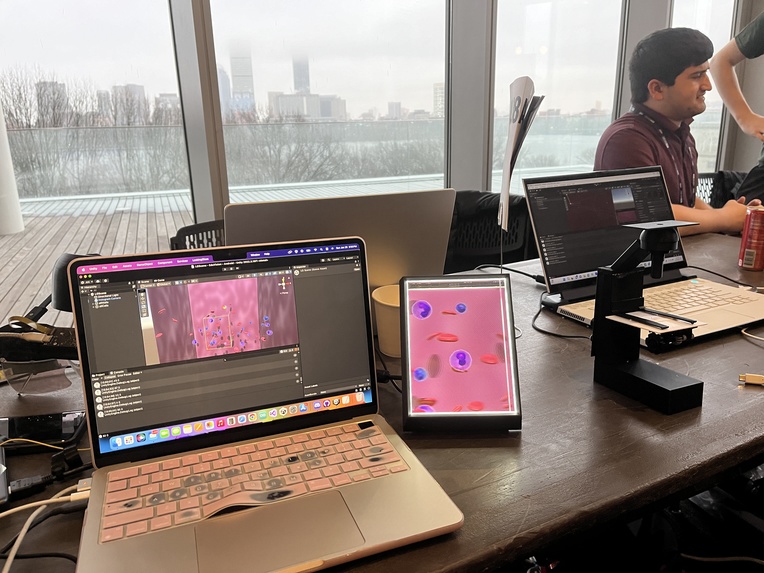
Setup with LookingGlass and Microscope
-
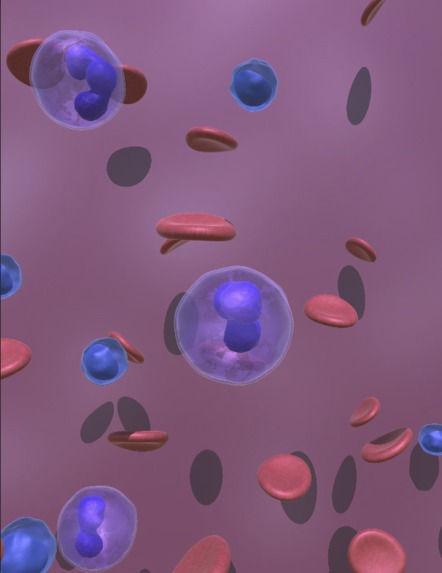
Microscope Display – Zoomed Out
-
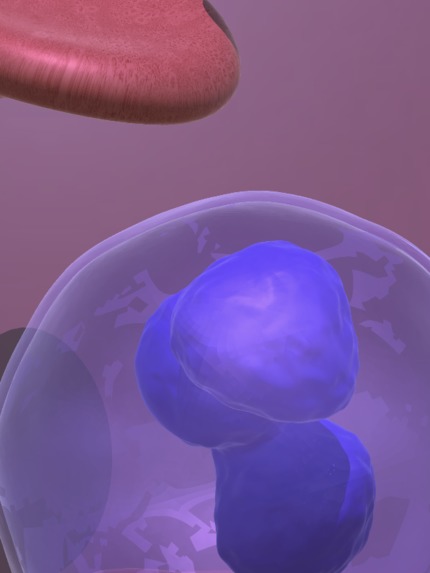
Mircroscope Display – Zoomed In
-
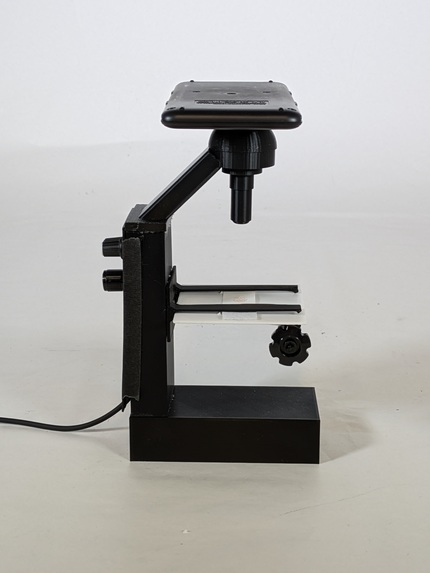
Microscope Side View
-
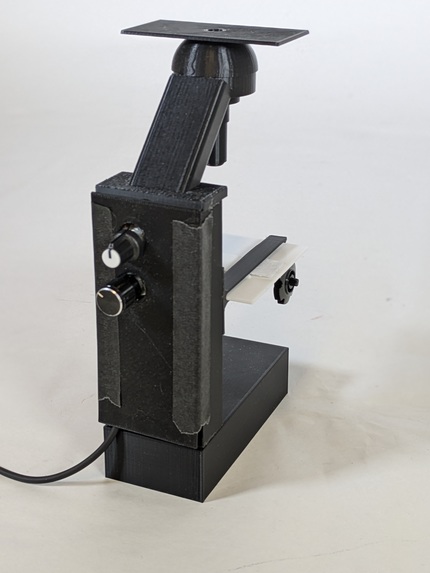
Microscope - Back View
-
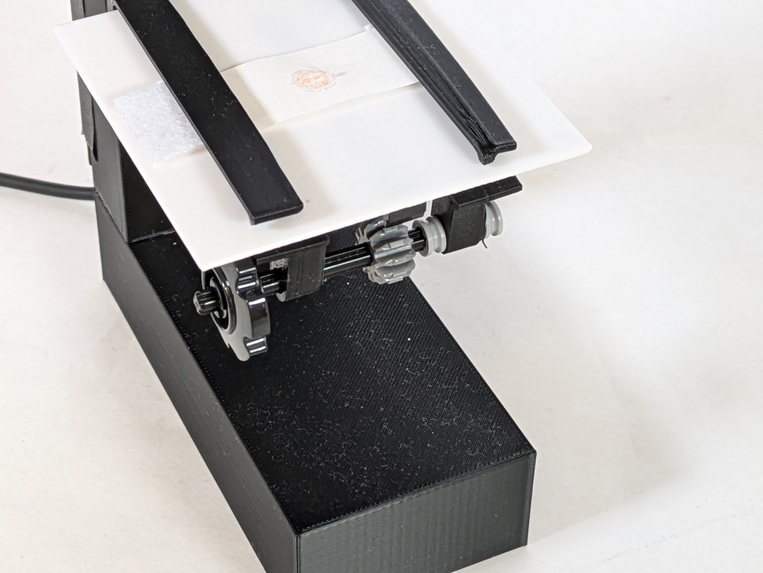
Microscope - Detail View

Inspiration
Think back to when you were a student and had the chance to experience a scientific lab for the first time. That may be either looking through a microscope or exploring matter that makes us who we are. Hands-on experience ignites a kid's curiosity, and engages them to want to learn more. Unfortunately, more than 50% of schools in the US alone lack the facilities to provide hands-on scientific experience to students. We wanted to leverage extended reality in order to make scientific education more accessible.
What it does
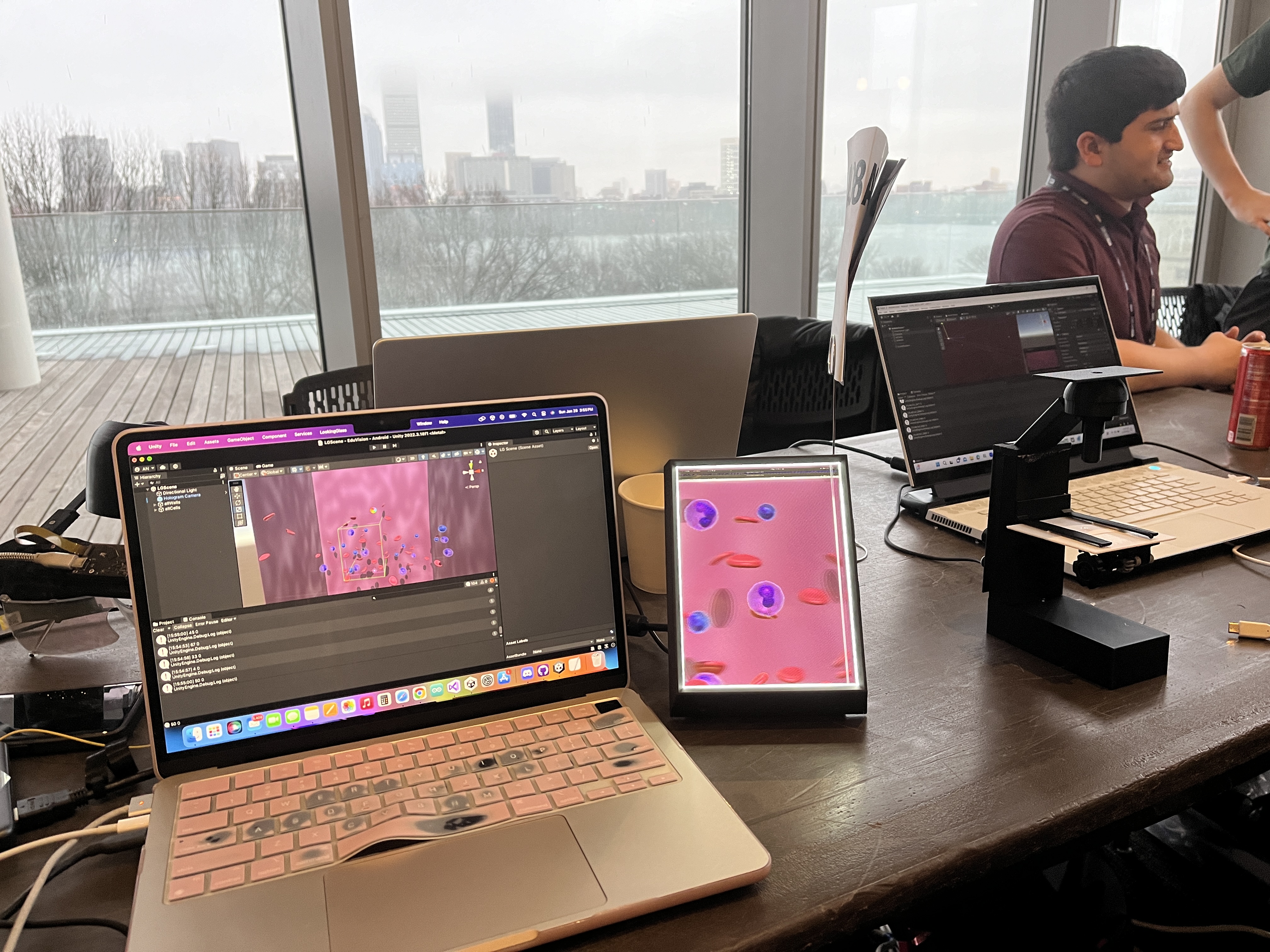
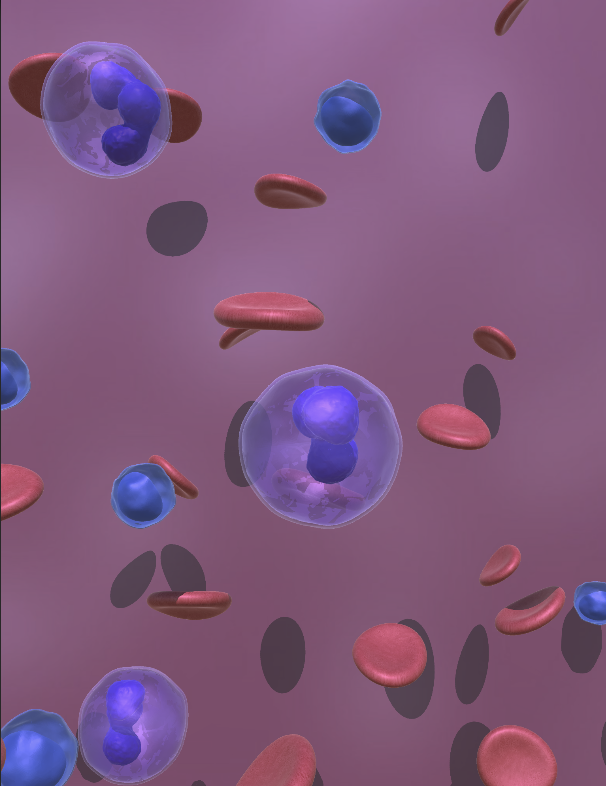
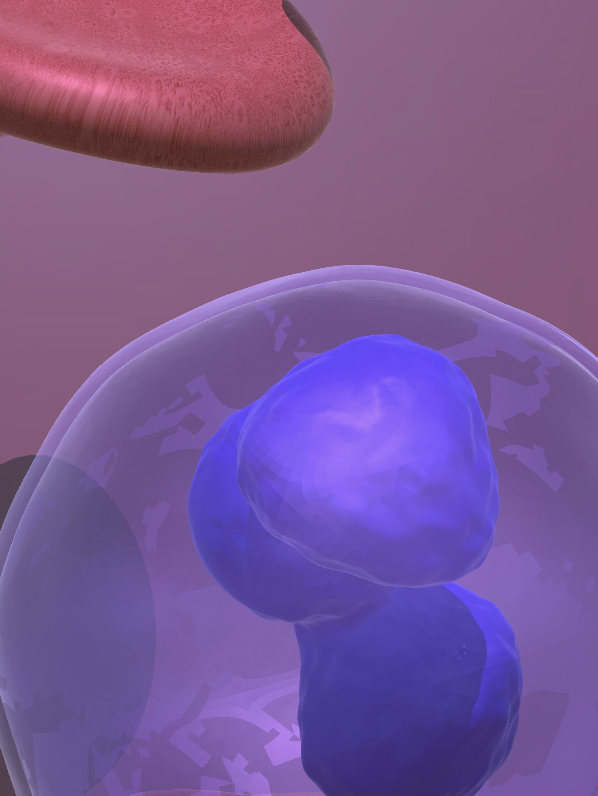
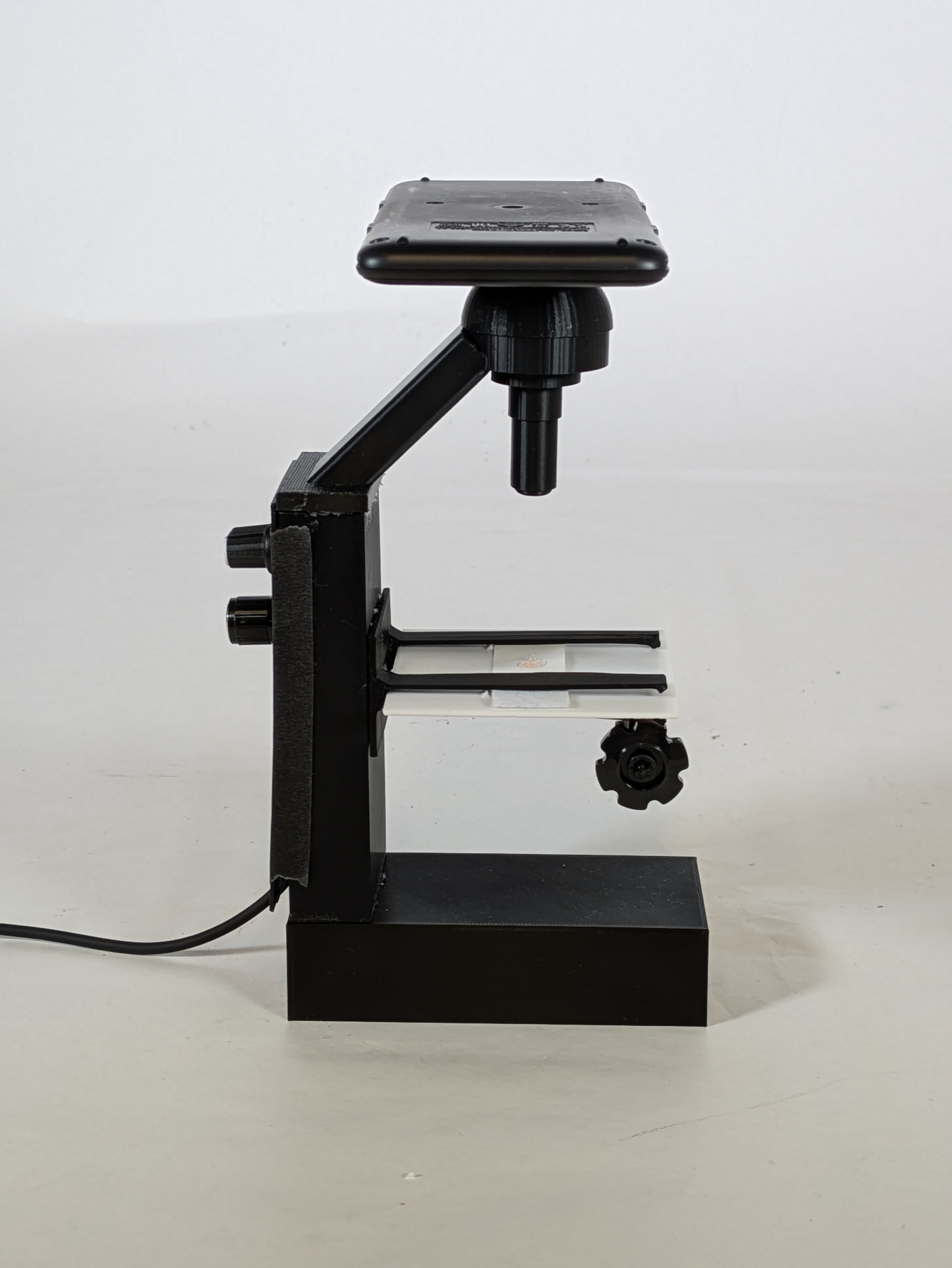
EduVision makes scientific experiments immersive, engaging, and accessible. Our first prototype is a 3D printed microscope coupled with a 3D display to replicate the real experience. The current prototype allows the exploration of blood cells either through a mobile phone which is very accessible or a more expensive Looking Glass for a better understanding of the spatial aspect.
How we built it
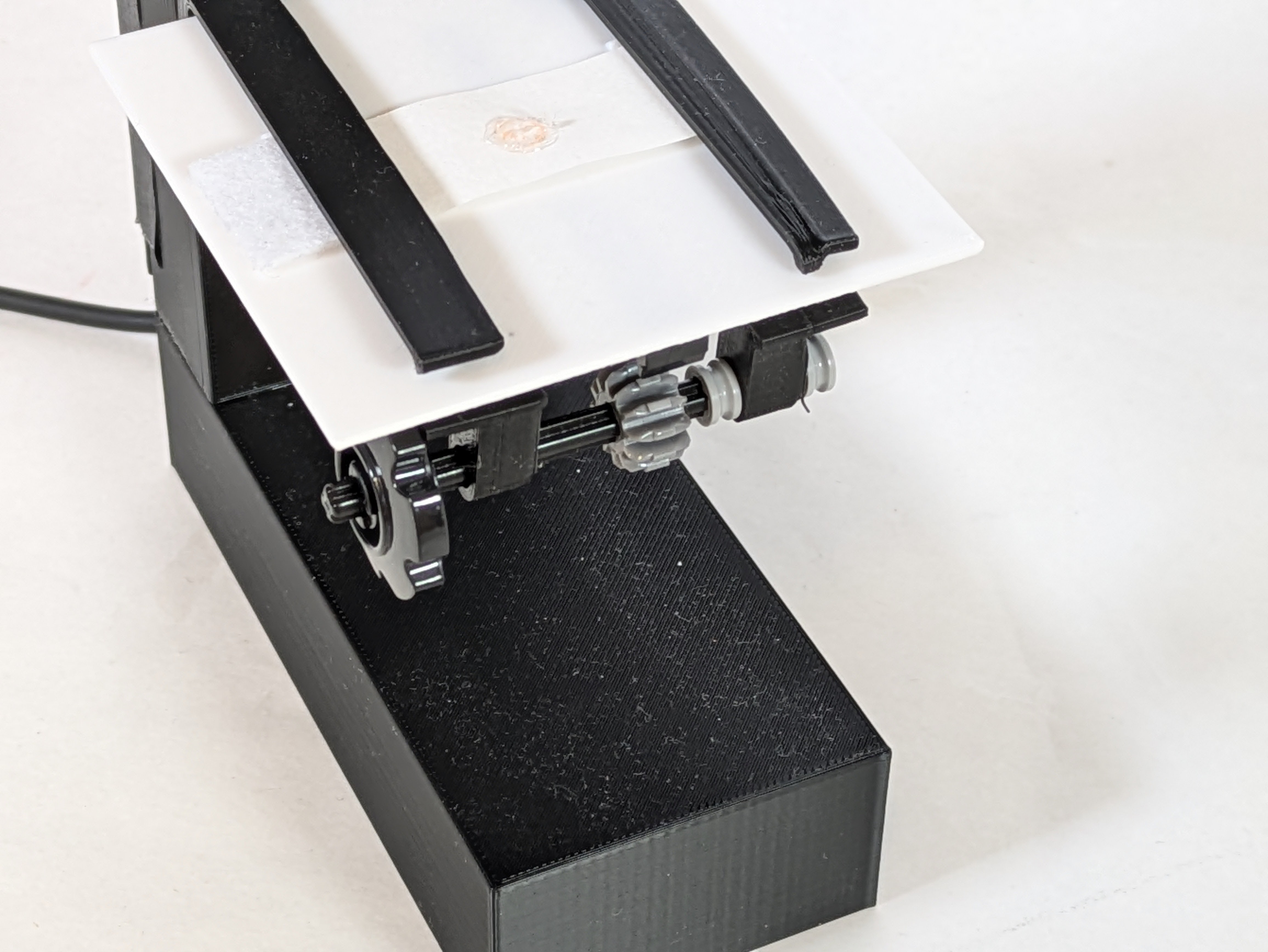
To fabricate and programmatically control our EduVision microscope, we first selected an ideal scene to visualize: red and white blood cells. First, we set up our Unity scene with red and white blood cell GameObjects from Sketchfab – optimizing their geometry and adjusting materials in Blender. Once prepared for Unity, we exported them as .fbx files and positioned duplicates in the scene while implementing sinusoidal movements with C#. After setting up our scene, we diverged into two scenes: one with the Unity camera configured for a mobile phone display, and one configured for the Looking Glass’ Hologram Camera. For each scene, we implemented camera controls based on input from the potentiometer circuit to enable users to adjust the focus while zooming in or out. Our physical microscope serves an aesthetic purpose that emulates an expensive microscope, and we 3D modeled this with TinkerCad and Onshape. Aside from our ESP32 and wires, our components were entirely 3D printed and can connect to a mobile phone or Looking Glass display. Our circuit was developed in C++ with the Arduino IDE, while our interactive visualization was developed and integrated with the circuit in Unity with C# and Visual Studio. Collaboration was easy and engaging as we set up version control with a guide that Ashley – one of our team members – created :)
Acknowledgements
- Looking Glass mentors – troubleshooting Hologram Camera controls in C#
- T and Lucas – Northstar assembly and potentiometer circuit serial
- Bosco - hardware mentorship
- International Medical University Red Blood Cell model
- Vikrama Raghuraman’s White Blood Cell models
Challenges we ran into
- Trying to replicate or enhance scientific experiments with low cost devices
- Implementing the microscope blur accurately
- Using bluetooth when everyone in the room was using it
Accomplishments that we're proud of
We are proud that we were able to create a functional device that students can use at a low cost. We are also proud of our team and being able to work together efficiently without knowing each other previously.
What we learned
We learned a lot about scaling businesses as we are all students with no prior experience in entrepreneurship. We made our first startup pitch and were able to discuss the potential of our product with investors.
What's next for EduVision
EduVision wants students to use our microscope and learn from it. We want to inspire students to be curious and explore scientific careers in the future. We would like to simulate the microscopic view of other structures such as microorganisms. We are also looking into recreating other scientific experiments in XR.


Log in or sign up for Devpost to join the conversation.