Inspiration
BYUI administrators struggle with allocating faculty and classroom resources due to high numbers of student enrollment.
What it does
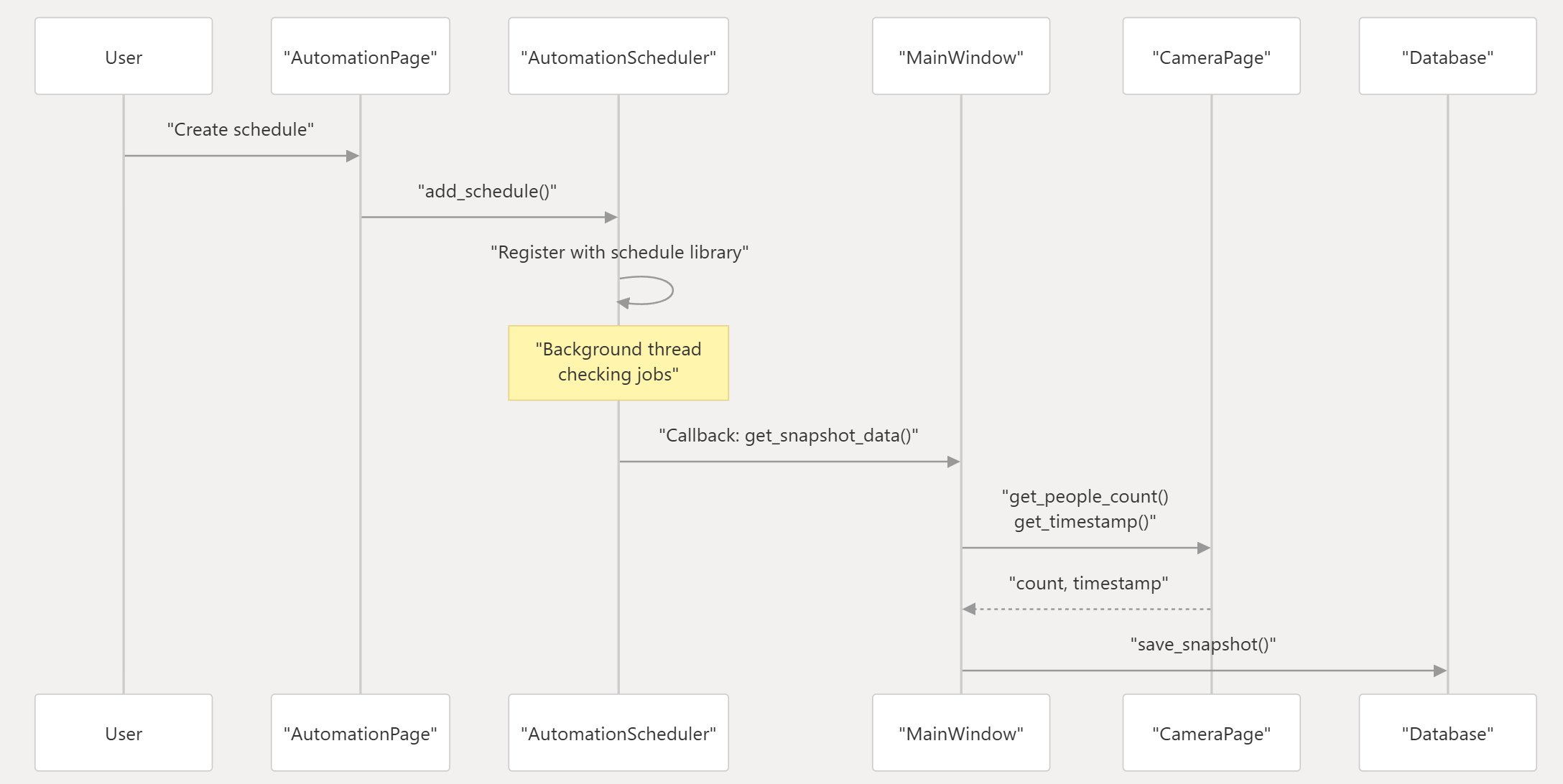
- Gather data across facilities via manual camera snapshots or classroom automation schedules
- Predict course demand and optimize class scheduling
- Allocate resources effectively across departments
- Identify patterns in student attendance behavior
- Make data-driven decisions about curriculum planning
- Forecast enrollment trends and capacity needs
How we built it
A strict Python stack, we utilized a completely local machine desktop application architecture. Using Python became advantageous for popular and well-supported machine learning libraries. We first utilized a Python library called YOLO for its object detection algorithms. We were able to use the OpenCV library to display our camera between computer and mobile phones from the PyQt5 desktop application. We implemented an authentication system using the Bcrypt library. We then finetuned our own ML model, outperforming the YOLO model in various metrics.
| Model Management | Load and maintain YOLO model instance with configurable model weights | | Person Detection | Identify people in video frames using YOLO inference | | Count Tracking | Maintain current person count from the most recent frame | | Frame Annotation | Draw bounding boxes and confidence labels on detected persons | | Performance Monitoring | Calculate and track frames per second (FPS) for performance metrics |
Challenges we ran into
Using the PyQt Python desktop application library proposed a challenge since it is single threaded. Enabling the camera feature within the app required the creation and switching between threads.
Our analytical plot graphs required some complex querying which became a hurdle when our database schema didn't represent our contain the necessary data columns for matching tables on related items.
We also faced challenges with some Python library dependency versions being different between local machines.
Accomplishments that we're proud of
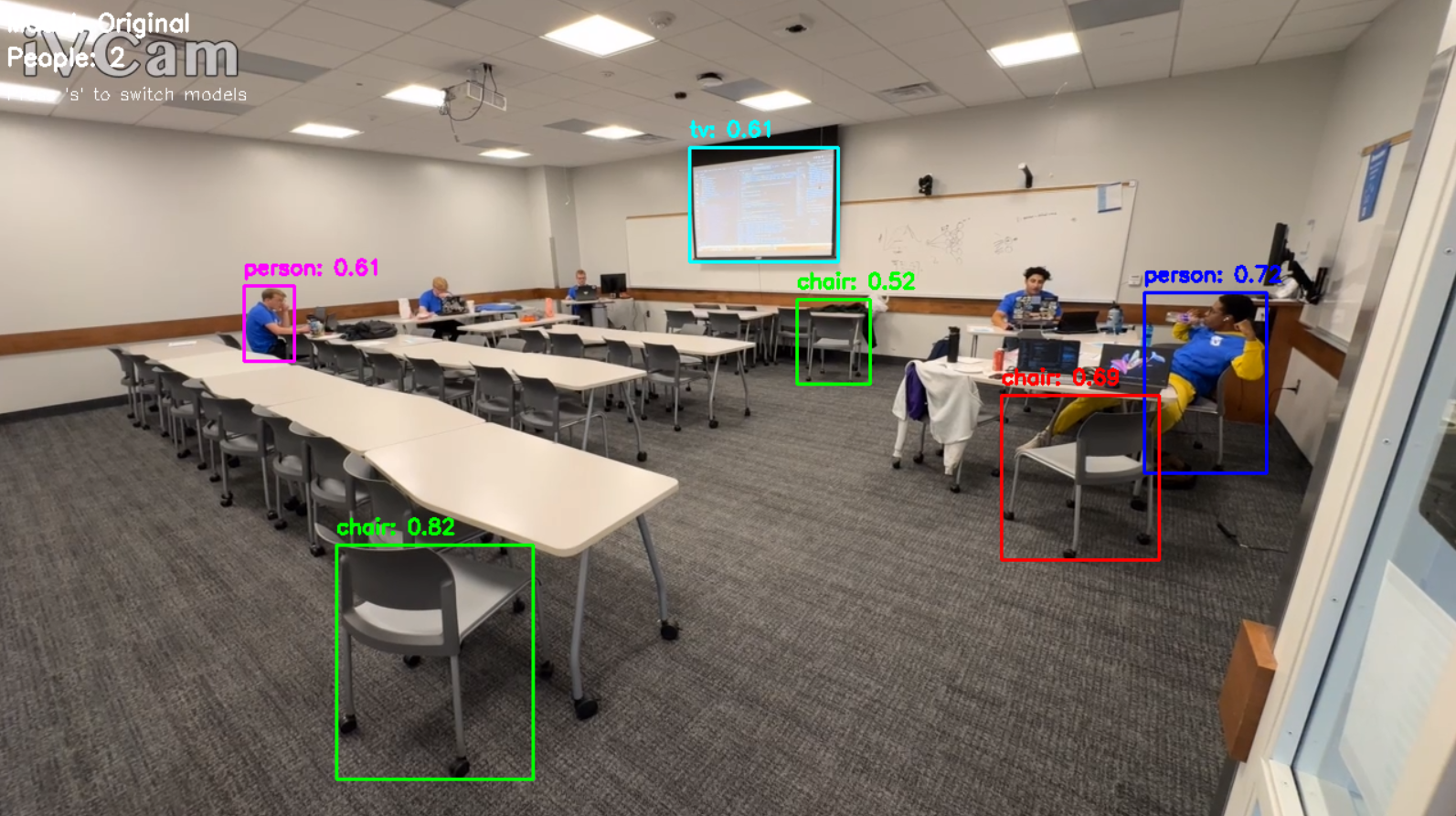
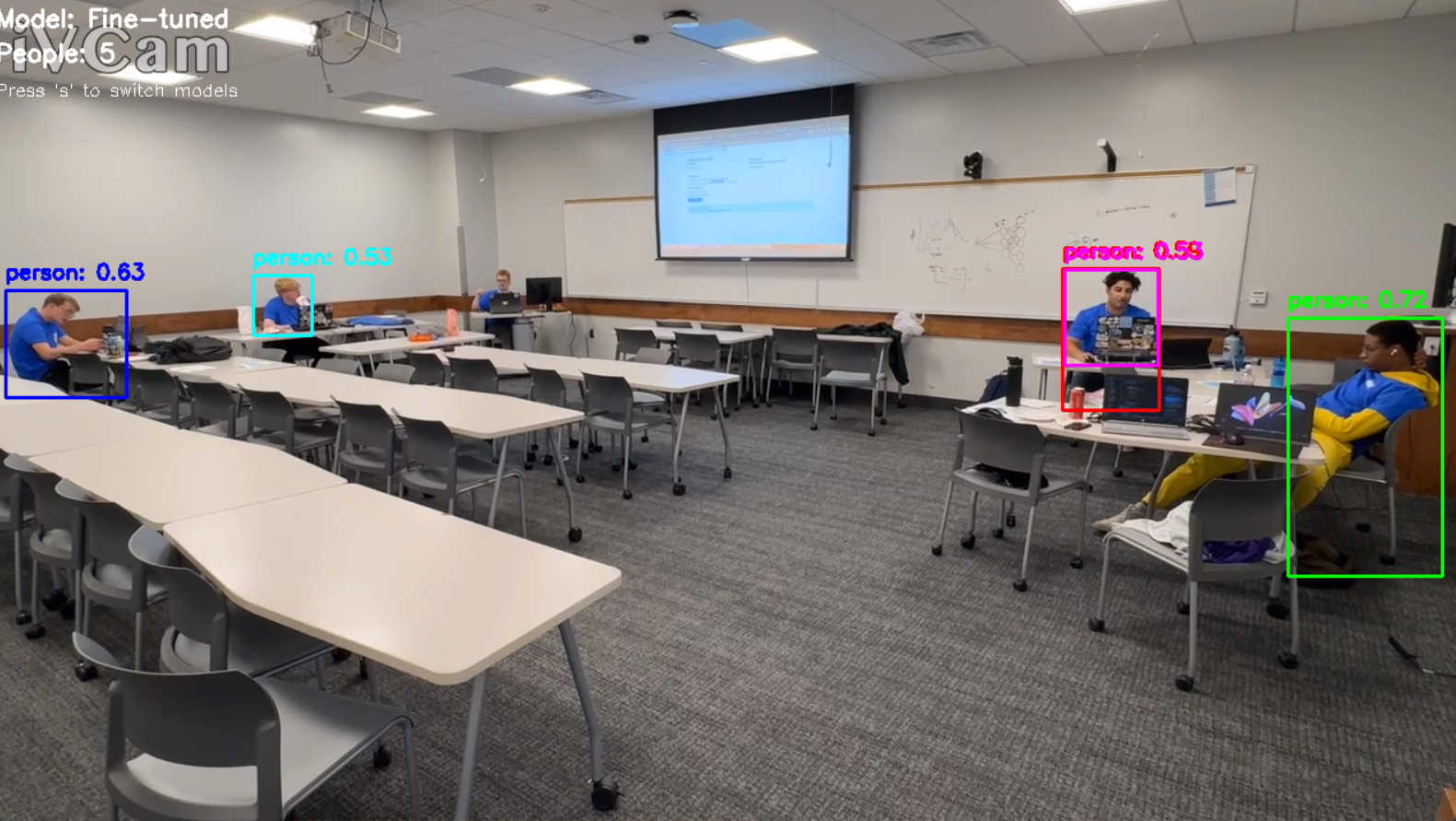
Our fine-tuned model significantly outperforms the original YOLOv8n model in campus environments: Fine-tuned Model Performance:
- Accuracy: 90% at 15 epochs
- Training: Custom dataset optimized for campus environments
- Improvement: Better detection accuracy compared to base YOLOv8n model
- Note: Could be trained further for even better performance
What we learned
Fine-tuned Model Learning Outcomes:
- Campus-Specific Training: Trained on real campus scenarios with diverse lighting, angles, and crowd densities
- Higher Accuracy: 90% accuracy vs ~75% for base YOLOv8n in campus settings
- Better Detection in Crowded Scenes: Improved performance when multiple people are present
- Optimized for Classroom Environments: Specifically tuned for typical classroom layouts and furniture
- Reduced False Positives: Better at distinguishing people from objects in educational settings
- Improved Confidence Scores: More reliable confidence thresholds for attendance tracking ## What's next for EduVision
- Extended Training: Train the fine-tuned model for more epochs to improve accuracy beyond 90%
- Multi-Class Detection: Expand beyond person detection to include objects like laptops, books, etc.
- Real-time Alerts: Implement notifications for unusual attendance patterns
- Mobile Integration: Develop companion mobile app for faculty
Long-term Vision
- Predictive Analytics: Build ML models to forecast attendance and enrollment
- Integration APIs: Connect with existing university systems (LMS, scheduling)
- Advanced Analytics: Implement time-series analysis for attendance trends
- Scalability: Support for multiple campuses and distributed systems
- AI Insights: Automated recommendations for course scheduling and resource allocation
Research Opportunities
- Behavioral Analysis: Study patterns in student attendance and engagement
- Optimization Algorithms: Develop algorithms for optimal class scheduling
- Predictive Modeling: Create models to predict course success based on attendance
- Resource Optimization: AI-driven recommendations for facility and faculty allocation


Log in or sign up for Devpost to join the conversation.