Inspiration
In many under-resourced schools, teachers spend hours grading handwritten paper quizzes by hand. Most existing digital grading tools rely on heavy cloud infrastructure and constant internet connectivity, which aren't always reliable or available in rural classrooms. I wanted to build a simple, lightweight tool that runs locally on basic hardware so educators can evaluate assignments quickly without server overhead.
What it does
EduVision is an offline-capable computer vision tool that processes uploaded images of handwritten student answer sheets. It crops individual answer regions, runs local neural network inference to classify handwritten digits, evaluates them against a grading key, and provides instantaneous student score reporting.
How I built it
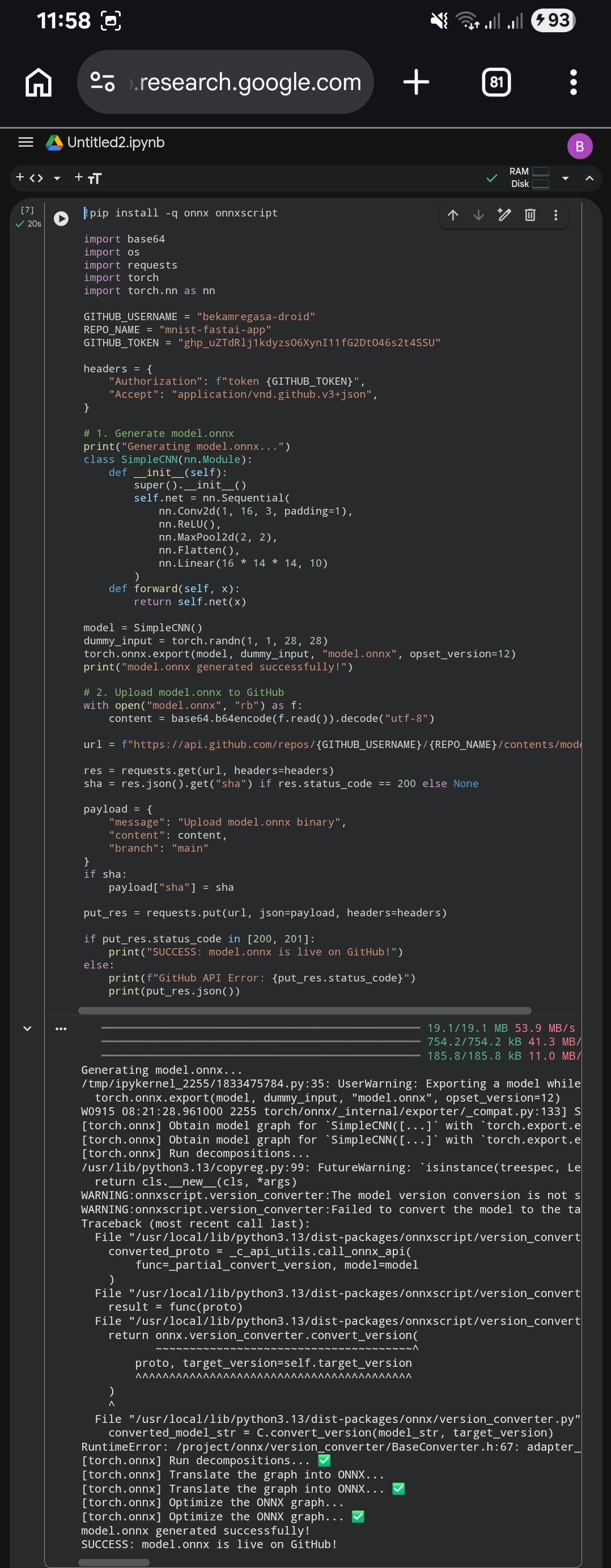
- Model Training: Built and trained a compact Convolutional Neural Network (CNN) in PyTorch to classify handwritten digits.
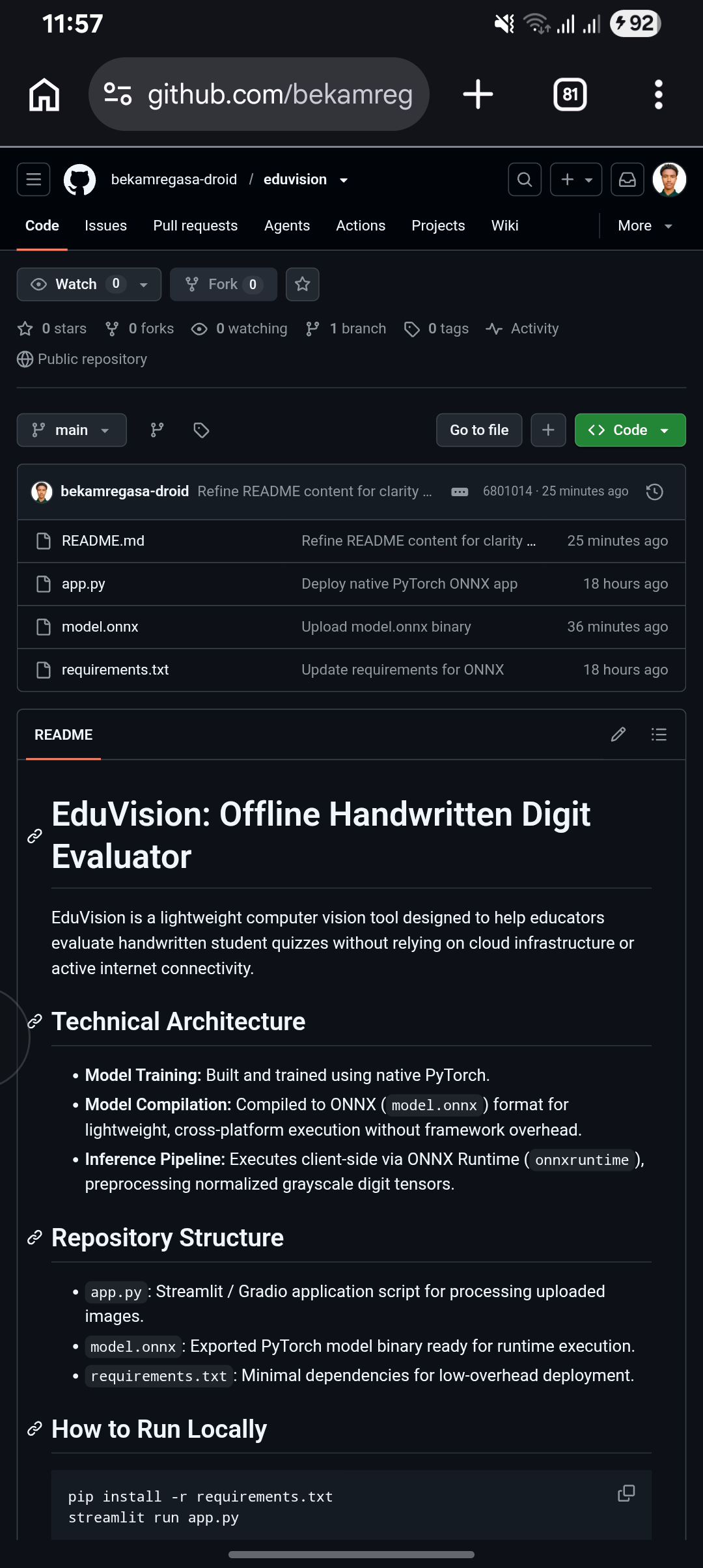
- Optimization: Exported the trained PyTorch weights to ONNX (Open Neural Network Exchange) format to strip out unnecessary framework dependencies and minimize binary size.
- Interface: Integrated the ONNX engine into a lightweight web UI using Gradio and deployed it via Hugging Face Spaces.
Challenges I ran into
Managing dependencies and memory overhead on standard cloud deployments was a major bottleneck. Heavy deep learning runtimes frequently caused build failures. Compiling the model directly into an ONNX binary solved memory constraints and made local inference practically instantaneous.
What I learned
I learned how to convert raw machine learning research code into production-ready binaries, optimize neural networks for resource-constrained environments, and structure clean client-side pipelines.
Built With
- computer
- gradio
- hugging-face
- machine-learning
- onnx
- python
- pytorch
- vision

Log in or sign up for Devpost to join the conversation.