-
-
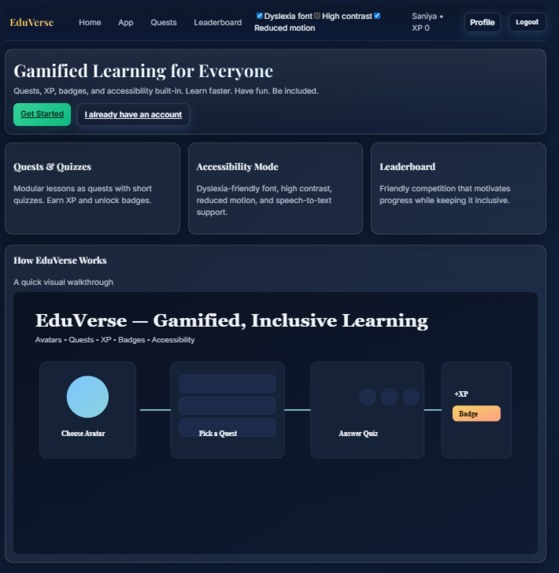
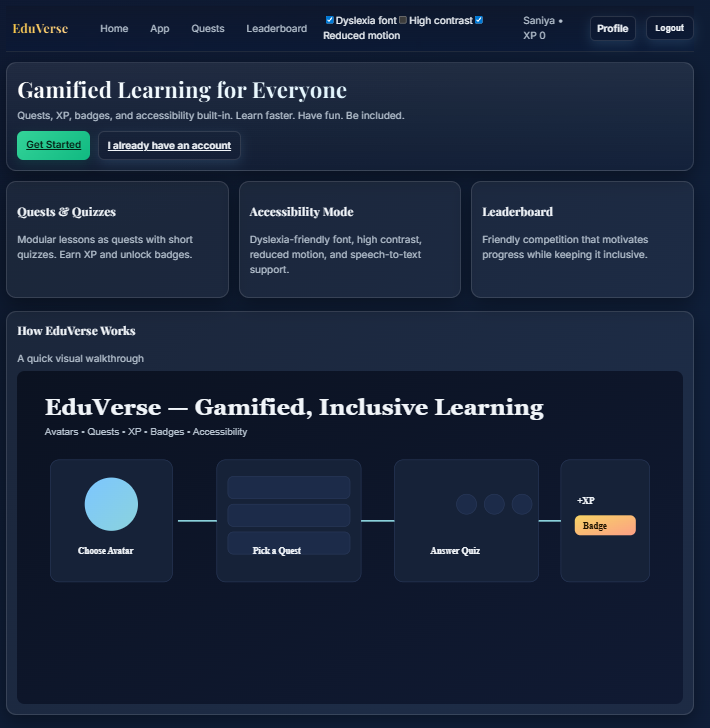
Home Page
-
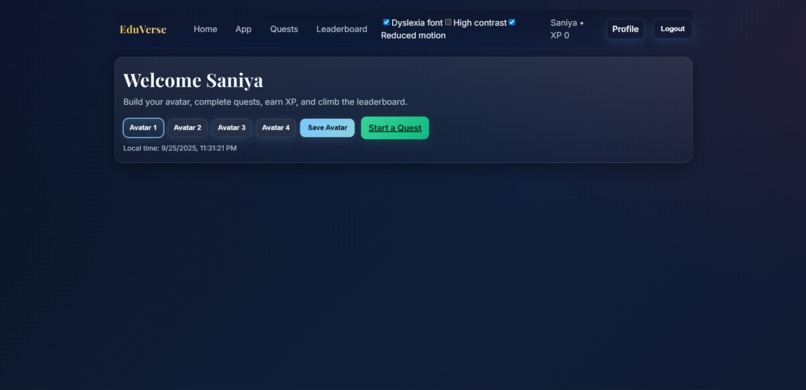
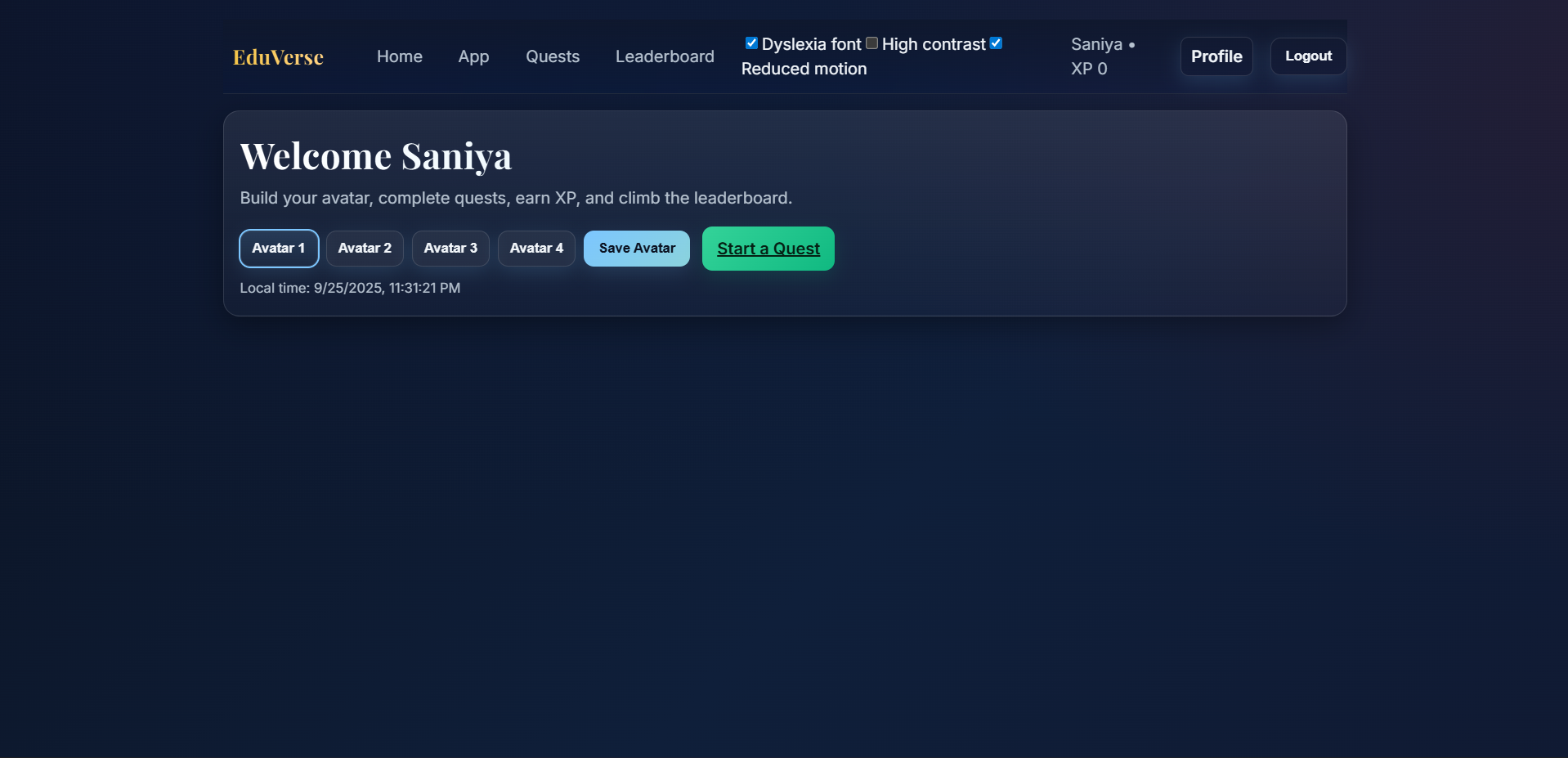
App
-
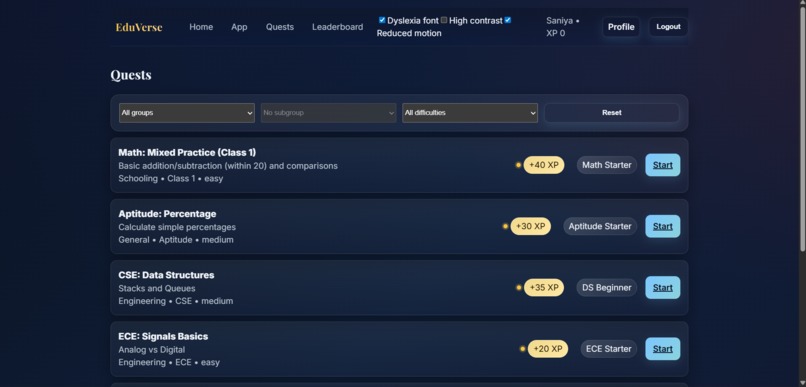
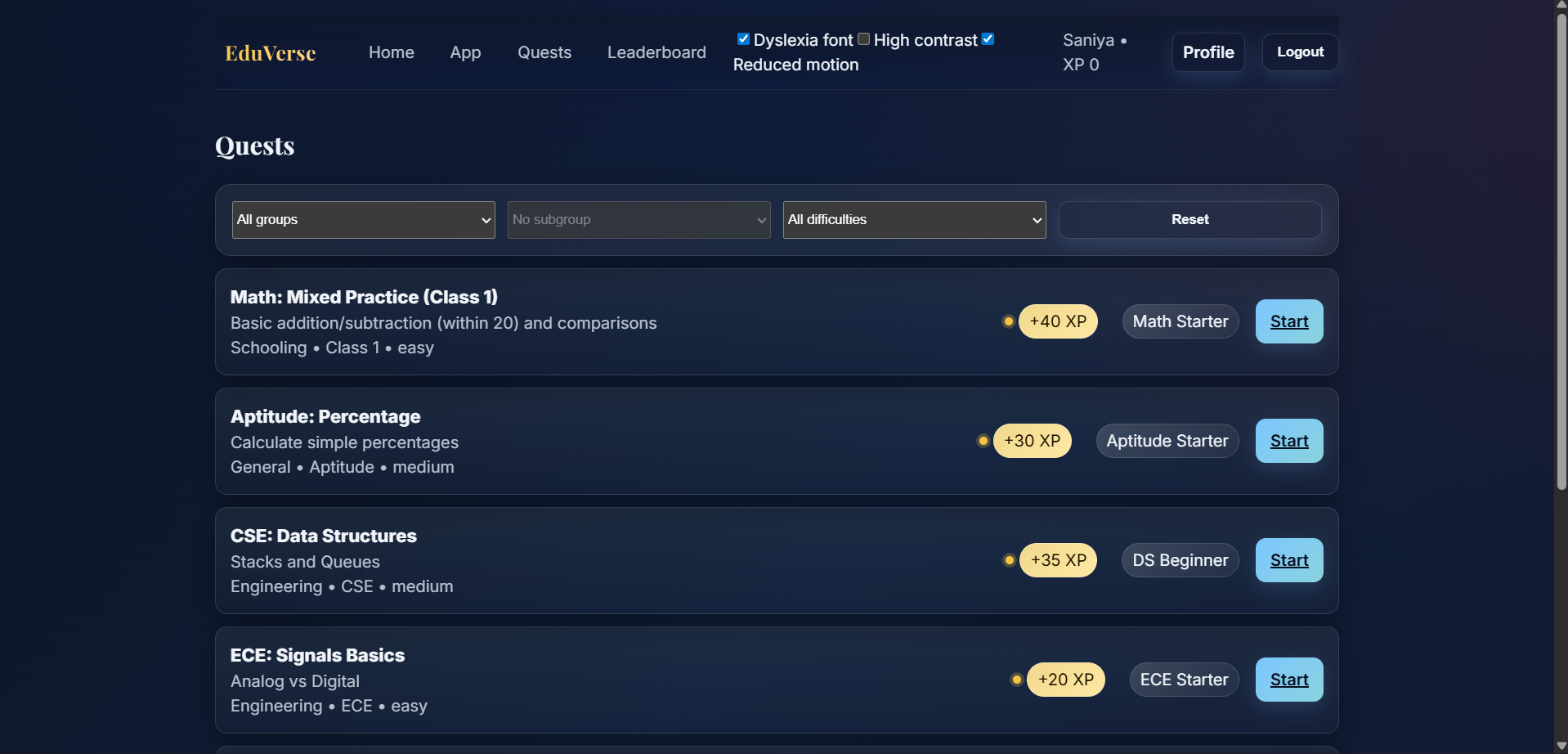
Quest Page
-
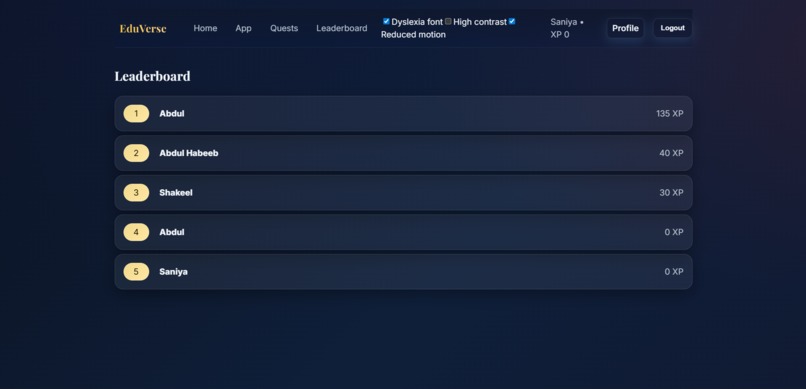
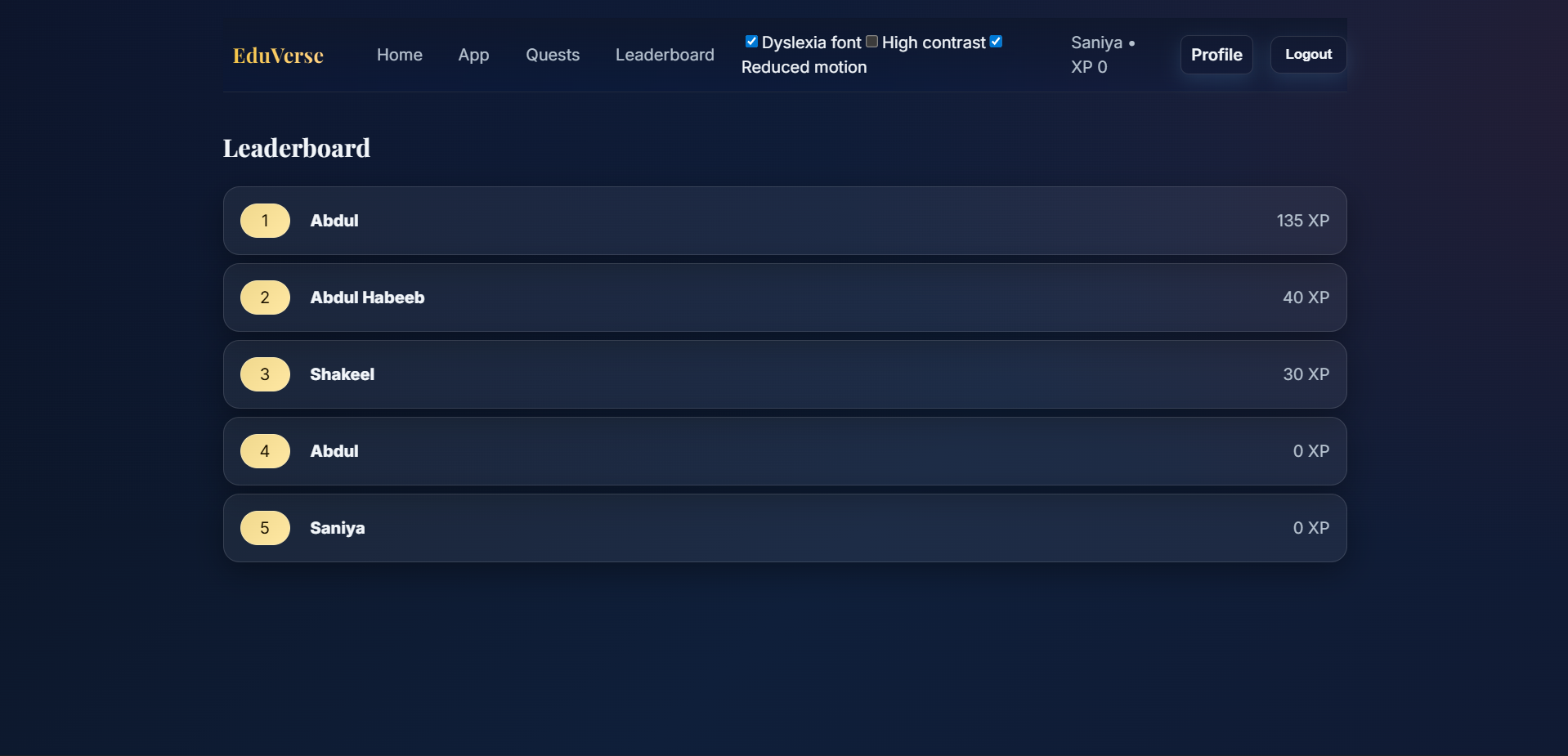
LeaderBord Page
-
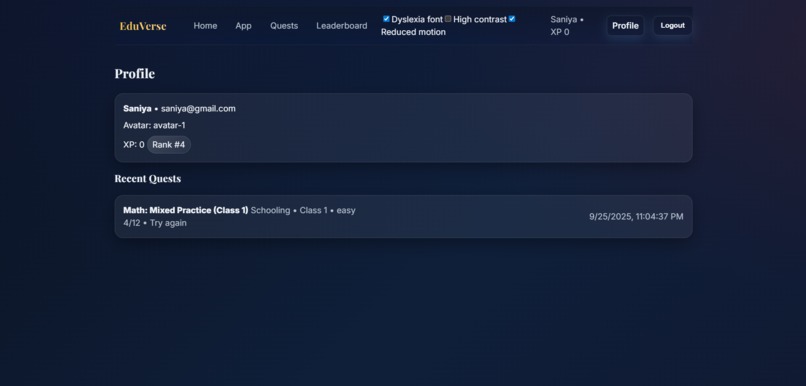
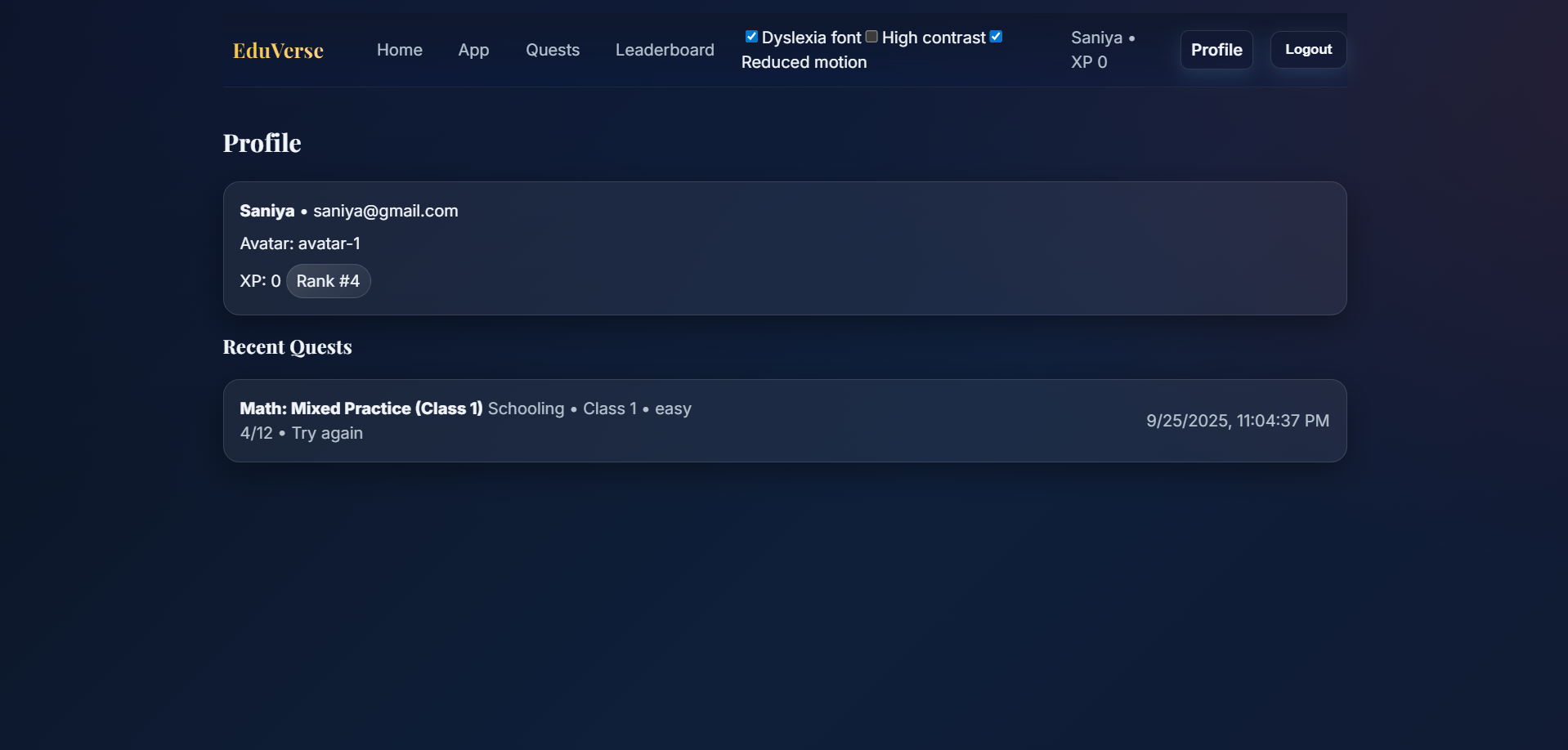
Profile
EduVerse - Gamified Learning & Accessibility Platform
Inspiration
The inspiration for EduVerse came from observing how traditional educational systems often fail to engage students through standardized testing and rigid curriculum structures. We recognized that students from different schools and colleges face varying educational standards, creating an uneven playing field for learning opportunities. The need for a platform that could democratize access to challenging educational content while making learning enjoyable and competitive drove us to create EduVerse. We wanted to build something that would inspire students to participate in open challenges regardless of their institutional background, fostering a global community of learners who could showcase their knowledge and learn from each other.
What it does
EduVerse is a comprehensive gamified learning platform that transforms education into an engaging, competitive experience. The platform allows students to participate in live online quests and challenges that transcend traditional school and college boundaries. Key features include:
- User Authentication & Profiles: Secure login system with MongoDB database integration for user data management
- Interactive Dashboard: Personalized user interface displaying quest history, current rankings, and progress tracking
- Live Quest Participation: Real-time online challenges where students compete and solve problems
- Point-Based Reward System: Users earn points for completing quests, which are displayed on a public leaderboard for knowledge showcasing
- Teacher Tools: Educators can host private test quests or practice sessions for exam preparation, improving student wellness and productivity
- Accessibility Features: Customizable interface with color preferences, contrast adjustments, and OpenDyslexic font support
- Voice Integration: AI-powered speech-to-text functionality allowing users to speak their answers when they get bored with traditional selection methods
- AI-Enhanced Learning: Post-quest AI explanations showing detailed solutions and answer methodologies
How we built it
EduVerse was constructed using a robust MERN stack with TypeScript for enhanced type safety and maintainability:
Frontend Architecture:
- React.js for fast development and building
- TypeScript for type safety across the entire codebase
- Three.js integration for avatar UI components
- Web Speech API for voice recognition features
- Custom CSS with accessibility considerations
Backend Infrastructure:
- Node.js with Express server using TypeScript
- JWT authentication with refresh tokens for secure user sessions
- MongoDB for data persistence and user management
- Zod validation for request body validation
- Comprehensive error handling and audit logging
Production Setup:
- Docker Compose for containerized deployment
- Nginx for serving the client and reverse-proxying the API
- Environment variable management for secure configuration
- Rate limiting, CORS, and security middleware implementation
Development Workflow:
- Monorepo structure for organized codebase management
- Separate development and production Docker configurations
- Automated build processes with proper secret management
Challenges we ran into
Several significant challenges emerged during development:
Technical Integration Complexities: Implementing the Web Speech API across different browsers while maintaining consistent functionality proved challenging, especially ensuring compatibility with various accent recognition and speech patterns.
Real-time Quest Management: Creating a system that could handle multiple concurrent live quests while maintaining data consistency and preventing cheating required careful database design and real-time synchronization.
Accessibility Implementation: Balancing visual appeal with accessibility features like high contrast modes, reduced motion preferences, and screen reader compatibility without compromising the gamified experience.
AI Integration: Incorporating intelligent explanation systems that could provide meaningful, contextual feedback for diverse question types while maintaining response speed and accuracy.
Scalability Concerns: Designing the leaderboard and ranking system to handle potentially thousands of concurrent users while maintaining real-time updates and fair scoring mechanisms.
Security Considerations: Implementing robust authentication and preventing quest answer manipulation while maintaining a smooth user experience.
Accomplishments that we're proud of
Inclusive Design Achievement: Successfully created a platform that accommodates students with different learning needs through comprehensive accessibility features, including OpenDyslexic font support and customizable interfaces.
Seamless Voice Integration: Developed an innovative voice-to-answer system that enhances user engagement and provides an alternative interaction method for students who prefer auditory learning.
Production-Ready Architecture: Built a fully containerized, scalable application with proper CI/CD considerations, making it deployment-ready for educational institutions.
Cross-Institutional Flexibility: Created a system that breaks down traditional educational barriers, allowing students from any institution to participate in challenging content regardless of their school's or college's standards.
Teacher Empowerment Tools: Developed comprehensive tools that enable educators to create private assessments and practice sessions, directly contributing to improved student wellness and productivity.
Real-time Community Building: Successfully implemented a leaderboard system that fosters healthy competition and knowledge sharing among students globally.
What we learned
Accessibility is Fundamental: We learned that accessibility features shouldn't be afterthoughts but core components of the design process. Implementing features like reduced motion and high contrast modes taught us how to create truly inclusive digital experiences.
Voice Technology Limitations: Working with Web Speech API revealed the complexities of natural language processing and the importance of providing fallback options for users with different speech patterns or technical limitations.
Gamification Psychology: We discovered the delicate balance required in gamification - providing enough competitive elements to motivate students while ensuring the platform remains focused on learning outcomes rather than just point accumulation.
Scalable Architecture Importance: Building with TypeScript across the full stack and implementing proper containerization taught us valuable lessons about maintaining code quality and deployment reliability in production environments.
User Experience Complexity: We learned that creating intuitive interfaces for diverse user groups (students, teachers, administrators) requires extensive user testing and iterative design improvements.
Security in Educational Technology: Implementing JWT authentication and proper data validation highlighted the critical importance of security in educational platforms where sensitive student data is involved.
What's next for EduVerse
Advanced AI Integration: Expand the AI explanation system to provide personalized learning paths, adaptive difficulty adjustment, and intelligent tutoring capabilities that can identify knowledge gaps and suggest targeted improvement areas.
Mobile Application Development: Create native mobile applications for iOS and Android to increase accessibility and enable offline quest participation with synchronization capabilities.
Institution Partnership Program: Develop APIs and integration tools that allow schools and colleges to directly integrate EduVerse into their existing learning management systems.
Advanced Analytics Dashboard: Build comprehensive analytics for both students and teachers, including progress tracking, performance insights, and predictive modeling for academic success.
Collaborative Learning Features: Implement team-based quests, peer tutoring systems, and study group formation tools to enhance collaborative learning experiences.
Expanded Content Library: Partner with educational content providers to offer subject-specific quest libraries covering diverse academic disciplines and professional certification preparation.
Blockchain Credentialing: Explore blockchain technology for secure, verifiable digital certificates and achievements that students can showcase to potential employers or educational institutions.
International Localization: Expand the platform to support multiple languages and regional educational standards, making it truly global in scope.
Virtual Reality Integration: Investigate VR capabilities for immersive learning experiences, particularly for subjects like science, history, and engineering where visualization enhances understanding.
Advanced Accessibility Features: Implement additional assistive technologies such as eye-tracking navigation, advanced screen reader optimization, and cognitive load management tools for students with learning differences.

Log in or sign up for Devpost to join the conversation.