-
-
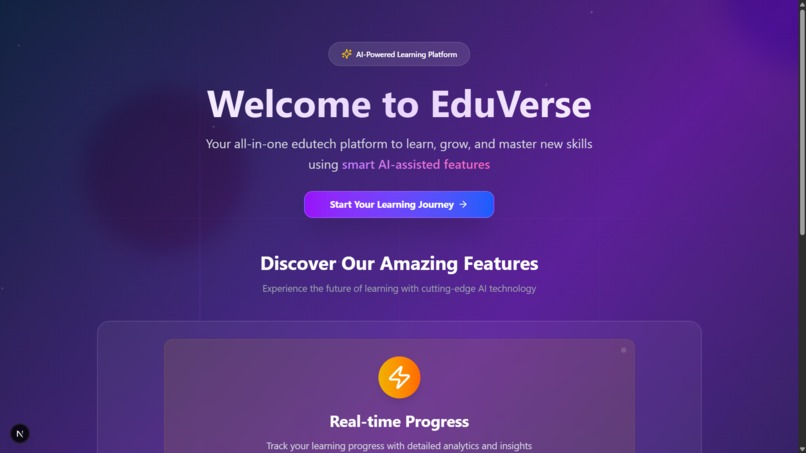
Welcome Page of Eduverse
-
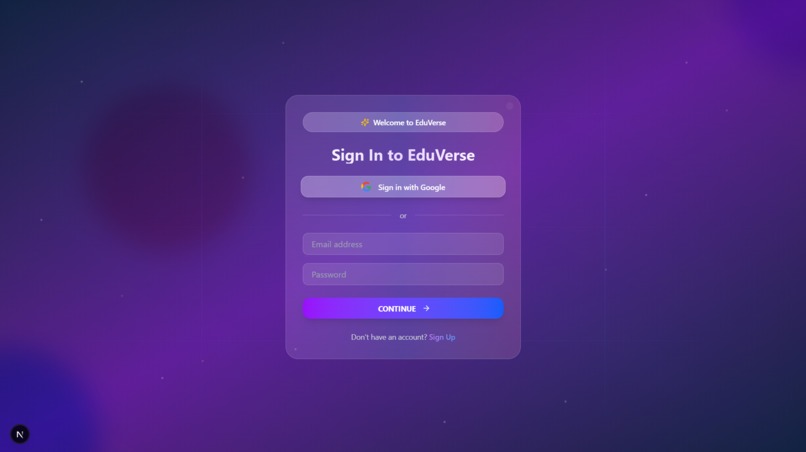
Sign Up Page
-
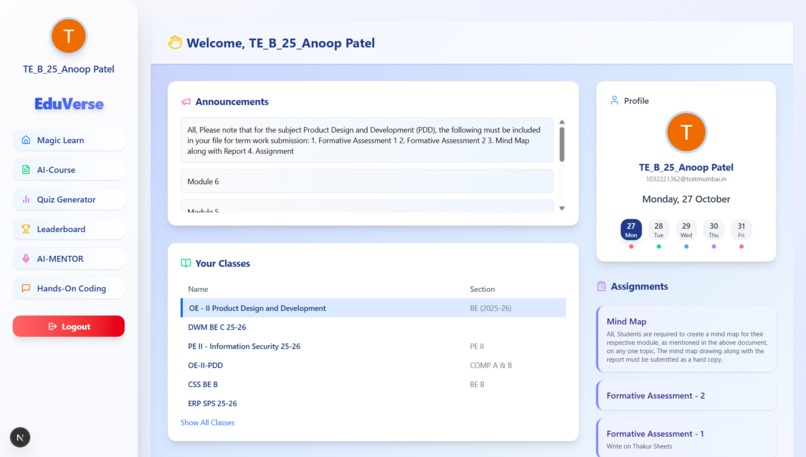
Google Classroom overview
-
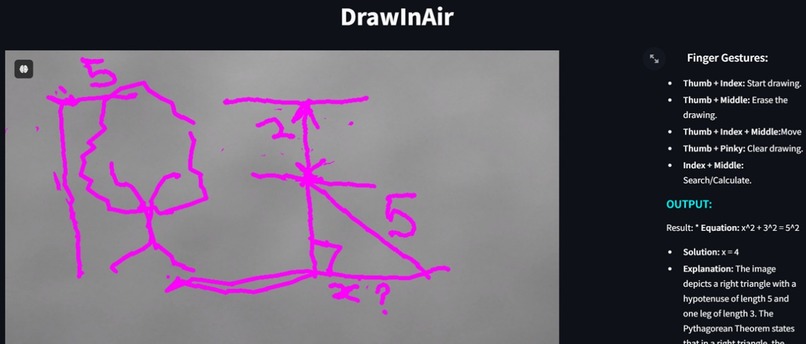
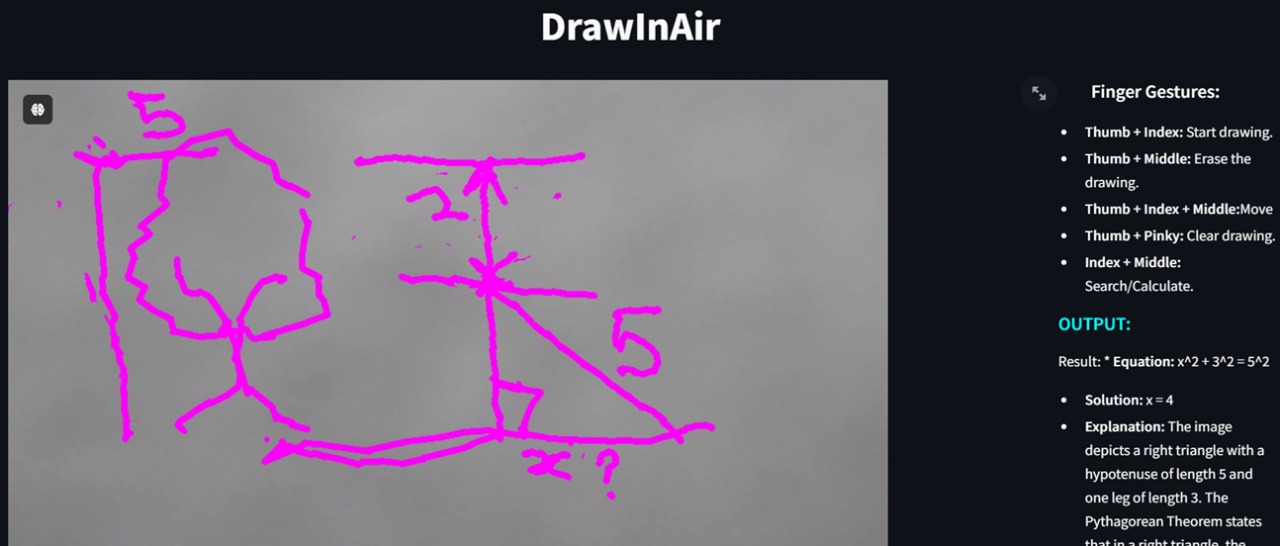
Magic Learn Feature
-
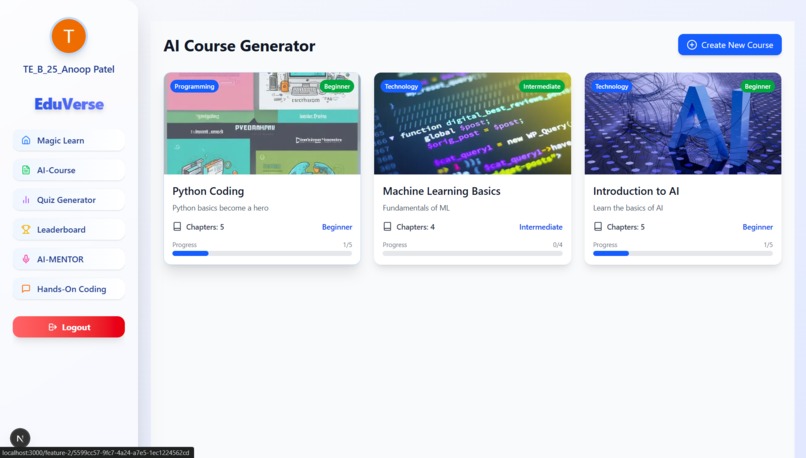
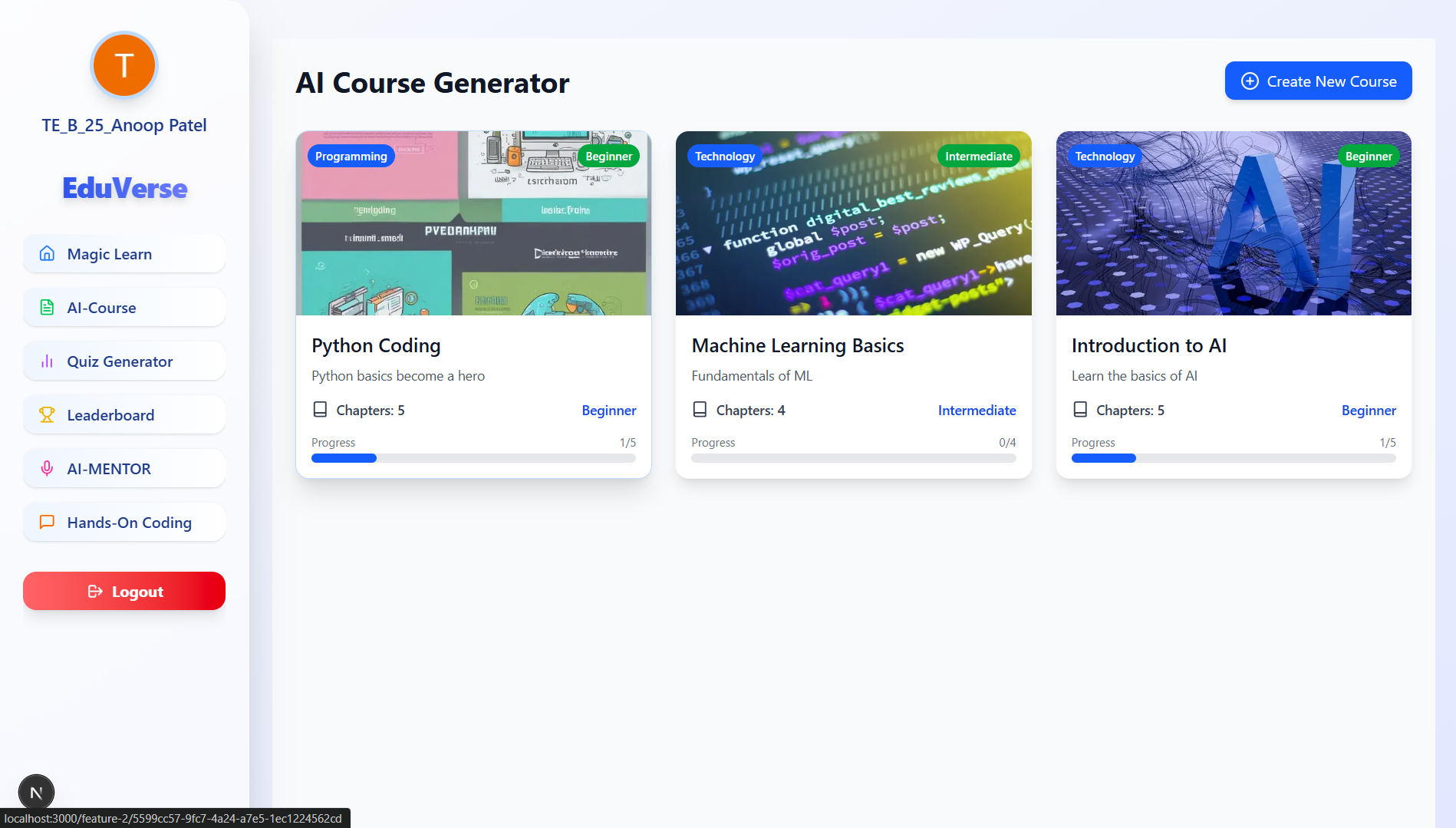
AI Course Generator Personalized
-
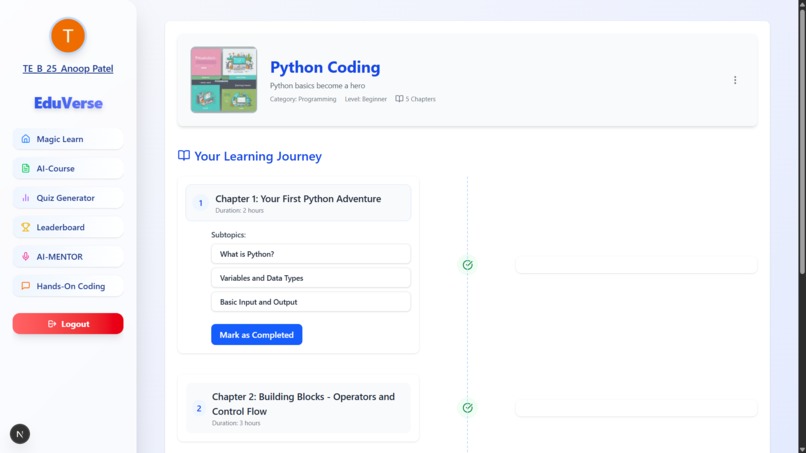
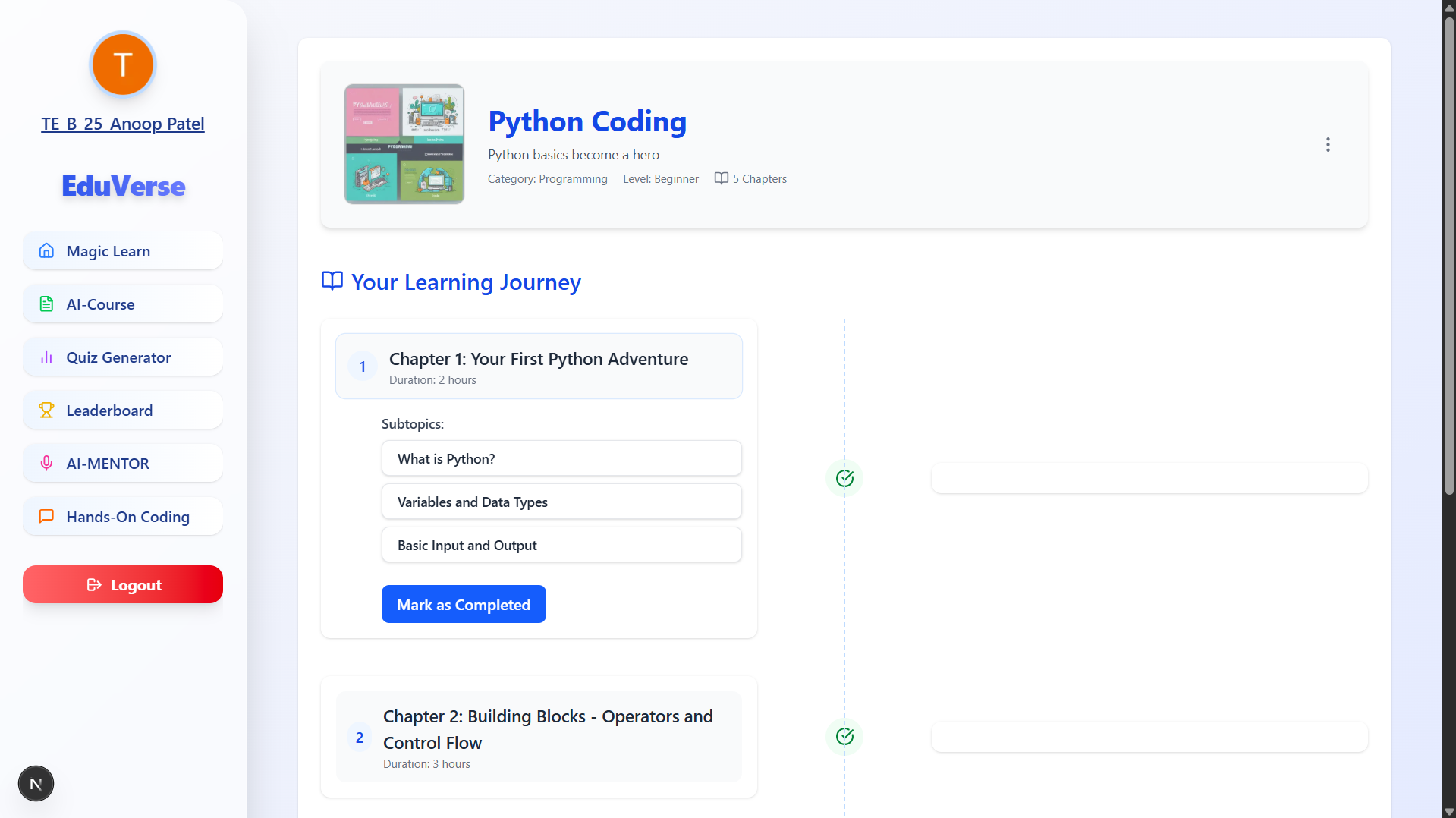
Detailed Course overview
-
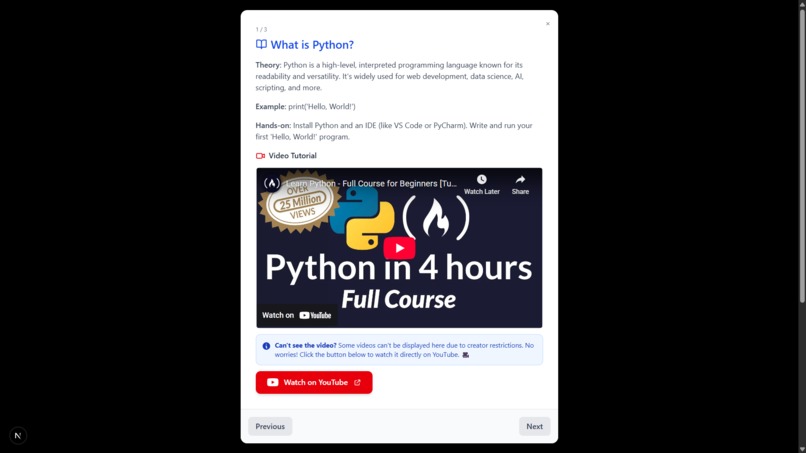
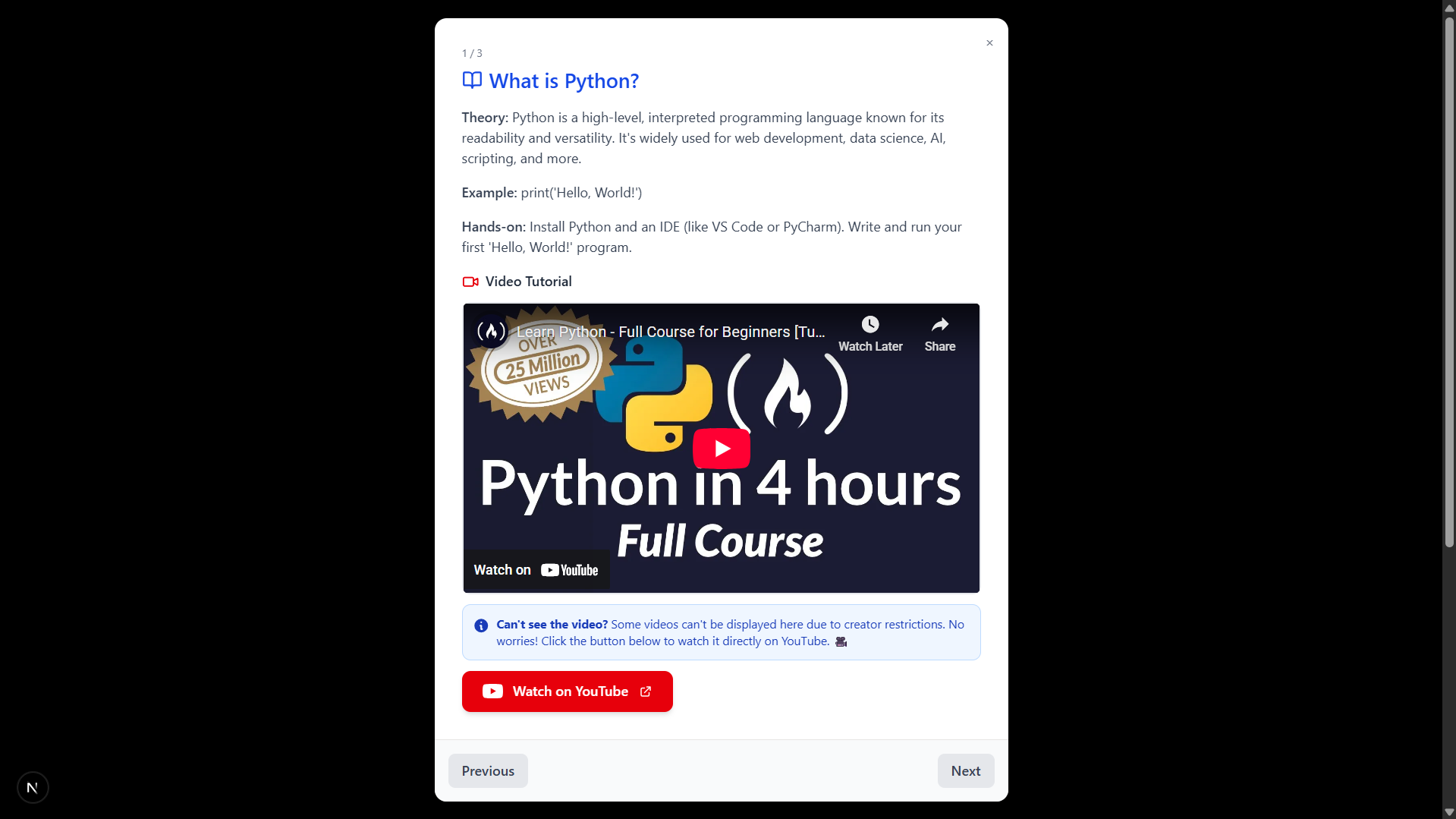
Videos of subtopics
-
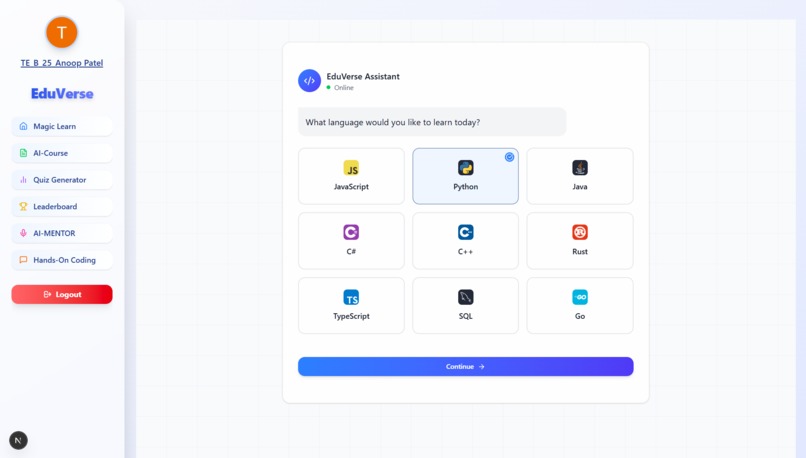
Hands on coding tutorials
-
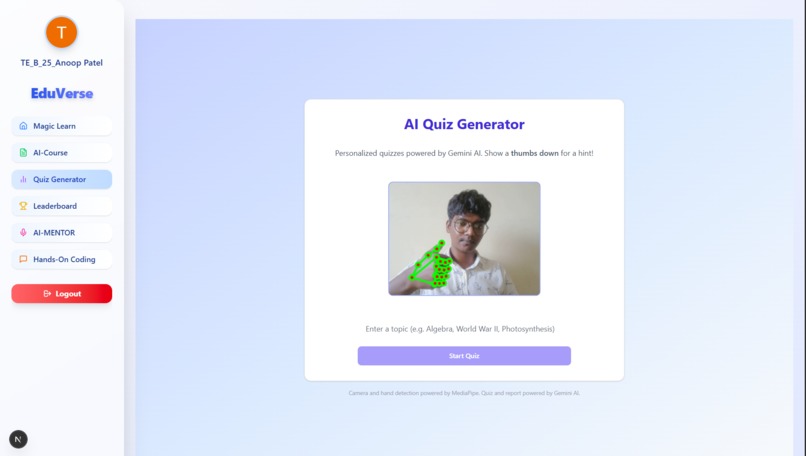
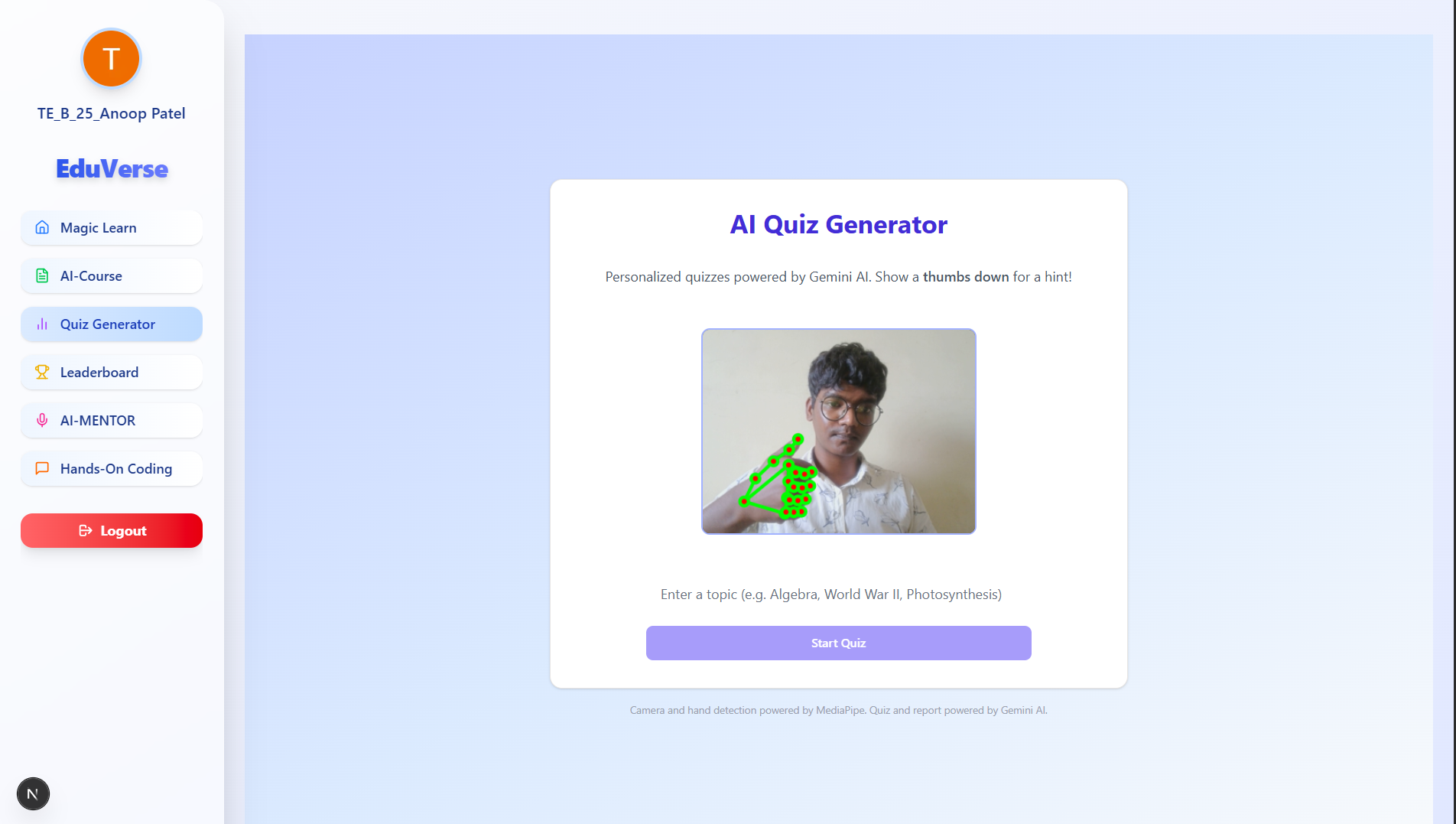
AI Quiz Generator
-
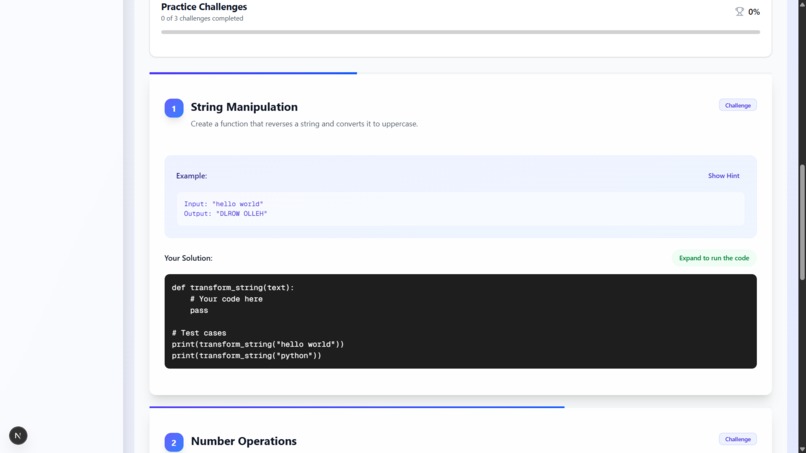
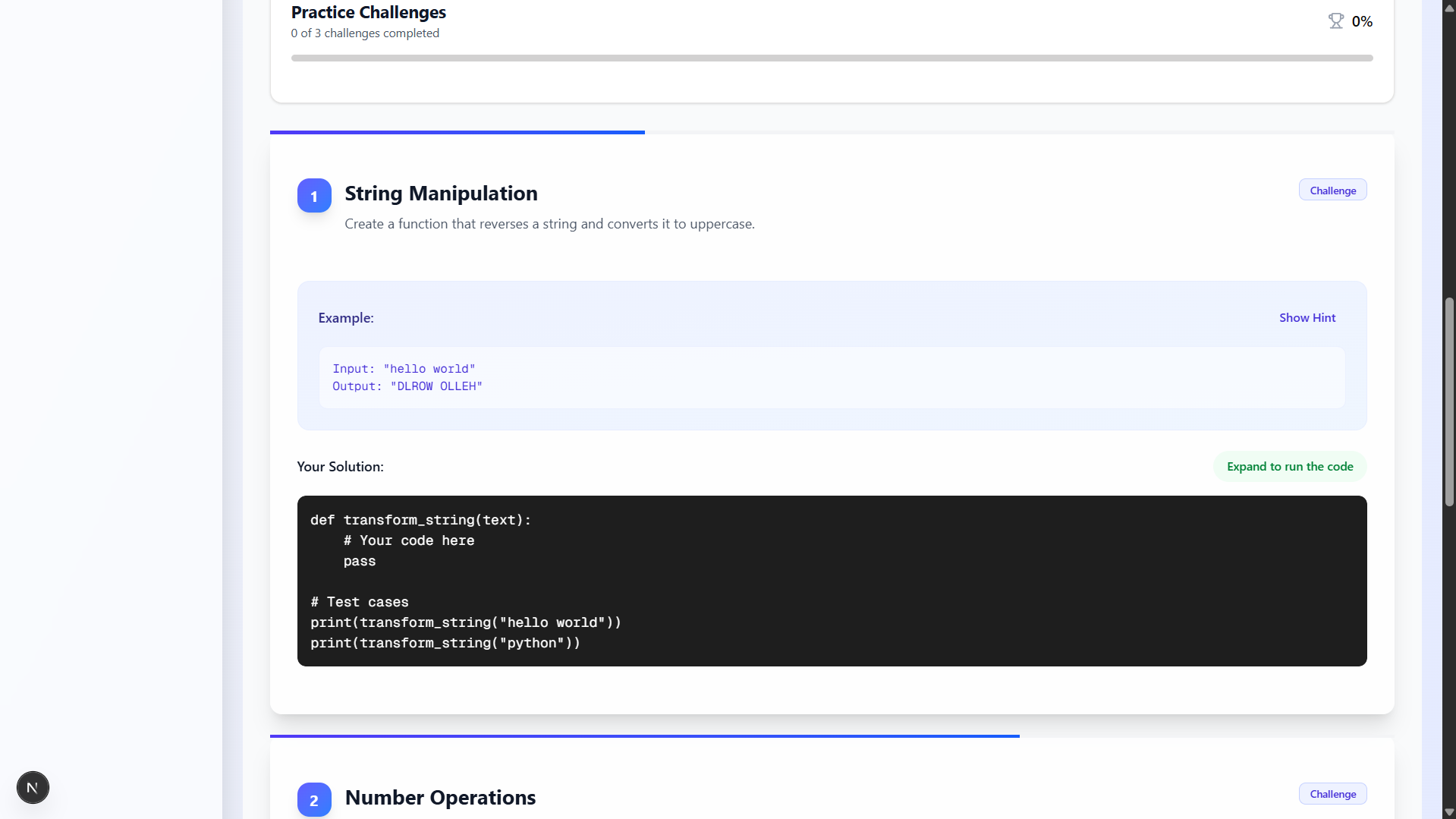
Practice Hands On Coding
-
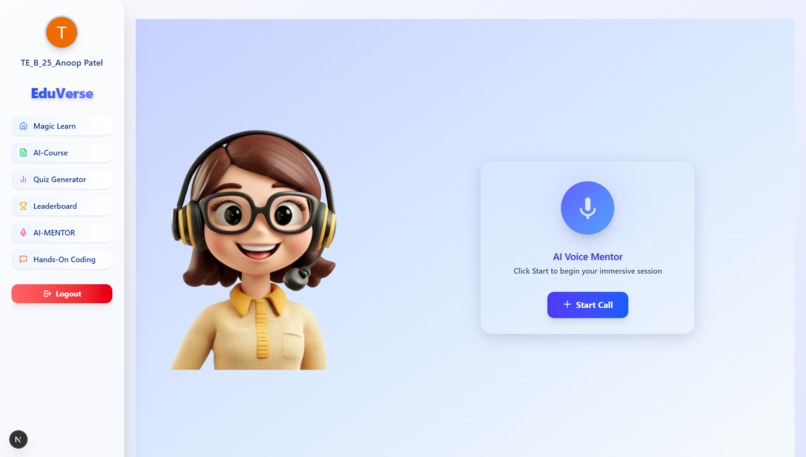
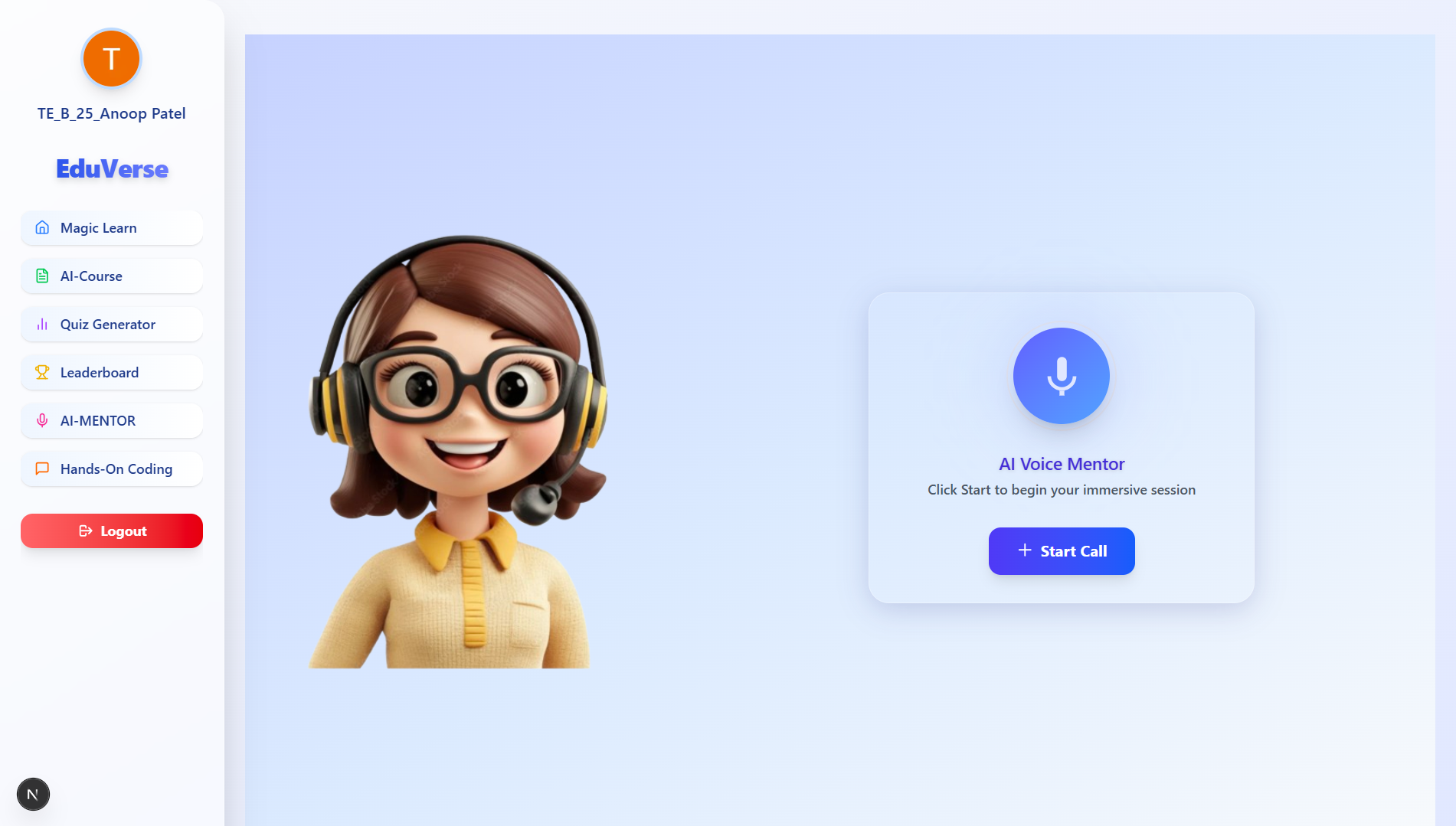
AI Mentor
-
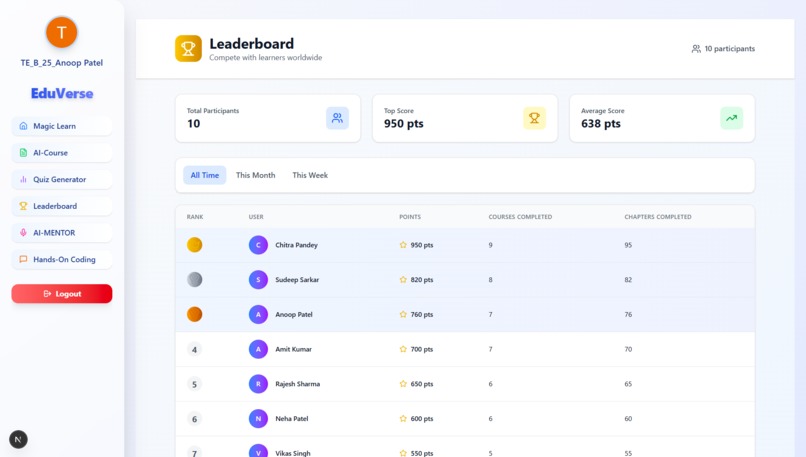
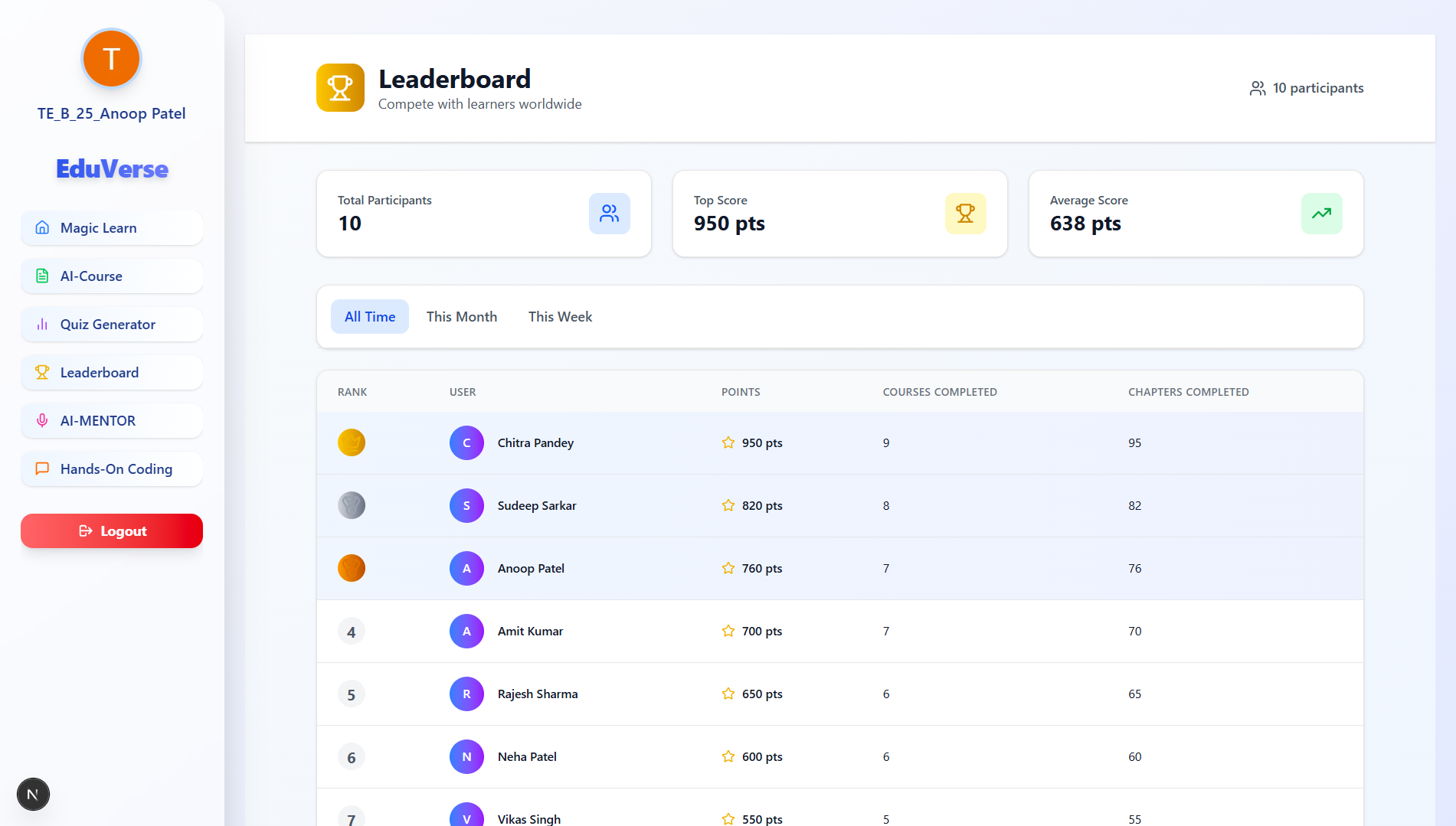
Leaderboard



Inspiration The traditional education system leaves millions of students behind—struggling with one-size-fits-all content, lacking personalized guidance, and losing motivation through monotonous learning experiences. We've all been there: stuck on a concept at midnight with no teacher to help, or abandoning online courses because they felt impersonal and boring.
Eduverse was born from a simple question: What if every student had an AI mentor available 24/7, adaptive courses tailored to their pace, and a learning experience as engaging as their favorite video game?
We envisioned a platform where technology doesn't replace teachers—it empowers learners. Where AI doesn't just generate content—it understands, guides, and motivates. Where education isn't a chore—it's an adventure.
What it does Eduverse is an AI-powered learning ecosystem that transforms how students learn and educators teach:
🤖 AI Mentor (Voice-Enabled Conversational Tutor) -> Real-time voice conversations with an intelligent AI tutor using VAPI integration -> Explains complex concepts, answers questions, and provides instant feedback -> Available 24/7—no more waiting for office hours or email replies -> Adaptive responses based on student's learning level
📚 Intelligent Course Generator -> AI-powered course creation using Gemini 2.5 Flash model -> Automatically structures courses into chapters and subtopics -> Curates high-quality video tutorials from Code with Harry's playlists via YouTube Data API v3 -> Smart playlist-matching algorithm ensures relevant, embeddable educational content -> Generates custom course thumbnails using AI Guru Lab API
🎮 Gamification & Progress Tracking -> Real-time points system rewarding course completion and engagement -> Dynamic leaderboards fostering healthy competition -> Visual progress bars tracking learning milestones -> Achievement notifications keeping students motivated
📊 Adaptive Learning Dashboard -> Personalized course recommendations -> Progress analytics and performance insights -> Course library with difficulty levels (Beginner → Advanced) -> Interactive UI with beautiful animations and responsive design
How we built it -> Architecture & Tech Stack: -> Frontend (Next.js 15.3.4): - React Server Components for optimal performance - TypeScript for type safety and better developer experience - Tailwind CSS + Magic UI components for stunning animations - shadcn/ui for accessible, customizable UI components - Lucide React for beautiful, consistent icons
-> Backend & APIs: - Next.js API Routes for serverless backend logic - Supabase (PostgreSQL) for robust database management - NextAuth.js for secure authentication - Gemini AI API (gemini-2.5-flash-lite) for course generation - YouTube Data API v3 for video curation - VAPI for voice-based AI mentor interactions - AI Guru Lab API for custom thumbnail generation
Key Technical Implementations: Smart Video Curation Algorithm: Gamification Engine: AI Course Generation Pipeline:
Challenges we ran into
YouTube Video Reliability Crisis 🎥 Problem: Initial implementation returned video IDs that were deleted, region-blocked, or had embedding disabled—4 out of 5 videos failed! Solution: Complete strategy overhaul: Shifted from generic video search to playlist-based approach Prioritized Code with Harry's structured playlists (Python Tutorial, Java Tutorial, etc.) Implemented multi-level validation: embeddable=true + privacyStatus=public + uploadStatus=processed Result: 95%+ success rate with reliable, sequential content
API Quota Management ⚡ Problem: YouTube API has 10,000 units/day limit—each course with 9 videos consumed ~900 units. Challenge: Balancing feature richness with API constraints. Solution: Optimized search strategy to minimize redundant calls, implemented smart caching for playlist data, and added graceful fallbacks when quota exceeded.
Real-Time Voice Integration 🎙️ Problem: Integrating VAPI for seamless voice conversations with low latency. Solution: Implemented WebSocket connections for real-time audio streaming, optimized AI response times, and built fallback text interface for unstable connections.
Database Schema Complexity 🗄️ Problem: Designing relationships between users, courses, chapters, subtopics, progress tracking, and gamification. Solution: Carefully architected PostgreSQL schema with proper foreign keys, indexes, and cascade rules. Used Supabase's real-time subscriptions for live leaderboard updates.
Next.js 15 Migration Issues 🚀 Problem: Image optimization warnings, Server Component vs Client Component boundaries. Solution: Properly configured remotePatterns for YouTube thumbnails, used "use client" directives strategically, and optimized component rendering.
Accomplishments that we're proud of ✨ Built a fully functional AI-powered LMS from scratch in the hackathon timeframe 🎯 Solved the video reliability problem with our innovative playlist-based curation algorithm—went from 20% to 95%+ success rate 🤖 Seamlessly integrated 4 different AI APIs (Gemini, YouTube, VAPI, AI Guru Lab) into one cohesive experience 🎮 Created an engaging gamification system that makes learning genuinely fun and addictive 📱 Designed a beautiful, responsive UI with smooth animations and intuitive navigation 🔒 Implemented secure authentication and database architecture that scales 🌟 Built features that actually solve real problems students and educators face daily
What we learned
Technical Skills: Advanced Next.js 15 patterns (Server Components, API Routes, streaming) AI integration best practices—prompt engineering, error handling, fallback strategies YouTube Data API intricacies—video validation, playlist management, quota optimization Real-time voice processing with WebSocket connections Database design for complex educational platforms Gamification mechanics and user engagement psychology
Problem-Solving: Sometimes the obvious solution (direct video search) isn't the best—playlist-based curation was the breakthrough User experience matters more than fancy features—the hybrid video embed + button approach ensures students always have access API limitations drive innovation—quota constraints forced us to build smarter, more efficient algorithms
Collaboration: Effective division of tasks across features (AI Mentor, Course Generator, Gamification) Importance of clear documentation and code comments for team coordination Iterative development—we went through 5+ versions of video search before nailing it

Log in or sign up for Devpost to join the conversation.