-
-
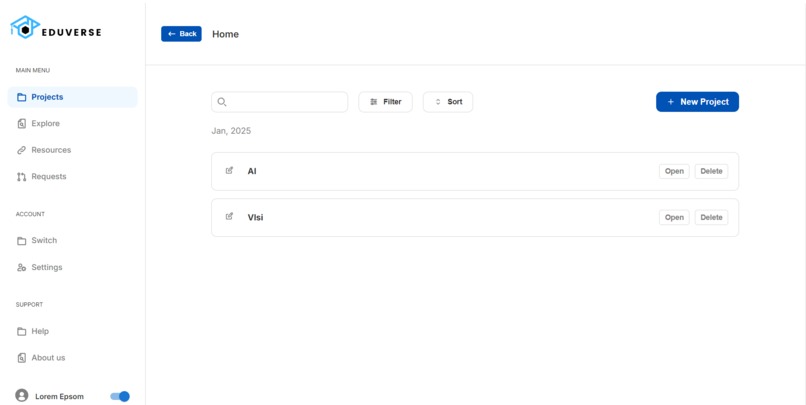
Theme Switch
-
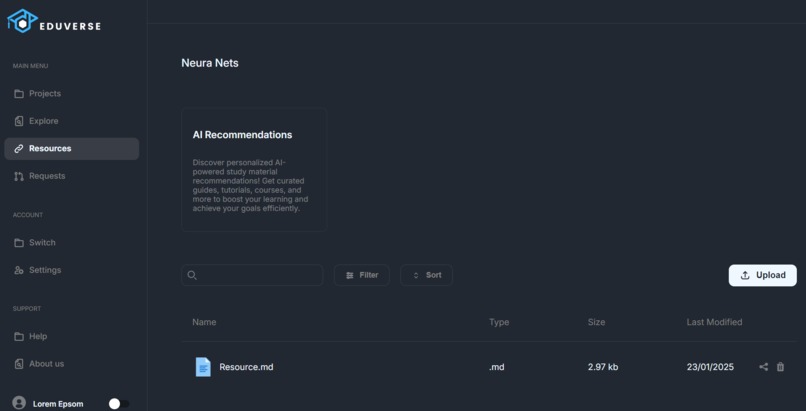
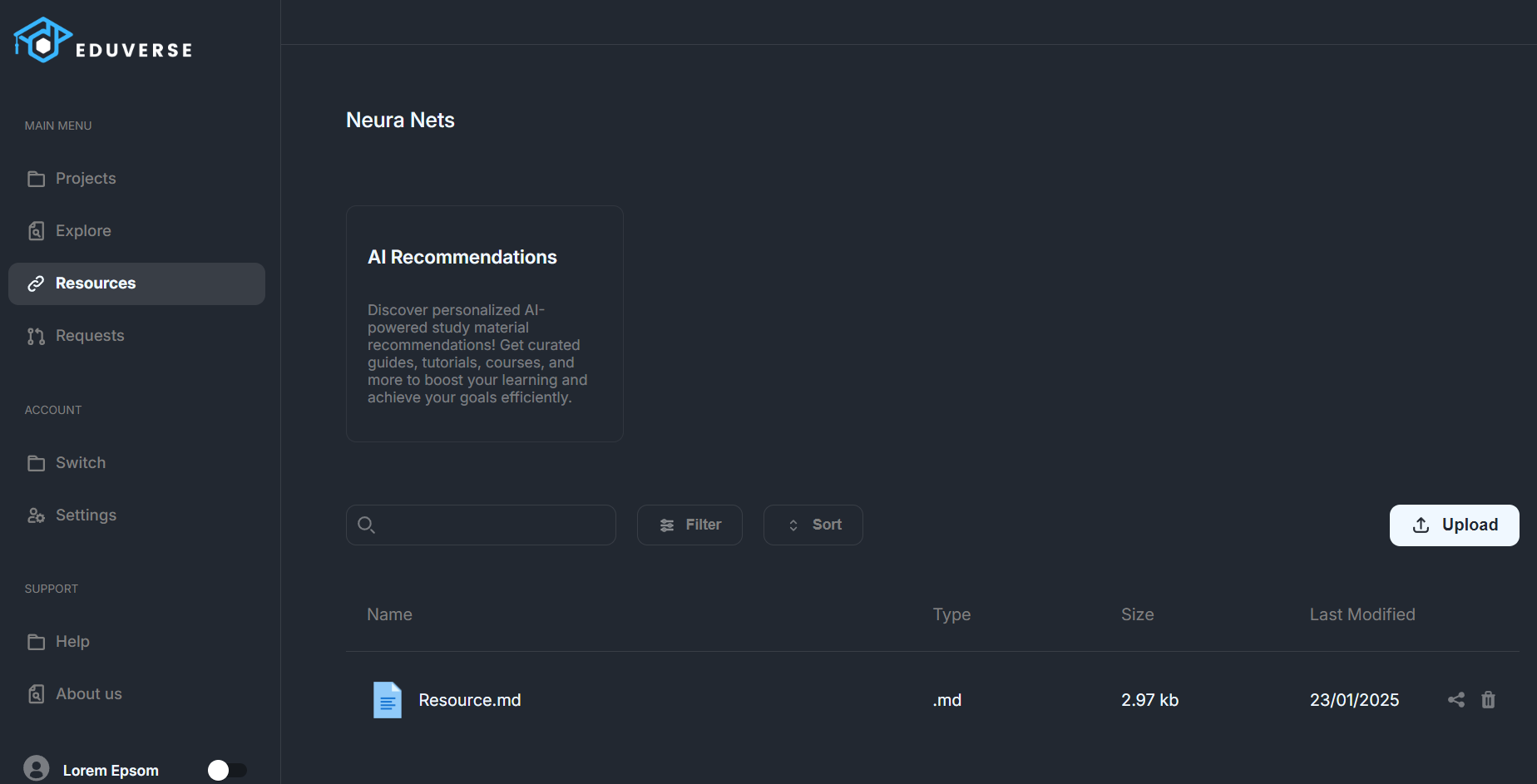
Study Material Management
-
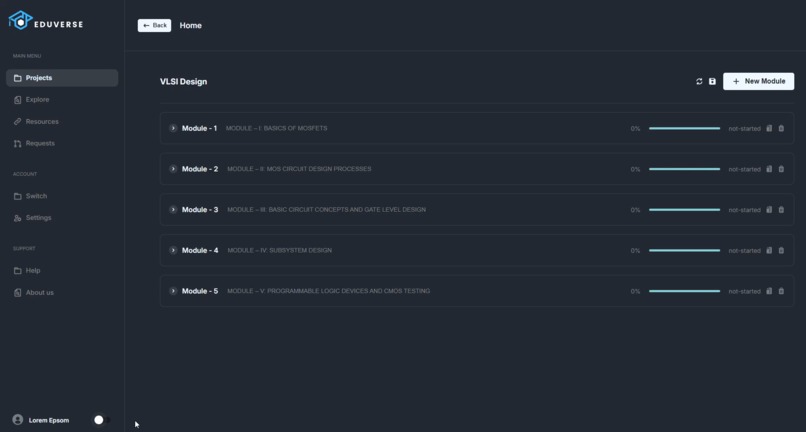
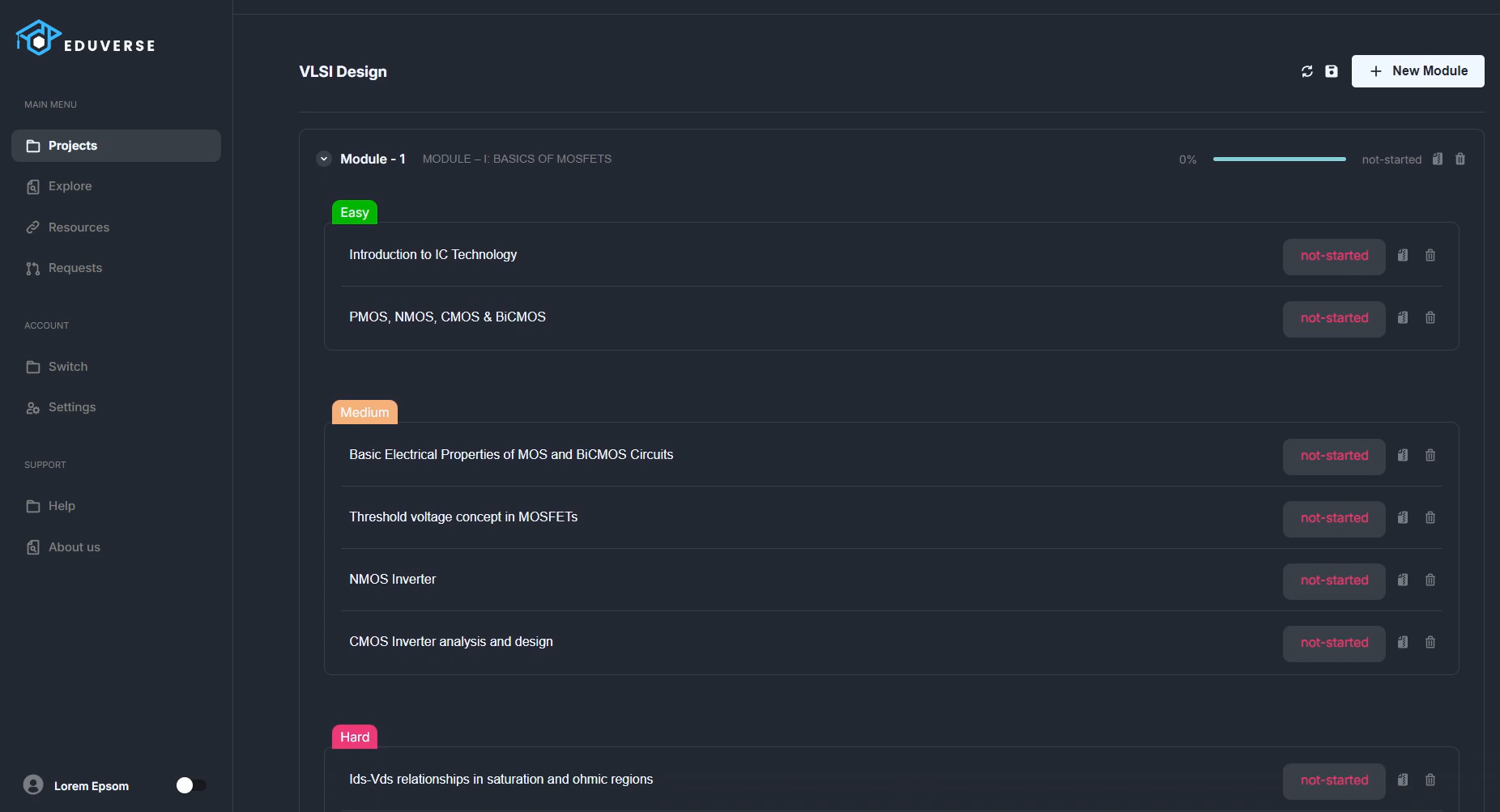
Roadmap Progress Tracking
-
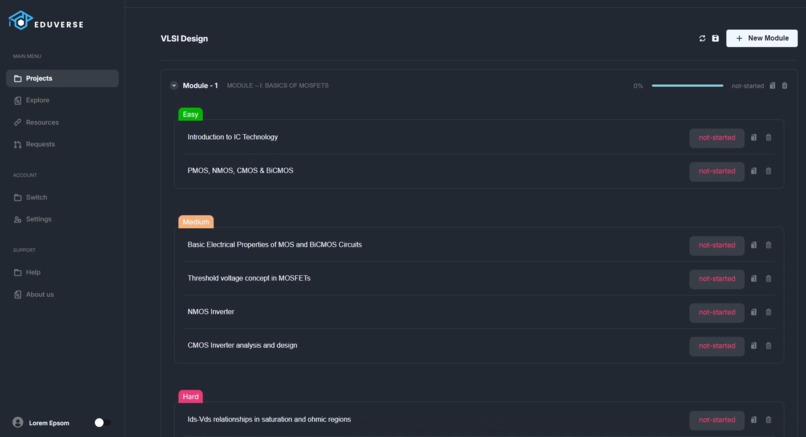
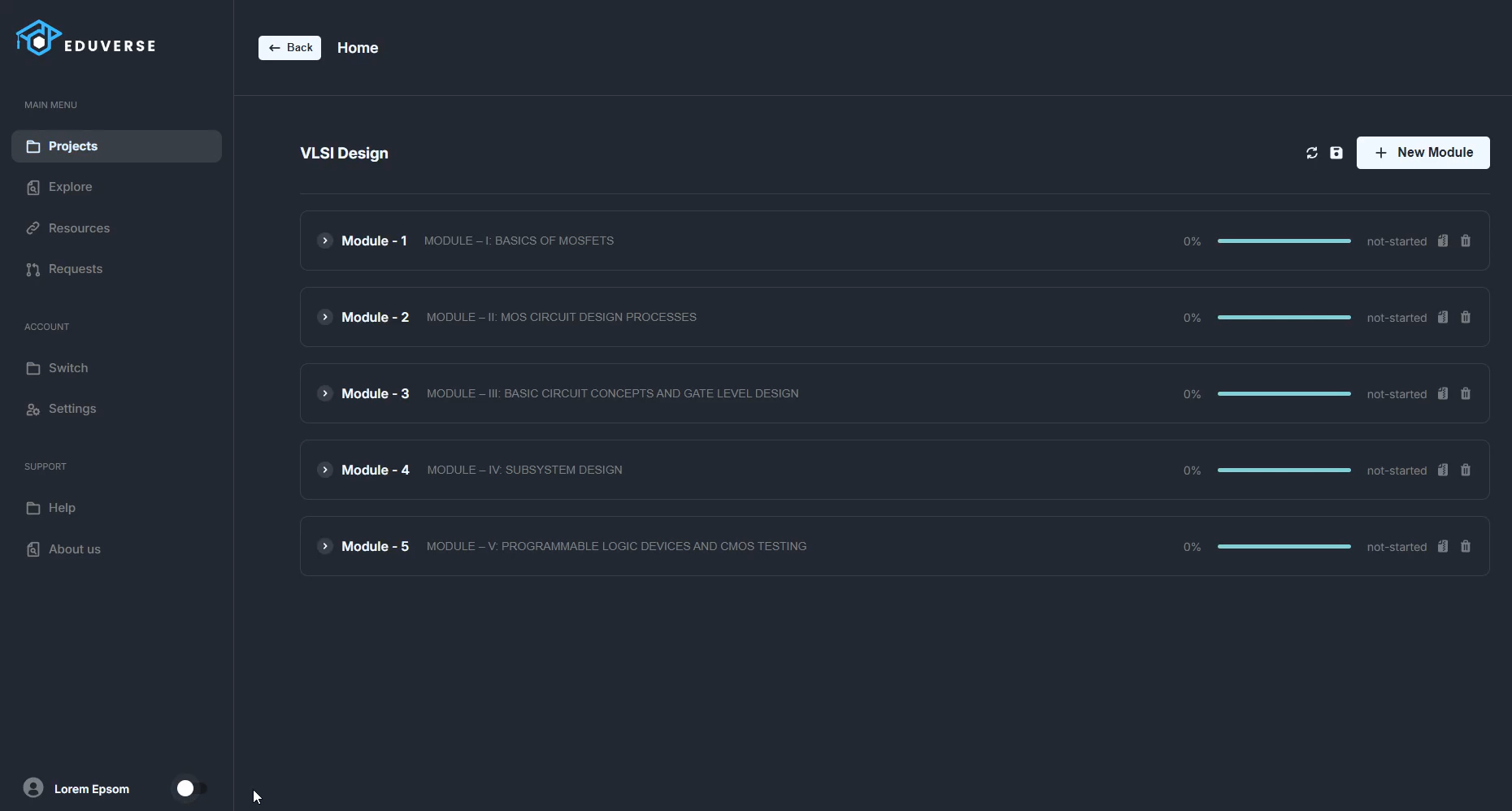
Roadmap Management
-
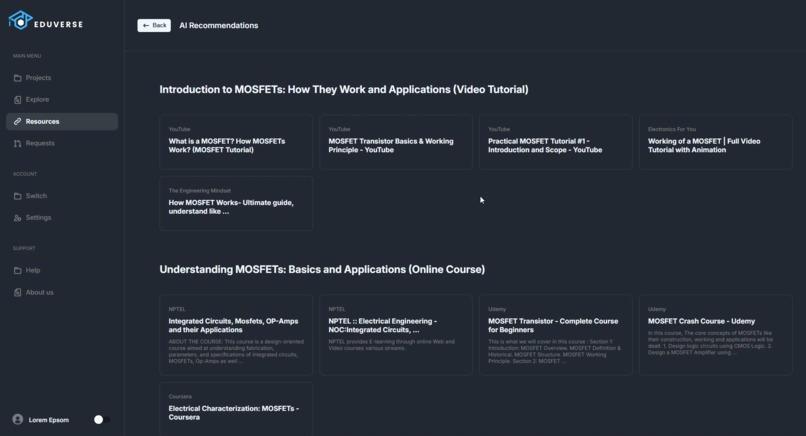
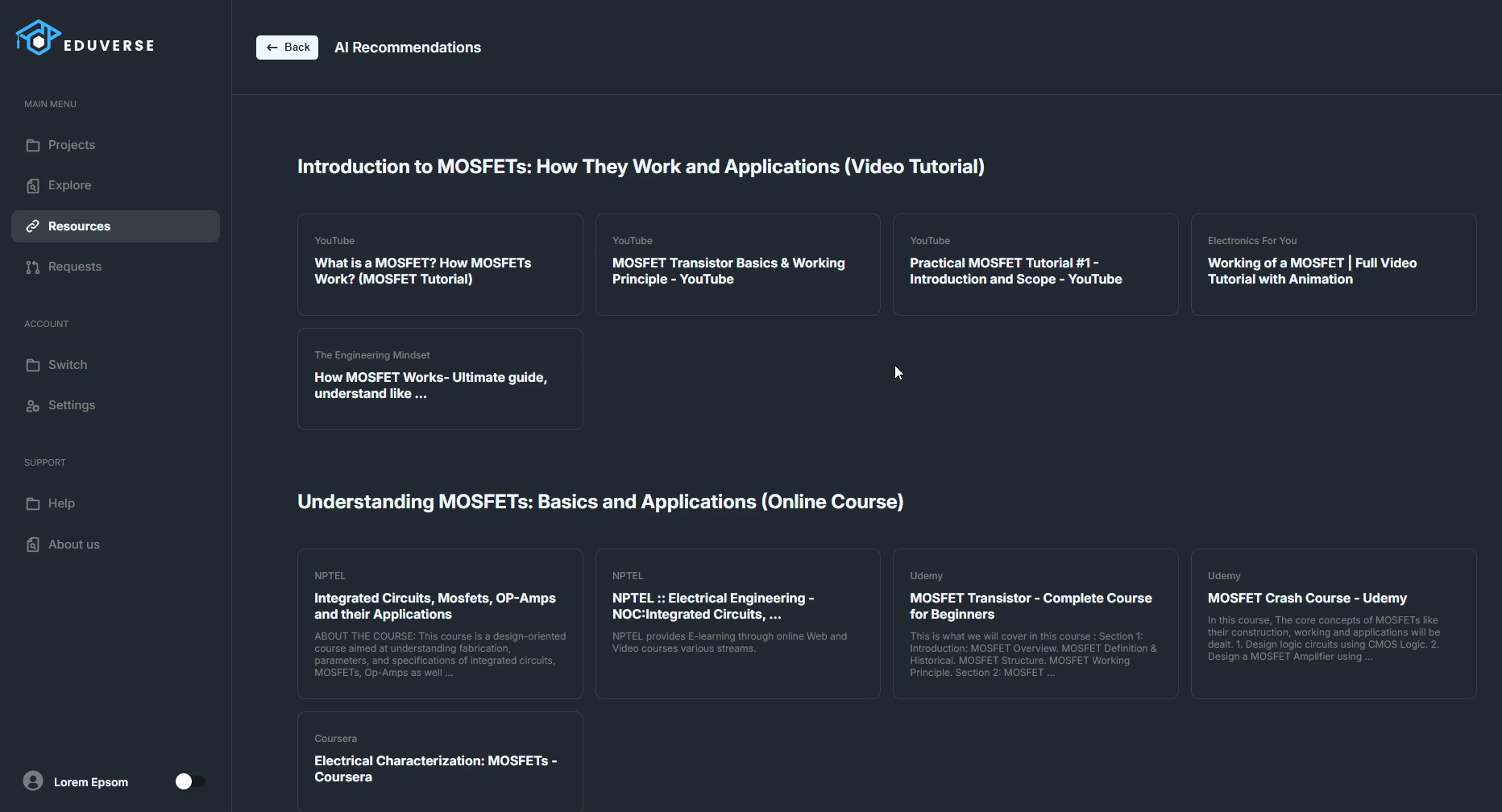
AI-Powered Resource Recommendations
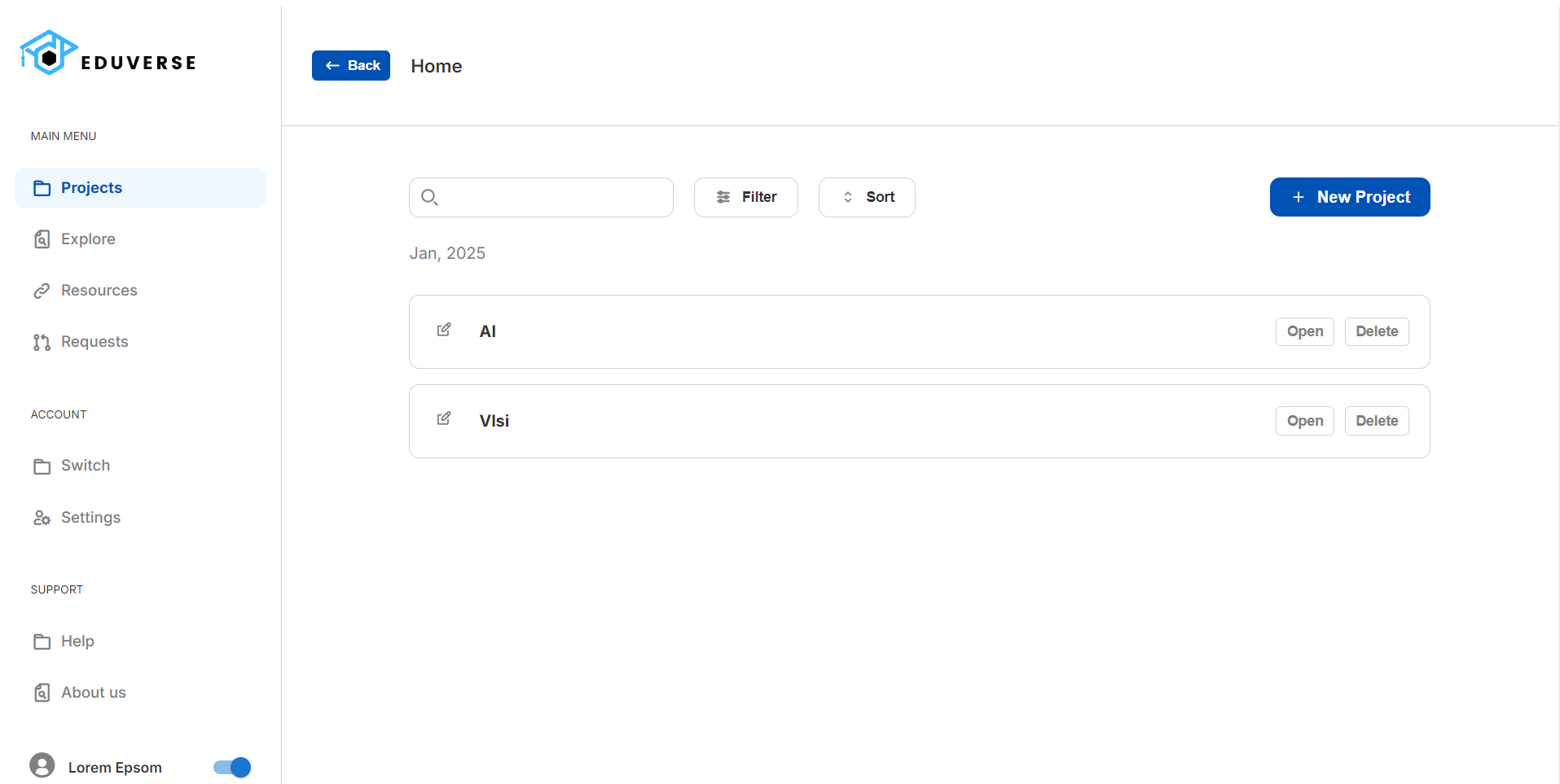
Eduverse: AI-Powered Student Companion
Overview
Eduverse is a standalone desktop application designed to empower students by offering tools to create and manage personalized learning roadmaps, organize study resources, and receive AI-powered study material recommendations.
Features
Roadmap Creation & Management
Students can create custom roadmaps or edit AI-generated ones, attach learning resources to specific modules and topics, and track their learning progress.Resource Sharing & Collaboration
Students can share their roadmaps and associated resources with others, as well as follow and utilize roadmaps and resources shared by peers on the server.Google Drive Integration
Eduverse uses the user's Google Drive as object storage for study resource sharing, significantly reducing deployment costs.Theme Switching
Offers a light and dark mode for user convenience.Offline Functionality
The desktop app operates independently of the backend server, ensuring personal use functionality even if the server is offline. However, server-dependent features, such as accessing shared resources, will be unavailable in such scenarios.
How It Works
Technologies Used
Frontend
- Built using Electron.js and React.js, providing the flexibility of web frameworks in a desktop environment.
- Data storage utilizes local file operations with JSON files.
Backend
- Developed using Node.js, Express.js, and MongoDB for resource sharing and roadmap hosting.
AI Integration
- Roadmap generation utilizes the OpenAI API powered by GPT-4o mini.
- Study material recommendations combine Puppeteer for web scraping (via Bing Search) with generative AI enhancements using OpenAI.
Challenges Faced
Cost-Effective Deployment
- The goal of creating a standalone application required an alternative to traditional web-based solutions.
- After extensive research, we chose Electron.js to achieve a desktop-first approach.
AI-Powered Features
- AI functionality depends on the user’s OpenAI API key, ensuring flexibility without incurring centralized costs.
Backend Independence
- Decoupling the application from the backend server was a priority to maintain offline functionality while allowing resource sharing when the server is hosted.
Simplified Deployment
- By using Electron, we enabled users to download and run a pre-built executable file without the need for additional deployment steps.
Lessons Learned
- Gained expertise in Electron.js and the process of developing a standalone desktop application for the first time.
Future Plans for Eduverse
Enhanced Backend Development
- Building a robust backend server to allow users and educational institutions to share courses, learning paths, and resources.
Expanded Collaboration Features
- Enabling universities and organizations to host and distribute their learning materials through Eduverse.
Improved AI Capabilities
- Exploring advanced AI features to further enhance the learning experience for students.

Log in or sign up for Devpost to join the conversation.