-
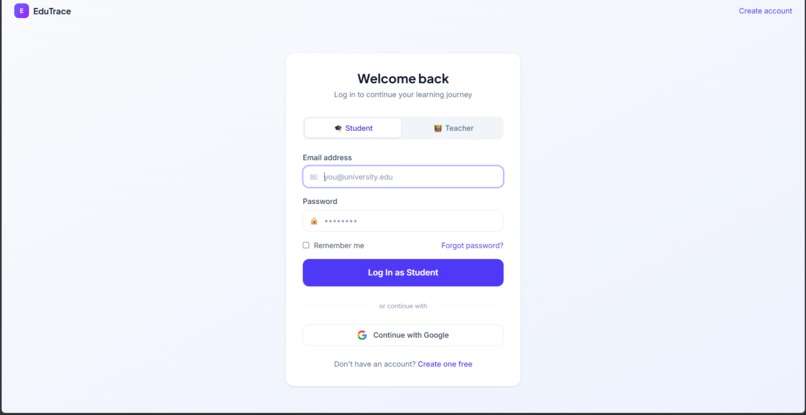
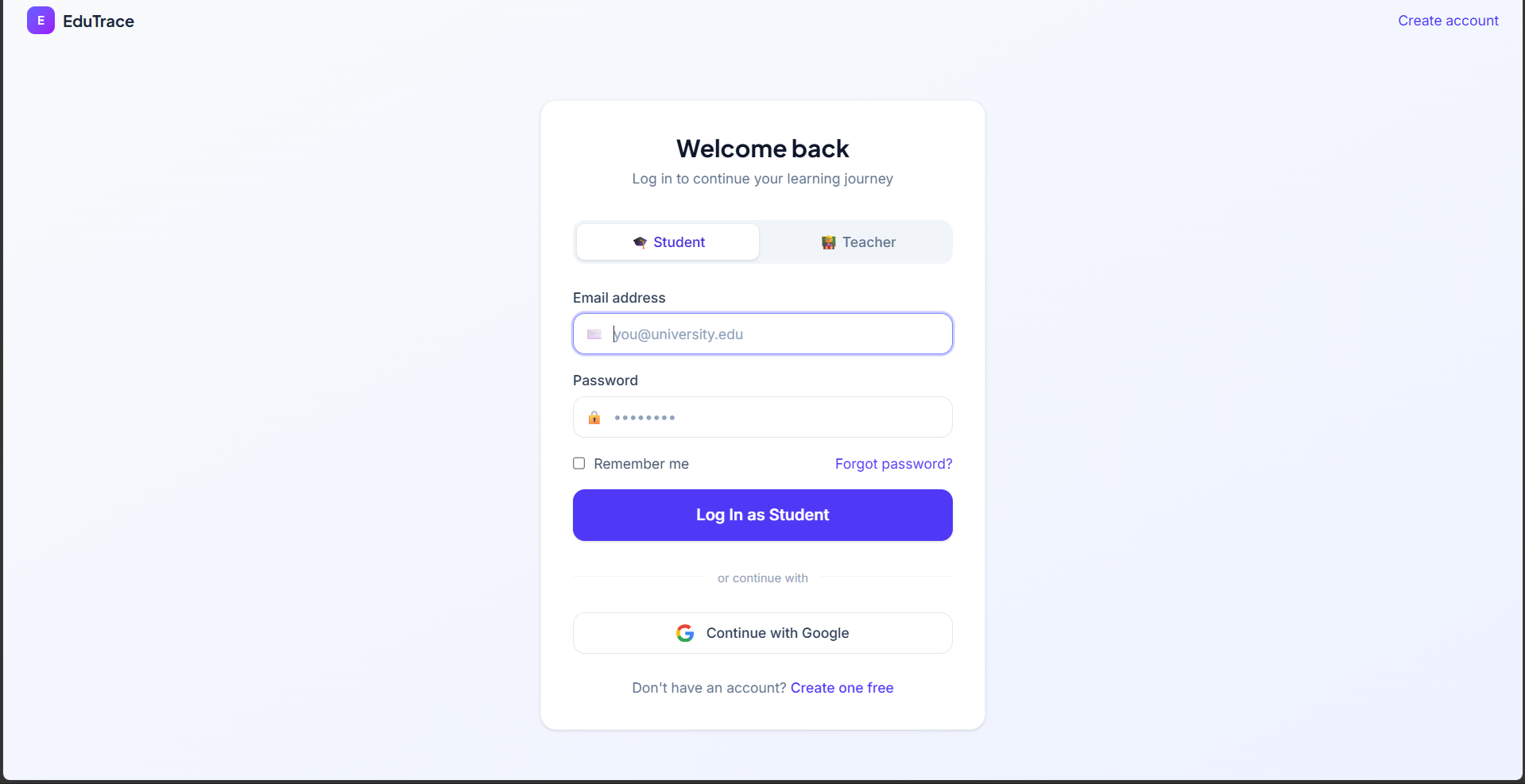
Student Login
-
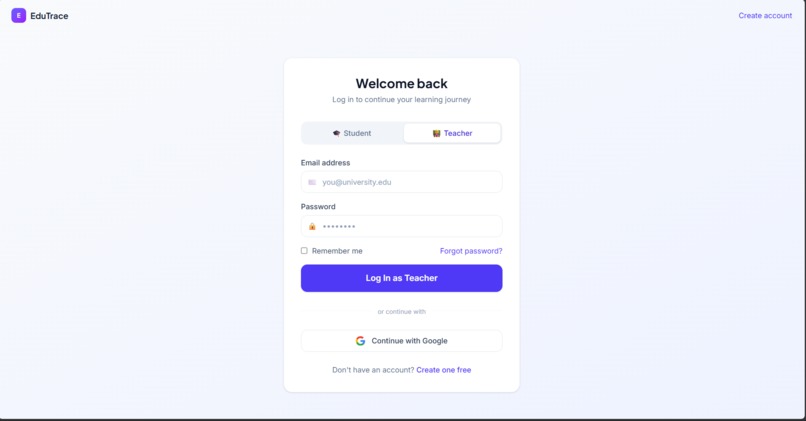
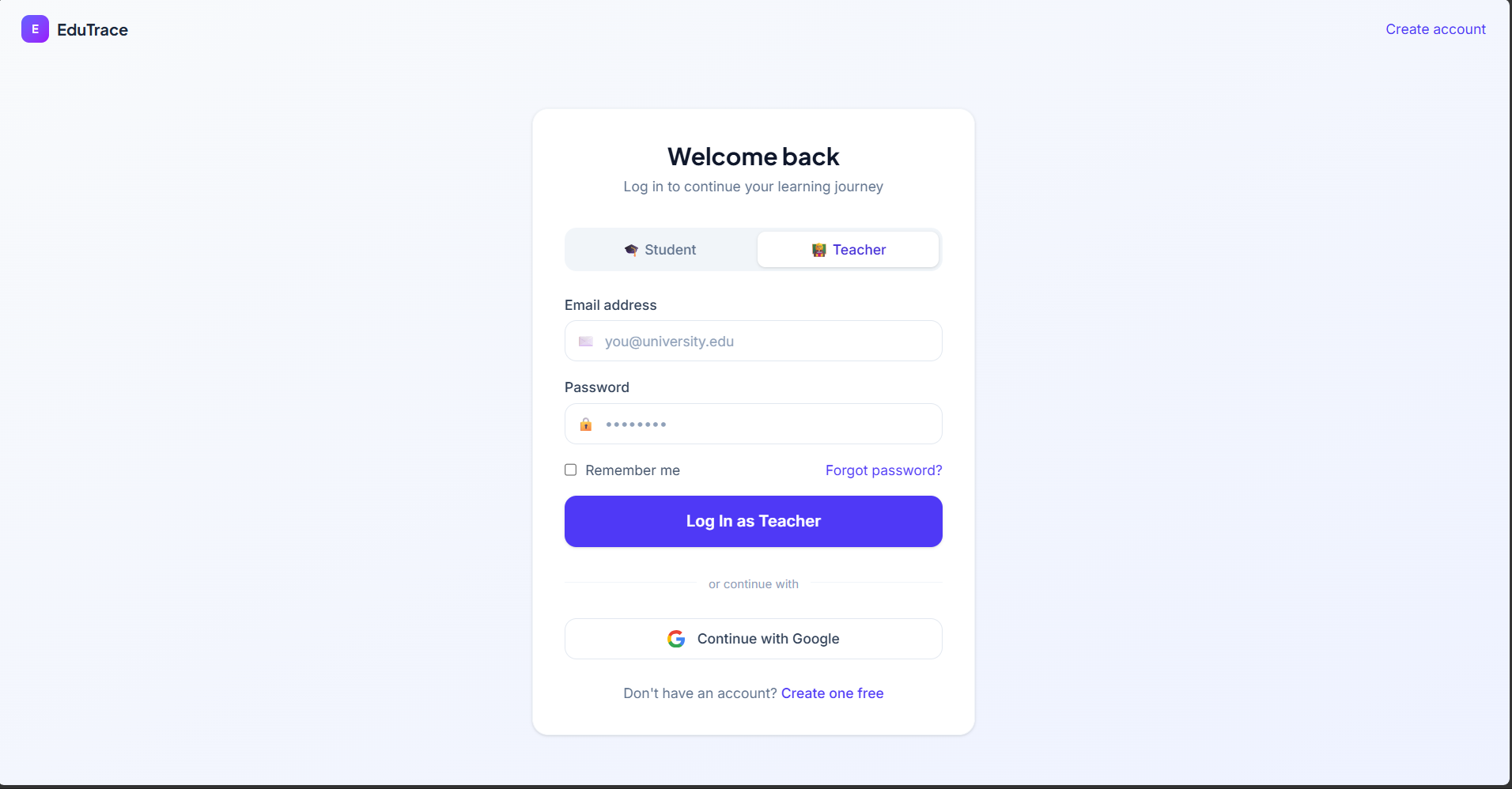
Teachers Login
-
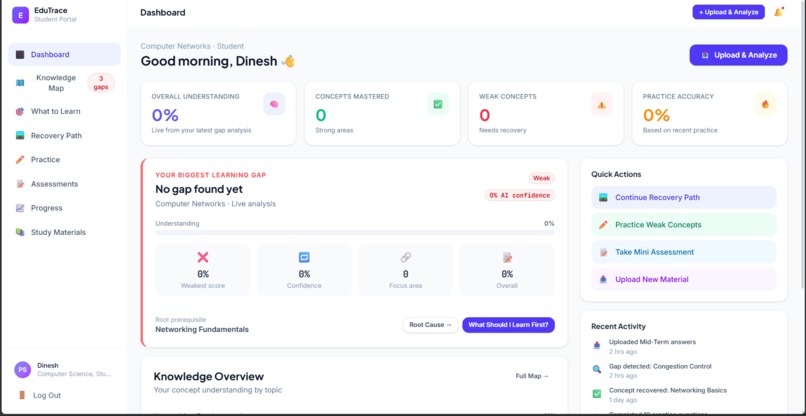
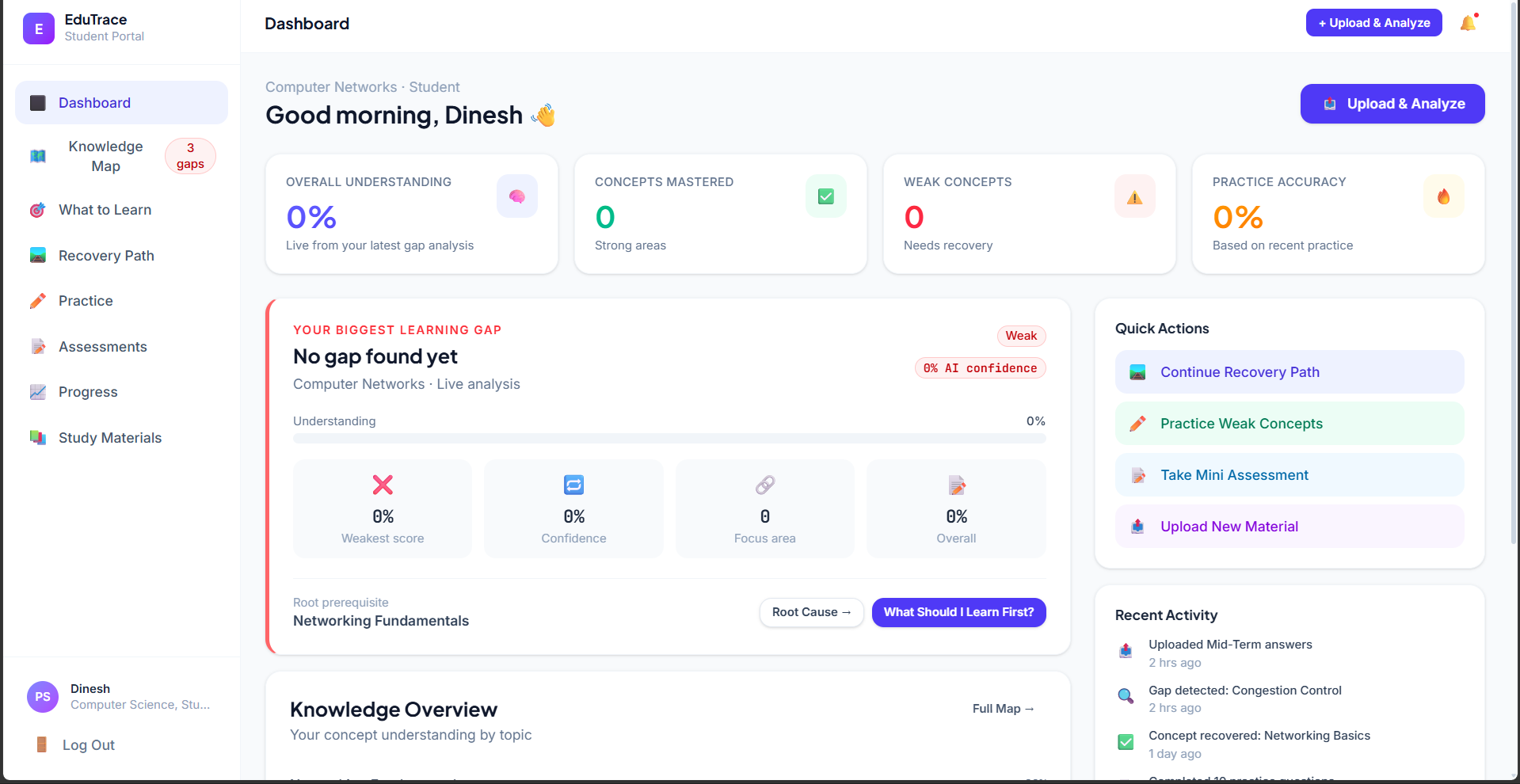
Dash board
-
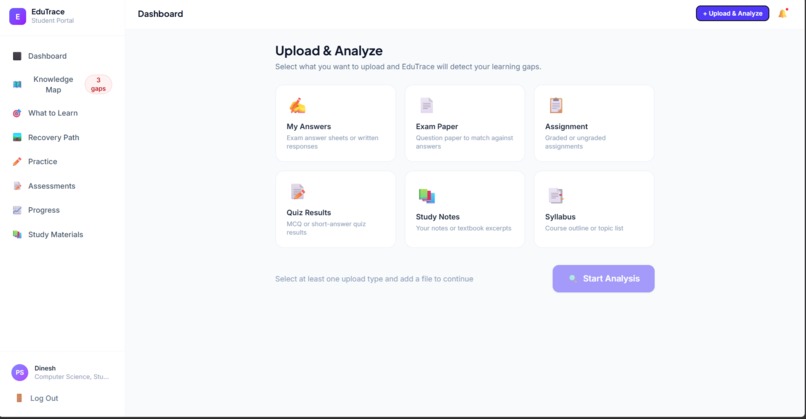
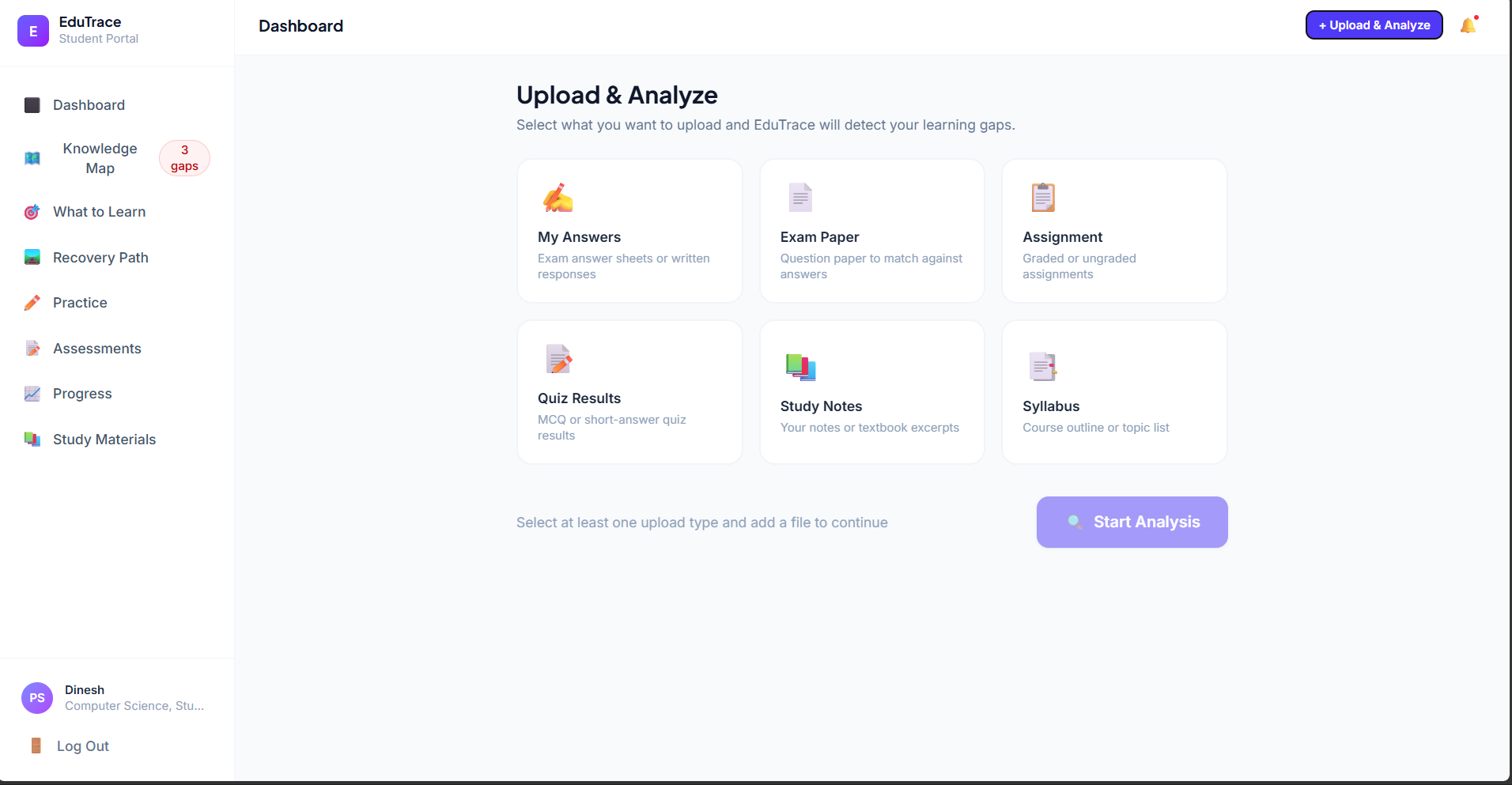
uplode image
-
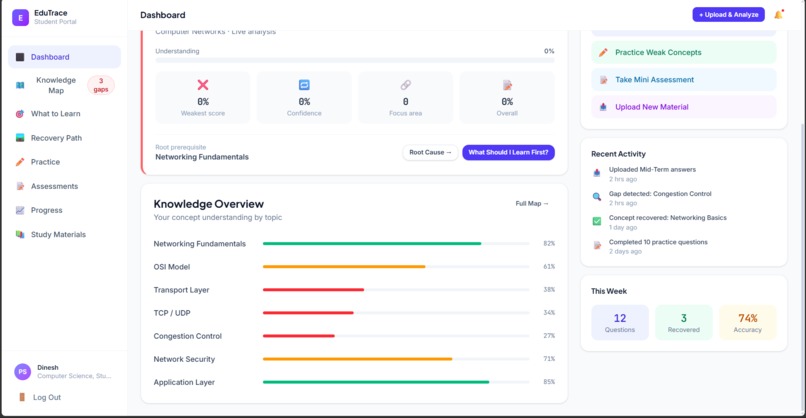
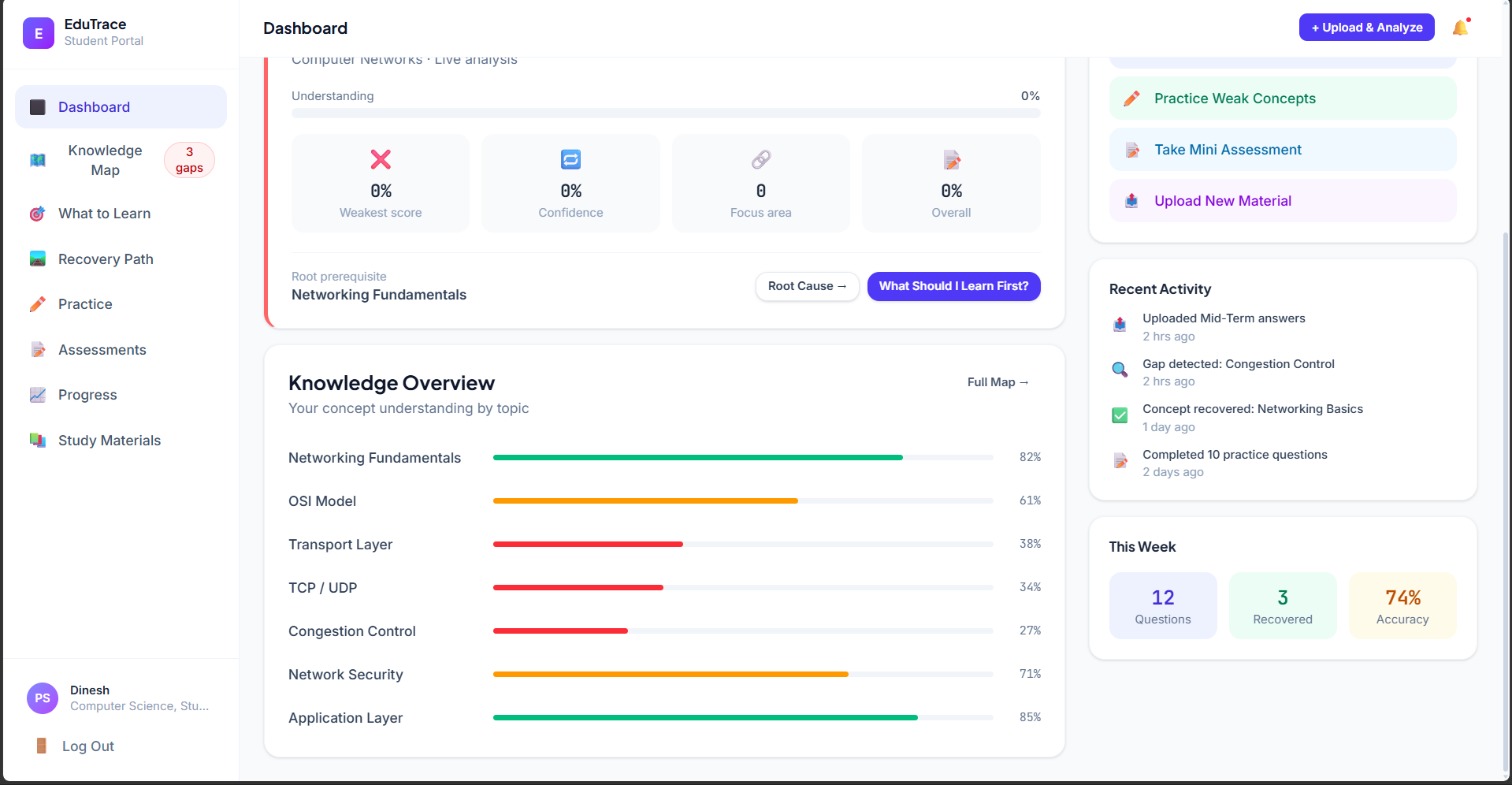
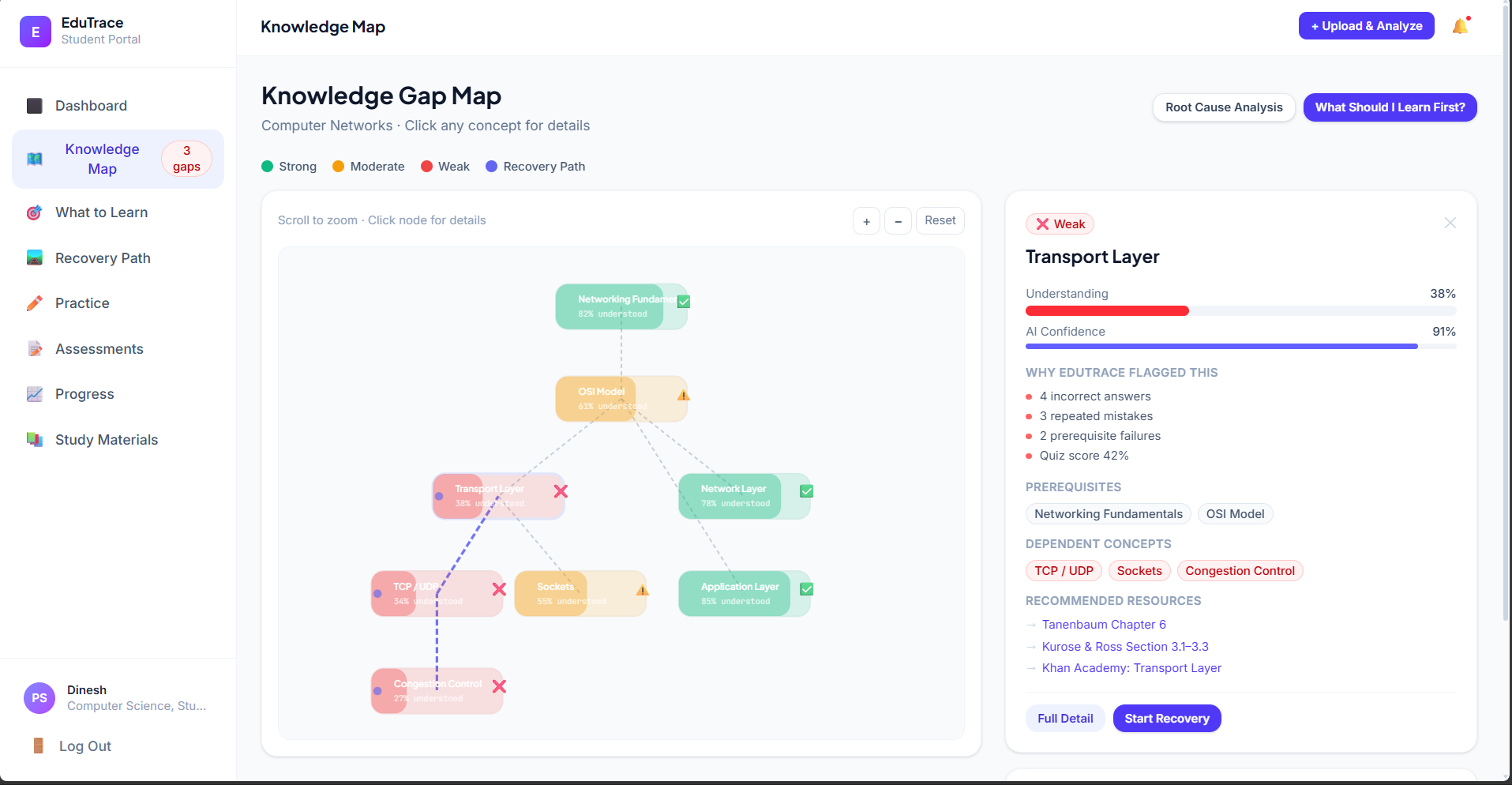
Knowlege overview
-
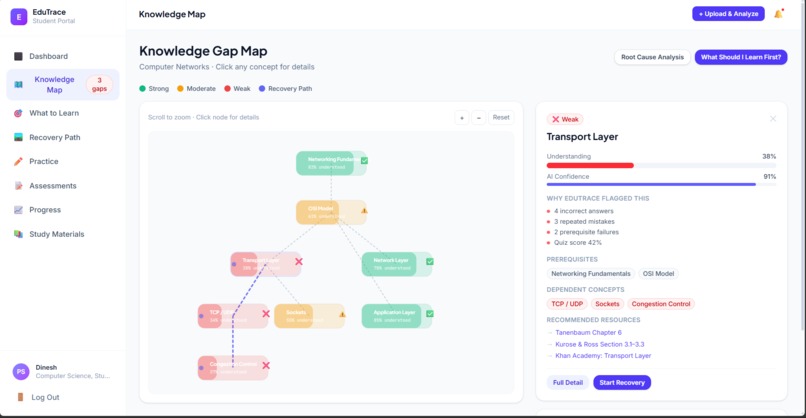
Knowledge Map
-
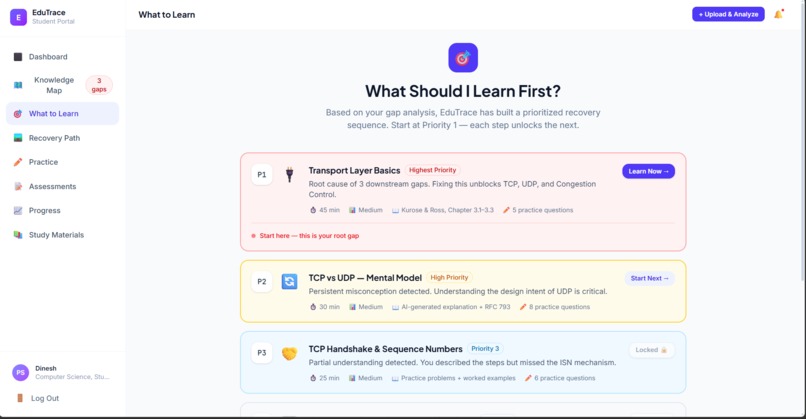
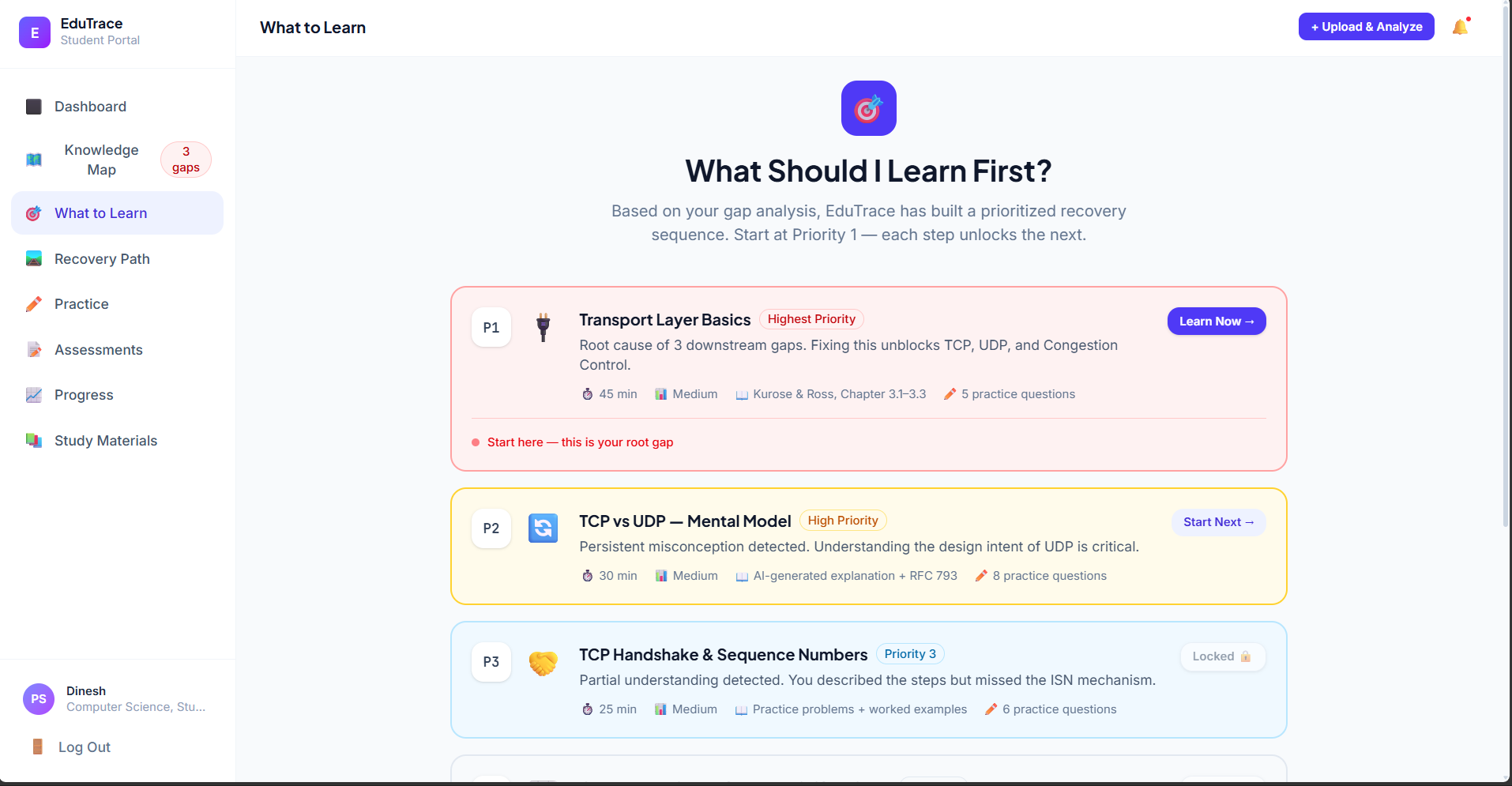
Way To Learn
-
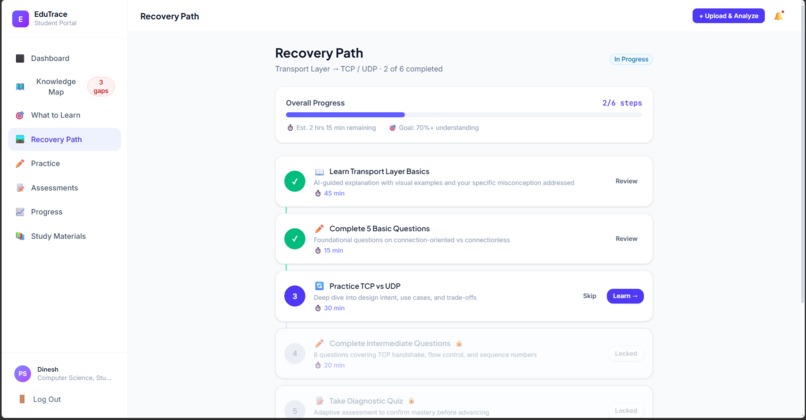
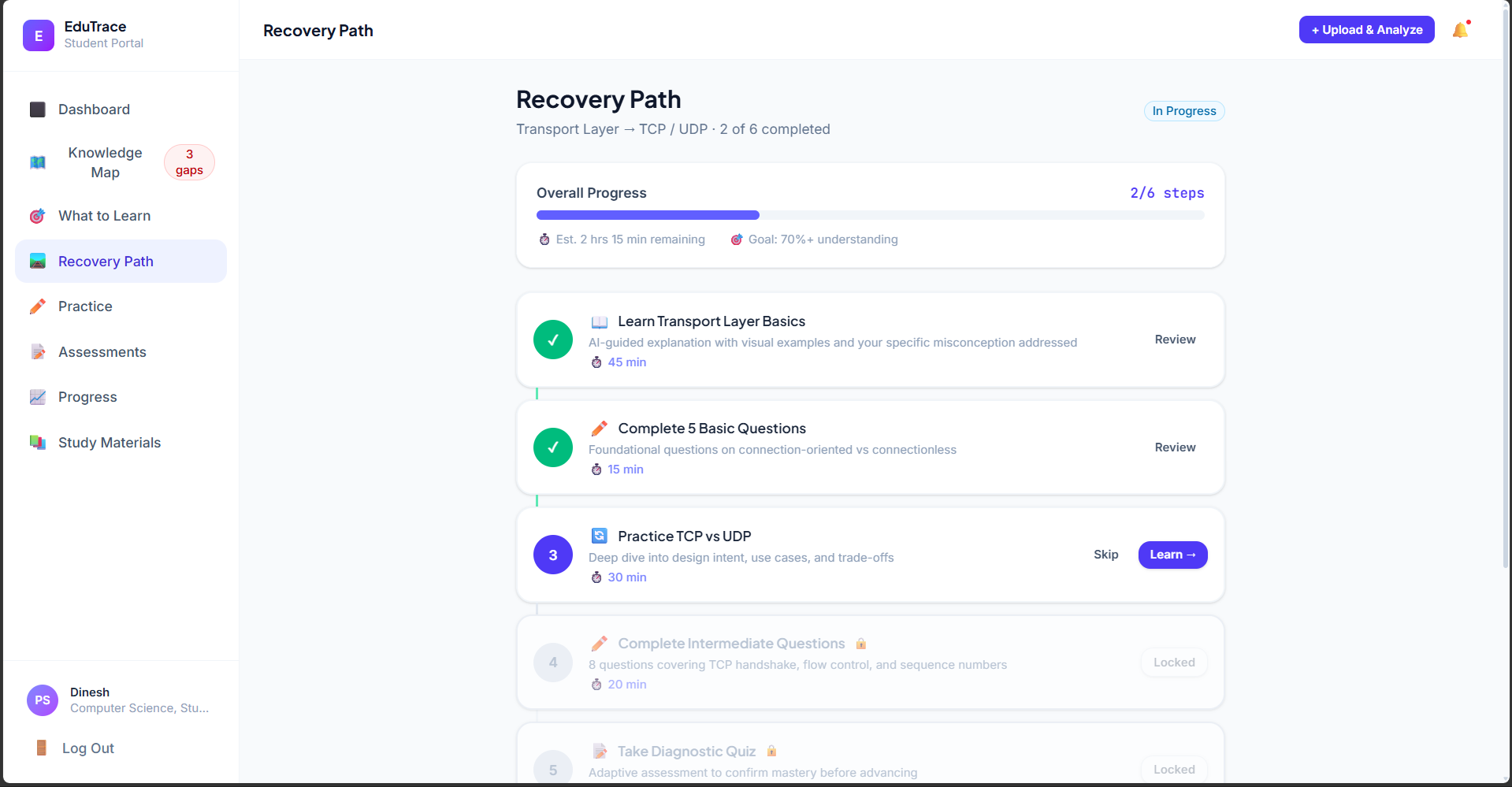
Recovery Path
-
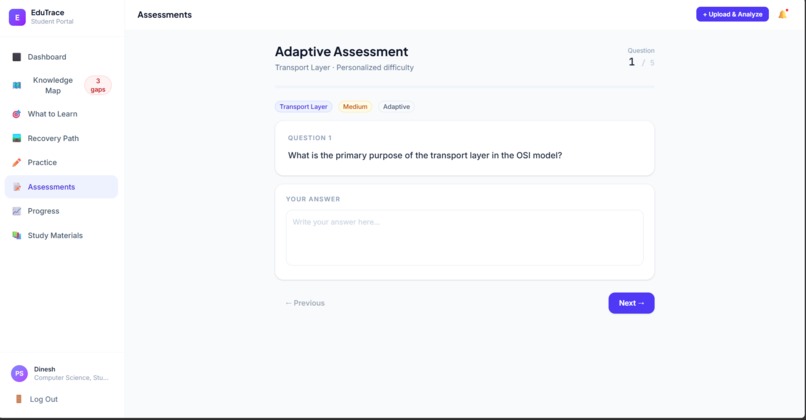
Practice
-
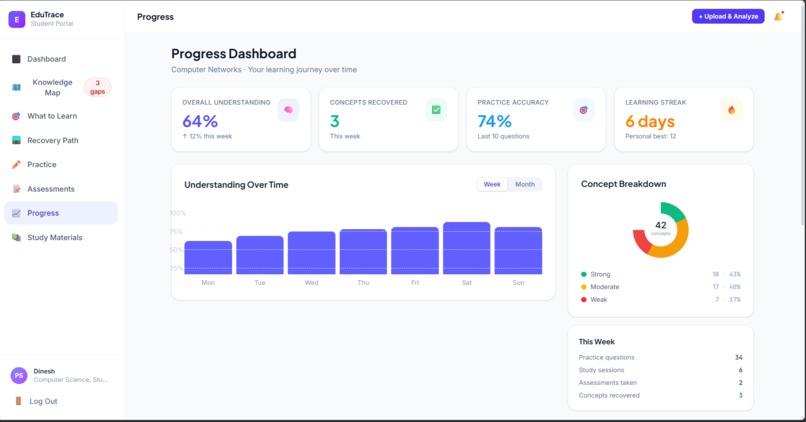
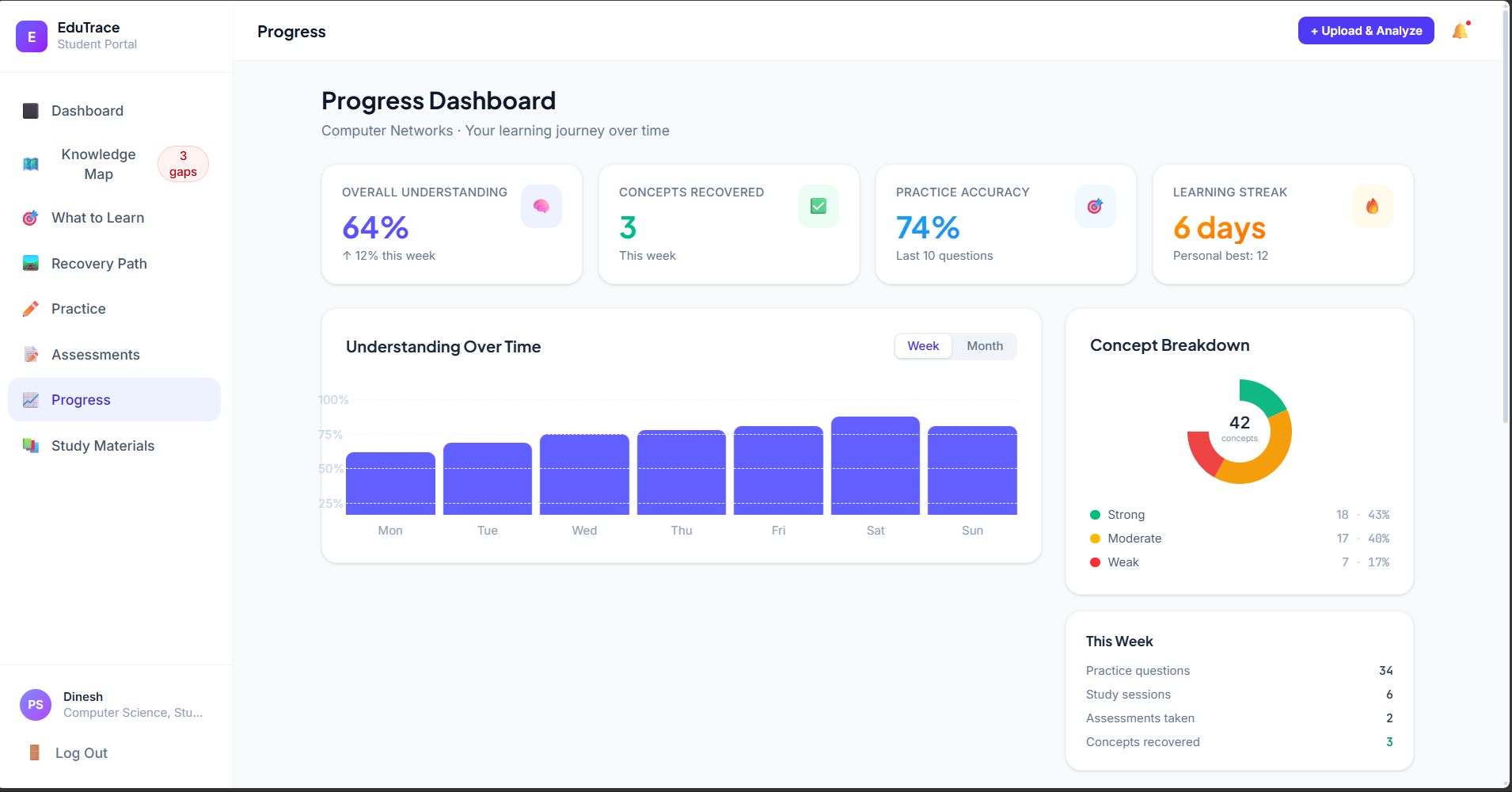
Progress Dashboard
-
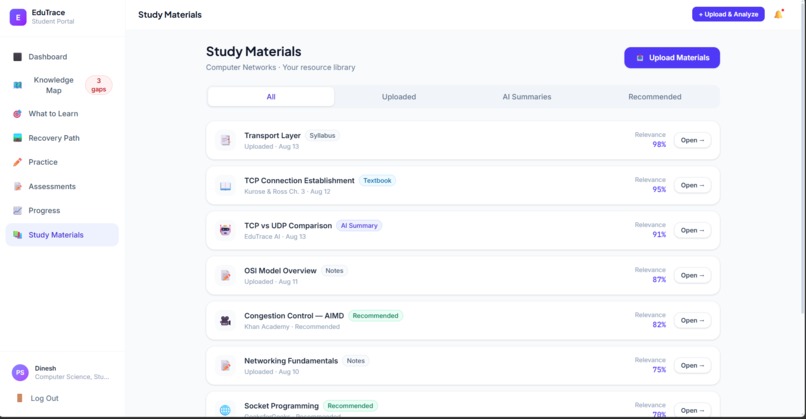
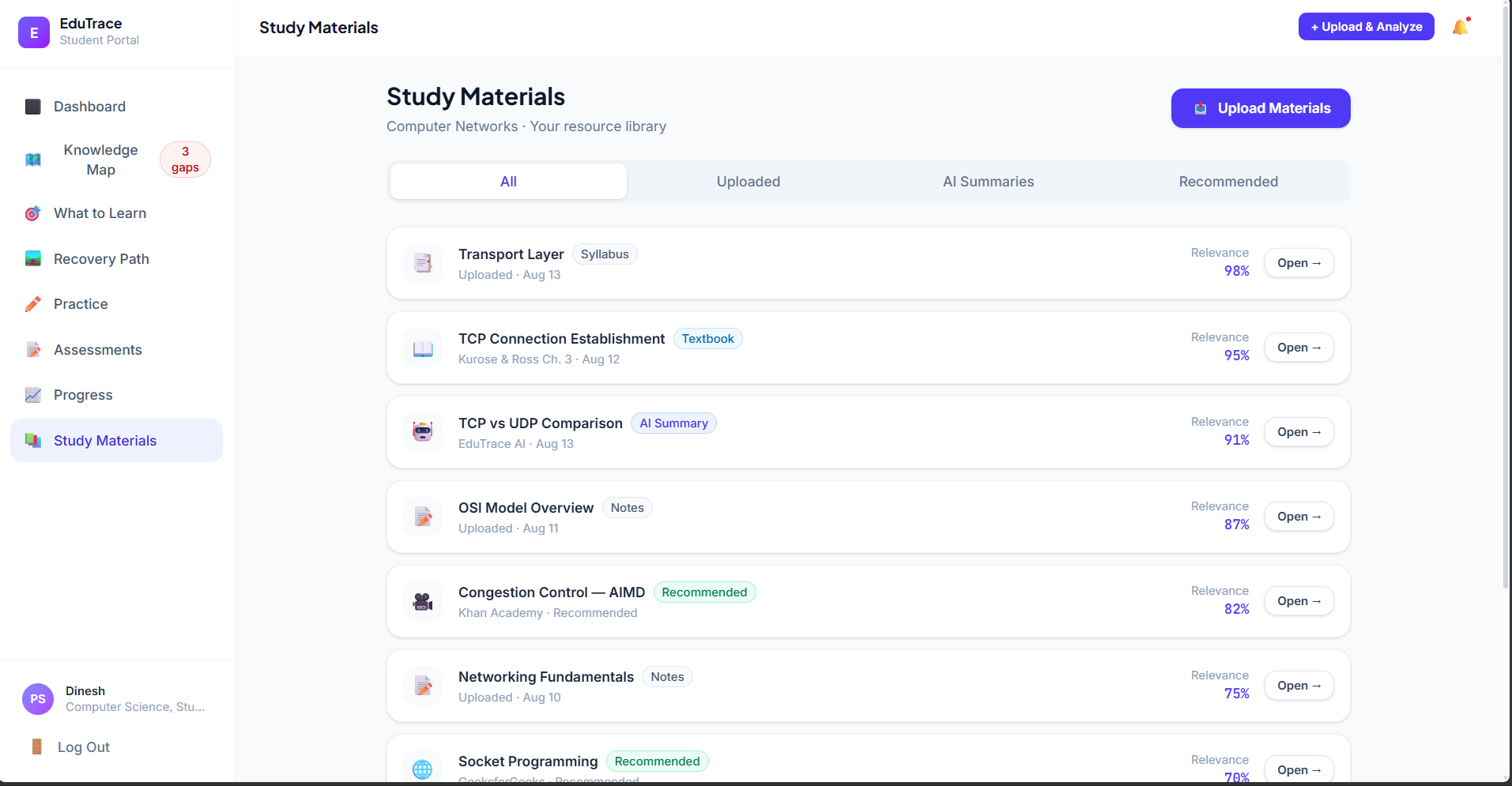
Study Materials
-
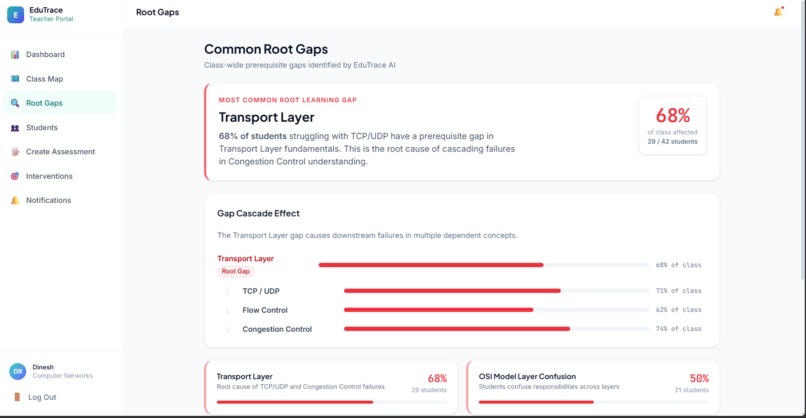
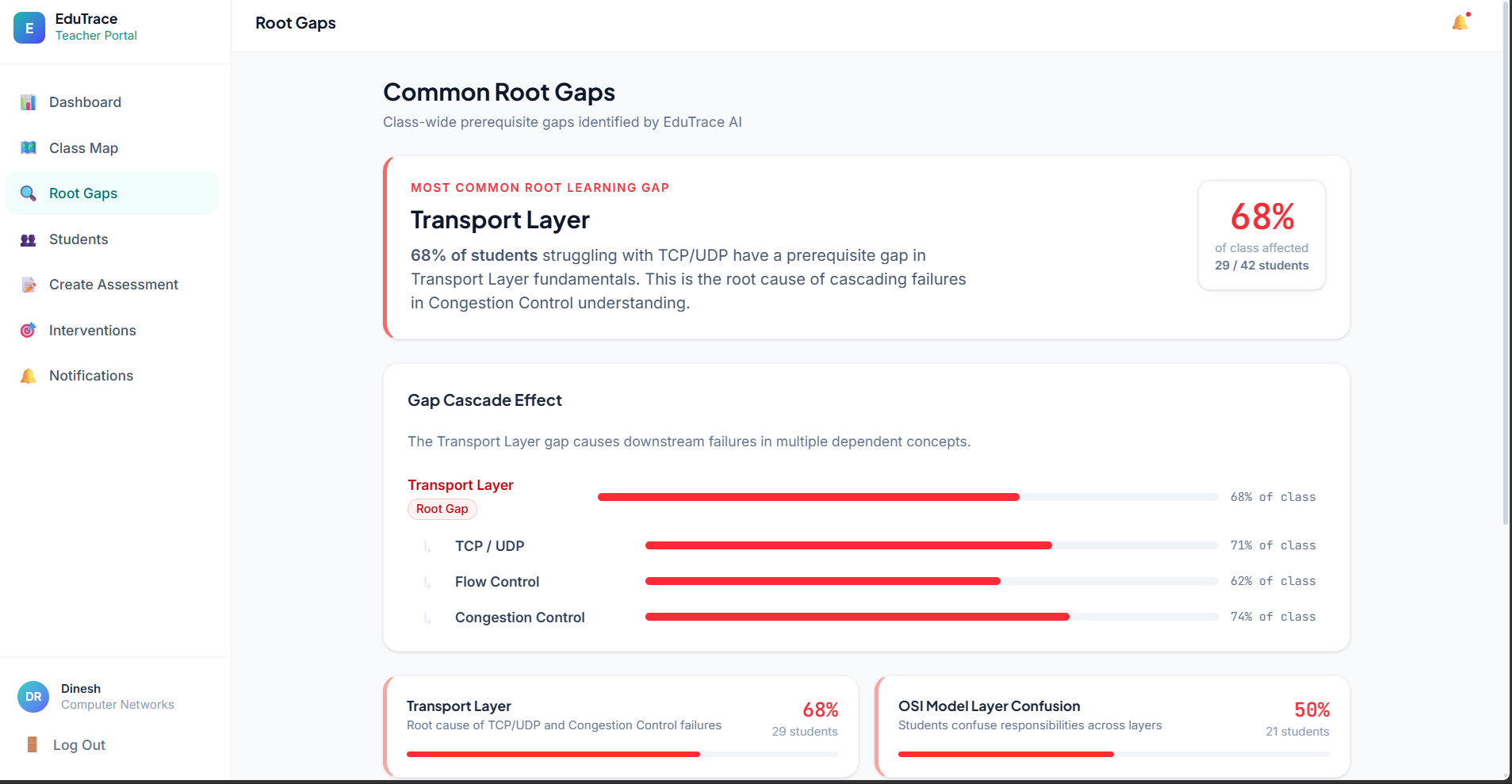
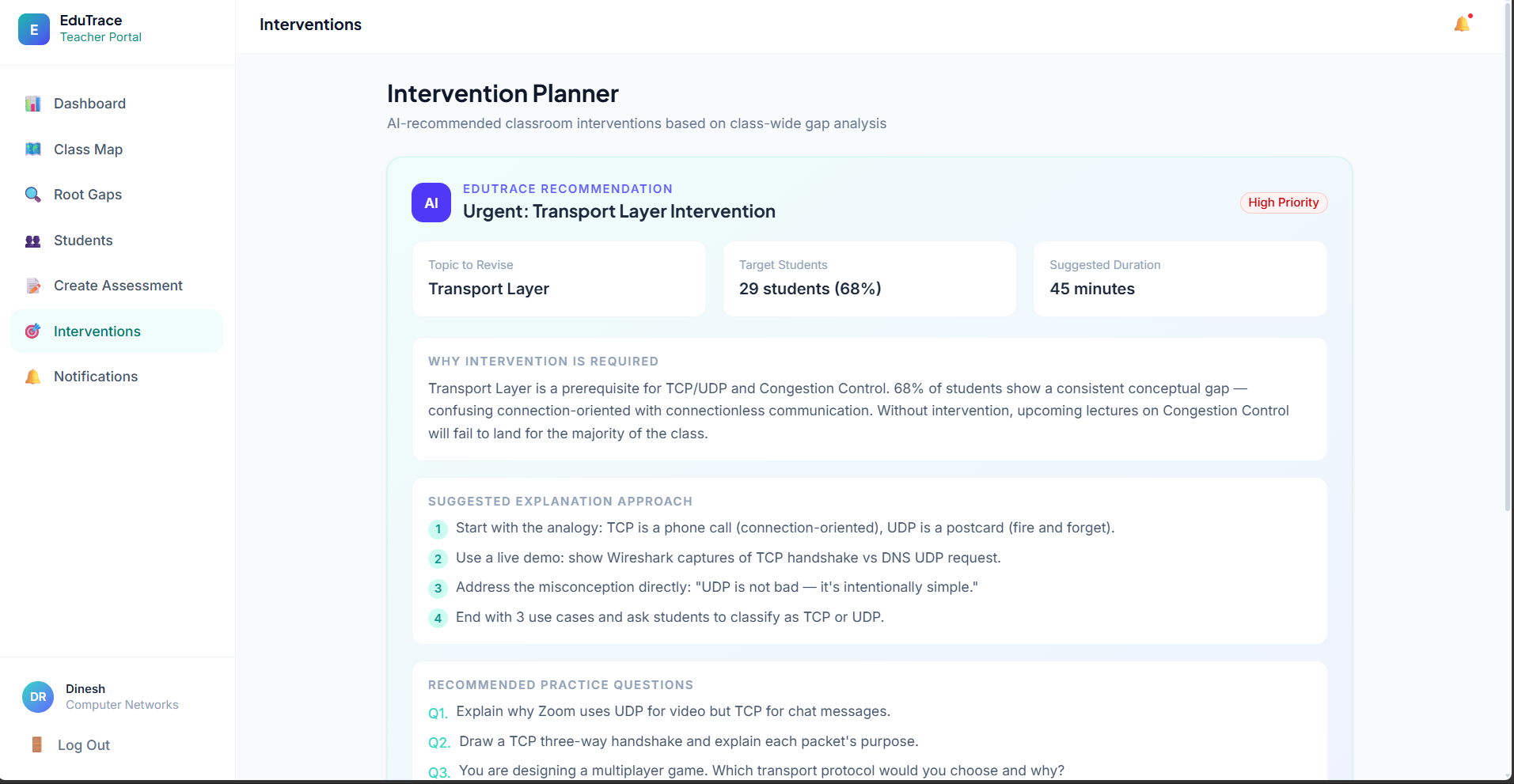
Teacher DashBoard
-
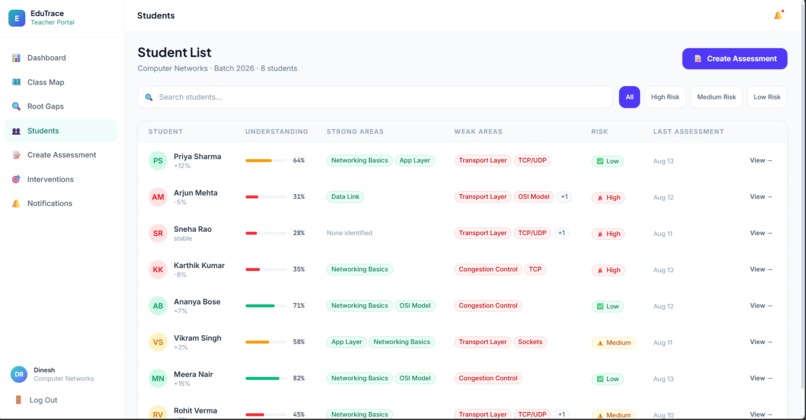
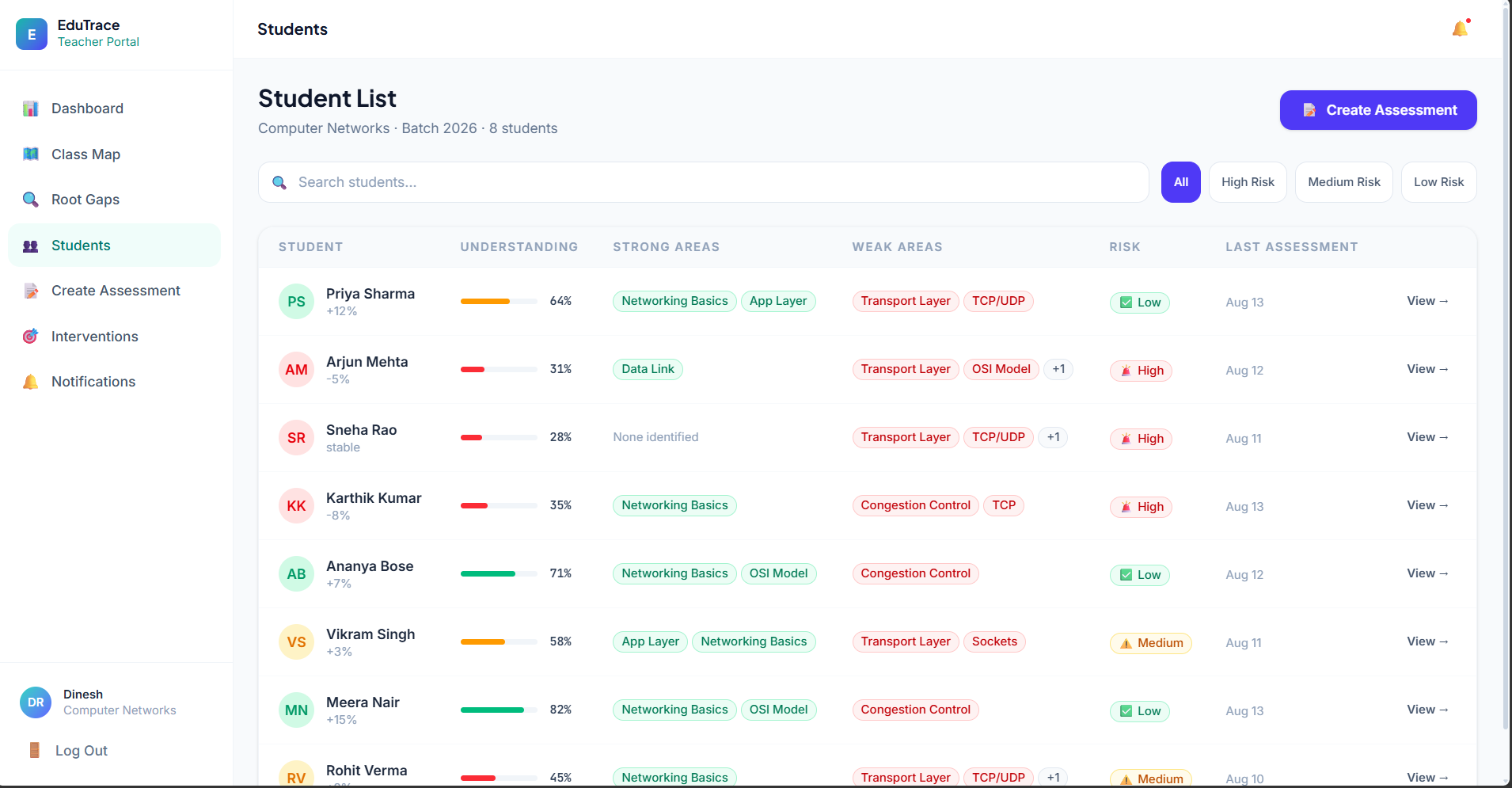
student history
-
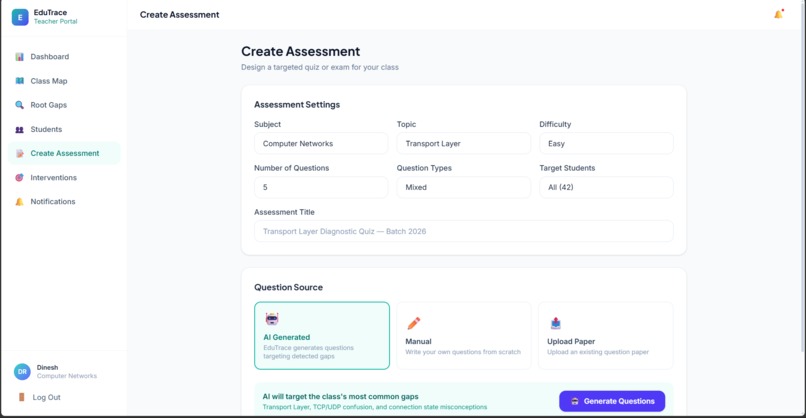
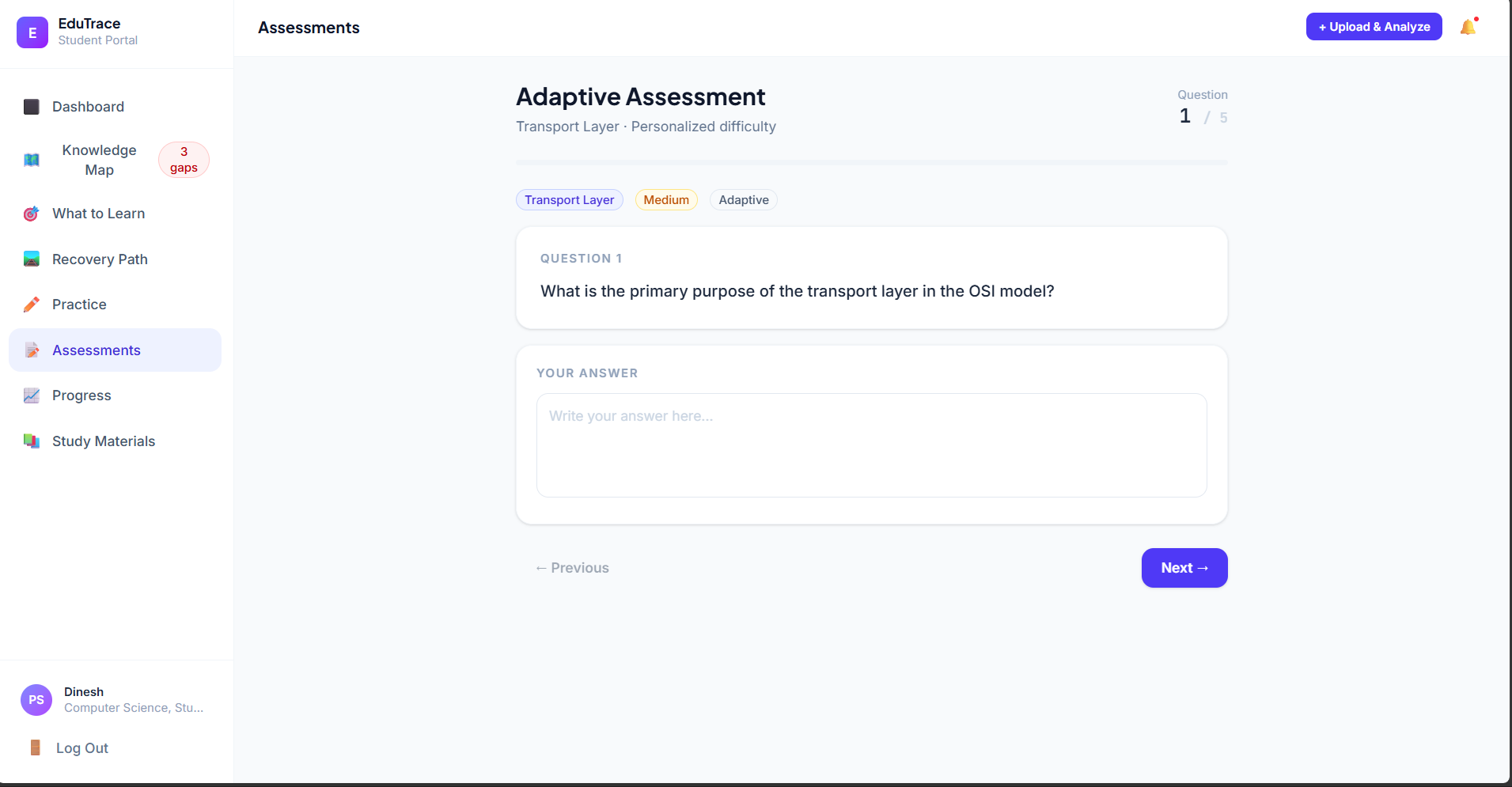
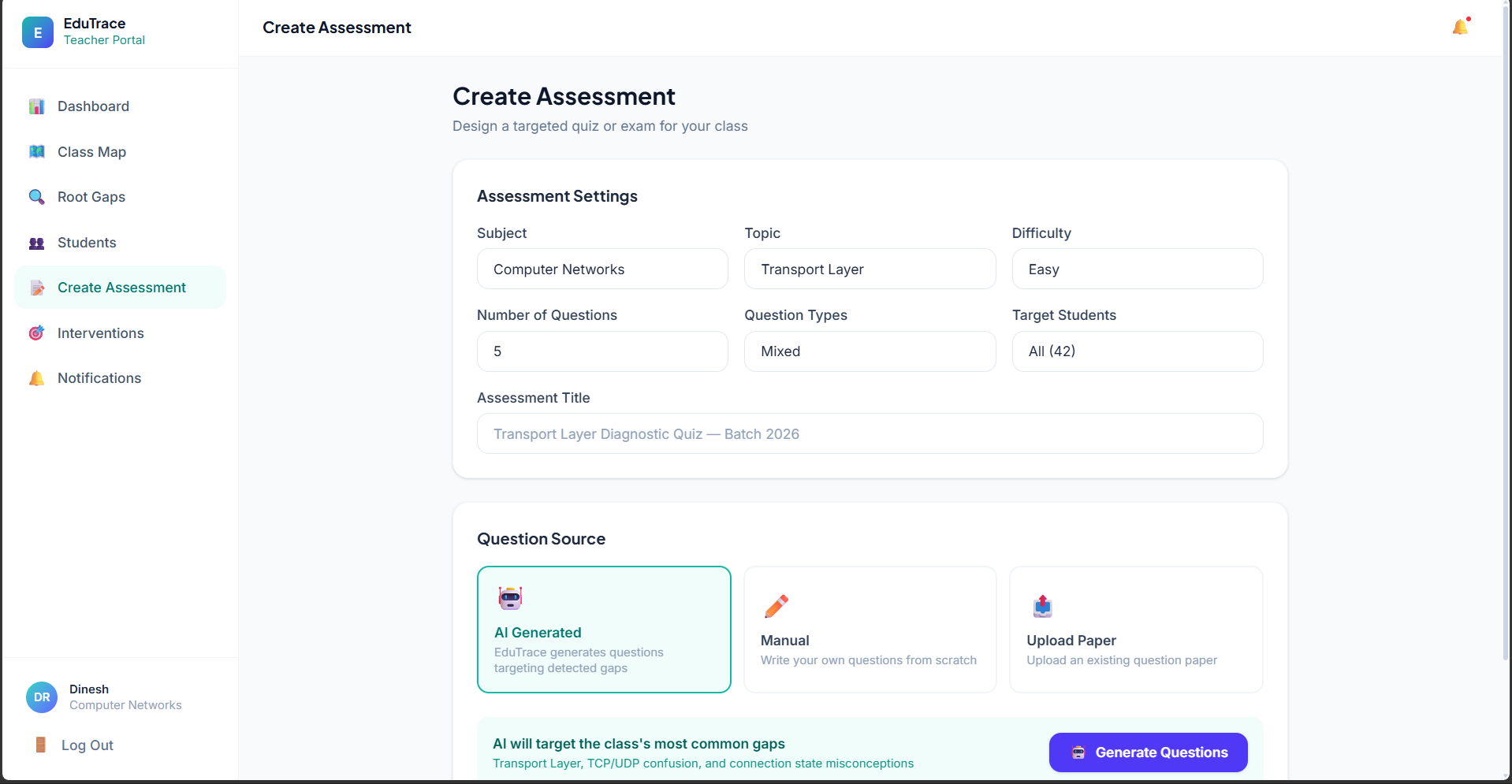
give assesment
-
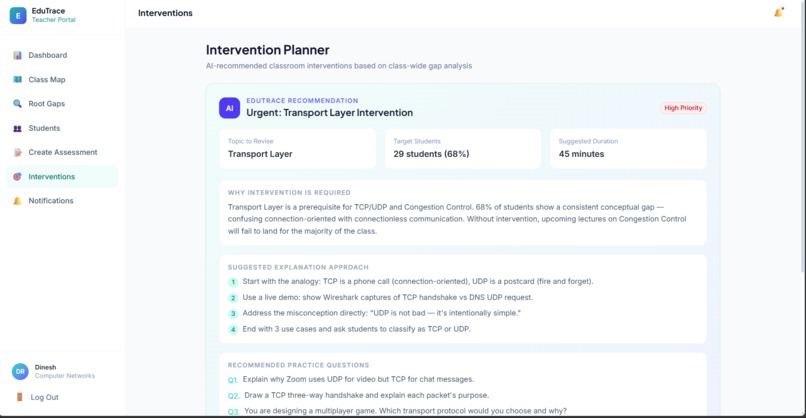
teacher page
Inspiration
Traditional education systems often focus on marks and scores, but a score does not explain why a student is struggling. A student may score poorly in one topic because they have not understood an earlier prerequisite concept.
This inspired us to build EduTrace, based on a simple idea:
“Don’t tell students their marks. Tell them what they actually don’t understand.”
What it does
EduTrace analyzes a student's:
Exam answers Assignments and quizzes Syllabus Notes and study materials
The system identifies incorrect concepts, repeated mistakes, misconceptions, weak prerequisites, and strong areas.
It then creates a Knowledge Gap Map showing where the student's understanding is weak.
Instead of simply saying:
“You scored 52%.”
EduTrace can identify the underlying problem:
“Your Transport Layer foundation is weak, which is affecting your understanding of TCP/UDP and Congestion Control.”
The system then provides a personalized recovery path showing what the student should learn first, what to practice next, and which dependent concepts to strengthen.
How we built it
We built EduTrace as a full-stack AI application.
Frontend: React + Vite Backend: FastAPI Database: PostgreSQL/SQLite with SQLAlchemy AI: Gemini API Document Processing: PDF, DOCX, TXT and OCR RAG: Student-provided learning materials are used to ground AI recommendations ML: Scikit-learn for academic gap scoring Knowledge Graph: Used to connect concepts and prerequisites Visualization: Knowledge gaps and progress are presented through interactive dashboards
The overall pipeline is:
Student Data ↓ Document & Answer Analysis ↓ Error Classification ↓ Knowledge Graph ↓ Gap Detection ↓ Root-Cause Analysis ↓ Personalized Recovery Path ↓ Practice & Progress Tracking
Challenges we ran into
While building EduTrace, we learned that identifying a learning gap is more complicated than simply calculating marks.
The system needs to understand relationships between concepts, distinguish between a careless mistake and a conceptual misunderstanding, and use the student's own learning materials to provide relevant recommendations.
We also gained experience integrating AI, machine learning, RAG, OCR, FastAPI, databases, authentication, and a React frontend into a single application.
Accomplishments that we're proud of
One of our biggest challenges was connecting multiple components reliably.
We had to handle:
Different document formats Extracting text from scanned documents using OCR Connecting the React frontend with FastAPI Authentication and database integration Matching student answers with concepts Detecting prerequisite knowledge gaps Building a useful knowledge graph Generating AI recommendations grounded in the student's actual materials
Another challenge was ensuring that AI recommendations were not just generic explanations. EduTrace needed to provide actionable learning priorities based on the student's actual mistakes and knowledge gaps.
What we learned
We had to handle:
Different document formats Extracting text from scanned documents using OCR Connecting the React frontend with FastAPI Authentication and database integration Matching student answers with concepts Detecting prerequisite knowledge gaps Building a useful knowledge graph Generating AI recommendations grounded in the student's actual materials
Another challenge was ensuring that AI recommendations were not just generic explanations. EduTrace needed to provide actionable learning priorities based on the student's actual mistakes and knowledge gaps.
What's next for EduTrace
Most academic platforms focus on:
Score → Result
EduTrace focuses on:
Mistake → Concept → Root Cause → Prerequisite → Recovery Path
The goal is not just to tell students what they got wrong, but to tell them what they should learn first to get better.
Future Vision
We want EduTrace to evolve into an intelligent academic companion that continuously tracks a student's learning progress and adapts their learning path over time.
Future improvements could include stronger knowledge graphs, more advanced misconception detection, adaptive assessments, teacher intervention recommendations, and class-level learning analytics.


Log in or sign up for Devpost to join the conversation.