-
-
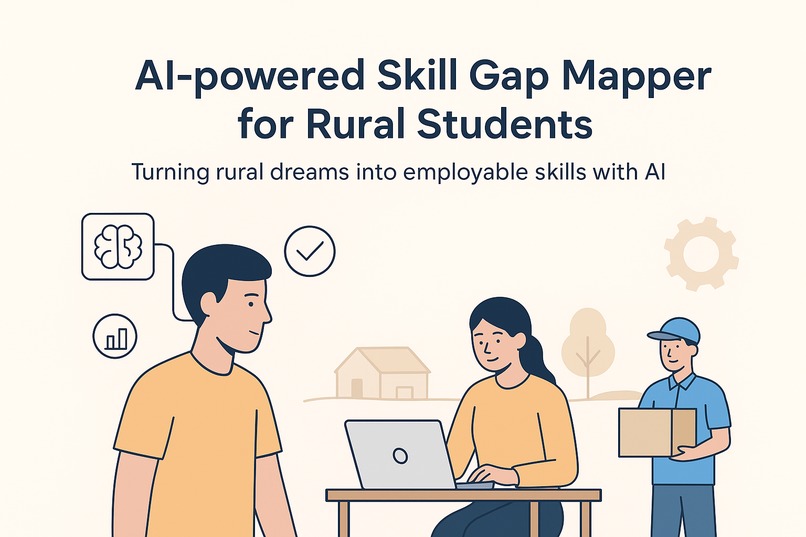
EduTech – AI-powered Skill Gap Mapper for Rural Students
Inspiration
In rural India, millions of talented students graduate each year, yet many struggle to find jobs that match their education. The core problem is a lack of career guidance, awareness of job trends, and skill alignment with market needs — especially in local languages. Seeing this gap inspired me to create an AI-powered platform that maps student skills to real job market demands, helping rural youth get personalised, actionable learning paths.
What it does
The AI-powered Skill Gap Mapper: -Collects student education history, interests, and skill data. -Uses AI to compare this profile with real-time job market trends. -Generates a personalised skill roadmap with recommended courses and resources. -Provides guidance in vernacular languages using a voice interface. -Works offline-first, making it accessible in low-connectivity rural areas.
How we built it
Frontend: Progressive Web App (PWA) for cross-platform and offline access.
Backend: Python (FastAPI) with a cloud-hosted database for storing profiles and recommendations.
AI Engine: Natural Language Processing (NLP) for multilingual text & voice.
Machine Learning models to identify skill gaps and recommend learning paths.
Data Sources: Integrated job listing APIs (LinkedIn, Naukri) and government skill databases.
Voice Support: Google Speech-to-Text and Text-to-Speech APIs.
Challenges we ran into
1.Data availability 2.Language diversity 3.Offline-first design 4.User adoption
Accomplishments that we're proud of
-Built a functional AI prototype that works in English and one Indian language. -Created an offline-compatible, voice-enabled interface for low-digital-literacy users. -Developed a recommendation engine that links education directly to employability.
What we learned
-How to integrate AI & NLP into real-world, socially impactful solutions. -Importance of UX design for non-technical users. -How to manage limited and noisy datasets for AI training.
What's next for EduTech – AI-powered Skill Gap Mapper for Rural Students
-Add support for 10+ Indian languages. -Partner with NGOs, schools, and government skill programs for pilot deployment. -Integrate gamification to keep students motivated. -Expand data coverage to include regional job portals and apprenticeship opportunities.

Log in or sign up for Devpost to join the conversation.